
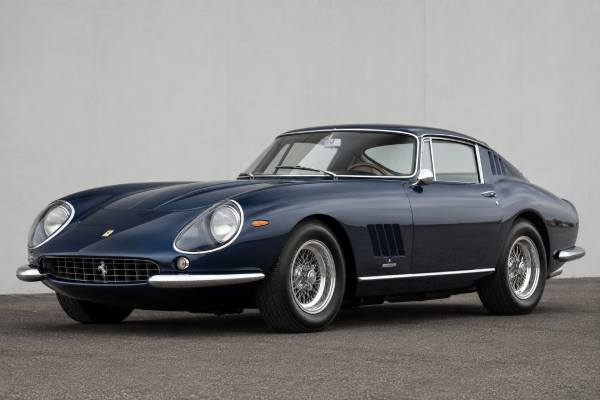
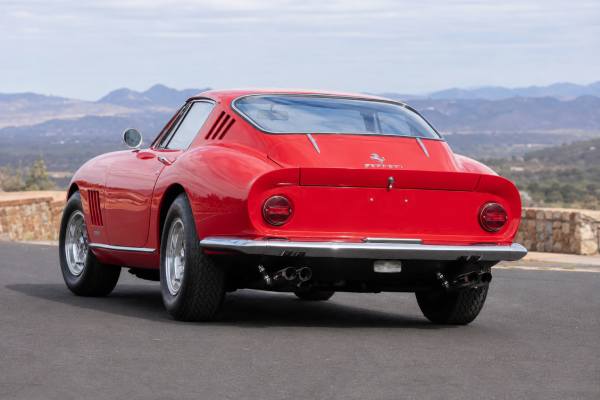
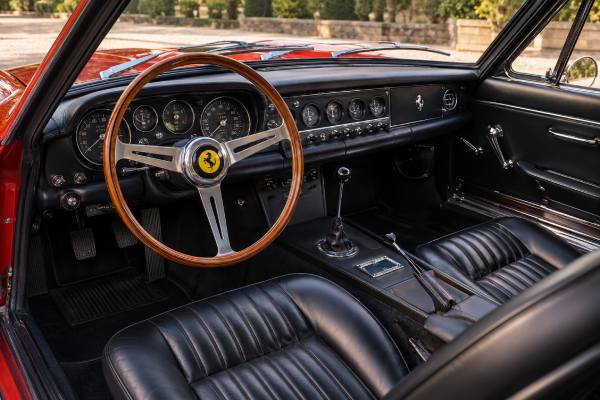
The 1966 Ferrari 275 GTB/C Tipo 590 A is the final and most focused competition version of the two-cam 275 GTB, powered by a 3.3-liter Tipo 213 Competizione V12 and commonly quoted at about 282 hp in racing trim. Built only in 1966, it was not a normal road-going 275 with a few lightweight parts. It was a low-volume customer competition car with a special chassis, dry-sump engine, ultra-thin alloy bodywork, Perspex windows, magnesium components, and endurance-racing details hidden beneath a shape that still looked close to the long-nose 275 GTB.
Its importance comes from the moment it represents. The 275 GTB/C was Ferrari’s last great front-engined GT racer developed by the factory competition department before the company’s customer GT racing efforts became more indirect. It followed the 250 GT competition line, arrived after homologation battles around the 250 LM and early 275 GTB competition cars, and gave selected privateer teams a serious weapon for GT-class racing. Today, the car matters for three reasons: it is rare, it is technically fascinating, and it sits in the collector market between usable classic Ferrari berlinettas and near-mythical cars like the 250 GTO.
Quick Take
The Ferrari 275 GTB/C Tipo 590 A is most appealing because it looks like an elegant Pininfarina-era 275 but is engineered as a thin-skinned, dry-sump, privateer competition Ferrari. Its identity is tied to low weight, the Tipo 213 Competizione V12, factory racing development, and a 12-car production run. The main caution is that originality, race history, panel integrity, and documentation matter more than ordinary condition, because past accident damage or incorrect restoration work can change the car’s value dramatically. A serious buyer should focus first on Ferrari Classiche certification, matching major components, body-number evidence, period history, and inspection by a specialist who understands 1960s competition Ferraris.
Table of Contents
- History and Collector Importance
- Engine, Chassis and Key Specifications
- Production, Variants and Authenticity
- Design, Engineering and Special Details
- Road, Track Feel and Performance
- Maintenance, Restoration and Known Risks
- Market Values, Buying Guide and Rivals
History and Collector Importance
The 275 GTB/C matters because it was Ferrari’s final factory-built front-engined GT competition berlinetta of the classic privateer era. It connected the dominant 250 GT competition cars of the early 1960s with the later period when Ferrari’s racing attention moved toward prototypes and Formula 1.
The standard Ferrari 275 GTB arrived in 1964 as a major step forward from the 250 GT family. It kept the familiar front-mounted V12 character but added two features that changed the feel of Ferrari road cars: a rear-mounted five-speed transaxle and independent rear suspension. This gave the 275 GTB better weight balance and more modern handling than the earlier live-axle 250 GT berlinettas.
Ferrari’s racing problem was more complicated. The company wanted a GT-class successor to the 250 GTO, but homologation rules were tightening. The mid-engined 250 LM was too different from the 250 GT road cars to be accepted as a normal GT evolution. Early 275 GTB competition efforts also ran into disputes over weight and specification. By 1966, Ferrari developed the final version: the 275 GTB/C based around the long-nose 275 GTB shape but substantially re-engineered for competition.
Mauro Forghieri and the Scuderia Ferrari engineering team treated the car as much more than a lightweight road car. The 275 GTB/C received the Tipo 590 A chassis, a dry-sump Tipo 213 Competizione V12, a lightweight transaxle, competition suspension settings, and a body built with extremely thin aluminum panels by Scaglietti. The cars were sold to favored privateer clients rather than run as a full works factory team effort.
This privateer role is central to the car’s identity. Examples were associated with teams and entrants such as Maranello Concessionaires, Ecurie Francorchamps, Scuderia Filipinetti, and NART. The model scored GT-class success at Le Mans in 1966 and 1967, and it was also used in Italian events, hill climbs, and endurance races. It did not have the public fame of the 250 GTO, but among Ferrari historians it is one of the most technically interesting competition berlinettas of the period.
Its collector appeal today rests on a rare mix of traits:
- Only 12 examples of the definitive 1966 275 GTB/C were built.
- It is closely related visually to the 275 GTB but mechanically much more specialized.
- It carries direct Ferrari competition-department engineering.
- It has genuine international racing relevance.
- It is usable in elite historic racing, concours, and major Ferrari gatherings when properly prepared.
- It represents the end of a line rather than the beginning of a common production branch.
That last point is why enthusiasts still care. The 275 GTB/C is not just another rare Ferrari. It is the last expression of the front-engined Ferrari GT racer as a factory competition object before the Daytona Competizione and later GT cars took a different path through outside preparation and changing motorsport rules.
Engine, Chassis and Key Specifications
The 275 GTB/C’s specification is best understood as a racing reinterpretation of the two-cam 275 GTB. The numbers look close to the road car at first glance, but the dry-sump engine, lightweight chassis, special body, magnesium parts, and race-focused details make it a very different machine.
| Item | Specification |
|---|---|
| Model | Ferrari 275 GTB/C |
| Production year | 1966 |
| Chassis type | Tipo 590 A lightweight tubular chassis |
| Body | Scaglietti-built aluminum berlinetta body |
| Engine | Tipo 213 Competizione 60-degree V12 |
| Displacement | 3,285.72 cc |
| Bore x stroke | 77 mm x 58.8 mm |
| Valvetrain | Single overhead camshaft per bank, two valves per cylinder |
| Induction | Three twin-choke Weber competition carburetors |
| Lubrication | Dry sump |
| Quoted output | About 282 hp at around 7,500 rpm, with period figures varying by source and rating method |
| Transmission | Five-speed manual rear transaxle |
| Drivetrain | Rear-wheel drive with limited-slip differential |
| Suspension | Independent front and rear suspension with coil springs and telescopic dampers |
| Brakes | Four-wheel hydraulic disc brakes with competition pad access |
| Wheels | Borrani wire wheels, wider than road-car fitment |
| Fuel capacity | Approximately 36 gallons / 136–140 liters for endurance use |
| Weight | Roughly 1,100–1,115 kg depending on trim, fuel, tools, and event preparation |
Tipo 213 Competizione V12
The engine is a Colombo-family V12, but in the GTB/C it was prepared for racing use. The dry-sump oiling system allowed the engine to sit lower in the chassis and helped keep oil control stable during long, high-speed cornering. Internally, the engine used competition pistons, special camshafts, a revised crankshaft, and valve technology associated with Ferrari’s racing engines of the period.
The three-carburetor layout deserves explanation. Some road-going 275 GTBs could be ordered with six carburetors, but the competition homologation paperwork did not properly account for that option. As a result, the GTB/C ran a three-carburetor setup, tuned for racing with distinctive intake trumpets. This is one reason quoted power figures can be confusing. Some later catalogues and period discussions use different ratings, but the 282 hp figure at about 7,500 rpm is widely associated with the definitive 1966 275 GTB/C competition engine.
Chassis and transaxle
The Tipo 590 A chassis was lighter and more focused than the road-car structure. It retained the 275 layout idea: front V12, rear transaxle, and independent rear suspension. But the GTB/C used competition-minded details such as a magnesium transaxle casing, close-ratio gears, a strengthened limited-slip differential, and an open driveshaft arrangement that made clutch access easier for race service.
The road-going 275 GTB was already advanced for Ferrari because of its transaxle and independent rear suspension. The GTB/C sharpened that formula by removing weight and adding durability where racing loads demanded it.
Performance figures
Exact acceleration and top-speed figures vary because gearing, tire choice, race preparation, and period measurement methods were not standardized. A well-prepared 275 GTB/C is generally understood as a car capable of roughly 170 mph or more on the right gearing, with strong high-rpm performance rather than modern low-speed torque. Its performance advantage over a normal 275 GTB comes less from a huge power increase and more from lower weight, better oil control, racing gearing, improved cooling, and competition preparation.
Production, Variants and Authenticity
Ferrari built only 12 examples of the definitive 1966 275 GTB/C, and that small number makes identification and history unusually important. For collectors, the key is separating the 1966 Tipo 590 A cars from earlier 275 GTB competition-related variants and from road cars with desirable options.
The 275 family includes several cars that can sound similar in casual conversation:
| Version | Basic identity | Collector relevance |
|---|---|---|
| 275 GTB | Standard two-cam road berlinetta, built from 1964 to 1966 | Foundation model; values vary by short nose, long nose, alloy body, and carburetor specification |
| 275 GTB/6C | Road car with six Weber carburetors | Highly desirable road specification, especially with alloy body and long nose |
| 275 GTB Competizione Speciale | Earlier ultra-rare competition development, built in tiny numbers before the 1966 GTB/C | Closer in mythology to the 250 GTO successor story; not the same as the 12-car 1966 GTB/C |
| 275 GTB/C Tipo 590 A | Definitive 1966 competition berlinetta, 12 built | The subject car; lightweight, dry-sump, factory competition department engineering |
| 275 GTB/4 | Later four-cam road berlinetta from 1966 onward | A major road-car evolution, but not a direct replacement for the GTB/C as a factory GT racer |
Why the 12-car production run matters
With a normal classic sports car, production number is only one part of value. With the 275 GTB/C, it controls nearly everything. Each car has a known chassis identity, individual history, and often a long record of ownership, racing, restoration, and concours appearances. Two cars with the same basic model name can differ greatly in value if one has important period race results and another has limited competition history but more original metal.
The best examples are supported by:
- Ferrari Classiche Red Book certification.
- Factory build sheets or copies.
- Matching chassis, engine, and gearbox numbers.
- Clear body-number evidence on panels and interior pieces.
- Period race entries, photographs, and results.
- Continuous ownership history.
- Restoration invoices from respected Ferrari specialists.
- FIA Historic Technical Passport where relevant.
- Expert history reports from recognized marque historians.
Factory colors and interiors
Because these cars were hand-built competition machines, original color and trim can be more important than appearance alone. Many were red at some point, but not every car’s most valuable presentation is simply “red over black.” The correct specification is the one documented for that chassis. A car restored to its original delivery color, with accurate cloth inserts, trim materials, and exterior details, will usually have stronger concours and collector appeal than a prettier but inaccurate presentation.
Quick identifiers
A 1966 275 GTB/C may look similar to a long-nose road 275 GTB, but careful inspection reveals many differences. Important identifiers include ultra-thin alloy panels, Perspex side and rear windows, outside fuel and oil-related access details, enlarged rear haunches for wider wheels, drilled internal structures, competition seats, magnesium parts, dry-sump engine details, and racing fuel system components.
The challenge is that these cars have lived hard lives. Some raced in period, some were modified for later use, and some were restored more than once. A visual checklist is never enough. Authenticity has to be proven through the car itself, the documents, and the judgment of specialists who know the model.
Design, Engineering and Special Details
The 275 GTB/C is special because its elegant shape hides an extreme lightweight racing structure. Ferrari and Scaglietti kept the car visually close to the 275 GTB, but almost every major detail was reconsidered for weight, serviceability, cooling, and endurance racing.
The body followed the long-nose 275 GTB theme, with a low front, covered headlights, a fastback roofline, and a short Kamm-style tail. The proportions were beautiful, but they were not decorative. The long nose helped stability, the rear shape managed airflow more cleanly than earlier short-nose cars, and the wider rear bodywork allowed a broader rear tire footprint.
The body panels were made from very thin aluminum. This saved weight but created one of the car’s lasting ownership issues: the panels are vulnerable. A person leaning on the body can deform it. Small racing incidents could leave major evidence. Poor repairs can change panel fit, surface tension, and body-number integrity.
Weight saving went far beyond the outer skin. Ferrari used Perspex for side and rear windows, drilled holes in brackets and internal panels, used lightweight seat frames, and replaced road-car comfort with purposeful minimalism. The floor and fuel system also reflected competition thinking. Large endurance fuel capacity gave the car range for long events, while the dry-sump system and oil-cooling layout helped the V12 survive racing loads.
Why the dry sump matters
A dry-sump system stores oil in a separate tank rather than relying only on oil sitting in a pan under the engine. For a racing car, this has two big benefits. First, oil supply remains more stable during hard cornering and braking. Second, the engine can be mounted lower, improving the center of gravity.
On the 275 GTB/C, that lower engine position helped the car feel more balanced and reduced the penalty of having a V12 ahead of the cabin. It also connected the car more closely with Ferrari’s sports-racing engines than with ordinary road GT practice.
Magnesium and Elektron components
Magnesium alloy parts were used to reduce weight in areas such as engine and transaxle casings. These components are valuable and historically important, but they also age differently from ordinary aluminum or steel. Corrosion, porosity, cracking, and poor repair work can become serious concerns decades later. Their presence adds authenticity and value, but also adds inspection risk.
Wheels and tires
The Borrani wire wheels are part of the car’s period look, but they also represent a limit of 1960s technology. With modern historic racing tires, grip can be higher than the original wheel design comfortably tolerates. Period reports and later histories note that the combination of independent suspension, racing tires, and wire wheels could create wheel fatigue or deformation. That is why wheel condition, spoke tension, rim history, and event preparation matter so much on any car that is still driven hard.
Road, Track Feel and Performance
A 275 GTB/C feels like a racing car first and a grand tourer second. It has the beauty and basic layout of a 275 GTB, but the noise, heat, stiffness, throttle response, and delicacy of its lightweight body make it a very different experience from a road berlinetta.
The engine is the center of the car’s character. The Tipo 213 Competizione V12 is not about modern instant torque. It rewards revs, temperature, and mechanical sympathy. When properly warmed, the engine has a crisp carbureted response and a hard, metallic V12 sound that builds with rpm. The dry-sump system, racing cams, and intake layout give it a sharper edge than a normal 275 GTB engine.
At low speeds, the car demands patience. The carburetors need proper setup, the oil and coolant need temperature, and the gearbox prefers a driver who understands older synchronizers and mechanical feel. Once moving quickly, the car becomes more natural. The rear transaxle helps balance the front-engine layout, while the independent rear suspension gives the GTB/C a more modern cornering feel than earlier live-axle Ferraris.
Steering and balance
The steering is unassisted, detailed, and heavier at parking speeds than a modern performance car. On the road it should feel alive without nervousness. A properly set up GTB/C has a more settled rear end than many older front-engined racers, but it still requires respect. Narrower period-style tires, high value, and a short margin for body damage mean the car is not something to throw around casually.
The balance is one of its great strengths. The front V12 gives the car long-nose drama, while the rear transaxle helps keep it from feeling nose-heavy when driven correctly. In fast corners, the car rewards smooth inputs and early planning. Abrupt modern driving habits do not suit it.
Brakes and gearbox
The disc brakes are strong for the period, but they should not be judged by modern carbon-ceramic standards. Pedal feel, pad material, fluid condition, ducting, and event use all affect confidence. A tired hydraulic system can make the car feel much older than it really is.
The five-speed transaxle is one of the key parts of the 275 experience. It gives the car a purposeful, mechanical shift feel. The competition version’s close ratios help keep the V12 in its effective rev range, while the limited-slip differential improves traction out of corners. Clutch condition and driveshaft setup are important. Vibration, baulking shifts, or driveline harshness should not be dismissed as “normal old Ferrari behavior.”
Usability
As a road car, the GTB/C is usable only in the specialist sense. It can take part in tours and road rallies, and many examples have done so, but it is hot, loud, valuable, and fragile compared with a normal classic GT. The cabin is simple, visibility is better than many later supercars, and the car is compact by modern standards. Still, every journey requires planning: fuel quality, warm-up, tools, support, weather, and secure parking all matter.
On track, it is fast enough to be exciting and rare enough to make every lap feel consequential. Owners who race them seriously usually rely on expert preparation, conservative rev limits, crack checking, wheel inspection, and careful post-event service.
Maintenance, Restoration and Known Risks
The 275 GTB/C is not “reliable” or “unreliable” in the normal used-car sense. It is a hand-built 1960s Ferrari competition car whose dependability depends on preparation quality, correct parts, expert service, and how honestly previous damage has been repaired.
The biggest maintenance risks are not minor tune-up items. They are authenticity loss, hidden crash damage, magnesium deterioration, poor engine rebuilds, incorrect body repairs, weak wheels, and old restoration work that looks attractive but is mechanically or historically wrong.
Engine and fuel system
The Tipo 213 Competizione V12 requires specialist care. Carburetor setup must be correct, ignition timing must be precise, and the dry-sump system must be inspected for leaks, tank condition, hose age, and oiling performance. Old fuel residue can damage carburetors and tanks, while modern fuel blends can create compatibility problems in older hoses, seals, and fuel-system materials.
A proper engine inspection should include:
- Compression and leak-down testing.
- Oil pressure checks hot and cold.
- Bore and valve-train inspection where possible.
- Carburetor condition and synchronization.
- Dry-sump tank, lines, fittings, and cooler checks.
- Evidence of overheating or detonation.
- Verification of engine number and internal specification.
A rebuild is specialist work. The issue is not just cost; it is accuracy. Using incorrect internal parts, wrong finishes, or unsuitable modern substitutions can reduce both value and historical integrity.
Chassis, body, and corrosion
The thin aluminum body is one of the most important inspection areas. Look for uneven panel thickness, excessive filler, incorrect welds, poor repairs around wheel arches, distorted door openings, and signs that panels have been replaced without proper documentation. Original panel markings, where present, can be highly valuable evidence.
The tubular chassis should be checked for straightness, corrosion, accident repairs, and old racing modifications. Suspension mounting points, front structure, rear frame areas, and jacking points deserve close attention. A car that looks perfect at concours level can still hide old impact damage under paint and trim.
Magnesium parts
Magnesium components need careful inspection because they can corrode or crack with age. Repairs must be done by people who understand the material. Replacement parts may be available only through specialist networks or by expensive remanufacture. Original magnesium parts are valuable, but only if they are safe and usable.
Wheels, brakes, and suspension
Borrani wire wheels should be inspected regularly, especially if the car is used in historic events. Spoke tension, rim condition, hub splines, and crack evidence are essential checks. Suspension bushings, dampers, springs, hubs, and bearings also need close attention because old competition cars often experience loads far beyond ordinary road use.
Brake systems should be treated as consumables. Calipers, lines, master cylinders, pads, discs, and fluid all age. A car that has been stored as a collection piece may need more work than one used regularly by a careful owner.
Restoration tradeoffs
The best restoration is not always the shiniest one. For a 275 GTB/C, originality can be more important than cosmetic perfection. A preserved car with honest period metal and known race scars may be more significant than a car restored so heavily that little original material remains.
Before buying or restoring one, owners should decide the goal:
- Concours presentation.
- Historic racing eligibility.
- Road rally usability.
- Long-term preservation.
- Investment-grade originality.
- A balanced approach that allows careful use.
Each goal changes decisions about paint, trim, tires, safety equipment, engine build specification, and how much visible patina should remain.
Market Values, Buying Guide and Rivals
The 275 GTB/C sits in the upper tier of collectible front-engined Ferraris, but its value is highly individual. Public sales have shown a broad range because each car’s history, originality, restoration quality, race record, and documentation matter more than a simple price guide.
In recent public market context, 1966 275 GTB/C examples have appeared in the high seven-figure to mid-eight-figure dollar range. A highly regarded example sold at Monterey in 2022 for $7.595 million, while another sold at Pebble Beach in 2017 for $14.52 million. Earlier European sales and later estimates also show that the market can move widely depending on the chassis and the moment. These cars trade infrequently, so a single auction result should not be treated as a complete market.
The strongest value drivers are:
- Confirmed identity as one of the 12 1966 GTB/C cars.
- Matching-numbers engine, gearbox, and original body.
- Ferrari Classiche certification.
- Important period race history.
- Original or accurately restored color and trim.
- Minimal accident damage.
- Quality of restoration and maintenance.
- Expert documentation.
- Eligibility for major concours and historic events.
- Long-term ownership by respected collectors.
Buyer inspection priorities
A serious buyer should approach the 275 GTB/C like a historic artifact that can also move very quickly. The inspection should go far beyond a normal pre-purchase check.
| Area | What to verify |
|---|---|
| Identity | Chassis, engine, gearbox, body numbers, and known history |
| Documentation | Build sheets, Classiche file, invoices, race entries, photographs, ownership chain |
| Body | Original panel evidence, repair quality, alloy thickness, distortion, filler use |
| Chassis | Straightness, corrosion, repairs, suspension pickup points, race modifications |
| Engine | Correct Tipo 213 Competizione specification, oiling system, rebuild history, test results |
| Transaxle | Correct casing, gear condition, differential, shift quality, driveline vibration |
| Magnesium parts | Originality, corrosion, cracking, repair history, safe usability |
| Wheels and brakes | Borrani condition, splines, cracks, brake hydraulics, disc and pad condition |
| Event eligibility | FIA paperwork, safety equipment, historic racing compliance, concours history |
| Use plan | Whether the car is prepared for touring, racing, preservation, or concours display |
Examples to seek and avoid
Seek a car with transparent history, original major components, known restoration work, and a specialist-supported maintenance record. A less-raced car may appeal to a preservation-minded collector, while a car with strong period results may command more attention from historic racing enthusiasts.
Avoid any example with vague documentation, unexplained engine or gearbox changes, heavy accident history without high-quality repair evidence, missing body-number support, or a restoration that cannot be tied to recognized Ferrari specialists. At this level, a cheap car is rarely cheap. The discount may simply be the market pricing in missing history or future restoration risk.
Rivals and alternatives
The closest Ferrari alternatives include the 250 GT SWB Competizione, 250 GTO, 250 LM, 275 GTB/4, and Daytona Competizione. Each offers a different balance of usability, racing importance, and price. The 250 GTO is more famous and vastly more expensive. The 250 LM has prototype drama and Le Mans mythology but a different mid-engined character. The Daytona Competizione is later, more muscular, and tied to a different era of GT racing.
Non-Ferrari rivals include the Shelby Cobra, Aston Martin DB4 GT and DB4 GT Zagato, Jaguar Lightweight E-Type, and Maserati competition berlinettas. These cars are relevant because they shaped the same GT racing environment, but the 275 GTB/C has a specific appeal: it combines Ferrari V12 refinement, front-engined balance, Scaglietti alloy craftsmanship, and final-generation factory GT-racer status.
For long-term collectability, the 275 GTB/C is secure because the supply is fixed, the story is strong, and the car is important within Ferrari’s competition timeline. Market prices may move with broader collector trends, but genuine, well-documented examples should remain among the most desirable 1960s Ferrari berlinettas.
References
- Ferrari 275 GTB Competizione (1965) 1965
- Ferrari 275 GTB (1964) 1964
- Ferrari 275 GTB/C – Make no mistake, a classic with a capital “C” 2021
- 1966 Ferrari 275 GTB/C by Scaglietti | Monterey 2022 | RM Sotheby’s 2022
- 1966 Ferrari 275 GTB/C | Gooding Christie’s 2017
Disclaimer
This article is for informational purposes only and is not a substitute for professional diagnosis, repair, valuation, authentication, or restoration advice. Specifications, torque values, service intervals, procedures, components, and correct finishes can vary by chassis number, market, period preparation, restoration history, and equipment. Always verify details against official Ferrari documentation, Ferrari Classiche records, period build information, and advice from qualified specialists before buying, servicing, restoring, or racing a Ferrari 275 GTB/C.
If you found this guide useful, please consider sharing it on Facebook, X/Twitter, or with other classic Ferrari enthusiasts to support our work.