
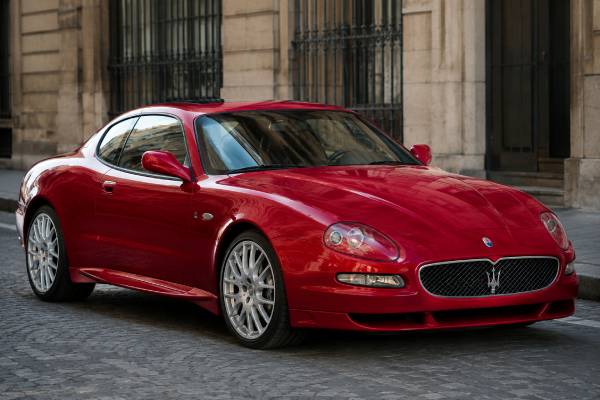
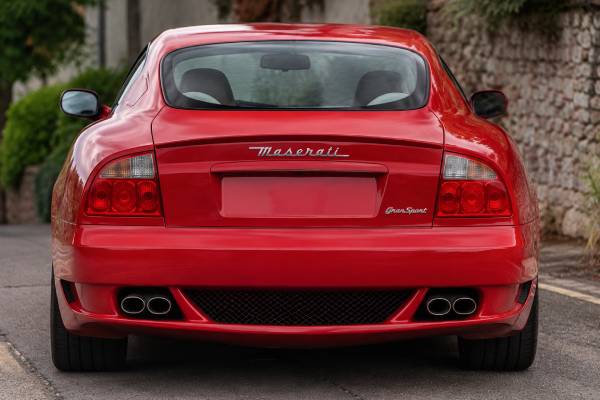
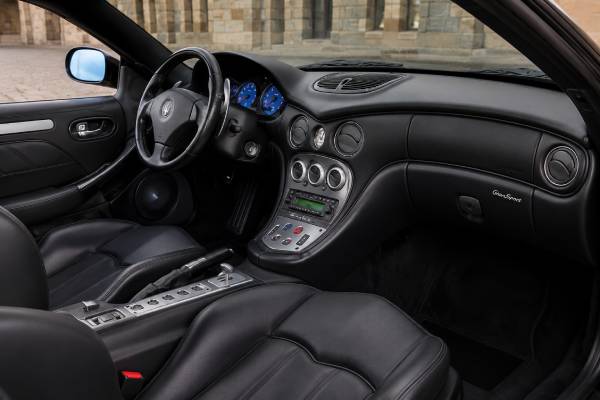
The 2006–2007 Maserati GranSport Contemporary Classic is a late-production GranSport coupé defined by its carefully coordinated colors, full-leather cabin, vintage-style instruments, and ball-polished 19-inch wheels. It does not have more power than the standard 400 hp GranSport, nor is it a stripped competition derivative like the MC Victory. Its appeal comes from combining the M138 platform’s sharp transaxle balance and high-revving V8 with a warmer, more traditional interpretation of Maserati luxury. That makes originality unusually important. A correct car should present as one complete factory concept rather than a standard GranSport fitted later with shiny wheels or retrimmed seats. Mechanical condition still matters most: clutch wear, Cambiocorsa calibration, suspension joints, cooling health, sticky interior controls, and aging electrical systems can outweigh the value of rare trim. The best examples preserve their original colorway, instruments, leather, and wheel finish while showing consistent specialist service and regular use.
Table of Contents
- A Farewell Edition with Classic Intent
- Mechanical Package and Factory Figures
- Paris Debut, Colorways, and Identification
- Vintage Details on a Modern GranSport
- Driving Character Behind the Luxury Trim
- Preserving Leather, Wheels, and Mechanical Health
- How to Buy the Right Contemporary Classic
A Farewell Edition with Classic Intent
The Contemporary Classic was Maserati’s elegant send-off for the GranSport coupé, introduced at the 2006 Paris motor show and offered from October that year. It retained the normal GranSport mechanical package while presenting the car through details inspired by the brand’s older grand tourers.
By 2006, the M138 family had already completed most of its technical development. The basic Coupé had arrived with a naturally aspirated 4.2-liter V8 and rear transaxle, while the GranSport sharpened that formula with 400 hp, faster Cambiocorsa programming, lower suspension, revised aerodynamics, 19-inch wheels, and a more focused cabin. Maserati was preparing for the larger GranTurismo that would succeed it, so the Contemporary Classic did not attempt a major engineering rewrite. Instead, it emphasized craftsmanship, restrained color coordination, and visual continuity with earlier Maserati road cars.
That purpose separates it from other special GranSports. The MC Victory used racing-linked aerodynamic parts, carbon-shell seats, revised steering, and numbered production. The Contemporary Classic moved in the opposite direction. Full leather replaced the more technical leather-and-BrighTex atmosphere found in many standard cars, a leather steering wheel softened the cabin, and the instrument graphics adopted a deliberately traditional look. The highly polished wheels added formality without changing the suspension geometry or tire sizes.
Collectors care because late-run factory specifications often survive in smaller numbers than the base model, especially when delicate trim has been altered over time. Ball-polished wheels are frequently refinished incorrectly, leather can be recolored, instrument clusters can be replaced, and cars may receive badges or trim from other versions. A Contemporary Classic therefore needs to be judged as a complete specification, not merely by what a seller calls it.
Maserati did not promote a clear, universally documented numbered production total for this equipment package. Registration year can also cause confusion: a car built or announced in late 2006 may be titled as a 2007 model in some markets. The useful questions are whether the VIN, build data, original invoice, color codes, and surviving equipment agree. A well-documented example has a stronger claim to special-edition value than an attractive car whose identity rests on wheels and upholstery alone.
Mechanical Package and Factory Figures
Under its classic presentation, the Contemporary Classic is mechanically a 400 hp GranSport. It uses the M138P 4,244 cc dry-sump V8, a six-speed Cambiocorsa transaxle, rear-wheel drive, double-wishbone suspension, and Brembo steel brakes.
| Item | Specification |
|---|---|
| Body | Steel monocoque two-door, four-seat coupé with front and rear subframes |
| Engine code | M138P, Ferrari-Maserati F136-family V8 |
| Configuration | 90-degree aluminum V8, 32 valves, four overhead camshafts |
| Displacement | 4,244 cc |
| Bore × stroke | 92.0 × 79.8 mm |
| Compression ratio | 11.1:1 |
| Induction and fuel system | Naturally aspirated, electronic multipoint injection |
| Lubrication | Dry sump |
| Maximum output | 400 hp at 7,000 rpm |
| Maximum torque | 452 Nm at 4,500 rpm |
| Maximum engine speed | 7,600 rpm |
| Transmission | Six-speed Cambiocorsa automated manual |
| Driveline | Rear transaxle, rear-wheel drive, limited-slip differential |
| Suspension | Double wishbones front and rear; Skyhook adaptive damping where fitted |
| Steering | Hydraulically assisted rack and pinion |
| Brakes | Ventilated, cross-drilled steel discs with four-piston Brembo calipers |
| Brake disc dimensions | 330 × 32 mm front; 310 × 28 mm rear |
| Wheels | 19-inch GranSport wheels with ball-polished treatment |
| Tires | 235/35 ZR19 front; 265/30 ZR19 rear |
Cambiocorsa is a conventional manual transmission operated by an electrohydraulic system. The driver selects gears with paddles, while pumps, valves, actuators, and software move the clutch and selector mechanism. This distinction matters because the clutch still wears through low-speed slipping. Automatic mode does not turn the system into a torque-converter automatic, and repeated crawling can consume clutch life quickly.
Sport mode sharpens the car’s responses. It commands quicker shifts, uses firmer damping on Skyhook-equipped cars, allows the exhaust bypass valves to open more readily, and adjusts stability-control intervention. A correctly set up car should shift decisively at higher throttle openings without crashing into gear. Harsh engagement can indicate poor calibration, excessive clutch wear, worn mounts, hydraulic trouble, or software settings rather than desirable aggression.
| Measure | Figure |
|---|---|
| Length | 4,523 mm |
| Width | 1,822 mm |
| Height | 1,295 mm |
| Wheelbase | 2,660 mm |
| Front/rear track | 1,525 mm / 1,538 mm |
| Dry weight | Approximately 1,580 kg |
| Kerb weight | Approximately 1,680 kg |
| Fuel capacity | 88 liters |
| Luggage capacity | 315 liters |
| Claimed 0–100 km/h | 4.85 seconds |
| Claimed 0–200 km/h | 17.4 seconds |
| Claimed top speed | 290 km/h |
Those figures match the standard coupé because the Contemporary Classic treatment was not presented as a weight-saving or power-enhancing conversion. Wheel finish and leather specification do not alter the fundamental performance envelope. Tire condition, clutch adjustment, fuel quality, weather, and test method can create larger real-world differences than the edition itself.
The dry-sump engine requires correct oil-level technique. Oil circulates through a separate reservoir, so a casual cold check can be misleading. Overfilling can be as harmful as running low. An experienced workshop should follow the specified temperature and idle procedure, inspect hoses and seals, and use an oil grade suitable for the car’s climate and service history.
Paris Debut, Colorways, and Identification
The safest way to identify a Contemporary Classic is to verify the complete factory combination. Maserati publicly paired four exterior colors with specific leather and piping choices, then added the polished wheels, full-leather steering wheel, and Vintage instrument panel.
| Exterior | Leather | Piping |
|---|---|---|
| White | Cuoio | White |
| Black | Cuoio | Black |
| Green | Cuoio | Green |
| Red | Black | Red |
A proper authentication file should include as many of the following as possible:
- VIN and build sheet that identify the original exterior and interior specification.
- Original sales invoice or dealer order showing the Contemporary Classic equipment.
- Paint and trim codes that match the physical car.
- Period photographs showing the wheels, cabin, and instruments before restoration.
- Service invoices tied consistently to the same VIN and registration.
- Documentation for any replacement cluster, retrim, or wheel refinishing.
The Vintage instrument panel deserves close inspection. A used standard cluster can physically resemble the correct unit after cosmetic modification, while a replacement cluster may also create mileage questions. Compare the cluster style with period details, review diagnostic mileage where available, examine tamper evidence, and trace any documented replacement. Odometer history should be supported by inspections, services, and dated invoices rather than accepted from the display alone.
Ball-polished wheels are another key identifier but not conclusive proof. The treatment creates a smooth, reflective metal surface rather than an ordinary silver-painted finish. Standard wheels can be polished later, and original wheels can be painted after corrosion or curb damage. Inspect all four for matching casting marks, correct dimensions, consistent finish, repair welds, flat spots, and excessive material removal.
The full-leather interior should look coherent. Check whether seat faces, bolsters, door panels, dashboard areas, steering wheel, and piping age at a similar rate. Freshly recolored seats beside heavily worn original trim can reveal partial restoration. Correct restoration is not automatically undesirable, but it should use the proper grain, sheen, stitching, and piping color and should be disclosed.
Production counting is especially difficult because the Contemporary Classic was described as equipment rather than a globally numbered series. Some databases may fold it into the 2,640 total GranSport coupés, while regional records can classify it by registration date. Sellers who quote a precise worldwide number should provide documentary support. Rarity is credible; an unsupported exact count is not.
Vintage Details on a Modern GranSport
The edition’s special quality comes from contrast: a technical early-2000s sports-GT platform dressed with materials and color cues intended to age gracefully. The result works best when every surface remains close to its original finish.
The basic body was designed by Italdesign under Giorgetto Giugiaro and began life before the GranSport name returned. Its compact proportions are unusually tidy for a four-seat V8 coupé: a long hood, short rear deck, low glasshouse, and muscular rear haunches. The GranSport added a deeper front bumper, larger grille opening, side skirts, rear lip, and underbody work. These changes reduced lift and helped the car achieve a drag coefficient near 0.33 without resorting to a large freestanding wing.
The Contemporary Classic did not replace those aerodynamic parts. Its polished wheels and traditional interior sit against the same assertive exterior. This is important during restoration because fitting a standard Coupé bumper, incorrect side skirt, or missing rear lip changes both appearance and aerodynamic intent. Panel gaps, grille fit, undertrays, and mounting points should be checked after any front-end repair.
Inside, the GranSport’s architecture remains driver-focused. The tachometer is prominent, paddles stay fixed to the steering column, and a central display handles audio and navigation functions that now feel period-specific. The Vintage dial presentation tempers the otherwise technical dashboard. Its value lies less in added function than in making the cockpit feel connected to older Maserati instruments.
Full leather changes the atmosphere and the maintenance burden. Leather-covered surfaces can shrink, lift, wrinkle, fade, or separate where heat and ultraviolet exposure are strong. Dark dashboards absorb heat; pale piping shows dye transfer and grime; Cuoio hides some wear but can become glossy and dry. Aggressive cleaners remove surface color and leave a patchy shine. Gentle cleaning, controlled humidity, sun protection, and careful conditioning are better than frequent heavy treatment.
The polished wheel finish is visually central. It catches light more dramatically than painted silver, making the car appear more formal without adding chrome. It is also vulnerable to road salt, trapped brake dust, harsh acidic cleaners, and moisture beneath protective coatings. Once corrosion creeps under the surface, spot repairs rarely blend invisibly. A specialist refinisher must preserve the wheel profile and avoid rounding edges or thinning critical areas.
Driving Character Behind the Luxury Trim
The Contemporary Classic drives like a normal well-sorted GranSport: quick, compact, rear-biased, and more rewarding when the driver treats Cambiocorsa as a manual gearbox. Its richer trim does not soften the suspension or reduce the V8’s urgency.
At low speed, smoothness depends on technique. Select first, let the clutch take up without unnecessary throttle, and avoid inching forward continuously. On hills, use the brake rather than balancing the car on the accelerator. A brief lift during gentle upshifts can make them cleaner, while stronger throttle and higher engine speed allow the system to complete shifts more decisively. Automatic mode is convenient but often less intuitive because it chooses clutch and shift timing for the driver.
The engine feels flexible around town, yet its special character appears above the middle of the rev range. Throttle response is immediate because there are no turbochargers to build boost. Power rises smoothly toward 7,000 rpm, and the final portion of the tachometer turns an already brisk GT into a genuinely fast car. A healthy engine should pull without flat spots, flashing warning lights, or hesitation under load.
Steering is one of the platform’s strongest qualities. The hydraulic rack has more texture than most modern electrically assisted systems, and the front tires communicate changes in road surface and loading. The long hood is visible from the driver’s seat, but the car’s modest overall size makes placement easier than its exotic badge suggests. Rearward visibility is acceptable for a coupé, though parking sensors are valuable where fitted.
The rear transaxle helps the car rotate naturally. On a flowing road, the front responds cleanly and the rear follows rather than feeling dragged by a nose-heavy layout. Stability control provides a safety layer, but old, mismatched, or incorrectly pressured tires can overwhelm the chassis balance. Matching high-quality tires with correct load and speed ratings matter more than pursuing the most aggressive compound.
Ride quality depends heavily on wheel condition, bushings, alignment, and dampers. Nineteen-inch wheels and short sidewalls transmit sharp impacts, yet a sound car should not crash over every imperfection. Skyhook can keep body movement controlled while preserving acceptable touring comfort. Warning lights, leaking dampers, failed accelerometers, or tired mounts can leave the car either floaty or unnecessarily harsh.
Preserving Leather, Wheels, and Mechanical Health
Ownership success depends on maintaining two cars at once: the GranSport mechanical platform and the Contemporary Classic’s vulnerable presentation details. Deferred work in either area can erase the premium attached to the edition.
Cambiocorsa clutch and hydraulics
Clutch condition should be measured with compatible diagnostic equipment, but a percentage reading is only one part of the story. The calculation depends on setup values and sensor information. A specialist should also review clutch position, PIS or point-of-initial-slip calibration, engagement behavior, hydraulic pressure, pump cycle, selected-gear errors, and stored faults.
Common warning signs include:
- Delayed selection of first or reverse.
- Repeated neutral warnings or dropped gears.
- Excessive shudder when moving away.
- A hydraulic pump that runs unusually often.
- Large differences between cold and hot shifting.
- Harsh take-up after recent clutch work.
A clutch replacement can involve the disc, pressure plate, release bearing, sensor, seals, machining or flywheel assessment, and careful calibration. Budgeting only for a friction disc understates the job.
Engine, cooling, and age-related leaks
The M138P V8 is generally robust when serviced properly, but age hardens hoses, seals, and plastic connectors. Inspect for oil leakage around cam covers, front covers, dry-sump lines, and lower engine areas. Look for coolant residue at the radiator, expansion tank, hose joints, thermostat area, and water pump. Temperature should remain stable during traffic, air-conditioning use, and a hot restart.
Misfires can arise from coils, plugs, injectors, vacuum leaks, electrical supply, or less common mechanical problems. A pre-purchase scan should include pending faults and misfire counters, not merely confirm that no dashboard light is illuminated. Freshly cleared monitors are a reason to investigate.
Suspension, brakes, tires, and wheels
Ball joints, control-arm bushings, anti-roll-bar links, tie rods, wheel bearings, and dampers can all wear. Clunks are not simply normal low-profile-tire noise. Uneven inner-edge wear can point to alignment, bent wheels, worn joints, or ride-height problems. Since the signature wheels are expensive to restore correctly, have them checked for radial and lateral runout before purchase.
Tire age is as important as tread depth. Low annual mileage often leaves a car on hard, cracked rubber that still looks unworn. Replace tires as a matched set or matched axle pairs with compatible construction, then align the car to appropriate settings. A perfect polished finish is of little value if the wheel is structurally compromised.
Interior and electrical preservation
Early-2000s Italian soft-touch coatings can become sticky. Buttons, vents, switches, door pulls, and console surfaces may require professional refinishing. Avoid abrasive household chemicals that strip legends and leave mismatched textures. Check seat movement, memory, heating, windows, mirrors, locks, alarm, climate control, audio, navigation display, parking sensors, exterior lighting, and every steering-column control.
Leather care should be conservative. Keep the car clean, dry, and shaded; remove dust before wiping; test products in hidden areas; and address lifted or shrinking leather early. Replacing a complete leather-covered panel is much harder than stabilizing a small defect.
| Area | What to verify | Why it matters |
|---|---|---|
| Cambiocorsa | Clutch data, PIS, pump cycle, hot operation | Prevents a gearbox warning from becoming a recovery event |
| Cooling | Stable temperature, fan operation, dry hose joints | Heat damages engines, wiring, and leather-covered cabins |
| Wheels | Correct finish, no cracks, welds, or excessive runout | The edition’s defining exterior feature is costly to restore |
| Leather | Original grain, piping, adhesion, and color consistency | Poor retrimming reduces authenticity and value |
| Electrical system | Healthy battery, charging, grounds, complete function test | Low voltage can create misleading faults |
How to Buy the Right Contemporary Classic
Buy the most authentic, mechanically sorted Contemporary Classic you can verify, not the lowest-mileage example or the car with the brightest wheel finish. Documentation and a specialist inspection should establish both edition identity and platform health.
Start before the viewing. Ask the seller for the VIN, build data, service invoices, cold-start availability, tire date codes, clutch history, diagnostic printout, repaint record, and close photographs of the instruments, piping, wheel faces, wheel barrels, lower bumpers, seat bolsters, dashboard, and underbody. A vague description of “rare factory colors” is not enough.
Use this inspection order:
- Confirm identity. Match VIN, paint code, interior code, equipment listing, and registration documents. Look for a Contemporary Classic reference on original paperwork where available.
- Evaluate completeness. Verify the Vintage instruments, full-leather steering wheel, correct leather and piping relationship, and four ball-polished wheels.
- Trace restoration. Request invoices for wheel refinishing, upholstery, paintwork, cluster replacement, and sticky-control restoration.
- Scan every control unit. Record active, stored, pending, and recently cleared faults, plus clutch and hydraulic data.
- Inspect from underneath. Check leaks, corrosion, damaged undertrays, suspension joints, exhaust mounts, accident repair, and wheel condition.
- Drive from cold to fully hot. Test repeated starts, reverse selection, all gears, both transmission modes, Sport mode, rough roads, hard braking, and a hot restart.
- Price the corrective work. Obtain written estimates rather than assuming cosmetic or hydraulic issues are small.
A strong car should start cleanly, hold stable oil and coolant behavior, select gears promptly, engage without severe judder, track straight, brake without vibration, and complete a heat-soaked drive without warnings. The cabin should smell dry, all electronics should work, and the polished wheels should run true.
Be cautious when several small defects appear together. Sticky buttons, weak air conditioning, a slow window, old tires, a flashing suspension warning, and a clutch “with plenty left” can combine into a major first-year expense. Exotic-car costs accumulate by system, not by the seller’s description of each fault.
Mileage should be interpreted in context. A very low-mileage car may have original tires, dried seals, infrequent fluid changes, sticky hydraulic valves, flat-spotted wheels, and leather damage from long storage. A regularly driven car with excellent records can be the safer purchase. The odometer should align with inspections, service entries, wear on pedals and bolsters, and diagnostic evidence.
Originality affects value more strongly here than on a standard GranSport. A high-quality retrim in the factory pattern may preserve usability, but it should not be represented as untouched. Painted wheels are easier to maintain but remove a defining feature. Modern infotainment can improve touring convenience, yet cut wiring and missing original equipment harm collectability. Reversible work with retained parts is the best compromise.
The right Contemporary Classic is a subtle collector car rather than a louder or faster GranSport. Its reward lies in the complete factory idea: Giugiaro proportions, polished wheels, carefully matched piping, warm leather, vintage dials, and a 7,000-rpm V8 working through a rear transaxle. Preserve that idea, maintain the mechanical systems proactively, and the car can deliver both authentic late-era Maserati character and genuine long-distance usability.
References
- Maserati prepares for further growth | Maserati | Stellantis Media 2006
- GranSport, GranSport Spyder – Gran Turismo models | Maserati 2026
- gransport spyder · coupé 2006 (Brochure)
- Certification of Authenticity for your Maserati car | Maserati UK 2026
Disclaimer
This article is for informational purposes and is not a substitute for professional diagnosis, inspection, or repair. Specifications, torque values, service intervals, and procedures can vary by VIN, market, and installed equipment; verify all work against the official service documentation for the individual vehicle.
Please share this article on Facebook, X/Twitter, or another enthusiast platform to support our work.