
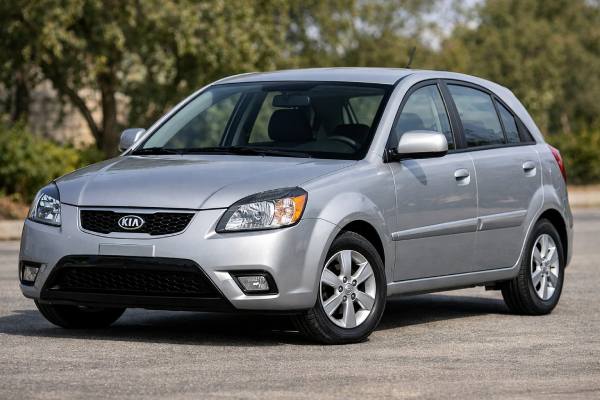
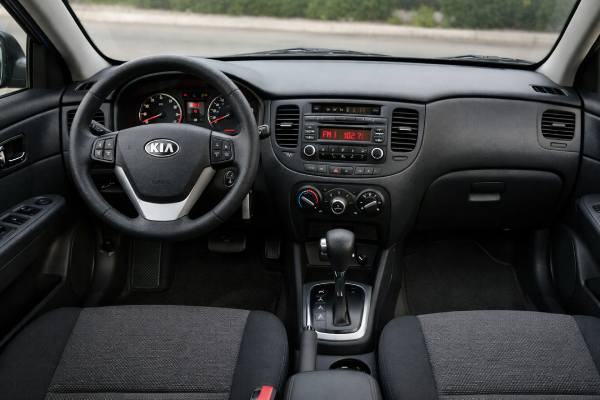
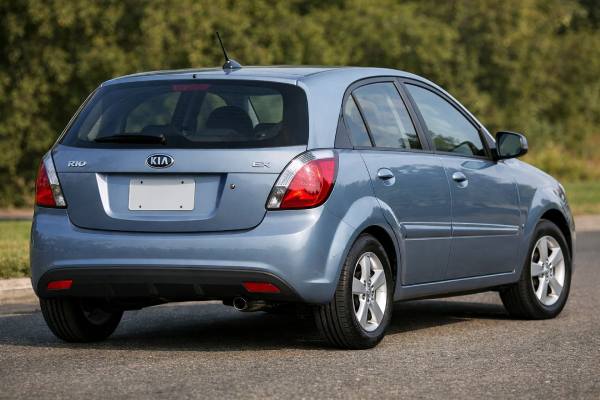
The facelifted 2010–2011 Kia Rio (JB) with the 1.6-liter petrol engine sits in a sweet spot for buyers who want simple, low-cost transport without stepping down to a weak powertrain. In most markets this naturally aspirated 1.6 is a straightforward, port-injected four-cylinder paired with a manual or a conventional automatic, driving the front wheels. That basic formula matters: it keeps parts availability strong, diagnostics simple, and ownership predictable.
Where this Rio tends to win is day-to-day usability—easy controls, light steering, and enough mid-range pull to keep up with modern traffic. Where it needs respect is age and upkeep. Cooling systems, rubber mounts, suspension joints, and neglected fluids can turn a cheap supermini into a drip-and-rattle machine. Buy the best-maintained example you can, and the JB Rio 1.6 can be an honest, durable commuter.
Top Highlights
- Strong value for money with simple, naturally aspirated 1.6 petrol and low parts costs.
- Comfortable around town with light controls and predictable front-wheel-drive behavior.
- Watch for age-related leaks, tired engine mounts, and front suspension wear on higher-mileage cars.
- Change engine oil and filter every 10,000–15,000 km (6,000–9,000 miles) or 12 months (whichever comes first).
- Brake fluid refresh every 2 years helps keep pedal feel and ABS components healthy.
Section overview
- Kia Rio JB facelift 1.6 explained
- Kia Rio JB 1.6 specs tables
- Kia Rio JB equipment and safety
- Failure trends and service bulletins
- Service schedule and buyer checklist
- Real driving feel and mpg
- Rio JB 1.6 vs key rivals
Kia Rio JB facelift 1.6 explained
The 2010–2011 facelift version of the Kia Rio (JB) is best understood as “simple transport refined.” The updates were mainly cosmetic and equipment-focused, but the fundamentals stayed the same: a compact chassis, a conventional petrol engine, and a mechanical package designed to be inexpensive to build and easy to maintain.
What the 1.6 offers in real ownership terms
- Enough power for mixed use. A 1.6 at around 110 hp gives the Rio the flexibility to do motorway runs without feeling strained. It will not feel quick, but it will feel less busy than the smaller engines when loaded with passengers or running A/C.
- Low complexity by modern standards. Most versions are naturally aspirated with a traditional fuel system. That generally means fewer high-cost surprises than direct-injection turbo engines found in newer small cars.
- A drivetrain that rewards maintenance. Manual gearboxes tend to age well if the clutch and fluid history is decent. Automatics (where fitted) are simple but benefit from periodic fluid service rather than a “sealed for life” attitude.
Why facelift years matter
Facelift cars often bundle small improvements owners notice every day: minor NVH (noise, vibration, harshness) tweaks, updated trim, and sometimes better standard safety equipment. In the used market, that can translate into fewer “cheap car” annoyances—provided the car was not neglected.
Where buyers should calibrate expectations
- Cabin materials and sound insulation are economy-grade. Expect more road noise than in larger hatchbacks.
- Rust and water ingress risk depends heavily on climate and prior repairs. Any past accident work done cheaply can create long-term corrosion points.
- Age-related wear is the big story: engine mounts, suspension bushings, brake lines in salty climates, tired dampers, and brittle plastic connectors.
If you want a low-drama daily driver, the best JB Rio 1.6 examples are the ones with boring paperwork: regular oil changes, cooling system service, brake fluid history, and proof that recalls and campaigns were addressed.
Kia Rio JB 1.6 specs tables
Specs can vary by market, body style (hatch vs sedan), transmission, and emissions calibration. The tables below focus on the typical 2010–2011 facelift JB Rio with the 1.6 petrol around 110 hp.
Powertrain and efficiency (typical)
| Item | Specification |
|---|---|
| Code | Commonly Gamma 1.6 MPI (G4FC) in many markets (verify by VIN/engine label) |
| Engine layout and cylinders | Inline-4; DOHC; 4 valves/cyl |
| Displacement | 1.6 L (≈1591 cc) |
| Bore × stroke | ≈ 77.0 × 85.4 mm (3.03 × 3.36 in) |
| Induction | Naturally aspirated |
| Fuel system | Multi-point fuel injection (MPI) |
| Compression ratio | Often around 10.5:1 (market-dependent) |
| Max power | ≈ 110 hp (82 kW) @ ~6,000 rpm |
| Max torque | Typically 145 Nm (107 lb-ft) range @ ~4,500 rpm (varies) |
| Timing drive | Often chain on Gamma engines (confirm by engine family) |
| Rated efficiency | Commonly 6.5–7.5 L/100 km mixed (≈36–31 mpg UK) depending on gearing/body |
| Real-world highway @ 120 km/h | Often 7.0–8.0 L/100 km (≈40–35 mpg UK) with A/C, depending on tyres and wind |
Transmission and driveline (typical)
| Item | Specification |
|---|---|
| Transmission | 5-speed manual common; 4-speed automatic in some markets |
| Drive type | FWD |
| Differential | Open |
Chassis and dimensions (hatchback typical)
| Item | Specification |
|---|---|
| Suspension (front/rear) | Front MacPherson strut; rear torsion beam |
| Steering | Rack and pinion; electric or hydraulic assist depending on market |
| Brakes | Front disc; rear disc or drum depending on trim |
| Popular tyre sizes | Often 175/70 R14 or 185/65 R15 (market/trim dependent) |
| Ground clearance | Typically ~150–160 mm (5.9–6.3 in), varies |
| Length / width / height | ~3990 / 1695 / 1470 mm (157.1 / 66.7 / 57.9 in) |
| Wheelbase | ~2500 mm (98.4 in) |
| Turning circle (kerb-to-kerb) | Around 9.8–10.2 m (32–33 ft), tyre dependent |
| Kerb weight | Commonly ~1050–1120 kg (2315–2469 lb) depending on body/trans |
| GVWR | Often around ~1550–1600 kg (3417–3527 lb), market dependent |
| Fuel tank | Typically 45 L (11.9 US gal / 9.9 UK gal) |
| Cargo volume | Typically ~270 L seats up (VDA-style); over 1,000 L seats folded depending on measurement |
Performance and capability (typical)
| Metric | Typical value |
|---|---|
| 0–100 km/h (0–62 mph) | ~10–11 s (manual faster than automatic) |
| Top speed | ~180–190 km/h (112–118 mph) depending on gearing |
| Braking 100–0 km/h | Commonly ~39–42 m on good tyres (condition-dependent) |
| Towing | Often limited; if rated, commonly modest—check your market plate/manual |
| Payload | Usually ~450–520 kg depending on GVWR and kerb weight |
Fluids and service capacities (verify for VIN)
| Item | Typical guidance |
|---|---|
| Engine oil | Usually ACEA/API spec per market; viscosities commonly 5W-30 or 5W-40 depending on climate |
| Engine oil capacity | Often ~3.3–3.8 L (3.5–4.0 US qt) with filter (engine-dependent) |
| Coolant | Ethylene glycol OAT/HOAT type per Kia spec; 50/50 mix typical |
| Manual gearbox oil | GL-4 75W-85/90 typical (confirm) |
| Automatic ATF | Kia/Hyundai-spec ATF (do not “universal” mix unless explicitly compatible) |
| A/C refrigerant | R134a on most cars of this era; charge varies by system label |
Key torque specs (common decision points)
| Fastener | Typical range (verify) |
|---|---|
| Wheel nuts | Often ~90–110 Nm (66–81 lb-ft) depending on wheel/market |
| Spark plugs | Usually low torque (often ~15–25 Nm), follow plug maker/service data |
| Drain plug | Commonly ~30–40 Nm, confirm to avoid stripped threads |
Kia Rio JB equipment and safety
Trim names vary widely by country, but the facelift JB Rio 1.6 generally followed a familiar ladder: base, mid, and higher trims, with most meaningful differences tied to comfort, wheels, and brake hardware rather than drivetrain.
Trims and options that change the experience
Common comfort and usability options
- Manual A/C vs automatic climate control (where offered).
- Power mirrors, heated mirrors, and heated seats in colder-market packages.
- Audio upgrades: basic head unit vs factory CD/MP3 with steering-wheel controls; some markets offered Bluetooth late in the run.
- Convenience: central locking with remote, power windows, trip computer.
Mechanical or functional differences worth noting
- Rear brakes: some trims use rear discs, others drums. Discs offer easier inspection and often more consistent feel; drums can be cheaper and durable if maintained.
- Wheel and tyre packages: 14-inch wheels tend to ride softer and cost less to re-tyre; 15-inch packages often sharpen response slightly but can add road noise.
- Transmission pairing: if choosing an automatic, expect slower acceleration and higher fuel use in town, but smoother stop-and-go operation.
Quick identifiers when shopping
- Brake check: look through the rear wheel spokes—disc rotor visible = rear discs; closed backing plate = drums.
- Cluster features: trip computer and outside temperature usually indicate mid/higher trims.
- Seat fabric and wheel buttons: steering-wheel audio controls and upgraded cloth patterns often track better equipment levels.
Safety ratings and what they mean for 2010–2011
For the JB generation, formal crash ratings may be tied to earlier test years rather than the facelift itself. Treat ratings as structure-era guidance, not a guarantee for a specific car.
Safety equipment you should confirm on the actual car
- Front airbags as standard in most markets; side airbags and curtain airbags may be trim- or year-dependent.
- ABS availability varies by market and year; many facelift cars have it, but do not assume—verify with the dash warning lamp behavior and the build sheet.
- Electronic stability control (ESC) was not universal in this class/era. If fitted, it is a meaningful safety upgrade, especially in wet or snowy climates.
- Child-seat provisions: ISOFIX/LATCH presence varies by market; check the seat tags and rear seat anchors.
ADAS reality check
This Rio predates modern ADAS suites (AEB, ACC, lane centering). If you see aftermarket sensors or head units, treat them as add-ons, not factory driver assistance. That also makes repairs simpler—no radar calibration bills after a bumper job—but it places more responsibility on the driver.
Failure trends and service bulletins
At this age, reliability is shaped less by “design flaws” and more by maintenance history, climate, and driving pattern. Still, the JB Rio 1.6 has repeatable weak spots that show up across many small cars from the same era.
Common issues (high prevalence)
1) Ignition and emissions sensors (low–medium cost)
- Symptoms: misfires under load, rough idle, check engine light, higher fuel use.
- Likely causes: aging coils, worn plugs, tired oxygen sensors, vacuum leaks.
- Remedy: scan for codes, confirm with live data, replace failed part(s) with quality equivalents; avoid “parts cannon” swapping.
2) Engine mounts and driveline lash (medium cost)
- Symptoms: vibration at idle, thump on take-off, harsh shifting feel.
- Likely causes: collapsed mounts, worn lower torque mount.
- Remedy: replace mounts as a set if multiple are tired; re-check exhaust flex joints and heat shields after mount work.
3) Cooling system seepage (medium cost if caught early)
- Symptoms: coolant smell, low reservoir level, overheating in traffic, weak cabin heat.
- Likely causes: aged hoses, radiator end-tank seep, thermostat wear, cap failure.
- Remedy: pressure test, replace weak components proactively, and bleed properly.
4) Front suspension wear (low–medium cost)
- Symptoms: clunks over bumps, vague steering, uneven tyre wear.
- Likely causes: stabilizer links, control-arm bushings, ball joints, tired dampers.
- Remedy: inspect on a lift; fix alignment after any control-arm or tie-rod replacement.
Occasional issues (moderate prevalence)
A/C performance decline (medium–high cost depending on cause)
- Symptoms: weak cooling, compressor noise, intermittent operation.
- Causes: low refrigerant from leaks, compressor clutch wear, condenser damage.
- Remedy: leak test before re-gas; don’t ignore slow leaks—oil loss can kill the compressor.
Throttle body and idle control quirks (low–medium cost)
- Symptoms: hunting idle, stalling when hot, delayed response.
- Causes: carbon buildup, aging sensors, intake leaks.
- Remedy: clean throttle body correctly; re-learn idle if the procedure is required.
Rare but costly concerns (low prevalence, high impact)
Overheating-related head gasket risk
- Trigger: repeated overheating events or running low on coolant.
- Avoidance: treat any temperature spike as urgent; confirm fan operation and coolant circulation.
Recalls, TSBs, and service actions
Because campaigns vary by country and VIN range, treat this as a process:
- Run a VIN recall check through your official national database (or the manufacturer’s portal).
- Ask a dealer to confirm completion history on their system.
- If the car has ABS/airbag warning lamps, verify whether any campaign work or module updates apply before buying.
If the seller cannot show recall completion or service records, negotiate as if you will immediately budget for baseline fluids, belts/hoses inspection, and a full brake check.
Service schedule and buyer checklist
A good maintenance plan for the Rio JB 1.6 is less about exotic procedures and more about consistent fluids and inspections. The goal is to prevent overheating, keep the engine breathing clean air, and stop small chassis wear from turning into tyre-killing alignment problems.
Practical maintenance schedule (typical)
Every 10,000–15,000 km (6,000–9,000 miles) or 12 months
- Engine oil and filter (use the viscosity and spec recommended for your climate).
- Inspect air intake ducting for cracks and loose clamps.
- Check coolant level, colour, and signs of oil contamination.
Every 20,000–30,000 km (12,000–18,000 miles)
- Engine air filter (sooner in dusty regions).
- Cabin air filter (keeps HVAC efficient and reduces window fogging).
- Rotate tyres; inspect brake pads, discs/drums, and slide pins.
Every 40,000–60,000 km (25,000–37,000 miles)
- Manual gearbox oil (especially if shifts feel notchy when cold).
- Inspect accessory belt(s), tensioner, and pulleys for noise.
- Full suspension inspection: ball joints, bushings, stabilizer links.
Every 2 years
- Brake fluid flush (helps ABS longevity and pedal feel).
- Coolant condition check; replace coolant on a time basis if your manual specifies it.
Spark plugs
- Many 1.6 engines use long-life plugs, but interval varies. If the car is over 100,000 km and history is unclear, plan plugs soon and inspect coils and boots at the same time.
12 V battery
- Test annually once the battery is past 4 years old; small cars are sensitive to weak batteries, especially in winter.
Fluids, specs, and “do not guess” items
- Use the correct ATF for automatics; wrong fluid can create shudder, harsh shifts, or premature wear.
- Use the correct coolant type; mixing incompatible coolants can form sludge or reduce corrosion protection.
Buyer’s guide: inspection checklist
Body and structure
- Check wheel arches, sills, and the underside for corrosion, especially if the car lived in salted winter areas.
- Inspect for mismatched paint, overspray, or uneven panel gaps that suggest repair work.
Engine bay
- Look for dried coolant residue around radiator seams and hose joints.
- Listen for rattles at cold start (heat shields, mounts, or timing area noises should be investigated).
Test drive
- From a standstill, feel for driveline “thump” (mounts).
- At 80–120 km/h, check for steering vibration (tyres, balancing, or wheel bearings).
- Hard brake from speed (safely): the car should track straight with no pulsing beyond mild ABS action.
Paperwork you should request
- Service invoices showing oil intervals and coolant/brake fluid work.
- Proof of recall completion (or confirmation you can verify with the VIN).
- Tyre receipts/alignment records (a proxy for suspension health).
If you can choose, prioritize a car with documented cooling system care and recent brake fluid service over one with flashy wheels or stereo upgrades.
Real driving feel and mpg
The Rio JB 1.6 is not a “hot hatch,” but it is often the most balanced engine choice in the range. It gives the car enough torque to feel relaxed without forcing you into constant high revs.
Ride, handling, and NVH
- Ride quality: On smaller wheels and healthy dampers, the Rio rides with a soft edge that suits city streets. As dampers age, it can become bouncy over speed bumps and floaty at motorway speeds.
- Steering: Light and easy in town. Feedback is limited, but the car responds predictably. Worn front-end parts often show up as a vague on-centre feel.
- Braking feel: Typically decent for the class if the caliper sliders are serviced and the brake fluid is fresh. A spongy pedal often points to old brake fluid, air in the system, or seized rear hardware on drum setups.
- Cabin noise: Expect noticeable tyre roar on coarse asphalt and more wind noise at higher speeds than newer superminis.
Powertrain character
- Throttle response: Generally smooth and linear; it is happiest when you keep it in the mid-range rather than short-shifting too early.
- Manual gearbox: Usually straightforward, but cold stiffness or crunchy shifts can improve after a gearbox oil refresh (where appropriate).
- Automatic gearbox: Convenient in traffic but may feel dated—slower kickdown and fewer gears mean higher revs and higher consumption under load.
Real-world efficiency
Fuel economy depends heavily on tyres, alignment, and driving style:
- City: often around 7.5–9.0 L/100 km (≈38–31 mpg UK) with frequent stops.
- Highway (100–120 km/h): often 6.8–8.0 L/100 km (≈42–35 mpg UK).
- Mixed: commonly 6.5–7.5 L/100 km (≈43–38 mpg UK) for well-maintained cars.
Cold weather can add a meaningful penalty due to longer warm-up time and winter tyres. If your consumption is suddenly worse than expected, check thermostat operation, tyre pressures, alignment, and oxygen sensor health before blaming the engine.
Rio JB 1.6 vs key rivals
Shopping the used supermini class is about choosing which compromises you can live with. The Rio JB 1.6 usually competes on value and simplicity, not on premium feel.
Versus Toyota Yaris 1.3/1.5 (similar years)
- Yaris advantage: strong reputation for low running costs and excellent city usability; often better interior packaging.
- Rio advantage: purchase price is often lower for similar age/mileage; 1.6 can feel stronger on the motorway.
- What decides it: if you want the safest “appliance car,” the Yaris is hard to beat. If you want more power per money, the Rio often wins.
Versus Honda Jazz (Fit) 1.4
- Jazz advantage: class-leading interior flexibility (Magic Seat style layouts), excellent practicality, and strong reliability when serviced.
- Rio advantage: usually cheaper to buy; simpler trim levels and fewer “clever” mechanisms to rattle with age.
- What decides it: practicality and resale point to the Jazz; budget-focused commuting points to the Rio.
Versus Ford Fiesta 1.4/1.6
- Fiesta advantage: sharper steering feel and handling balance; more engaging chassis.
- Rio advantage: typically simpler ownership and fewer “driver’s car” wear issues from hard use.
- What decides it: if you care about driving enjoyment, Fiesta is tempting. If you care about predictable commuting, Rio often makes more sense.
Versus Renault Clio 1.2/1.6 and similar European superminis
- Clio advantage: comfort features and sometimes better noise suppression in higher trims.
- Rio advantage: commonly better long-term simplicity and parts interchange across Hyundai/Kia families.
- What decides it: buy on condition. A fully documented Clio can be great; a neglected one can be expensive. The same is true for the Rio, but the Rio’s mechanical simplicity can make “bringing it back” easier.
Bottom line: A facelift Rio JB 1.6 is a strong pick when you want a basic, capable small car and you’re willing to judge examples harshly on maintenance history. The best rival is usually the better-kept car—not the better brochure.
References
- Rio instruktionsböcker 2024 (Owner’s Manual Portal)
- Oil Grades and Capacities 2024 (Service Fluids Guide)
- 2011 Kia Rio 2025 (Recall Database)
- Kia Rio 2005 (Safety Rating)
Disclaimer
This article is for informational purposes only and is not a substitute for professional inspection, diagnosis, or repair. Specifications, torque values, service intervals, and procedures can vary by VIN, market, powertrain version, and fitted equipment, so always verify details against the correct official service documentation for your specific vehicle.
If this guide helped, please consider sharing it on Facebook, X (Twitter), or your favorite forum/community to support our work.