

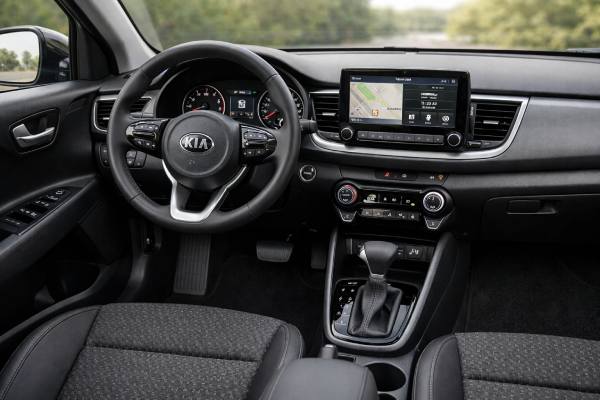
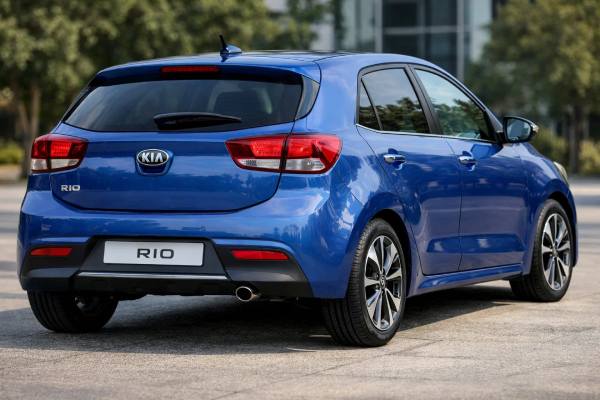
The facelifted Kia Rio (YB) with the 1.0 T-GDI mild-hybrid system is one of the most “engineered-for-ordinary-life” superminis of its era. You get a small turbocharged three-cylinder that feels punchier than its size suggests, plus a 48-volt belt starter-generator that smooths stop-start events and adds light torque assistance at low load. In everyday use, the benefit is less about headline speed and more about how relaxed the car feels in traffic, how quickly it restarts, and how often it can coast with the engine off under the right conditions.
For owners, the Rio’s biggest strengths are predictable running costs, a simple front-wheel-drive layout, and a drivetrain that rewards correct servicing. The main risks are also straightforward: short-trip abuse, skipped oil changes, and neglected software updates can turn a “low-drama” car into a nuisance. Treat it like a modern turbo—warm-up, quality oil, and timely filters—and it tends to pay you back.
Quick Specs and Notes
- Strong real-world midrange for a small car; the mild-hybrid helps smooth take-off and stop-start behavior.
- Typically lower fuel use in mixed driving than non-hybrid turbo versions, especially in traffic and rolling A-roads.
- Compact dimensions make parking easy while still offering usable rear space for a supermini class car.
- Ownership caveat: keep oil and filter changes on schedule; short trips accelerate oil dilution and intake deposits.
- Typical interval: engine oil and filter every 10,000–15,000 km (6,000–9,000 mi) or 12 months, whichever comes first.
What’s inside
- Kia Rio YB MHEV at a glance
- Kia Rio YB 1.0 MHEV specs and dimensions
- Kia Rio YB facelift trims and safety tech
- Reliability, common faults, and service actions
- Maintenance plan and smart buying checklist
- Real-world driving and efficiency
- Rivals: how the Rio MHEV stacks up
Kia Rio YB MHEV at a glance
Think of this Rio as a traditional small hatchback that quietly borrows a few tricks from hybrids—without changing your habits. The 48-volt mild-hybrid system does not drive the wheels on electric power alone. Instead, a belt-driven starter-generator (often called MHSG/BSG) assists the engine during light acceleration, recuperates energy when you lift off, and enables longer “engine-off” coasting in the right conditions. The result is a drivetrain that feels a little more polished than the same turbo engine without electrification, especially around town.
The facelift years (2020–2023) matter because Kia paired the 48-volt system with updated powertrain logic and, in many markets, the intelligent Manual Transmission (iMT). iMT is best understood as a manual gearbox with an electronically controlled clutch actuator. You still shift gears, but the car can open the clutch and shut the engine down earlier during deceleration, then restart smoothly as you reapply throttle or prepare to move off. Some markets also offered a 7-speed dual-clutch transmission (DCT) on certain outputs; your “101 hp” variant is typically the lower-output tune, so availability depends on region.
From an ownership perspective, this Rio’s sweet spot is daily commuting, mixed driving, and urban errands where the mild-hybrid features get used often. It is also a good fit for buyers who want modern safety features (often packaged by trim) without moving up to a larger, heavier crossover. Cabin practicality is typical supermini: adequate rear room for adults on short trips, a useful hatch opening, and a trunk that works well for groceries and soft luggage.
Where owners get caught out is treating it like an old naturally aspirated engine. The 1.0 T-GDI is a modern direct-injection turbo. That means oil quality and change frequency matter more, intake cleanliness depends on driving style, and cooling system health matters because turbos run hot. Drive it gently from cold, avoid endless short trips where the engine never warms fully, and keep servicing current. Do those basics, and the Rio MHEV tends to feel “grown up” for its size: stable on the motorway, easy in traffic, and cost-effective to run.
Kia Rio YB 1.0 MHEV specs and dimensions
Below are typical specs for the facelift Rio (YB) 1.0 T-GDI 48-volt mild-hybrid around 74 kW (100 PS / ~101 hp). Exact figures vary by country, emissions certification, wheel size, and gearbox. Use the tables as a decision guide, then verify by VIN and your market’s official spec sheet.
Powertrain and efficiency
| Item | Spec (typical) |
|---|---|
| Code | Smartstream 1.0 T-GDI (market-specific code) |
| Engine layout and cylinders | I-3, DOHC, 4 valves/cyl (12v total) |
| Displacement | 1.0 L (998 cc) |
| Induction | Turbocharged |
| Fuel system | Gasoline direct injection (GDI) |
| Compression ratio | ~10.5:1 (varies by version) |
| Max power | ~101 hp (74 kW) @ ~4,500–6,000 rpm |
| Max torque | ~172 Nm (127 lb-ft) @ ~1,500–4,000 rpm |
| Timing drive | Chain |
| Mild-hybrid system | 48-V belt starter-generator + 48-V Li-ion battery (not plug-in) |
| Rated efficiency | ~5.0–5.8 L/100 km combined (varies by WLTP and wheels) |
| Real-world highway @ 120 km/h | ~5.8–6.6 L/100 km, depending on load, wind, tyres, and gearing |
Transmission and driveline
| Item | Spec (typical) |
|---|---|
| Transmission | 6-speed manual (often iMT on MHEV); some markets offer 7-speed DCT on higher outputs |
| Drive type | FWD |
| Differential | Open |
Chassis and dimensions
| Item | Spec (typical) |
|---|---|
| Suspension (front / rear) | MacPherson strut / torsion beam |
| Steering | Electric power steering (EPS) |
| Brakes | Front ventilated discs; rear discs or drums (market/trim dependent) |
| Wheels and tyres (common) | 185/65 R15, 195/55 R16, or 205/45 R17 (trim dependent) |
| Ground clearance | ~140–155 mm |
| Length / width / height | ~4,065–4,075 mm / ~1,725 mm / ~1,450 mm |
| Wheelbase | ~2,580 mm |
| Turning circle | ~10.2–10.6 m |
| Kerb weight | ~1,120–1,230 kg (MHEV adds some mass) |
| GVWR | ~1,600–1,700 kg (varies) |
| Fuel tank | ~45 L (11.9 US gal / 9.9 UK gal) |
| Cargo volume | ~325 L seats up; ~1,100+ L seats down (method varies by market) |
Performance and capability
| Item | Spec (typical) |
|---|---|
| 0–100 km/h (0–62 mph) | ~10.5–12.0 s (gearbox and wheels matter) |
| Top speed | ~180–190 km/h (112–118 mph) |
| Braking distance 100–0 km/h | ~36–41 m on good tyres (test dependent) |
| Towing capacity | Often limited; many markets list no towing or very low ratings—verify locally |
| Payload | Commonly ~400–500 kg (varies with trim and equipment) |
Fluids, service capacities, and key torque specs
These are “shop-planning” numbers; always confirm against the correct service manual for your VIN.
| Item | Spec (typical) |
|---|---|
| Engine oil | ACEA C2/C3 (market dependent); often 0W-20 or 5W-30 depending on climate/spec |
| Oil capacity | ~3.5–3.8 L (3.7–4.0 US qt) with filter |
| Coolant | Long-life OAT coolant, 50/50 mix |
| Coolant capacity | ~5–6 L (varies) |
| Manual gearbox oil | MTF (manufacturer spec), ~1.7–2.1 L |
| DCT fluid (if equipped) | Gear oil per OEM spec; service method varies by unit |
| A/C refrigerant | R-1234yf in many EU markets (charge varies) |
| Wheel nut torque | Commonly ~88–110 Nm (65–81 lb-ft) |
| Spark plug torque | Commonly ~18–25 Nm (13–18 lb-ft) |
Safety and driver assistance (summary)
| Item | Spec (typical) |
|---|---|
| Euro NCAP | Rio scored 3 stars with standard equipment in the 2017 protocol; 5 stars when tested “with safety pack” under the same protocol |
| ADAS suite (availability varies) | AEB (car/ped/cyclist), lane keeping/centering aids, driver attention alert, rear parking sensors/camera, optional blind-spot and cross-traffic on higher trims in some markets |
Kia Rio YB facelift trims and safety tech
Rio trims vary widely by country, but most lineups follow a similar ladder: an entry grade focused on price, a mid grade with comfort tech, and a sporty or “GT-Line” style grade with larger wheels and extra driver assistance. For this 1.0 T-GDI MHEV, the key is not the badge on the tailgate—it’s the equipment list and the gearbox type.
Trims and options that change ownership
- Wheel size and tyre spec: 15-inch wheels usually ride better and cost less to tyre. 17-inch packages sharpen turn-in but increase noise and are more prone to rim damage on rough roads.
- Infotainment tier: Many facelift cars upgraded to an 8-inch screen in higher grades. Wireless phone integration may be tied to the non-navigation head unit in some markets, while factory navigation trims add live services where supported.
- iMT vs conventional manual: If your car has iMT, it will still have a clutch pedal, but clutch operation is electronic. That changes how coasting stop-start behaves and can affect how the car feels in slow manoeuvres until you adapt.
- DCT availability: Where offered, the 7-speed DCT delivers quick shifts and good economy, but it is more sensitive to creeping in traffic and needs the correct fluid service approach.
Quick identifiers when shopping used
- Trim cues: “GT-Line” style grades often have sportier bumpers, larger wheels, and more interior contrast trim.
- Driver assistance buttons: Look for steering-wheel lane-assist buttons, radar housing behind the grille, and camera modules near the rear-view mirror area—these often indicate AEB/lane features.
- Cluster messages: iMT cars may display specific prompts related to coasting or engine-off phases during deceleration.
- Build data: The most reliable check is the VIN decode and the original sales invoice/build sheet from the supplying dealer.
Safety ratings and what they mean for a 2020–2023 car
The Rio’s widely quoted crash rating is from the 2017 Euro NCAP protocol. That does not automatically mean a 2020–2023 facelift is “unsafe,” but you should interpret the star score carefully. Under that protocol, the Rio scored strongly for adult and child occupant protection, but the “Safety Assist” score was low without the optional safety pack—because AEB and lane support were not standard on the tested configuration. In other words, a higher-trim facelift with AEB and lane functions is closer to the “with safety pack” result than the base configuration.
ADAS and service implications
Driver assistance features are valuable, but they add two ownership requirements:
- Calibration awareness: Windshield replacements, front-end repairs, and some suspension work can require camera/radar calibration to keep AEB and lane features accurate.
- Software currency: Kia updates can improve sensor fault handling, connectivity stability, and sometimes drivability. When shopping used, ask the seller for dealer service history showing software campaigns completed.
For many owners, the ideal “value” setup is a mid trim with the safety pack (or its local equivalent), 15–16 inch wheels, and a full service history. That combination keeps operating costs predictable while giving you the active safety features that make the Rio feel more modern than its size suggests.
Reliability, common faults, and service actions
Reliability on the Rio MHEV is best understood as “mostly simple, with a few modern turbo and 48-volt specifics.” Below is a practical map of what tends to happen, how it presents, and what usually fixes it. Prevalence can vary by climate, fuel quality, and driving pattern.
Common (low to medium cost)
- 12 V battery weakness (symptoms: slow start, random warnings, stop-start disabled): Mild-hybrid cars still rely on a healthy 12 V system for modules and wake-up routines. Remedy: battery test under load, replace if weak; check charging logic and parasitic draw if it returns.
- Ignition coil or plug wear (misfire, rough idle, engine light): Turbo GDI engines are sensitive to spark quality. Remedy: correct-spec plugs at the proper interval, coils as needed; avoid bargain parts.
- Brake squeal or rear brake corrosion (noise, uneven braking): Short trips and wet climates can glaze pads or rust rotors. Remedy: pad/rotor inspection, cleaning, and occasional firm braking to keep surfaces clean.
Occasional (medium cost)
- GDI intake deposits (hesitation, uneven idle, reduced efficiency): Direct injection sprays fuel into the cylinder, not over intake valves, so deposits can build over time—worse with short trips and lots of idling. Remedy: driving pattern improvements (regular full warm-up), quality oil, and intake cleaning (typically walnut blasting) if symptoms develop.
- Turbo-related noises (rattle on lift-off, whistle, low boost): Small turbos can develop wastegate rattle or boost leaks from hoses/clamps. Remedy: smoke test for leaks, inspect diverter/recirc valve system, check actuator function.
- Cooling system seepage (sweet smell, low coolant): Hoses, clamps, or thermostat housings can weep as the car ages. Remedy: pressure test, repair the leak early to protect the turbo from heat stress.
Rare but higher cost
- 48-V system faults (warning light, stop-start unavailable, rough restarts): The belt starter-generator, its belt/tensioner, wiring, or the 48-V battery/DC-DC unit can trigger faults. Remedy: proper scan-tool diagnosis, belt and connector inspection, and module testing—avoid “parts darts.”
- iMT actuator or calibration problems (clutch feel odd, stalling, jerky take-off): iMT relies on an electromechanical clutch actuator and calibration routines. Remedy: software update and clutch adaptation procedure; inspect clutch wear and pedal sensor plausibility if symptoms persist.
- DCT shudder or overheating in traffic (if equipped): Dry-clutch DCTs dislike creeping and repeated low-speed clutch slip. Remedy: adjust driving technique (use a little more decisive throttle, avoid inching), ensure correct fluid where applicable, and check for software updates.
Recalls, TSBs, and service actions: how to handle them
Rather than memorising a list, treat recalls and campaigns as a process:
- Run an official VIN or registration check in your market to see open safety actions.
- Ask for dealer invoices showing completion dates and campaign codes.
- Confirm software updates for powertrain and driver assistance where relevant.
A used Rio with campaigns completed and evidence of regular oil changes is usually a safer bet than a lower-mileage car with gaps in history. In this class, condition and documentation matter more than small differences in odometer reading.
Maintenance plan and smart buying checklist
A mild-hybrid Rio does not demand exotic maintenance, but it does demand consistency. The goal is to protect three systems: the turbo GDI engine (oil quality), the cooling/charging ecosystem (temperature and electrical stability), and the driveline (correct fluids and clutch habits).
Practical maintenance schedule (typical guidance)
| Item | Interval (distance/time) | Notes |
|---|---|---|
| Engine oil and filter | 10,000–15,000 km or 12 months | Short trips, cold climates, or hard driving: use the shorter interval |
| Engine air filter | 30,000 km or 24 months | Dusty areas: inspect more often |
| Cabin filter | 15,000–30,000 km or 12–24 months | Affects HVAC flow and windshield fogging |
| Spark plugs | 60,000 km (some markets 90,000–120,000 km) | Use correct heat range and OEM-equivalent |
| Brake fluid | Every 2 years | Important for pedal feel and ABS performance |
| Coolant | Often 10 years / 160,000–200,000 km | Replace sooner if contamination or repeated top-ups occur |
| Manual gearbox oil | 60,000–120,000 km (verify) | Especially important if shifting feels notchy |
| DCT service (if equipped) | Per OEM schedule | Follow the exact spec and method for your transmission |
| 48-V belt and tensioner | Inspect at 60,000 km; replace as needed | Listen for chirps, check belt dust and alignment |
| Tyre rotation | 10,000–12,000 km | Helps reduce front tyre shoulder wear |
| Alignment check | Annually or after impacts | Small cars show misalignment quickly |
| 12 V battery test | Yearly after year 3 | Replace proactively if it tests weak |
Fluid specifications: what to prioritise
- Engine oil: Use the correct ACEA/API spec first, viscosity second. Modern turbo GDI engines benefit from oils designed for deposit control and timing chain protection.
- Coolant: Stick with the correct long-life OAT formulation; mixing types can gel or reduce corrosion protection.
- Gearbox fluids: Manual and DCT units are not “universal.” The wrong fluid can cause poor shift feel or accelerated wear.
Buyer’s inspection checklist (used 2020–2023 Rio MHEV)
Paperwork and history
- Service book/invoices showing annual oil changes (not “whenever the light came on”).
- Proof of campaigns/recalls completed.
- Evidence of correct spark plug replacement if mileage suggests it is due.
Mechanical checks
- Cold start: listen for timing chain rattle, rough idle, or misfire.
- Warm drive: check for smooth boost, no hesitation, and stable temperature.
- Underbody: look for oil dampness around sump area, turbo plumbing, and coolant traces.
- Brakes and tyres: uneven wear suggests alignment or suspension bush wear.
Hybrid-specific checks
- Confirm stop-start and coasting functions behave normally (when conditions allow).
- Scan for stored 48-V or charging-related fault codes if you have access to a proper diagnostic tool.
Long-term durability outlook
This Rio tends to age well when it sees regular long-enough drives to fully warm up and when oil changes are kept tight. The mild-hybrid hardware usually behaves if belts, electrical connections, and software are maintained. Buy the best-documented example you can, and you’ll usually spend your ownership budget on tyres, brakes, and routine servicing—not surprises.
Real-world driving and efficiency
On the road, the 1.0 T-GDI MHEV Rio feels less like a “budget small car” and more like a carefully tuned commuter tool. The three-cylinder engine has a distinctive thrum under load, but the mild-hybrid system often softens the rough edges: restarts are quicker, low-speed roll-on feels smoother, and the drivetrain is more willing to stay relaxed when you’re just flowing with traffic.
Ride, handling, and NVH
- Ride: With 15–16 inch wheels, the Rio is generally compliant over broken city surfaces. Larger wheels can look good but tend to transmit sharper impacts and add tyre roar.
- Handling: The chassis is predictable rather than playful—safe front-end grip, mild understeer when pushed, and stable motorway tracking.
- Steering: Light at parking speeds, more weighted on the move, with enough accuracy for daily driving even if feedback is limited.
- Noise: Expect more tyre and wind noise on coarse highways than in larger cars. The engine note is noticeable when accelerating hard, but cruising is usually calm.
Powertrain character
The turbo’s strength is usable torque in the midrange. It does not need high revs to make progress, which suits real roads. Mild-hybrid torque assistance is subtle; you’ll notice it most as reduced “bogging” when pulling away gently, and as smoother transitions when stop-start intervenes.
If your car has iMT, the learning curve is small but real. Because the clutch is controlled electronically, take-off can feel slightly different until you recalibrate your footwork. Once familiar, iMT’s biggest benefit is that it can enable earlier engine-off phases during deceleration and coasting, improving economy in rolling traffic.
If your car has a DCT, treat it like a manual with automated clutches: avoid creeping on a hot day for long periods, and be decisive in stop-start traffic. That habit alone often separates “problem-free” from “why does it shudder?”
Real-world efficiency
In mixed driving, many owners see economy benefits that depend heavily on route type:
- City-heavy use: The mild-hybrid has more chances to recuperate energy and manage stop-start smoothly.
- Steady highway: Gains are smaller, but the engine is efficient enough that consumption can still stay reasonable.
- Cold weather: Expect higher fuel use and less frequent engine-off operation until everything warms fully.
A realistic expectation for many drivers is roughly 5.5–6.5 L/100 km combined over varied weeks, with better results on gentle routes and worse results on short, cold trips.
Key metrics that affect daily life
- Passing power: Midrange response is more important than 0–100 times; the Rio typically feels confident from 60–100 km/h when the turbo is on song.
- Braking confidence: Tyre quality matters as much as brakes. A good tyre choice transforms wet stopping distances.
- Turning circle: Small-car manoeuvrability is one of the Rio’s genuine advantages—useful every single day.
Overall, the Rio MHEV is not trying to be sporty. It is trying to be easy: smooth in traffic, stable on the motorway, and efficient when driven with a little mechanical sympathy.
Rivals: how the Rio MHEV stacks up
In the supermini class, rivals tend to win on one of three axes: driving fun, hybrid efficiency, or perceived premium feel. The Rio MHEV sits in a balanced middle ground—rarely the absolute best at one thing, but often the easiest to live with at a sensible price.
Versus Ford Fiesta 1.0 EcoBoost (including mHEV in some markets)
- Fiesta advantage: Sharper steering and handling; more “driver’s car” feel.
- Rio advantage: A calmer, more straightforward ownership proposition in many cases, with mild-hybrid smoothness focused on daily usability.
- Choose Fiesta if: you care about chassis feel and don’t mind slightly more sensitivity to maintenance and trim complexity.
Versus Toyota Yaris Hybrid
- Yaris advantage: True hybrid operation can deliver outstanding urban economy and very low stop-start stress.
- Rio advantage: Familiar turbo-manual (or DCT) driving feel, often lower purchase cost, and simpler high-speed behaviour for drivers who prefer conventional power delivery.
- Choose Yaris if: your driving is mostly city and you want maximum fuel savings with minimal driver involvement.
Versus Renault Clio TCe (and similar turbo rivals)
- Clio advantage: Often a more “European premium” interior impression and strong infotainment in higher trims.
- Rio advantage: A durable-feeling mechanical package, clear ergonomics, and a mild-hybrid system that focuses on smoothness rather than gimmicks.
- Choose Clio if: cabin ambience and infotainment polish are top priorities.
Versus Volkswagen Polo 1.0 TSI / Skoda Fabia 1.0 TSI
- Polo/Fabia advantage: Solid highway refinement and a “bigger car” feel, especially in noise isolation and ride maturity.
- Rio advantage: Value, warranty positioning in many markets, and mild-hybrid features that can improve day-to-day smoothness.
- Choose Polo/Fabia if: you do lots of motorway driving and want maximum refinement.
Versus Hyundai i20 1.0 T-GDI 48V
- i20 advantage: Very close mechanical cousin with different tuning; sometimes newer-feeling cabin tech depending on year and trim.
- Rio advantage: Often priced more aggressively, with a calmer design and similar running costs when maintained well.
- Choose based on: the specific car’s service history, trim equipment, and tyre/wheel setup—these matter more than the badge.
Bottom line: The Rio MHEV is a strong pick for drivers who want modern turbo torque, mild-hybrid smoothness, and predictable ownership—without committing to a full hybrid system. In this segment, the best choice is usually the best-kept example, not the “best on paper.”
References
- The upgraded Kia Rio 2021 (Press Kit)
- Kia’s new intelligent Manual Transmission retains driver engagement and enhances efficiency 2020 (Press Release)
- Official Kia Rio safety rating 2017 (Safety Rating)
- Kia Car Owners Manual | Kia UK 2025 (Owner’s Manual Portal)
- Car Safety Recalls | What They Are & What To Do | Kia UK 2025 (Recall Information)
Disclaimer
This article is for informational purposes only and is not a substitute for professional diagnosis, inspection, or repair. Specifications, torque values, fluid types, service intervals, and procedures can vary by VIN, market, model year, and equipment. Always verify details using the official owner’s manual and service documentation for your specific vehicle, and consult a qualified technician for safety-critical work.
If this guide helped, please consider sharing it on Facebook, X (Twitter), or your favourite forum to support our work.