
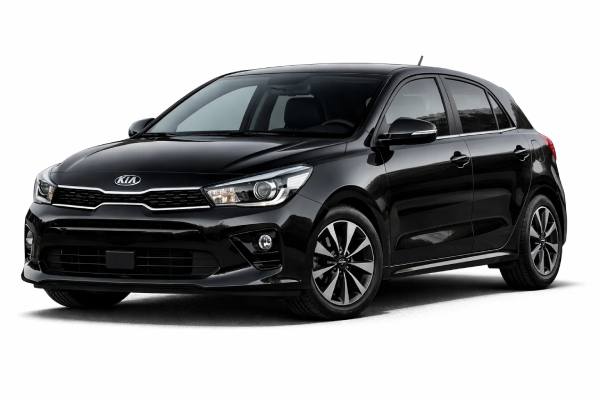
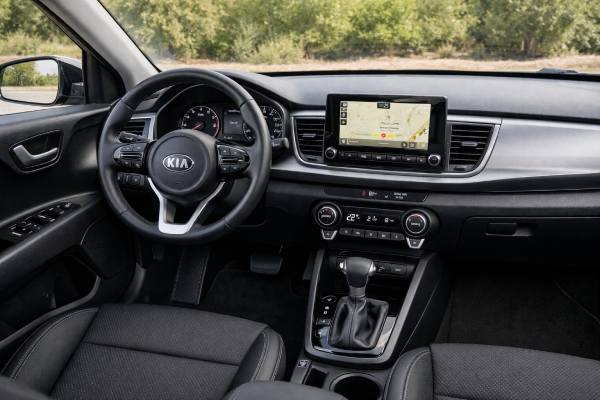
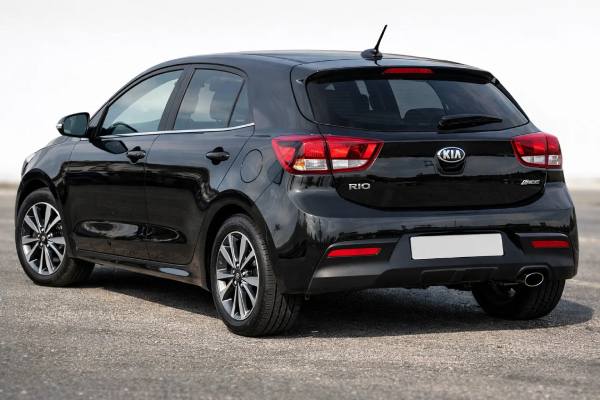
The facelift-era Kia Rio (YB) with the 1.6 MPI gasoline engine is a straightforward small car that leans on proven mechanical choices rather than headline technology. Its key appeal is predictable ownership: a naturally aspirated, port-injected four-cylinder that avoids many of the long-term concerns tied to small direct-injection turbos, paired with simple front-wheel-drive packaging and accessible service points. In daily use, this Rio variant feels more relaxed than the smaller engines because it doesn’t rely on boost for normal acceleration, and it generally tolerates mixed driving styles without drama.
For shoppers, the important nuance is that equipment and transmissions vary by market. Some regions pair the 1.6 MPI with a conventional automatic or a CVT-style unit, while others offer a manual. That affects both performance feel and maintenance planning. Get the fundamentals right—fluids, tires, and brakes—and the Rio can deliver years of low-effort commuting.
Owner Snapshot
- Smooth, linear power delivery that suits mixed city and highway use without turbo lag.
- Port injection typically means fewer intake-valve deposit worries than DI-only engines.
- Practical dimensions make parking easy while still offering usable rear-seat space for the class.
- If equipped with a CVT/IVT-style transmission, fluid condition and correct service interval matter more than many owners expect.
- Plan engine oil and filter service every 12 months or 10,000–15,000 km (6,000–9,000 mi) depending on duty cycle.
Quick navigation
- Kia Rio YB facelift essentials
- Kia Rio YB 1.6 MPI specifications
- Kia Rio YB trims and safety tech
- Reliability and known weak points
- Maintenance schedule and buying tips
- Road manners and fuel use
- Rivals: where the Rio fits
Kia Rio YB facelift essentials
This 2021–2023 facelift-period Kia Rio (YB) with the 1.6 MPI is best understood as a “keep it simple” configuration in a segment that increasingly moved toward downsized turbo engines and more complicated emissions hardware. The 1.6 MPI is a naturally aspirated, multi-point injected (port-injected) inline-four. In plain terms: fuel is sprayed into the intake ports rather than directly into the combustion chamber, which can reduce the likelihood of heavy intake-valve carbon deposits seen on some direct-injection-only engines. That doesn’t make it maintenance-free, but it often shifts ownership risk away from expensive cleaning procedures and toward more familiar wear items.
The facelift itself typically brought updated bumpers, lighting details, and—depending on market—new infotainment hardware and a broader availability of driver-assistance features. Mechanically, the Rio remains a front-wheel-drive car with a lightweight chassis, tuned more for stability and efficiency than sporty feedback. Its strengths are predictable handling, low operating costs when serviced on schedule, and an engine that feels unstrained at normal road speeds compared with smaller displacement options.
Where owners get surprised is not the engine, but the “details layer” around it:
- Transmission choice changes the ownership profile. A manual is usually the simplest long term. A conventional automatic can be durable with periodic fluid service. A CVT/IVT-style unit can be smooth and efficient, but it is more sensitive to correct fluid and driving heat load.
- Equipment varies sharply by trim and region. The same year can range from basic (few active safety features) to well equipped (AEB, lane support, and a larger screen).
- Tire and wheel packages matter. The Rio rides best on smaller wheels with taller sidewalls; larger wheels can sharpen response but often increase harshness and tire cost.
If you want a compact car that behaves like an appliance in the best sense—starts, runs, and asks for little—this configuration is usually one of the safer bets in the Rio lineup. The smartest approach is to buy based on condition, service history, and transmission type, not just model year.
Kia Rio YB 1.6 MPI specifications
Specs for the Rio (YB) can differ by market and body style (hatchback vs sedan). The tables below reflect the common engineering layout for the 1.6 MPI ~120 hp facelift-era cars, with ranges where regional equipment changes the numbers.
Powertrain and efficiency
| Item | Specification |
|---|---|
| Code | Gamma-family 1.6 MPI (commonly listed as G4FG in many markets; verify by VIN/label) |
| Engine layout and cylinders | Inline-4 (I-4), DOHC, typically 4 valves/cyl (16V) |
| Displacement | 1.6 L (≈1,591 cc) |
| Induction | Naturally aspirated (NA) |
| Fuel system | Multi-point injection (MPI / PFI) |
| Compression ratio | Typically around 10–11:1 (market dependent) |
| Max power | 120 hp (≈88 kW) @ rpm (rating method and rpm vary by market) |
| Max torque | Commonly 150–155 Nm (111–114 lb-ft) @ rpm |
| Timing drive | Timing chain (common for this engine family) |
| Rated efficiency | Typical mixed 6.0–7.0 L/100 km (34–39 mpg US / 40–47 mpg UK) depending on transmission and wheels |
| Real-world highway @ 120 km/h (75 mph) | Often 6.2–7.2 L/100 km (33–38 mpg US / 39–46 mpg UK) with normal load and A/C use |
Transmission and driveline
| Item | Specification |
|---|---|
| Transmission | 6-speed manual (some markets) / conventional automatic or CVT/IVT-style (others) |
| Drive type | FWD |
| Differential | Open (traction control manages wheelspin) |
Chassis and dimensions
| Item | Specification |
|---|---|
| Suspension (front/rear) | MacPherson strut front / torsion beam rear (typical for the class) |
| Steering | Electric power steering (EPS); ratio varies by market |
| Brakes | Front discs / rear drums or discs (trim dependent) |
| Wheels and tyres (common sizes) | Often 185/65 R15 or 195/55 R16 (market dependent) |
| Ground clearance | Typically 140–160 mm (5.5–6.3 in) (spec and measurement method vary) |
| Length / width / height | Commonly around 4,050–4,070 mm / 1,725 mm / 1,450 mm (159–160 in / 68 in / 57 in) |
| Wheelbase | Around 2,580 mm (101.6 in) |
| Turning circle (kerb-to-kerb) | Often 10.2–10.6 m (33–35 ft) |
| Kerb (curb) weight | Roughly 1,150–1,250 kg (2,535–2,756 lb) depending on body and transmission |
| Fuel tank | Commonly 45 L (11.9 US gal / 9.9 UK gal) |
| Cargo volume | Hatchback often around ≈325 L (≈11.5 ft³) seats up and ≈1,100 L (≈39 ft³) seats down (method dependent) |
Performance and capability
| Item | Typical result (varies by transmission/market) |
|---|---|
| 0–100 km/h (0–62 mph) | ~10.5–11.8 s |
| Top speed | ~185–195 km/h (115–121 mph) |
| Braking distance (100–0 km/h) | Often ~38–41 m with good tyres and dry surface |
| Towing capacity | Frequently not rated or low; verify local homologation |
| Payload | Often ~400–500 kg (880–1,100 lb) depending on GVWR |
Fluids and service capacities (verify for your exact VIN)
| Item | Typical specification |
|---|---|
| Engine oil | Usually 0W-20 / 5W-20 / 5W-30 depending on climate and manual; capacity often ~3.6–4.0 L (3.8–4.2 US qt) with filter |
| Coolant | Long-life ethylene glycol; mix commonly 50/50; capacity often ~5–6 L (5.3–6.3 US qt) |
| Manual gearbox oil | Typically ~1.8–2.0 L (1.9–2.1 US qt); spec varies |
| Automatic/CVT fluid | Use only the specified Kia/Hyundai fluid; capacity varies widely by unit |
| A/C refrigerant | Commonly R-134a (some markets moved to R-1234yf); charge varies |
Key torque specs (typical ranges; confirm in service info):
- Wheel lug nuts: 88–108 Nm (65–80 lb-ft)
- Engine oil drain plug: 30–40 Nm (22–30 lb-ft)
- Spark plugs: 18–25 Nm (13–18 lb-ft)
These numbers are enough for comparison shopping and maintenance planning, but always treat them as VIN-dependent, especially for fluids and refrigerant.
Kia Rio YB trims and safety tech
For the facelift-era Rio (YB), trims and options typically split into two broad families: value-focused versions aimed at affordability, and higher trims that concentrate most of the safety and comfort upgrades. Because markets package the Rio differently, the best strategy is to identify equipment by hardware cues (sensors, cameras, steering-wheel buttons) rather than relying on trim names alone.
Trims and options that matter in real ownership
Infotainment and cabin tech
- Base cars often have smaller screens and fewer connectivity features. Higher trims may add a larger central display, better microphones, and faster phone integration.
- If you care about daily usability, prioritize screen size and camera quality over premium audio badges; those are more consistently valuable.
Wheels, tyres, and ride
- Smaller wheels (commonly 15-inch) typically ride better and cost less to re-tire.
- Sportier wheel packages can look sharper but often increase road noise and transmit bumps more directly through the torsion-beam rear suspension.
Climate hardware
- Some trims add automatic climate control and better cabin filtration. If you live in dusty or hot climates, that can be more meaningful than cosmetic features.
Quick identifiers when viewing a used car
- AEB/Forward camera: Look for a camera module near the top center of the windshield.
- Parking sensors: Small circular sensors in the bumpers.
- Lane features: Steering wheel buttons for lane assist, and a lane icon on the instrument display.
- Blind-spot monitoring: Indicators in the mirror housing or mirror glass (implementation varies).
Safety ratings and what they really mean
The Rio (YB) earned strong crash-test results in many test programs for its generation, but there’s a crucial caveat: rating outcomes can depend on whether the vehicle was tested with an optional safety pack (AEB and lane support) or in a base configuration. When you shop, try to match the tested equipment level by choosing a car that clearly has the relevant sensors and camera.
Safety systems and ADAS availability
Typical safety and assistance equipment on facelift-era cars includes:
- Core safety: Multiple airbags (front, side, and curtain in many markets), ABS, stability control, and brake assist.
- Child-seat provisions: ISOFIX/LATCH points (usually outboard rear seats), plus top-tether anchors.
- ADAS (trim dependent):
- Autonomous Emergency Braking (AEB) for car-to-car; some packs extend to pedestrian/cyclist detection.
- Lane Keeping Assist (LKA) and, on some versions, a more active lane centering style feature.
- Driver attention warning, speed limiter, and traffic sign recognition (market dependent).
A practical ownership note: any windshield replacement, front-end repair, or alignment work can require ADAS calibration. If you’re buying a used Rio with advanced safety features, ask for documentation that camera/radar calibrations were completed after prior bodywork.
Reliability and known weak points
Overall, the 1.6 MPI Rio tends to be a low-risk configuration, but no car is immune to patterns. The most useful way to think about reliability is to separate issues by prevalence and cost severity, then tie them to mileage, age, and operating conditions.
Common (usually low to medium cost)
- Ignition coil or spark plug wear (60,000–120,000 km / 40,000–75,000 mi)
Symptoms: misfire under load, rough idle, flashing engine light.
Likely cause: aging coils, worn plugs, moisture intrusion at coil boots.
Remedy: replace plugs on schedule; replace coils as needed (often best in matched sets if multiple failures occur). - Accessory belt and tensioner noise (often after 80,000 km / 50,000 mi)
Symptoms: chirp/squeal on cold start, visible belt cracking.
Remedy: replace belt; inspect tensioner and idlers at the same time. - Brake hardware and slider pin sticking (city driving, winter road salt)
Symptoms: uneven pad wear, pulling, hot wheel after a drive.
Remedy: clean and lubricate slider pins, replace damaged boots, flush brake fluid on time. - Battery and charging-related complaints (3–5 years typical)
Symptoms: slow crank, random warning lights, infotainment resets.
Remedy: load-test the 12 V battery; check grounds and charging voltage.
Occasional (medium cost, depends on diagnosis)
- Cooling system seepage
Symptoms: sweet smell after shutdown, slow coolant loss, crusty residue near hoses or thermostat housing.
Remedy: pressure test; replace weak hoses/clamps or housing seals early to avoid overheating. - EVAP and purge valve faults
Symptoms: check-engine light, fuel smell, rough start after refueling.
Remedy: replace purge valve or related EVAP components; inspect charcoal canister lines for damage. - Variable valve timing (VVT/CVVT) solenoid contamination
Symptoms: sluggish response, cam timing codes, rough idle.
Root cause: dirty oil, extended intervals, sludge formation.
Remedy: correct oil viscosity and interval; replace or clean solenoid if indicated.
Transmission-related risks (severity varies)
Because transmissions vary by market, assess the risk based on what the car actually has:
- Manual: generally durable; watch for clutch wear, input shaft bearing noise, and shift-linkage bushing slop on higher-mileage cars.
- Conventional automatic: typically robust if fluid stays clean; harsh shifts can come from old fluid, adaptive learning issues, or solenoids.
- CVT/IVT-style: most sensitive to fluid condition and heat.
Symptoms to watch: shudder on light acceleration, flare (rpm rises without matching speed), delayed engagement, or a “rubber band” feel that worsens over time.
Best practice: treat fluid changes as real maintenance, especially for heavy city use or hot climates.
Software and calibrations
Modern cars hide a lot of “reliability” inside software. Common examples include:
- Infotainment freezes or Bluetooth instability solved by updates.
- Transmission logic improvements (shift behavior, hesitation) addressed through dealer programming in some cases.
- ADAS camera calibration requirements after repairs.
Recalls, TSBs, and how to verify
Rather than relying on generic lists, do two things:
- Run an official VIN recall check for your country.
- Ask the seller for dealer service printouts showing recall completion and software updates.
For a buyer, reliability is less about the model’s reputation and more about whether the specific car has clean fluids, correct tires, and evidence of preventative service.
Maintenance schedule and buying tips
A simple drivetrain stays simple only if you service it consistently. The Rio 1.6 MPI rewards “boring maintenance,” especially oil quality, filtration, and brake care. Use the schedule below as a practical framework, then adjust to your duty cycle (short trips, extreme heat/cold, heavy traffic, and steep terrain all count as severe use).
Practical maintenance schedule (distance or time, whichever comes first)
| Item | Normal use | Severe use (short trips, heat, heavy traffic) |
|---|---|---|
| Engine oil and filter | 10,000–15,000 km (6,000–9,000 mi) or 12 months | 7,500–10,000 km (4,500–6,000 mi) or 6–12 months |
| Engine air filter | 30,000 km (18,000 mi) | 15,000–20,000 km (9,000–12,000 mi) |
| Cabin air filter | 15,000–30,000 km (9,000–18,000 mi) | 10,000–15,000 km (6,000–9,000 mi) |
| Spark plugs | 60,000–120,000 km (40,000–75,000 mi) depending on plug type | Toward the shorter end of the range |
| Brake fluid | Every 2 years | Every 2 years |
| Coolant | 5–10 years or 100,000–200,000 km (62,000–125,000 mi) (coolant type dependent) | Same, but inspect level and condition more often |
| Manual gearbox oil | Inspect for leaks; change 100,000–160,000 km (62,000–100,000 mi) if desired | Earlier if hard use |
| Automatic/CVT fluid | 60,000–100,000 km (40,000–60,000 mi) typical best practice | 40,000–60,000 km (25,000–40,000 mi) |
| Tyre rotation | Every 10,000–12,000 km (6,000–7,500 mi) | Same |
| Alignment check | Annually or after impacts | Same, plus after tyre wear appears |
Fluids and specs that reduce risk
- Engine oil: Choose the viscosity listed for your climate and engine label (commonly 0W-20, 5W-20, or 5W-30 depending on region). Consistency matters more than chasing “miracle” oils.
- Coolant: Use the correct long-life coolant type; mixing incompatible coolants can reduce corrosion protection.
- Transmission fluid: Use only the specified fluid. Generic CVT fluids are a common path to expensive problems.
Buyer’s guide: inspection checklist
Before you drive
- Check for service history proving regular oil changes.
- Look for coolant residue at hose junctions and the thermostat housing area.
- Inspect tyre brand and wear pattern; uneven wear suggests alignment or suspension issues.
During the test drive
- Cold start should be smooth without extended cranking or strong fuel smell.
- Acceleration should be linear; hesitations can be ignition, fuel, or transmission logic.
- For CVT/IVT cars, pay attention to shudder or delayed engagement.
- Brake pedal should be firm; pulsation may indicate warped rotors or uneven pad deposits.
After the drive
- Check for oil seepage around the valve cover area and lower engine region.
- Sniff for burnt smells near wheels (sticking caliper) or hot oil (leaks onto exhaust components).
- Confirm all driver-assistance features operate without warning lights.
Best years and trims to seek
For 2021–2023, the “best” Rio is usually:
- A car with clear service records,
- A trim that includes the safety equipment you want (ideally AEB and lane support if available),
- And a transmission that matches your risk tolerance (manual and conventional automatic generally feel simplest long term).
Long-term durability outlook: If you keep fluids fresh, replace wear items promptly, and avoid ignoring early warning signs (misfires, coolant loss, brake drag), the Rio 1.6 MPI can be one of the more predictable small-car ownership experiences of its era.
Road manners and fuel use
The Rio’s driving character is defined by light weight, compact dimensions, and tuning that prioritizes stability. With the 1.6 MPI, the car feels more “grown up” than smaller engines because it doesn’t need high rpm or turbo boost to maintain speed. That matters most on highways and on steep grades, where the engine can hold pace without sounding strained.
Ride, handling, and NVH
- Ride quality: The Rio generally rides comfortably over average pavement, especially on 15-inch wheels with taller tyres. Larger wheel packages can make sharp edges more noticeable because the rear torsion beam has limited ability to isolate single-wheel impacts.
- Handling balance: Expect safe, mild understeer at the limit. The chassis is predictable, and stability control is usually calibrated to intervene early—good for security, not for playful rotation.
- Steering feel: Electric power steering is light at low speed, which helps in parking. Feedback is modest, but straight-line tracking is usually stable with proper alignment.
- Cabin noise: Road noise depends heavily on tyres. Many owners improve perceived refinement simply by choosing quieter touring tyres rather than aggressive tread patterns.
Powertrain character
- Throttle response: Typically smooth and easy to modulate in traffic. Naturally aspirated torque delivery is linear, so the car feels consistent from stoplights to merging.
- Transmission behavior:
- A manual feels direct and can make the Rio more engaging, but clutch condition and shifter feel vary with use.
- A conventional automatic usually provides familiar step shifts and can be easier to judge during passing.
- A CVT/IVT-style unit often keeps rpm steady under light load for economy, then raises rpm under acceleration. It can feel smooth, but test for shudder and avoid cars with neglected fluid.
Real-world efficiency
Real economy depends on transmission type, wheel size, and climate, but typical owner expectations are:
- City: ~7.0–8.5 L/100 km (28–34 mpg US / 33–40 mpg UK)
- Highway (100–120 km/h / 60–75 mph): ~5.8–7.2 L/100 km (33–41 mpg US / 39–49 mpg UK)
- Mixed: ~6.2–7.5 L/100 km (31–38 mpg US / 37–45 mpg UK)
Cold weather can raise consumption noticeably because the engine spends more time warming up, and winter tyres add rolling resistance. Short trips amplify this effect.
Select performance metrics that affect the verdict
- Passing power: The 1.6 MPI is adequate rather than fast. The car will pass safely, but it may downshift (or raise rpm) to do it. If most of your driving is high-speed motorway with frequent overtakes, consider whether you prefer a stronger engine option in your market.
- Braking feel: The Rio usually offers consistent braking for the class. If pedal feel is soft, suspect old brake fluid, mismatched pads, or air in the system.
For most owners, the key takeaway is that the Rio 1.6 MPI feels “honest.” It doesn’t pretend to be sporty, but it delivers calm, easy mobility with decent fuel economy when maintained correctly.
Rivals: where the Rio fits
The Rio sits in a crowded small-car field where each rival tends to specialize: some feel more premium, some offer more space, and some focus on low running costs. The Rio 1.6 MPI’s competitive advantage is usually the combination of straightforward engineering and everyday usability.
Versus Toyota Yaris
- Yaris strengths: Often excellent reliability reputation, efficient drivetrains, and strong resale in many regions.
- Rio advantage: The 1.6 MPI can feel more relaxed than smaller-displacement rivals in real-world acceleration, especially with passengers and A/C.
- Decision point: Choose Yaris if long-term resale and hybrid availability matter; choose Rio if you want a simple gasoline engine with predictable servicing and a calmer highway feel.
Versus Honda Jazz/Fit (where available)
- Jazz/Fit strengths: Exceptional interior packaging, flexible rear seats, often class-leading space usage.
- Rio advantage: Typically simpler rear suspension layout and, in some markets, a lower purchase price for comparable mileage.
- Decision point: If you routinely carry bulky items, the Honda’s packaging can outweigh everything else.
Versus Volkswagen Polo and Skoda Fabia
- Polo/Fabia strengths: Often more refined ride and cabin feel; strong chassis polish.
- Rio advantage: Generally lower parts and service complexity in naturally aspirated configurations, and often lower buy-in cost used.
- Decision point: If you value a “bigger car” feel and quieter cruising, Polo/Fabia may win; if you want simple ownership, Rio can be the safer choice.
Versus Hyundai i20 / Accent (platform relatives in many markets)
- Strengths: Similar engineering, often similar service needs; equipment differences by year and region can be significant.
- Rio advantage: Depending on market, the Rio’s trim structure may offer a better value mix (especially if a safety pack is available at a reasonable step-up).
- Decision point: Buy the best-maintained example regardless of badge; these cars are often condition-sensitive more than brand-sensitive.
Versus Dacia Sandero (value alternative)
- Sandero strengths: Purchase price and simple mechanicals; often newer for the same money.
- Rio advantage: Typically stronger safety tech availability and a more settled highway feel in many trims.
- Decision point: If budget is primary, Sandero can be compelling; if you want a more balanced daily driver, Rio often justifies the extra spend.
The practical verdict
If your priorities are:
- simple gasoline ownership,
- reasonable economy without special driving habits,
- and a compact car that’s easy to live with,
the Rio 1.6 MPI is usually a strong contender—especially when you select the right transmission and verify service history. The rivals that beat it typically do so on space utilization (Jazz/Fit) or cabin refinement (Polo/Fabia), not on basic day-to-day dependability.
References
- Official Kia Rio (full safety package) safety rating 2017 (Safety Rating)
- Vehicle Detail Search – 2022 KIA RIO 4 DR FWD 2022 (Recall Database)
- Fuel Economy of the 2022 Kia Rio 2022 (Official Fuel Economy Data)
- Quick Reference Guide 2022 (Owner’s Manual)
- 2022 Kia Rio Brochure 2022 (Specifications)
Disclaimer
This article is for informational purposes only and is not a substitute for professional inspection, diagnosis, or repair. Specifications, torque values, fluid types, service intervals, and procedures can vary by VIN, market, model year, and installed equipment; always verify details using the official owner’s manual and service documentation for your specific vehicle.
If you found this guide useful, please consider sharing it on Facebook, X (Twitter), or your favorite forum to help others find reliable ownership information.