
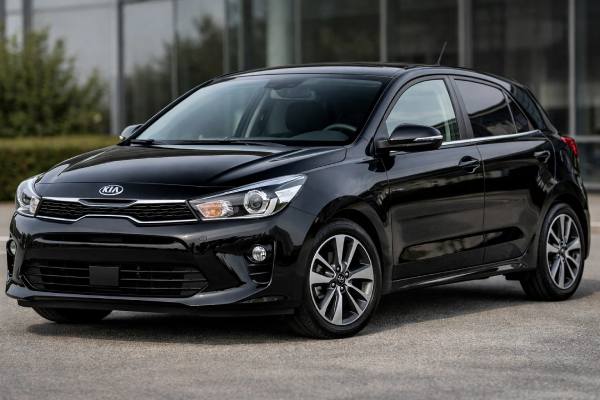
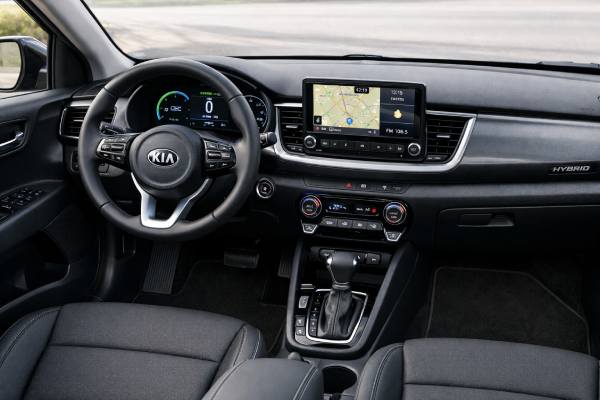
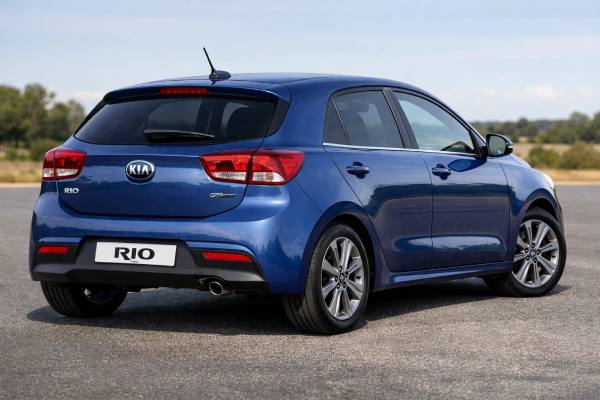
The facelifted Kia Rio (YB) with the 1.0 T-GDI 48V mild-hybrid (MHEV) and 120 hp is the “most grown-up” version of Kia’s supermini. You get a small turbo three-cylinder that’s tuned for everyday torque, then a belt-driven 48V system that quietly smooths start/stop, supports the engine during pull-away, and harvests energy on deceleration. In real ownership terms, this variant is about reducing stress: fewer jerky restarts in traffic, better in-gear flexibility than the non-hybrid 1.0, and often a stronger equipment list (especially safety tech) because many markets bundled driver assistance with higher trims.
It’s still a compact, light front-drive hatchback, so tires, brakes, and suspension parts stay affordable. The key is knowing which transmission you’re buying (iMT or 7-DCT) and maintaining it on time.
Quick Specs and Notes
- Strong mid-range response for a small engine, especially from ~1,500 rpm in daily driving.
- 48V mild-hybrid helps smooth stop/start and can reduce fuel use in dense city traffic.
- Budget for transmission-specific service planning (clutch actuator fluid on iMT; correct DCT fluid on 7-DCT).
- Change engine oil every 10,000–15,000 km (6,000–9,000 mi) or 12 months (short-trip use benefits from the shorter interval).
- Best results come from quality fuel and regular intake and ignition maintenance to protect a direct-injection turbo.
Jump to sections
- Kia Rio YB MHEV: what it is
- Kia Rio YB 120 MHEV specs
- Rio facelift trims and safety tech
- Common issues and service actions
- Maintenance plan and buying advice
- Real-world driving and economy
- How it stacks up against rivals
Kia Rio YB MHEV: what it is
This Rio combines Kia’s 1.0-liter turbocharged gasoline direct-injection (T-GDI) engine with a 48-volt mild-hybrid system. Mild-hybrid (MHEV) is not the same as a full hybrid: you cannot drive on electric power alone, and there is no high-voltage traction motor. Instead, the Rio uses a compact belt-driven starter-generator (often described as a mild-hybrid starter generator) plus a small 48V lithium battery and a DC–DC converter to supply the normal 12V electrical system.
What that means on the road is subtle but useful. The starter-generator can restart the engine faster and more smoothly than a conventional starter motor, which is why stop/start tends to feel less abrupt. During gentle acceleration, the system can provide a small torque assist to reduce load on the engine (helpful in the first seconds after pulling away or when the air conditioning is working hard). When you lift off the throttle or brake, it recuperates energy that would otherwise be wasted as heat, storing it in the 48V battery.
On facelift (2020–2023) cars, the mild-hybrid system was often paired with two different transmission philosophies:
- 6-speed iMT (intelligent Manual Transmission): This is a manual gearbox, but the clutch is managed by an electro-hydraulic actuator (clutch-by-wire). It can decouple the engine from the drivetrain under certain conditions and enable extended coasting strategies. It still feels like a manual in day-to-day use, but it has extra hardware and fluid that owners should not ignore.
- 7-speed dual-clutch (7-DCT): A dual-clutch gearbox is efficient and quick when healthy, but it is more sensitive to heat and driving style. Lots of creeping in traffic or repeated hill-holds can shorten clutch life.
The 120 hp tune is the “sweet spot” because the Rio remains light, so you get flexible performance without needing high revs. The mild-hybrid layer also helps mask the natural vibration and low-rpm load sensitivity that many small three-cylinder turbos have.
Ownership takeaway: this powertrain is designed to make a small hatch feel more relaxed and slightly more efficient, but you should treat it like a modern turbo DI engine—clean oil, good ignition parts, and correct transmission care matter.
Kia Rio YB 120 MHEV specs
Below are practical specifications for the facelift Rio (YB) 1.0 T-GDI MHEV 120 hp. Exact values can vary by market, body style (hatch/sedan), wheel size, and transmission (iMT vs 7-DCT), so where variation is common, ranges are shown.
Powertrain and efficiency
| Item | Specification |
|---|---|
| Engine | 1.0-liter turbocharged gasoline direct injection (T-GDI), mild-hybrid (48V) |
| Layout | I-3 (inline 3-cylinder), DOHC |
| Displacement | 1.0 L (998 cc) |
| Induction | Turbocharged |
| Fuel system | Direct injection (DI) |
| Max power | 120 hp (88 kW) @ ~6,000 rpm (market dependent) |
| Max torque | ~172–200 Nm (127–148 lb-ft) @ ~1,500–4,000 rpm (variant dependent) |
| Timing drive | Chain (typical for this family; verify by engine variant) |
| Rated efficiency | Commonly ~5.0–6.0 L/100 km combined (47–39 mpg US / 56–47 mpg UK), depending on transmission and wheels |
| Real-world highway @ 120 km/h (75 mph) | Often ~5.5–6.5 L/100 km (43–36 mpg US / 51–43 mpg UK), temperature and wind dependent |
Transmission and driveline
| Item | Specification |
|---|---|
| Drive type | Front-wheel drive (FWD) |
| Manual option | 6-speed iMT (clutch-by-wire) in many EU markets |
| Automatic option | 7-speed dual-clutch (7-DCT) in many EU markets |
| Differential | Open (traction control does the braking-based work) |
Chassis and dimensions (5-door hatchback typical)
| Item | Specification |
|---|---|
| Front suspension | MacPherson strut |
| Rear suspension | Torsion beam |
| Steering | Electric power steering (EPS) |
| Brakes | Front discs / rear discs or drums (market and trim dependent) |
| Popular tyre size | 185/65 R15 or 205/45 R17 (varies by trim) |
| Length / Width / Height | ~4,065 / 1,725 / 1,450 mm (160.0 / 67.9 / 57.1 in) |
| Wheelbase | ~2,580 mm (101.6 in) |
| Turning circle | ~10.2–10.4 m (33.5–34.1 ft) |
| Kerb weight | ~1,100–1,250 kg (2,425–2,756 lb) |
| Fuel tank | ~45 L (11.9 US gal / 9.9 UK gal) |
| Cargo volume | Typically ~325 L seats up (VDA) for hatch; seats-down varies by market trim |
Performance and capability (typical ranges)
| Metric | Typical value |
|---|---|
| 0–100 km/h (0–62 mph) | ~9.5–10.5 s (gearbox and wheel size matter) |
| Top speed | ~185–195 km/h (115–121 mph) |
| Braking 100–0 km/h | ~37–40 m (121–131 ft) with good tyres |
| Towing | Often limited or not recommended on some markets/trims; check VIN plate and local homologation |
| Payload | Commonly ~400–500 kg (882–1,102 lb), equipment dependent |
Fluids and service capacities (commonly published for this 1.0 T-GDI family)
| System | Specification (verify by VIN/market) |
|---|---|
| Engine oil | 0W-30 / 5W-30 (market/climate dependent); capacity ~3.6 L (3.8 US qt) |
| Engine coolant | Ethylene glycol-based; capacity ~5.6 L (5.9 US qt) |
| Manual gearbox (iMT) | Gear oil ~1.5–1.6 L (1.6–1.7 US qt) |
| iMT actuator fluid | Small dedicated quantity (about 0.082 L / 82 mL) |
| 7-DCT fluid | Often listed around ~1.6–1.7 L service quantity (follow the exact specified fluid) |
| Key torque specs | Wheel nuts typically ~88–108 Nm (65–80 lb-ft); always confirm for your wheel type |
If you want one “rule of thumb”: treat the engine like a modern turbo DI unit (fresh oil and correct spark plugs) and treat the transmission like its own system with its own service logic.
Rio facelift trims and safety tech
Facelift Rio (2020–2023) trims vary widely by country, but the pattern is consistent: the 120 hp MHEV is usually positioned above entry level, so it often brings better infotainment and, importantly, access to driver assistance packs.
Trims and options that matter mechanically
The main mechanical differences you’ll see across trims are wheel and tyre sizes, brake hardware (rear disc vs drum in some markets), and the gearbox pairing:
- iMT trims: Often sold as efficiency-focused or mid trims. The iMT’s advantage is lower cruising revs and the ability to coast with the engine decoupled in certain situations, which can help economy in rolling terrain. The “tell” is the presence of iMT branding in some markets and a slightly different clutch feel: it can feel lighter and more consistent because an actuator is managing engagement.
- 7-DCT trims: Often paired with higher trims and option packs. This is attractive for commuting because it removes the manual workload, but it can be less tolerant of repeated low-speed creeping. If you live in stop-start traffic every day, a careful test drive matters.
Year-to-year changes on facelift cars usually show up as infotainment upgrades, connectivity services, and the packaging of ADAS. When shopping used, don’t assume a badge guarantees the safety suite—look for the specific functions in the cluster menus and camera/radar hardware.
Safety ratings
The Rio’s widely referenced European crash rating is a 5-star Euro NCAP result for the model with the advanced safety pack, published in 2017 and later reviewed as protocols evolved. In that assessment, the car scored 93% Adult Occupant, 84% Child Occupant, 71% Pedestrian, and 59% Safety Assist. The rating may be shown as “expired” due to age of the protocol, but it still provides a useful benchmark for the structure and the effectiveness of the optional driver assistance pack on that generation.
Safety systems and ADAS (what to look for)
Common equipment across many markets includes:
- Multiple airbags (front, side, curtain) depending on trim
- ESC (stability control), ABS, hill-start assist
- ISOFIX/LATCH mounting points (typically outer rear seats), and a front passenger airbag deactivation function on many versions
Driver assistance features are often trim- or pack-dependent, especially:
- AEB (autonomous emergency braking) for vehicle and, in many packs, pedestrian detection
- Lane keeping support (lane departure warning or lane keep assist)
- Driver attention warning
- Blind-spot monitoring and rear cross-traffic alert on higher trims
- Adaptive cruise control is less common than basic cruise, but does appear on some higher-spec cars in certain markets
After windshield replacement or front-end repairs, ADAS calibration can be required. A pre-purchase scan for stored camera/radar faults is worth doing, and a clean windshield area in front of the camera (no aftermarket tint strip over the sensor zone) matters more than people think.
Common issues and service actions
This Rio variant is generally robust, but it combines three modern complexity layers—turbocharging, direct injection, and mild-hybrid hardware—so the “common issues” are usually about maintenance quality and usage patterns, not a single fatal flaw. Here’s a practical map by prevalence and severity.
Common (low to medium cost)
- Stop/start and 48V system sensitivity
Symptoms: stop/start unavailable, warning messages, slightly rough restarts.
Likely causes: low 12V battery health, sensor issues, or the car protecting the 48V state-of-charge.
Remedy: test the 12V battery properly (not just voltage), check charging behavior, and ensure software updates are current. - Coil packs or spark plugs under load (turbo DI engines are demanding)
Symptoms: misfire under acceleration, hesitation, check engine light, higher fuel use.
Cause: worn plugs, marginal coil, or carbon tracking.
Remedy: replace with correct heat-range plugs at the right interval and use quality ignition parts. - Brake wear influenced by driving style
MHEV recuperation can reduce brake use slightly, but city driving still eats front pads. The bigger factor is wheel size and driver habits.
Occasional (medium cost)
- GDI intake valve deposits (direct injection reality)
Symptoms: rough idle, reduced response, sometimes misfires as mileage builds.
Cause: fuel does not wash intake valves on DI engines, so deposits can accumulate, especially with short trips.
Remedy: prevention is mostly usage—regular longer drives, quality oil, and avoiding constant short cold runs. Cleaning is a workshop job when symptoms appear. - Dual-clutch behavior in traffic (7-DCT)
Symptoms: shudder during gentle takeoff, hesitation, clutch smell on hills.
Cause: heat and clutch wear from creeping, repeated hill-holding, or aggressive low-speed modulation.
Remedy: adjust driving technique (use decisive inputs, avoid “micro-creep”), ensure correct DCT fluid service, and have adaptation/learning checked if shifts feel abnormal. - iMT actuator or clutch calibration
Symptoms: inconsistent clutch engagement feel, warning lights, difficulty selecting gear.
Cause: actuator wear, fluid issues, calibration drift.
Remedy: correct diagnostic procedure, fluid check for the actuator circuit where applicable, and calibration via dealer-level tools.
Rare (higher cost, but uncommon)
- Turbocharger control or boost leaks
Symptoms: loss of power, limp mode, whistling, underboost codes.
Cause: hose leaks, wastegate control issues, or sensor faults.
Remedy: smoke test the intake tract, inspect vacuum/actuator hardware, and verify boost control operation.
Recalls, TSBs, and verification
Because campaigns vary by country and VIN range, the smart approach is process-driven:
- Run the official VIN recall check for your market.
- Ask for dealer printouts showing campaign completion.
- Scan the car for stored powertrain and chassis codes before purchase—modern cars can hide intermittent faults.
If you buy one of these used, the best predictor of a good experience is not mileage alone—it’s whether the car received timely oil changes and whether the transmission type matches your daily driving environment.
Maintenance plan and buying advice
A practical maintenance plan for the Rio 1.0 T-GDI MHEV should protect three areas: the turbo DI engine, the gearbox you actually have, and the two-battery electrical system (48V + 12V). Use the schedule below as a strong baseline, then adjust to your climate and driving style.
Core maintenance schedule (distance/time)
- Engine oil and filter: every 10,000–15,000 km (6,000–9,000 mi) or 12 months.
Short trips, frequent cold starts, or high-speed motorway use justify the shorter interval. Turbo DI engines reward clean oil. - Cabin air filter: every 15,000–30,000 km (9,000–18,000 mi) or yearly if you drive in dusty cities.
- Engine air filter: inspect every 15,000 km, replace around 30,000–45,000 km depending on conditions.
- Spark plugs: typically 60,000 km (37,000 mi) for many turbo small engines; confirm for your exact plug type and market schedule.
- Coolant: often first change around 120,000–210,000 km or 5–10 years depending on coolant spec; verify for your VIN. Coolant neglect can become expensive later.
- Brake fluid: every 2 years regardless of mileage (moisture absorption is time-based).
- Tyre rotation and alignment: rotate every 10,000–12,000 km; align if you see uneven wear or after suspension work.
Transmission-specific items (choose the path you own)
- 7-DCT: follow the exact fluid specification and service logic. Some dual-clutch units are sensitive to wrong fluids or incorrect fill procedures. If the car sees heavy traffic, be more conservative with service intervals and driving technique.
- 6-speed iMT: treat it like a manual gearbox plus an actuator system. If your market specifies a separate actuator fluid quantity, ensure it’s not ignored during service. If clutch engagement feels strange, don’t let shops “guess”—proper calibration matters.
Fluids and specifications (decision-friendly)
- Engine oil viscosity: commonly 0W-30 or 5W-30 depending on climate and spec. Use the required performance standard for your market.
- Engine oil capacity: about 3.6 L (3.8 US qt) with filter for this engine family.
- Fuel quality: use the recommended octane for your region; turbo engines dislike consistently poor fuel.
Buyer’s guide: what to check before you commit
- Confirm it’s the 120 hp MHEV (not the 100 hp) by VIN decode, registration data, and drivetrain badges where applicable.
- Identify transmission behavior on a test drive:
- DCT: check for shudder and delayed engagement in slow traffic simulation.
- iMT: check for smooth, predictable clutch engagement and no warning lights.
- Look for full service history with documented oil changes and correct fluids.
- Scan for fault codes (engine misfire history, boost control, transmission adaptation codes, and battery/charging related faults).
- Inspect for prior front-end repairs that could affect ADAS sensors.
Long-term outlook is strong if you match gearbox choice to your life and maintain it like a modern turbo car rather than a “basic small hatch.”
Real-world driving and economy
In daily use, the 120 hp mild-hybrid Rio is defined less by peak horsepower and more by how “complete” it feels at normal speeds. The turbo three-cylinder has enough low-rpm pull to keep you out of constant downshifts, and the mild-hybrid system helps cover the small gaps where a tiny turbo engine can feel flat—pulling away smoothly, restarting quickly, and keeping accessories from dragging the engine down.
Ride, handling, and NVH
The Rio’s chassis is tuned for stability and predictability rather than sharp cornering. Expect a firmish but controlled ride on 15–16 inch wheels; 17s can look great but often add impact harshness on broken pavement. Steering is typically light and easy in town with a stable on-center feel on the highway. Road noise is more tyre-dependent than many owners realize—switching to quieter touring tyres can make the cabin feel a class higher.
At city speeds, the three-cylinder character is present (a gentle thrum), but it’s usually well managed. At motorway speeds, wind noise is reasonable for the class; again, tyre choice can be the difference between “fine” and “tiring.”
Powertrain character and transmission feel
- Torque delivery: The engine feels best from roughly 1,500 rpm upward, where boost comes in smoothly. It won’t feel like a larger four-cylinder, but it is responsive enough for confident merging.
- iMT: can feel like a normal manual, but with a slightly different engagement “texture” because an actuator is involved. When it’s healthy, it’s easy to live with and can be efficient.
- 7-DCT: shifts quickly when you drive assertively. In slow traffic, some dual-clutch gearboxes can hesitate or feel indecisive; that’s not always a fault, but you should ensure it’s not excessive.
Real-world efficiency
Real-world fuel use depends heavily on your route:
- City-heavy driving: mild-hybrid benefits show up most here, often landing around 5.8–7.0 L/100 km (41–34 mpg US / 49–40 mpg UK) depending on congestion and temperature.
- Highway 100–120 km/h: typically 5.5–6.5 L/100 km (43–36 mpg US / 51–43 mpg UK).
- Mixed commuting: many owners see 5.5–6.5 L/100 km overall with sensible tyres and steady driving.
Cold weather usually adds consumption due to longer warm-up time and higher electrical load. The mild-hybrid system helps, but physics still wins—short winter trips are the hardest scenario for any turbo DI car.
If you want the “best Rio experience,” prioritize tyre quality, keep oil fresh, and choose the gearbox that matches your traffic reality.
How it stacks up against rivals
In the supermini class, the facelift Rio 1.0 T-GDI MHEV 120 hp competes on mature road manners and a powertrain that feels stronger than its size suggests. Here’s how it typically compares in real buying decisions.
Versus Volkswagen Polo 1.0 TSI (95–110 hp)
A Polo often feels more solid and refined at speed, especially over rough surfaces, and it can have a more premium interior layout. The Rio counters with straightforward ownership costs and, in many markets, a stronger value equation for equipment. If you do lots of motorway driving and care about cabin hush, the Polo may edge it. If you want “enough car” with simpler long-term costs, the Rio holds up well.
Versus Ford Fiesta 1.0 EcoBoost (100–125 hp)
A Fiesta is usually the driver’s choice: sharper steering, better cornering balance, and a playful chassis. The Rio feels calmer and less sporty, but also less demanding. For buyers who want comfortable commuting and predictable behavior in bad weather, the Rio is often the easier daily companion. Reliability perceptions also tend to favor conservative maintenance and simpler hardware; both cars benefit from good oil and correct service, but the Rio’s overall package is generally less “high-strung.”
Versus Renault Clio / Peugeot 208 1.0T class
French rivals can offer standout interior design and comfort features, and sometimes a softer ride. The Rio’s advantage is typically consistency: intuitive controls, solid basic ergonomics, and powertrain smoothness helped by the 48V system. If you value style and a more modern cabin feel, the Clio/208 can win. If you value clear ownership logic and dependable daily behavior, the Rio stays compelling.
Versus Toyota Yaris hybrid (full hybrid)
A full hybrid like the Yaris can beat the Rio in stop-and-go economy and offers genuine electric-only creeping. That’s a real advantage if your life is mostly city traffic. The Rio fights back with a more conventional driving feel, often lower purchase cost on the used market, and fewer hybrid-specific high-voltage considerations. If your driving is mixed and you prefer a traditional gearbox experience (especially iMT), the Rio can make more sense.
The Rio’s “best-fit” buyer
Choose the Rio 120 hp MHEV if you want a small car that feels composed, has enough performance to avoid stress, and rewards consistent maintenance. Choose a rival if you have a very specific priority—maximum city fuel savings (full hybrid), maximum fun (Fiesta), or maximum premium feel (Polo).
References
- The upgraded Kia Rio 2020 (Press Kit)
- Official Kia Rio (full safety package) safety rating 2017 (Safety Rating)
- Kia Recalls | Kia Europe 2026 (Recall Database)
- Recommended lubricants and capacities 2024 (Owner’s Manual)
Disclaimer
This article is for informational purposes only and is not a substitute for professional inspection, diagnosis, or repair. Specifications, torque values, service intervals, and procedures can vary by VIN, market, production date, and equipment. Always verify details using the official owner’s manual and service documentation for your exact vehicle.
If this guide helped, please consider sharing it on Facebook, X (Twitter), or your favorite forum to support our work.