
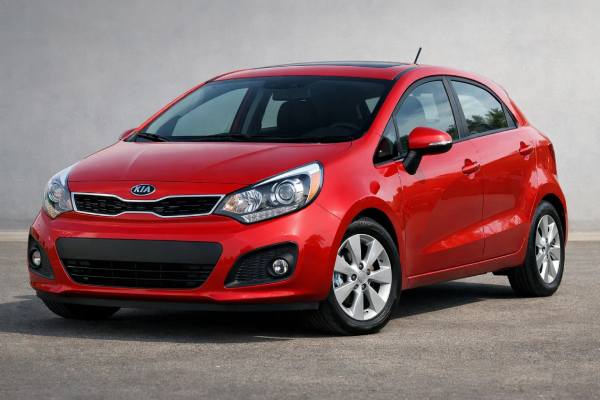
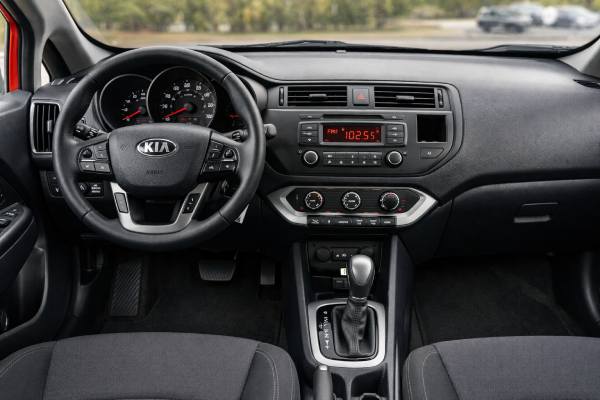
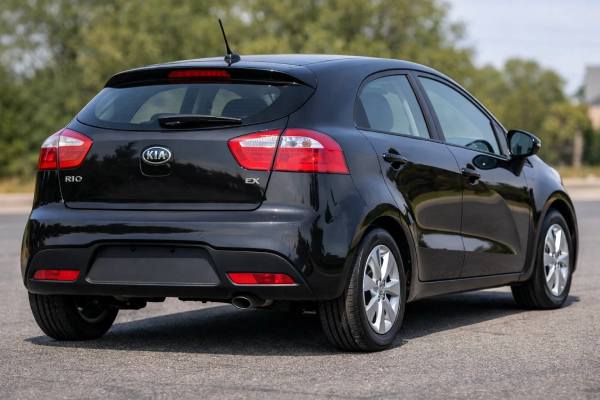
If you want a small car that feels “normal” to own—easy to service, predictable to drive, and not packed with expensive gimmicks—the Kia Rio UB with the 1.2 CVVT (85 hp) is one of the stronger value picks from the early 2010s supermini class. The core of the package is the Kappa-family four-cylinder: a timing-chain engine with simple port fuel injection and a light, rev-friendly character. In day-to-day use, that translates to low running costs, decent real-world fuel economy, and fewer high-ticket failure points than many turbocharged rivals.
The trade-offs are also clear. This is not a fast Rio, and higher-mileage cars can develop typical small-car wear in suspension, steering, and braking hardware—especially if they’ve lived in cities or on rough roads. Buy well, maintain it on time, and it can be a very durable commuter.
Quick Specs and Notes
- Strong everyday value: simple engine design, widely available parts, and straightforward servicing
- Practical packaging: usable rear seat for the class and a hatch that carries real weekly shopping
- Generally dependable drivetrain, especially with a manual gearbox and consistent oil changes
- Watch for age-related chassis wear (drop links, bushings) and intermittent sensor/coil issues
- Typical interval: engine oil and filter every 10,000–15,000 km or 12 months (shorter in severe use)
Jump to sections
- Kia Rio UB 1.2 ownership feel
- Kia Rio UB 1.2 specs and dimensions
- Kia Rio UB trims and safety kit
- Known problems and recalls
- Maintenance plan and buying tips
- Real driving and economy
- Rivals worth cross-shopping
Kia Rio UB 1.2 ownership feel
The 2011–2014 Kia Rio UB with the 1.2 CVVT sits in a sweet spot for owners who want modern-enough safety and comfort without “modern” complexity. Mechanically, this version avoids the biggest cost multipliers seen in some small cars of the era: there’s no turbocharger, no direct injection (so no intake-valve carbon cleaning routine), and no dual-clutch transmission. That doesn’t make it perfect, but it does make budgeting easier.
In mixed use, the Rio’s strengths are consistency and low friction ownership. The engine is happiest when it’s allowed to rev a little, and it tends to tolerate short trips better than many small turbo engines (which often struggle with fuel dilution and moisture in the oil). The manual gearbox is usually the best match—simple, efficient, and cheaper to maintain long term. If your market offers a conventional automatic, it’s typically a torque-converter unit: smoother than many small automated manuals, but it needs clean fluid to stay that way.
Where the Rio UB can surprise new owners is how “full size” it feels for a supermini. The wheelbase gives it stable tracking on the highway, and the cabin packaging is more adult-friendly than older B-segment cars. As a commuter or first car, it’s easy to park, cheap to insure in many regions, and forgiving to drive.
The predictable weak points are the same ones you’ll see on most 10+ year-old small cars:
- Rubber components age (bushings, engine mounts, door seals)
- Suspension links and dampers wear if the car lives on broken pavement
- Electrical niggles show up as sensors, coils, switches, or battery/ground issues rather than expensive control modules
If you buy one today, the smartest mindset is “condition first, engine second.” The 1.2 itself is rarely the reason a Rio becomes uneconomical; neglected maintenance and accumulated chassis wear are. A well-kept example with clean fluids, quiet suspension over bumps, and stable idle will usually be a better bet than a lower-mileage car that has sat, done short trips, or missed services.
Kia Rio UB 1.2 specs and dimensions
Below are the core specifications most buyers and owners look for. Values can vary slightly by market, body style (hatch vs sedan), wheel/tyre package, and transmission, so treat them as a decision-grade reference and verify against your VIN documentation.
Powertrain and efficiency (1.2 CVVT / 85 hp)
| Item | Spec |
|---|---|
| Code (common) | G4LA (Kappa-family) |
| Engine layout and cylinders | I-4, DOHC, 4 valves/cyl (16V) |
| Bore × stroke | 71.0 × 78.8 mm (2.80 × 3.10 in) |
| Displacement | 1.2 L (1248 cc) |
| Induction | Naturally aspirated |
| Fuel system | MPI (port fuel injection) |
| Compression ratio | ~10.5:1 (market-dependent) |
| Max power | 85 hp (63 kW) @ ~6,000 rpm |
| Max torque | ~121 Nm (89 lb-ft) @ ~4,000 rpm |
| Timing drive | Chain |
| Rated efficiency (typical) | ~5.0–5.8 L/100 km (47–39 mpg US / 56–49 mpg UK) |
| Real-world highway @ 120 km/h | ~6.2–7.0 L/100 km (38–34 mpg US / 46–40 mpg UK) |
Transmission and driveline
| Item | Spec |
|---|---|
| Transmission (common) | 5-speed manual; some markets: conventional automatic |
| Drive type | FWD |
| Differential | Open |
Chassis and dimensions (typical hatchback values unless noted)
| Item | Spec |
|---|---|
| Suspension (front / rear) | MacPherson strut / torsion beam |
| Steering | Electric power steering (EPS); ratio varies by market |
| Brakes (front / rear) | Ventilated discs / drums (rear discs on some trims/markets) |
| Common tyre size | 175/70 R14 or 185/65 R15 |
| Ground clearance (approx.) | ~140 mm (5.5 in) |
| Length / width / height (hatch) | ~4,045 / 1,720 / 1,455 mm (159.3 / 67.7 / 57.3 in) |
| Wheelbase | ~2,570 mm (101.2 in) |
| Turning circle (kerb-to-kerb) | ~10.2 m (33.5 ft) |
| Kerb weight (typical) | ~1,040–1,130 kg (2,293–2,492 lb) |
| Fuel tank | ~43 L (11.4 US gal / 9.5 UK gal) |
| Cargo volume (hatch) | ~288 L (10.2 ft³) seats up; ~923 L (32.6 ft³) seats down (method varies) |
Performance and capability (typical manual)
| Item | Spec |
|---|---|
| 0–100 km/h (0–62 mph) | ~12.5–13.5 s |
| Top speed | ~170–175 km/h (106–109 mph) |
| Braking 100–0 km/h | ~38–42 m (setup- and tyre-dependent) |
| Towing capacity | Market-dependent; often modest for 1.2 |
| Payload | Commonly ~400–500 kg (trim-dependent) |
Fluids and service capacities (decision-grade ranges)
| Item | Typical spec |
|---|---|
| Engine oil | API/ACEA per market; often 5W-30 or 5W-40; ~3.3–3.8 L (3.5–4.0 US qt) |
| Coolant | Long-life ethylene glycol mix; ~5.0–6.0 L (5.3–6.3 US qt) |
| Manual transmission oil | GL-4 gear oil; ~1.8–2.2 L (1.9–2.3 US qt) |
| Automatic transmission fluid | Spec varies; drain/fill commonly ~3–4 L, total higher |
| A/C refrigerant | R134a on many markets/years; charge varies by body style |
Safety and driver assistance (era-typical)
| Item | Spec |
|---|---|
| Airbags | Commonly 6 (front, side, curtains) on many trims/markets |
| Stability and traction | ESC and traction control became common/standard over time (market-dependent) |
| ADAS | Generally none beyond basic parking sensors on some trims |
Kia Rio UB trims and safety kit
Trim naming varies widely (LX/EX, 1/2/3, Base/Mid/High, “Plus,” “Spirit,” and many regional special editions), so the most useful way to understand Rio UB equipment is to group it by functional content: comfort, chassis, and safety.
Trims and options: what usually changes
- Wheels and tyres: Base cars often run 14-inch wheels with taller tyres for comfort and cost; higher trims move to 15-inch or occasionally 16-inch wheels, which can sharpen steering response but also raise road noise and tyre cost.
- Rear brakes: Many markets keep rear drums even on mid trims; some higher trims/packages offer rear discs. Drums can be perfectly fine on a light car, but discs simplify inspection and can feel more consistent after repeated hard stops.
- Infotainment: Early cars typically have a basic radio/CD/USB setup; later years and higher trims may add Bluetooth, steering-wheel controls, and sometimes a small touchscreen. If you care about daily usability, Bluetooth stability and USB charging current matter more than screen size.
- Climate and convenience: Manual A/C is common; automatic climate control is less common in this segment. Heated seats and heated mirrors appear in cold-climate packages, which can be a big quality-of-life upgrade.
Quick identifiers when shopping
- Look at the steering wheel (audio controls often indicate a higher equipment tier).
- Check the instrument cluster (trip computer and outside temperature display often arrive with mid trims).
- Inspect rear brake type through the wheel spokes (disc vs drum).
- Confirm ESC presence via dash button/indicator behavior at startup and by checking build sheet/VIN equipment list where available.
Year-to-year changes that matter (2011–2014)
- Equipment “creep” is common: features like Bluetooth, USB integration, and additional airbags may become standard in later years in some markets.
- Safety equipment availability can shift as regulations evolve; two cars labeled “same trim” in different years can have different standard safety content.
Safety ratings: what the numbers mean
In period testing, the Rio generation achieved strong crash-test results for its class, helped by a modern structure and widespread availability of airbags. When comparing ratings, confirm the exact test year and protocol; scoring systems and weighting change over time, and some results assume a specific “safety pack” is fitted.
Safety systems and what’s actually on the car
- Airbags: Many Rio UB cars have front airbags; side and curtain airbags may be trim-dependent in some markets, so physically confirm.
- Child-seat provisions: ISOFIX/LATCH mounting points are common, but top-tether locations and access can differ by body style. Check for intact plastic guides and undamaged seat-back structures.
- Brakes and stability: ABS is typically widespread; ESC/traction control may be standard later or on higher trims. If ESC matters to you, treat it as a must-verify item, not an assumption.
Because this is a pre-ADAS era design, the “driver assistance” story is mostly about fundamentals: tires in good condition, brakes serviced on time, and stability control present and functional where equipped.
Known problems and recalls
The Rio UB 1.2’s reliability profile is generally favorable, but age and maintenance history now matter more than model-year reputation. The best way to think about common problems is by prevalence and cost tier.
Common (usually low to medium cost)
- Ignition coils and spark-related misfires:
Symptoms: rough idle, flashing MIL under load, loss of power.
Likely cause: coil degradation, worn plugs, moisture intrusion at connectors.
Remedy: plugs first (correct heat range and gap), then suspect coil(s); check wiring and grounds. - Battery and charging “gremlins”:
Symptoms: intermittent warning lights, slow cranking, radio resets.
Likely cause: aging battery, weak alternator output, corroded grounds.
Remedy: proper battery load test, clean grounds, verify charging voltage under load. - Front suspension noises:
Symptoms: clunks over small bumps, vague steering on rough roads.
Likely cause: worn drop links, top mounts, lower control arm bushings.
Remedy: replace worn links/bushings in pairs; follow with alignment.
Occasional (medium cost)
- EPS/steering feel issues (depends on market hardware):
Symptoms: light knock in steering, inconsistent assist, steering warning light.
Likely cause: column coupler wear (in some systems), sensor faults, poor electrical supply.
Remedy: confirm charging/grounds, scan for EPS codes, repair per fault tree rather than guessing. - CVVT-related drivability complaints:
Symptoms: sluggish low rpm, occasional hesitation, fault codes tied to cam timing.
Likely cause: oil quality/intervals, sticky oil control valve/solenoid, clogged screens.
Remedy: correct oil spec and interval; clean/replace solenoid as needed; verify timing correlation.
Rare (higher cost if ignored)
- Timing chain noise or stretch criteria:
Symptoms: cold-start rattle, persistent timing correlation codes.
Likely cause: extended oil intervals, low oil level, worn tensioner/guides.
Remedy: do not “drive it out.” Diagnose promptly; replace chain set if out of spec.
Mileage and age bands
- 0–120,000 km: mostly consumables, occasional coil/sensor issues.
- 120,000–200,000 km: suspension refresh becomes likely; engine mounts and exhaust components age.
- 200,000+ km: durability depends heavily on oil discipline and cooling system health.
Service actions, recalls, and verification
Recalls and warranty extensions vary by country and VIN range. The practical advice is universal:
- Run an official recall check for your VIN and save the result.
- Ask for documentation showing the remedy was performed (dealer invoice or service history entry).
- If the car has an airbag or steering-column related campaign, treat proof of completion as high priority.
A well-maintained Rio UB can be very dependable, but the “bad” cars usually share the same pattern: overdue oil changes, cheap mismatched tyres, and ignored suspension play that turns into uneven tyre wear and wandering steering. Fixing that backlog costs more than paying slightly more for a clean example up front.
Maintenance plan and buying tips
A Rio UB 1.2 will usually reward boring, on-time maintenance. The engine is simple, but it still depends on clean oil (especially for CVVT control) and a healthy cooling system.
Practical maintenance schedule (typical guidance)
- Engine oil and filter: every 10,000–15,000 km or 12 months. If the car does short trips, idles a lot, or sees dusty conditions, use 7,500–10,000 km.
- Engine air filter: inspect every service; replace around 30,000 km (sooner in dust).
- Cabin filter: 15,000–30,000 km or annually if you drive in traffic/pollution.
- Spark plugs: 60,000–90,000 km depending on plug type; replace coils only when diagnosed.
- Coolant: commonly 5 years / 100,000 km initial, then shorter intervals; verify your exact coolant type and schedule.
- Brake fluid: every 2 years, regardless of mileage.
- Brakes: inspect pads/rotors/drums at every tyre rotation; clean and lubricate slide pins annually in salted climates.
- Transmission:
- Manual: change gear oil around 90,000–120,000 km as a longevity move.
- Automatic: consider drain-and-fill service around 60,000–90,000 km, especially if it sees city heat.
- Serpentine/aux belt: inspect at 60,000 km intervals; replace if cracked or noisy.
- Timing chain: no routine replacement interval; inspect by symptoms (noise, codes, correlation issues).
- Tyres and alignment: rotate every 10,000–12,000 km; align when tyres are replaced or if it pulls.
- 12 V battery: test yearly after year 3; many last 4–6 years.
Fluid specs and “good-enough” decision rules
- Choose oil viscosity appropriate to climate and the manufacturer’s approvals for your market; the engine typically tolerates common quality synthetics well, but it does not tolerate running low.
- If you don’t know what coolant is in the car, don’t top off randomly—flush and refill to a known correct spec.
Essential torque values (typical ranges; verify for VIN)
- Wheel nuts: 88–110 Nm (65–81 lb-ft)
- Spark plugs: 18–25 Nm (13–18 lb-ft)
- Oil drain plug: commonly 25–40 Nm (18–30 lb-ft)
Buyer’s guide: what to check in 20 minutes
- Cold start: listen for chain rattle, check idle stability, verify no misfire under light throttle.
- Steering and suspension: drive over small bumps with light steering input; listen for clunks and feel for dead zone.
- Brakes: straight stop from 60–20 km/h; look for vibration (warped discs) or pull (caliper issues).
- Cooling system: inspect coolant level/condition, look for crust at hose joints, check fan operation.
- Leaks: valve cover seepage, wetness around oil pan area, and any burnt-oil smell on the exhaust.
- Electrics: test windows, locks, blower speeds, A/C cooling, and charging voltage if you have a meter.
- Tyres: uneven wear often means neglected alignment or worn bushings—use this as a negotiation point.
Best versions to seek
- A manual gearbox car with documented oil changes is often the simplest, cheapest long-term combination.
- Prioritize safety equipment you care about (especially ESC availability) and verify it by VIN, not trim badge.
Durability outlook is good when serviced, but the purchase decision is mostly about avoiding backlog. A Rio with fresh tyres, quiet suspension, and clean fluids is usually the right one.
Real driving and economy
The Rio UB 1.2 is not a “hot” small car; it’s a competent, predictable one. The engine’s character is light and smooth for the class, and it makes its best effort above mid-range rpm. Around town, that feels friendly: easy clutch take-up (manual), good visibility, and a chassis that’s stable without being overly stiff.
Ride, handling, and NVH
- Ride: Generally comfortable on standard tyre sizes. Low-profile tyres on larger wheels can make potholes feel harsher and may accelerate suspension wear.
- Handling balance: Safe and mild understeer at the limit—exactly what you want in a commuter.
- Steering: EPS is light at parking speeds. On-centre feel varies by tyre choice and alignment; a worn front end will make it feel vague.
- Cabin noise: Wind and tyre noise become noticeable at highway speeds, especially on coarse asphalt. Fresh door seals and correct tyre pressures help more than you’d think.
Powertrain behavior
- Throttle response: Best described as progressive rather than punchy. It rewards smooth inputs.
- Manual gearbox: Typically a good match; watch for worn mounts or clutch judder in stop-start traffic.
- Automatic (where fitted): Prioritize smooth engagement and consistent shifting; hesitation, flare, or harsh changes suggest overdue fluid or emerging valve-body/solenoid issues.
Real-world fuel economy
Your results depend heavily on speed and trip length:
- City (stop-start): commonly ~6.5–8.0 L/100 km (36–29 mpg US / 43–35 mpg UK)
- Highway (100–120 km/h): commonly ~6.0–7.0 L/100 km (39–34 mpg US / 47–40 mpg UK)
- Mixed commuting: often ~5.8–7.0 L/100 km (41–34 mpg US / 49–40 mpg UK)
Cold weather and short trips can add a meaningful penalty. The car warms up reasonably quickly, but frequent sub-10 km journeys still push consumption up and stress the oil more—another reason to shorten oil intervals for city-only use.
Key performance metrics that matter
- 0–100 km/h: around the low-13-second range in many real conditions. Plan overtakes; use the right gear.
- Passing power: the engine can do it, but it needs rpm. If you drive mostly on fast rural roads with loaded passengers, the 1.2 will feel stretched compared with a 1.4/1.6.
As a daily driver, the Rio UB 1.2 wins by being easy. It’s comfortable enough, cheap enough to run, and predictable enough that you stop thinking about it—usually the highest compliment for a small commuter car.
Rivals worth cross-shopping
Shopping the Rio UB 1.2 is smartest when you compare it to other naturally aspirated small cars from the same era. Many turbo options can feel quicker, but they often add long-term cost risk.
Ford Fiesta (1.25/1.4 NA)
- Why choose it: sharper steering and handling; fun at legal speeds.
- Why choose the Rio instead: the Rio often feels simpler and cheaper to maintain over time, and ride comfort can be better on smaller wheels.
Volkswagen Polo (1.2 MPI) and Skoda Fabia (1.2 MPI)
- Why choose them: solid interior feel, calm highway manners, broad parts ecosystem.
- Why choose the Rio instead: the Rio can deliver similar practicality with lower purchase cost and straightforward servicing, depending on your market.
Toyota Yaris (1.0/1.3)
- Why choose it: strong reputation for durability, good city efficiency.
- Why choose the Rio instead: the Rio’s cabin and highway stability can feel more “grown up,” and equipment levels may be higher for the money.
Opel/Vauxhall Corsa (1.2) and Renault Clio (1.2)
- Why choose them: plentiful supply and trim variety.
- Why choose the Rio instead: the Rio’s engine/transmission simplicity and general robustness can be a safer bet if you want low drama.
What to prioritize in any rival
- Verified service history (oil discipline matters on all of them)
- Tyre quality and even wear (tells you about alignment and suspension health)
- Safety equipment you actually want (especially ESC), verified by VIN/equipment list
In short: the Rio UB 1.2 isn’t the sportiest choice, but it’s a very rational one. If your goal is low-cost, predictable ownership—and you buy a clean example—it compares well against the class.
References
- euroncap_kia_rio_2011_5stars.pdf 2011 (Safety Rating)
- UB CAN (ENG) foreword.qxp 2012 (Owner’s Manual)
- Check for Recalls: Vehicle, Car Seat, Tire, Equipment | NHTSA 2026 (Recall Database)
- 2012-2013 MY Kia Rio Driver’s Front Airbag Clock Spring Assembly New Vehicle Limited Warranty Extension 2019 (Service Action)
Disclaimer
This article is for informational purposes only and is not a substitute for professional inspection, diagnosis, or repair. Specifications, torque values, service intervals, and procedures can vary by VIN, market, model year, and installed equipment. Always verify details using official owner/service documentation for your specific vehicle and follow qualified technician guidance where appropriate.
If you found this guide useful, please consider sharing it on Facebook, X (Twitter), or your favorite forum to help others and support our work.