

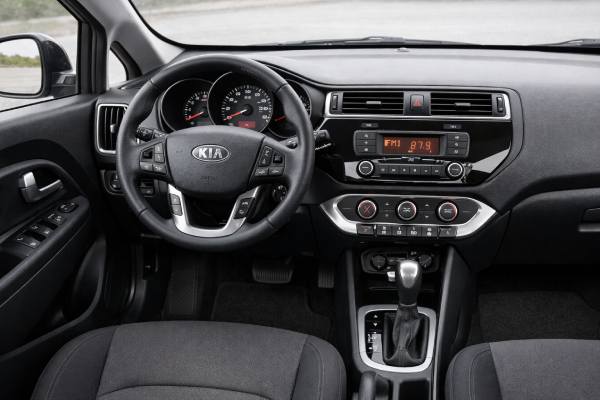
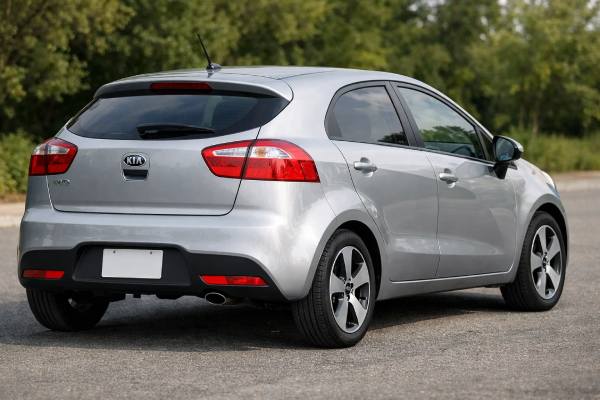
The 2011–2014 Kia Rio (UB) with the 1.4 CRDi 90 hp diesel is one of those small cars that makes sense when you drive lots of mixed miles and want low fuel spend without stepping up to a larger hatch. Its engineering “personality” is straightforward: a compact common-rail turbodiesel (strong low-rpm pull for its size), simple front-wheel-drive layout, and a chassis tuned more for stability and comfort than sharp hot-hatch responses.
As an ownership proposition, this Rio tends to reward regular, correct maintenance—especially around diesel emissions hardware (EGR and DPF on many markets) and clean oil habits. The upside is that parts availability is usually good, the car is easy to service, and real-world economy can be excellent on steady-speed commutes. If you’re shopping used, the best examples are the ones with clear service history, warm-running driving patterns, and no warning lights “explained away.”
Owner Snapshot
- Strong low-rpm torque makes city driving and passing easier than many small petrol engines.
- Typically low highway fuel use when driven at steady speed and properly maintained.
- Simple layout and wide parts availability keep many repairs in the “manageable” category.
- Short-trip use can accelerate DPF/EGR issues—prioritize cars that see regular longer drives.
- Plan engine oil and filter service at least every 12 months (or sooner under severe use).
Navigate this guide
- Kia Rio UB diesel ownership profile
- Kia Rio UB 1.4 CRDi specs and dimensions
- Kia Rio UB trims options and safety equipment
- Reliability common faults and service actions
- Maintenance plan and used buying checklist
- Driving feel and real world economy
- Rio UB 1.4 CRDi vs key rivals
Kia Rio UB diesel ownership profile
This Rio sits in the sweet spot for drivers who want a compact car that feels relaxed at everyday speeds. The 1.4 CRDi’s headline benefit is usable torque in the low-to-mid rev range—so you can short-shift, keep noise down, and still move with confidence in traffic. Compared with small naturally aspirated petrol engines of the same era, the diesel version generally feels less “busy” because it doesn’t need to be revved as hard to make progress.
On the road, the Rio (UB) is built around predictable handling and decent straight-line stability. The suspension design is conventional for the class (strut front, torsion-beam rear), which is good news for long-term costs: fewer complex components, and many wear items are affordable. Ride quality is usually more “grown up” than you might expect from a supermini, especially on stock wheel sizes with sensible tire sidewalls.
Where ownership gets more nuanced is diesel emissions equipment. Many European-market 1.4 CRDi cars are fitted with a diesel particulate filter (DPF) and an exhaust gas recirculation (EGR) system. These are not “bad” parts—when the car is used in the way diesel systems were designed for (regular warm running, periodic longer drives), they can be trouble-free. Problems show up when the car lives on short, cold trips: the engine doesn’t fully warm, soot loading rises, and the car may struggle to complete DPF regenerations. That pattern can cause warning lights, limp mode, or frequent forced regens.
In used form, the best Rio diesels are the ones that were driven consistently and serviced on time (or early). Look for a smooth idle, clean cold start, and no hesitations under load. On a test drive, the engine should pull strongly from roughly 1,500–2,000 rpm without flat spots, and the car should track straight under braking. Also pay attention to “small car” realities: road noise depends heavily on tire brand and wear, and some interior plastics can rattle if the car has lived on rough roads.
If your driving is mostly urban, a petrol Rio can be the safer pick. But if you do mixed miles with routine highway segments, the 1.4 CRDi can be a very cost-effective daily—provided you buy the right example.
Kia Rio UB 1.4 CRDi specs and dimensions
Below are the core technical specs most owners and buyers care about for the 2011–2014 Rio (UB) 1.4 CRDi 90 hp. Values can vary by market, body style (hatch vs sedan), and trim; treat these as typical for the model family and verify against your VIN-specific documentation.
Powertrain and efficiency (typical)
| Item | Specification |
|---|---|
| Engine code (common) | D4FC (varies by market) |
| Layout | Front transverse inline-4 |
| Valvetrain | DOHC, 16 valves (4 valves/cyl) |
| Displacement | 1.4 L (≈1,396 cc) |
| Induction | Turbocharged (intercooled) |
| Fuel system | Common-rail direct injection (diesel) |
| Max power | 90 hp (66 kW) @ ~4,000 rpm |
| Max torque | ~220 Nm (≈162 lb-ft) @ ~1,750–2,750 rpm |
| Timing drive | Market-dependent; confirm belt vs chain by VIN/service data |
| Rated economy | Commonly ~3.6–4.5 L/100 km (≈52–65 mpg UK / 42–52 mpg US) depending on gearing and test cycle |
| Real-world highway @ 120 km/h | Often ~4.5–5.5 L/100 km on healthy cars with correct tires and alignment |
Transmission and driveline
| Item | Specification |
|---|---|
| Drive type | FWD |
| Transmissions (typical) | 6-speed manual (most common); 4-speed automatic in some markets/years |
| Differential | Open |
Chassis and dimensions (typical hatchback)
| Item | Specification |
|---|---|
| Suspension (front / rear) | MacPherson strut / torsion beam |
| Steering | Electric power steering (EPS/MDPS) |
| Brakes (front / rear) | Ventilated discs / drums or discs depending on trim |
| Common tire size | 185/65 R15 (varies: 195/55 R16 on higher trims) |
| Length / Width / Height | ≈4045 / 1720 / 1455 mm (≈159.3 / 67.7 / 57.3 in) |
| Wheelbase | ≈2570 mm (≈101.2 in) |
| Turning circle (kerb-to-kerb) | Often around 10.2 m (≈33.5 ft) |
| Ground clearance | Typically ~140 mm (≈5.5 in) |
| Curb weight | Commonly ~1,150–1,250 kg (≈2,535–2,756 lb) depending on body/trim |
| Fuel tank | ~43 L (≈11.4 US gal / 9.5 UK gal) |
| Cargo volume | Hatch often ~280–290 L seats up; over ~900 L seats down (method varies). Sedan trunk is larger but fixed-opening. |
Performance (typical 90 hp diesel)
| Metric | Typical value |
|---|---|
| 0–100 km/h (0–62 mph) | ~12.5–14.5 s (gearbox and body style matter) |
| Top speed | ~170–180 km/h (≈106–112 mph) |
| Braking 100–0 km/h | Often ~38–42 m on good tires; confirm by test data where available |
Fluids and service capacities (typical, verify by VIN)
| Fluid / item | Spec (typical) |
|---|---|
| Engine oil | ACEA C3 is commonly specified on many DPF-equipped Kia diesels; viscosity often 5W-30 |
| Engine oil capacity | ~5.3 L (≈5.6 US qt / 4.7 UK qt) |
| Coolant | Ethylene-glycol long-life coolant; mix ratio commonly 50/50 |
| A/C refrigerant | Usually R134a on this era (charge varies by system label) |
Key torque specs (decision-useful only; confirm before wrenching)
- Wheel nuts: commonly in the 88–108 Nm (65–80 lb-ft) range
- Engine oil drain plug: commonly around 35–45 Nm (26–33 lb-ft)
- Front brake caliper bracket bolts: often around 80–100 Nm (59–74 lb-ft)
Kia Rio UB trims options and safety equipment
Trim naming varies by country, but the 2011–2014 Rio (UB) usually follows a familiar ladder: a base trim focused on essentials, a mid trim with comfort upgrades, and a higher trim adding wheels, infotainment, and convenience features. When you’re shopping used, focus less on the badge and more on what’s actually fitted—because option packs and mid-year changes can make two “same trim” cars very different.
Trims and options that change the experience
Common equipment differences you’ll see:
- Wheels and tires: 15-inch wheels are the comfort-and-cost sweet spot. 16-inch packages can look better but may add road noise and make pothole impacts harsher.
- Start-stop (ISG): Some markets offered idle stop-start. It helps consumption in slow traffic but increases sensitivity to battery health and correct charging behavior.
- Climate control: Manual A/C is common; automatic climate is less common but nice in hot climates.
- Infotainment: Early cars may have basic audio and Bluetooth; later or higher trims may add navigation, better speakers, steering-wheel controls, and parking sensors/camera.
Quick identifiers (useful on a walk-around)
- Steering wheel and dash buttons: Cruise-control buttons and phone controls often indicate a higher equipment grade.
- Rear brakes: Some trims use rear discs instead of drums; discs often come with higher trims or specific packages.
- ESC and hill-start assist: Electronic stability control is commonly standard in many European markets; hill-start assist often appears with ESC-equipped cars.
Safety ratings and what they mean here
For this generation, crash-test performance is generally strong for a supermini of its era, especially for adult and child occupant protection. However, pedestrian protection scores from that period tend to be lower than modern cars, largely due to front-end design standards at the time. Also note that ratings depend on the test year and protocol—a five-star result under an older protocol is not directly comparable to a modern five-star car. Use the rating as a “within-era” comparison tool.
Safety systems and driver assistance (what’s realistic for 2011–2014)
Most 2011–2014 Rio (UB) diesels focus on core safety rather than modern ADAS:
- Airbags: Typically front airbags; many cars add side and curtain airbags—verify by interior tags and VIN equipment list.
- ISOFIX/LATCH: ISOFIX rear outer positions are common; check for top-tether points where relevant.
- ABS and ESC: ABS is essentially universal; ESC is common in many markets and a meaningful safety upgrade.
- ADAS: Features like autonomous emergency braking (AEB) and lane keeping are generally not part of this era’s Rio equipment set in most markets. If you see them listed, confirm carefully—sometimes listings confuse model years or safety-pack definitions from later generations.
If safety is a priority, your best strategy is simple: choose a car with ESC, full curtain airbags where available, good tires, and a clean accident history.
Reliability common faults and service actions
A well-maintained 1.4 CRDi Rio can be dependable, but reliability depends heavily on usage pattern and maintenance quality. Think of issues in two buckets: (1) typical small-car wear items, and (2) diesel-specific emissions and fueling components that dislike repeated short trips.
Common issues (higher prevalence)
- DPF loading and regeneration problems (medium–high cost):
Symptoms: DPF warning light, reduced power, fans running after shutdown, frequent fuel consumption spikes.
Likely causes: Short-trip operation, failed thermostat (engine runs cool), incorrect oil, EGR soot buildup, or sensors (pressure/temp) reporting incorrectly.
Remedy: Confirm thermostat and coolant temp behavior, check soot load data, repair root cause first; forced regeneration may be required. Avoid “delete” solutions—many are illegal and create inspection headaches. - EGR valve and intake contamination (medium cost):
Symptoms: Rough idle, hesitation, smoke, engine light with EGR-related codes.
Root cause: Soot and oil vapor buildup over time.
Remedy: Cleaning or replacement, plus addressing driving pattern and oil quality. - Injector sealing or fueling irregularities (medium–high cost):
Symptoms: Hard starts, uneven idle, diesel knock, smoke, fuel smell.
Root cause: Injector wear, contamination, or sealing issues.
Remedy: Diagnostic balance checks, leak-off testing, and addressing fuel quality; replace components as indicated.
Occasional issues (moderate prevalence)
- Turbo control and boost leaks (medium cost):
Symptoms: Weak pull, “whooshing” noises, overboost/underboost codes.
Root cause: Split boost hoses, sticky actuator/vanes (market dependent).
Remedy: Smoke test intake plumbing; repair leaks before condemning the turbo. - Clutch and dual-mass flywheel wear (manual cars, medium–high cost):
Symptoms: Vibration at idle, chatter when engaging, slipping under load.
Root cause: High torque at low rpm plus stop-start city use.
Remedy: Replace as a set when wear is confirmed; check engine mounts too. - Cooling system “slow warm-up” (low–medium cost):
Symptoms: Cabin heat weak, temp gauge slow to rise, higher soot loading.
Root cause: Thermostat stuck open.
Remedy: Replace thermostat; it can materially improve diesel health.
Rare but important checks (low prevalence, higher consequence)
- Timing system noise or correlation faults:
Whether your specific engine uses a belt or chain, pay attention to rattle on cold start, persistent ticking, or timing-related fault codes. Treat these as “investigate now,” not “drive and see.”
Recalls, TSBs, and how to verify
Recalls and technical service bulletins vary by country and VIN range. Your best process:
- Run the official VIN recall check for your region.
- Ask the seller for dealer printouts showing campaign completion.
- During a pre-purchase inspection, scan for stored and pending fault codes, not just dash lights.
This Rio can be a long-lived car, but it strongly prefers correct oil, correct temperature (thermostat healthy), and a driving pattern that allows the emissions system to do its job.
Maintenance plan and used buying checklist
A practical maintenance plan for the 1.4 CRDi Rio is about protecting three things: lubrication, temperature control, and emissions hardware. Many owners stretch intervals because “it’s just a small car,” but diesel longevity improves dramatically when you stay conservative.
Maintenance schedule (distance/time)
Use your market schedule as the rule, and treat the items below as a buyer-friendly baseline:
- Engine oil and filter: at least every 12 months; shorten the interval for short trips, frequent idling, or very cold/hot climates. Use the correct ACEA rating for DPF-equipped cars (commonly ACEA C3) and a quality filter.
- Air filter (engine): inspect regularly; replace roughly every 30,000 km (or earlier in dusty areas).
- Cabin filter: usually every 15,000–30,000 km depending on pollen/dust exposure.
- Fuel filter (diesel): replace on schedule—diesel injection systems are sensitive to contamination.
- Coolant: follow the long-life coolant interval for your market; check concentration and condition at inspections.
- Brake fluid: typically every 2 years is a sensible safety interval.
- Transmission fluid: manual gear oil and automatic ATF intervals vary; if there’s no proof of service on an automatic, budgeting a fluid service is smart.
- Brake pads/rotors and tire rotation: inspect at every service; rotate tires if wear is uneven.
- Battery testing: test yearly; replace proactively if start-stop equipped and starting becomes slow.
Fluids and specs (quick guide)
- Oil type and fill quantity are among the most important “right or wrong” choices on a diesel with a DPF. Use the exact grade listed for your engine and market, and don’t overfill—overfill can increase oil vapor ingestion and soot formation.
- Coolant: keep the system sealed and correctly mixed; many diesel problems start with the engine not reaching or holding proper operating temperature.
Used-buyer inspection checklist (high signal items)
Paperwork and history
- Full service record with dates, mileage, and oil spec evidence.
- Proof of recall/campaign completion.
- Evidence of fuel filter changes (diesel owners sometimes skip this—don’t).
Mechanical checks
- Cold start: should be clean and stable after the initial diesel clatter settles.
- Warm-up time: should reach normal temp in a reasonable time; weak heat can hint at thermostat issues.
- Under load: steady pull from low rpm, no surging, no excessive smoke.
- Clutch bite point and vibration (manual): watch for chatter and slipping.
- Suspension: listen for front knocks (links/bushings) and check for uneven tire wear.
Emissions system sanity
- No DPF/EGR warning lights.
- Ask whether the car regularly sees longer drives (20–30 minutes at operating temperature).
- Scan for codes even if the dash is clear.
Long-term durability outlook
If you do mixed driving and maintain it correctly, this Rio can age gracefully. If your use is mostly short urban trips, you can still own it—but you’ll need more disciplined maintenance and occasional “DPF-friendly” longer drives to keep the diesel system happy.
Driving feel and real world economy
The 1.4 CRDi’s character is defined by torque delivery rather than top-end power. Around town, it feels willing: you can pull away cleanly and roll through traffic with fewer downshifts than many small petrol engines. On a 6-speed manual, gearing typically keeps the engine in its efficient band at ordinary speeds, which helps consumption and makes the car feel calm on the highway.
Ride, handling, and NVH
- Ride: Generally composed for the class, especially on 15-inch wheels. Bigger wheels can sharpen responses but also increase harshness and noise.
- Handling: Safe, predictable front-drive balance. It’s not a “playful” chassis by default, but it’s stable and easy to place.
- Steering: Light at low speeds with a modern, easy parking feel. Feedback is adequate, not sporty.
- Noise: Diesel clatter is most noticeable at cold start and low rpm under load. At steady cruising, tire choice is often the dominant noise source.
Powertrain behavior
- Low-rpm pull: The car’s strong point. Keeping revs moderate usually feels best.
- Turbo behavior: Expect a mild step in torque as boost builds; it should be smooth, not jerky.
- Manual shift quality: Typically light and easy. If shifts feel notchy, check fluid age and linkage condition.
- Automatic behavior (where fitted): Older 4-speed units can feel busy at highway speeds; they’re usually reliable when serviced, but economy may be weaker than the manual.
Real-world efficiency (what owners commonly see)
Actual numbers depend on speed, tires, temperature, and route, but a healthy Rio diesel often delivers:
- City: typically mid-4s to mid-5s L/100 km (high-40s to low-50s mpg UK) with gentle driving; short cold trips can be much worse.
- Highway (100–120 km/h): commonly mid-4s to low-5s L/100 km when conditions are good.
- Mixed driving: often around the high-4s to mid-5s L/100 km.
Cold weather matters more than many expect: warm-up takes longer, the cabin heater load rises, and the car may trigger more regeneration activity. If your winter use is mostly short trips, economy and reliability both suffer—so plan occasional longer drives.
If you want a small car that feels relaxed and efficient at real highway speeds, this engine is the reason to choose the diesel Rio—just make sure your driving pattern matches diesel reality.
Rio UB 1.4 CRDi vs key rivals
In the 2011–2014 supermini landscape, the Rio 1.4 CRDi competes best on “total ownership sense” rather than on being the sportiest or the most premium.
Where the Rio diesel tends to win
- Everyday torque and easy progress: The 90 hp diesel output isn’t about speed, but the torque band makes the car feel stronger than the horsepower figure suggests.
- Value for money: Used pricing often undercuts some class leaders, while still offering solid safety equipment (especially when ESC and curtain airbags are fitted).
- Serviceability: The platform is conventional and widely supported—helpful when the car hits the age where suspension, brakes, and sensors need attention.
Where rivals can be better
- Driving sharpness: Cars like the Ford Fiesta of the era often feel more engaging, with tighter body control and more steering feedback.
- Cabin refinement: A Volkswagen Polo can feel more “dense” and quiet, though you may pay more to get the same equipment level.
- Diesel complexity tradeoffs: Some rivals (not all) may have more mature diesel calibrations in certain markets, but the real determinant is still maintenance and usage pattern.
Choosing the right one for your use
Pick the Rio 1.4 CRDi if you:
- Do routine mixed driving with regular longer trips.
- Want strong economy without upsizing.
- Prefer predictable comfort and reasonable upkeep costs.
Consider a petrol alternative (even within the Rio lineup) if you:
- Mostly drive short urban trips.
- Want fewer emissions-system variables as the car ages.
- Prioritize simplicity over fuel savings.
A good Rio diesel is a practical tool: not flashy, but often satisfying to own when you match it to the right driving pattern.
References
- Kia Recalls | Kia Europe 2026 (Recall Database)
- Kia Service Intervals 2023 (Service Schedule)
- Engine Oil Grades and Capacities 2023 (Service Specification)
- PIN Flash 30 How safe are new cars sold in the EU? An analysis of the market penetration of Euro NCAP-rated cars 2016 (Safety Rating)
Disclaimer
This article is for informational purposes only and is not a substitute for professional inspection, diagnosis, or repair. Specifications, fluid types and capacities, torque values, service intervals, and procedures can vary by VIN, market, model year, and equipment. Always verify details using official Kia service documentation for your specific vehicle and follow local regulations.
If this guide helped, please consider sharing it on Facebook, X (Twitter), or your favorite forum to support our work.