
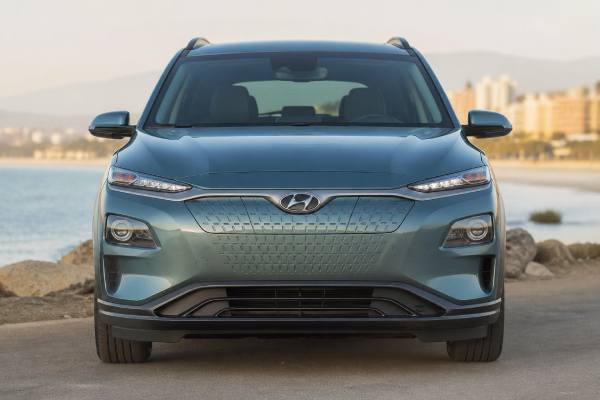
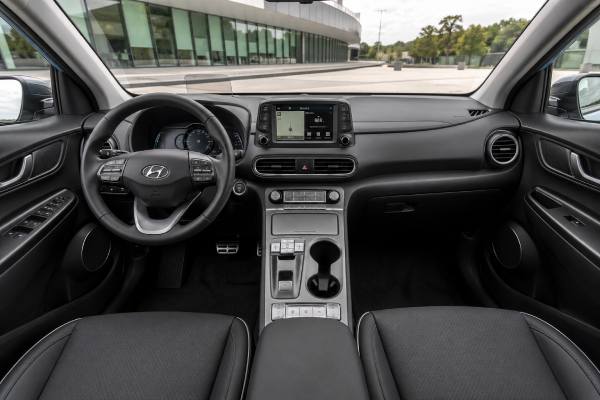
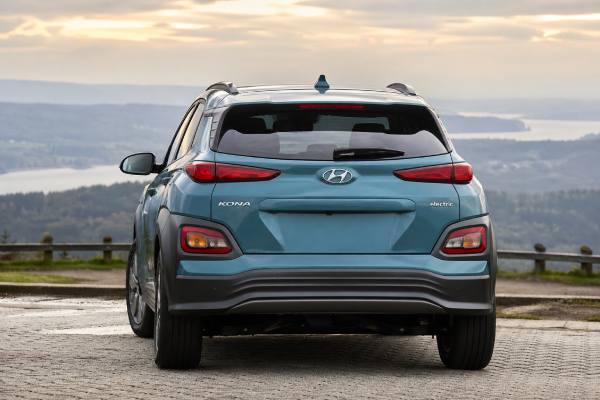
The Hyundai KONA Electric OS EV with the 100 kW front motor is the smaller-battery version of Hyundai’s first-generation electric crossover. Sold in many markets from 2018 through 2021, it paired a 39.2 kWh lithium-ion polymer battery with a compact SUV body, strong efficiency, and a surprisingly mature EV driving experience. It is not the long-range 64 kWh model, but it still has clear strengths: low energy use, useful torque, simple front-wheel-drive packaging, and a well-controlled ride for a small crossover. For used buyers, the key is understanding the exact market specification, charging hardware, battery warranty status, and recall history. Early Kona Electric models also need careful checks for high-voltage battery campaigns, coolant service actions, charge-port condition, and reduction-gear noise. A good example remains an efficient, easy-to-own commuter EV with enough range for daily use and shorter regional trips.
Quick Overview
- Efficient 100 kW motor gives smooth urban performance and modest highway energy use.
- 39.2 kWh battery suits daily commuting better than frequent long-distance motorway travel.
- Check recall completion, coolant service history, and battery state-of-health before buying.
- Typical official DC 10–80% charging time is about 47–48 minutes.
- Brake fluid and coolant service intervals depend on market, but annual inspection is important.
Guide contents
- Hyundai KONA Electric OS EV Basics
- Hyundai KONA Electric OS EV Specs
- Hyundai KONA Electric OS EV Trims
- Reliability, Issues and Service Actions
- Maintenance Schedule and Used Buying
- Real World Driving and Charging
- Rivals and Market Position
Hyundai KONA Electric OS EV Basics
The 100 kW Hyundai KONA Electric OS EV is the standard-range version of the first-generation Kona Electric. In metric markets it is usually described as the 39.2 kWh or 136 PS model; in horsepower terms, its 100 kW output equals about 134 hp. It uses a single permanent-magnet synchronous motor mounted at the front, driving the front wheels through a single-speed reduction gear. Torque is the same headline figure as the larger-battery model at 395 Nm, so the car feels stronger from low speeds than its horsepower number suggests.
This version’s main appeal is efficiency rather than outright range. The 39.2 kWh battery gives an official WLTP range of roughly 289–305 km depending on model year and homologation version. In daily use, it is strongest in town and on mixed roads, where regenerative braking and low rolling resistance help it return very low consumption. At motorway speeds, the smaller battery becomes more noticeable, especially in winter or in heavy rain, but the car still performs well for its size and age.
The OS EV platform is not a dedicated skateboard EV platform in the modern sense, yet Hyundai packaged the car intelligently. The battery sits low in the body, helping stability and reducing the top-heavy feel that some small crossovers have. Cargo space remains practical at 332 L with the rear seats up, and the cabin gives a familiar small-SUV seating position rather than a low hatchback feel.
For ownership, the biggest distinction is between the early 2018–2019 cars and the updated 2021 facelift range. The facelift brought a cleaner nose, revised trim strategy in some markets, a broader digital cabin, and upgraded equipment. Charging hardware also depends on market and year. Some cars use a 7.2 kW single-phase onboard charger, while later European-market cars can have an 11 kW-class three-phase onboard charger rated at 10.5 kW.
The model’s best advantages are low running cost, manageable tyre and brake wear, and easy drivability. The limitations are also clear: DC fast charging is not especially fast by modern standards, the smaller pack is not ideal for repeated long motorway journeys, and used examples must be checked carefully for battery-related recalls or campaigns. Treated as an efficient daily EV rather than a long-range tourer, it remains a well-rounded used choice.
Hyundai KONA Electric OS EV Specs
Powertrain, Battery, and Efficiency
| Spec | Value |
|---|---|
| Model scope | Hyundai KONA Electric OS EV, 39.2 kWh, 100 kW FWD, 2018–2021 |
| Motor type | Permanent magnet synchronous motor |
| Motor count and axle | Single motor, front axle |
| System voltage | 327 V |
| Battery chemistry | Lithium-ion polymer |
| Traction battery capacity | 39.2 kWh |
| Battery pack layout | Floor-mounted high-voltage battery |
| Max power | 134 hp (100 kW, 136 PS) |
| Max torque | 395 Nm (291 lb-ft) |
| Battery thermal management | Liquid-cooled and electrically heated battery thermal system |
| Heat pump | UK 2021: customer option; Canada: fitted on many cold-climate cars |
| Official efficiency standard | WLTP |
| Rated efficiency | 14.3 kWh/100 km (230 Wh/mi) |
| Rated range | 289–305 km (180–189 mi) WLTP |
| Real-world highway at 120 km/h | 19–21 kWh/100 km (306–338 Wh/mi); 185–205 km (115–127 mi) |
Driveline and Charging
| Spec | Value |
|---|---|
| Drive unit | Single-speed reduction gear |
| Final drive ratio | 7.981:1 |
| Drive type | Front-wheel drive |
| Torque distribution | Front axle, traction-control managed |
| AC connector | Type 2, 230 V single-phase and 400 V three-phase on later European cars |
| DC connector | CCS Combo 2 |
| Charging port location | Front centre charge door |
| Onboard charger | 7.2 kW single-phase; 10.5 kW three-phase on later European-market cars |
| DC fast-charge compatibility | 50 kW and 100 kW CCS chargers |
| DC fast-charge peak | 44–50 kW on 39.2 kWh battery |
| Typical DC 10–80% average | 37–40 kW |
| Typical taper point | 60–70% state of charge |
| DC 10–80% time | 47–48 minutes |
| AC 10–100% time | 6:00 at 7.2 kW; 4:20 at 10.5 kW three-phase |
| Emergency cable time | 17 hours from 10–100% |
| Battery preconditioning for DC charging | Battery heater fitted; no navigation-triggered DC preconditioning |
Performance and Capability
| Spec | Value |
|---|---|
| 0–100 km/h | 9.7–9.9 seconds |
| 0–62 mph | 9.9 seconds |
| 0–60 mph | About 9.5 seconds |
| Top speed | 155 km/h (96 mph) |
| Payload | 427–485 kg (941–1,069 lb) |
| Roof load | 80 kg (176 lb) |
Chassis and Dimensions
| Spec | Value |
|---|---|
| Front suspension | MacPherson strut |
| Rear suspension | Multi-link |
| Steering | Column-mounted motor-driven power steering |
| Steering turns lock-to-lock | 2.5 |
| Turning circle | 10.4 m (34.1 ft) |
| Front brakes | 305 mm ventilated discs |
| Rear brakes | 300 mm solid discs |
| Parking brake | Electric parking brake |
| Wheels | 17 x 7.0J alloy |
| Tyres | 215/55 R17 94V |
| Ground clearance | 158 mm (6.2 in) |
| Length | 4,180 mm pre-facelift; 4,205 mm facelift |
| Width | 1,800 mm (2,070 mm including mirrors) |
| Height | 1,570 mm with roof rails |
| Wheelbase | 2,600 mm |
| Track front and rear | 1,564 mm front; 1,575 mm rear |
| Kerb weight | 1,535–1,593 kg (3,384–3,512 lb) |
| GVWR | 2,020–2,030 kg (4,453–4,475 lb) |
| Cargo volume | 332 L seats up; 1,114 L seats down, VDA |
Safety and Driver Assistance
| Spec | Value |
|---|---|
| Euro NCAP rating | 5 stars, 2017 test protocol |
| Euro NCAP adult occupant | 87% |
| Euro NCAP child occupant | 85% |
| Euro NCAP vulnerable road users | 62% |
| Euro NCAP safety assist | 60% |
| Airbags | Front, front-side, and curtain airbags |
| Child-seat anchors | ISOFIX outer rear seats; rear top tether points |
| Core stability systems | ABS, EBD, brake assist, ESC, traction control, hill-start assist |
| ADAS | Forward collision avoidance, lane keeping, lane following, smart cruise, blind-spot assist, rear cross-traffic assist by year and trim |
| EV driver aids | Regenerative braking paddles, drive modes, energy-use displays |
Fluids and Service Values
| Spec | Value |
|---|---|
| Reduction gear fluid | 70W API GL-4, TCGO-9 (MS517-14) |
| Reduction gear fluid capacity | 1.0–1.1 L (1.0–1.1 US qt) |
| Coolant type | Phosphate-based ethylene glycol coolant for aluminum radiator; low-conductivity EV coolant where specified |
| Coolant capacity without heat pump | 10.3–10.7 L (10.9–11.3 US qt) |
| Coolant capacity with heat pump | 10.7–11.2 L (11.3–11.8 US qt) |
| Brake fluid | FMVSS116 DOT 3 or DOT 4 |
| Brake fluid capacity | 0.7–0.8 L (0.74–0.85 US qt) |
| A/C refrigerant without heat pump | 550 ±25 g (19.4 ±0.9 oz) |
| A/C refrigerant with heat pump | 1,000 ±25 g (35.3 ±0.9 oz) |
| A/C compressor lubricant | POE, 180 ±10 g (6.34 ±0.35 oz) |
| Tyre pressure | 250 kPa (36 psi) |
| Wheel nut torque | 107–127 Nm (79–94 lb-ft) |
Hyundai KONA Electric OS EV Trims
The exact trim names depend heavily on market, but the 39.2 kWh KONA Electric generally sat below the 64 kWh version while still offering much of the same cabin, safety, and convenience equipment. In the UK, early cars used familiar grades such as SE, Premium, and Premium SE, while the 2021 facelift range introduced SE Connect and revised Premium specifications for the 39.2 kWh version. The 64 kWh battery often had access to higher trims, so buyers should not assume that every advertised “Kona Electric” feature applies to the 100 kW model.
Mechanically, the 39.2 kWh version keeps the same basic chassis layout as the bigger-battery car: front motor, front-wheel drive, single-speed reduction gear, MacPherson strut front suspension, and multi-link rear suspension. The key mechanical differences are battery capacity, battery output, kerb weight, charging behaviour, and long-distance usability. The 39.2 kWh car is lighter, which helps steering response and urban efficiency, but it cannot match the 64 kWh version for range or sustained touring flexibility.
Trim identifiers are useful when shopping used. A 39.2 kWh car normally shows “100 kW,” “136 PS,” or “39 kWh” in dealer descriptions. The 2021 UK facelift SE Connect 39 kWh typically has 17-inch alloy wheels, 10.25-inch navigation, Bluelink, rear camera, keyless entry, smart adaptive cruise with stop-and-go, regenerative braking paddles, and the digital instrument cluster. Premium adds desirable comfort and safety features such as full LED headlamps, heated front seats, heated steering wheel, front parking sensors, power-folding mirrors, wireless charging, Blind Spot Collision Avoidance Assist, and Rear Cross Traffic Collision Avoidance Assist.
The heat pump deserves special attention. In some cold-climate markets it was widely fitted, while in the UK facelift price list it appears as a paid option. A working heat pump can reduce winter cabin-heating energy use, but it does not remove the normal range penalty from cold batteries, winter tyres, wet roads, and motorway speed.
Safety equipment also moved by year and trim. Core passive safety includes front, side, and curtain airbags, seatbelt reminders, stability control, ISOFIX rear child-seat anchors, and top tether points. ADAS availability is more trim-sensitive. Forward collision assistance, lane keep assistance, lane follow assistance, and smart cruise were strong selling points by the facelift period, while blind-spot and rear cross-traffic functions were often tied to higher grades.
For safety ratings, the Kona generation achieved a 5-star Euro NCAP result under the 2017 protocol, with 87% adult occupant and 85% child occupant scores. The test was not a separate electric-only 39.2 kWh result, so it should be read as a body-structure and equipment-rating reference for the Kona family. When buying, confirm that all ADAS functions operate without warning lights. After windscreen replacement, front radar work, suspension repairs, or body repairs, camera and radar calibration records are important.
Reliability, Issues and Service Actions
The KONA Electric 39.2 kWh is generally efficient and mechanically simple, but it is still an early mass-market EV and should be judged by service history rather than mileage alone. The high-voltage battery, coolant loop, reduction gear, onboard charger, charge port, 12 V system, and ADAS sensors are the main areas to inspect.
The most serious service-action topic is the high-voltage battery recall history on early Kona Electric models. In affected markets, Hyundai issued campaigns for battery short-circuit fire risk, including BMS software updates, inspection, temporary state-of-charge limits, and battery system assembly replacement where required. Severity is high because the risk involves fire while parked, charging, or driving, but prevalence is VIN-specific. The correct buying approach is simple: run an official VIN recall check and ask the seller for dealer paperwork showing campaign completion.
Common or occasional issues include:
- Coolant warnings: A “refill inverter coolant” or coolant-supplement warning may appear even when the reservoir level looks normal. Likely causes include coolant-flow restriction, air trapped after service, sensor issues, or cooling-circuit debris. Remedy is not a casual top-up; the car needs dealer-level diagnosis, correct low-conductivity coolant where specified, and proper bleeding or flushing.
- Reduction-gear noise: A rhythmic tapping, rumble, whine, or speed-related growl can point to reduction-gear, motor bearing, or driveline alignment issues. Severity ranges from medium to high because out-of-warranty drive-unit work is expensive. A quiet test drive from cold and warm is essential.
- 12 V battery weakness: Like many EVs, the Kona can suffer from low-voltage battery problems that trigger odd warnings, failed start-up, or communication faults. This is usually a low-cost issue compared with high-voltage faults, but it can confuse diagnosis.
- Brake corrosion: Regenerative braking means the friction brakes may be used lightly. In wet or salty climates, discs can rust and pads can stick if the car is not periodically braked firmly and inspected.
- Charge-port wear: Check the front charge door, latch, seals, pins, and water drainage. Slow AC charging, interrupted sessions, or connector heat can indicate port, cable, EVSE, or onboard-charger concerns.
Battery degradation is usually moderate when the car has been charged sensibly, but a small battery has less buffer for range loss than the 64 kWh version. Ask for a battery state-of-health report, check the displayed range after a full charge, and compare energy consumption against recent driving conditions. Do not judge battery health from the guess-o-meter alone.
HV isolation faults are rare but important. Warning messages, refusal to charge, reduced power, or HV system alarms can be caused by moisture ingress, damaged connectors, coolant leaks, insulation faults, or prior poor repair work. Any such warning deserves professional EV diagnosis, not repeated clearing of fault codes.
Before purchase, request:
- Official VIN recall and campaign status.
- Dealer service invoices, especially coolant, BMS, and battery-related work.
- Evidence of correct reduction-gear fluid inspections or changes.
- A battery state-of-health printout or diagnostic report.
- Confirmation that both AC and DC charging work correctly.
- A test drive that includes acceleration, coasting, regen, braking, and low-speed manoeuvres.
Maintenance Schedule and Used Buying
Maintenance is lighter than on a petrol crossover, but it is not maintenance-free. The KONA Electric has no engine oil, spark plugs, exhaust system, clutch, or conventional automatic gearbox service, yet it still needs regular inspection of brakes, tyres, coolant, reduction gear, suspension, steering, air conditioning, software, and the 12 V battery.
A practical ownership schedule for a used 39.2 kWh KONA Electric is:
- At every charge stop or long trip: Check tyre condition, visible coolant level, washer fluid, warning messages, and charge-port condition.
- Every month: Check tyre pressures, tread wear, exterior lights, coolant level, and signs of underbody damage.
- Every 12,000–15,000 km or 12 months: Inspect brakes, brake hoses, suspension joints, steering boots, driveshaft boots, chassis fasteners, coolant system, 12 V battery health, high-voltage warnings, tyres, and charging operation.
- Every 24,000–30,000 km or 24 months: Replace the cabin air filter, service or clean brake hardware where needed, and inspect air-conditioning performance.
- Every 36 months or around 60,000 km: Replace low-conductivity coolant where the market schedule requires it, using the exact Hyundai-approved coolant type.
- Every 48 months or around 48,000 km in schedules using this interval: Replace brake fluid with the specified DOT 3 or DOT 4 fluid.
- By 4–6 years: Test the 12 V battery carefully and budget for replacement if voltage recovery is weak.
- By 90,000–120,000 km: Pay close attention to reduction-gear noise, suspension wear, coolant service history, and brake condition.
Severe-use conditions shorten the inspection mindset even if the official schedule does not always list a separate EV interval. Frequent DC fast charging, repeated high-speed motorway driving, mountain routes, extreme cold, high heat, salted winter roads, and heavy urban stop-start work all justify more frequent checks.
For used buying, the battery is the headline item but not the only expensive component. Ask the seller to charge the car to 100% before inspection if practical, then note the displayed range, battery percentage, recent efficiency, and outside temperature. A strong 39.2 kWh car should feel consistent and predictable rather than showing sudden state-of-charge drops. During a DC charging test, look for clean session start-up, no port errors, and sensible tapering as the battery warms and fills.
Check the heat pump if fitted. It should provide efficient cabin heat without strange compressor noises or persistent HVAC faults. Confirm that the coolant reservoir is filled with the correct fluid, not a generic substitute. Blue low-conductivity coolant systems are particularly sensitive to correct procedure and bleeding.
On the chassis, inspect the underside, subframes, battery tray edges, underbody covers, fasteners, brake pipes, and suspension arms for corrosion or impact damage. The front charge door is exposed to weather, stone chips, and pressure-washer abuse, so its seal and hinge matter more than they might on a rear charge-port design.
The best examples are usually late 2020 or 2021 cars with full dealer history, completed campaigns, working heat pump if desired, LED headlights, advanced safety equipment, and documented battery health. Avoid cars with unresolved HV warnings, missing recall proof, repeated coolant warnings, noisy reduction gears, damaged charge ports, or unclear accident history around the battery area.
Long-term durability is promising when maintained correctly. Battery longevity should be good for normal daily use, but high-cost risks remain the traction battery, drive unit, onboard charger, coolant-system repairs, and ADAS sensor work after body damage.
Real World Driving and Charging
The 100 kW KONA Electric feels quicker than its horsepower rating suggests because the 395 Nm torque arrives instantly. Around town, it is responsive, quiet, and easy to place. Eco mode softens response and helps efficiency, Normal is the best everyday setting, and Sport sharpens the first part of accelerator travel. The front tyres can chirp if the road is wet and the driver asks for full torque from a standstill, but traction control is usually quick and predictable.
The low-mounted battery helps the car feel more settled than a petrol Kona. Body roll is present, but the car does not feel loose or top-heavy. Steering is light, accurate, and better suited to urban and suburban driving than enthusiastic back-road use. Ride quality is generally good on 17-inch wheels with 215/55 tyres; these tyres also help efficiency and road noise compared with larger, lower-profile wheel packages.
Regenerative braking is one of the car’s strengths. Steering-wheel paddles let the driver choose the regen level, from coasting to stronger deceleration. Many drivers adapt quickly because the system gives clear control without forcing one-pedal driving all the time. The brake pedal blends regenerative and friction braking smoothly in normal use, although brake discs still need periodic firm use to prevent corrosion.
Real range depends strongly on speed and temperature. In mild city use, careful drivers can exceed the official range because low-speed EV efficiency is excellent. In mixed use, around 240–280 km is realistic for many owners. At 110–120 km/h, expect roughly 185–225 km depending on wind, temperature, tyres, rain, and HVAC use. Cold weather can reduce practical range by 20–30%, especially on short trips where the cabin and battery never fully settle.
Typical consumption looks like this in real use:
- City, mild weather: about 11–14 kWh/100 km.
- Mixed driving: about 14–17 kWh/100 km.
- Motorway at 100–120 km/h: about 17–21 kWh/100 km.
- Cold motorway use: about 20–24 kWh/100 km.
Charging is predictable but not fast by current EV standards. At home, a 7.2 kW wallbox can take the battery from 10–100% in about six hours. Later three-phase European cars can reduce that substantially on compatible AC supplies. A domestic emergency cable is best kept for backup because a 10–100% charge takes about 17 hours.
On DC, the smaller battery typically charges from 10–80% in just under 50 minutes. The headline compatibility with 100 kW chargers does not mean the 39.2 kWh pack will hold 100 kW. In practice, it peaks much lower and tapers as the state of charge rises. Starting with a cold battery can slow charging sharply, and this generation does not have modern route-based preconditioning that automatically warms the pack before a rapid charger.
With passengers and luggage, stability remains good, but the smaller battery makes energy planning more important. The 39.2 kWh KONA Electric is at its best as a refined commuter and regional car. It can travel longer distances, but its charging speed and battery size mean a 64 kWh Kona, Kia e-Niro, or later EV platform is better for frequent motorway touring.
Rivals and Market Position
The 39.2 kWh KONA Electric sits in an interesting used-EV space. It is more SUV-like than a Renault Zoe, more efficient than many larger crossovers, and often cheaper than long-range versions of the Kona or Kia e-Niro. Its main rivals include the Nissan Leaf 40 kWh, Kia e-Niro 39.2 kWh, Kia Soul EV 39.2 kWh, Peugeot e-2008 50 kWh, MG ZS EV, Renault Zoe R135, and entry versions of the Volkswagen ID.3.
Against the Nissan Leaf 40 kWh, the Hyundai’s biggest advantage is liquid battery thermal management. The Leaf is simple and popular, but its battery cooling approach makes repeated rapid charging and hot-climate use more sensitive. The Kona also has strong efficiency and a crossover driving position. The Leaf counters with a roomier-feeling cabin in some areas and a large used supply.
Against the Kia e-Niro, the Kona feels smaller and slightly more compact inside. The e-Niro is more practical for families, but it is closely related mechanically and often costs more. If the buyer does not need the Kia’s extra cabin space, the Kona can be the sharper-value choice.
Compared with the Peugeot e-2008 and early MG ZS EV, the Kona’s main advantage is efficiency. The Peugeot has a more stylish interior and a larger nominal battery, while the MG offers value and space. The Hyundai, however, usually delivers better energy use at similar speeds, which narrows the practical range gap.
Compared with the Renault Zoe R135, the Kona feels more substantial and more crossover-like. The Zoe can be very efficient in town and may offer strong AC charging depending on version, but the Kona’s CCS rapid charging and SUV format make it more flexible for many households.
The Volkswagen ID.3 changed expectations with a dedicated EV platform, rear-wheel drive, and more interior space. A used ID.3 can be a better family EV, especially with the larger battery, but early software reputation and higher purchase prices may push some buyers back toward the simpler Kona.
The best reason to choose the 39.2 kWh KONA Electric is not that it beats newer EVs on every metric. It does not. Its case is based on efficiency, proven hardware, compact dimensions, good equipment, useful safety technology, and manageable ownership costs. Buyers who need regular 300 km highway legs should choose the 64 kWh model or a newer EV. Buyers who drive mostly locally, charge at home, and want a small crossover with low energy consumption should keep the 100 kW KONA Electric on the shortlist.
References
- Hyundai announces New KONA Electric prices and specifications 2021 (Manufacturer Specifications) ([Hyundai News][1])
- Hyundai KONA EV. Specifications. 2021 (Manufacturer Specifications)
- OS EV CAN-E 7.qxp 2023 (Owner’s Manual) ([Hyundai Canada][2])
- Hyundai KONA 2017 (Safety Rating) ([Euro NCAP][3])
- Part 573 Safety Recall Report 21V-127 2021 (Recall Database)
Disclaimer
This article is for informational purposes only and is not a substitute for professional diagnosis, repair, or inspection by a qualified EV technician. Specifications, torque values, service intervals, fluids, charging hardware, safety equipment, and repair procedures can vary by VIN, market, model year, trim, and equipment. Always verify details against the official service documentation for the exact vehicle.
If this guide helped you, please consider sharing it on Facebook, X/Twitter, or your preferred social platform to support our work.