
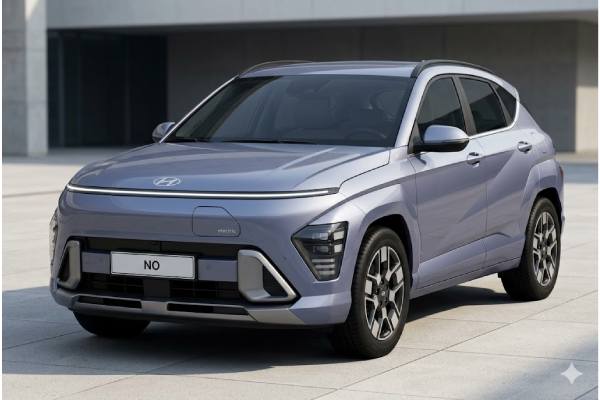
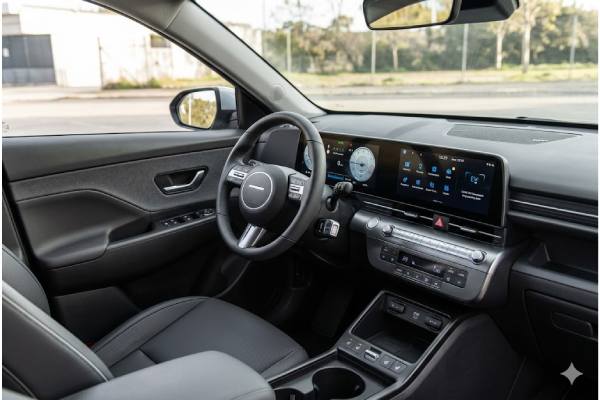
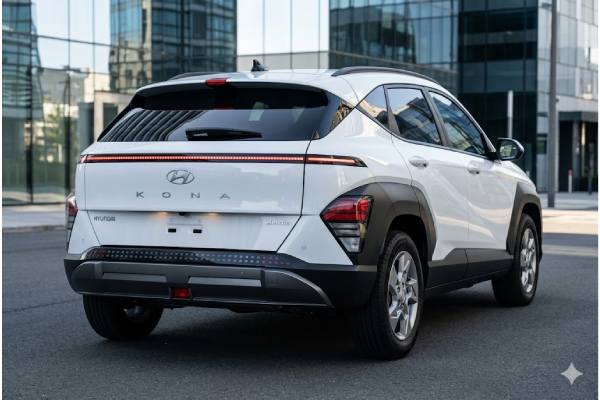
The second-generation Hyundai KONA Electric, known by the SX2 EV platform code, moved the model from a converted small crossover into a more mature electric SUV with better packaging, more cabin space, updated driver assistance, and a stronger technology package. The 150-kW version is the long-range front-wheel-drive model sold in several markets with a battery around 64.8–65.4 kWh, depending on region and type-approval method.
Its appeal is straightforward: useful range, compact dimensions, easy home charging, and low running costs without the size or price jump of larger EVs. The main compromises are equally clear. It is not an ultra-fast-charging 800-volt EV, it is front-wheel drive only in this specification, and wheel choice can make a visible difference to range and ride comfort.
Quick Overview
- The 150-kW motor gives the KONA Electric SX2 smooth, quick daily performance with 201 hp and 255 Nm of torque.
- The long-range battery delivers strong real-world efficiency, especially on 17-inch wheels and mixed urban use.
- DC fast charging is practical but not class-leading, with a typical 10–80% stop of about 43 minutes.
- Used buyers should verify recall completion, charging behavior, 12 V battery health, and a documented traction-battery state-of-health report.
- Tyre rotation and brake inspections are typically needed about every 8,000 miles or 12 months, depending on market schedule.
Table of Contents
- KONA Electric SX2 Long-Range Profile
- KONA Electric SX2 Technical Specs
- KONA Electric SX2 Trims and Safety
- Reliability, Issues and Service Actions
- Maintenance and Used Buyer Checks
- Real Driving, Range and Performance
- KONA Electric Rivals Compared
KONA Electric SX2 Long-Range Profile
The Hyundai KONA Electric SX2 is the second-generation KONA EV, introduced globally from 2023 and sold in North America mainly from the 2024 model year. The version covered here is the long-range front-wheel-drive model with a single 150-kW permanent-magnet motor, a single-speed reduction gear, and a high-voltage battery rated around 64.8 kWh in North American specifications. In parts of Europe and other WLTP markets, closely related long-range versions may be listed with a 65.4-kWh battery and a slightly different power rating, so exact figures should always be checked by VIN and market.
Compared with the first-generation KONA Electric, the SX2 feels like a larger, more refined vehicle. It has a longer wheelbase, more cargo room, a more spacious rear seat, a cleaner digital cockpit, and a wider spread of safety and convenience technology. It still sits in the compact crossover class, but it no longer feels as narrow or compromised as the earlier model.
The 201-hp version is the sweet spot of the range. The smaller-battery version is cheaper and efficient, but the long-range model better matches the way most buyers use an EV: commuting during the week, running errands without charging anxiety, and taking occasional highway trips. With the 17-inch wheel setup, EPA-rated range sits around the low-260-mile mark, while 19-inch wheel versions give away range for style and handling sharpness.
The powertrain is simple and familiar by modern EV standards. A single front motor sends 255 Nm of torque to the front wheels through a fixed reduction gear. There is no multi-speed transmission, clutch pack, or rear motor in this specification. That keeps mechanical complexity low, but it also means the front tyres do all the work: steering, acceleration, regenerative braking, and traction management. In dry conditions the setup works well; in heavy rain or snow, a smooth right foot and good tyres matter.
The KONA Electric’s advantages are strongest in day-to-day use. It is easy to park, quiet at urban speeds, economical in stop-start driving, and quick enough to feel relaxed in traffic. Regenerative braking can be adjusted with steering-wheel paddles, and stronger regeneration modes make one-pedal-style driving natural once the driver adapts. The cabin layout is also more practical than before, with better visibility, physical controls for common functions, and enough rear-seat space for adults on shorter journeys.
Its main limitation is charging speed. The SX2 KONA Electric uses a 400-volt-class charging system and peaks around 100 kW on DC fast charging. That is enough for regular regional trips, but it is not in the same league as Hyundai’s larger E-GMP models such as the IONIQ 5, which can charge much faster under ideal conditions. On a long journey, the KONA Electric rewards drivers who plan slightly longer but less frequent charging stops rather than expecting ultra-short rapid-charge sessions.
For ownership, the best version depends on priorities. A long-range SEL or equivalent 17-inch-wheel model is usually the most efficient and rational choice. Higher trims add better audio, more driver-assistance hardware, ventilated seats, parking cameras, and premium interior features, but they may also bring larger wheels that reduce range and add road noise. The N Line appearance package improves visual appeal but is not a performance upgrade in the mechanical sense.
As a used EV, the KONA Electric SX2 is still relatively new, so long-term failure patterns are not as mature as older electric models. That makes paperwork especially important. A strong example should have completed recalls, no unresolved high-voltage warnings, clean charging-port hardware, good tyres, a healthy 12 V battery, and a battery health report showing no abnormal imbalance or degradation.
KONA Electric SX2 Technical Specs
Powertrain and Battery
| Specification | Value |
|---|---|
| Model scope | Hyundai KONA Electric SX2 EV long-range, 150-kW front-drive version |
| Body style | 5-door compact electric SUV |
| Powertrain type | Battery electric vehicle |
| Motor type | Permanent-magnet synchronous motor |
| Motor count and axle | Single front motor |
| Maximum power | 201 hp (150 kW) |
| Maximum torque | 255 Nm (188 lb-ft) |
| Drive type | Front-wheel drive |
| Battery type | Lithium-ion high-voltage traction battery |
| Battery system capacity | 64.8 kWh |
| Battery supplier | CATL |
| System voltage | 358 V |
| Battery structure | 1P96S |
| Battery location | Underfloor traction-battery pack |
| Battery heating | Standard battery heating system |
| Thermal management | Liquid-cooled high-voltage battery and power electronics |
| 12 V system | Conventional 12 V auxiliary battery |
Efficiency, Range and Charging
| Specification | Value |
|---|---|
| EPA range, 17-inch long-range version | 420 km (261 mi) |
| EPA efficiency, 17-inch long-range version | 18.0 kWh/100 km (290 Wh/mi) |
| EPA combined rating, 17-inch long-range version | 116 MPGe |
| EPA range, 19-inch version | 370 km (230 mi) |
| EPA efficiency, 19-inch version | 19.3 kWh/100 km (310 Wh/mi) |
| WLTP range, long-range 17-inch version | Up to 513 km (319 mi) |
| WLTP efficiency, long-range 17-inch version | 14.7 kWh/100 km |
| Typical 120 km/h highway consumption | 17–19 kWh/100 km (275–305 Wh/mi) |
| Typical 120 km/h highway range | 350–380 km (220–235 mi) |
| AC connector, North America | SAE J1772 |
| DC connector, North America | CCS1 |
| AC connector, Europe | Type 2 |
| DC connector, Europe | CCS2 |
| Charging port location | Front grille, driver-side area |
| Onboard AC charger | 10.8 kW |
| Marketed AC charging rate | 11 kW |
| DC fast-charge peak | 100 kW class |
| Typical DC 10–80% average power | 60–65 kW |
| DC fast charge, 10–80% | About 43 min |
| AC charge, 10–100% at 11 kW | About 6 h 14 min |
| Battery conditioning | Battery conditioning and heating system |
Driveline and Performance
| Specification | Value |
|---|---|
| Transmission | Single-speed reduction gear |
| Final drive ratio | 10.65:1 |
| Shift control | Shift-by-wire |
| Drive modes | Eco, Normal, Sport, Snow |
| 0–100 km/h | About 7.8 s |
| 0–60 mph | About 7.1–7.6 s |
| Top speed | 172 km/h (107 mph) |
| Regenerative braking | Paddle-adjustable regenerative braking |
| Parking brake | Electric parking brake |
| European braked towing capacity | 750 kg (1,653 lb) |
| European unbraked towing capacity | 300 kg (661 lb) |
| European payload range | 425–522 kg (937–1,151 lb) |
Chassis, Dimensions and Cargo
| Specification | Value |
|---|---|
| Front suspension | MacPherson strut with coil spring |
| Rear suspension | Multi-link |
| Steering | Rack-and-pinion C-MDPS |
| Steering ratio | 13.6:1 |
| Steering turns, lock-to-lock | 2.5 |
| Turning circle, kerb-to-kerb | 10.6 m (34.8 ft) |
| Front brakes | 305 x 25 mm ventilated discs |
| Rear brakes | 300 x 10 mm solid discs |
| ABS system | 4-channel, 4-sensor ABS with EBD |
| Standard 17-inch tyres | 215/60 R17 |
| Available 19-inch tyres | 235/45 R19 |
| Length | 4,356 mm (171.5 in) |
| Width | 1,826 mm (71.9 in) |
| Height | 1,575–1,580 mm (62.0–62.2 in) |
| Wheelbase | 2,659 mm (104.7 in) |
| Ground clearance | 150 mm (5.9 in) |
| Cargo volume, rear seats up | 722 L (25.5 ft³), SAE |
| Cargo volume, rear seats folded | 1,804 L (63.7 ft³), SAE |
| Front storage volume | 27 L (0.95 ft³) |
| Roof rail load | 100 kg (220 lb) |
Safety and Service Data
| Specification | Value |
|---|---|
| Euro NCAP rating | 4 stars |
| Euro NCAP adult occupant | 80% |
| Euro NCAP child occupant | 83% |
| Euro NCAP vulnerable road users | 64% |
| Euro NCAP safety assist | 60% |
| IIHS small overlap front | Good |
| IIHS updated moderate overlap front | Good |
| IIHS updated side impact | Good |
| IIHS headlight rating | Acceptable |
| IIHS pedestrian front crash prevention | Good |
| Airbags | 6 |
| Driver assistance systems | FCA, LKA, LFA, BCW, RCCA, SEW, HBA, ISLA, HDA, NSCC |
| Reduction gear oil capacity | 2.8 L (3.0 US qt) |
| Brake fluid specification | DOT 4 |
| Wheel nut torque | 108–127 Nm (80–94 lb-ft) |
KONA Electric SX2 Trims and Safety
The trim structure depends heavily on market, but the broad pattern is easy to understand. In North America, the entry SE typically uses the smaller battery and lower-output motor, while SEL, N Line, and Limited versions carry the 150-kW motor and long-range battery. In Europe and some other WLTP markets, the trim names differ, and the long-range version may be listed with a 65.4-kWh battery and a 160-kW rating rather than the North American 150-kW figure.
For the 201-hp specification, the most important trim distinction is not the motor. It is the wheel, tyre, equipment, and driver-assistance package. Long-range versions with 17-inch wheels are usually the efficiency choice. They ride more comfortably, produce less tyre roar, and deliver the strongest range. Versions on 19-inch wheels look sharper and may feel more alert in direction changes, but they reduce range and can make the ride busier on broken pavement.
In the U.S. lineup, the SEL is often the rational long-range pick because it pairs the larger battery and 150-kW motor with the more efficient wheel package. The N Line adds sportier exterior and interior treatment, usually with 19-inch wheels, but it should not be mistaken for a higher-output performance model. The Limited adds the richest technology set, including features such as surround-view monitoring, premium audio, ventilated front seats, remote parking functions in some configurations, and more complete driver-assistance equipment.
Quick identifiers are useful when checking a car in person. A long-range 201-hp SX2 usually has trim badging that matches SEL, N Line, Limited, Premium, Ultimate, or a comparable market grade rather than the most basic short-range trim. Larger 19-inch wheels, N Line exterior details, ventilated seats, a Bose audio system, a surround-view camera display, and remote smart parking functions point to higher equipment grades. Build sheets, window stickers, and VIN-based Hyundai records are still the safest way to confirm battery size and motor output.
Safety equipment is one of the SX2’s stronger points. Standard and available systems include forward collision-avoidance assist, pedestrian and cyclist detection, lane keeping, lane following, blind-spot monitoring, rear cross-traffic assist, safe exit warning, high-beam assist, intelligent speed-limit assistance, adaptive cruise control, and highway driving assistance. Exact availability depends on trim, market, and model year, but even mid-grade versions are generally well equipped by compact-SUV standards.
The crash-test picture is good but not perfect. Euro NCAP awarded the KONA a four-star rating under the stricter 2023 protocol, with solid adult and child protection but more modest vulnerable-road-user and safety-assist scores. The IIHS rating for the 2024–2026 KONA line is stronger in several crash categories, with Good ratings in major structural tests and Acceptable-rated headlights. The important ownership point is that safety ratings are tied to specific test protocols and equipment, so a local rating may not apply exactly to every region or trim.
The SX2’s structure benefits from a modern unibody shell and a low-mounted battery pack, which helps stiffness and lowers the centre of gravity. Child-seat provisions include ISOFIX or LATCH anchors depending on region, and rear-seat packaging is notably better than the previous KONA Electric. Families should still test rear-facing child seats before purchase, because the KONA remains a compact SUV rather than a large family crossover.
After body, glass, suspension, or bumper work, driver-assistance calibration matters. A replaced windshield may require camera calibration. A repaired front bumper can affect radar operation. Wheel alignment and ride-height changes can also influence lane-support behavior. Warning lights that appear after collision repair should not be dismissed as harmless software quirks; they often indicate that a sensor needs calibration, coding, or replacement.
Reliability, Issues and Service Actions
The SX2 KONA Electric is still a relatively young model, so reliability expectations should be framed carefully. It does not yet have the long mileage history of the first-generation KONA Electric, Kia Niro EV, or early Tesla Model 3. So far, the main ownership risks are not a single dominant failure pattern but the normal weak points of a modern compact EV: 12 V battery behavior, charging hardware, software updates, brake corrosion, tyre wear, and occasional high-voltage diagnostic faults.
The most common low-cost issue is brake-hardware corrosion or noise. Because regenerative braking handles much of the stopping in normal driving, the friction brakes may see light use for days at a time. In damp or salted climates, that can leave rust on the discs, uneven pad deposits, or scraping noises after the car sits. The remedy is usually inspection, cleaning, and occasional firm friction-brake use where safe. Severe corrosion, deep scoring, or seized slider pins need normal brake service.
Tyre wear is another common running-cost item. The 201-hp front-drive model delivers instant torque through the front axle, and the battery adds mass compared with a petrol KONA. Cars driven hard from low speed, run with incorrect pressure, or left out of alignment can wear front tyres quickly. The 19-inch package tends to be more expensive to replace and less forgiving over potholes. A good used example should have four matching EV-appropriate tyres, even wear, and no signs of inner-edge scrub.
The 12 V battery is a small part with outsized importance. Like most EVs, the KONA Electric depends on the 12 V system to wake control modules, close high-voltage contactors, operate locks, and support accessories. Symptoms of a weak or discharged 12 V battery can include no-start behavior, odd warning messages, intermittent infotainment faults, or remote-app failures. The likely causes are normal battery aging, repeated short accessory use, software wake/sleep behavior, or an external accessory draw. Testing and replacement are usually inexpensive compared with high-voltage diagnosis, so the 12 V battery should be checked before assuming a traction-battery fault.
Charging complaints are occasional rather than universal. Level 2 interruptions, slow AC charging, charge-port latch errors, or failed charge scheduling can come from the EVSE, charge-port hardware, onboard charger, vehicle charging software, or thermal limits. The correct approach is to test the vehicle on more than one known-good charger, inspect the port for heat marks or bent pins, confirm latch operation, and check whether Hyundai has issued a charging-control update for that VIN. Replacing hardware before checking software can be an expensive mistake.
High-voltage faults are rare but serious. Warning messages such as “Check electric vehicle system,” sudden charging refusal, reduced power, or isolation-fault codes require proper EV diagnostic equipment. Possible causes include moisture intrusion at connectors, a contactor or relay issue, a battery-management fault, onboard charger failure, DC–DC converter faults, or insulation resistance below threshold. These systems should be diagnosed by technicians trained for high-voltage work; probing orange cables or opening HV components without the correct procedure is unsafe.
Drive-unit and reduction-gear issues appear uncommon at this stage, but a road test should still include listening for speed-related whine, clicking under load, vibration on acceleration, or clunks when changing from drive to reverse. A faint electric whir is normal. Grinding, rumbling, or a tone that rises with road speed can point toward bearings, reduction-gear wear, half-shafts, mounts, or tyre noise. The reduction gear has a specified oil capacity, and service records are worth checking on higher-mileage or severe-use cars.
Software and calibrations deserve special attention. Modern Hyundai EVs rely on control software for battery conditioning, thermal management, charging, ADAS, infotainment, and remote connectivity. Updates may improve charging behavior, reduce nuisance warnings, address module communication issues, or refine battery-conditioning logic. A dealer service history showing completed updates is more valuable than a generic “full service history” stamp with no detail.
Recalls and service campaigns must be checked by VIN. In the U.S., certain 2024 KONA vehicles were covered by a recall involving the 12 V positive battery cable, where protective sheathing was installed to reduce short-circuit and fire risk in a crash-related scenario. The affected range is VIN-specific, so the presence or absence of a recall depends on production details rather than model name alone. The remedy should be recorded in dealer history.
It is also important not to confuse SX2 issues with earlier KONA Electric battery recalls. The first-generation KONA Electric had well-known high-voltage battery recall activity in some markets. That history is relevant background for Hyundai EV ownership, but it should not be automatically applied to the SX2 long-range model. For the second-generation car, evidence should be VIN-specific: completed campaigns, battery-health data, charging logs, and current diagnostic scans.
Before buying, request:
- A Hyundai dealer printout showing recall and campaign completion.
- A traction-battery state-of-health report with cell-voltage balance data where available.
- Proof that the car charges correctly on AC and DC.
- A test drive from cold, including acceleration, regeneration, braking, and highway cruising.
- Inspection of the charge port, underbody panels, battery casing, coolant areas, and front subframe.
- Confirmation that all keys, charging cables, adapters, tyre-inflation equipment, and manuals are present.
A clean SX2 KONA Electric should feel quiet, smooth, and consistent. Walk away from cars with persistent high-voltage warnings, unexplained charging refusal, damaged battery undertrays, unresolved crash repairs, missing service records, or seller excuses about “software glitches” that have not been diagnosed.
Maintenance and Used Buyer Checks
The KONA Electric has fewer routine service items than a combustion-engine SUV, but it is not maintenance-free. Its ownership costs stay low only when tyres, brakes, coolant, software, charging hardware, and the 12 V system are looked after. The official service schedule varies by country, climate, mileage, and production specification, so the VIN-specific maintenance booklet remains the authority.
For normal use, a practical maintenance rhythm is built around annual checks and regular tyre rotation. Around every 8,000 miles or 12 months, expect tyre rotation, pressure checks, brake inspection, steering and suspension inspection, charging-port inspection, coolant-level checks, wiper and lighting checks, and a scan for stored EV-system faults. In markets that use a different official interval, follow the local schedule, but do not stretch inspections simply because the car has no engine oil.
The cabin air filter is a simple but important service item. It is commonly replaced about every 12–24 months, or sooner in dusty, humid, or high-pollen environments. A clogged cabin filter reduces HVAC performance, increases fan noise, and can make winter demisting less effective. On cars with a heat pump, weak cabin airflow can make owners think the heat pump is underperforming when the filter is actually the restriction.
Brake fluid still matters in an EV. Regeneration reduces pad wear, but the hydraulic brake system still uses hygroscopic brake fluid that absorbs moisture over time. A sensible approach is to inspect or test it annually and replace it according to the official time or moisture-content limit, commonly every two to four years depending on market guidance. Spongy pedal feel, dark fluid, or poor moisture-test results should be addressed promptly.
The friction brakes need more attention, not less, because they are used lightly. During service, inspect pads, discs, calipers, slider pins, parking-brake operation, and rear brake hardware. In wet or salted climates, occasional controlled friction-brake use can help clean the discs. If the car sits for long periods, expect surface rust and a scraping sound during the first few stops.
Tyres should be treated as a major EV service item. Rotate them regularly, keep pressures correct, and check alignment if the steering wheel is off-centre or the tread wears unevenly. The 17-inch setup is usually the best long-term choice for range, comfort, and replacement cost. The 19-inch setup looks better but can reduce range, increase road noise, and make pothole damage more expensive.
The reduction gear uses oil, even though there is no conventional transmission. Hyundai lists a 2.8-litre capacity for the reduction-gear lubricant on the 150-kW SX2 version. Some markets specify inspection only under normal use and replacement under severe conditions; others may give clearer distance-based guidance. For cars used in extreme temperatures, repeated high-speed driving, mountain routes, heavy loads, or frequent rapid acceleration, a fluid change around the severe-use interval is a reasonable item to discuss with a Hyundai EV technician.
Battery and power-electronics coolant should be inspected at scheduled services. The correct coolant type is important because high-voltage cooling systems may require specific low-conductivity fluid. Mixing generic coolant can create corrosion, conductivity, or warranty problems. Any coolant smell, unexplained level drop, pump noise, or thermal-management warning needs prompt diagnosis.
The 12 V battery should be tested annually after the first few years. Many EV owners focus on the traction battery and forget the small auxiliary battery, but a weak 12 V battery can immobilize an otherwise healthy EV. Replacement every three to five years is common in real-world use, with shorter life in extreme heat, frequent short trips, or cars loaded with dashcams and accessories.
For used buyers, the battery-health check is central. Ask for a state-of-health report, maximum and minimum cell-voltage spread, charge-history clues, and any record of pack or module replacement. A moderate amount of DC fast charging is not automatically bad, especially with proper thermal control, but repeated fast charging in extreme heat may accelerate ageing. More concerning signs include a sudden range drop, abnormal tapering at low state of charge, repeated charge failures, or large cell imbalance.
Charging hardware should be inspected physically and functionally. The charge flap should open and close cleanly, the latch should lock and release, seals should be intact, and pins should be clean with no heat discoloration. Test AC charging if possible and confirm the car reaches the expected onboard-charger rate on a suitable wallbox. For DC charging, look for a smooth session from a low-to-mid state of charge and check whether the car tapers normally rather than cutting power early.
Cooling and HVAC checks are especially important in cold climates. Confirm cabin heat, defrosting, battery conditioning, and heat-pump operation where fitted. A car that charges slowly in winter may simply have a cold battery, but persistent slow charging after preconditioning may point to a thermal-management, sensor, or software issue.
The best long-term purchase is usually a long-range 17-inch-wheel trim with complete service records, clean recall history, healthy tyres, and no high-voltage fault history. Higher trims are attractive if the equipment is important, but do not pay only for badges. Pay for battery health, charging reliability, clean structure, correct tyres, and documented maintenance.
Real Driving, Range and Performance
The 201-hp KONA Electric SX2 feels quicker than its power figure suggests in city driving because the motor delivers torque immediately. Step-off response is smooth in Eco and Normal modes and sharper in Sport. It is not a hot crossover, but it has enough punch to merge confidently, pass slower traffic, and make urban driving feel effortless. The single-speed drive unit means there are no shifts, no turbo lag, and no hesitation once the car is moving.
Front-wheel drive defines the character. In dry weather the traction-control system manages torque cleanly, but full-throttle launches can still make the front tyres work hard. In wet conditions, the car rewards progressive accelerator use. Snow mode softens response and helps stability, but the biggest winter upgrade is a quality set of winter tyres. There is no dual-motor all-wheel-drive version of this 201-hp SX2 specification in the main North American lineup.
Ride quality depends strongly on wheel choice. On 17-inch wheels, the KONA Electric is composed and comfortable for a compact SUV. The battery’s low placement helps body control, and the multi-link rear suspension gives the second-generation car a more settled feel than many budget EVs. On 19-inch wheels, steering response feels more immediate, but sharp impacts and coarse road noise become more noticeable.
Steering is light and predictable rather than talkative. Around town, that is a benefit because the car is easy to place and park. At highway speeds, it tracks well for its size, helped by the longer wheelbase compared with the previous generation. It does not feel as planted as a larger, wider EV such as an IONIQ 5 or Model Y, but it is stable enough for regular motorway use.
Braking feel is generally well judged. Hyundai’s adjustable regenerative braking lets the driver choose from light coasting to strong deceleration, with paddle controls making changes easy. Strong regeneration is useful in city traffic, while lower regen settings can feel smoother on open roads. The transition between regenerative and friction braking is mostly natural, though the friction brakes still need periodic use to prevent corrosion.
Efficiency is one of the KONA Electric’s main strengths. In urban and suburban driving, especially in mild weather, consumption can sit around 13–15 kWh/100 km, or roughly 210–240 Wh/mi. Mixed driving often lands around 15.5–17 kWh/100 km, depending on tyres, HVAC use, elevation, and speed. At 100–120 km/h, aerodynamic drag becomes more important, and consumption commonly moves into the 17–20 kWh/100 km range.
That means real range depends heavily on route. In mild mixed driving, a long-range 17-inch version can come close to its official rating. At 120 km/h on the highway, a realistic planning range of roughly 350–380 km is more sensible than expecting the full laboratory figure. In cold weather, especially with short trips and heavy cabin heating, usable range can drop by 15–30%. Preconditioning, garaging, moderate speed, and efficient tyres make a real difference.
Charging behavior is predictable but not especially fast by newer EV standards. At home, the 10.8-kW onboard charger is more than adequate; a full overnight charge is easy on a proper Level 2 wallbox. On DC fast charging, the KONA’s roughly 100-kW peak and about 43-minute 10–80% time are fine for occasional trips but behind faster 400-volt and 800-volt competitors. The best results come when the battery is warm and the session starts at a lower state of charge.
The charging curve matters more than the headline peak. The car may briefly approach its maximum rate, then taper as state of charge and battery temperature rise. Above 70–80%, charging slows enough that it is usually better to leave and continue driving unless the extra range is needed. For long trips, planning stops from about 10–15% to 75–80% usually saves time.
With passengers and cargo, the KONA Electric remains composed, but load reduces range and can make front-axle traction less crisp. Towing approval depends on market, and where towing is permitted, range can fall sharply. A modest trailer, roof box, bikes, or sustained mountain driving can reduce efficiency by 20–50% depending on speed and conditions. For regular towing, a larger EV with more battery and stronger thermal margins is the better tool.
The overall driving verdict is positive. The SX2 KONA Electric is quiet, easy, efficient, and quick enough for normal use. Its character is not sporty in a traditional sense, but it is more polished than the old model and more satisfying than many basic EV commuters. The best setup for most drivers is the long-range battery with 17-inch wheels, because that combination keeps the car’s strongest qualities intact.
KONA Electric Rivals Compared
The KONA Electric sits in a busy space between small electric hatchbacks and larger family EVs. It is more practical than many entry EVs, but it is not as roomy or fast-charging as the next class up. That middle ground is exactly why it works for many buyers: it gives enough range and equipment without forcing the size, weight, or price of a larger electric SUV.
The Kia Niro EV is its closest relative in spirit. It offers similar power, similar battery capacity, and a more conventional cabin shape. The Niro may appeal to buyers who want a calmer design and slightly more wagon-like practicality, while the KONA feels newer inside and more expressive outside. Charging performance is similar enough that the decision often comes down to price, equipment, seat comfort, and local availability.
The Hyundai IONIQ 5 is the clear upgrade within Hyundai’s own range. It is roomier, rides with more big-car composure, and charges much faster thanks to its E-GMP platform. It is also larger, more expensive, and less easy to park in tight urban streets. The KONA Electric is the better fit for drivers who mostly commute, charge at home, and want compact dimensions. The IONIQ 5 is better for frequent long-distance travel.
The Tesla Model Y is a tougher rival on range, software, charging-network access, and cargo space. It feels like a larger and more powerful vehicle, especially in dual-motor form. The KONA counters with a smaller footprint, more conventional controls, strong efficiency, and often a lower entry price. Buyers who value Tesla’s charging ecosystem may prefer the Model Y, while buyers who want a compact EV with traditional dealer support may prefer the Hyundai.
The Chevrolet Equinox EV is larger and can offer more range in some trims. It is a stronger choice for families who need rear-seat space and cargo capacity, but it is not as compact or city-friendly as the KONA. The Hyundai feels more like a small crossover that happens to be electric; the Equinox EV feels closer to a family-sized electric SUV.
The Volvo EX30 offers a different kind of appeal. It is stylish, very quick in dual-motor form, and more premium in image, but it is smaller inside than many people expect and its minimalist control layout will not suit everyone. The KONA is less dramatic but easier to live with for buyers who want physical controls, practical rear doors, and straightforward daily usability.
Volkswagen ID.4 and Nissan Ariya models also overlap depending on price and incentives. Both are larger and more comfortable for families, but they move the buyer into a bigger-vehicle class. The KONA Electric is easier to recommend when parking space, efficiency, and value matter more than maximum rear-seat width or cargo volume.
The strongest case for the KONA Electric SX2 is not that it beats every rival in every metric. It does not. It charges slower than the best Hyundai and Tesla alternatives, it lacks all-wheel drive in this version, and it gives up range on larger wheels. Its advantage is balance. In long-range 17-inch form, it offers useful real-world range, modest running costs, good safety equipment, improved cabin space, and a size that still suits dense cities.
For most buyers, the best choice is a long-range SEL, Premium, Preferred, or comparable mid-grade model with the efficient wheel package. Choose the Limited or Ultimate if the extra comfort and driver-assistance features matter. Choose the N Line for appearance, not for better efficiency or performance. Avoid any example with unresolved campaigns, questionable charging behavior, accident damage near the battery pack, or missing battery-health documentation.
References
- 2024 Kona Electric Specifications 2024 (Specifications)
- Fuel Economy of the 2025 Hyundai Kona Electric (17 inch Wheels) 2025 (EPA Efficiency)
- Euro NCAP | Hyundai KONA 2023 (Safety Rating)
- 2024 Hyundai Kona 2024 (Safety Rating)
- IMPORTANT SAFETY RECALL 2024 (Recall Notice)
Disclaimer
This article is for informational purposes only and is not a substitute for professional diagnosis, repair, or inspection. Specifications, torque values, service intervals, software campaigns, towing approval, charging equipment, and procedures can vary by VIN, market, production date, and installed equipment. Always verify critical information against the official owner’s manual, service documentation, warranty booklet, and dealer records for the specific vehicle.
If this information helped, consider sharing it on Facebook, X/Twitter, or your preferred automotive community to support our work.
7