
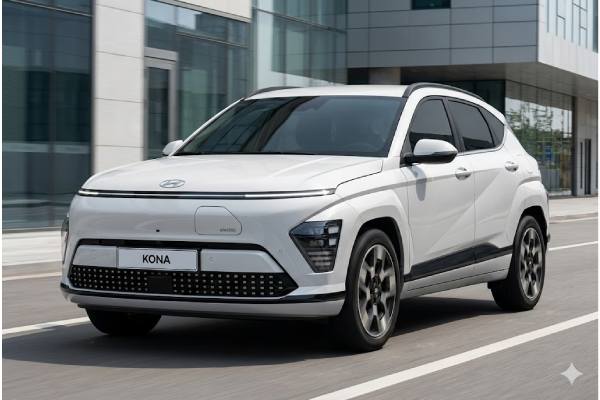
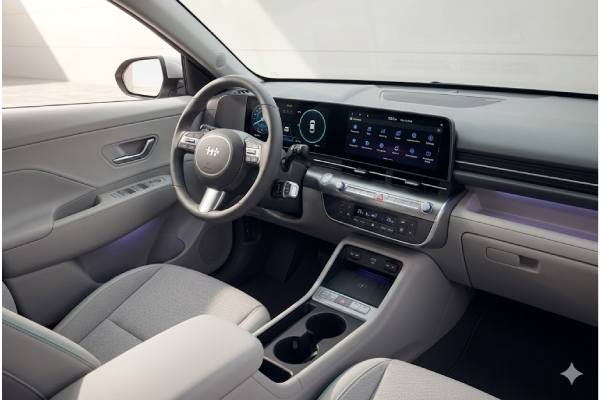
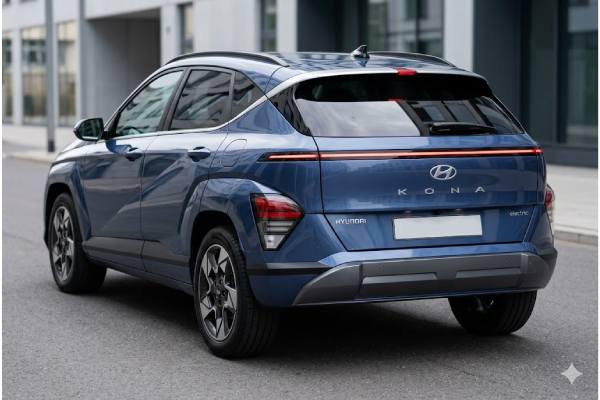
The second-generation Hyundai KONA Electric is a larger, more mature electric small SUV than the original model, and the 65.4 kWh, 160 kW version is the strongest front-wheel-drive version sold in many European and UK markets. It keeps the KONA’s practical urban size but adds more cabin space, better equipment availability, a longer official range, faster AC charging, heat-pump availability, vehicle-to-load functionality, and more advanced driver-assistance technology.
The important point is scope. This guide focuses on the SX2 EV KONA Electric with the 65.4 kWh battery and 160 kW electric motor, rated at about 215 hp. Some markets use different outputs, battery options, trim names, safety equipment, and warranties, so a VIN-specific check remains essential before buying or servicing one.
Quick Overview
- The 65.4 kWh KONA Electric is efficient for its size, with its best WLTP range achieved on 17-inch wheels.
- The 160 kW front motor gives strong everyday acceleration without making the car feel difficult to manage.
- Heat-pump availability, battery preconditioning, V2L, and strong standard driver assistance make it a well-rounded daily EV.
- The main ownership caveat is charging speed: around 100 kW peak DC charging is usable, but not class-leading.
- Key service items include regular EV system checks, brake fluid replacement, tyre rotation, and coolant service, with coolant first due at about 180,000 km or 10 years in the referenced schedule.
Table of Contents
- KONA SX2 EV at a Glance
- KONA SX2 EV Specs Data
- KONA SX2 EV Trims and Safety
- Reliability, Service Campaigns and Issues
- Maintenance and Used Buyer Checks
- Driving, Range and Charging Behavior
- KONA Electric Versus Key Rivals
KONA SX2 EV at a Glance
The SX2-generation KONA Electric is no longer just an electrified version of a small crossover. Hyundai developed this generation with electric packaging as a central part of the vehicle, and that shows in its proportions, cabin space, storage, charging hardware, and electronic features. It remains a compact SUV, but it feels less cramped than the first-generation KONA Electric and is more convincing as a small family car.
The 160 kW version uses a single front-mounted electric motor driving the front wheels through a single-speed reduction gear. Peak output is 160 kW, or about 215 hp, with 255 Nm of torque. In normal driving, the car feels quick rather than aggressive. The motor gives instant response at low speeds, useful mid-range pull for merging, and enough reserve for motorway overtakes. The front-wheel-drive layout also keeps weight, complexity, and cost under control, though it cannot provide the traction or bad-weather confidence of a dual-motor AWD EV.
The 65.4 kWh battery is the key version to focus on if range matters. In its most efficient configuration, usually with 17-inch wheels, the official WLTP range is around 513–514 km, or about 319 miles. With 19-inch wheels, the official figure drops noticeably, usually to about 453 km, or 282 miles. That wheel-size difference is not just a laboratory detail. The larger wheels add visual appeal and sharper turn-in, but they also increase rolling resistance, road noise, and energy use.
Real-world range depends heavily on speed, weather, tyres, terrain, and cabin heating. In mild mixed use, the long-range KONA Electric can feel like a genuine 400 km-plus EV. At steady highway speeds around 110–120 km/h, expect the usable range to fall closer to the low-to-mid 300 km band in good weather, and lower still in winter. The heat pump helps reduce heating losses, but it cannot cancel the energy penalty of cold air, dense air at speed, wet roads, winter tyres, or repeated fast driving.
Charging performance is practical rather than spectacular. The KONA Electric uses a 400 V-class electrical architecture, with DC charging peaking around 101 kW. A 10–80% DC fast-charge stop takes about 41 minutes under suitable conditions. That is adequate for occasional long trips, but slower than the best 800 V Hyundai, Kia, and Porsche platforms, and slower than some newer compact rivals with stronger charging curves. On AC, the 10.4–10.5 kW onboard charger is more useful for daily ownership, especially in markets with three-phase home or workplace charging.
As an ownership proposition, the SX2 EV’s strengths are balance and efficiency. It is not the quickest, cheapest, or fastest-charging electric SUV in its class. Its appeal comes from useful range, strong standard equipment, approachable driving manners, a sensible cabin, good cargo capacity for the footprint, and Hyundai’s broad EV experience. The best version for maximum range and comfort is the 65.4 kWh model on 17-inch wheels. The best version for equipment depends on market, but higher trims add useful driver-assistance, camera, audio, seating, and parking features that can matter more in daily use than the modest styling differences suggest.
KONA SX2 EV Specs Data
Model Scope
| Item | Specification |
|---|---|
| Brand | Hyundai |
| Model | KONA Electric |
| Generation / code | SX2 EV |
| Model years | 2023–present |
| Body style | 5-door small SUV |
| Powertrain type | Battery-electric vehicle |
| Reference version | 65.4 kWh Long Range FWD |
| Market basis | UK / Europe |
| Seats | 5 |
| Doors | 5 |
Powertrain, Battery and Efficiency
| Item | Specification |
|---|---|
| Motor type | Permanent-magnet synchronous motor |
| Motor count / axle | One front-mounted traction motor |
| Drive type | Front-wheel drive |
| System voltage | 398.5 V |
| Battery type | Lithium-ion polymer |
| Traction battery capacity | 65.4 kWh |
| Pack layout | Underfloor traction battery pack |
| Maximum power | 215 hp (160 kW); 218 PS |
| Maximum torque | 255 Nm (188 lb-ft) |
| Thermal management | Liquid-cooled EV system with heat pump, PTC heating and waste-heat use |
| Battery preconditioning | Navigation-triggered conditioning with battery heater |
| WLTP range, 17-inch wheels | 513–514 km (319 mi) |
| WLTP range, 19-inch wheels | 453 km (282 mi) |
| WLTP efficiency, 17-inch wheels | 14.7 kWh/100 km (237 Wh/mi) |
| WLTP efficiency, 19-inch wheels | 16.6 kWh/100 km (267 Wh/mi) |
| Green NCAP average energy use | 16.9 kWh/100 km (272 Wh/mi) |
| Green NCAP highway energy use | 21.9 kWh/100 km (352 Wh/mi) |
Driveline and Charging
| Item | Specification |
|---|---|
| Transmission / drive unit | Single-speed reduction gear |
| Gear selector | Column-mounted shift-by-wire |
| AC connector | Type 2 |
| DC connector | CCS Combo 2 |
| Charging port location | Front central charging door |
| Onboard charger | 10.4–10.5 kW AC |
| AC charging, 11 kW | 0–100% in about 6:25 |
| AC charging, 7.4 kW | 10–100% in about 8:00 |
| DC fast-charge peak | 101 kW |
| DC fast-charge 10–80% | About 41 min |
| Range added in 15 min DC | About 162 km (101 mi) |
| Regenerative braking | Regenerative Braking System 2.0 with i-PEDAL |
| Vehicle-to-load | Interior 3-pin socket; exterior adapter capability where equipped |
Performance and Capability
| Item | Specification |
|---|---|
| 0–100 km/h (0–62 mph) | 7.8 s |
| Top speed | 172 km/h (107 mph) |
| Braked towing capacity | 750 kg (1,653 lb) |
| Unbraked towing capacity | 300 kg (661 lb) |
| Trailer nose weight | 100 kg (220 lb) |
| Roof load | 100 kg (220 lb) |
| Payload | 425–522 kg (937–1,151 lb) |
| GVWR | 2,220 kg (4,894 lb) |
| Gross train weight | 2,970 kg (6,548 lb) |
Chassis and Dimensions
| Item | Specification |
|---|---|
| Front suspension | MacPherson strut |
| Rear suspension | Multi-link |
| Steering | Column-mounted motor-driven power steering |
| Steering turns lock-to-lock | 2.55 |
| Turning circle | 10.6 m (34.8 ft) |
| Front brakes | Ventilated discs |
| Rear brakes | Solid discs |
| Parking brake | Electric parking brake |
| 17-inch tyres | 215/60 R17 |
| 19-inch tyres | 235/45 R19 |
| 17-inch wheels | 7.0J x 17 |
| 19-inch wheels | 7.5J x 19 |
| Length | 4,355 mm (171.5 in); N Line 4,385 mm (172.6 in) |
| Width excluding mirrors | 1,825 mm (71.9 in) |
| Width including mirrors | 2,100 mm (82.7 in) |
| Height | 1,580 mm (62.2 in) |
| Wheelbase | 2,660 mm (104.7 in) |
| Kerb weight | 1,698–1,795 kg (3,743–3,957 lb) |
| Cargo volume, seats up | 466 L (16.5 ft³), VDA |
| Cargo volume, seats folded | 1,300 L (45.9 ft³), VDA |
| Front storage | 27 L (1.0 ft³) |
Safety and Assistance
| Item | Specification |
|---|---|
| Euro NCAP rating | 4 stars, 2023 |
| Euro NCAP adult occupant | 80% |
| Euro NCAP child occupant | 83% |
| Euro NCAP vulnerable road users | 64% |
| Euro NCAP safety assist | 60% |
| Airbags | Front, front-side, curtain and centre-front |
| Standard assistance systems | FCA 1.5, Smart Cruise Control, HDA 1.5, LKA, LFA, ISLA, LVDA, TPMS |
| Higher-trim assistance systems | BCA, BVM, RCCA, PCA-R, SEW, SVM, HDA 2.0 and FCA 2.0 where equipped |
Fluids, Capacities and Service Values
| Item | Specification |
|---|---|
| Reduction gear fluid | HK ATF 65 SP4M-1 |
| Reduction gear fluid capacity | 0.75 ± 0.03 L (0.79 ± 0.03 US qt) |
| Coolant type | Phosphate-based ethylene glycol coolant for aluminum radiator |
| Coolant capacity with heat pump | 8.79 L (9.29 US qt) |
| Coolant capacity without heat pump | 8.68 L (9.17 US qt) |
| Brake fluid | SAE J1704 DOT-4 LV / FMVSS 116 DOT-4 / ISO 4925 Class-6 |
KONA SX2 EV Trims and Safety
The SX2 KONA Electric range differs by country, but the UK and European structure gives a useful picture of how the 65.4 kWh, 160 kW car is positioned. The smaller 48.4 kWh version is typically the entry model, while the 65.4 kWh battery opens the door to broader trim availability and the stronger motor. For most buyers, that long-range battery is the more versatile choice, because the difference in usable range is felt every week, not just on long trips.
In UK-style trim language, Advance is the value-oriented grade. It is the one to look at if maximum efficiency and lower purchase cost matter most. On the 65.4 kWh version, Advance usually keeps the 17-inch wheel package that delivers the best official range and the most compliant ride. It still includes major EV hardware and daily-use technology, including the digital displays, navigation, connected services, heat pump on the long-range version, V2L availability, and a broad set of driver-assistance systems.
N Line changes the character more visually than mechanically. Its 19-inch wheels and sportier exterior details make the KONA look more assertive, but they reduce range and can make the ride busier. It remains front-wheel drive and uses the same basic 160 kW powertrain. N Line S and high-spec Ultimate versions add the features that make the car feel more premium: upgraded audio, more camera coverage, blind-spot displays, advanced parking support, heated and ventilated seating on some specifications, head-up display availability, and broader active-safety coverage.
Quick identifiers are useful when comparing used cars. A 65.4 kWh car should show the higher power output and long-range battery in its build data or dealer specification. The most efficient versions generally have 17-inch wheels with taller-sidewall tyres. N Line models are easy to spot by the body styling and 19-inch wheels. Higher trims may have blind-spot camera views in the cluster, surround-view camera functions, Bose audio, ventilated front seats, or remote parking features, depending on market and option pack.
Safety equipment is strong in day-to-day terms, but the crash-rating picture needs nuance. Euro NCAP tested the KONA in 2023 and awarded four stars. The adult and child occupant scores were respectable, while vulnerable-road-user and safety-assist performance kept the overall result below a five-star outcome. That does not make the car unsafe, but it does mean shoppers should avoid assuming that every new EV with many driver aids automatically carries a top-tier independent safety rating.
The standard safety package usually includes autonomous emergency braking with car, pedestrian, cyclist and junction-turning detection, lane keeping assistance, lane following assistance, intelligent speed limit assistance, leading vehicle departure alert, smart cruise control, and highway driving assistance. Higher trims or packs can add blind-spot collision avoidance, rear cross-traffic collision avoidance, blind-spot view monitor, surround-view monitor, parking collision avoidance, safe-exit warning, and more advanced highway assistance.
The KONA Electric’s body structure and low battery position help stability, but the electronic systems still need correct calibration. Windscreen replacement, front bumper repair, radar replacement, suspension work, alignment correction, and collision repair can all require camera or radar calibration. A car that has had accident repairs should be checked for ADAS fault codes, proper sensor alignment, clean radar covers, and correct tyre sizes, because small differences can affect braking assistance, lane support, and blind-spot functions.
Reliability, Service Campaigns and Issues
The SX2 KONA Electric is still a relatively young model, so its long-term reliability record is not as mature as that of the first-generation KONA Electric. That limits any confident claims about high-mileage battery life, drive-unit wear, and ageing electronics. Still, Hyundai has years of mass-market EV experience, and the SX2’s main risk areas are already clear enough to guide inspections and ownership decisions.
The most common low-to-medium cost issues are likely to be ordinary EV wear items rather than major high-voltage failures. Tyres can wear quickly if the car is driven hard from low speed, because all torque goes through the front axle. The heavier 19-inch wheel package can increase tyre replacement costs and road noise. Brake rotors can develop corrosion or surface roughness in wet or salty climates because regenerative braking reduces friction-brake use. Owners should use the friction brakes occasionally and have pads, calipers, sliders and rotors inspected rather than assuming low brake use means no brake maintenance.
The 12 V battery is another area to watch. Like many EVs, the KONA Electric depends on a conventional low-voltage battery for control modules, locks, telematics, and start-up readiness. Weak 12 V batteries can cause confusing warning messages, no-start conditions, infotainment faults, or intermittent electronic behaviour. Testing the 12 V battery annually is sensible, especially after the third year, in cold climates, or on cars that sit unused for long periods.
Charging interruptions deserve careful diagnosis. Hyundai has issued charging-logic service campaign material in some markets for certain 2024–2025 KONA Electric SX2 EV vehicles, with the remedy involving vehicle charge management software. The reported symptom is interrupted or reduced 240 V AC charging. That does not mean every car is affected, and it does not mean every charging fault is software-related. A proper check should include the wallbox, cable, charge port latch, port seals, onboard charger, diagnostic trouble codes, and campaign status.
High-voltage faults are less common but more serious. Warning messages related to EV system service, power limitation, charging failure, isolation faults, or sudden loss of propulsion should not be treated casually. Likely causes can range from a low battery temperature, overheating, software logic, a contactor or relay issue, coolant-loop problem, onboard charger fault, DC–DC converter fault, battery management issue, or moisture intrusion in a high-voltage connector. Orange-cable systems require trained technicians and correct isolation procedures; visual inspection by an owner should stop at obvious damage, leaks, corrosion, or warning messages.
Battery degradation should usually be gradual rather than sudden. A healthy 65.4 kWh KONA Electric should show consistent range estimates for its temperature, tyre setup, and recent driving pattern. A single low range estimate after fast driving or cold weather is not proof of a bad battery. More useful evidence includes a dealer state-of-health report, cell voltage balance, usable energy estimate, rapid-charge behaviour, and repeated range checks at similar temperature and speed. A car that has had a battery module or pack replaced should have complete documentation.
Drive-unit and chassis noises should be taken seriously during a test drive. A light electric whine is normal, but grinding, growling, clicking under torque reversal, rhythmic bearing noise, or clunks from the half-shafts or suspension are not. Suspension bushings, ball joints, wheel bearings, and alignment can all suffer on rough roads. Underbody checks matter more on an EV than on a petrol crossover because the battery housing, coolant lines, high-voltage cable routes, covers and fasteners are all part of the vehicle’s long-term safety and durability.
Corrosion inspection should focus on subframes, suspension mounts, underbody covers, brake pipes where visible, wheel-arch edges, battery mounting points, and exposed fasteners. Cars used in coastal areas, salted winter climates, or on rough roads deserve a closer look. Any evidence of underbody grounding, crushed battery protection, missing covers, coolant staining, or damaged high-voltage cable shielding should be investigated before purchase.
For recalls, service actions, and software campaigns, the only reliable answer is a VIN check. Campaigns vary by market, production date, powertrain, and regulatory authority. Some KONA recalls reported in public databases apply to gasoline or hybrid versions rather than the 65.4 kWh BEV. Before buying, ask for a dealer campaign printout and service records showing BMS, charge-management, infotainment, ADAS, and onboard-charger updates. A clean service screen is more valuable than a seller’s verbal assurance.
Maintenance and Used Buyer Checks
A full-battery EV has fewer routine service items than a petrol or diesel SUV, but it is not maintenance-free. The KONA Electric still has tyres, brakes, coolant, reduction gear fluid, air-conditioning hardware, suspension, steering, wheel bearings, a 12 V battery, high-voltage connectors, and software-controlled systems that need inspection. Skipping maintenance can turn a low-running-cost EV into a costly used purchase.
The official schedule depends on market, but the referenced Hyundai maintenance guidance places many EV checks on a distance-and-time basis. A practical ownership rhythm is an annual inspection, with extra attention every 15,000–30,000 km depending on market and operating conditions. The EV special care items include high-voltage battery condition, insulation resistance, battery voltage deviation, coolant amount, cooling pump operation, three-way valve operation, underbody battery damage, high-voltage cable condition, and diagnostic trouble code checks.
Cabin air filter service is simple but important. In dusty, humid, high-pollen, or urban use, it may need replacement annually even if the official interval is longer. A blocked cabin filter can reduce demisting performance, make the HVAC system noisier, and increase load on the fan. Because EVs rely heavily on efficient cabin conditioning for range, HVAC health matters more than many owners expect.
Brake fluid and brake hardware need regular attention. The fluid specification is DOT-4 LV Class-6 in the referenced manual data, and the service schedule should be followed by VIN and market. Brake pads and rotors may last a long time in terms of friction material, but corrosion, glazing, seized sliders, and uneven rear-disc wear are common EV ownership concerns. A car driven gently in a wet climate may need brake cleaning or rotor service earlier than a higher-mileage car used regularly on dry roads.
Tyres are a major running-cost item. Rotate them on schedule, check pressures monthly, and inspect the inner shoulders. Earlier rotations than the maximum official interval can be worthwhile because the KONA Electric is front-wheel drive and has instant torque. Four matching EV-suitable tyres of the correct size and load rating help range, braking, steering feel, and ADAS consistency. Cheap mismatched tyres can make the car feel nervous in rain and can reduce real-world range more than expected.
The reduction gear uses HK ATF 65 SP4M-1, with a listed capacity of about 0.75 L. Hyundai guidance emphasizes inspection at set intervals, with more severe-use attention where applicable. Severe use includes repeated high-speed driving, towing, heavy stop-and-go operation, mountainous roads, dusty conditions, and harsh climates. Because the fluid quantity is small, any leak, incorrect fluid, or metal-contaminated oil should be taken seriously.
Coolant service is critical because it protects the battery, power electronics, and drive system from temperature extremes. The referenced schedule lists first coolant replacement at about 180,000 km or 10 years, then shorter repeat intervals afterward. That long first interval does not mean the system can be ignored. Leaks, wrong coolant, air pockets, blocked radiators, faulty pumps, or poor fan operation can affect charging speed, battery temperature, and long-term component life.
For used buying, the first request should be a battery state-of-health report. It should ideally include state of health, cell balance, diagnostic trouble codes, charging history where available, and any battery repairs. Compare the dashboard range estimate at 80% or 100% with the season, tyre size, recent driving, and HVAC use. A short motorway test is more revealing than a gentle city loop, because highway consumption exposes tyre, alignment, battery-conditioning, and thermal-management issues.
Charging hardware should be tested on both AC and DC if possible. On AC, confirm the car accepts the expected power from a suitable wallbox and does not stop unexpectedly. On DC, watch the initial ramp, peak power, and taper from a moderate state of charge. A slow session is not automatically the car’s fault; cold battery temperature, high starting state of charge, charger limits, and site congestion can all reduce speed. Repeated failures on known-good equipment need diagnosis.
The charge port deserves a close physical inspection. Check the flap, latch, seals, pins, lighting, water staining, impact damage, and cable fit. Ice, grit, bent pins, or a sticky latch can turn a simple home-charge routine into an irritating ownership problem. Confirm that supplied cables, portable charging leads, and any V2L adapter are correct for the car and market.
The best used specification depends on priorities. For efficiency and comfort, the 65.4 kWh model on 17-inch wheels is the smartest choice. For equipment, higher trims with blind-spot view, surround-view camera, Bose audio, ventilated seats, head-up display, and advanced parking assistance are more appealing, but the 19-inch wheels reduce range and can make ride quality firmer. Avoid cars with unresolved EV warnings, missing service records, unclear campaign status, underbody battery damage, repeated charging complaints, or a weak 12 V battery that the seller dismisses as harmless.
Long-term durability should be good if the car is kept updated and serviced correctly. The most likely high-cost areas outside warranty are tyres, brake refurbishment caused by corrosion, 12 V battery replacement, suspension wear, onboard charging hardware, DC–DC electronics, HVAC heat-pump components, and rare drive-unit or battery repairs. A documented service history and a clean diagnostic scan are worth paying for.
Driving, Range and Charging Behavior
The 160 kW KONA Electric feels lively in the way good front-drive EVs usually do: quick at low speeds, smooth in the middle of the speed range, and calm rather than dramatic at motorway pace. The instant torque makes city driving easy, and the accelerator response can be tailored with drive modes. Sport mode sharpens the car, but Normal is already responsive enough for most use. Eco mode softens delivery and is useful in winter or when range is the priority.
Traction is the main limit. With 255 Nm arriving instantly at the front axle, the car can chirp its tyres or trigger traction control if the road is wet, cold, or polished. This is not a flaw so much as a reminder that the KONA Electric is not an AWD performance SUV. Smooth throttle inputs make it feel composed; abrupt inputs can make the front tyres do too much work. Good tyres make a bigger difference than most owners expect.
Ride and handling depend heavily on wheels. The 17-inch setup is the more rounded choice. It rides better over broken surfaces, produces less road noise, and supports the best range figures. The 19-inch setup looks stronger and gives the steering a sharper initial response, but the shorter sidewalls make the car firmer and less efficient. Because the battery sits low in the body, the KONA Electric generally feels stable and planted, with less top-heavy motion than a combustion crossover of similar height.
Steering is light and accurate rather than rich in feedback. That suits the car’s role. It is easy to place in town, stable on faster roads, and not tiring on long drives. The 10.6 m turning circle helps in car parks and narrow streets. Cabin noise is well controlled at city speeds because there is no engine vibration, but tyre and wind noise become more obvious at highway speeds, especially on coarse surfaces or with 19-inch tyres.
Regenerative braking is one of the KONA Electric’s best daily features. Drivers can adjust regen strength, use i-PEDAL for near one-pedal driving, or choose a lighter setting that allows more coasting. The blended brake pedal is generally predictable, but friction braking still matters in emergency stops, steep descents, low-temperature operation, and when the battery is near full and cannot accept maximum regeneration. If a warning states that regenerative braking is reduced, stopping distance may increase and the friction brakes should be used with more care.
Efficiency is strongest in town and moderate-speed driving. In mild weather, mixed consumption can sit in the mid-to-high teens in kWh/100 km if the tyres are correct and speeds are sensible. Urban driving can stretch the range well beyond what a petrol small SUV driver would expect, because regeneration recovers energy and aerodynamic drag is low. On highways, speed dominates. At 110–120 km/h, consumption often rises into the low 20s kWh/100 km, making a realistic highway range of roughly 320–360 km in good conditions more sensible than the official WLTP figure.
Cold weather changes the picture. The heat pump reduces cabin-heating losses, but winter still adds rolling resistance, denser air, battery temperature limits, and more auxiliary load. Short trips are especially inefficient because the cabin and battery may need repeated warming. In cold highway use, a range closer to 250–300 km can be realistic, depending on temperature, tyres, wind, elevation, and speed. Preconditioning before departure and charging while the car is still warm can improve both comfort and efficiency.
Charging behaviour is easy to live with at home. On a suitable 11 kW three-phase AC supply, a full charge takes about six and a half hours. On a 7.4 kW single-phase wallbox, an overnight 10–100% session is realistic. Most owners will not charge from empty; daily charging from 40% to 80% is much shorter and gentler on the battery. Scheduled charging and preconditioning are useful when electricity tariffs vary by time of day.
Public DC charging is adequate but not outstanding. The 101 kW peak and roughly 41-minute 10–80% time mean the KONA Electric can road-trip, but it rewards planning. The fastest sessions happen when the battery is warm, the starting state of charge is low, and the charger can deliver full power. Battery preconditioning helps when the navigation system is used to route to a compatible fast charger, but it may not activate if the battery state of charge or temperature is outside required conditions. Above 80%, charging slows enough that continuing to 100% is usually only worthwhile before a long rural leg or when destination charging is unavailable.
With passengers and cargo, the KONA Electric remains stable and predictable, but consumption rises. Towing is permitted in some European specifications up to 750 kg braked, which is useful for light trailers rather than heavy touring. A boxy trailer, roof load, or bike rack can cut range dramatically, often by 30–50% depending on speed and wind. For towing or heavy-load trips, route planning and shorter charging intervals are part of the ownership routine.
KONA Electric Versus Key Rivals
The KONA Electric sits in a busy part of the EV market. It overlaps with small electric SUVs, high-riding hatchbacks, and compact crossovers that vary widely in battery size, charging speed, interior space, and price. Its strongest argument is not one headline number but a mix of range, efficiency, equipment, warranty support, and daily usability.
Against the Kia Niro EV, the KONA Electric feels closely related in philosophy. Both emphasize efficiency, sensible packaging, and approachable controls rather than extreme performance. The KONA’s newer cabin design, sharper styling, and availability of newer Hyundai interface features may appeal to buyers who want a more modern feel. The Niro EV remains a strong rival for practicality and comfort, so the better choice often comes down to price, trim, availability, and wheel package.
Compared with the Volvo EX30, the KONA Electric is less performance-focused but more conventional and practical in some daily situations. The Volvo can feel more premium and, in some versions, much quicker. The Hyundai counters with a clearer family-SUV layout, a more familiar control arrangement, and a strong efficiency story. Buyers who prioritize acceleration and design may lean Volvo. Buyers who want a calmer ownership experience and more traditional ergonomics may prefer the KONA.
Against Stellantis-based compact EVs such as the Jeep Avenger Electric, Peugeot e-2008, or Fiat 600e, the Hyundai’s advantage is usually range and equipment depth in long-range form. Those rivals can be stylish, compact, and pleasant in city use, but many have smaller batteries and shorter highway range. The KONA Electric is better suited to drivers who regularly leave town or want fewer compromises from a single-car EV.
The MG4 and MG ZS EV create a different challenge. MG often competes hard on price and, in some versions, performance or rear-wheel-drive dynamics. The Hyundai generally feels more polished in its driver-assistance tuning, cabin layout, service support, and efficiency, but it may cost more. A value-focused buyer should compare final transaction prices, warranty terms, equipment, real range, charging speed, and dealer access rather than only list prices.
Volkswagen ID.3, Cupra Born, and newer compact EVs such as the Skoda Elroq may offer stronger rear-drive balance, more cabin width, or faster charging depending on version. The KONA Electric’s response is compact-SUV practicality, strong WLTP efficiency, heat-pump availability, and the useful 65.4 kWh battery. It is not as engaging as the sportier rear-drive rivals, but it is easier to recommend as a low-drama daily car.
The KONA Electric is the right choice for someone who values usable range, manageable size, high equipment levels, and efficient commuting more than ultra-fast charging or AWD traction. The best-balanced version is the 65.4 kWh car on 17-inch wheels. Higher trims add desirable technology, but shoppers should understand the range and ride trade-off of 19-inch wheels. As a used buy, the priority should be a healthy battery, clean charging behaviour, complete software campaign history, correct tyres, and proof that the high-voltage system has been inspected by people who understand EVs.
References
- Hyundai KONA Electric | Technical, Specifications and Pricing | Model year 2024 | June 2024 2024 (Specifications)
- Normal maintenance schedule 2024 (Owner’s Manual)
- Recommended lubricants and capacities 2024 (Owner’s Manual)
- Euro NCAP | Hyundai KONA 2023 (Safety Rating)
- Hyundai KONA electric – 2024 Green NCAP Datasheet 2024 (Efficiency Test)
Disclaimer
This article is for informational purposes only and is not a substitute for professional diagnosis, repair, inspection, or official service guidance. Specifications, torque values, fluid capacities, maintenance intervals, software campaigns, safety equipment, and procedures can vary by VIN, model year, market, trim, and equipment. Always verify details against the official owner’s manual, workshop information, dealer records, and manufacturer VIN checks before making purchase, service, or repair decisions.
If you found this useful, consider sharing it on Facebook, X/Twitter, or your preferred automotive community to help other KONA Electric owners and shoppers.