
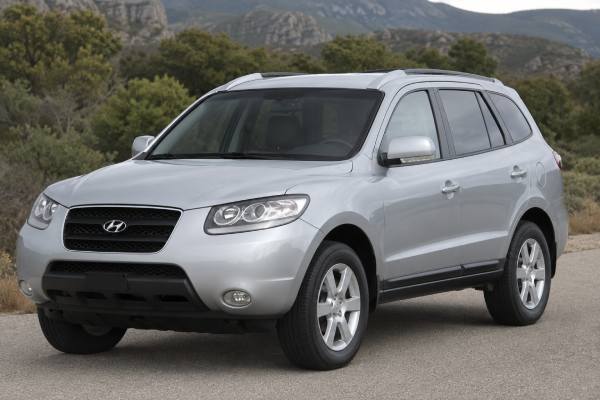
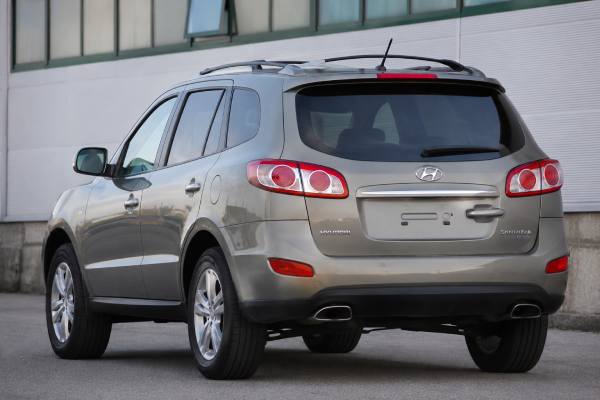
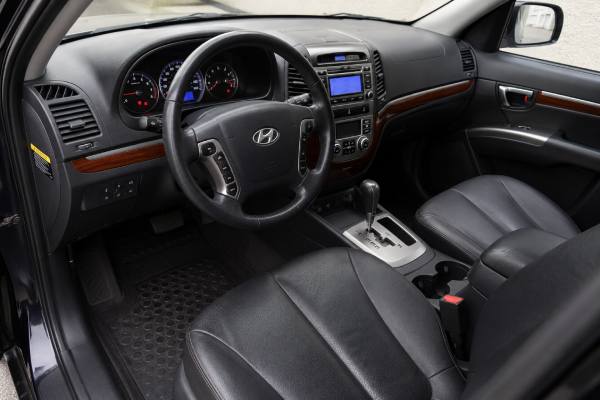
The 2007–2009 Hyundai Santa Fe FWD with the 3.3-liter V6 sits in a useful middle ground: larger and more refined than the first-generation Santa Fe, but still simple enough to maintain without the complexity of modern turbocharged, hybrid, or driver-assistance-heavy SUVs. In North American trim, the 3.3 V6 was the stronger gasoline engine choice, paired with a five-speed automatic and aimed at buyers who wanted smoother highway performance, better passing power, and more equipment than the base 2.7 V6 versions.
As a used SUV, this CM-generation Santa Fe is best judged by condition, service history, corrosion exposure, and recall completion. The engine itself is generally robust when serviced properly, but age-related issues now matter more than original design quality. Suspension wear, oil leaks, cooling-system neglect, brake corrosion, and airbag or ABS-related recalls should all be checked carefully before purchase.
Quick Overview
- Strong 242 hp V6 gives noticeably better passing power than the base 2.7 V6.
- Comfortable ride, roomy cargo area, and standard stability control make it practical for family use.
- Five-speed automatic is smooth when maintained, but old fluid, harsh shifts, or delayed engagement need attention.
- Verify recalls by VIN, especially airbag, stop-lamp switch, clock spring, and ABS-module campaigns.
- A practical oil-change interval is about 7,500 miles or 12 months in normal use, shorter for severe service.
Table of Contents
- Santa Fe CM 3.3 V6 Profile
- Santa Fe CM Technical Specs
- Santa Fe CM Trims and Safety
- Reliability, Issues and Recalls
- Maintenance and Used Buying
- Driving Feel and Efficiency
- Comparison With Similar SUVs
Santa Fe CM 3.3 V6 Profile
The CM-generation Hyundai Santa Fe was a major step up from the original model. It grew into a midsize crossover shape, gained a more settled road feel, and used a more modern unibody platform rather than trying to look or behave like a traditional off-road SUV. The FWD 3.3 V6 version is especially relevant because it combines the strongest gasoline engine offered in the early CM lineup with lower weight and simpler driveline hardware than the AWD model.
The scope here is the 2007, 2008, and 2009 Santa Fe FWD equipped with the 3.3-liter Lambda V6, rated at 242 hp and 226 lb-ft of torque in North American specification. It is a naturally aspirated, aluminum, DOHC 24-valve V6 using multi-point fuel injection and continuously variable valve timing. The engine is paired with a five-speed automatic transmission with manual-shift functionality, commonly marketed as SHIFTRONIC.
This is not the later 3.5 V6 used in some 2010–2012 CM Santa Fe models, nor the later direct-injected 3.3 V6 found in newer Santa Fe generations. That distinction matters because the 2007–2009 3.3 is a port-injected Lambda unit, so it avoids the intake-valve carbon buildup pattern often associated with direct-injection-only engines. It also uses a timing chain rather than a scheduled timing belt.
In the United States, the 3.3 V6 was typically fitted to SE and Limited trims. In Canada and some other markets, trim naming and equipment differed, and the same CM body could be offered with diesel engines, manual transmissions, AWD, or different seating packages. For this article, the baseline assumption is the gasoline 3.3 V6 front-wheel-drive model with five seats and automatic transmission.
Its strengths are straightforward: good highway manners, relaxed power delivery, a usable cargo area, strong standard safety equipment for its era, and relatively simple mechanicals. Its weaknesses are also predictable for an older midsize SUV: fuel economy is only average, braking distances are not class-leading, interior plastics age unevenly, and neglected examples can become expensive once suspension, tires, brakes, fluids, and warning lights all need attention at once.
For a used buyer, the best examples are not necessarily the lowest-mileage ones. A well-serviced Santa Fe with clean fluid records, completed recall work, dry engine bay, healthy automatic transmission behavior, and little underside corrosion is usually a better choice than a cheaper one with warning lights, unclear ownership history, or deferred maintenance.
Santa Fe CM Technical Specs
Specification data can vary slightly by market, trim, build date, seating layout, tire package, and measurement standard. The figures below are most representative of the 2007–2009 Hyundai Santa Fe CM FWD 3.3 V6 automatic in North American-style specification.
| Item | Hyundai Santa Fe FWD 3.3 V6 CM |
|---|---|
| Engine code | Lambda G6DB family |
| Engine layout | 60-degree V6, 6 cylinders, DOHC, 4 valves per cylinder |
| Bore × stroke | 92.0 × 83.8 mm (3.62 × 3.30 in) |
| Displacement | 3.3 L (3,342 cc) |
| Induction | Naturally aspirated |
| Fuel system | Multi-point port fuel injection |
| Compression ratio | 10.4:1 |
| Maximum power | 242 hp (180 kW) @ 6,000 rpm |
| Maximum torque | 306 Nm (226 lb-ft) @ 4,500 rpm |
| Timing drive | Timing chain |
| EPA-rated efficiency | About 13.8 L/100 km city, 9.8–10.2 L/100 km highway, 11.8–12.4 L/100 km combined (17 city, 23–24 highway, 19–20 combined mpg US) |
| Real-world highway at 120 km/h | Typically about 10.5–12.0 L/100 km (22–20 mpg US), depending on tires, load, wind, roof racks, and maintenance condition |
| Item | Specification |
|---|---|
| Transmission | 5-speed automatic with manual-shift mode; Hyundai/Kia A5HF1 family commonly associated with this powertrain |
| Drive type | Front-wheel drive |
| Differential | Open front differential |
| Front suspension | Independent MacPherson strut |
| Rear suspension | Independent multi-link |
| Steering | Power rack-and-pinion; approximately 18.9:1 where published |
| Brakes | Four-wheel disc brakes with ABS; common North American rotor sizing is about 298 mm front ventilated / 302 mm rear solid, with some market and parts-catalog variation |
| Common tire size | P235/60R18 on SE/Limited-style 3.3 V6 trims; some markets and trims used smaller wheels |
| Ground clearance | About 206 mm (8.1 in) |
| Length / width / height | 4,675 / 1,890 / about 1,795 mm (184.1 / 74.4 / 70.7 in) |
| Wheelbase | 2,700 mm (106.3 in) |
| Turning circle | About 10.5 m (34.4 ft) curb-to-curb |
| Curb weight | About 1,724–1,745 kg (3,800–3,847 lb), depending on trim and equipment |
| GVWR | Common published figures are about 2,400–2,520 kg (5,291–5,556 lb), depending on market and trim |
| Fuel tank | 75 L (19.8 US gal / 16.5 UK gal) |
| Cargo volume | About 968–969 L seats up and up to about 2,213–2,214 L seats folded (34.2–78.2 ft³; SAE-style published cargo figures in North America) |
| Item | Typical value |
|---|---|
| 0–100 km/h / 0–62 mph | Roughly 8.5–9.5 seconds in real testing and estimates, depending on trim, surface, load, and measurement method |
| Top speed | Approximately 180–190 km/h (112–118 mph), market dependent |
| Braking distance | Typical period tests reported about 41–43 m from 97 km/h to 0 (135–142 ft from 60 mph), depending on tires and test conditions |
| Towing capacity | Up to about 1,588 kg (3,500 lb) braked in some North American listings; unbraked ratings vary by market, often around 750 kg (1,653 lb) where specified |
| Payload | Approximately 550–700 kg (1,200–1,540 lb), depending on GVWR, trim, occupants, and equipment |
| Engine oil | API SJ/SL or later and ILSAC GF-3 or later where specified; 5W-20 or 5W-30 commonly used; about 5.5 L / 5.5 US qt with filter depending on manual and market data |
| Coolant | Ethylene-glycol long-life coolant, typically 50/50 with distilled water; about 7.0 L (7.4 US qt) |
| Automatic transmission fluid | Hyundai/Kia ATF SP-III-type specification for this era; total fill around 9–10 L, with a drain-and-fill replacing less |
| Differential / transfer case | Not applicable for FWD transfer case; front final drive is integrated with the transaxle |
| A/C refrigerant | R-134a; charge amount should be verified by under-hood label and service manual |
| Useful torque values | Wheel lug nuts commonly around 90–110 Nm (66–81 lb-ft); oil drain plug around 39 Nm (29 lb-ft). Confirm by VIN and service manual before repair work. |
For safety, the CM Santa Fe was strong for its time. It had standard front airbags, front seat-mounted side airbags, side curtain airbags, ABS, electronic brake-force distribution, traction control, and electronic stability control in major North American trims. It does not have modern ADAS such as automatic emergency braking, adaptive cruise control, lane keeping assistance, or blind-spot monitoring in the 2007–2009 specification.
Santa Fe CM Trims and Safety
In the U.S. market, the 3.3 V6 was most commonly associated with SE and Limited trims. The base GLS used the 2.7 V6, while the SE and Limited added the 3.3-liter engine and five-speed automatic. The SE was the sportier-looking and value-focused 3.3 model, typically identifiable by 18-inch alloy wheels, fog lights, upgraded interior details, and the larger engine. The Limited added more comfort equipment, often including leather upholstery, heated front seats, automatic climate control, upgraded audio availability, and additional convenience features depending on year and package.
Canadian naming was different in some years, and export-market CM Santa Fe models could be sold as GL, GSi, CDX, CRTD diesel, or other local grades. Because of these differences, trim names should not be used as the only identifier. A better method is to confirm the VIN, engine label, emissions label, transmission type, tire placard, and build sheet.
Useful identifiers include the 3.3 V6 engine cover, five-speed automatic selector with manual mode, 18-inch tire package on many higher trims, dual exhaust outlets on many 3.3 models, and trim-specific interior equipment. The VIN and under-hood emissions label are the most reliable ways to confirm the engine family and model-year compliance.
Year-to-year changes were modest across 2007–2009. The 2007 model introduced the redesigned CM generation. The 2008 and 2009 versions largely carried the formula forward, with equipment, audio, satellite radio availability, and package details changing more than the underlying mechanical layout. The 3.3 V6 rating stayed at 242 hp, and the five-speed automatic remained the relevant transmission.
Safety was a strong selling point when new. The Santa Fe received good IIHS results in moderate-overlap front, side, and head-restraint testing, but the side-impact result has an important build-date note: improved side-curtain airbag changes applied to vehicles built after March 2007. When looking at an early 2007 example, build date matters. The driver-door jamb label is the quickest place to check.
NHTSA ratings and recall records should be checked by VIN rather than assumed from model year alone. Several safety campaigns affected 2007–2009 Santa Fe vehicles, including airbag occupant classification software, driver airbag clock spring, stop-lamp switch, labeling, and—in a more limited population—ABS module fire-risk work. A vehicle can look clean and drive normally while still having an open recall.
Child-seat accommodation is practical for this generation. Rear outboard LATCH anchors and top tether points are present in typical North American models, and the rear bench is wide enough for many family setups, although three-across child-seat fit depends heavily on seat shell width. As with any older SUV, check that seat belts retract cleanly, buckle stalks are not damaged, and no airbag warning light remains on after startup.
ADAS is essentially absent by modern standards. There is no factory AEB, pedestrian detection, lane-centering, adaptive cruise, or camera-based lane assistance in this version. That simplicity reduces sensor calibration concerns after windshield, bumper, or alignment work, but it also means the driver relies on traditional crash protection, stability control, tire grip, and braking performance.
Reliability, Issues and Recalls
The 3.3 V6 Santa Fe has a generally solid reliability profile, but most surviving examples are now old enough that maintenance history matters more than reputation. A neglected 100,000-mile example can be worse than a carefully maintained 170,000-mile example. Age hardens rubber, corrodes fasteners, weakens electrical contacts, and exposes shortcuts from previous repairs.
Common and moderate-cost issues include suspension wear, brake corrosion, minor oil leaks, tired engine mounts, and aging ignition components. Front control-arm bushings, sway-bar links, struts, rear shocks, wheel bearings, and brake calipers should be considered normal inspection items. Symptoms include clunks over bumps, uneven tire wear, wandering on the highway, pulsing under braking, or grinding from a wheel bearing that changes with road speed.
The Lambda 3.3 V6 uses a timing chain, so there is no scheduled timing-belt replacement. That is an advantage, but it does not mean the timing system should be ignored forever. On high-mileage or poorly serviced engines, listen for cold-start chain rattle, check for cam/crank correlation codes, and inspect for sludge or poor oil-change history. Chain, guide, or tensioner work is uncommon compared with routine maintenance, but it is expensive when needed.
Oil leaks are usually more age-related than catastrophic. Valve-cover gaskets, front cover sealing areas, oil pan sealing, and cooler or pressure-switch areas should be inspected. A light seep may be manageable; oil dripping onto exhaust components, alternator areas, or the driveway needs diagnosis. PCV valve neglect can worsen leaks and oil consumption, so it is a low-cost item worth replacing periodically.
The cooling system deserves careful attention. Look for old coolant, crusting around hose connections, radiator seam seepage, weak radiator caps, noisy water pump bearings, and heater performance problems. Overheating is far more damaging than routine coolant service, especially on an aluminum V6. Any used example with a history of overheating should be treated cautiously unless there is clear repair documentation.
The five-speed automatic should shift smoothly when warm. Occasional issues include delayed engagement, harsh 2–3 or 3–4 shifts, flare under light throttle, or shudder caused by old fluid, internal wear, solenoid-body issues, or engine/transmission mount movement. A proper road test should include cold start, gentle acceleration, kickdown, highway cruising, stop-and-go driving, and reverse engagement on level ground.
Electrical and safety-system issues are important because of known campaigns. The stop-lamp switch recall relates to brake-light operation and can also affect shift interlock behavior. Occupant classification recalls relate to front passenger airbag detection. Clock spring issues may trigger an airbag warning light or affect steering-wheel controls. ABS module campaigns should be checked carefully because some involve fire-risk mitigation and VIN-specific remedies.
A simple pre-purchase issue map helps prioritize:
| System | Prevalence | Severity | What to check |
|---|---|---|---|
| Suspension bushings, links, struts | Common | Low to medium | Clunks, wandering, uneven tire wear, poor alignment |
| Brake calipers, rotors, lines | Common in rust regions | Medium | Sticking calipers, pulsation, rusty lines, weak parking brake |
| Valve-cover or engine oil leaks | Occasional | Low to medium | Burning smell, wet engine, oil on undertray or exhaust side |
| Automatic transmission shift quality | Occasional | Medium to high | Delayed engagement, flare, harsh shifts, dark or burnt ATF |
| Airbag, OCS, clock spring recalls | VIN-dependent | High | Open recalls, SRS light, passenger airbag detection behavior |
| ABS module campaign | VIN-dependent | High | Recall completion proof, ABS warning lights, dealer records |
Before buying, request service records, recall completion proof, recent fluid history, and any diagnostic reports for warning lights. A seller who says “it just needs a sensor” should be expected to prove that with scan data. On an older Santa Fe, multiple small faults can quickly exceed the price difference between a cheap example and a better one.
Maintenance and Used Buying
A sensible maintenance plan for the 3.3 V6 FWD Santa Fe combines official intervals with age-aware ownership. Many of these vehicles are no longer under warranty, so the goal is not only compliance with the manual but prevention of expensive age-related failures.
For normal use, an oil and filter service every 7,500 miles or 12 months is a reasonable baseline. For short trips, winter use, dusty roads, towing, heavy city driving, or long idling, shorten that to about 3,750–5,000 miles. Use the viscosity range and oil specification listed for the vehicle’s market and climate. The common North American guidance includes 5W-20 or 5W-30, with 10W-30 acceptable in warmer conditions in some manuals. Always verify against the owner’s manual and oil cap.
The timing chain should be inspected by symptoms rather than replaced at a fixed interval. Listen for startup rattle, check for timing-correlation codes, and avoid extended oil intervals. If the chain system is quiet, oil pressure is healthy, and service history is strong, preventive chain replacement is usually unnecessary.
A practical schedule is:
| Interval | Service items |
|---|---|
| Every fuel stop or monthly | Check engine oil, coolant level, washer fluid, tire pressure, exterior lights, and visible leaks |
| Every 6 months | Inspect brakes, tires, battery terminals, wipers, belts, hoses, and underbody corrosion |
| Every 7,500 miles / 12 months | Change engine oil and filter, rotate tires, inspect brake pads and rotors, check suspension and steering play |
| Every 15,000 miles | Inspect or replace cabin air filter, inspect engine air filter, check exhaust, mounts, and cooling hoses |
| Every 30,000 miles | Replace engine air filter if dirty, inspect fuel system, inspect drive belt, service brake fluid if age or moisture content requires |
| Every 50,000–60,000 miles | Drain and refill automatic transmission fluid under severe use, exchange coolant if age or condition requires, inspect spark plugs and ignition coils |
| Around 95,000–105,000 miles | Replace spark plugs if not already done, inspect valve-cover gaskets, PCV valve, belt tensioner, coolant hoses, and engine mounts |
| Every 4–5 years | Load-test 12 V battery, inspect charging system, replace aged coolant and brake fluid if not recently serviced |
Used-buying checks should start underneath the vehicle. Inspect the front subframe, rear suspension mounting points, rocker panels, brake lines, fuel lines, exhaust hangers, and rear wheel arches. Surface rust is expected in many climates; heavy scaling, soft metal, or patched structural areas are not.
On the road test, the V6 should start cleanly, idle smoothly, pull without hesitation, and hold temperature. The transmission should engage drive and reverse without a long pause. On a light-throttle uphill grade, it should not flare or hunt excessively. Under firm throttle, downshifts should be decisive but not violent.
Inside, test every window, lock, mirror, HVAC mode, blower speed, seat heater, audio function, steering-wheel control, and warning light. Confirm that the SRS light illuminates at startup and then goes out. A glowing or disabled airbag light is not a minor cosmetic issue; it needs proper diagnosis.
The best versions to seek are clean SE or Limited FWD examples with complete records, matching quality tires, smooth transmission behavior, and documented recall completion. Avoid vehicles with unexplained overheating, airbag lights, burnt transmission fluid, severe rust, mismatched cheap tires, multiple pending codes, or sellers unwilling to allow inspection.
Driving Feel and Efficiency
The 3.3 V6 changes the character of the Santa Fe. Compared with the 2.7 V6, it feels more relaxed at highway speed and less strained with passengers or cargo. It is not a sporty SUV, but the extra torque makes merging, climbing grades, and passing slower traffic easier. The engine is smooth by the standards of its era, and the port-injected V6 has a more linear response than many later small-displacement turbo engines.
Throttle response is predictable rather than sharp. Around town, the five-speed automatic shifts early to keep revs low. It can be slow to kick down by modern standards, but using the manual gate helps on hills or when preparing to pass. A healthy transmission shifts smoothly; harsh engagement or flare should not be dismissed as normal age.
Ride quality is one of the Santa Fe’s better traits. The independent rear suspension helps it feel more settled than older truck-based SUVs, and the long wheelbase gives it calm highway behavior. It absorbs rough pavement well on standard tire sizes, though worn struts or tired rear shocks make it floaty. The 18-inch tire package looks better but can make poor roads feel sharper than smaller-wheel versions.
Handling is safe and predictable. The front-drive layout means it will understeer if pushed hard, especially on worn all-season tires, but stability control gives useful protection in emergency maneuvers. Steering is light to moderate in effort and not especially communicative, but it suits the vehicle’s family-crossover mission. The turning circle is compact enough for parking lots, although the high beltline and older mirror/camera technology require more care than in modern SUVs.
Braking feel is adequate when the system is fresh, but the Santa Fe’s weight shows in hard stops. Good tires, fresh brake fluid, smooth rotors, and freely sliding calipers make a major difference. In rust-belt areas, caliper pins and rear brake hardware deserve regular attention.
Fuel economy is reasonable for a naturally aspirated V6 midsize SUV of this period but poor by modern crossover standards. Expect roughly 14–16 L/100 km in heavy city use, 10–12 L/100 km on steady highway trips, and 11.5–13.5 L/100 km mixed. In U.S. terms, that is often about 15–17 mpg city, 20–23 mpg highway, and 17–20 mpg mixed in real use. Cold weather, short trips, roof racks, underinflated tires, old oxygen sensors, dragging brakes, and aggressive driving can lower those figures quickly.
Towing should be approached conservatively. The V6 has enough power for light trailers, small utility loads, and occasional recreational towing, but transmission temperature, brake condition, tongue weight, tire load rating, and local tow-rating rules matter. If towing regularly, shorten ATF service intervals and inspect cooling-system condition carefully. Full-load mountain driving is where neglected cooling and transmission systems show up first.
Comparison With Similar SUVs
The 2007–2009 Santa Fe 3.3 FWD competes most naturally with the Toyota Highlander V6, Honda Pilot, Nissan Murano, Ford Edge, Chevrolet Equinox, Kia Sorento, and similar family crossovers from the same period. Its appeal is not that it beats every rival in one category, but that it offers a good mix of power, safety equipment, cabin space, and value.
Against the Toyota Highlander, the Hyundai usually costs less on the used market and often offers more equipment for the price. The Highlander has a stronger reputation for long-term resale and durability, but clean examples are often priced accordingly. The Santa Fe can be the smarter buy when its service history is better and the price leaves room for preventive maintenance.
Against the Honda Pilot, the Santa Fe feels smaller and easier to park. The Pilot offers more interior flexibility and stronger family-hauling credentials, especially for buyers who need a usable third row. The Hyundai’s FWD 3.3 version is simpler and more efficient than some larger AWD Pilots, but it cannot match the Honda’s maximum passenger capacity.
Against the Nissan Murano, the Santa Fe has a more conventional automatic transmission rather than a CVT, which some used buyers prefer. The Murano may feel more stylish and car-like, but CVT condition is a major buying factor. A well-maintained Santa Fe automatic can be less worrying than a questionable high-mileage Murano CVT.
Against the Ford Edge, the Santa Fe is narrower, lighter-feeling, and more traditional inside. The Edge offers a strong V6 and a broader cabin, but early examples can have their own drivetrain, PTU, cooling, and electrical concerns depending on configuration. The Santa Fe’s advantage is simplicity and lower purchase cost.
Against the Kia Sorento of the same era, the comparison depends on which Sorento is meant. Older Sorentos were more truck-like and offered different towing and off-road characteristics, while the Santa Fe is more road-oriented and comfortable. For daily use, commuting, and family trips, the Santa Fe is usually the calmer choice.
The verdict is straightforward: the 3.3 V6 FWD Santa Fe is worth considering when the example is clean, properly serviced, and recall-complete. It is not the most fuel-efficient, quickest, or most premium SUV of its age, but it is practical, comfortable, reasonably strong, and mechanically understandable. The main mistake is buying solely on low price. At this age, condition is the feature that matters most.
References
- Hyundai Owners Manuals | Hyundai Motor UK 2026 (Owner’s Manual)
- Gas Mileage of 2007 Hyundai Santa Fe 2026 (Fuel Economy)
- 2007 Hyundai Santa Fe 2026 (Safety Rating)
- Vehicle Detail Search – 2007 HYUNDAI SANTA_FE | NHTSA 2026 (Recall Database)
- Hyundai 2026 (Recall Campaign)
Disclaimer
This article is for informational purposes only and is not a substitute for professional diagnosis, repair, or inspection. Specifications, torque values, service intervals, fluid capacities, and procedures can vary by VIN, market, trim, equipment, production date, and later service updates. Always verify critical information against the official owner’s manual, service manual, under-hood labels, recall database, and qualified repair documentation for the specific vehicle.
If this helped, please consider sharing it on Facebook, X/Twitter, or another platform to support our work.