
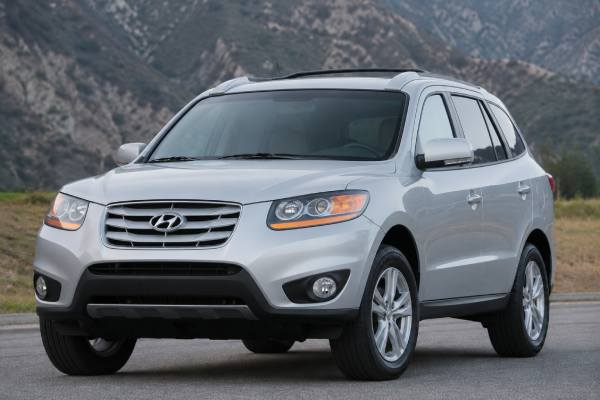
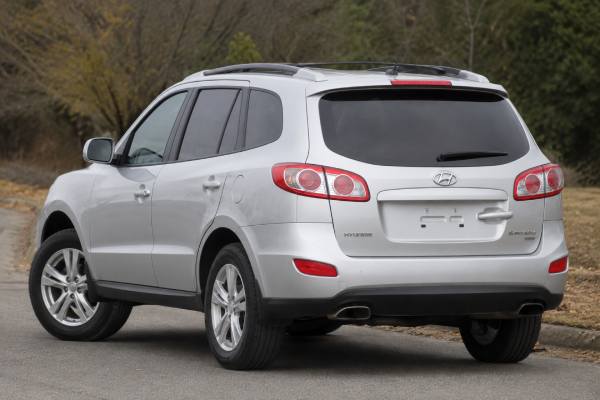
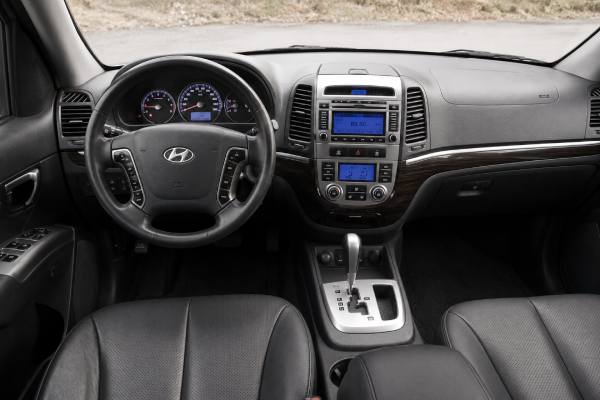
The facelifted CM-generation Hyundai Santa Fe with the 2.4-liter MPI engine sits in a useful middle ground: larger and more comfortable than a compact crossover, but simpler than many newer turbocharged or electrified SUVs. In AWD form, it appeals most as a practical used family vehicle for winter roads, light towing, commuting, and long-distance driving rather than as a performance SUV.
The important distinction is that this 2.4 MPI version is the four-cylinder model, not the stronger 3.5 V6. It trades acceleration and towing strength for lower running costs, easier servicing, and generally straightforward mechanical layout. Buyers should still inspect it carefully, especially for engine history, driveline fluids, corrosion, and completed recall or service-campaign work.
Quick Overview
- The 2.4 MPI AWD Santa Fe offers good cabin space, standard stability control, and a simple naturally aspirated four-cylinder engine.
- AWD improves winter traction, but matching tires and regular transfer-case/rear-differential service matter.
- Main ownership caveats are Theta II bearing-related history, oil consumption checks, aging suspension parts, and rust in salt-belt regions.
- Normal oil service is commonly 12,000 km or 12 months; severe-use service is closer to 6,000 km or 6 months.
- AWD driveline oils are commonly serviced around 120,000 km under severe use, or sooner after water exposure.
Table of Contents
- Santa Fe CM AWD Used Overview
- Santa Fe CM 2.4 MPI Specs
- Santa Fe CM Trims and Safety
- Known Issues and Service Actions
- Maintenance Plan and Buying Checks
- Road Feel, Performance and Economy
- Rivals and Used Market Context
Santa Fe CM AWD Used Overview
The 2010–2012 facelifted Hyundai Santa Fe CM was the final phase of Hyundai’s second-generation midsize crossover before the DM-generation replacement arrived. In North American form, the 2.4 MPI AWD version was typically a five-seat SUV with a transverse four-cylinder engine, six-speed automatic transmission, and an electronically controlled all-wheel-drive system that primarily behaved like a front-drive vehicle until rear traction was needed.
The facelift brought more than styling changes. The 2.4-liter Theta II engine replaced the older 2.7 V6 as the entry powertrain in many markets, and the six-speed automatic improved drivability and highway fuel economy compared with older four- and five-speed units. The cabin also gained more standard convenience equipment, including Bluetooth and USB availability on many trims, while the exterior received revised lighting, grille details, and trim updates.
For a used buyer, the main appeal is practical value. The Santa Fe has a broad cabin, easy entry height, a useful cargo area, and a conventional mechanical layout that many independent workshops understand. It is not as refined as newer Santa Fe models, and its four-cylinder engine needs revs when loaded, but it avoids some complexity found in later turbocharged and hybrid SUVs.
The AWD system is best viewed as an on-road traction aid. It helps in snow, rain, and loose gravel, but it is not a low-range off-road system. Tire condition is especially important because mismatched rolling diameter can stress the coupling, transfer case, and rear differential. A well-maintained Santa Fe AWD with four matching tires usually feels predictable and secure; a neglected one may show binding, vibration, or drivetrain noise.
The 2.4 MPI engine is naturally aspirated and port-injected, which means no turbocharger and no direct-injection carbon buildup issue in the usual GDI sense. However, the broader Hyundai/Kia Theta II engine family has known bearing-related concerns, and some 2010–2012 Santa Fe 2.4 MPI vehicles were covered by warranty-extension or engine-inspection programs depending on VIN and market. That does not make every example bad, but it does make service history, oil-change discipline, and VIN-specific campaign checks essential.
The best examples are not necessarily the lowest-mileage cars. A 140,000 km Santa Fe with documented oil changes, fresh tires, serviced AWD fluids, clean underbody, and completed campaigns can be a better purchase than a lower-mileage car with unknown maintenance. Look for smooth cold starts, no lower-end knocking, no oil-pressure warning behavior, clean ATF service records under severe use, and no signs of coolant or timing-cover leaks.
Santa Fe CM 2.4 MPI Specs
Specifications vary by market, equipment, and model year. The figures below focus on the facelifted CM Santa Fe AWD with the 2.4-liter MPI gasoline engine and six-speed automatic, using North American/Canadian data where applicable. Always confirm by VIN, door-jamb label, emissions label, and official service information.
| Powertrain and efficiency | Hyundai Santa Fe AWD CM 2.4 MPI |
|---|---|
| Engine code/family | Theta II 2.4 MPI, commonly G4KE family |
| Layout | Front transverse inline-4, aluminum block/head |
| Valvetrain | DOHC, 16 valves, 4 valves/cylinder, dual CVVT |
| Bore × stroke | 88.0 × 97.0 mm (3.46 × 3.82 in) |
| Displacement | 2.4 L (2,359 cc) |
| Induction | Naturally aspirated |
| Fuel system | MPI/MPFI port fuel injection |
| Compression ratio | About 10.5:1 |
| Max power | 175 hp (130 kW) @ 6,000 rpm |
| Max torque | 229 Nm (169 lb-ft) @ 3,750 rpm |
| Timing drive | Chain |
| Fuel type | Regular unleaded gasoline |
| Rated economy, 2010 AWD automatic | 21 city / 27 highway / 23 combined mpg US; about 11.2 / 8.7 / 10.2 L/100 km |
| Rated economy, 2012 AWD automatic | 20 city / 25 highway / 22 combined mpg US; about 11.8 / 9.4 / 10.7 L/100 km |
| Real-world highway at 120 km/h | Typically about 9.0–10.5 L/100 km, depending on tires, load, wind, roof racks, and terrain |
| Transmission and driveline | Data |
|---|---|
| Transmission | Hyundai/Kia six-speed automatic with manual-shift mode; A6MF/A6-family depending on market and build |
| Drive type | Electronically controlled AWD, front-biased |
| Transfer case | Compact bevel/transfer unit for rear driveline |
| Rear drive coupling | On-demand electronically controlled coupling |
| Differentials | Open front and rear; traction control assists wheelspin management |
| Low range/locking axle differential | Not fitted |
| Chassis and dimensions | Data |
|---|---|
| Front suspension | MacPherson strut, independent |
| Rear suspension | Multi-link independent |
| Steering | Hydraulic power-assisted rack and pinion |
| Steering ratio | About 15.2:1 |
| Turning circle | About 10.8 m (35.4 ft) kerb-to-kerb |
| Brakes | Four-wheel discs with ABS, EBD, and brake assist |
| Brake rotor size | Commonly about 300 mm front and 302 mm rear on many 17-inch-wheel versions; verify by VIN and rotor option |
| Popular tire size | P235/65R17 on 17 × 7 in alloy wheels |
| Optional tire size | P235/60R18 on some trims/markets |
| Ground clearance | About 206 mm (8.1 in) |
| Length | About 4,650–4,676 mm (183.1–184.1 in), market dependent |
| Width | 1,890 mm (74.4 in) |
| Height | About 1,725 mm (67.9 in), or about 1,760 mm (69.3 in) with roof rails |
| Wheelbase | 2,700 mm (106.3 in) |
| Curb weight | About 1,758 kg (3,875 lb) for 2.4 AWD automatic |
| GVWR | About 2,300 kg (5,070 lb), label dependent |
| Fuel tank | 68–75 L (18.0–19.8 US gal / 15.0–16.5 UK gal), market dependent |
| Cargo volume | About 968 L (34.2 ft³) seats up; about 2,214 L (78.2 ft³) seats folded, method varies |
| Performance and capability | Data |
|---|---|
| 0–100 km/h | About 10.5–11.5 seconds, depending on test method and load |
| 0–60 mph | About 9.9–10.5 seconds in typical published testing |
| Top speed | About 180–190 km/h (112–118 mph), market dependent |
| 100–0 km/h braking | Not consistently published by Hyundai; expect roughly 40–43 m (131–141 ft) on good all-season tires |
| Towing capacity | About 907 kg (2,000 lb) in North American 2.4 models; some markets list higher diesel/V6 ratings |
| Unbraked trailer | About 749–750 kg (1,650 lb) where specified |
| Payload | Roughly 500–550 kg (1,100–1,210 lb), depending on equipment and GVWR label |
| Fluids and service capacities | Specification |
|---|---|
| Engine oil | API SM / ILSAC GF-4 or later; SAE 5W-20 preferred in many manuals, 5W-30 allowed; 4.6 L (4.86 US qt) drain/refill |
| Coolant | Ethylene-glycol coolant for aluminum engines, mixed with distilled/deionized water; 6.6 L (6.97 US qt) for 2.4 automatic |
| Automatic transmission fluid | Hyundai genuine ATF SP-IV or approved equivalent; 7.1 L (7.50 US qt) total capacity |
| Brake fluid | DOT 3 or DOT 4; about 0.7–0.8 L (0.74–0.85 US qt) system volume |
| Power steering fluid | PSF-3; about 1.0 L (1.06 US qt) |
| Rear differential oil | API GL-5 SAE 75W-90 hypoid gear oil; 0.7 L (0.74 US qt) |
| Transfer case oil | API GL-5 SAE 75W-90 hypoid gear oil; 0.6 L (0.63 US qt) for 2.4 AWD |
| Wheel lug nut torque | 88–107 Nm (65–79 lb-ft) |
| Engine oil drain plug torque | Commonly about 39 Nm (29 lb-ft); verify by service manual |
| Safety and assistance | Availability |
|---|---|
| Crash-test profile | IIHS Good ratings for moderate overlap front, original side test, and head restraints/seats for 2007–2012 application |
| Euro NCAP | Not the primary rating for the North American 2010–2012 CM 2.4 AWD specification |
| Airbags | Front airbags, front seat-mounted side airbags, and side curtain airbags; market/row coverage varies |
| Stability systems | ABS, EBD, brake assist, traction control, electronic stability control |
| Child-seat provisions | LATCH/ISOFIX-type anchors in rear seating positions, market dependent |
| ADAS | No modern AEB, adaptive cruise, lane keeping, cyclist detection, or traffic-sign assist on this generation |
| Headlight rating | Not rated under later IIHS headlight protocols |
Santa Fe CM Trims and Safety
In the North American market, the 2.4-liter engine was most closely associated with GLS models, while the stronger 3.5 V6 appeared on higher-output versions and some higher trims. Trim naming changed by country, so a Canadian GL or Limited 2.4 may not match a U.S. GLS exactly. The safest approach is to identify the vehicle by VIN, emissions label, engine label, transmission, wheel package, and build sheet rather than by badge alone.
Most 2.4 AWD examples use the six-speed automatic. A six-speed manual existed on some front-drive four-cylinder versions, but AWD 2.4 examples are generally automatic in the core North American used market. Mechanically, the 2.4 AWD buyer should care most about transmission type, tire size, AWD hardware, tow rating, and service history rather than leather, audio, or cosmetic equipment.
Common trim and option differences include:
- GLS/entry trims: cloth seats, 17-inch wheels, 2.4-liter engine, automatic transmission on AWD models, stability control, side-curtain airbags, air conditioning, Bluetooth/USB on many facelift cars.
- Limited or higher equipment versions: leather upholstery, upgraded audio, power seat, heated seats, sunroof availability, larger wheels, and more interior convenience features.
- V6 trims: stronger acceleration and higher tow rating, but higher fuel use and different service priorities.
- Wheel packages: 17-inch tires usually ride better and cost less; 18-inch tires may sharpen response slightly but increase replacement cost and harshness.
Quick identifiers include the “2.4” emissions label under the hood, the eighth VIN character on some market versions, 17-inch P235/65R17 tire fitment on many GLS AWD vehicles, and the absence of V6 badging or dual exhaust cues found on some V6 trims. Interior tells are less reliable because many features were available through packages.
Safety equipment was strong for the period. The CM Santa Fe structure performed well in IIHS testing, with Good ratings in the original moderate-overlap front test, side-impact test, and head-restraint/seat evaluation for the applicable 2007–2012 range. The side rating applies to models built after Hyundai’s early side-curtain airbag updates in the 2007 model year, so the 2010–2012 facelift cars fall within the later, improved range.
However, “good for its time” should not be confused with modern driver-assistance capability. This generation does not have automatic emergency braking, adaptive cruise control, lane-centering assistance, pedestrian detection, blind-spot monitoring, or rear cross-traffic alert as factory systems in the way newer SUVs do. Its safety package is built around structure, airbags, ABS, traction control, and electronic stability control.
For families, check that the rear seatbacks latch properly, the LATCH/ISOFIX anchors are undamaged, the rear belts retract cleanly, and the passenger airbag status light behaves normally. After windshield, bumper, suspension, or crash repairs, verify that ABS and stability-control warning lights are off and that steering-angle calibration has not been disturbed. This model has fewer ADAS calibration issues than modern SUVs, but wheel-speed sensors, steering-angle sensors, and yaw/stability-control inputs still need proper diagnosis when warning lamps appear.
Known Issues and Service Actions
The 2.4 MPI Santa Fe can be durable, but it is old enough that condition matters more than reputation. The most important concerns fall into three groups: engine health, AWD/driveline maintenance, and age-related chassis or corrosion issues.
| Issue | Prevalence | Severity/cost | Symptoms | Likely cause and remedy |
|---|---|---|---|---|
| Theta II bearing wear or engine knock | Occasional, VIN/campaign dependent | High | Cold or warm lower-end knock, oil-pressure warning, metal in oil, limp mode | Stop driving, verify campaign coverage, perform dealer inspection, replace engine if confirmed |
| Oil consumption | Occasional | Medium to high | Low oil between services, blue smoke, ticking after low oil level | Track consumption, inspect PCV system and leaks, compression/leak-down test if severe |
| Timing-chain noise | Occasional | Medium | Rattle at start-up, timing correlation faults | Inspect chain, guides, tensioner, oil pressure, and cam phasers |
| Valve-cover/timing-cover seepage | Common with age | Low to medium | Burning-oil smell, oil residue on engine | Replace gaskets/seals and clean area to confirm repair |
| AWD coupling/transfer-case noise | Occasional | Medium | Binding on turns, humming, vibration, rear engagement faults | Check tire matching, service fluids, inspect coupling, rear diff, and prop shaft |
| Rear differential or transfer oil neglect | Common on poorly maintained AWD cars | Medium | Whine, clunk, dark gear oil | Replace correct GL-5 75W-90 oil; repair worn bearings/gears if noisy |
| Front suspension wear | Common with age | Low to medium | Clunks, wandering, uneven tire wear | Inspect control-arm bushings, ball joints, struts, sway-bar links |
| Wheel bearings | Occasional | Medium | Speed-related hum that changes with load | Replace affected hub/bearing assembly |
| Brake caliper sticking | Common in salt regions | Low to medium | Heat smell, poor economy, uneven pad wear | Service slider pins, replace caliper/hoses if sticking |
| Underbody corrosion | Market dependent | Medium to high | Rust on subframes, brake lines, fuel lines, rocker seams | Inspect on lift; repair structurally important corrosion before purchase |
The major engine concern is bearing-related wear in parts of the Theta II family. Some 2010–2012 Santa Fe 2.4 MPI vehicles were included in warranty extensions or inspection programs, and certain 2012 vehicles were subject to engine-inspection or replacement campaign work. The practical buying advice is simple: do not rely on a seller’s verbal assurance. Run the VIN through Hyundai and official recall databases, request dealer service printouts, and look for proof of any engine inspection, software update, warranty extension, or replacement engine.
During a test drive, start the engine cold if possible. A brief top-end tick can be less serious than a deep rhythmic knock from the lower engine. Watch the oil-pressure light before and after start-up. Check the dipstick level before driving. A clean engine bay is not proof of health; fresh cleaning may hide leaks. After the drive, look again for oil seepage around the timing cover, valve cover, oil pan, and filter housing area.
The six-speed automatic is generally smooth when healthy. Problems usually show as flare between gears, harsh engagement into Drive or Reverse, delayed downshifts, or torque-converter shudder. Hyundai documentation often treated normal-use ATF as no-service, but severe-use schedules call for fluid replacement. On an older AWD vehicle, clean SP-IV fluid history is a plus, especially if the SUV has towed, climbed mountains, driven in heavy city traffic, or lived in very hot or very cold climates.
The AWD system should be quiet and transparent. Tight parking-lot turns should not produce hopping, binding, or loud clunks. Four matching tires with similar tread depth are important. A single new tire mixed with three worn tires can create driveline stress. Ask when the rear differential and transfer case were last serviced; if there is no record, budget for immediate fluid replacement unless there is already noise.
Known service-action themes include stop-lamp switch recalls on several Hyundai models from this era, rear brake-caliper recall coverage for certain 2011 Santa Fe production ranges, and engine-related inspection or warranty programs for certain 2.4 MPI vehicles. Recall applicability depends on VIN, production date, country, and prior completion. A complete pre-purchase check should include official VIN recall status, dealer campaign history, oil-change receipts, proof of driveline fluid service, and a lift inspection for rust.
Maintenance Plan and Buying Checks
A Santa Fe CM 2.4 AWD responds well to conservative maintenance. Many examples are now old enough that “lifetime fluid” language should be treated cautiously. Time, heat, towing, short trips, and winter salt exposure all matter.
| Item | Practical interval | Notes |
|---|---|---|
| Engine oil and filter | 12,000 km or 12 months normal; 6,000 km or 6 months severe use | Use API/ILSAC oil in the correct viscosity; check level every 1,000–1,500 km on older engines |
| Tire rotation | 12,000 km / 7,500 miles, or sooner with uneven wear | Keep all four tires matched on AWD |
| Engine air filter | Inspect regularly; replace about every 48,000 km or sooner in dust | Dirty filters reduce performance and economy |
| Cabin air filter | Inspect annually; replace sooner in dusty or polluted use | Helps HVAC airflow and defogging |
| Spark plugs | Iridium plugs around 156,000 km in Canadian schedule; severe use may require earlier | Use correct heat range |
| Valve clearance | Inspect if noise or vibration appears; schedule inspection points vary | Adjustment is not a casual DIY job |
| Coolant | First replacement around 100,000 km or 60 months; then every 48,000 km or 24 months | Use compatible ethylene-glycol coolant and proper water mix |
| Drive belts and hoses | Inspect from 96,000 km onward, then regularly | Replace cracked, glazed, swollen, or oil-soaked parts |
| ATF | No normal-service change in some manuals; severe use around 96,000 km | Use Hyundai SP-IV specification only |
| Transfer case oil | Severe-use replacement around 120,000 km; immediately after water submersion | API GL-5 SAE 75W-90 |
| Rear differential oil | Severe-use replacement around 120,000 km; immediately after water submersion | API GL-5 SAE 75W-90 |
| Brake fluid | Inspect regularly; replacement every 2–3 years is prudent on older vehicles | DOT 3 or DOT 4 |
| Brake pads, rotors, calipers | Inspect at least annually | Service slider pins in salt climates |
| Battery | Test yearly after 3–4 years of age | Weak 12 V battery can trigger electrical symptoms |
| Alignment | Check after suspension work, tire wear, or impact | Protects tires and AWD driveline |
For a pre-purchase inspection, prioritize the expensive items first. The engine should start cleanly, idle smoothly, and pull without knocking. The automatic transmission should engage promptly and shift without flare. The AWD system should not bind. The underbody should be inspected on a lift, with attention to subframes, suspension mounting points, brake and fuel lines, rear wheel arches, rocker seams, exhaust hangers, and the spare-wheel area.
A good inspection sequence is:
- Check VIN for open recalls, service campaigns, and engine warranty-extension eligibility.
- Review oil-change records and look for gaps longer than recommended intervals.
- Start cold and listen for lower-end knock, chain rattle, exhaust leaks, and accessory noise.
- Road-test at city speed, highway speed, and during low-speed full-lock turns.
- Inspect ATF behavior, AWD engagement, brakes, steering feel, and wheel-bearing noise.
- Lift the vehicle and inspect rust, leaks, bushings, ball joints, CV boots, transfer case, and rear differential.
- Confirm all four tires match in brand, size, model, and similar tread depth.
The best versions to seek are clean, rust-free 2.4 AWD examples with documented engine oil service, completed Hyundai campaigns, matching tires, and evidence of coolant, brake fluid, ATF, and AWD fluid attention. Avoid cars with unexplained engine noise, an illuminated oil-pressure light, coolant contamination, severe underside corrosion, mismatched tires, driveline binding, or sellers who cannot provide campaign history.
Long-term durability is reasonable when the vehicle has been maintained and kept out of severe corrosion. The four-cylinder engine is not effortless, but it is accessible. Suspension and brake reconditioning is normal at this age. The key is not to overpay for a neglected example simply because the Santa Fe has a practical shape and comfortable cabin.
Road Feel, Performance and Economy
The 2.4 MPI AWD Santa Fe drives like a mature, comfort-biased crossover. Its strengths are stability, ride comfort, and predictable controls rather than speed. Around town, the engine is smooth enough and the six-speed automatic helps keep revs low. At highway speed, the cabin is calmer than many compact SUVs from the same era, although tire roar and wind noise become noticeable on coarse pavement.
With 175 hp and 169 lb-ft, performance is adequate when lightly loaded. The engine’s torque peak arrives at 3,750 rpm, so it does not have the low-rpm shove of the 3.5 V6 or a modern turbo engine. When climbing hills, merging onto fast highways, or carrying passengers and luggage, the transmission needs to downshift and the engine becomes more audible. This is normal character, not necessarily a fault.
The six-speed automatic is usually well matched to gentle driving. It shifts smoothly when serviced and warmed up, but it may hunt between gears on rolling hills if the vehicle is loaded. Kickdown response is acceptable rather than sharp. During a test drive, harsh engagement, delayed Reverse, shudder at light throttle, or a flare on the 2–3 or 3–4 shift deserves diagnosis before purchase.
Steering is hydraulic, so it has more natural weight than many later electric systems, though feedback is still filtered. The Santa Fe tracks straight on the highway and feels secure in poor weather with good tires. It leans if pushed through corners, but the chassis balance is predictable. Brake feel is generally reassuring when the fluid is fresh, the calipers are free, and the rotors are not corroded.
Real-world economy depends heavily on speed and use. In mixed driving, many owners see roughly 10–12 L/100 km, or about 20–24 mpg US. Highway cruising at 100 km/h can be noticeably better, while 120 km/h, winter tires, roof racks, headwinds, and cold starts can push consumption into the 9.5–11 L/100 km range even on open roads. Urban winter use with short trips can be much worse because the engine spends more time warming up and the AWD system, tires, and fluids create extra drag.
AWD behavior is mostly invisible in normal driving. It is helpful on snow-covered starts and wet uphill roads, but it cannot compensate for poor tires. Stability control is tuned conservatively and may cut power if the front wheels begin to spin. For winter use, a set of quality snow tires transforms the vehicle more than any drivetrain feature.
For towing, the 2.4 AWD is suitable only for light loads in North American rating terms. A small utility trailer, light camping trailer, or modest cargo load is more realistic than a large travel trailer. Expect slower acceleration, more downshifts, higher coolant and transmission temperatures on grades, longer stopping distances, and a substantial fuel-economy penalty. If towing is a central use case, the V6 Santa Fe or a larger SUV is usually the better choice.
Rivals and Used Market Context
The 2010–2012 Santa Fe 2.4 AWD competes most directly with used midsize and larger compact crossovers such as the Toyota RAV4, Honda CR-V, Subaru Forester, Ford Escape, Chevrolet Equinox, Kia Sorento, Nissan Rogue, and Mitsubishi Outlander. It is larger and more highway-oriented than some compact rivals, but less powerful than V6 alternatives.
Against a Toyota RAV4, the Santa Fe often costs less for the same year and equipment. The RAV4 has a strong reliability reputation and available V6 power, but interior feel and noise control vary by trim. The Santa Fe’s advantage is value and cabin comfort; the Toyota’s advantage is resale strength and long-term reputation.
Compared with the Honda CR-V, the Santa Fe feels broader and more substantial, while the CR-V is usually more economical and easier to park. Honda’s four-cylinder engine is generally more responsive in daily use because the CR-V is lighter. The Santa Fe counters with a quieter highway feel and stronger midsize-SUV impression.
The Subaru Forester is the more natural choice for buyers who prioritize snow traction, visibility, and light-road capability. It also has its own age-related concerns, including head gaskets on some engines and CVT issues on later models. The Santa Fe is smoother and more conventional, but not as agile or as confidence-inspiring on rough tracks.
The Kia Sorento from this period shares some Hyundai/Kia engineering themes, especially in later unibody versions. It may offer a more truck-like feel or different packaging depending on model year. As with the Santa Fe, VIN-specific engine and campaign checks are essential.
The Chevrolet Equinox and GMC Terrain offer a roomy cabin and comfortable ride, but four-cylinder versions from this era have well-known engine and oil-consumption concerns. The Santa Fe 2.4 is not free of risk, yet a well-documented Hyundai may be easier to recommend than a neglected GM 2.4 of similar age.
The Santa Fe makes the most sense when priced below the strongest Toyota and Honda alternatives and when its condition is clearly above average. Its advantages are space, comfort, simple controls, decent safety structure for the period, and affordable parts availability. Its weaknesses are modest four-cylinder performance, age-related suspension and corrosion risk, and the need to verify Theta II engine history carefully.
A good used Santa Fe CM AWD is a sensible purchase for someone who wants a practical winter-capable family crossover without modern complexity. It is less appealing for drivers who tow frequently, demand strong acceleration, or want modern driver-assistance technology. Buy on condition, records, VIN history, and inspection results rather than trim name or mileage alone.
References
- CM FL (CAN) ENG 7.qxp 2012 (Owner’s Manual)
- CM FL (CAN) ENG 8.qxp 2012 (Owner’s Manual)
- Gas Mileage of 2010 Hyundai Santa Fe 2010 (Fuel Economy)
- 2010 Hyundai Santa Fe 2010 (Safety Rating)
- Engine Recalls – Hyundai 2026 (Recall and Warranty Information)
Disclaimer
This article is for informational purposes only and is not a substitute for professional diagnosis, repair, or vehicle inspection. Specifications, torque values, service intervals, fluids, procedures, recalls, and equipment can vary by VIN, market, production date, and trim. Always verify details against the official service documentation for the specific vehicle and consult a qualified technician before making repair or purchase decisions.
If this helped you evaluate the Hyundai Santa Fe CM 2.4 AWD, please consider sharing it on Facebook, X/Twitter, or your preferred platform to support our work.