

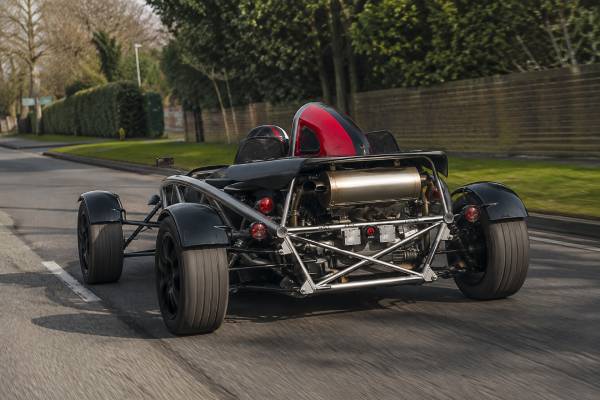
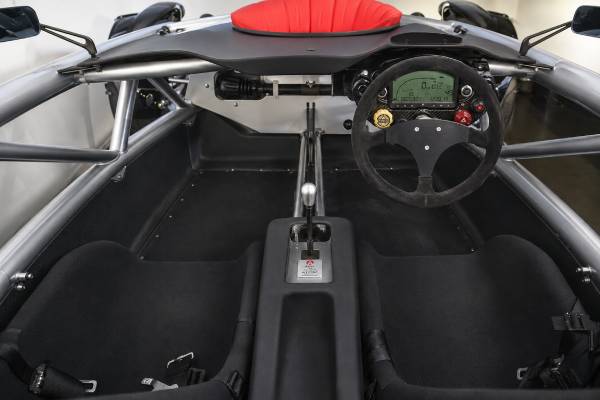
The Ariel Atom 120 is the least powerful production version of the first-generation Atom, yet it may be the clearest expression of the original idea. Its 1.8-liter Rover K-Series engine produces only 120 hp, but it moves a car weighing roughly half as much as a typical modern sports coupe. The result is immediate response, vivid steering feedback, and performance that depends more on low mass than on brute force.
This early Atom is also a very specific ownership proposition. It has an exposed tubular chassis, almost no weather protection, a five-speed manual gearbox, unassisted controls, and many parts that may now be more than two decades old. Condition and provenance matter more than mileage alone. A well-kept 120 can be a remarkably usable road-and-track toy; a neglected or heavily modified one can become a costly recommissioning project.
Table of Contents
- What Makes the Atom 120 Distinctive
- Ariel Atom 120 Technical Data
- How 120 hp Delivers Real Performance
- Rover K-Series Maintenance and Cooling
- Chassis, Brakes, Tires, and Setup
- Living With an Early Atom
- Buyer’s Inspection and Value Factors
What Makes the Atom 120 Distinctive
The Atom 120 is not simply a slower version of a later Atom. It is the entry point to Ariel’s original production concept: a tiny road-legal machine whose chassis, suspension, and mechanical parts are displayed rather than hidden beneath conventional bodywork.
Ariel launched the production Atom around the turn of the millennium after developing the concept from the earlier Lightweight Sports Car project. The 120 used a naturally aspirated Rover K-Series four-cylinder mounted transversely behind the occupants. Drive went to the rear wheels through a five-speed manual transmission. There was no turbocharger, supercharger, electronic stability control, or elaborate aerodynamic package to mediate the experience.
That simplicity gives the 120 a different rhythm from the later supercharged cars. The driver can use more throttle more often, carry speed through corners, and work with the chassis without being overwhelmed by torque. On a narrow road or compact circuit, this can be more satisfying than constantly restraining a 275- or 300-hp Atom. The car rewards accuracy: clean braking, patient turn-in, and early but progressive throttle application.
It is also historically important. The 120 was the version that demonstrated how little power an extremely light car actually needed. Contemporary road tests noted that its acceleration felt far stronger than the output number suggested because there was so little mass to move and so little isolation between the driver and the road.
Do not assume every early car is identical. Ariel was a low-volume manufacturer, customers could choose options, and cars have often been upgraded over the years. Wheels, dampers, brakes, dashboard instruments, seats, lighting, exhaust parts, and even engine specification may differ. The chassis number and Ariel’s build information are therefore more useful than a seller’s casual description.
Ariel Atom 120 Technical Data
The Atom 120 is a gasoline-powered, mid-engine, rear-wheel-drive two-seater. Its core mechanical package is a 1,796 cc naturally aspirated Rover K-Series engine, a five-speed manual gearbox, and a lightweight tubular steel chassis with independent double-wishbone suspension. Published figures differ slightly among period and secondary sources, so the tables below retain only values consistently associated with the 120 specification.
| Specification | Value |
|---|---|
| Engine family | Rover K-Series |
| Configuration | Inline four-cylinder, transverse mid-engine |
| Displacement | 1,796 cc (1.8 L) |
| Valvetrain | DOHC, 16 valves |
| Bore × stroke | 80.0 × 89.3 mm |
| Compression ratio | 10.5:1 |
| Induction | Naturally aspirated |
| Maximum power | 120 hp at 5,500 rpm |
| Maximum torque | About 160 Nm (118 lb-ft) at 2,750 rpm |
| Fuel | Gasoline/petrol |
| Specification | Value |
|---|---|
| Transmission | Five-speed manual |
| Drive type | Rear-wheel drive |
| Engine position | Behind the occupants, ahead of the rear axle line |
| Electronic traction aids | None in standard early specification |
| Specification | Value |
|---|---|
| Body structure | Exposed tubular steel spaceframe with minimal composite panels |
| Seating | Two occupants |
| Front suspension | Independent double wishbones with inboard pushrod-operated dampers |
| Rear suspension | Independent double wishbones with inboard pushrod-operated dampers |
| Steering | Unassisted rack and pinion |
| Front brakes | 240 mm ventilated discs |
| Rear brakes | 240 mm discs |
| Common wheel size | 14 × 6 in front and rear |
| Common tire size | 185/60 R14 front and rear |
| Specification | Value | Condition or note |
|---|---|---|
| Length | 3,410 mm (134.3 in) | Commonly published first-generation figure |
| Width | About 1,800 mm (70.9 in) | Published values differ slightly by source |
| Height | About 1,200 mm (47.2 in) | Dependent on setup and screen equipment |
| Wheelbase | 2,345 mm (92.3 in) | Commonly published first-generation figure |
| Kerb weight | Approximately 456 kg (1,005 lb) | Equipment and source definitions may differ |
| Fuel-tank capacity | Approximately 40 L (10.6 US gal) | Some sources list a smaller nominal figure |
| 0–100 km/h | About 5.6 seconds | Period published claim for the 120 |
| Top speed | About 185 km/h (115 mph) | Published figure; setup and conditions matter |
These figures should not be transferred automatically to every surviving car. An early Atom may have later wheels, competition brakes, adjustable dampers, a close-ratio gearbox, or an engine rebuilt to a different output. Verify the exact equipment before ordering parts or applying setup data.
How 120 hp Delivers Real Performance
The Atom 120 feels quick because its power-to-weight relationship and control response matter more than the modest engine output. At roughly 456 kg, the car asks each horsepower to move far less mass than it would in a conventional sports car.
Acceleration is only part of the effect. The exposed driving position makes 80 km/h feel fast, and the unassisted steering transmits small changes in tire load directly to the driver’s hands. There is little delay between pedal input and vehicle response. The car also sheds speed with unusual urgency because the brakes have so little mass to manage.
The 1.8-liter engine’s torque peak arrives much lower than the high-revving Honda engines used in later Atoms. That makes the 120 relatively flexible in ordinary road use. It does not need to be held near the limiter to make progress, and the five-speed gearbox suits the engine’s broad, accessible character. The trade-off is that the upper part of the rev range is less dramatic than in the 190 or a K20A-powered Atom 2.
On track, the 120 teaches momentum management. Entering too slowly cannot be hidden with a huge burst of power on exit. Smooth steering and disciplined braking matter. Because the car is light, it can change direction quickly without requiring very stiff springs, but abrupt inputs can still unsettle it. The low polar moment—the concentration of mass near the center—means rotation begins quickly once rear grip is exceeded.
Tires make an enormous difference. A 120 on fresh, appropriate road tires may be more communicative and enjoyable than a higher-output car on old track rubber. Conversely, cold semi-slick tires can make the car unexpectedly nervous. The narrow original-size tires are part of the 120’s balance; fitting much wider rubber may add grip but can change steering effort, breakaway behavior, and the loads transmitted into hubs and suspension joints.
Top speed is not the car’s main strength. The open wheels, exposed cockpit, and upright occupant create considerable aerodynamic drag. Above normal road speeds, wind pressure becomes tiring and the engine must work hard against the air. The Atom is far more convincing as a car that accelerates, brakes, and changes direction vividly than as a long-distance high-speed machine.
Rover K-Series Maintenance and Cooling
The engine can be dependable in an Atom, but cooling-system condition and timing-belt history must be treated as essential. The K-Series has a well-known reputation for head-gasket trouble in some applications, while the Atom’s low mass and effective cooling reduce the load; age, poor bleeding, or neglected hoses can still create serious problems.
The first inspection should begin cold. Check the coolant level, expansion tank, hose joints, radiator, and the long coolant runs between the front radiator and rear-mounted engine. Look for dried coolant residue, staining, swollen hoses, loose clips, or evidence that sealant has been used as a shortcut. The temperature should rise steadily and then remain controlled during a stationary fan cycle and a road test.
Air trapped in the system is a particular risk in a mid-engine car with a remote radiator. A coolant change must be filled and bled using the correct procedure for the exact chassis arrangement. Simply topping up the expansion tank does not prove the system is full. Repeated loss of coolant, unexplained pressurization from cold, combustion residue in the expansion tank, or a heaterless car that suddenly runs hot all justify professional diagnosis.
The timing belt is an age-sensitive service item. Period buying guidance for the Rover-powered Atom recommends replacement every three years. A receipt should identify the date, mileage, parts used, and ideally the tensioner and related components. “It has barely done any miles” is not a reason to ignore a decades-old rubber belt.
Engine oil should be changed at least annually on a lightly used car and more often after repeated track running. The correct viscosity and specification depend on engine build, climate, and advice for that exact car, especially if the engine has been modified. Track use raises oil temperature and can uncover oil-control weaknesses that never appear during gentle road driving. Ask whether the sump is standard or baffled and whether any oil-temperature or pressure monitoring has been added.
Other age-related checks include:
- Inspecting fuel hoses for cracking, abrasion, and outdated material, particularly near hot exhaust components.
- Checking engine mounts and exhaust supports for fatigue caused by vibration.
- Confirming the throttle opens and returns smoothly without cable binding.
- Looking for oil leakage around the cam cover, sump, crank seals, and gearbox joints.
- Testing the cooling fan and its electrical control rather than assuming it works.
- Replacing old brake and clutch fluid even when the car has covered few miles.
A compression or leak-down test is sensible when there is doubt about an engine’s condition, but readings must be interpreted by someone familiar with the K-Series and the test conditions. A clean test does not replace inspection of cooling history, and a rebuilt engine is not automatically better unless the work is documented.
Chassis, Brakes, Tires, and Setup
The exposed structure makes inspection easier, but it also leaves many components vulnerable to water, road salt, stone impact, and careless jacking. The most important chassis check is not whether the powder coat is perfect; it is whether damage, corrosion, or repair suggests the frame has been heavily loaded.
Study the main tubes in good light. Local flattening, fresh paint over one area, cracked coating around a joint, uneven panel gaps, or silver marks where the coating has been scraped away can indicate contact or impact. Minor cosmetic chips are normal. Distortion, questionable welding, or evidence that suspension pickup points have moved is not. Ariel can often help identify original specification from the chassis number, and a factory or specialist inspection is valuable before purchase.
The suspension uses rod ends and adjustable links. This allows accurate geometry adjustment but also creates maintenance needs that a conventional road-car owner may not expect. Each joint should move freely without play, binding, rust, or torn protective parts. Locknuts must be secure. Worn rod ends can produce vague steering, clunks, or changing alignment. Replacement should be followed by a proper geometry setup, not just a visual approximation.
Dampers may be original Koni units or later alternatives. Check for leaks, damaged adjusters, mismatched units, and ride heights that differ side to side. More stiffness is not automatically better. A car set very low for a smooth circuit may scrape on road crests and can lose suspension travel. Ask for the owner’s road and track settings rather than turning adjusters at random.
The standard brakes are effective because the vehicle is so light. Problems are more likely to come from age, track heat, or poor adjustment than from inadequate disc diameter. Inspect discs for cracking and heavy lips, pads for uneven wear, hoses for age, and calipers for sticking. If the car has adjustable brake bias, confirm that the system works and that the driver understands its effect. An aggressive rearward setting can make the car unstable under braking.
Wheel bearings deserve close attention. Raise the car only at approved points, then check for play and roughness while distinguishing bearing movement from compliant suspension joints. Inspect wheels for cracks, bends, and incorrect offsets. Tire age is especially important: an Atom may show deep tread while its tires have hardened after years of storage. Replace by date and condition, not tread depth alone.
Living With an Early Atom
The Atom 120 can be road registered in suitable markets, but it is not an everyday sports car in the usual sense. There are no doors, roof, conventional luggage compartment, or meaningful acoustic isolation. Weather, road grit, heat, and mechanical noise are part of every trip.
A helmet or suitable eye protection greatly improves comfort, even where a helmet is not legally required. Small stones and insects become significant at speed. Hearing protection can reduce fatigue on long journeys, but it must still allow the driver to hear traffic and warning sounds. Clothing should be chosen for wind chill rather than the forecast temperature; an open cockpit can feel cold even on a mild day.
Storage must be planned. Loose objects cannot be left in the cockpit, and luggage needs secure, heat-resistant packing. A phone, wallet, or tool can become a projectile. Owners often use a support vehicle or trailer for track days because tires, fuel, tools, and wet-weather clothing are difficult to carry in the Atom itself.
Before a track session, use a repeatable checklist:
- Check engine oil, coolant, brake fluid, and visible leaks with the car level and cold where required.
- Inspect tires for age, pressure, cuts, and debris; set pressures for the actual tire and conditions.
- Confirm wheel fasteners, suspension locknuts, harness condition, and seat adjustment.
- Warm the engine, gearbox, brakes, and tires progressively rather than attacking the first lap.
- Use a cool-down lap and inspect the car between sessions for fluid loss, loose fasteners, and heat damage.
The 120’s running costs can be reasonable because it uses modest tire and brake sizes, but specialist labor can dominate repairs. Access is visually open yet some jobs still require substantial disassembly. Budget for annual servicing even if mileage is low, plus periodic replacement of age-sensitive hoses, belts, seals, rod ends, tires, and harnesses.
Buyer’s Inspection and Value Factors
Buy the best-documented, straightest, most original or intelligently upgraded car you can find. A low odometer reading is less valuable than evidence of regular use, correct servicing, careful storage, and professional setup.
Start with identity. Confirm the chassis number, registration documents, engine number where recorded, and the build specification. Because early cars could be upgraded and advertisements may use output figures loosely, establish whether the engine is genuinely the 120-hp 1.8-liter version. Check whether later brakes, dampers, wheels, dashboards, or engine parts were fitted by Ariel, a recognized specialist, or an unknown workshop.
Ask for invoices rather than a verbal history. The most useful records cover:
- Timing-belt and cooling-system service.
- Engine oil and gearbox oil changes.
- Brake-fluid replacement and caliper work.
- Rod-end, wheel-bearing, damper, and steering repairs.
- Chassis inspections or powder-coating work.
- Track use, accident repairs, and geometry settings.
- Tire dates and any long periods of storage.
A cold start should be clean, with stable oil pressure and no heavy mechanical knock. Watch the exhaust for persistent smoke and the coolant temperature through a complete warm-up. The gearbox should select every ratio cleanly both cold and hot. Clutch slip is most obvious under load in a higher gear, but any test must be done carefully and with the seller’s permission.
During the drive, the car should track straight, respond symmetrically, and feel precise rather than nervous. Steering kickback is normal; looseness, clunks, or a tendency to change direction under braking is not. Do not dismiss bad behavior as “they all do that.” Geometry, worn joints, mismatched tires, or chassis damage can make one Atom very different from another.
Originality supports collectibility, particularly because first-generation production was limited and many cars were exported or modified. However, sympathetic upgrades can improve use and safety. The key is reversibility, documentation, and engineering quality. A later dash or brake package fitted by Ariel may be preferable to fragile original equipment; a home-made wiring loom or unexplained engine tune is a liability.
The final decision should include a specialist inspection and a realistic recommissioning budget. An Atom 120 that needs tires, belts, hoses, rod ends, fluids, and brake work can consume a meaningful sum before it is ready for serious driving. Paying more for a sorted car is often cheaper than rescuing a neglected bargain.
For the right owner, the 120 remains compelling precisely because it is not excessive. It preserves the delicacy of the original Atom, makes ordinary road speeds engaging, and gives the driver room to explore the chassis. Its value lies less in headline acceleration than in the purity of the engineering and the condition of the individual car.
References
- Atom – Ariel Motor Company 2026
- Atom Service Kit – Ariel Motor Company 2026
- Fiche technique Ariel Atom I 120 2000-2004 – Auto titre 2026
- Ariel Atom: used car buying guide | evo 2013
- Ariel Atom (2000-): PH Pocket Buying Guide 2016
- Ariel Atom: Models, Specs, and Buyer’s Guide | Car & Classic 2026
Disclaimer
This article is for informational purposes and is not a substitute for professional diagnosis, inspection, or repair. Specifications, torque values, service intervals, and procedures can vary by chassis number, market, build date, and equipment; verify all work against the official documentation for the individual vehicle. Please share this article on Facebook, X/Twitter, or your preferred enthusiast community if it has been useful.