

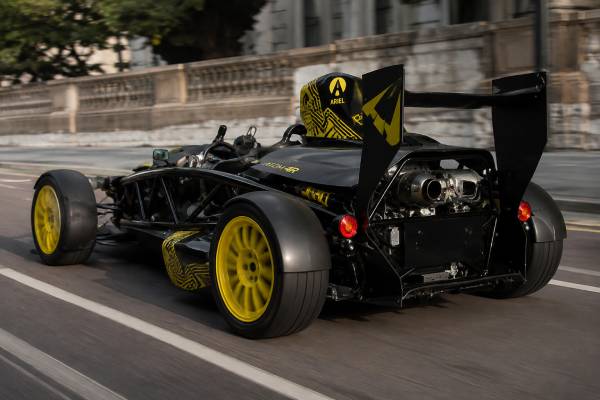
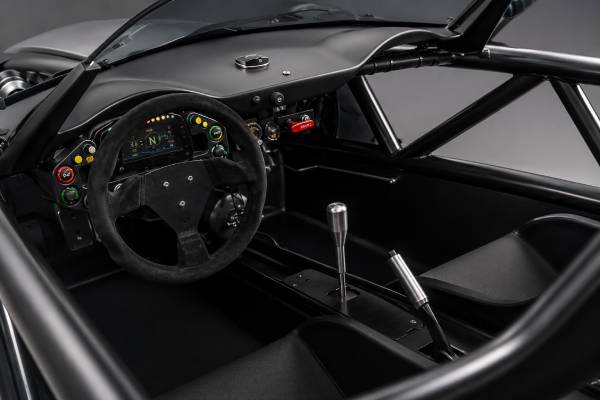
The Ariel Atom 4RR is the fastest and most powerful Atom announced for production, combining 525 bhp and 550 Nm with a sub-700 kg target, a hand-built motorsport engine, pneumatic sequential transmission, Öhlins suspension, AP Racing brakes, and three selectable power maps. Ariel first announced the project in July 2025 and released the full production specification on April 9, 2026. That chronology matters: early coverage described an intended 25-car anniversary edition, while the launch material defines the finished built-to-order machine, its 2.4-second 0–62 mph claim, 5.1-second 0–100 mph claim, hand-assembled closed-deck K20C-based engine, and £208,000 price before taxes. The 4RR remains road legal, but its component life, operating procedure, and ownership economics belong to a motorsport-grade car. Prospective owners should judge it through engine build records, dyno documentation, software versions, gearbox and pneumatic service, brake and suspension condition, and exact legal configuration. This guide focuses on the production 4RR rather than speculation from the announcement stage.
Table of Contents
- What Reached Production in 2026
- 4RR Engine and Chassis Specifications
- Inside the Hand-Built Engine
- Three Maps, One Competition Driveline
- Braking, Suspension, and Tyre Management
- Service Life and Operating Discipline
- Commissioning, Buying, and Collecting
What Reached Production in 2026
The production Atom 4RR is a built-to-order, road-legal, track-focused derivative of the Atom 4R with a unique 525 bhp engine package and motorsport-grade hardware. Ariel describes it as the company’s most focused vehicle and quotes a power-to-weight ratio above 780 bhp per tonne.
The project was announced on July 3, 2025 to celebrate 25 years of Atom production, initially with a maximum of 25 examples proposed. The more detailed April 9, 2026 launch identifies the car available for commissioning, gives its complete technical package, and sets a base price of £208,000 before applicable taxes. Buyers and writers should use the later specification when the two stages differ or when earlier reports lacked detail.
The engine is based on Honda’s 2.0-litre K20C Type R architecture, but calling it a tuned donor engine understates the work. Ariel replaces or re-engineers most significant internal and external components. Each engine requires more than 100 hours of hand assembly, is run in and tested on a dynamometer, and is delivered with an individual dyno graph.
The 4RR sits on the 4R platform rather than the standard manual Atom 4. It therefore uses a Quaife six-speed sequential gearbox with pneumatic paddle actuation, dedicated cooling, aero-profile suspension links, and high-level electronic control. The 4RR adds its own engine, intake, fuel, exhaust, lubrication, brake, wheel, tyre, and calibration specification.
Its road legality should be interpreted narrowly. The car can be approved and registered for road use in suitable jurisdictions, but it has no conventional weather enclosure, little storage, very high noise and heat potential, track-biased tyres, competition-style restraints, and components whose replacement and inspection requirements differ from production road cars.
The “2026–present” date does not imply volume production or yearly revisions. Each 4RR is commissioned individually. Build timing, customer specification, registration date, and delivered equipment must be taken from the vehicle record.
4RR Engine and Chassis Specifications
The Atom 4RR is a mid-engined, rear-wheel-drive gasoline vehicle with a bespoke Ariel-built 1,996 cc turbocharged inline-four. Its specifications are defined by three selectable engine maps, a strengthened and balanced competition engine, sequential transmission, high-capacity braking and suspension hardware, and a target mass below 700 kg.
| Specification | Value |
|---|---|
| Engine basis | Honda K20C 2.0-litre inline-four architecture, extensively re-engineered by Ariel |
| Displacement | 1,996 cc (2.0 L) |
| Block preparation | Closed-deck cylinder sleeves |
| Rotating assembly | Bespoke forged pistons and connecting rods; weight-matched and dynamically balanced components |
| Cylinder head | Revised head and port geometry with bespoke camshafts |
| Valve gear | Alloy valves, uprated springs, and guides |
| Maximum engine speed | 8,200 rpm |
| Build process | More than 100 hours of hand assembly, run-in, dyno testing, and final calibration |
| System | Published specification |
|---|---|
| Turbocharger | Larger unit with peak boost of 1.7 bar |
| Fuel system | Upgraded high-pressure system with 1,400 cc injectors |
| Map 1 | 400 bhp / 380 Nm |
| Map 2 | 500 bhp / 450 Nm |
| Map 3 | 525 bhp / 550 Nm |
| Air intake | New carbon-fibre inlet system |
| Exhaust | Full titanium system |
| Component | 4RR specification |
|---|---|
| Oil control | Gated oiling system for sustained circuit loads |
| Oil pump | High-flow unit |
| Head gasket | Competition-grade design with reinforced fire-ring sealing |
| Head retention | Race-spec cylinder-head stud kit |
| Engine documentation | Individual dyno graph supplied with each engine |
| Rated output | 525 bhp and 550 Nm in maximum map |
| Specification | Value |
|---|---|
| Gearbox | Quaife 6-speed sequential plus reverse |
| Shift actuation | Pneumatic paddle system with ignition cut and automatic downshift blip |
| Drive | Rear-wheel drive |
| Dampers | Öhlins twin-tube units with Ariel-specific calibration |
| Suspension links | Chromoly aero-profile wishbones and pushrods |
| ABS | 11-stage switchable system plus off |
| Body type | Open two-seat tubular-frame road and track car |
| Specification | Published value |
|---|---|
| Brake discs | 310 mm AP Racing two-piece discs |
| Calipers | AP Racing four-piston units |
| Front wheels | 16 × 7 in forged |
| Rear wheels | 17 × 9 in forged |
| Front tyres | 195/50 R16 Yokohama Advan A052 |
| Rear tyres | 255/40 R17 Yokohama Advan A052 |
| Target mass | Below 700 kg |
| Power-to-weight ratio | More than 780 bhp per tonne |
| 0–62 mph | 2.4 seconds |
| 0–100 mph | 5.1 seconds |
The quoted acceleration figures are manufacturer results for the completed specification. They depend on tyre condition, surface, launch settings, driver mass, temperature, fuel, and vehicle configuration. The sub-700 kg figure is a category statement rather than a guarantee that every commissioned car with road accessories and fuel will weigh the same.
Inside the Hand-Built Engine
The 4RR engine is designed around cylinder pressure, high engine speed, and sustained lateral load rather than around a one-time peak-power conversion. Its closed-deck structure, forged rotating assembly, revised head, valvetrain, sealing, lubrication, turbo, and fuel system work as a matched package.
Closed-deck sleeves increase support around the cylinder bores, helping maintain shape and sealing under high combustion pressure. Their installation is precision machine work; future repair cannot be approached like a routine replacement K20C short block. Bore condition, piston clearance, surface finish, and deck flatness need measurement against the engine builder’s specification.
Bespoke forged pistons and connecting rods provide strength and allow Ariel to choose compression, crown, ring, pin, and mass characteristics for the target. Weight matching and dynamic balancing reduce vibration and bearing load at 8,200 rpm. These components still have finite fatigue lives. Their presence does not justify cold revving, detonation, contaminated oil, or unlimited track hours.
The cylinder head receives revised port geometry, dedicated camshafts, and upgraded valves, springs, and guides. Higher airflow and engine speed increase valvetrain demand. Valve clearance, spring condition, cam timing, chain system, and oil supply should be serviced according to Ariel’s schedule, not a mass-market Honda interval.
The head gasket uses reinforced fire-ring sealing, while race-spec studs maintain clamping force under extreme pressure and temperature. Any unexplained coolant pressurization, combustion gas in the coolant, misfire on start-up, or fluid cross-contamination requires immediate investigation. Continuing to run can turn a sealing issue into damage to the head, block, turbo, or catalyst-equivalent exhaust components.
A gated oiling system and high-flow pump address oil movement under braking and cornering. They reduce risk but do not eliminate the need for correct oil level, temperature, viscosity, and inspection. Overfilling can aerate oil or increase windage; underfilling can uncover the pickup. The exact checking procedure and fill quantity supplied with the car must be followed.
The larger turbo reaches up to 1.7 bar boost. Turbo life depends on clean oil, unrestricted drain, stable cooling, correct air filtration, proper warm-up, and managed shutdown. Inspect compressor blades, shaft condition within specification, oil residue, wastegate and control lines, heat shields, and the titanium exhaust supports.
The 1,400 cc injectors and high-pressure fuel system must maintain commanded delivery at maximum map. Fuel pressure, injector characterization, fuel quality, and ECU calibration are inseparable. A vehicle stored or shipped with unknown fuel should not be placed directly in Map 3. Drain or test the fuel, confirm the required octane and composition, and review logs first.
Every engine’s dyno graph provides a valuable baseline, but it is not a lifetime guarantee. Preserve the original graph and compare later controlled testing for changes in boost, air-fuel ratio, power shape, and temperature. Differences should be diagnosed before attempting to tune them away.
Because the engine is unique, unauthorized changes can reduce both reliability and collectability. An intake, exhaust, turbo, injector, or software alteration may invalidate the balance Ariel established. Any modification should have a clear engineering objective, data, and reversible documentation.
Three Maps, One Competition Driveline
The three engine maps are tools for matching output to grip, temperature, fuel, and driver experience. Map 1’s 400 bhp is not a valet setting; in a sub-700 kg car it remains an extreme power-to-weight ratio and should be the default until conditions justify more.
Map 1 limits both power and torque to 400 bhp and 380 Nm. Its lower torque can improve traction, reduce thermal load, and make road driving less abrupt. Map 2 raises output to 500 bhp and 450 Nm. Map 3 releases the full 525 bhp and 550 Nm. The switches should be labelled, their logic documented, and selection confirmed on the display.
A map change should not be used to compensate for old tyres or poor technique. If the car struggles for grip in Map 1, the solution is not a more permissive traction setting. Check tyre temperature, pressure, age, alignment, surface, damping, and throttle application.
The sequential gearbox carries every map’s torque through dog-engaged ratios. Pneumatic paddles provide rapid shifts, while ignition cut and automated throttle matching reduce interruption. Correct operation depends on pressure, actuator travel, gear-position sensing, cut duration, engine speed, and mechanical wear.
Learn the start and stop procedure from Ariel. The clutch is needed for pulling away and coming to rest, while the pneumatic system handles shifts once moving under its programmed conditions. Neutral and reverse engagement may require a specific sequence. Incorrect commands can strain selectors or leave the driver unable to manoeuvre.
Pre-drive checks should include pneumatic pressure build, leak rate, paddle operation, gear indication, clutch travel, and gearbox oil status. A pressure system that cycles excessively may have a leak. A display that disagrees with the selected ratio should be treated as a fault, not an inconvenience.
Shift quality is diagnostic information. Harsh or delayed engagement, repeated failure in one ratio, unexpected neutral, or a change as temperature rises can indicate control, pressure, sensor, actuator, or dog wear. Save event logs and review shift times. Do not continue full-power operation simply because a second paddle request succeeds.
Launch control can help reproduce acceleration, but repeated launches are severe on clutch, driveshafts, differential, tyres, and mounts. The 2.4-second claim is not a recommended daily test. Use launch functions only under appropriate closed-course conditions and according to Ariel’s limits.
The driveline also needs a torque-aware cool-down. Sequential oil, differential, CV joints, and hubs retain heat after a session. Inspect boots, seals, play, and fastener marks. Service intervals should consider shift count and high-load hours rather than road mileage alone.
Electronic safeguards are valuable but cannot protect against every wrong input or mechanical failure. The 4RR’s performance comes from the integration of driver, map, shift system, traction, tyres, and surface. Treating the maximum setting as the normal setting defeats that integration.
Braking, Suspension, and Tyre Management
The 4RR’s AP Racing brakes, Öhlins dampers, chromoly links, forged wheels, A052 tyres, and adjustable ABS form a single grip-management system. Changing one element affects the others, so setup should begin from Ariel’s delivered baseline.
The 310 mm two-piece discs are larger than the standard Atom 4 brakes and use four-piston AP calipers. Inspect disc thickness, runout, mounting hardware, heat checking, pad taper, piston boots or seals, and hose routing. Record pad compound because friction level and temperature range influence pedal response and ABS behaviour.
The 11-stage ABS lets the driver tune intervention and switch it off. Begin with a conservative setting. Test on a safe dry surface, then evaluate wet conditions separately. The lowest-intervention position is not inherently the fastest, and an off setting removes an important safety layer in a car capable of enormous deceleration.
Brake fluid should be selected for expected temperature and changed by condition and interval. A firm pedal before a session does not prove that moisture content or boiling margin is adequate. Bleed procedures must preserve the correct front/rear circuits and any adjustable bias system.
Öhlins twin-tube dampers separate pressure areas to deliver consistent control over a broad operating range. Their adjustment should be documented in clicks from a defined reference, without forcing end stops. Confirm matched left-right settings and service history. Internal wear can reduce consistency before external leakage appears.
Chromoly aero-profile wishbones and pushrods combine strength with reduced drag. Inspect them for impact marks, bending, corrosion, cracked finish, and rod-end play. Their shape does not make them safe lifting or tie-down points. Use only approved jacking and transport locations.
The forged 16 × 7 and 17 × 9 wheels should be checked for runout, cracks, bead damage, and correct fasteners after any impact. Tyre technicians need low-profile and performance-wheel experience. Record wheel position so a developing vibration or crack can be traced.
Yokohama A052 tyres provide high dry grip and fast warm-up, but they are sensitive to heat cycles, pressure, alignment, and standing water. Tread depth alone is a poor measure of performance. Check manufacturing date, shoulder condition, flat spotting, pickup, and whether the compound has hardened.
Hot pressures and tread temperatures should be logged after representative laps. A large inner-to-outer gradient may indicate camber or pressure mismatch; one tyre behaving differently can point to alignment, braking, damper, or driver issues. Make one change at a time.
Corner weighting should include the driver or ballast, normal fuel load, current wheels, and road or aero equipment. Ride height must preserve suspension and splitter clearance through braking and compression. An aggressive static stance that contacts the track is slower and more dangerous than a slightly higher functional setup.
The 4RR’s acceleration receives attention, but braking and tyre condition are the real limits on repeatable performance. A car with full Map 3 output and degraded tyres is not merely slower—it is fundamentally misconfigured.
Service Life and Operating Discipline
The 4RR should be maintained through component-life tracking, fluid analysis, and pre/post-event inspection. Calendar mileage is inadequate for an engine assembled to motorsport specification and a gearbox that may complete hundreds of high-load shifts in one day.
At delivery, establish a master record containing the engine number, dyno graph, ECU and controller versions, map requirements, run-in status, fluid specifications, torque values, service limits, brake and tyre data, and all option part numbers. Store copies separately from the car.
Before every start, perform a leak and level check. Inspect oil, coolant, fuel, charge pipes, turbo connections, exhaust, and the ground beneath the car. Confirm battery voltage because low voltage can disrupt pneumatic controls and data systems. Ensure the intake is clear and all side-pod openings are unobstructed.
Warm the car in stages. Coolant temperature alone does not prove that engine oil, gearbox oil, dampers, tyres, and brakes are ready. Use low load and moderate rpm until data reaches the ranges specified by Ariel. Avoid extended stationary idling that heat-soaks the rear without useful airflow.
During operation, log oil pressure and temperature, coolant, intake temperature, fuel pressure, lambda or air-fuel ratio, boost, ignition correction, pneumatic pressure, shift times, wheel speeds, and warnings. Review the data after each event. Trend analysis can reveal a weakening pump, blocked cooler, injector issue, pressure leak, or changing shift before a driver feels it.
Oil and filter service should follow Ariel’s hours-based guidance. Cut or inspect filters when appropriate and use laboratory analysis to track fuel dilution, viscosity, wear metals, and coolant. The correct response to abnormal data is diagnosis, not a shorter interval that hides the trend.
The titanium exhaust saves mass and handles heat differently from stainless steel. Inspect welds, supports, springs or fasteners, sensor bungs, and clearances. Do not use cleaning chemicals or repair methods that are unsuitable for titanium. A cracked support can transfer damaging load to the turbocharger.
The fuel system should receive fresh, verified fuel. Track storage, supplier, octane, and ethanol content if relevant. Sample fuel after long storage or transport. High-output operation should stop if fuel pressure falls, knock correction rises, or mixture deviates.
Gearbox and pneumatic service should include oil changes, debris inspection, actuator checks, leak-down testing, pressure-system drying where specified, sensor calibration, and review of dog and selector life. A scheduled inspection can be cheaper than waiting for a missed shift at 8,000 rpm.
Brake discs, pads, tyres, rod ends, dampers, wheel bearings, harnesses, and fire equipment need measured life records. Replace by limit, age, or condition rather than by appearance. Safety parts should not be extended because the car has covered few road miles.
After each event, cool the car properly, inspect all systems, download data, wash without pressure-forcing water into connectors or bearings, and dry it before storage. Protect the battery, prevent tyre flat spots, and keep rodents away from carbon intake and wiring.
Ariel or an approved specialist should handle major engine, gearbox, ECU, and structural work. The 4RR’s rarity and integration make improvised servicing a risk to safety, reliability, and provenance.
Commissioning, Buying, and Collecting
Commissioning a new 4RR is closer to specifying a competition car than selecting a conventional trim. A buyer should define intended circuits, road use, noise limits, driver fit, support, transport, and legal requirements before choosing cosmetic details.
The announced price is £208,000 before taxes, and the final cost can be affected by local tax, registration, transport, options, insurance, spares, and support. Obtain a written quotation that identifies what is included, payment milestones, estimated build timing, cancellation terms, and the process for factory testing and handover.
Driver fitting should occur early. Sit in the cockpit with helmet, HANS device if used, footwear, and intended harness configuration. Check seat support, pedal reach, steering and paddle clearance, mirror view, display visibility, and emergency exit. A bespoke car should not be accepted with a compromised driving position.
Discuss the delivered map and fuel strategy. Determine which map is recommended for road use, the minimum fuel specification, whether regional fuel differs from development fuel, and how the ECU responds to temperature or pressure limits. Obtain written map-selection and warning procedures.
Plan support before delivery. Identify who can service the engine, Quaife gearbox, pneumatic system, Öhlins dampers, AP brakes, AIM electronics, and tubular chassis. Arrange transport equipment, approved tie-down points, spares, fluids, diagnostic access, and secure dry storage.
For a used or resold 4RR, provenance should be continuous. Match chassis and engine numbers, original order, dyno graph, handover documents, software versions, service records, event logs, transport history, and any replacement components. Confirm that the three maps still match the delivered engine and fuel system.
A pre-purchase examination should include frame measurement, engine data review, compression or leak-down work if justified, oil analysis, turbo and fuel checks, gearbox dog and actuator assessment, brake measurements, damper condition, wheel inspection, tyre age, and electronics. The inspector should understand the exact Ariel system rather than merely high-performance cars in general.
Accident history matters even when repairs look excellent. Inspect lower frame tubes, floor, suspension pickups, uprights, wishbones, aero mounts, wheels, and steering. Request photographs and invoices for any repair. Repaired competition-style components may be acceptable when the work is engineered and documented; hidden repair is not.
Drivers should resist the opposite error: treating rarity as invulnerability. The 4RR’s forged and motorsport-grade parts are designed for load, but they have inspection and life requirements. Full output should be used only when fuel, tyres, temperatures, surface, and driver are ready.
The best ownership outcome is a car commissioned for a clear purpose, used within a written protocol, and preserved with complete data. In a machine this rare, responsible operation and documentation are part of the engineering value.
References
- ARIEL LAUNCHES NEW 525BHP MOTORSPORT-SPEC ‘ATOM 4RR’ – Ariel Motor Company 2026
- NEW 525bhp ARIEL ATOM ANNOUNCED – THE ATOM 4RR – Ariel Motor Company 2025
- ATOM 4R LAUNCHES AT GOODWOOD FOS 2023 – Ariel Motor Company 2023
- Atom – Ariel Motor Company 2026
- The 525-HP Ariel Atom 4RR Is the Most Powerful Atom Ever, But It Doesn’t Come Cheap 2026
Disclaimer
This article summarizes public production information and is not a substitute for the individual 4RR build manual, factory support, professional motorsport inspection, or local legal advice. Specification, options, software, service limits, price, registration, and delivered weight can differ by commissioned car and market. Verify the chassis and engine records, dyno graph, maps, fluids, component-life data, and road or circuit requirements before use or purchase. Please share this guide with another owner or prospective custodian if it promotes careful, documented stewardship.