

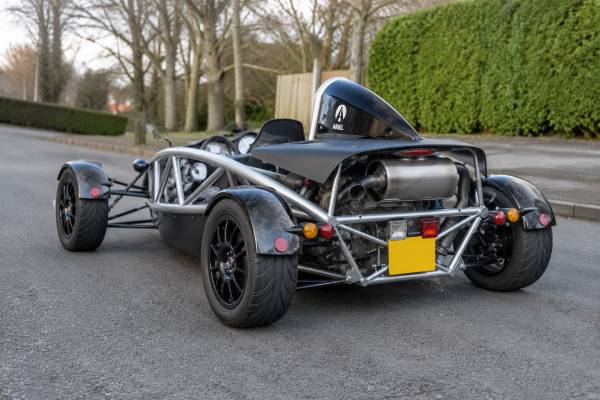
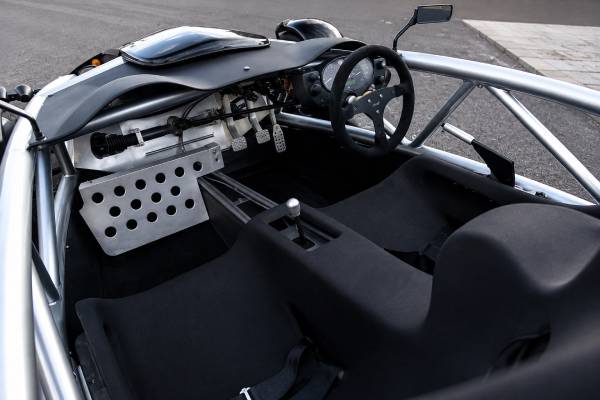
The 2006 Ariel Atom 2 160 Honda Type S is one of the most unusual factory Atom specifications. Ariel describes it as a limited edition of 25 cars, using a 2.0-liter Honda Type S engine rated at 160 bhp and a five-speed manual gearbox. It trades the explosive acceleration associated with supercharged Atoms for a calmer, more accessible delivery while retaining the open spaceframe, unassisted controls, and intensely physical driving position.
That combination makes the car more than an entry-level curiosity. Lower output can reveal the chassis more clearly, reduce stress on tires and drivetrain parts, and allow the driver to use full throttle for longer. Rarity creates a different ownership issue: a seller must prove that a car is a genuine Type S 160 rather than a de-tuned, converted, or loosely described Atom 2. Factory records, original equipment, and the five-speed Honda installation matter. For buyers who value provenance and balance over a headline sprint time, the 160 can be one of the most distinctive Atom 2 choices.
Table of Contents
- The Purpose of the 25-Car Type S Edition
- Honda Type S 160 Specification
- Performance Without Excess
- Five-Speed Honda Powertrain Maintenance
- Factory Chassis Equipment and Setup
- Rarity, Authenticity, and Preservation
- A Type S-Specific Buying Checklist
The Purpose of the 25-Car Type S Edition
The Type S 160 offered the Atom 2 experience with a less highly tuned Honda engine and a five-speed gearbox. Ariel’s own used-vehicle description calls it a rare limited edition of 25 from 2006, which makes exact identity central to both value and maintenance.
The model sits apart from the better-known K20A 220 and 245. Its Honda Type S engine produces 160 bhp, an output closer to a warm road car than a racing special, but the Atom’s low mass transforms the result. There is little bodywork, no roof, no conventional doors, and minimal insulation. Steering, braking, induction noise, tire movement, and wind reach the occupants without the filters found in a normal car.
Ariel also paired the lower-output engine with purposeful chassis equipment. The official example lists 15-inch front and 16-inch rear road wheels, Alcon front brakes, and adjustable Bilstein dampers. These items show that the model was not merely a stripped price leader. It was configured as a road-oriented Atom with serious control hardware and more manageable engine performance.
The five-speed gearbox is another identifying feature. Most performance K20A Atom 2 descriptions emphasize a six-speed manual. Assuming that every Honda Atom 2 uses the same transmission can lead to incorrect fluid, parts, ratios, and buying expectations. The transmission should be identified physically and from the build record.
Lower power does not remove the need for skill. The car remains mid-engined, rear-wheel drive, very light, and largely free from electronic intervention. Its responses are rapid, its cockpit is exposed, and its tires may be cold or old. The 160 is more accessible than a 275, not equivalent to a conventional modern sports car with stability control.
Its strongest appeal is the freedom to use the engine. On public roads and compact circuits, the driver can work through gears and hold the throttle open without reaching the speeds generated by a supercharged Atom almost immediately. For some owners, that makes the 160 more involving, even though it is less spectacular on a specification sheet.
Honda Type S 160 Specification
The Type S is a gasoline ICE car with a naturally aspirated 2.0-liter Honda four-cylinder, a five-speed manual transaxle, and rear-wheel drive. Ariel’s factory description confirms the limited 2006 production, 160 bhp output, wheel sizes, Alcon front brakes, and adjustable Bilstein dampers. Some dimensions are shared with the wider Atom 2 architecture, but weight and option details should be confirmed for each chassis.
| Specification | Factory-described value |
|---|---|
| Engine | Honda Type S inline four-cylinder |
| Displacement | 2.0 L |
| Induction | Naturally aspirated |
| Maximum power | 160 bhp (119 kW) |
| Engine position | Transverse mid-engine |
| Transmission | Five-speed manual |
| Drive | Rear-wheel drive |
| Fuel | Gasoline/petrol |
| Component | Specification |
|---|---|
| Construction | Tubular steel Atom 2 spaceframe |
| Seating | Two |
| Front brakes | Alcon big front brake package |
| Dampers | Adjustable Bilstein units |
| Suspension layout | Independent double wishbones with inboard spring-damper operation |
| Steering | Unassisted rack and pinion |
| Position | Factory-described road wheel size |
|---|---|
| Front | 15 in |
| Rear | 16 in |
| Layout effect | Staggered diameter supports tire choice and rear-drive packaging |
| Measure | Approximate figure | Use |
|---|---|---|
| Length | 3,410 mm (134.3 in) | General early Atom 2 reference |
| Width | About 1,800 mm (70.9 in) | Equipment and measurement can differ |
| Height | About 1,200 mm (47.2 in) | Screen and setup influence it |
| Wheelbase | About 2,345 mm (92.3 in) | General early Atom 2 reference |
| Item | Confirmed description |
|---|---|
| Model year | 2006 |
| Edition size | 25 cars according to Ariel |
| Defining combination | 160 bhp Honda Type S engine with five-speed manual |
| Primary verification | Chassis number and Ariel build documentation |
Do not fill gaps with figures from the 220, a North American Ecotec car, or a later Atom 3. Low-volume options and later owner changes can alter brakes, dampers, wheels, dashboard, and road equipment. The build record is the controlling source.
Performance Without Excess
The Type S 160 is fast because it is light, not because it overwhelms the rear axle with torque. Its performance is best understood as sustained usability: the driver can accelerate hard, carry momentum, and explore balance without immediately reaching supercar speeds.
The naturally aspirated engine should respond progressively. There is no supercharger belt, boost pressure, or charge-cooling circuit to add torque and heat. That simplifies pedal modulation and reduces the number of systems between the driver’s foot and the rear tires. The throttle can be used to adjust the car’s attitude with finer increments.
A five-speed gearbox changes the rhythm from the close-ratio six-speed performance cars. Each gear covers a broader speed range, and the engine may drop farther from its strongest rpm after an upshift. That does not make it inferior; it gives the car a less frantic road character and may reduce the need for constant shifting. Gear selection still matters because a naturally aspirated 160 does not have abundant low-speed torque to hide the wrong ratio.
The low output also highlights momentum. Braking too early or entering a bend too slowly costs more time because the engine cannot restore speed as violently as a 275. The driver learns to preserve tire load, release the brakes smoothly, and avoid unnecessary steering. On a technical circuit, that discipline can make the 160 deeply satisfying.
Straight-line numbers are not the best measure. Published data for the Type S are limited, and borrowing acceleration from another Atom would be misleading. The car’s open cockpit magnifies speed, while its brakes and direction changes benefit from low mass. It can feel more vivid at moderate road speeds than an enclosed car feels at far higher velocity.
Tire temperature remains essential. A lower-powered car can still rotate rapidly if the rear tires are old, cold, or wet. The unassisted steering transmits grip changes quickly, but the driver must interpret them before the slide grows. There is no electronic stability system waiting to correct a lift or excessive throttle.
The Alcon front brake package adds heat capacity and pedal authority, yet rear balance and tire grip still control stopping stability. Braking hardware should be evaluated as a complete system. Aggressive front pads with unsuitable rear friction can make the car feel safe while lengthening stops or overworking the front tires.
For road driving, the 160’s gentler delivery is an advantage. It reduces the need to constantly restrain the engine, makes wet conditions less intimidating, and allows more time to absorb the surroundings. The Atom remains noisy and exposed, so the driver still needs eye protection, suitable clothing, and a conservative margin around traffic and poor surfaces.
Five-Speed Honda Powertrain Maintenance
The Type S powertrain should be maintained as the exact five-speed Honda installation, not by applying six-speed K20A assumptions. Identify the engine code, gearbox code, ECU, and service parts before ordering anything.
Oil level is the first routine priority. Check it on the correct surface and according to the installed engine’s procedure, especially before track use. Record consumption and investigate a sudden change. The Atom’s cornering ability can expose inadequate oil control, so determine whether the sump contains factory baffles or later modifications.
Oil pressure and temperature instrumentation should be trusted only after verification. Exposed wiring, old senders, grounds, and connectors can create erratic readings. A suspicious value deserves a calibrated test. Do not continue driving merely because a previous owner says the gauge has always behaved that way.
Honda’s 2.0-liter engine family generally uses chain-driven camshafts, but chain drive is not maintenance-free. Persistent start-up rattle, correlation faults, poor running, or evidence of an over-rev should be investigated. The exact Type S engine specification matters because components and procedures may differ from the higher-output K20A.
Valve-clearance checks, spark plugs, filters, and ignition components should follow Ariel or Honda guidance for the actual engine. A low annual mileage does not prevent age-related deterioration. Coil connectors, vacuum lines, coolant hoses, and fuel lines live in a hot, vibrating, exposed installation.
The cooling circuit extends to the front radiator. Inspect the radiator core for impact and blockage, check fan operation, and examine every accessible pipe and hose. A correct bleed after coolant work is essential. Temperature should remain stable in traffic, during a controlled load test, and after returning to idle.
The five-speed gearbox needs the lubricant specified for its code. Check driveshaft seals, case joints, linkage, and mounts. Selection should be clean from cold and after full warm-up. A clutch that drags can mimic gearbox trouble, while worn mounts can distort shift feel during acceleration and lift-off.
Fuel quality matters even at 160 hp. Determine the octane and ethanol compatibility expected by the calibration. Long storage can leave stale fuel and deposits. Inspect the tank, filter history, hoses, and pump behavior when a car has been inactive. A low odometer does not mean the fuel system is young.
Annual servicing is a sensible baseline. Ariel’s general Atom guidance refers to annual or 4,500-mile attention, with larger service points by time and mileage. The exact Type S schedule should be confirmed from the chassis record, but the principle is clear: time, heat cycles, and track events matter as much as miles.
Factory Chassis Equipment and Setup
The Type S 160’s chassis should feel composed and transparent, not harsh for the sake of appearing serious. Its Bilstein dampers, Alcon front brakes, and staggered wheels need condition checks and a setup appropriate to the owner’s road or track use.
Inspect the tubular frame before adjusting anything. Look for crushed lower tubes, cracked powder coat around welds, bends, repaired suspension pickups, and fresh finish that lacks documentation. Minor stone chips are normal. Structural distortion or unexplained welding needs specialist measurement.
Bilstein dampers should be identified by part number and inspected for leakage, damaged adjusters, bent shafts, worn bearings, and mismatched spring hardware. Count and record adjustment positions rather than turning them randomly. If the car feels nervous, first verify tires, bearings, rod ends, alignment, and ride height; damping clicks cannot repair a loose chassis.
Rod ends are exposed to water and grit. Check for play, rough movement, corrosion, secure locknuts, and sufficient thread engagement. Wheel bearings should turn smoothly without looseness. Any replacement should be followed by a measured geometry setup.
The staggered 15/16-inch wheel package is part of the factory description. Confirm wheel manufacturer, width, offset, condition, and tire size from the individual car. Later wheels may be sensible, but they should not be represented as original without evidence. Inspect track-used wheels for bends and cracks.
Tire selection has an outsized effect on the 160. A suitable road tire can make the car communicative over a wide temperature range. A semi-slick may increase dry grip but become abrupt when cold, old, or wet. Keep front and rear compounds compatible, monitor date codes, and use pressure changes based on measured behavior.
The Alcon front brake package should be supported by correct discs, pads, calipers, hoses, and master-cylinder balance. Confirm replacement-part availability before purchase. Inspect for uneven pad wear, heat cracks, seized pistons, fluid leaks, and loose mounting hardware. Brake fluid should be appropriate to use and replaced on a time schedule.
Alignment must match the road surface. Aggressive camber and toe can make a car exciting during a short smooth-circuit test but unpleasant and unstable on public roads. Record settings, driver weight, fuel level, and tire pressures. Corner weighting can refine balance after every mechanical component is confirmed sound.
Rarity, Authenticity, and Preservation
Because Ariel identifies the Type S as a 25-car limited edition, preservation begins with proof. The chassis number, original order, factory correspondence, engine and gearbox identities, and period equipment should form a traceable record.
A badge or engine cover is not enough. Compare the car with Ariel’s listed combination: 2006 build, 160 bhp Honda Type S engine, five-speed gearbox, staggered road wheels, Alcon front brakes, and Bilstein adjustable dampers. Options or later replacements may create differences, but those changes should be documented.
Ask Ariel whether the chassis left the factory as a Type S 160. Obtain copies of invoices and early photographs. Check registration history, especially for imported cars whose model description may have been simplified by authorities. An Atom registered in 2007 can still have been built as a 2006 specification; the production record is more meaningful than the first-registration date alone.
Preserve removed parts whenever an upgrade is made. Original wheels, dampers, instruments, panels, exhaust components, and road equipment can be valuable even when modern replacements improve usability. Label parts by position and store them clean and dry. Photograph changes and keep calibration or alignment records.
Avoid unnecessary power conversions. Installing a higher-output engine may make the car faster, but it erases much of the reason the limited 160 exists. A reversible intake or damper update is different from changing the defining powertrain and gearbox. Buyers attracted by the model’s rarity usually value a coherent original specification.
Mechanical preservation does not mean avoiding use. Fluids, seals, brakes, battery, fuel system, and joints can deteriorate during storage. Exercise the car properly, reach full operating temperature, and inspect after each drive. Store it dry with air circulation and protect exposed metal without contaminating brakes or tires.
The chassis should be cleaned carefully after wet or salted roads. Do not use aggressive pressure washing around bearings, connectors, instruments, or intake parts. Remove debris from radiator and suspension areas. Address coating damage before corrosion spreads, but photograph and assess the structure before refinishing.
Maintain a written log. Record date, mileage, engine hours if available, fluids, tire pressures, track sessions, faults, setup changes, and parts. For a 25-car edition, a detailed contemporary history may become as important as the original invoice.
A Type S-Specific Buying Checklist
A buyer should prioritize authentication first, chassis condition second, and mechanical baseline third. The 160’s lower output makes it less mechanically stressed than a supercharged car, but rarity means an incorrect identity can affect both value and parts planning.
Request the chassis number before viewing and ask Ariel to confirm the build. Obtain the five-speed gearbox identity and engine code. Ask whether the car retains its Alcon front brakes, Bilstein dampers, and original wheel package. Compare every major change with an invoice or photograph.
Inspect the car before it has been started. Check oil and coolant, look for leaks, examine the frame, and review the radiator, hoses, wiring, intake, engine mounts, and gearbox seals. Tire dates and harness age should be visible. A seller should not object to a careful cold inspection.
Start the engine and let it warm gradually. Listen for chain rattle, bearing noise, exhaust leaks, misfire, and unstable idle. Confirm fan operation and stable temperature. Check that instruments behave plausibly and warning lights perform their normal self-test rather than remaining dark.
The gearbox should select all five ratios cleanly. Test clutch engagement, throttle return, and driveline response at low speed before adding load. The car should steer symmetrically, brake straight, and absorb bumps without repeated oscillation or clunks. Unassisted steering communicates road texture, but free play is not normal.
Inspect hot. Look for fresh seepage, coolant odor, pressure in hoses beyond normal behavior, brake drag, and wheel-bearing temperature differences. A short drive that never reaches full temperature is not enough to evaluate an old low-volume car.
Commission a specialist to measure geometry, inspect the frame and rod ends, test the cooling system, scan the ECU, verify oil pressure if needed, and review brake condition. Confirm replacement availability for the Alcon package and any unique five-speed components before negotiating.
Set aside money for a baseline service. Replace uncertain fluids and filters, review tires and harnesses, service brakes, confirm alignment, and document the installed parts. Even an excellent collector-grade car should be made mechanically known before hard use.
The Type S 160 suits an owner who understands that lower output can be a feature. It offers the Atom’s steering, braking, exposure, and lightness with more time to explore them. Its limited production and unusual five-speed Honda specification make originality unusually important. A verified car is not merely the slow Atom 2; it is a deliberate, rare branch of the range with its own driving logic.
References
- Atom 2 160 – Ariel Motor Company 2026
- Atom – Ariel Motor Company 2026
- Atom Service Kit – Ariel Motor Company 2026
- Ariel Atom: used car buying guide | evo 2013
- Ariel Atom (2000-): PH Pocket Buying Guide 2016
- Ariel Atom: Models, Specs, and Buyer’s Guide | Car & Classic 2026
Disclaimer
This overview is not a factory certificate, workshop manual, legal opinion, or substitute for inspecting the specific limited-edition chassis. Confirm the car’s build status, engine and gearbox codes, service requirements, brake parts, fluids, safety equipment, and registration rules with Ariel and qualified specialists. Share it with another enthusiast when it helps preserve an authentic Type S 160.