


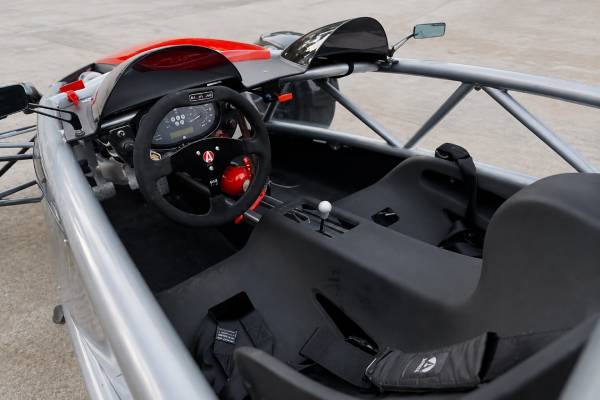
The Ariel Atom 2 245 is the developed naturally aspirated Honda model for drivers who want more top-end performance without the added systems of a supercharger. Its 2.0-liter K20A-family engine is rated at 245 hp, sends power through a six-speed manual gearbox, and relies on low mass, close ratios, and high engine speed rather than boosted torque. That makes it one of the most technically focused naturally aspirated Atom 2 versions.
The same qualities create a demanding buying brief. A claimed 245 may be a genuine factory specification, a later conversion from a 220, or a car whose current engine no longer matches its original build. Compression ratio, camshafts, ECU calibration, intake, exhaust, oil control, and rev limit can all influence output and reliability. The 2005–2007 dates also overlap the transition toward Atom 3, so registration year alone cannot settle generation. A worthwhile example must be authenticated by chassis and engine records, then judged by how cleanly its engine, gearbox, cooling system, and chassis operate together.
Table of Contents
- Where the 245 Fits in the Atom 2 Range
- Ariel Atom 2 245 Technical Reference
- Extracting Naturally Aspirated Pace
- High-Rpm Engine Management and Service
- Six-Speed Gearbox and Limited-Slip Care
- Suspension and Brake Setup for Precision
- Generation, Specification, and Purchase Verification
Where the 245 Fits in the Atom 2 Range
The 245 is the stronger naturally aspirated answer between the 220 and the supercharged Atom 2 models. It offers more high-rpm output while avoiding the belt drive, boost plumbing, and charge-temperature concerns of the 275 and 300.
That position is important because an Atom’s output number changes the way it is used. The 220 already has enough power to produce a remarkable power-to-weight ratio. Raising naturally aspirated output to 245 hp does not create the huge midrange step of a supercharger; it sharpens the upper part of the engine’s range. The driver still needs revs, gear selection, and momentum.
The engine is mounted transversely behind the occupants, coupled to a six-speed Honda manual transaxle. On documented examples, a limited-slip differential helps deliver power through the rear wheels. The exposed tubular frame, double-wishbone suspension, and unassisted steering remain central to the experience. The car has little mass to accelerate, stop, or turn, and very little bodywork to isolate the driver.
A K20A engine can be built to several specifications using related Honda and aftermarket parts. That flexibility is useful for maintenance and tuning, but it makes a visual inspection insufficient. A block may carry one code while the cylinder head, camshafts, pistons, oil pump, intake manifold, ECU, and exhaust define another output. Documentation should show how the 245 figure was achieved.
Low-volume production adds another layer. Cars may have been built in one year and first registered later. The assignment period runs through 2007, when Atom 3 was emerging with revised Honda hardware and chassis details. A 2007 registration is not automatically an Atom 3, and an advertisement calling every Honda car “Atom 2” is equally unreliable. Use the chassis number and factory record.
For the driver, the 245’s attraction is clarity. It provides stronger acceleration than the 220 while retaining progressive naturally aspirated response. It is still possible to use the throttle as a fine balancing tool, and heat soak is less complicated than in a boosted installation. The trade-off is that high-rpm engine condition becomes crucial.
Ariel Atom 2 245 Technical Reference
The 245 is a gasoline ICE vehicle with a naturally aspirated 1,998 cc Honda K20A-family inline four-cylinder, six-speed manual transmission, and rear-wheel drive. A Brammo-era owner manual for Honda-powered U.S. cars lists 245 hp, 163 lb-ft, 11.5:1 compression, and an 86 mm square bore and stroke; European chassis weight and equipment can differ substantially, so those engine values should not be used to infer U.S. curb mass or vice versa.
| Specification | Published value |
|---|---|
| Engine family | Honda K20A |
| Configuration | Inline four-cylinder, transverse mid-engine |
| Displacement | 1,998 cc (2.0 L) |
| Bore × stroke | 86.0 × 86.0 mm |
| Valvetrain | DOHC, 16 valves, i-VTEC |
| Induction | Naturally aspirated |
| Compression ratio | 11.5:1 in the published 245 engine listing |
| Maximum power | 245 hp (183 kW) |
| Maximum torque | About 221 Nm (163 lb-ft) |
| Fuel | Premium gasoline/petrol matched to the ECU calibration |
| Specification | Value |
|---|---|
| Gearbox | Six-speed manual transaxle |
| Drive | Rear-wheel drive |
| Differential | Limited-slip differential on documented 245 examples |
| Engine placement | Behind the seats and forward of the rear axle line |
| Driver aids | No conventional electronic stability-control system |
| Specification | Value |
|---|---|
| Structure | Powder-coated tubular steel spaceframe |
| Body style | Open two-seater with exposed wheels |
| Suspension | Independent double wishbones with inboard spring-damper units |
| Steering | Unassisted rack and pinion |
| Brake control | Four-wheel discs; cabin-adjustable bias appears on some documented cars |
| Measure | Reference value | Qualification |
|---|---|---|
| Front wheel diameter | 15 in on documented examples | Width and offset depend on package |
| Rear wheel diameter | 16 in on documented examples | Width and offset depend on package |
| Length | Approximately 3,410 mm (134.3 in) | Early Atom 2 architecture |
| Wheelbase | Approximately 2,345 mm (92.3 in) | Early Atom 2 architecture |
| European published mass context | Roughly 456–500 kg depending on equipment and source | Do not compare directly with U.S. curb-weight definitions |
| Area | What the specification means |
|---|---|
| Output delivery | Peak performance concentrated high in the rev range |
| Power-to-weight | Approximately 490–537 hp per tonne across the stated mass context |
| Acceleration | Launch- and tire-sensitive; exact period test procedures differ |
| Maximum speed | Strongly influenced by open-body aerodynamic drag |
The range in the weight table is an explicit equipment and source range, not permission to choose whichever figure creates the best performance claim. Weigh the actual car if a precise value is important.
Extracting Naturally Aspirated Pace
The 245 rewards drivers who keep the engine in its working range and preserve momentum. It is more powerful than the 220, but its naturally aspirated torque still arrives progressively rather than as the early shove of a supercharged model.
At modest rpm, the car can be driven smoothly through traffic or a paddock. As the cam and breathing system reach their intended range, acceleration intensifies. The engine should feel eager rather than strained, pulling consistently toward its limit. A sudden flat spot, misfire, or reluctance at high rpm suggests a problem with fuel, ignition, valve control, timing, or calibration.
The six-speed gearbox helps the driver remain near peak power. Clean, deliberate shifts matter because a missed gear or mechanical over-rev can damage a high-compression engine. The lever should not be used as a handrest under load, and the gearbox needs temperature before repeated fast changes.
The 245’s throttle is a chassis tool. Because response is direct and predictable, the driver can add load to the rear tires gradually. The car is light enough that 221 Nm is substantial, especially in lower gears or on cold rubber. Full throttle while still carrying steering angle can still break traction.
Momentum technique also protects components. A driver who brakes smoothly and maintains corner speed creates less repeated acceleration load than one who over-slows and then relies on the engine. This does not mean the car should be driven timidly; it means precision is faster than violence.
The steering communicates tire load with little filtering. Small changes in effort can show when the front tires are approaching saturation. The rear gives fewer warnings if alignment is poor or tires are mismatched, so setup must be trustworthy before exploring balance. A limited-slip differential can increase exit drive but may also make the transition under power more decisive.
Braking distances are short because mass is low. The challenge is consistency and stability, not merely peak deceleration. Heat, pad transfer, fluid condition, front-to-rear balance, and tire grip determine whether the pedal remains predictable after several laps. A cabin bias adjuster should have a marked baseline and protection against accidental movement.
On public roads, the upper engine range can produce speed very quickly. Wind, debris, surface changes, and other traffic reduce the safe opportunity to use it. The naturally aspirated character is best explored at a circuit or closed venue where braking points and runoff are known.
High-Rpm Engine Management and Service
The 245’s engine must be maintained for high-rpm use. Oil pressure, valve clearance, timing-chain control, fuel delivery, ignition, and calibration are more important than the K20 family’s general reputation for strength.
Identify the engine before servicing it. Record block and head markings, camshafts, compression ratio if documented, oil pump, sump, ECU, injectors, intake, exhaust, and rev limit. A replacement K20 may fit physically while requiring different parts and settings. “Honda 2.0” is not a complete specification.
Check oil level before every track session and after sustained running. The correct level depends on the installed sump and Ariel’s or the builder’s procedure. Baffles, an accumulator, oil cooler, or dry-sump conversion may be fitted. Each adds hoses, fittings, thermostats, or tanks that require inspection.
Monitor hot oil pressure and temperature. A pressure warning during a corner, even briefly, demands investigation. Validate sensors and wiring with a mechanical gauge when readings are uncertain. Trend information is useful: a gradual fall in hot pressure or rise in consumption may precede obvious noise.
Valve clearances should be measured at the specified condition and interval. High-rpm cam profiles and valve springs make correct clearance vital. Tight valves can lose compression when hot; excessive clearance increases impact and may alter performance. Keep the worksheet rather than only the invoice total.
The chain, guides, and tensioner depend on clean oil and correct parts. Persistent rattle, cam-correlation faults, or unexplained high-rpm weakness should not be dismissed. An engine that has suffered a missed downshift may need a leak-down test and valve-train inspection even if it still idles normally.
Fuel must match the 11.5:1 published compression context and ECU map. Use the required octane and avoid stale fuel. Verify fuel pressure under load, injector duty, air-fuel ratio, intake temperature, and ignition activity during calibration checks. A dyno run should confirm safe repeatability, not chase one peak number.
Spark plugs can provide evidence of cylinder-to-cylinder differences. Use the heat range and gap specified by the tuner, and investigate damaged electrodes, oil deposits, or signs of detonation. Coils and grounds are exposed to heat and vibration; intermittent high-load misfire may not appear at idle.
The cooling circuit must remain free of air. Inspect radiator, fan, expansion tank, long pipes, hoses, clamps, and bleed points. Verify stable temperature during load and after returning to idle. The open chassis makes leaks visible, but airflow can spread coolant and obscure the source.
Annual or 4,500-mile general Ariel service guidance is a useful ceiling for lightly used cars, while track use calls for more frequent checks. Oil, filter, brake fluid, gearbox fluid, coolant, air filter, plugs, and safety joints should be scheduled by events and hours as well as mileage.
Six-Speed Gearbox and Limited-Slip Care
The six-speed transaxle is central to the 245’s performance, and its condition should be assessed both cold and fully hot. Clean shifts, correct lubricant, stable mounts, and a healthy differential are worth more than a shortened aftermarket lever.
Identify the gearbox code and final-drive specification. Honda transaxles can contain different ratios and limited-slip units even when cases look similar. A replacement gearbox may change acceleration, cruising rpm, speedometer behavior, and service fluid. Documentation should explain any swap.
Use the lubricant recommended for the exact synchronizers and differential. Some limited-slip designs require compatible friction characteristics, while others use separate mechanical principles. The wrong oil can create poor shifting or noise. Record fill quantity and procedure rather than relying on a generic workshop value.
Cold shift quality provides an initial clue. Every ratio should engage without excessive force. After full warm-up, repeat the evaluation because worn synchronizers or bearings may become more obvious. A problem isolated to one gear suggests a different cause from general stiffness across the gate.
Clutch drag can make first or reverse difficult and can imitate synchronization trouble. Check pedal travel, hydraulic condition, release action, and fluid. Slip may appear under high load in a taller gear. Repeated launch testing is unnecessary and can damage a car that was healthy before inspection.
Engine and gearbox mounts control driveline movement. Cracked or overly soft mounts can pull on cables, exhaust, hoses, and driveshafts. Extremely rigid mounts may reduce movement but transmit damaging vibration and fatigue brackets. Look for contact marks that show components moving under load.
A limited-slip differential should provide consistent drive without excessive binding. Some noise during tight slow turns may be characteristic of a particular unit, but clunks, metal in the fluid, or changing behavior need diagnosis. Tire circumference must be closely matched side to side because a difference makes the differential work continuously.
Driveshaft joints and wheel bearings see high speeds and repeated load reversals. Inspect boots, fasteners, play, and grease leakage. A vibration under acceleration can come from a shaft, mount, wheel, tire, or engine rather than the gearbox itself, so diagnosis should avoid assumptions.
Suspension and Brake Setup for Precision
The 245 works best with a neutral, repeatable setup rather than maximum stiffness. Precision comes from a straight frame, tight joints, suitable tires, controlled damping, and measured geometry.
Inspect frame coating and tubes in good light. Lower-rail damage, cracks near welds, repaired suspension pickups, or asymmetry require specialist assessment. A car can be made to drive straight with compensating alignment while still having a damaged structure.
Check rod ends one by one. Look for corrosion, play, binding, correct thread engagement, and secure locknuts. Raise the car only at approved points, then inspect wheel bearings and ball joints. Any looseness undermines the accuracy of later measurements.
Record spring rates, damper model, ride height, and adjuster positions. The lowest visual stance may leave insufficient bump travel. A stiff car that skips across bumps has less usable grip than a compliant one that maintains tire contact. Service or revalve worn dampers before changing springs.
Set alignment for the actual use. Road stability may call for more conservative toe and camber than a circuit. Track settings should be developed from tire temperatures, wear, driver feedback, and lap consistency. Corner weighting should include a representative driver and fuel load.
Wheel width, diameter, and offset affect steering geometry and bearing loads. Document spacers and fastener engagement. The staggered 15/16-inch format is common on Atom 2, but individual cars may carry other packages. Inspect wheels for bends and cracks, especially after curb or road-impact history.
Tire compound should match temperature and weather. A 245 can overpower an unsuitable rear tire, but fitting a much stickier rear than front may create understeer. Replace tires that are aged or heavily heat-cycled even if tread remains. Establish pressures from tire-manufacturer guidance and measured hot results.
Brake inspection includes discs, pads, calipers, master cylinders, hoses, bias mechanism, and fluid. Choose pads for temperature range and balance, not marketing. A hard pedal with poor modulation can be slower and less safe than a modest system in excellent condition.
Generation, Specification, and Purchase Verification
The purchase decision should begin with generation and engine verification. A 2007 registration, a 245-hp dyno graph, or a K20 engine does not by itself prove that the car is a factory Atom 2 245.
Send the chassis number to Ariel and ask for the original build. Compare the record with engine and gearbox identities, brake package, dampers, wheels, body panels, and dashboard. Determine whether output was original, factory-upgraded, or created by an independent tuner.
For a modified engine, request a complete build sheet. It should identify pistons, compression, head work, cams, springs, oil pump, sump, injectors, ECU, exhaust, fuel, rev limit, and builder. A recent dyno report should show safe mixture and repeat runs. A power claim without supporting detail adds risk rather than value.
Review service history by system. Engine oil and analysis, valve clearances, cooling work, gearbox fluid, clutch, differential, brakes, rod ends, dampers, tires, wheel bearings, harnesses, and battery all matter. Mileage alone does not capture track hours or storage deterioration.
Inspect cold. Check fluid condition, leaks, frame damage, radiator, hoses, wiring, mounts, intake security, tire dates, and wheel condition. Confirm that warning lights and gauges operate. A pre-warmed engine removes valuable evidence.
Warm up fully and drive progressively. The car should idle steadily, hold temperature, shift cleanly, brake straight, and respond symmetrically. High-rpm load testing should be carried out only in a safe controlled setting, ideally with data logging. Stop for any pressure, temperature, misfire, or fuel issue.
After the drive, inspect again. Heat can reveal leaks, loose clamps, brake drag, and coolant problems. Compare wheel temperatures cautiously and check for tire contact. Review the ECU for pending or recently cleared faults.
A specialist should measure the frame and geometry, assess the engine, verify oil pressure if needed, test compression or leakage where justified, inspect gearbox and differential fluid, and evaluate brakes. Use the findings to build a first-year budget rather than merely negotiate the purchase price.
The Atom 2 245 is especially rewarding when its engine specification is real and its setup remains disciplined. It offers high-rpm performance, direct throttle response, and less forced-induction complexity than the boosted cars. Those advantages disappear when a seller’s 245 label conceals an unknown conversion. Documentation and repeatable mechanical health are the true performance options.
References
- Atom – Ariel Motor Company 2026
- BRAMMO ARIEL ATOM 2 2006 OWNER’S MANUAL 2026
- 2005 Ariel Atom 2 VIN: AA04H2022CNRAM145 for Sale – Cars & Bids 2023
- Ariel Atom: used car buying guide | evo 2013
- Ariel Atom (2000-): PH Pocket Buying Guide 2016
- Ariel Atom: Models, Specs, and Buyer’s Guide | Car & Classic 2026
Disclaimer
This is general research guidance and does not establish the specification or condition of a particular car. Confirm the chassis generation, engine and gearbox build, fluids, calibration, service intervals, safety equipment, and legal requirements through Ariel records and hands-on specialist inspection. Share it with an owner or buyer who needs a careful starting point for a naturally aspirated 245.