


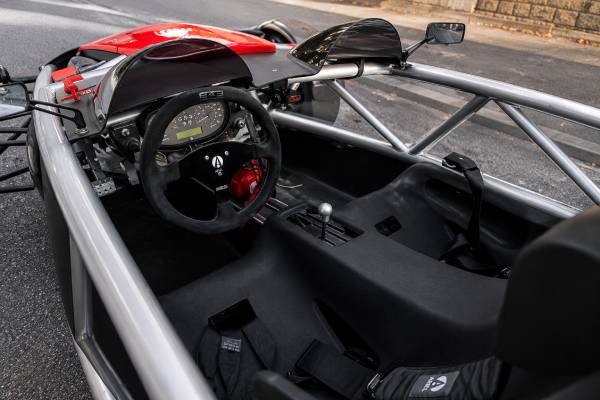
The Ariel Atom 2 L61 is the naturally aspirated entry point to the North American Brammo-built Atom 2 family. Its 2.2-liter GM Ecotec four-cylinder produces 140 hp and 150 lb-ft, drives the rear wheels through a five-speed manual transaxle with a limited-slip differential, and sits in a U.S.-specific chassis whose published curb weight is 1,350 lb. It is slower than the LSJ supercharged versions, but it has fewer forced-induction parts, a broad torque curve, and enough performance to make the Atom’s exposed driving environment vivid.
The key is not to confuse it with a British Rover or Honda Atom. The Brammo owner’s manual specifies different weight, fuel capacity, wheel sizes, fluids, transmission, and service parts. Many cars have also been upgraded after sale, sometimes with an LSJ engine, turbo system, or nonstandard calibration. A correct appraisal starts with the VIN, engine code, and Brammo documentation. For a road-focused owner, the L61 can be the most approachable U.S. Atom 2—provided the chassis, cooling circuit, fuel system, and age-sensitive joints have been maintained.
Table of Contents
- The American L61 Atom 2 in Context
- L61 Factory Data and Capacities
- How 140 hp Works in the Brammo Chassis
- Ecotec Routine Service and Fluid Control
- U.S. Chassis Wear Points and Safety Checks
- Road Use, Track Days, and Storage
- Buying an L61 Atom Without Guesswork
The American L61 Atom 2 in Context
The L61 version is a U.S.-market Atom 2 built around GM’s naturally aspirated 2.2-liter Ecotec rather than the Honda engines associated with British Atom 2 production. Brammo’s manual treats it as a distinct powertrain alongside the supercharged LSJ stages.
That difference explains why online specifications often conflict. A European K20A Atom 2 may be quoted near 456 kg and use a six-speed gearbox. The Brammo L61 manual lists a 1,350 lb curb weight, a five-speed manual, a 9.7 U.S. gallon fuel tank, and staggered 15- and 16-inch wheels. Applying the lighter European mass to the U.S. L61 creates a false power-to-weight claim.
The L61 is an all-aluminum, dual-overhead-cam four-cylinder with sequential fuel injection and electronic engine management. It was widely used in GM vehicles, which can make core service parts easier to source than low-volume chassis components. The Atom installation remains specialized, however. Cooling pipes run through the car, the transaxle and limited-slip differential have installation-specific details, and the exposed wiring and plumbing face weather and vibration.
Performance is deliberately modest relative to the LSJ cars. The naturally aspirated engine does not need a supercharger belt, air-to-liquid aftercooler, bypass system, or boosted fuel calibration. That reduces complexity and heat, although it does not remove the need for oil-pressure awareness, correct coolant bleeding, or frequent inspection after track use.
The L61 can be an excellent driver-development Atom. Its torque peak is accessible, the five-speed gearbox does not require constant shifting, and the driver can use full throttle more often. The chassis still reacts quickly because mass is concentrated near the center and there is almost no body isolation. Mistakes remain visible rather than corrected electronically.
Identification is essential because an L61 chassis may have received later powertrain work. A genuine original car can be valued for simplicity; a converted car should be evaluated for the engine it now contains. The VIN, Brammo documents, engine casting and code, wiring, ECU, transmission, and invoices should all tell the same story.
L61 Factory Data and Capacities
The Brammo L61 Atom 2 is a gasoline ICE vehicle with a 2,198 cc naturally aspirated inline four-cylinder, five-speed manual limited-slip transaxle, and rear-wheel drive. The manufacturer owner’s manual provides unusually useful U.S.-specific data, including 140 hp, 150 lb-ft, 1,350 lb curb weight, wheel offsets, tire pressures, and fluid capacities.
| Specification | Manual-listed value |
|---|---|
| Engine family/code | GM Ecotec L61 |
| Configuration | Inline four-cylinder, transverse mid-engine |
| Displacement | 2,198 cc (2.2 L) |
| Valvetrain | DOHC, 16 valves |
| Bore × stroke | 86.0 × 94.6 mm |
| Compression ratio | 10.0:1 |
| Induction | Naturally aspirated |
| Fuel system | Sequential fuel injection |
| Maximum power | 140 hp (104 kW) |
| Maximum torque | 203 Nm (150 lb-ft) |
| Specification | Manual-listed value |
|---|---|
| Transmission | Five-speed synchronized manual transaxle |
| Differential | Limited-slip |
| Drive | Rear-wheel drive |
| Engine position | Mid-mounted behind two occupants |
| Curb weight | 612 kg (1,350 lb) |
| Body material | Fiberglass or optional carbon-fiber panels over the frame |
| Position or system | Manual-listed specification |
|---|---|
| Front wheel | 15 × 7 in, +35 mm offset |
| Rear wheel | 16 × 7 in, +38 mm offset |
| Recommended cold tire pressure | 124 kPa (18 psi) front; 138 kPa (20 psi) rear |
| Front suspension | Independent, pushrod-operated spring and damper |
| Rear suspension | Independent, pushrod-operated spring and damper |
| Steering | Manual rack and pinion |
| System | Manual-listed quantity or requirement |
|---|---|
| Fuel tank | 36.7 L (9.7 US gal) |
| Fuel grade | Premium unleaded gasoline |
| Engine oil | Six US quarts; Mobil 1 synthetic 5W-30 specified in the manual |
| Manual transaxle fluid | Approximately 1.99 L (2.1 US qt); specified Saturn manual-transmission fluid |
| Brake fluid | DOT 4 |
| Cooling system | Approximately 10.4 L (2.75 US gal); Dex-Cool-type coolant specified |
| Item | Manual guidance |
|---|---|
| Engine-oil level | Check at each track event or every 1,000 miles |
| Coolant level | Check at each track event |
| Air filter | Clean and re-oil at 5,000-mile intervals in the listed schedule |
| Spark plugs | Inspect at each track event |
| Rod ends | Closely inspect and replace according to use; the manual gives a 3,000-mile recommendation |
Fluid level must be set by the manual procedure and dipstick or fill point, not by blindly pouring a nominal capacity into a system that may retain old fluid. Later modifications can also change quantities.
How 140 hp Works in the Brammo Chassis
The L61’s 140 hp is sufficient because the U.S. car weighs only 612 kg, has short gearing, and places the driver in the airflow. It is not supercar-quick in the LSJ sense, but it delivers a high level of involvement at accessible speeds.
The 2.2-liter engine’s long 94.6 mm stroke helps produce 150 lb-ft, slightly more torque than the horsepower number may suggest. The car can pull cleanly without being held near an extreme rev limit. That makes it easier to drive on ordinary roads and reduces the need to plan every overtake around a narrow power band.
The five-speed gearbox complements the broad delivery. Fewer, wider ratios mean less shifting than in a close-ratio six-speed Honda installation. A driver can concentrate on braking and line rather than constantly chasing rpm. The trade-off is a larger drop between ratios and less acceleration once aerodynamic drag becomes dominant.
Low mass changes every control. Steering effort builds directly with front-tire load. Braking requires relatively little energy compared with a normal car, so moderate hardware can produce strong deceleration. Direction changes happen immediately because the central engine and occupants keep polar inertia low.
The open cockpit exaggerates speed. Wind hits the driver’s helmet and shoulders; stones, insects, temperature, and exhaust sound are unfiltered. A measured 60 mph can feel far more intense than the same speed in a closed car. The L61 therefore offers the Atom experience without requiring a 300-hp engine to create drama.
On a tight circuit, the car rewards momentum. Over-braking costs time because 140 hp cannot erase a poor corner exit. Smooth brake release, accurate turn-in, and early progressive throttle are the effective techniques. The limited-slip differential helps drive, but it does not replace tire temperature or correct rear alignment.
The absence of stability control remains important. A sudden lift in a fast bend, rear brake imbalance, or abrupt throttle on cold tires can rotate the car quickly. Lower output widens the margin but does not make the chassis foolproof. Driver education and progressive track sessions should come before chasing lap times.
Maximum speed is not the L61’s purpose. Exposed wheels and occupants create substantial drag. Wind load and noise also make sustained high speed tiring. The best use is a technical road or circuit where the driver can exploit braking, response, and visibility rather than engine power alone.
Ecotec Routine Service and Fluid Control
The L61’s maintenance advantage is its naturally aspirated simplicity, but the Atom installation still needs a track-oriented inspection routine. The owner should control oil, coolant, fuel, gearbox fluid, electrical condition, and exposed plumbing rather than relying on GM road-car intervals.
Check oil with the car level and according to the manual procedure. The six-quart nominal figure is a service reference, not a substitute for verifying the dipstick after filter filling and circulation. Record consumption. Oil loss can come from leaks, breathing, or internal wear, and a sudden increase deserves investigation.
Track cornering can uncover oil-control limitations that never appear in a sedan. Identify the sump, baffles, oil cooler, remote filter, and any accumulator fitted. Inspect hoses and fittings for abrasion and heat. If the pressure gauge shows a drop in a particular corner, confirm the sender but treat the event as real until proven otherwise.
The timing system is chain driven. Clean oil supports the chain, guides, and tensioner. Persistent rattle, poor cam correlation, or debris in the filter should be investigated. A naturally aspirated L61 does not need the supercharger-specific belt system of an LSJ, so unexpected extra pulleys or plumbing may indicate a conversion.
Cooling requires a correct bleed. The radiator is forward while the engine is rearward, creating long passages that can trap air. Inspect the core for stone damage, confirm fan operation, examine hoses and clamps, and use coolant compatible with the system. Temperature should remain stable after a hard run and during the following idle period.
The five-speed transaxle needs the specified fluid and fill level. Check for seepage at driveshaft seals, case joints, and venting. A difficult first or reverse selection may come from clutch drag rather than internal wear. Evaluate all ratios cold and hot, listening for bearing whine or load-dependent noise.
Premium fuel is specified. Long storage can leave stale gasoline, moisture, or deposits. Keep the filler and cap clean, inspect lines and filter history, and avoid using an unknown fuel blend before track load. A weak pump may deliver enough fuel at idle while failing at sustained throttle.
The air filter is exposed to dust and debris. The owner manual calls for cleaning and re-oiling at a defined mileage, but dusty track use may require more frequent attention. Excess filter oil can contaminate sensors; insufficient oil can reduce filtration. Follow the filter manufacturer’s process.
Spark plugs are easy evidence. The manual encourages inspection at every track event. Look for consistent coloration across cylinders, correct gap, oil deposits, overheating, or damaged electrodes. Diagnose differences rather than replacing plugs and erasing the clue.
Brake fluid, clutch hydraulics, and battery also age. DOT 4 absorbs moisture; replace it on a time and temperature schedule. Keep terminals and grounds secure because the exposed chassis can magnify electrical corrosion. Use a maintainer during storage rather than repeated short starts.
U.S. Chassis Wear Points and Safety Checks
The Brammo Atom 2’s exposed rod ends, wheel bearings, frame coating, brakes, and wheels need more frequent visual attention than comparable parts hidden beneath a normal body. The manual’s short rod-end recommendation reflects the consequences of track use and environmental exposure.
Begin with the powder-coated tubes. Clean enough dirt to see the surface, then look for chips, corrosion creep, cracks around welds, crushed lower rails, and repaired pickup points. Compare sides and inspect radiator and rear engine structures. Fresh finish should be supported by photographs of the work.
Rod ends should move freely without play. Examine every threaded adjuster for adequate engagement and tight locknuts. Rust staining, oval movement, clicks, or changing alignment indicate replacement. Do not lubricate a joint with a product that attracts grit unless the component manufacturer calls for it.
Wheel bearings and uprights deserve particular attention. Some owners upgrade bearing and upright assemblies, which can be a legitimate durability improvement. Confirm who designed and installed the parts, whether geometry and wheel fitment remain correct, and what replacements are available. An undocumented custom upright can create future service difficulty.
The manual lists 15 × 7 front and 16 × 7 rear wheels with specific offsets. Verify actual dimensions, spacers, fastener engagement, and tire clearance. Bent wheels and aged tires are common on low-mileage toys. Replace tires based on age, condition, compound, and heat cycles, not only tread.
Start cold pressures from the manual’s 18 psi front and 20 psi rear only when the tire and wheel package are compatible. Modern tires may need a different operating range. Measure hot pressure, shoulder wear, and temperature. Never reduce pressure simply to chase grip if the tire rolls onto its sidewall.
Brake inspection should cover pads, discs, calipers, hoses, master cylinders, fluid, and bias mechanism. A lightweight car can hide declining brake capacity during gentle use. Track heat exposes sticking pistons, boiled fluid, cracked discs, and pad taper. Mark any adjustable bias control at a known safe position.
Harnesses, seats, and steering-wheel release are safety systems. Check dates, webbing damage, anchor condition, latch operation, seat mounting, and quick-release security. Event organizers may impose expiration rules even when road law does not. Eye and hearing protection should be treated as normal equipment.
Road Use, Track Days, and Storage
The L61 is practical only by Atom standards. It can be road registered, but weather exposure, luggage limitations, visibility, noise, and fuel range require planning.
For road trips, secure every object. A phone or tool can leave the cockpit under braking. Use protective luggage arrangements away from exhaust heat and moving suspension. Confirm fuel availability because the 36.7-liter tank and real-world consumption under hard use limit range.
Dress for airflow rather than ambient temperature. Wind chill becomes significant, and rain reaches occupants and electrical parts directly. Eye protection is essential. A helmet can add aerodynamic lift and neck strain at speed, so fit and posture matter.
Before track use, perform a written pre-event inspection. Check oil, coolant, fuel, brake fluid, tire condition and pressure, wheel fasteners, rod ends, bearings, harnesses, and leaks. Warm the engine, gearbox, brakes, and tires progressively. Reinspect between sessions rather than assuming the first check covers the day.
The L61’s lower output can reduce fuel, tire, and brake consumption relative to an LSJ, but poor technique can still create heat. Long sessions, repeated wheelspin, or riding the brakes shorten component life. Cool-down laps should avoid parking immediately with extreme brake temperature.
Storage should be dry and ventilated. Clean track debris and salt, then allow the car to dry before covering. Stabilize or manage fuel according to local product guidance. Maintain the battery and rotate or support tires correctly during long lay-up.
Do not start the engine briefly every few weeks merely to hear it. If it cannot reach full temperature and recharge the battery, condensation may increase. A planned exercise drive or a proper storage procedure is better. Before return to service, check for nesting, chewed wiring, seized brakes, old fuel, low fluids, and tire flat spots.
Maintain a log of track events and component hours. A car with 3,000 road miles may have experienced many hard sessions. Recording oil changes, rod ends, wheel bearings, brake pads, tire heat cycles, and alignment gives future decisions a factual basis.
Buying an L61 Atom Without Guesswork
A good purchase depends on proving that the car is an L61 Brammo Atom, then evaluating it as a complete U.S.-specification machine. Do not let a seller combine the lightest European weight, the strongest LSJ acceleration claim, and the L61’s simpler engine into one impossible description.
Request the VIN, Brammo manual and build paperwork, engine code photographs, title history, service invoices, and a list of modifications. Ask whether the car has ever used an LSJ, turbocharger, altered ECU, different transaxle, or upgraded upright. Determine who performed any conversion.
Inspect cold. Confirm the 2.2-liter naturally aspirated installation, look for unused supercharger wiring or brackets, and compare plumbing with the manual. Check oil, coolant, radiator, hoses, fuel odor, gearbox seals, frame coating, rod ends, tires, wheels, and harnesses.
Start and warm fully. The engine should idle consistently, build oil pressure, and hold coolant temperature. Listen for chain noise, exhaust leaks, bearing knock, and accessory noise. Verify fan operation and gauge plausibility. Scan the ECU for present, pending, and recently cleared faults.
Drive at low speed first. The clutch should engage cleanly, every gear should select, and the car should not pull or clunk. Build load gradually, checking engine response, gearbox noise, steering accuracy, brake balance, vibration, and differential behavior. Avoid full-power testing on old tires or public roads.
Afterward, look again for oil, coolant, or fuel leakage. Compare wheel and brake temperatures for an obvious dragging corner. Check reservoir levels and inspect the underside. Heat can expose faults hidden when cold.
A specialist should perform the final inspection. Useful work includes compression or leak-down testing when indicated, oil-pressure verification, coolant pressure testing, geometry measurement, frame inspection, wheel-bearing and upright assessment, brake review, and ECU logging. Confirm that replacement parts remain available for nonstandard upgrades.
Plan a baseline service using the manual. Replace uncertain engine and gearbox fluids, brake fluid, filters, and coolant; inspect plugs, fuel system, rod ends, bearings, tires, harnesses, and battery. Record the starting condition and settings.
The L61’s appeal is honest rather than theatrical. It gives the U.S. Atom chassis enough torque to be lively, with less heat and fewer parts than an LSJ car. Its lower value on a horsepower chart can make it overlooked, yet that simplicity may be exactly what a road-oriented owner needs. Buy one for the condition and the experience, not to pretend it is a Stage 3.
References
- BRAMMO ARIEL ATOM 2 2006 OWNER’S MANUAL 2026
- Ariel Atom (US) Useful documents 2026
- Ariel Atom, Ariel Nomad, Ariel North America Atom 4 2026
- Ariel Atom (2000-): PH Pocket Buying Guide 2016
- Ariel Atom: used car buying guide | evo 2013
- Palatov-Designed Ariel Atom Uprights – Lightweight Motorsports 2026
Disclaimer
This guide summarizes general U.S. Atom 2 information and is not a substitute for the Brammo manual, VIN-specific records, professional inspection, or current legal advice. Confirm the installed engine, transmission, capacities, parts, service procedures, safety equipment, and registration rules before use. Share it with another U.S. Atom owner when it helps prevent British and Brammo specifications from being mixed.