

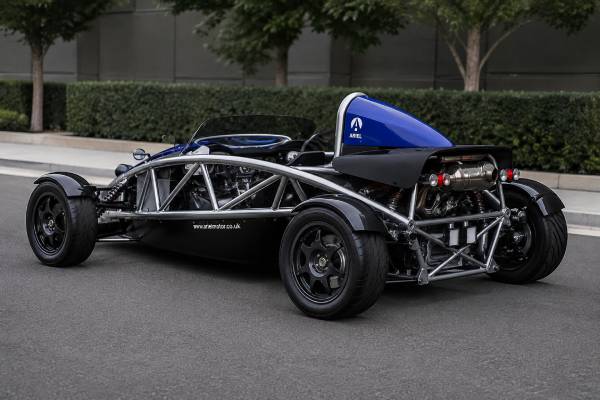
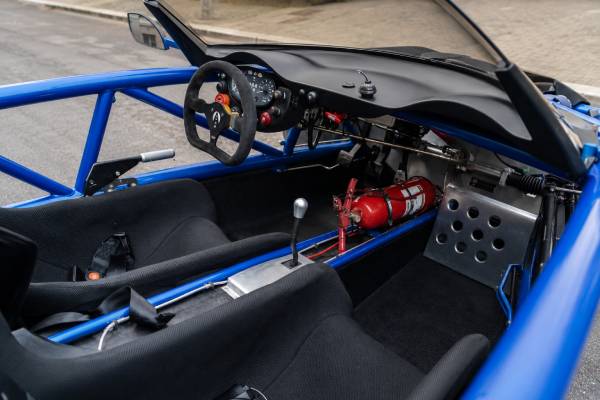
The TMI-built Ariel Atom 3 300 is one of the best-documented early North American Atoms because a period instrumented test recorded its engine output, dimensions, weight, acceleration, braking, and grip. Its 2.0-litre Honda K20A used Hondata control and a non-intercooled Jackson Racing supercharger running about 7 psi, lifting output from the naturally aspirated car’s 245 hp to 300 hp. In a 1,388 lb test car, that produced 0–60 mph in 2.9 seconds and a 125 mph quarter-mile. Those numbers are useful, but they describe a particular optioned car rather than every example built from 2008 to 2012. Brakes, dampers, differential, road equipment, and later modifications can materially alter specification. This guide focuses on the licensed North American K20A 300, uses the period tested configuration as an anchor, and explains how boost, cooling, setup, registration, and maintenance determine whether a surviving car still performs as intended.
Table of Contents
- The Tested 300 hp Package
- K20A Supercharged Technical Specs
- Why the Numbers Are So Extreme
- Non-Intercooled Boost and Heat
- Options That Shape the Car
- Failure Prevention and Track Checks
- Provenance, Modifications, and Purchase
The Tested 300 hp Package
The representative 2009 North American Atom 3 300 was not a bare base car; it combined the supercharger with major brake and damper options. That context explains both its measured capability and why a less comprehensively equipped 300 may feel different despite carrying the same nominal power figure.
TMI AutoTech began Atom 3 production at Virginia International Raceway after taking over North American construction from Brammo. Period reporting described the frame as bent and welded in Virginia and the car as hand assembled in a small facility. The new generation moved away from the mixed engine menu associated with many American Atom 2s and used Honda K20A power in two states of tune.
The naturally aspirated engine produced 245 hp and 170 lb-ft. The optional Jackson Racing supercharger raised output to 300 hp and 190 lb-ft. The system was non-intercooled and used approximately 7 psi of boost. The increase of 55 hp sounds modest by modern tuning standards, but the car’s mass transformed it into an enormous change in acceleration. The measured test example weighed 1,388 lb, or about 630 kg, with options and test equipment.
Its option list included Alcon four-piston brakes and ten-way-adjustable dampers. Those components did not create the straight-line figures, but they helped the car repeat high-load braking and gave the chassis greater tuning range. They also raised the purchase price and introduced future rebuild costs. A modern buyer should therefore distinguish between an original premium option, its present condition, and the assumption that an expensive component remains superior after fifteen years of use.
The test produced 1.12 g on a skidpad, stopped from 70 mph in 158 ft, and ran the quarter-mile in 11.2 seconds at 125 mph. Short gearing required two shifts before 60 mph, while the open body limited high-speed efficiency. The result illustrates the Atom formula: acceleration and cornering come from low mass and immediate controls, while top speed is constrained by aerodynamic drag.
Not every K20A 300 was identical. TMI offered a long options list, owners frequently changed wheels and tyres, and road-registration equipment differed by jurisdiction. Some cars have since gained charge cooling, alternative pulleys, revised exhausts, data systems, or replacement dampers. The period road test is therefore an excellent benchmark, not a universal certificate.
K20A Supercharged Technical Specs
A verified North American Atom 3 300 should combine a K20A, six-speed manual transaxle, and documented supercharger package. The table values below separate measured period data from equipment that must be confirmed on an individual build.
| Item | Period specification |
|---|---|
| Engine | Honda K20A inline four |
| Displacement | 1,998 cc |
| Valve gear | DOHC, 16 valves, i-VTEC |
| Induction | Jackson Racing positive-displacement supercharger |
| Charge cooling | None on the representative factory option |
| Boost | 7 psi in the cited factory-option test car |
| Management | Hondata calibration |
| Item | Specification |
|---|---|
| Power | 300 bhp at 8,400 rpm |
| Torque | 190 lb-ft at 5,800 rpm |
| Transmission | Six-speed manual |
| Layout | Transverse rear-mid-engine, rear-wheel drive |
| Differential | Limited-slip equipment commonly fitted; verify the specific unit |
| Measure | Test-car result |
|---|---|
| Wheelbase | 92.3 in |
| Length | 134.3 in |
| Width | 72.0 in |
| Height | 47.0 in |
| Curb weight | 1,388 lb |
| Occupancy | Two |
| Measure | Result |
|---|---|
| 0–60 mph | 2.9 seconds |
| 0–100 mph | 6.4 seconds |
| 0–130 mph | 12.6 seconds |
| Quarter-mile | 11.2 seconds at 125 mph |
| Top speed | 155 mph, governor limited in the tested car |
| Skidpad | 1.12 g |
| 70–0 mph | 158 ft |
| System | Equipment |
|---|---|
| Frame | Tubular steel Atom 3 spaceframe |
| Dampers | Ten-way-adjustable option on tested car |
| Brakes | Optional Alcon four-piston package |
| Front tyres | 205/50R15 |
| Rear tyres | 225/45R16 |
| Steering | Unassisted rack and pinion |
These figures should be cited with their conditions. A launch on warm tyres and a prepared surface is not a promise that an owner can reproduce 2.9 seconds on a public road. Tyre compound, ambient temperature, driver technique, gearing, and vehicle mass all influence the result. More importantly, repeated standing starts impose considerable clutch, driveshaft, differential, and tyre stress.
Why the Numbers Are So Extreme
The Atom 3 300 accelerates like a much more powerful conventional car because it carries very little mass and wastes little time translating driver input into motion. Its 300 hp is impressive, but the absence of a heavy body, luxury equipment, sound insulation, and large wheels is the real multiplier.
At 1,388 lb, each horsepower moves roughly 4.6 lb before occupants are included. A contemporary high-output sports car could have similar or greater peak power while carrying twice the mass. The Atom also uses short gearing, so the engine stays close to the productive part of its rev range. The cost is additional shifts and a top speed governed as much by drag and gearing as by output.
The supercharger’s response makes the acceleration feel more immediate than the peak number suggests. A mechanically driven compressor builds boost in proportion to engine speed without waiting for exhaust energy. Torque arrives predictably when the throttle opens. In a light rear-drive chassis, that direct connection is valuable because the driver can sense and adjust wheel load rather than waiting for a delayed surge.
Traction is helped by the rear-mid-engine layout, but it is not unlimited. On a warm, dry surface, rearward static mass and acceleration load can give the tyres enough work to produce a clean launch. On cold or damp pavement, the same car can spin its tyres before the driver has used much pedal travel. The model’s performance data therefore describe a narrow set of favourable conditions.
The open structure also changes perception. Wind, induction sound, gear noise, and supercharger whine arrive without insulation. The driver sits close to the front axle line and can see the wheels, so acceleration, yaw, and road texture feel immediate. Period reporting compared the supercharger sound to a power tool close to the occupant’s ear. Hearing protection is not an affectation on a long drive or circuit day; it is sensible safety equipment.
Cornering capability comes from low inertia, geometry, and tyre load rather than enormous rubber. The representative car used a 205-section front and 225-section rear tyre, sizes found on ordinary road cars, yet produced 1.12 g. A light vehicle asks each tyre to manage less total energy, allowing responsive dimensions without the steering mass and aquaplaning risk of very wide tyres.
Braking follows the same principle. Large four-piston brakes added thermal capacity, but the short stopping result also depended on low mass, grip, and pedal control. No conventional brake booster or stability system shields the driver from mistakes. If the front tyres lock, the solution is pressure modulation and preparation, not an electronic rescue.
This combination makes the 300 unusually sensitive to setup. A small change in toe, tyre pressure, or damper control can be felt immediately because there is little compliance to mask it. Owners should resist chasing specifications before establishing a sound baseline. The quickest car over a full day is usually the one that remains predictable as temperatures change.
Non-Intercooled Boost and Heat
The original 7 psi supercharger package is simple and responsive, but its lack of charge cooling makes intake temperature an important operating limit. A car can feel powerful on the first run and progressively softer as heat accumulates, even when nothing is mechanically broken.
Compressing air raises its temperature. An intercooler removes some of that heat before the air enters the engine; the period TMI option did not have one. The ECU must therefore protect the engine through suitable fuel and ignition calibration, while the driver must recognise that repeated hot laps, high ambient temperatures, and low-speed staging create a harsher environment than one acceleration test.
Heat soak is not the same as overheating. Coolant temperature may remain acceptable while intake air becomes hotter and the ECU reduces timing. A later dyno run can show less power because the conditions differ, not because the engine has lost compression. Useful diagnosis requires logging coolant temperature, intake temperature, air-fuel behaviour, knock response where available, and boost under repeatable conditions.
The supercharger belt system needs routine visual and auditory inspection. Check the belt for glazing, edge wear, contamination, and cracking. Inspect pulley alignment, tensioner movement, idlers, and brackets. Belt dust near one pulley suggests tracking trouble. A sudden change in whine, a chirp that follows load, or boost that falls at high rpm should be investigated before another full-throttle run.
Fuel quality is critical. The K20A is a high-specific-output engine, and boost reduces its tolerance for poor octane, stale fuel, or an incorrect map. Use the fuel required by the calibration, keep the tank and filters clean, and avoid tuning around an unknown injector or pump. A pressure test under load is more informative than hearing a pump prime at idle.
Cooling-system health remains essential even though the charge is not intercooled. The front radiator, long coolant pipes, rear engine, fans, hose joints, and bleed procedure all form one system. Inspect for dried residue, weeping clamps, damaged lines, and debris blocking the radiator. The level should stabilise after a properly bled service. Repeated coolant loss must be explained rather than normalised.
Owners sometimes retrofit charge cooling, alternative intake systems, or smaller pulleys. These changes can improve consistency or raise output when designed as a package. They can also add pumps, reservoirs, wiring, hoses, and failure points. Verify the engineering: component identity, installation quality, calibration, pressure testing, and temperature data. A decorative reservoir is not proof that the system works.
Oil control is another high-load concern. Period reporting noted a baffled oil pan on the TMI K20A specification. Confirm that the present engine retains appropriate oil-control hardware, particularly if it has been replaced. Check oil level before events, watch pressure, and analyse any warning immediately. High lateral acceleration and high rpm are an unforgiving combination when the pickup is uncovered.
Options That Shape the Car
Two K20A Atom 3 300s can share an engine rating and drive like different cars because Ariel and TMI offered substantial chassis options. Dampers, brakes, tyres, windscreen equipment, differential hardware, and seat configuration should all be treated as part of the vehicle’s identity.
Adjustable dampers are useful only when healthy and understood. A ten-way unit allows the owner to tune response for circuit surface, tyre, and road use, but old seals, contaminated shafts, or mismatched settings can create erratic control. Ask when the dampers were serviced and whether all adjusters work. Record the current settings before touching them, then return to a known baseline.
Alcon four-piston brakes were a costly period upgrade. Their value today depends on disc thickness, crack limits, bell and hardware condition, caliper seals, pad availability, and fluid maintenance. Some legacy one-piece components can be difficult to source, while specialists and Ariel have offered alternatives. Confirm exact part numbers before assuming replacement cost or availability.
The limited-slip differential affects traction and turn-in. Identify its type and service requirement. Chatter in tight manoeuvres may be characteristic of an aggressive unit or may signal incorrect fluid and wear. A car that spins one tyre under power could have an open differential, a worn limited-slip unit, or a traction problem caused by geometry. The build record and mechanical inspection should agree.
Wheels and tyres change more than appearance. Lightweight period wheels reduce unsprung mass, but track use, potholes, and incorrect torque can damage them. Inspect inner barrels and mounting faces, not only the visible spokes. Verify offset, tyre clearance, and fastener engagement. A fashionable larger wheel often adds mass and worsens ride without improving usable grip.
A windscreen, side deflectors, fenders, and full lighting make road use more tolerable and may support registration, but they add drag and weight. They also change airflow around the occupants and radiator. Missing road parts can be hard to replace. Obtain every spare panel, bracket, mirror, light, and wheel set included in the sale, then inventory them against invoices.
Seat and pedal arrangement determines whether the driver can control the car safely. Some configurations adjust by pedal position or seat mounting rather than a conventional slider. The driver must be able to depress the clutch fully, apply maximum brake pressure without locking the knee, and hold the wheel with relaxed shoulders. Harnesses should route correctly for the seat and head-restraint device.
Data logging is one of the most useful upgrades when installed well. Temperatures, pressure, rpm, throttle, and lap data can reveal a trend before it becomes a failure. Poorly added sensors and wiring, however, introduce faults. Every circuit should be fused, supported, protected from heat and abrasion, and labelled.
Failure Prevention and Track Checks
Preventive inspection is more effective than reactive repair on an Atom because most critical systems are visible and heavily loaded. Build a written checklist around events, hours, and heat cycles rather than relying on an annual odometer service.
Before use, examine the frame and suspension for impact marks, powder-coat damage, corrosion, bent pushrods, loose rod ends, and cracked or distressed welds. Check steering-rack security and quick-release engagement. Lift the car safely and assess wheel bearings, CV joints, driveshaft boots, brake hoses, and tyre condition. A tiny amount of play that might be masked in a road car can alter an Atom’s geometry perceptibly.
Torque wheels with clean mating faces and the correct build-specific value. Do not use a generic number from a different Atom generation. Recheck after wheel changes and initial running as appropriate. Marking a nut can reveal movement, but it does not replace proper torque procedure.
Service fluids before they become visibly degraded. Engine oil sees high rpm and temperature. Brake fluid absorbs moisture. Manual-transmission fluid carries synchroniser and differential debris. Coolant additives age. Fuel filters and pump performance matter under boost. Keep samples or notes when a change reveals unusual material or smell.
At a circuit, start with conservative cold tyre pressures and work toward a target hot condition. Log pressures immediately after each session. Inspect tread for tearing, graining, pickup, cuts, and contact. A tyre can gain surface heat while remaining cold internally, so pressure and feel need to be interpreted together.
Warm the engine, gearbox, brakes, and tyres progressively. Avoid maximum boost immediately after startup and do not shut the engine down the instant a hard session ends unless a safety issue requires it. Use an appropriate cool-down procedure, then inspect for leaks, belt dust, loose exhaust hardware, and fluid movement.
Watch for pedal changes. Additional brake travel after corners can indicate pad knock-back or bearing movement. A clutch point that changes with heat may reveal hydraulic or mechanical trouble. Gear engagement that deteriorates during a session can point to clutch drag, fluid temperature, cable adjustment, or synchroniser wear. Stop before a manageable symptom becomes a damaged transaxle.
After any spin or off-track excursion, inspect the underside, wheels, tyres, suspension, and cooling system before returning. Gravel can lodge around brakes and radiators; grass can collect near hot exhaust parts. A light wheel strike can bend a steering arm or alter toe without looking dramatic.
At day’s end, clean the car carefully and inspect it while memories are fresh. Record maximum temperatures, fuel used, tyre pressures, laps, unusual sounds, and driver errors such as an over-rev. Honest notes are a maintenance tool. They also improve resale credibility because future buyers can see how the car was monitored.
Provenance, Modifications, and Purchase
A safe purchase starts by proving that the car is a TMI-built K20A 300 and then proving that its current hardware works together. A dyno sheet or “300 hp” decal cannot substitute for chassis, engine, calibration, title, and service documentation.
Request the original build sheet and period invoices. Confirm the chassis number, K20A identity, supercharger brand and pulley, Hondata ECU, differential, brake option, damper option, wheel sets, and road equipment. Compare the records with detailed photographs. If the engine has been replaced, establish the donor specification and who completed the installation.
North American registration deserves a separate document review. Title categories and specially constructed vehicle rules vary. Verify that VIN or chassis numbers match every document and that the destination state or province will accept the existing classification. Ask whether emissions or safety exemptions are transferable. Do this before paying a deposit, not after transport.
Inspect cold. A pre-warmed engine can conceal battery weakness, idle instability, smoke, and noises. Verify oil and coolant levels, then watch the start, charging system, immobiliser, dash warnings, fan operation, and hot restart. Listen to the supercharger and belt drive through the entire temperature range.
Measure rather than admire. Check frame alignment when repair is suspected, wheel runout, bearing play, brake dimensions, pad depth, joint clearance, tyre age, compression or leak-down consistency, fuel pressure under load, and calibration data. A specialist familiar with TMI Atom construction is preferable to a general performance-car inspection.
Evaluate modifications as systems. A smaller pulley needs suitable fuel delivery and calibration. Charge cooling needs a working pump, effective heat exchanger, bled circuit, and logged temperature benefit. Larger injectors need correct scaling. An exhaust needs safe clearance and support. Aftermarket dampers need appropriate motion ratio and spring rates. Parts that are individually expensive can still form a poor package.
During the test drive, establish steering, brakes, clutch, shifting, and temperatures before requesting boost. The car should track consistently, stop straight, and select gears cleanly. Build load gradually on warm tyres in a legal environment. Misfire, belt slip, surging, smoke, detonation-like noise, or abrupt temperature rise should end the test.
Price should reflect the cost of returning the car to a verified baseline. Old tyres, expired harnesses, unknown fluids, tired dampers, scarce brake discs, corroded joints, or questionable wiring can consume a large budget. Conversely, documented specialist maintenance, recent damper service, measured geometry, fresh safety equipment, and a known calibration add real value.
The K20A Atom 3 300 remains remarkable because its performance was not a speculative brochure claim; a period test measured acceleration that still challenges modern supercars. Preserving that capability requires more than chasing the original peak figure. The engine must receive cool enough air and adequate fuel, the belt drive must remain aligned, the chassis must stay tight, and the car’s legal and factory identities must be clear. When those pieces agree, the 300 delivers the intended combination of linear boost, precise control, and extraordinary speed.
References
- Ariel Atom 3
- Ariel Atom 3: First Drive
- Ariel Atom 3 and Ariel Atom 3S Reference Material
- Ariel Atom 3 | PH Used Buying Guide
- 2001-present Ariel Atom buying guide from Magneto magazine
- Ariel Atom 3S – Ariel North America
Disclaimer
The tested figures describe one period North American Atom 3 300 and may not match another car’s options, mass, calibration, tyres, or legal configuration. Verify the chassis number, TMI build record, K20A engine, supercharger system, ECU map, installed safety equipment, and title status with qualified specialists and the relevant authorities. Use only the fuel, fluids, torque values, and service procedures specified for the actual build. Conduct performance driving in controlled, legal conditions, and share this guide when it can support safer, better-documented Atom ownership.