


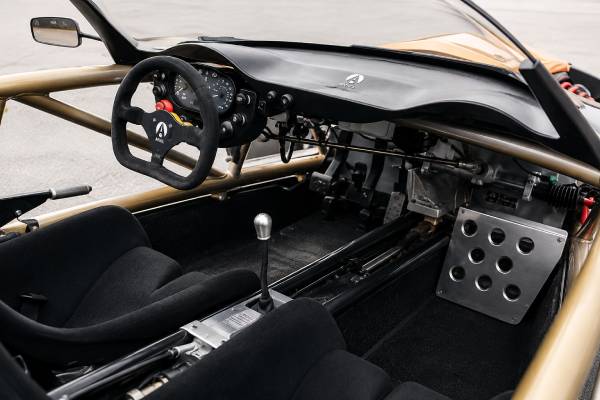
The Ariel Atom 3 300 is the supercharged counterpart to the naturally aspirated Atom 3 245: the same exposed spaceframe idea, but with enough extra midrange and top-end force to make throttle discipline a central part of the driving experience. In UK and European specification, its Honda K20Z4 engine retained the 2.0-litre Type R architecture and gained a belt-driven supercharger, Ariel calibration, and supporting hardware for a nominal 300 hp. The result was not merely a quicker 245. Additional mass, heat, belt load, traction demand, and driveline stress changed how the car had to be set up, serviced, and inspected. Production specifications also varied with year and options, so surviving cars should be identified by chassis record and physical equipment rather than by an advertisement’s badge alone. This guide concentrates on the 2007–2012 K20Z4-powered Atom 3 300, explains the engineering behind its performance, and gives practical guidance for maintenance, track preparation, and purchase.
Table of Contents
- What 300 hp Changes
- Ariel Atom 3 300 Specifications
- Supercharger System and Thermal Load
- Deploying Power Through the Chassis
- Track Preparation and Service Rhythm
- Common Problems and Modification Risk
- Inspection, Test Drive, and Value
What 300 hp Changes
The Atom 3 300 is best understood as a high-output system rather than an Atom 3 245 with one extra component. Its supercharger makes strong acceleration available without waiting for a downshift or the naturally aspirated engine’s final rush to the limiter, but that convenience raises temperatures and makes every weakness in tyres, dampers, geometry, clutch control, and driver inputs more visible.
A standard 245 rewards carrying revs and choosing the correct ratio. The 300 still thrives at high engine speed, yet the compressor fills in the lower and middle part of the curve. On a short circuit, the car can leave a corner with greater urgency even when the driver has not selected the ideal gear. On the road, overtaking becomes almost immediate. The danger is that the pedal still moves through a normal arc while the car has exceptionally little mass and no conventional body to soften sensations. A few millimetres of throttle movement can represent a large change in rear-tyre workload.
The increase also affects the car’s balance. The K20Z4 and six-speed transaxle remain behind the occupants, while the compressor, drive, intake plumbing, and associated brackets add weight high and rearward compared with the naturally aspirated arrangement. The difference is not enough to destroy the Atom’s agility, but it contributes to the supercharged car’s slightly more substantial feel. Period figures commonly place a configured 300 in the low-500-kilogram region rather than at the lightest bare-car numbers sometimes quoted for a 245.
The chassis therefore matters as much as the engine. Correctly aligned suspension, free-moving rod ends, matched tyres, and dampers in good condition allow the driver to use the extra output progressively. A neglected example can feel nervous under power, tramline over cambers, or spin an unloaded inside tyre. These symptoms are often blamed on the Atom being inherently wild, but a sound 300 should be direct rather than random.
There is also a historical distinction to preserve. This article concerns the UK and European Atom 3 with the K20Z4 engine. North American licensed-production cars used different specifications at different times, including K20A and later 2.4-litre K24 powertrains, with different weights, brakes, body equipment, and service information. A seller’s use of “Atom 3 300” is therefore not sufficient identification by itself.
Ariel Atom 3 300 Specifications
The defining specification is a supercharged 1,998 cc Honda K20Z4 four-cylinder rated at about 300 hp, driving the rear wheels through a six-speed manual transaxle. Exact mass, brake package, differential, wheels, and road equipment vary materially because Ariel built cars to order and offered numerous upgrades.
| Item | Specification |
|---|---|
| Engine family | Honda K20Z4 i-VTEC |
| Configuration | Inline four, aluminium block and head, DOHC, 16 valves |
| Displacement | 1,998 cc |
| Bore × stroke | 86.0 × 86.0 mm |
| Compression ratio | 11.5:1 base-engine architecture |
| Induction | Belt-driven positive-displacement supercharger |
| Nominal output | 300 hp class; period figures vary slightly by convention and calibration |
| Fuel and control | Electronic multipoint injection with Ariel-specific calibration |
| Item | Specification |
|---|---|
| Engine location | Transverse, behind the occupants |
| Driven wheels | Rear |
| Transmission | Honda-derived six-speed manual transaxle |
| Differential | Limited-slip differential commonly specified; verify each build |
| Clutch | Single-plate manual clutch; uprated components fitted to some cars |
| Shift control | Mechanical cable linkage |
| Measure | Period Atom 3 figure |
|---|---|
| Length | 3,410 mm |
| Width | 1,798 mm body width in cited period data |
| Height | 1,195 mm |
| Wheelbase | 2,345 mm |
| Track | 1,600 mm front and rear |
| Published road-test mass | 515–525 kg across cited period configurations |
| Seating | Two |
| Measure | Representative period claim |
|---|---|
| 0–60 mph | 2.7 seconds in cited period claims |
| 0–100 mph | 6.1–6.8 seconds across cited period claims |
| Top speed | 150–158 mph across cited period sources |
| Power-to-weight | 570–580 hp per tonne using cited output and mass figures |
| System | Typical specification |
|---|---|
| Structure | Welded tubular steel spaceframe with composite panels |
| Suspension | Unequal-length double wishbones, pushrod-actuated inboard coil-over dampers |
| Steering | Unassisted rack and pinion, quick ratio |
| Brakes | Four-wheel discs; standard and Alcon upgrade packages existed |
| Driver aids | No conventional ABS or stability control on normal period specification |
| Wheels | Staggered small-diameter motorsport-style wheels, specification by option |
These values describe the model family, not a universal build sheet. Windscreens, lighting, road-registration equipment, carbon parts, brake upgrades, dampers, wheel sets, differential choices, and track accessories changed mass and sometimes altered dimensions. The correct specification for a purchase is the combination of Ariel’s factory record, the car’s chassis number, invoices, and a physical inspection.
Supercharger System and Thermal Load
The supercharger gives the Atom 3 300 its immediacy, but heat management determines whether that performance remains repeatable. A healthy system should deliver smooth, linear boost without belt squeal, erratic fueling, coolant loss, or a sharp fall in power after only a few laps.
The period installation used a mechanically driven positive-displacement compressor. Because the supercharger is connected to crankshaft speed by a belt, response is immediate and predictable: there is no turbine to accelerate and no distinct turbo lag. The engine’s character remains recognisably K20, with clean response and a willingness to rev, but the torque curve is lifted across a broad range. The driver can therefore balance the car on throttle in a way that feels natural once rear grip is understood.
Mechanical drive is not free. The belt, tensioner, idlers, pulley alignment, and compressor bearings all become service items. A glazed or contaminated belt may chirp on startup or slip at high load. A failing bearing can introduce rumbling, rasping, or metallic noise that should not be dismissed as normal mechanical theatre. Because an Atom leaves its powertrain exposed, owners often become accustomed to hearing more whine and gear noise than they would in a closed car; comparison with a known-good example is especially valuable.
Intake temperature deserves equal attention. Compression heats air, and the compact rear installation receives less helpful ram airflow at low speed than the Atom’s openness might suggest. Some cars have later charge-cooling, revised ducting, different pulleys, or aftermarket management. These can improve consistency when correctly engineered, but they also mean the vehicle may no longer match its original calibration. A smaller pulley that raises boost without adequate fueling, temperature control, or knock protection is a warning, not a free upgrade.
Cooling performance must be assessed under the conditions in which the car will be used. The front radiator and long coolant runs place hoses, clamps, bleed points, and pipes throughout the chassis. Air trapped after a coolant change can cause temperature fluctuation. Aging hose ends may weep only when hot. Fans should cut in correctly, the expansion level should stabilise, and the engine should not push coolant out after a normal drive. Track use is a harsher test: repeated high-rpm acceleration adds engine heat while low-speed paddock movement offers little airflow.
Oil temperature and level are critical because the engine can sustain cornering loads that a donor road car rarely experiences. A baffled sump or appropriate upgraded oil-control solution is desirable for frequent circuit work, but its presence and installation must be verified. An oil cooler can be beneficial, yet over-cooling on the road or poor hose routing creates different problems. The best system is documented, monitored, and matched to actual use rather than assembled from fashionable parts.
Fuel quality matters as well. A high-compression K20 operating under boost has less tolerance for poor fuel, an incorrect map, or excessive inlet temperature than the naturally aspirated version. Use the grade required by the car’s calibration, avoid stale fuel after storage, and investigate detonation-like noise, misfire, or unexplained timing retard immediately. Dyno sheets are useful only when they identify fuel, boost, correction method, and test date.
Deploying Power Through the Chassis
The Atom 3 300 is fast because it is light, but it is satisfying only when the chassis allows the driver to meter that speed. Alignment, tyre condition, damper control, and differential behaviour have a larger effect on confidence than adding another few horsepower.
The welded spaceframe provides direct load paths, while pushrod suspension moves the dampers inboard. Steering is unassisted and rapid, so the front tyres communicate surface texture, camber, and load almost without filtering. At sensible speed this is unusually informative. At the limit, however, a toe error or loose joint is not hidden by compliance. A car that pulls, changes direction differently left to right, or needs constant correction should be measured rather than explained away as “race-car feel.”
Rear traction is governed by temperature and load. Cold road-legal track tyres can be surprisingly poor, especially in damp weather. Once warm, the same tyre may accept astonishing power. This wide operating window makes test drives deceptive: the car can seem defective when the tyres are merely cold, or feel excellent for ten minutes while concealing aged, heat-cycled rubber. Read date codes, inspect for cracking and flat spots, and compare compound and size with the intended use.
The limited-slip differential changes corner-exit behaviour. A well-functioning unit helps both rear tyres contribute under power and reduces one-wheel spin, but preload and wear influence how abruptly it locks. Excessive chatter, binding in tight manoeuvres, or inconsistent traction warrants investigation. Not every 300 left the factory with identical differential hardware, so identify the casing and service history before ordering parts or fluid.
Clutch engagement can feel sharp because there is little rotating mass and little vehicle inertia to absorb mistakes. That does not justify a clutch that slips under boost, drags when hot, or releases only at the end of pedal travel. Inspect the pedal box, hydraulic cylinders, hose routing, and any evidence of fluid seepage. A car used for repeated standing starts may have suffered more clutch stress in a few demonstrations than another accumulated in years of circuit laps.
Brakes are another option-dependent area. Standard hardware can be effective because the car is so light, while upgraded Alcon packages add thermal capacity and may use different disc constructions. Pedal feel should be firm and consistent. Long travel can result from air, adjustment, knock-back, worn components, or an unsuitable balance setting. The absence of conventional ABS means a driver must develop pressure progressively, particularly when the front tyres are cold or the road is bumpy.
Setup should begin conservatively. Confirm ride height, corner weights, toe, camber, fastener torque, and damper condition before adjusting clicks. Copying an aggressive circuit alignment from another car can make a road-driven Atom follow grooves and wear tyres rapidly. Equally, softening dampers indiscriminately may reduce platform control. Record every change, alter one variable at a time, and return to a known baseline when the result is worse.
Track Preparation and Service Rhythm
A track-driven Atom 3 300 needs inspection by hours and events as well as by mileage. Its road odometer can remain low while the engine, brakes, joints, wheel bearings, and tyres experience repeated maximum-load cycles.
Begin every season with a baseline service. Verify engine-oil grade and level, replace old brake fluid, inspect coolant concentration and hose condition, check the transmission lubricant, and examine the supercharger belt system. Mark critical fasteners if that suits the maintenance procedure, but do not treat paint marks as proof of torque. A proper torque wrench and the correct build-specific values are required.
Before each circuit day, inspect the exposed suspension closely. Rod ends should articulate smoothly without detectable play or torn boots where fitted. Pushrods must be straight. Wishbones require scrutiny around welds and pickup points, especially if the car has visited kerbs or spun through gravel. Look for contact marks that reveal a wheel, tyre, or body panel touching under compression. Ensure the steering rack is secure and that the quick-release wheel locks positively.
Wheel bearings can be checked with the car safely raised, but brake-pad knock-back and warm running symptoms also matter. Any change in pedal travel after a fast corner should be investigated. Check disc condition for cracking, heavy lips, heat spotting, or loose two-piece hardware according to the manufacturer’s limits. Measure pad material rather than estimating it through a wheel opening.
Tyre pressures should be set for the target hot condition, not copied blindly as a cold number. Record ambient temperature, starting pressure, hot pressure, and subjective balance. The Atom’s low mass can make it slow to build heat in some conditions, while overdriving a sliding tyre can raise the surface temperature without warming the structure evenly. A pressure log is more useful than chasing lap times in the first session.
During the day, inspect the car after every session. Look for fluid mist around fittings, coolant traces, belt dust, loose exhaust hardware, and tyre pickup hiding cuts. Check the oil only according to the correct procedure and on level ground. Watch trends in coolant and oil temperature rather than relying on a single maximum value. A gradual rise session by session can indicate blocked airflow, trapped debris, a fan problem, or a driving pattern that gives the system no recovery.
After the event, do not park the car dirty and assume the next check can wait. Rubber debris and gravel can lodge around the radiator, floor, brakes, and suspension. Clean gently, dry the structure, and inspect while evidence is fresh. Note any kerb strike, missed shift, over-rev, spin, or temperature excursion in the service record. Honest records protect the car and make later diagnosis far easier.
Common Problems and Modification Risk
Most Atom 3 300 problems are visible or measurable, but modified cars can hide their cause behind impressive parts lists. The safest purchase is not necessarily standard; it is the car whose changes form a coherent, documented system.
Start with the spaceframe. Powder coating can chip at lower rails, suspension pickups, and areas struck by road debris. Surface corrosion should be addressed before it spreads under the coating. Distortion, fresh local paint, uneven panel fit, or new components on one corner may indicate accident repair. Because the frame is the body, repair quality is fundamental. Measurements and specialist assessment are preferable to visual reassurance.
Rod ends and spherical joints wear because they are exposed to water, grit, and repeated articulation. Play can produce clicks, vague response, or inconsistent alignment. Replacing one visibly loose joint may not restore the chassis if the others are near the same age. Inspect the system as a set and use the correct grade and orientation of replacement parts.
The supercharger drive deserves a close look for belt dust, shiny pulley surfaces, frayed edges, misalignment, and improvised tensioning. Listen cold and hot. Check invoices for the exact compressor, pulley, belt, tensioner, and calibration. An advertised “300” may now make more or less than its nominal output; neither is automatically desirable. Reliability depends on air temperature, fueling, ignition strategy, rev limits, and mechanical condition, not on the peak dyno number.
K20 engines are robust when supplied with clean oil and kept within sensible limits, yet missed shifts and oil starvation can damage even a healthy unit. Review any electronic over-rev data available from the management system. Perform compression or leak-down testing when history is uncertain, interpreting results consistently across cylinders rather than chasing an isolated generic number. Inspect the oil and filter for debris if the seller permits.
Gear selection should be clean at low and high engine speed. A reluctant shift can come from cable adjustment, worn linkage components, clutch drag, synchroniser wear, or drivetrain movement. Do not assume all notchiness is characteristic. The linkage improved over earlier Atoms, and a sorted car should permit deliberate, accurate changes.
Electrical issues often result from exposure or later accessories rather than from complex factory electronics. Check the master switch, immobiliser, starter, charging voltage, dash, lights, fuel indication, and fan control. Inspect connectors for water entry and wiring for rubbing against tubes or panels. Additional cameras, data loggers, pumps, and chargers should be fused, supported, and documented.
Inspection, Test Drive, and Value
Buy the Atom 3 300 by identity, condition, and engineering quality before mileage or advertised power. A factory record, coherent invoices, and a specialist inspection carry more weight than polished body panels or a list of track-day options.
First establish what the car is. Record the chassis number and confirm the market, build date, engine type, original output, and factory options with Ariel or the relevant authorised constructor. The engine stamp should support the K20Z4 description, while invoices should explain any later replacement. Confirm registration status in the destination jurisdiction because approval routes differ and may be difficult to recreate after a move.
Ask for a chronological history rather than a folder of unsorted receipts. Useful records show oil changes, fluid services, belt work, joint replacement, geometry settings, damper rebuilds, brake-disc dimensions, clutch work, and engine calibration. Track use is not a reason to reject the car. Unrecorded track use combined with old fluids, mismatched tyres, and no inspection regime is.
Inspect the vehicle cold. A warmed engine can conceal starting, idle, battery, or noise issues. Watch for smoke, unstable idle, coolant pressure, fluid leaks, and abnormal supercharger or timing-chain sounds. Let the car reach normal temperature, verify fan operation, and then check for hot restart. Avoid prolonged idling without understanding the cooling system; the objective is diagnosis, not heat soaking the car unnecessarily.
On the road, assess controls before performance. Steering should be precise around centre without dead movement. The brake pedal should remain consistent. The clutch should take up cleanly, and all gears should engage without force. Build speed gradually, listening for bearing noise and watching temperatures. Apply boost progressively in a suitable gear only when tyres are warm, the road is dry, and conditions are legal and safe. The engine should pull cleanly without hesitation, belt flare, misfire, or smoke.
Budget beyond the purchase price for immediate fluids, tyres of known age, alignment, safety-equipment renewal, and correction of undocumented modifications. Harnesses and helmets have service lives; fire extinguishers require inspection; and road-registration items may be compulsory even if the previous owner removed them. A reserve for specialist labour is sensible because access can be easy while correct setup remains highly model-specific.
The strongest Atom 3 300 purchase is a car whose performance can be explained. Its boost system matches its calibration, cooling matches its use, suspension settings are recorded, and service history reflects both elapsed time and track hours. In that condition, the 300 offers an unusually direct relationship between engineering and sensation: supercar acceleration, visible mechanisms, and no unnecessary layer between the driver’s inputs and the car’s response.
References
- Ariel Atom 3 (2007 – 2013) review, history and specs
- Ariel Atom 300
- Ariel Atom 3 | PH Used Buying Guide
- Driven: Ariel Atom 245
- Atom 3 300 – Ariel Motor Company
- NEW 525bhp ARIEL ATOM ANNOUNCED – THE ATOM 4RR
Disclaimer
Specifications, performance claims, equipment, registration status, and service requirements can vary by market, build date, factory options, and later modification. Verify the chassis number, engine identity, original build record, installed hardware, and current technical condition with Ariel Motor Company or a qualified Ariel specialist before buying, servicing, or driving on track. Performance testing belongs only in controlled, legal conditions. Share this guide with other owners and prospective buyers when it can help preserve an accurately specified and safely maintained Atom 3 300.