

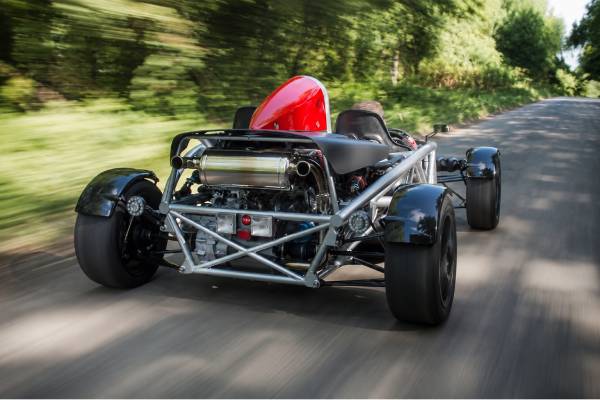
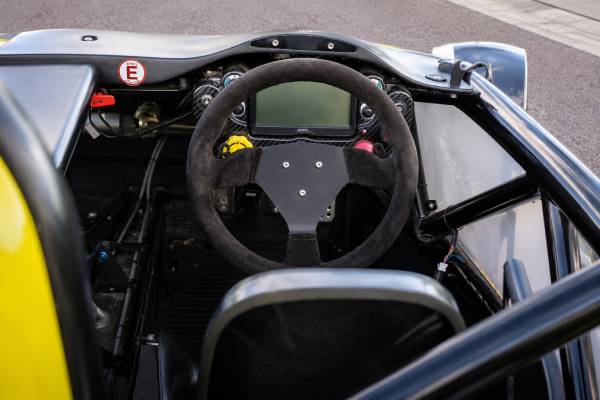
The Ariel Atom 3.5 245 preserved the naturally aspirated K20Z4 while revising the car around it. Introduced at the end of 2012 for the 2013 model era, the 3.5 gained a stiffer chassis informed by the Atom Mugen and V8, revised engine mounts, updated dampers, altered steering geometry, projector lighting, and clearer rear lamps. The 245 hp engine remained the least complicated route into the newer chassis: no supercharger drive, no charge-cooling circuit, and no forced-induction calibration to maintain. At a quoted 456 kg in one European brochure, it paired exceptional performance with a more compliant road setup than its appearance suggested. That apparent simplicity can still conceal hard use, worn rod ends, old dampers, oil-control risks, or incorrect geometry. This guide treats the 2012–2015 K20Z4 Atom 3.5 245 as a distinct model, explains what changed from the Atom 3, and provides practical advice for setup, service, inspection, and purchase.
Table of Contents
- The Importance of the Half Generation
- Atom 3.5 245 Technical Specifications
- Naturally Aspirated Speed and Control
- Road Compliance with Track Precision
- Keeping the Lightest 3.5 Healthy
- Identification, Condition, and Buying
The Importance of the Half Generation
The “3.5” name describes a substantial development of the Atom 3 rather than a larger engine. Ariel retained the 2.0-litre Honda architecture but strengthened and refined the structure, suspension, mounts, steering, lighting, and details that determine how the car feels over real roads.
The chassis changes drew on experience from the limited Atom Mugen and Atom V8. Increased rigidity gave the suspension a more stable platform, allowing Ariel to tune compliance without losing response. Revised engine mounts reduced unwanted movement and vibration transmission. Updated dampers helped the wheels follow broken surfaces instead of forcing the entire car to skip across them.
Visible changes make an original 3.5 easier to identify. Twin projector headlights replaced the earlier arrangement, LED indicators modernised the front, and revised rear lamps improved night visibility. These parts matter during inspection because later owners can update an Atom 3 cosmetically. Lighting alone does not prove the chassis generation; the number and factory record remain decisive.
The naturally aspirated 245 retained the K20Z4’s 1,998 cc, 86 × 86 mm dimensions and 11.5:1 compression ratio. Output remained 245 hp at 8,200 rpm with 210 Nm at 6,100 rpm in period European data. Ariel did not need to chase a new peak figure because the 3.5’s purpose was broader: make the car more accurate, more compliant, and easier to use without diluting the exposed, unassisted experience.
This version also provides a clean reference point for the 3.5 range. The supercharged 310 added output, mass, heat, and induction hardware. The 3.5R added more boost, charge cooling, a sequential gearbox, larger brakes, Öhlins TTX dampers, wings, and substantially greater complexity. The 245 is therefore not merely the inexpensive model; it is the lightest and mechanically simplest interpretation of the revised chassis.
Production dates need context. The model was launched late in 2012 and is commonly described as a 2013-on car, while assignment and registration records can span 2012–2015. Small-volume build dates, first registration dates, and model descriptions do not always align. Use the chassis number and Ariel build documentation to determine when a particular car was constructed and to which specification.
The half-generation matters most when buying parts or copying setup information. An Atom 3 alignment, damper, mount, or lighting part may not match a 3.5. Similarly, 3.5R hardware cannot be assumed to fit or improve a 245. Begin with the correct baseline for the actual chassis.
Atom 3.5 245 Technical Specifications
The 3.5 245 combines a naturally aspirated 1,998 cc K20Z4 with a six-speed manual and a quoted 456 kg vehicle weight in period European literature. Options, road equipment, and measurement method can move the real figure, so an individual car should be weighed rather than judged from the brochure alone.
| Item | Specification |
|---|---|
| Configuration | Inline four, naturally aspirated, DOHC, 16 valves, i-VTEC |
| Displacement | 1,998 cc |
| Bore × stroke | 86.0 × 86.0 mm |
| Compression ratio | 11.5:1 |
| Power | 245 hp at 8,200 rpm |
| Torque | 210 Nm at 6,100 rpm |
| Fuel tank | 42 litres in period European brochure |
| Gear | Ratio |
|---|---|
| 1st | 3.266 |
| 2nd | 2.130 |
| 3rd | 1.517 |
| 4th | 1.147 |
| 5th | 0.921 |
| 6th | 0.738 |
| Reverse | 3.580 |
| Measure | Figure |
|---|---|
| Length | 3,410 mm |
| Body width | 1,798 mm |
| Width including tyre envelope | Approximately 1,828 mm in brochure configuration |
| Height | 1,195 mm |
| Wheelbase | 2,345 mm |
| Track | 1,600 mm front and rear |
| Quoted vehicle weight | 456 kg |
| Maximum vehicle weight | 761 kg |
| Measure | Period claim |
|---|---|
| 0–60 mph | 2.7 seconds |
| 0–100 mph | 7.5 seconds |
| Top speed | 240 km/h / 149 mph |
| CO2 value | 212 g/km in cited market specification |
| Power-to-weight | Approximately 537 hp per tonne using the 456 kg figure |
| System | Typical 3.5 245 specification |
|---|---|
| Structure | Revised tubular steel spaceframe with greater rigidity |
| Suspension | Unequal-length wishbones and pushrod-actuated coil-over dampers |
| Steering | Unassisted rack and pinion, approximately 1.75 turns lock to lock |
| Brakes | 240 mm discs in base brochure specification; upgrades available |
| ABS | Not fitted |
| Drive | Rear-wheel drive; differential specification depends on build |
Ariel’s options can alter nearly every practical measure. A windscreen, larger brakes, alternative dampers, carbon panels, different wheels, limited-slip differential, road pack, or track equipment changes mass and sometimes dimensions. Confirm the exact installed components before ordering consumables or using the quoted performance as a condition standard.
Naturally Aspirated Speed and Control
The 245’s performance comes from low mass and revs rather than boosted torque. It is easier to meter at the rear tyres than the 310, but it still reaches 60 mph in a claimed 2.7 seconds and demands disciplined throttle, braking, and weight transfer.
The K20Z4’s square bore and stroke support a willingness to rev. Peak torque arrives at 6,100 rpm and peak power at 8,200 rpm, so the driver must keep the engine active for maximum acceleration. The six-speed ratios provide close enough spacing to return the engine to its useful range after each shift. On road, the engine remains tractable below the high cam, making the car less tiring than its exposed appearance suggests.
This progressive delivery helps teach the chassis. A supercharged car can cover a poor corner exit with extra torque; the 245 rewards carrying speed and choosing a clean line. Braking, turn-in, and throttle pickup connect clearly. The driver can feel how a small lift loads the front, how trail braking assists rotation, and how progressive throttle transfers load rearward.
The response remains extremely quick. With little mass and little steering compliance, abrupt inputs create immediate consequences. Lifting suddenly in a loaded bend can unload the rear and rotate the car. Adding throttle too early can move the balance rearward before the front has completed the turn. Smooth does not mean slow; in an Atom, smoothness is the method for accessing speed.
Tyre temperature changes the available margin. A light car can struggle to build heat in cool weather, especially on track-focused compounds. The front may initially understeer while the rear remains nervous. Do not compensate with aggressive geometry before confirming tyre age, compound, pressures, and temperature. A road-suitable tyre often gives more confidence across mixed conditions than an old semi-slick with impressive dry specifications.
The manual gearbox should feel positive and accurate. Synchromesh wear, clutch drag, cable maladjustment, or deteriorated mounts can make shifts reluctant. The engine’s high-rpm nature encourages frequent changes, so linkage quality matters. A seller’s claim that every Atom gearbox is obstructive should not end diagnosis.
The 245 also produces less induction heat and fewer service dependencies than the 310. There is no supercharger belt, compressor bearing, bypass valve, or charge-temperature issue. This simplifies fault finding and can make repeated track sessions more consistent. It does not remove engine-oil temperature, coolant, or oil-control concerns; high rpm and cornering load remain demanding.
Top speed is limited by the Atom’s exposed aerodynamics. Air meets the wheels, suspension, frame, occupants, and cockpit, so drag rises sharply. The 149 mph claim is less important than the acceleration to normal circuit speeds. Neck load, wind noise, debris, and helmet lift also become significant well before maximum velocity.
Road Compliance with Track Precision
The 3.5’s most useful advance is its ability to absorb poor surfaces without losing the accuracy expected of an Atom. A correctly set up 245 can feel supple at ordinary speed and controlled on track, which means harshness should not automatically be accepted as authenticity.
Revised dampers and a stiffer structure allow the suspension to do more of the work. When a frame flexes, damper changes can be masked by structural movement. Increasing rigidity gives Ariel a clearer relationship between wheel movement and damping force. The result can be both better ride and more consistent geometry.
Engine-mount revisions contribute to refinement. The K20 remains exposed and audible, but unwanted movement can disrupt shifts, exhaust alignment, and throttle feel. Inspect mounts for cracking, loose hardware, or later substitutions. An overly rigid aftermarket mount may increase vibration without improving control for the intended use.
Steering geometry was revised for sharper turn-in, with period commentary noting more toe-out and approximately 1.7 turns lock to lock. Toe-out can make the car eager to change direction but also sensitive to road camber and tyre differences. Alignment should be measured at the actual ride height with the driver load represented. Copying another owner’s numbers without matching tyres and use is poor practice.
Pushrod suspension places the dampers inboard and uses bellcranks to translate wheel movement. Check the pushrods for straightness, rod ends for play, bellcrank bearings for smooth motion, and damper mounts for security. Dirt and water reach exposed joints readily. A small amount of wear can create noise or inconsistent geometry.
Base 240 mm brakes are sufficient for a very light car when maintained and matched to suitable pads. Many cars received Alcon upgrades, larger discs, or adjustable bias. Identify the hardware before ordering parts. Pedal travel should be short and repeatable. No ABS means the driver must modulate pressure as grip changes, especially when front tyres are cold.
Ride-height adjustment affects more than appearance. Too low a car can strike the floor, coolant protection, sump guard, exhaust, or chassis rails. It may also place wishbones and pushrods outside their intended geometry. Inspect underbody damage and measure corner weights. A visually level car can carry unequal diagonal load.
Damper tuning should begin with Ariel or specialist baseline settings. Record clicks, spring rates, ride heights, tyre pressures, and alignment. Change one variable at a time. For road use, excessive compression damping can make the car skip over bumps; insufficient control can let it heave and upset aero or toe. The right setting follows the surface and tyre, not an abstract preference for stiffness.
Keeping the Lightest 3.5 Healthy
The 3.5 245 needs disciplined inspection despite its simple induction. Service intervals should reflect track hours, high-rpm use, age, and exposure, not only the small number shown on the odometer.
Engine oil is the first priority. Check level frequently and use the grade specified for the car’s market and operating conditions. The K20 can consume oil under sustained high-rpm use, and cornering loads challenge the pickup. Confirm whether the sump is standard, baffled, or otherwise modified. Any oil-pressure warning during a corner requires immediate investigation.
Change oil and filter on a conservative schedule for track use. Record consumption and inspect the drained oil. Cutting open the filter can reveal abnormal debris. An oil-temperature display or logger is useful because coolant can remain controlled while oil overheats. If an oil cooler is fitted, verify thermostat function, hose quality, routing, and protection.
Valve clearance should be checked according to K20 procedure and adjusted when necessary. Review over-rev history if the ECU stores it. A missed downshift can exceed safe engine speed even though the rev limiter works under acceleration. Compression and leak-down trends help evaluate a high-mileage or heavily tracked engine, but they do not replace valvetrain inspection.
Cooling depends on the front radiator, long pipes, rear engine, hose joints, expansion system, and correct bleeding. Inspect for stone damage, blocked fins, white residue, weeping clamps, and degraded hoses. Verify fan operation and stable temperature during traffic. After coolant service, recheck level through several full heat cycles.
The gearbox needs the correct Honda-compatible manual-transmission fluid and a fully releasing clutch. Note any deterioration when hot. Linkage cables and mounts should move cleanly. Differential fluid requirements depend on the actual unit, so identify whether the car has an open differential, factory limited slip, or later plate-type assembly.
Brake fluid ages by time and heat. Replace it before boiling resistance becomes questionable. Inspect discs, pads, calipers, lines, and balance hardware. A car that sees occasional road mileage can still have very old fluid because owners focus on distance. Harnesses, fire extinguishers, and helmets also have service dates independent of mileage.
Rod ends, wheel bearings, wishbones, steering joints, and driveshafts need regular hands-on checks. Clean the car after wet or salty use and repair coating chips promptly. The lower rails are vulnerable to debris, loading ramps, and jacks used in the wrong location. Follow the correct lifting points.
Tyres commonly age before they wear out. Record date codes and heat cycles. Inspect inner shoulders, which can hide camber wear. Set pressures from a measured hot target and keep a log. A stable pressure trend can reveal a slow leak, wheel damage, or abnormal heating before the driver feels it.
Storage should include fresh fuel or stabiliser, a maintained battery, dry ventilation, clean brakes and suspension, and protection from rodents. Avoid repeated short starts that never heat the oil fully. Recommission with a static inspection and fluid check before driving at speed.
Identification, Condition, and Buying
A good 3.5 245 is defined by correct chassis identity, intact structure, predictable setup, and a service record that reflects use. Its naturally aspirated engine is attractive, but buying solely because it lacks a supercharger ignores most of the car’s expensive systems.
Confirm the chassis number with Ariel and obtain the original build specification. Verify the projector lights, revised rear lamps, frame generation, K20Z4 engine, transmission, differential, brakes, dampers, wheels, windscreen, and carbon options. An earlier Atom 3 upgraded with 3.5-style lights is not automatically a 3.5.
Check the engine code and replacement history. A genuine replacement K20Z4 can be entirely acceptable when documented. Ask why it was changed, whether ancillary parts and calibration were retained, and who performed the work. Dyno output is less important than compression consistency, oil pressure, temperature control, and a clean rev range.
Inspect the chassis closely in good light. Look for local repainting, cracked powder coat, corrosion, bent pickup brackets, replacement wishbones, or asymmetry. Remove panels where permitted. Measure geometry if there is any evidence of a wheel strike or off-track event. A straight frame with stone chips is preferable to a freshly refinished car with no repair explanation.
Review damper and joint service. Ask when dampers were rebuilt, which spring rates are fitted, and what alignment the car uses. A test drive cannot fully diagnose worn dampers on unfamiliar tyres, but it can reveal left-right inconsistency, bouncing, harsh topping, or poor settling after a bump.
Start the engine cold. Watch for smoke, unstable idle, warning lights, coolant movement, oil leaks, and chain or valvetrain noise. Let it reach normal temperature and confirm fan operation and hot restart. During the drive, test clutch release, every gear, steering centre, brake consistency, and temperature before using high rpm.
The engine should build power cleanly toward 8,200 rpm. Hesitation, misfire, smoke after overrun, or an oil-pressure warning is not normal. The chassis should track straight and respond consistently. Initial understeer on cold tyres can be expected, but sudden breakaway, wandering under braking, or different behaviour in left and right turns needs diagnosis.
Assess road equipment and legal status. Lighting, fenders, windscreen, mirrors, silencing, emissions, and registration requirements vary. Confirm that removable parts are present and that the chassis number matches every document. Importing or transferring a small-volume car can require evidence that the seller no longer has.
Value options by condition. Alcon brakes, premium dampers, carbon panels, differential upgrades, and spare wheels are desirable only when serviceable. Old brake discs or damaged carbon can be expensive liabilities. A complete set of original parts adds flexibility and supports provenance.
Plan to establish a baseline immediately after purchase: fluids, filters, valve check, geometry, corner weights, tyre age, harness dates, joint condition, and damper function. This work is not evidence that the car was bad; it is how a new owner gains reliable information.
The 3.5 245 suits an owner who values the revised chassis more than maximum power. Its lighter, progressive character encourages precise driving and reduces forced-induction complexity while retaining acceleration beyond most road cars. When the chassis is tight, the geometry is measured, and the K20 is serviced for high-rpm use, it delivers the 3.5’s central achievement: greater usability without insulating the driver from the machinery.
References
- ATOM 3.5
- Ariel Atom 3.5 (2013 – 2018) review, history and specs
- 2013 Ariel Atom 3.5 – Images, Specifications and Information
- Driven: Ariel Atom 3.5 supercharged
- Ariel Atom 3 | PH Used Buying Guide
- NEW 525bhp ARIEL ATOM ANNOUNCED – THE ATOM 4RR
Disclaimer
Ariel Atom 3.5 specifications and service needs vary by market, build date, factory options, registration equipment, and later modification. Confirm the chassis number, K20Z4 identity, original 245 hp build, differential, brakes, dampers, wheel and tyre sizes, and correct fluids with Ariel or a qualified specialist. Performance claims depend on conditions and should never be attempted on public roads. Share this guide when it can help another owner distinguish a genuine 3.5, maintain it accurately, and preserve its naturally aspirated specification.