

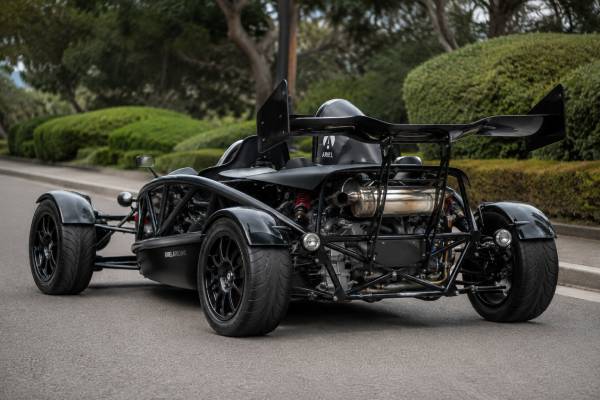
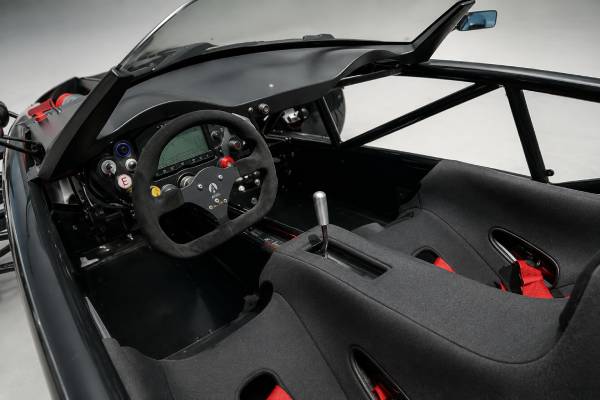
The North American Ariel Atom 3R is a ten-car limited edition built around a revived supercharged Honda K20Z3 drivetrain. It is easy to confuse with the British Atom 3.5R, but the two are not the same model. Ariel North America’s 3R uses a 2.0-litre supercharged engine rated at approximately 300 bhp, a conventional six-speed manual, a 1,360 lb published weight, standard carbon-fibre panels, and distinctive black metallic chassis finish. The British 3.5R used 350 bhp and a Sadev sequential gearbox. Because only ten North American 3Rs were planned, authenticity and completeness are central to value. The important questions are whether the chassis number belongs to the documented run, whether the original carbon package and model-specific components remain, and whether the engine, supercharger, gearbox, dampers, brakes, and tyres have current records. A 3R can be used hard and maintained well, or displayed carefully while aging silently. Condition must be established through inspection rather than assumed from low mileage or rarity.
Table of Contents
- The North American 3R Story
- Ariel Atom 3R Specifications
- The Returning Supercharged K20Z3
- Limited-Edition Chassis and Hardware
- Maintenance That Preserves a Usable Collector Car
- Authenticity and Pre-Purchase Inspection
- Collector Value and Ownership Fit
The North American 3R Story
The Atom 3R was a North American limited edition of ten units created to bring back the high-revving, supercharged 2.0-litre K20 experience after Ariel North America had moved to K24 power. Its identity is defined as much by scarcity and specification as by its 300 bhp output.
TMI AutoTech, operating as Ariel North America, had produced licensed Atoms in Virginia since 2008. Later North American Atom 3 cars used a naturally aspirated 2.4-litre K24Z7, while the 3S used a turbocharged version. The 3R deliberately returned to a supercharged 2.0-litre K20Z3 package that had not been used in a North American Atom since 2012.
This created a different driving character from the K24 cars. The K20 revs higher, makes less torque, and combines its increasing engine speed with the characteristic whine of a mechanically driven supercharger. The result is still extremely fast, but the driver uses revs and gear selection rather than relying on the 3S’s large turbocharged mid-range.
The model was also visually curated. Hand-laid carbon-fibre bonnet, airbox, intake snorkel, fenders, and dash surround were standard. A black metallic chassis finish, tinted side panels, windscreen, digital dash, and model-specific equipment distinguished the edition. The ten-unit limit means those details should be documented rather than recreated from memory during a restoration.
The name “3R” can create confusion in searches. Some advertisements and databases may return the UK 3.5R, which has different engine output, gearbox, suspension, brakes, weight, and years. Parts orders and valuations should always include “Ariel North America,” K20Z3, and the individual number within the ten-car series.
Ariel Atom 3R Specifications
The Atom 3R is a gasoline-only, mid-engined, rear-wheel-drive ICE car. It combines a supercharged 2.0-litre K20Z3, six-speed manual with limited-slip differential, JRi dampers, Wilwood four-piston brakes, staggered wheels, and extensive carbon bodywork.
| Specification | Value |
|---|---|
| Engine | Honda K20Z3 inline-four |
| Displacement | 2.0 L |
| Valvetrain | DOHC, 4 valves per cylinder, i-VTEC |
| Induction | Supercharged |
| Maximum power | Approximately 300 bhp at 8,000 rpm |
| Maximum torque | Approximately 220 lb-ft (298 Nm) at about 4,750 rpm |
| Gearbox | 6-speed manual |
| Differential | Limited-slip differential |
| Clutch | Performance clutch |
| Measure | Published value | Notes |
|---|---|---|
| Vehicle weight | 1,360 lb (617 kg) | Ariel North America figure |
| 0–60 mph | Approximately 3.0 seconds | Manufacturer estimate |
| 0–100 mph | Approximately 7.7 seconds | Manufacturer estimate |
| Quarter-mile | Approximately 11.0 seconds | Manufacturer estimate |
| Production run | 10 units | North American limited edition |
| Specification | Value |
|---|---|
| Suspension layout | Double unequal-length fabricated wishbones |
| Damper operation | Pushrod-operated inboard JRi adjustable dampers |
| Bell cranks | Aluminium with needle-roller bearings |
| Pushrods | Adjustable |
| Uprights | Lightweight fabricated units |
| Steering | Quick-ratio alloy rack and pinion |
| Steering wheel | Quick-release motorsport suede wheel |
| Specification | Value |
|---|---|
| Brake calipers | Wilwood four-piston |
| Brake discs | Two-piece ventilated |
| Brake bias | Cockpit-adjustable front/rear system |
| Front wheels | 15 × 7 in five-spoke motorsport wheels |
| Rear wheels | 17 × 9 in five-spoke motorsport wheels |
| Front tyres | 205/50 R15 Toyo R888 |
| Rear tyres | 245/45 R17 Toyo R888 |
| Specification | Value |
|---|---|
| Length | 3,410 mm (134.3 in) |
| Width | 1,890 mm (74.4 in) |
| Height | 1,195 mm (47.0 in) |
| Wheelbase | 2,345 mm (92.3 in) |
| Track | 1,600 mm (63.0 in) |
| Fuel tank | 10 US gal (37.9 L), aluminium |
| Carbon package | Bonnet, airbox, snorkel, fenders, and dash surround |
A particular car may have detail differences or later replacements. The numbered identity and original build file should settle what was standard on that unit.
The Returning Supercharged K20Z3
The K20Z3 gives the 3R a high-rpm, progressive character that differs from the larger K24 and turbocharged 3S. Its supercharger responds with engine speed, so torque delivery is immediate but still rewards revs.
The engine’s appeal is mechanical continuity. The driver hears the intake and compressor, feels the cam profile and rising airflow, and chooses gears to keep the engine in its strongest range. Around town, careful mapping allows smooth operation. On track, the lack of turbo lag makes throttle balancing intuitive, though 220 lb-ft in a 1,360 lb car remains enough to break traction.
A supercharged engine must be inspected as a system. The belt, tensioner, idlers, pulley alignment, supercharger bearings, bypass valve, intake joints, fuel supply, ECU calibration, and cooling all contribute to reliable output. A new belt is not a cure for worn bearings or misaligned brackets. Belt dust, edge wear, squeal, chirping, or fluctuating boost requires diagnosis.
High-rpm operation adds another risk: mechanical over-rev from a wrong downshift. The electronic limiter cannot prevent the rear wheels from driving the engine beyond its safe speed. A pre-purchase inspection should review any available ECU data, verify compression, and consider leak-down testing when track history is extensive or unclear.
Fuel requirement must match the documented calibration. Do not rely on a generic Honda recommendation or a seller’s memory. Changes to pulley size, injectors, intake, exhaust, or ECU may alter the required octane and safe operating range. The original 300 bhp package has collector value partly because it represents Ariel North America’s validated combination.
Warm-up and cool-down should be controlled. Avoid high rpm or load until oil and coolant are stable. After a hard session, reduce load progressively rather than stopping immediately and repeatedly blipping the throttle. Inspect oil and coolant lines, intake clamps, and belt condition while the rear bodywork is removed.
Limited-Edition Chassis and Hardware
The 3R’s chassis hardware is functional first and collectible second. Carbon panels and black metallic tubes attract attention, but straight suspension pickups, healthy rod ends, matched dampers, and current brakes determine how the car drives.
JRi dampers and two-piece springs allow setup changes, while adjustable pushrods and rod ends permit ride-height, toe, and camber work. That adjustability can conceal poor practice. A car may look level while carrying uneven diagonal loads, or may have aggressive alignment copied from another circuit. Corner weighting should be performed with driver mass and normal fuel load represented.
The large rear wheel and 17-inch tyre distinguish the 3R from several other Atom 3 variants. That fitment should be checked for tyre availability, correct offset, wheel damage, and suspension clearance. A replacement wheel that looks similar may have different mass or geometry. Keep original wheels and hardware even when a second track set is used.
Wilwood four-piston calipers and two-piece discs should deliver a firm, repeatable pedal. Check disc condition, rotor-to-bell hardware, pad taper, caliper seals, fluid age, and bias setting. Mark the established balance position. The light chassis can make braking feel powerful even when fluid or pads are near the end of their useful life.
Carbon-fibre panels should be inspected for cracks around fasteners, delamination, repaired edges, ultraviolet damage, and mismatched weave. Cosmetic defects do not necessarily affect safety, but original panels contribute to completeness. Replacement or repainted parts should be disclosed and documented.
The exposed chassis coating needs care. Stone chips can allow corrosion under powder coat, while aggressive cleaning can push water into joints and electrical connectors. Clean by hand, dry thoroughly, and protect damaged steel promptly using a method appropriate to the original finish.
Maintenance That Preserves a Usable Collector Car
The best preservation strategy is controlled use supported by records, not indefinite storage. Fluids circulate, seals move, tyres reveal condition, and faults become visible when the car is exercised correctly.
Engine oil should be selected and changed according to Ariel North America guidance for the K20 installation and actual duty. The company’s published reference lists 5W-30 and an approximate five-quart capacity for the K20 Atom 3R, but the exact sump, filter, cooler, and modifications must be confirmed before filling. Record the quantity that produces the correct level rather than relying on a rounded capacity.
The cooling system has long runs between the engine and front radiator, so bleeding must follow the approved procedure. Watch for temperature fluctuation, dried coolant residue, weak fan operation, damaged hoses, and debris in the radiator. Repeated topping-up is evidence of a problem.
A useful annual programme includes:
- engine oil and filter based on time and use;
- gearbox oil inspection and replacement as appropriate;
- brake-fluid moisture and heat assessment;
- supercharger belt and pulley inspection;
- suspension-joint cleaning and play check;
- damper leak and adjustment check;
- tyre date, pressure, cracking, and flat-spot inspection;
- harness, extinguisher, battery, immobiliser, and lighting review.
Storage requires a dry, ventilated environment and battery maintenance. Avoid leaving the car on old semi-slicks in one position for months. Protect the intake and exhaust from pests, keep moisture away from carbon and chassis joints, and do not wrap a damp car under a non-breathable cover.
Preserve removed original parts. If a modern tyre, brake pad, dash component, or track accessory improves usability, label and store the factory item. Future owners value a reversible change more than a permanent modification whose history is unclear.
A preservation file should be created even if the original owner did not keep one. Photograph the chassis number, limited-edition identification, engine code, supercharger and pulley, ECU, brake calipers, disc bells, dampers, springs, wheel markings, carbon panels, dash, seats, harness mounts, and every unusual fastener or bracket. Date the images and repeat them after major service. With only ten cars, these records help distinguish legitimate production variation from later substitution.
Originality should be evaluated by function and evidence rather than by refusing every replacement part. Tyres, belts, fluids, pads, seals, batteries, and harnesses must be renewed for safe use. Keep removed items only when they have historical value and can be stored safely; do not refit expired restraints or degraded tyres for display driving. For durable components such as wheels, panels, dampers, and instruments, a repaired or replaced piece should have an invoice, photographs, and the original part retained where practical.
Carbon repair requires specialist judgment. Small chips around a mounting hole may be cosmetic, while whitening, delamination, soft areas, or cracks following the weave can indicate structural damage. Drilling a new hole or overtightening a fastener can create a stress concentration. Use correct washers, isolators, and torque, and avoid polishing methods that remove resin or disguise heat damage. Matching weave and finish matters to appearance, but a documented sound repair matters more than invisible filler.
The black metallic chassis finish is also part of the edition’s identity. Cleaning should reveal rather than erase history. Photograph chips before treatment, stop corrosion with a compatible method, and avoid broad refinishing unless necessary. A localized, documented repair is easier for a future owner to understand than a complete fresh coating that removes evidence of original condition and may conceal tube work.
Spares planning is sensible because edition-specific pieces can be difficult to replace after an incident. Identify sources for the correct wheels, carbon panels, windscreen, instruments, supercharger components, brake bells, and damper parts before heavy track use. A second reversible wheel and tyre set can protect rare originals, but record offset, mass, fasteners, and alignment changes. Store original wheels clean, dry, unloaded, and clearly labelled by position.
Insurance should reflect both replacement difficulty and the intended use. An agreed-value road policy may exclude timed events, while track-day cover may settle only the event damage and not the long-term collectible loss. Provide the insurer with build confirmation, photographs, valuation evidence, storage details, and modifications. Confirm whether transport, spares, and original parts are covered.
A rare Atom still benefits from driver coaching. Smooth braking and throttle protect the frame, tyres, clutch, and carbon panels more effectively than avoiding all use. Begin with conservative pressures and alignment, use the lower part of the rev range while learning the car, and avoid launch demonstrations. The aim is to establish a repeatable operating baseline that future owners can understand.
Recommissioning after long storage should be methodical. Drain or test old fuel, inspect the tank and lines, change fluids as required, turn the engine only by approved procedure, verify oil pressure before load, bleed cooling and brakes, inspect belt and pulley bearings, service dampers if overdue, replace age-expired tyres and harnesses, then complete a low-load shakedown. A dyno or full-boost pull should be the end of the process, not the first step.
A specialist valuation should describe the car rather than merely assign a number. It should state the ten-car production context, confirmed identity, originality of the carbon package and wheels, mechanical condition, registration status, documented incidents, and replacement difficulty. Update the valuation after major restoration or a material market change. Photographs should include the underside and chassis details, not only polished exterior views. This level of evidence helps an insurer, estate, lender, or future buyer understand why one 3R may be worth substantially more than another despite similar mileage.
Authenticity and Pre-Purchase Inspection
Authenticity should be established before mechanical negotiation begins. With a ten-car run, the chassis number, build number, invoice, and period photographs should form a consistent record.
Ask Ariel North America to confirm the car where possible. Match the numbered-series claim, K20Z3 drivetrain, carbon package, chassis finish, windscreen, side panels, dash, brakes, wheels, and suspension. Verify whether any damaged original parts were replaced and whether those parts remain with the car.
Inspect the chassis for accident repair, especially around suspension pickups, lower rails, front structure, rear engine bay, and roll-over mounts. Look for local repainting, coating wrinkles, welds that differ from surrounding construction, bent brackets, and unequal wheel placement. A geometry report is valuable when the car has a track history.
Start from cold. The engine should idle cleanly, the supercharger drive should run without abnormal chirp or rumble, and temperatures should stabilise. Check oil pressure indication, fan operation, charging voltage, immobiliser, dash, and lights. During a test, verify clean high-rpm pull, consistent boost, straight braking, positive shifts, and predictable differential action.
Tyres and harnesses are age items even when the car has barely moved. Brake fluid absorbs moisture. Dampers can lose pressure. Fuel injectors can foul. Batteries can sulphate. A low-mileage stored example may need a full recommissioning budget before any spirited use.
The inspection should finish with a list of immediate, near-term, and cosmetic work. That prevents rarity from overpowering judgment. A genuine 3R can still be a poor purchase if the chassis is damaged, the engine history is unclear, or irreplaceable original parts are missing.
Collector Value and Ownership Fit
The Atom 3R is best for an owner who wants a rare North American K20 Atom and will preserve its specification while continuing to use it. It is not the best choice for someone seeking maximum power per dollar or a blank platform for modification.
Compared with the naturally aspirated Atom 3, the 3R offers a higher-revving engine and supercharged thrust, plus limited-edition finish and carbon. Compared with the turbocharged 3S, it makes less power and torque but has a more progressive, rev-led character. Compared with the 425 bhp 3RS, it is less extreme and more collectible as a distinct ten-car run.
Market value depends on more than mileage. Strong factors include confirmed number within the series, original panels and wheels, build documentation, clean chassis, recent damper and brake work, current tyres, and a standard engine calibration. Reversible upgrades with original parts retained are easier to accept than irreversible changes.
Insurance, registration, and transport should be arranged before purchase. Ariel North America notes that its vehicles are not federally homologated as normal production road cars. State or provincial rules vary, and a title that worked for one owner may not transfer automatically.
The first-year budget should include specialist inspection, enclosed transport if appropriate, fluids, tyres, brake service, belt and cooling checks, alignment, secure storage, and agreed-value insurance. Driver training is also a preservation expense: smooth inputs reduce the likelihood of the very incidents that destroy rare chassis and original panels.
A collector car does not need to become static. The 3R’s value comes from a specific engineering story—the return of the supercharged 2.0-litre K20 to North American Atom production. Careful exercise, exact records, reversible maintenance, and respect for its original configuration keep that story intact while allowing the car to do what it was built to do.
References
- Ariel Atom, Ariel Nomad, Ariel North America Ariel Atom 3R 2026
- Ariel Atom 3R Pictures Released! 2017
- Ariel Atom, Ariel Nomad, Ariel North America Limited Editions 2026
- Ariel Atom Oil Specifications and Capacities 2026 (Service Reference)
- Ariel Atom, Ariel Nomad, Ariel North America History – Ariel North America 2026
- 2014-Current Ariel Atom 3 and Ariel Atom 3S – Reference Material 2018 (Reference Manual)
Disclaimer
This article is for informational purposes and is not a substitute for professional diagnosis, inspection, repair, or valuation. Specifications, torque values, intervals, and procedures vary by chassis number, installed equipment, and modification history. Verify all technical work with official Ariel North America documentation and qualified specialists.
Please share this guide on Facebook, X/Twitter, or a collector community if it helps document and preserve the North American Atom 3R.