

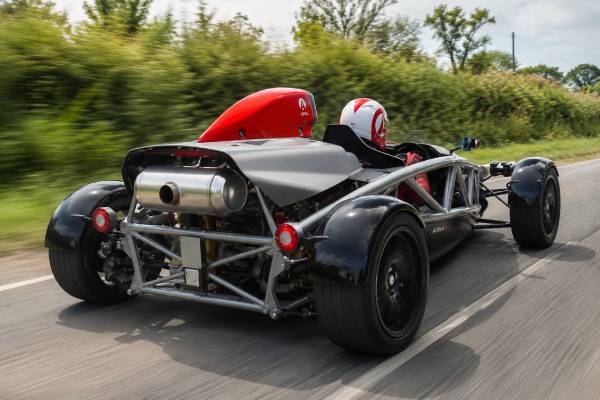
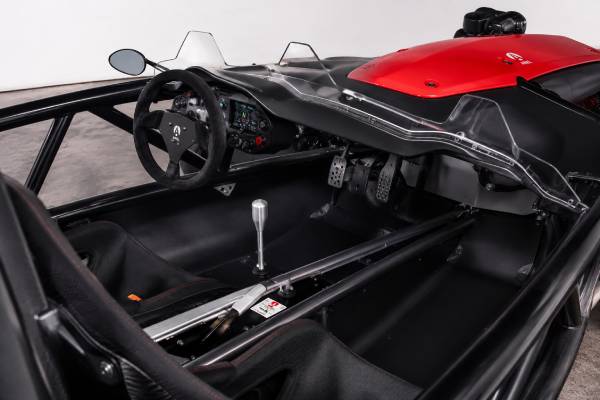
The 320 bhp Ariel Atom 4 is the standard-output version of Ariel’s fourth-generation exoskeleton sports car, but “standard” is misleading when the car weighs little more than 600 kg and reaches 60 mph in a claimed 2.8 seconds. Introduced in 2018, the Atom 4 was substantially new rather than a mild evolution: it gained a stiffer, roomier chassis, revised anti-dive and anti-squat suspension, more aerodynamic bodywork, digital electronics, and Honda’s 1,996 cc turbocharged K20C engine. It also became easier to tailor, with different brakes, dampers, wheels, tyres, limited-slip differentials, traction control, body panels, and road equipment offered according to market. For prospective owners, that flexibility creates both opportunity and risk. A build sheet matters because a UK car and a North American car can have different standard hardware, and two examples carrying the same 320 bhp description may be configured for very different uses. This guide separates the fixed engineering from the selectable equipment and explains how to inspect, operate, and maintain the car.
Table of Contents
- A Clean-Sheet Atom
- Core Atom 4 320 Specifications
- How the K20C Changes the Car
- Road, Track, and Market Options
- Maintenance by System
- Used-Car Evaluation
- Ownership Decisions
A Clean-Sheet Atom
The Atom 4 retained the exposed tubular-frame concept but redesigned almost everything around it. Ariel stated at launch that only a handful of familiar items carried over, while the chassis, suspension geometry, bodywork, cooling, seating, instruments, and powertrain installation were new.
That matters because the car should not be treated as an Atom 3 with a Civic Type R engine conversion. The fourth-generation chassis is larger and stiffer, with approximately 50 mm more cabin length and 20 mm more width to accommodate a broader range of drivers. Its suspension incorporates anti-dive and anti-squat geometry, while revised body panels manage airflow through and around the car more effectively.
The engine marks an equally important change. Earlier British Atoms used naturally aspirated or supercharged K20 engines, and later North American Atom 3 variants used K24 power. The Atom 4 adopted Honda’s turbocharged, direct-injection K20C architecture. Ariel calibrated it with its own engine management for 320 bhp and 420 Nm, producing much more low- and mid-range torque than the previous standard Atom 3.5.
The result is a different driving rhythm. An older naturally aspirated Atom often asks the driver to use revs and gear selection to create acceleration. The Atom 4 can deliver a large torque increase from around 3,000 rpm, so throttle position and boost management become more important. It remains highly responsive, but the driver must respect the rate at which rear-tyre load changes.
The 320 version is also the baseline from which the official 350 bhp upgrade is derived. A genuine 350 is normally a factory or Ariel-authorized combination of exhaust hardware and ECU calibration, not a separate chassis generation. Buyers should avoid assuming that every modified 320 has the same hardware, emissions status, noise level, or calibration as Ariel’s defined upgrade.
Production is low-volume and made to order. Build date, registration year, and specification can differ, and “present” does not imply that every option has remained unchanged since 2018. The car’s invoice and current parts list should be read together.
Core Atom 4 320 Specifications
The Atom 4 320 is a two-seat, mid-engined, rear-wheel-drive ICE car with a turbocharged and direct-injected Honda K20C inline-four. The fixed core is common, but brakes, dampers, differential, tyres, and road equipment can vary by market and order, so the tables distinguish universal model facts from North American published standard equipment.
| Specification | Value |
|---|---|
| Engine | Honda K20C inline-four, aluminium block, head, and sump |
| Displacement | 1,996 cc (2.0 L) |
| Bore × stroke | 86.0 × 85.9 mm |
| Valvetrain | Chain-driven DOHC, 4 valves per cylinder, i-VTEC |
| Induction | Single turbocharger with intercooling |
| Fuel system | Direct gasoline injection |
| Maximum power | 320 bhp at 6,500 rpm |
| Maximum torque | 420 Nm (310 lb-ft) at 3,000 rpm |
| Engine management | Ariel-specific calibration and electronic controls |
| Specification | Published figure |
|---|---|
| Transmission | 6-speed manual with reverse |
| Drive | Rear-wheel drive |
| Limited-slip differential | Available; standard status depends on market and build |
| 0–60 mph | 2.8 seconds |
| 0–100 mph | 6.8 seconds |
| Top speed | 162 mph (261 km/h) |
| Published North American weight | 1,312 lb (595 kg) |
| North American fuel capacity | 10.56 US gal (40.0 L) |
| Specification | Value |
|---|---|
| Chassis | Bronze- and TIG-welded tubular steel spaceframe |
| Front suspension | Unequal-length double wishbones, pushrod-operated inboard dampers, anti-dive geometry |
| Rear suspension | Unequal-length double wishbones, pushrod-operated inboard dampers, anti-squat geometry |
| Uprights | Lightweight machined aluminium |
| Steering | Unassisted rack and pinion |
| Adjustments | Ride height, camber, toe, spring and damper specification according to build |
| Component | Published specification |
|---|---|
| Front wheels | 16 × 7 in |
| Rear wheels | 17 × 9 in |
| Front tyres | 195/50 R16 Toyo Proxes R888R |
| Rear tyres | 255/40 R17 Toyo Proxes R888R |
| Front brakes | 290 mm vented discs with four-piston Brembo calipers |
| Rear brakes | 290 mm vented discs with four-piston calipers |
| Pedal box | Tilton aluminium assembly with twin master cylinders and adjustable front/rear bias |
| Dimension | Value |
|---|---|
| Length | 3,520 mm (138.6 in) |
| Width | 1,880 mm (74.0 in) |
| Height | 1,122 mm (44.2 in) |
| Wheelbase | 2,390 mm (94.1 in) |
| Front track | 1,600 mm (63.0 in) |
| Rear track | 1,615 mm (63.6 in) |
The UK standard brake package published at launch used smaller discs and two-piston front calipers, with a 290 mm AP Racing package offered as an upgrade. North American specifications list the larger four-piston arrangement as standard. This is exactly why brake pads and discs should be ordered from the installed part numbers rather than from the model name alone.
How the K20C Changes the Car
The turbo K20C gives the Atom 4 far more accessible torque than earlier standard Atoms, so it accelerates hard without living near the rev limiter. That makes it easier to drive quickly in one sense and easier to overwhelm the rear tyres in another.
The engine’s direct injection and electronic boost control allow Ariel to meet emissions requirements while delivering a broad torque plateau. On road, third or fourth gear can provide immediate acceleration without a downshift. On track, this reduces shift frequency but demands a deliberate throttle ramp as steering lock is removed.
Turbo response is fast, yet it is not identical to a naturally aspirated pedal. The ECU interprets throttle demand, boost target, engine speed, temperature, and traction-control strategy before the engine reaches the requested torque. Drivers moving from an older Atom should learn this relationship in a lower boost setting and with warm tyres rather than expecting the same linear response.
Ariel offered a three-stage boost controller and adjustable traction and launch control as options. Those systems should be treated as setup aids, not guarantees. Confirm which controls are installed, how the modes are selected, and whether the calibration is original. A switch without supporting documentation does not establish what each position commands.
The engine installation must manage substantial heat. The turbocharger, catalytic converter, exhaust, coolant circuit, intercooler, and intake path sit in a compact rear structure. Inspect heat shields, hose routing, clamps, wiring, and body panels for discoloration or contact. Track users should monitor intake temperature and coolant behaviour over successive laps because a single road pull cannot reveal heat soak.
Direct injection creates different service considerations from older port-injected K engines. Fuel pressure is much higher, and the high-pressure system must be depressurized and serviced correctly. Intake-valve deposits can occur because fuel is not continuously washing the back of the valves. Symptoms such as rough cold idle, misfire, or reduced airflow should be diagnosed with data rather than addressed through indiscriminate additives.
Oil selection and level control are critical. Use Ariel’s service information for the Atom installation, not a random Civic Type R interval or capacity. The Atom’s cooling, sump orientation, hoses, and duty cycle differ from those of the donor vehicle. Frequent track work justifies shorter intervals, filter inspection, and oil analysis.
The six-speed manual preserves an analogue part of the experience. Full-throttle shifts are not a standard feature, and rushed technique can damage synchronizers, clutch, or driveline. The gearbox should engage every ratio cleanly when cold and hot. A limited-slip differential improves power delivery but may introduce normal operational noise; abnormal binding, heavy clunks, or unequal drive still require investigation.
Performance figures should be read as ideal-condition claims. The 0–60 result depends on launch control where fitted, tyre temperature, surface, driver, and the willingness to stress the clutch. Top speed is dominated by exposed-car drag and is neither a sensible road target nor a measure of the car’s real strength. The Atom 4’s defining performance is the combination of acceleration, steering immediacy, low braking mass, and rapid directional change.
Road, Track, and Market Options
An Atom 4 should be judged as a configured car, not as a trim level. Ariel’s option system can turn the same 320 bhp platform into a comparatively compliant road machine, a focused circuit car, or a compromise between them.
Brake specification is one of the first distinctions. The UK launch configuration and North American standard package differ, while AP Racing, two-piece discs, alternative pad compounds, and cockpit-adjustable bias may be present. Verify disc diameter, caliper make, piston count, pad shape, master cylinders, and handbrake arrangement. Brake balance changes with pad friction and tyre grip, so do not copy another owner’s setting without confirming the hardware.
Damper choices also matter. Road-valved single-adjustable units can provide excellent control and enough compliance for broken surfaces. Double-adjustable dampers add tuning range but also create more ways to produce a poor setup. Record click positions from a defined baseline, confirm left-right consistency, and have dampers serviced according to manufacturer guidance rather than waiting for visible leakage.
Wheel and tyre packages influence steering effort, gearing, ride height, brake clearance, and aerodynamic drag. The North American R888R fitment is a track-oriented reference, not the only legitimate choice worldwide. Any alternative needs adequate load and speed ratings, correct diameter, appropriate rim width, and clearance through the full range of steering and suspension movement.
A windscreen, wind deflector, mudguards, body panels, lighting, luggage provisions, heater elements, and communications equipment can improve road usefulness but add mass and turbulence. The best specification depends on whether the owner drives to track days, trailers the car, or uses it primarily for short dry-weather runs.
Road legality is market-specific. UK cars may be individually approved and registered through Ariel, while North American cars are manufactured and titled under a different structure. Emissions equipment, catalytic converters, lighting, mirrors, noise, fenders, and registration categories can affect transfer. A decat pipe intended for track use may make a car illegal on public roads even if it runs correctly.
The 350 bhp package deserves special attention when evaluating a 320. Ariel’s published upgrade combines hardware and software changes, including sports-catalyst or decat choices and an ECU reflash. An independent tune may reach a similar number but should not be described as the same package unless the parts and calibration provenance match.
Safety equipment is another configurable area. Harnesses have dates and mounting requirements. A high-back seat, head restraint, rollover protection, arm restraints, and helmet choice should suit the event organizer’s rules and the driver’s body. The exposed frame does not remove the need for a complete safety plan; it makes fit and restraint quality more visible.
Maintenance by System
The Atom 4 needs a short, repeatable inspection routine because its important components are exposed and its low mass can hide the energy being transmitted through tyres, brakes, joints, and drivetrain. Maintenance should be grouped by system and intensified according to track hours.
For the engine, check oil level and condition, coolant level when cold, intake security, turbo oil and coolant lines, belt condition, fuel leaks, and stored fault data. After hard use, inspect the oil filter and consider laboratory analysis. Any repeated temperature rise, pressure change, misfire, or unexplained fluid loss should stop further track running.
The cooling pack needs clean airflow. Remove rubber debris, insects, and stones without bending fins. Check the intercooler and radiator faces, fan operation, ducting, and hose abrasion. Air trapped after coolant service can cause local overheating; use the approved bleeding procedure for the Atom 4 rather than assuming conventional front-engine methods apply.
For the fuel system, use the required octane and avoid long storage with stale fuel. Direct-injection pumps and injectors operate at high pressure, so leaks or service work require appropriate tools and procedures. A fuel smell in the cockpit or around the side tank must be investigated immediately.
The clutch and gearbox should be checked for changing engagement, fluid leaks, difficult shifts, and abnormal noise. Track launches accelerate wear and are not necessary to enjoy the car. Inspect driveshaft boots and joints, differential seals, engine mounts, and the fasteners supporting the powertrain.
Suspension checks should include every rod end, pushrod, bellcrank, damper, spring seat, upright, hub bearing, and mounting bolt. Look for play, binding, corrosion, witness marks, and contact from stones or tyre debris. Paint marks can help reveal rotation but do not replace torque checks with the correct procedure.
Brakes require pad measurements on both sides of each caliper, disc inspection, fluid-age tracking, hose checks, and confirmation that the bias mechanism has not moved unexpectedly. A pedal that changes during a session is a warning. Cooling laps do not reverse boiled fluid, cracked discs, or damaged seals.
Tyre maintenance should record date codes, heat cycles, hot and cold pressures, tread condition, and temperature spread. Semi-slicks can harden before they wear out. Store them away from ozone, sunlight, and extreme cold, and do not assume road legality means dependable wet-weather performance.
The AIM display and power-distribution system simplify wiring compared with a conventional fuse box but require correct diagnostics. Save configuration files before software changes, maintain battery voltage during programming, and keep connectors dry. A weak battery can create misleading faults across multiple systems.
Before each event, inspect harness dates, seat mounting, steering-wheel release, throttle return, mirrors, fire extinguisher, and tow points. Afterward, clean and inspect the underside, log anything that changed, and repair small chafing or loose fasteners before they become failures.
Used-Car Evaluation
The strongest used Atom 4 is the one whose current specification can be traced to its original order and subsequent invoices. Mileage alone is a weak guide because low-mileage cars may have completed many hard sessions, while a road-used car with more miles may be in better mechanical condition.
Begin with identification and legal paperwork. Match the chassis number, build plate, invoice, registration, and engine details. Confirm whether the car was built by Ariel Motor Company, Ariel North America, or another authorized route, and whether its title can be transferred in the buyer’s jurisdiction.
Obtain the option list. Determine the exact brakes, dampers, springs, differential, wheels, tyres, exhaust, catalyst, ECU calibration, traction and launch controls, bodywork, windscreen, lights, seats, harnesses, and data equipment. Price the car as equipped, not according to what the seller says was originally ordered.
Inspect the frame and suspension under bright light. Normal chips and surface wear differ from cracked coating around welds, bent tubes, fresh local powder coat, ground areas, distorted mounts, or asymmetrical pickup points. Ask about spins, kerb impacts, trailer incidents, and repairs. If geometry is uncertain, commission alignment and corner-weight measurements.
A cold start should be arranged. Check oil level first, then observe start speed, warning lights, smoke, persistent timing or bearing noise, idle stability, and fuel smell. Once warm, verify fan operation, stable temperatures, clean boost delivery, no misfire, and proper charging. Read fault codes and stored data with equipment appropriate to the Ariel ECU and AIM system.
The test drive should reveal precise steering, consistent brake response, clean shifting, and stable tracking. A car on old R888Rs may tramline or vibrate, but every symptom needs a cause. Wheel imbalance, tyre pickup, bent rims, hub play, damaged rod ends, or poor alignment can feel similar.
Inspect heat-sensitive areas around the turbo, exhaust, catalyst, coolant pipes, and side pods. Melted clips, browned panels, hardened hoses, or improvised insulation suggest a problem or an undocumented modification. Verify that the exhaust configuration matches the road registration and ECU map.
Consumables can materially change the purchase. Replacement dampers, brake discs, pads, tyres, harnesses, clutch components, and bespoke body panels are not priced like mass-market Honda parts. Request quotations before negotiating.
A pre-purchase inspection should be performed by an Atom specialist or a race-car engineer familiar with tubular frames, pushrod suspension, high-output K20C installations, and low-volume registration. A Honda specialist alone may assess the engine well but overlook chassis and setup issues.
Ownership Decisions
The 320 bhp Atom 4 is often the most coherent version for mixed road and track use because it combines enormous performance with the factory’s baseline cooling, emissions, and calibration package. More power is available, but it is rarely the first change an owner needs.
Driver fit comes first. Sit in the exact car with the intended helmet and footwear. Confirm pedal reach, clutch travel, steering-wheel clearance, harness angle, sight line, and the ability to exit. Seats and pedal assemblies may be adjustable or specified differently, so another person’s comfort report is irrelevant.
Weather tolerance comes next. The Atom has no conventional roof or doors, little luggage space, and limited protection from rain, stones, cold, and sun. Eye and hearing protection are sensible. A windscreen changes airflow but does not create a sealed cabin. Track-oriented tyres demand caution in low temperatures and standing water.
Insurance and registration should be resolved before purchase. Give the insurer the full specification and intended use, including track-day exclusions, storage, transport, and annual mileage. Confirm emissions and noise requirements for any sports catalyst, decat pipe, or exhaust.
Budget beyond the purchase price. Tyres, brake pads, fluid, alignment, damper service, harness replacement, trailer equipment, and specialist labour can dominate annual cost even when the Honda engine is healthy. Track use also consumes time: preparation, torque checks, cleaning, data review, and post-event inspection are part of ownership.
A 320 may be preferable to the 350 upgrade because its output is already traction-limited, it may retain quieter or more emissions-friendly hardware, and its provenance is easier to verify. The 350 is compelling for owners who understand the exhaust and calibration implications. The 4R and 4RR add sequential transmissions, larger cooling systems, and much higher cost and specialization; they are not simply faster versions of the same ownership experience.
Compared with a Lotus Elise, Exige, Caterham, or track-focused Porsche, the Atom offers more exposure and less convenience. It is not the rational choice for long journeys, wet climates, or unattended parking. It is the rational choice for a driver who specifically wants unassisted steering, low mass, transparent chassis behaviour, and an engine installation engineered as part of the car rather than a one-off conversion.
The best first upgrades are usually fresh tyres, correct alignment, professional instruction, and reliable temperature data. Once the driver can use the standard car consistently, changes to damping, brakes, or power can be made for a defined reason. That sequence preserves both performance and resale clarity.
References
- Atom – Ariel Motor Company 2026
- Ariel Atom, Ariel Nomad, Ariel North America Ariel Atom 4 Specifications & Press Release 2026
- Ariel Atom, Ariel Nomad, Ariel North America Atom 4 2026
- Ariel Atom, Ariel Nomad, Ariel North America The Ariel Atom 4 2018
- New Ariel Atom 4R revealed – extreme 400bhp Atom priced from £64,950 2023
- Ariel Atom 4R boosts Honda powerplant to 400bhp 2023
Disclaimer
This article is general information rather than model-specific service, legal, or purchasing advice. Atom 4 specifications vary by country, build date, options, and later modifications. Verify the VIN, original invoice, installed brake and suspension hardware, ECU calibration, emissions equipment, service instructions, and local road rules for the exact car. Please share this guide with another owner or buyer if it helps them verify an Atom properly.