
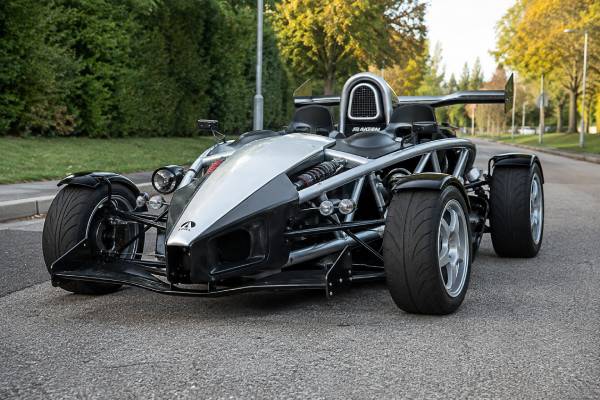
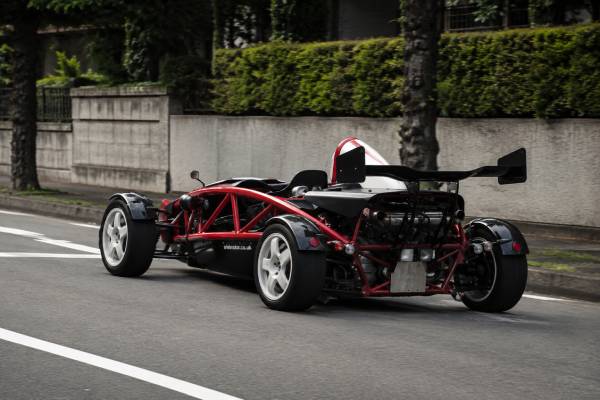
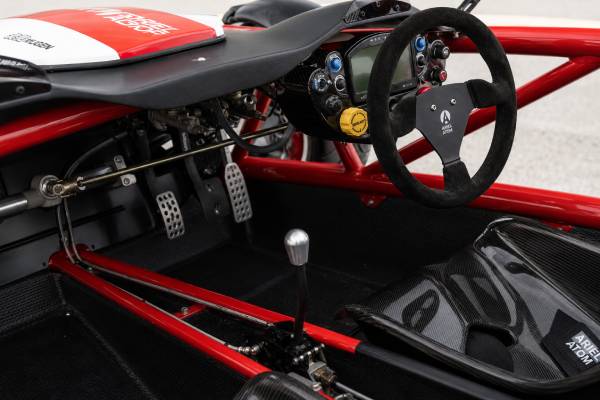
The 2011 Ariel Atom Mugen is not simply an Atom 3 with a modest power increase. It is a ten-car anniversary edition built around a hand-finished, naturally aspirated Honda K20Z4 that Mugen pushed to 270 hp at 8,600 rpm. New pistons, high-lift camshafts, valve springs, competition spark plugs, a baffled sump, and a lightened flywheel created a sharper engine rather than masking the car’s character with forced induction. Ariel then paired it with a close-ratio six-speed gearbox, limited-slip differential, Alcon brakes, V8-influenced adjustable suspension, and a programmable digital display. The result weighs about 550 kg and reaches 62 mph in a claimed 2.9 seconds, yet its appeal is less about a launch figure than the way it demands revs and precise driver inputs. Rarity now changes the ownership equation: preserving original parts, proving build identity, and maintaining the bespoke engine correctly are as important as enjoying the car on road or track.
Table of Contents
- Why the Mugen Is a Distinct Atom
- Atom Mugen Technical Data
- How Mugen Created 270 hp
- Suspension, Brakes, and Driver Feedback
- Using a Rare Atom on Road and Track
- Preservation-Led Maintenance
- Authenticity, Inspection, and Purchase
Why the Mugen Is a Distinct Atom
The Mugen stands apart because its extra performance came from internal engine development and a tightly defined factory package. Only ten examples were announced, all associated with the red, white, and black anniversary color scheme, so an authentic car should have much stronger provenance than a normal modified Atom.
Ariel created the edition to mark the Atom’s tenth anniversary. Mugen, Honda’s long-established performance partner, started with the naturally aspirated 2.0-liter Type R engine used in the Atom 3 and raised output from 245 hp to 270 hp. That 25 hp gain sounds small beside a supercharged 300 or 310, but extracting 135 hp per liter without boost required changes that materially altered the engine’s response and service needs.
The important distinction is between a genuine Mugen-built or Mugen-specified engine and a standard K20Z4 with external parts or an aftermarket ECU tune. A red-and-white paint scheme, Mugen badges, carbon panels, or a high dyno result do not establish authenticity. Buyers need the Ariel order sheet, engine documentation, numbered-edition evidence, invoices, and ideally confirmation from Ariel using the chassis number.
Period descriptions consistently identify the following package elements:
- A 1,998 cc naturally aspirated Honda K20Z Type R engine producing 270 hp at 8,600 rpm.
- Internal Mugen changes including high-performance pistons and high-lift camshafts.
- Uprated valve springs, race-grade spark plugs, and a baffled oil sump.
- A lighter, balanced flywheel.
- A close-ratio six-speed manual transaxle and limited-slip differential.
- Lightweight Alcon calipers with ventilated discs at both axles.
- Four-way adjustable dampers and springs related to the Atom V8 setup.
- A programmable LCD display in a carbon-fiber instrument panel.
- Production limited to ten cars.
One especially unusual example has been described as being completed to later Atom 3.5 appearance or chassis specification and registered years after the 2011 announcement. That reinforces a wider lesson: production date, first registration date, visible body specification, and model-year label can differ on low-volume cars. The build file is the authority.
Atom Mugen Technical Data
The Atom Mugen is a gasoline ICE car with a mid-mounted, naturally aspirated inline-four and rear-wheel drive. Its defining technical combination is high engine speed, very low mass, close gearing, and V8-derived chassis hardware rather than forced-induction torque or electronic driver aids.
| Specification | Value | Technical context |
|---|---|---|
| Engine family | Honda K20Z Type R / K20Z4 | Mugen-developed naturally aspirated installation |
| Configuration | Inline-four, DOHC, 16 valves, i-VTEC | Transverse mid-engine layout |
| Displacement | 1,998 cc (2.0 L) | 86 mm bore and 86 mm stroke for the K20Z4 base engine |
| Induction | Naturally aspirated | No supercharger or turbocharger |
| Maximum power | 270 hp (199 kW) at 8,600 rpm | Published model output |
| Maximum torque | 255 N·m (188 lb-ft) at 6,000 rpm | Published period figure |
| Specific output | 135 hp per liter | Calculated from the published displacement and power |
| Component | Mugen specification |
|---|---|
| Pistons | High-performance replacement pistons |
| Camshafts | High-lift camshafts |
| Valve control | Uprated valve springs |
| Ignition service parts | Race-grade spark plugs |
| Lubrication support | Baffled oil sump |
| Rotating response | Lightened and balanced flywheel |
| Specification | Value | Condition |
|---|---|---|
| Gearbox | Close-ratio six-speed manual | Honda-based transaxle |
| Differential | Limited-slip differential | Standard Mugen package |
| Drive type | Rear-wheel drive | Engine and gearbox mounted behind occupants |
| 0–62 mph | 2.9 seconds | Manufacturer-era claim |
| Top speed | 241 km/h (150 mph) | Published claim |
| Quoted weight | 550 kg (1,213 lb) | Period launch figure; fitted equipment affects measured weight |
| System | Specification |
|---|---|
| Frame | Exposed tubular Atom 3 spaceframe |
| Suspension layout | Unequal-length wishbones with pushrod-actuated springs and dampers |
| Dampers and springs | Four-way adjustable package developed from Atom V8 hardware |
| Front brakes | Ventilated discs with lightweight Alcon calipers |
| Rear brakes | Ventilated discs with lightweight Alcon calipers |
| Steering | Unassisted quick-ratio rack-and-pinion |
| Item | Factory-era description |
|---|---|
| Production | Ten examples announced |
| Color theme | Red, white, and black Mugen anniversary scheme |
| Instrument panel | Carbon-fiber panel with programmable LCD display |
| Shift indication | Programmable three-color shift lights |
| Engine cover | Carbon-fiber Mugen cover |
| Original launch price | £41,450 excluding VAT; later quoted retail around £49,470 |
At 550 kg, 270 hp equates to about 491 hp per metric tonne before adding driver and fuel. The number is close to the heavier Brammo Atom 2 300’s calculated ratio, but the Mugen delivers it through revs, gearing, and reduced inertia rather than supercharger boost.
How Mugen Created 270 hp
Mugen’s engineering made the engine breathe and survive at higher speed; it did not simply raise the rev limiter. The replacement pistons, camshafts, springs, ignition parts, sump, and flywheel form a system, and removing one element or calibrating it incorrectly can compromise the whole package.
High-lift camshafts open the valves farther and can hold them open longer, allowing more air into and out of the cylinders at high rpm. That improves peak power but can reduce smoothness or torque at low engine speed. Stronger valve springs are needed to keep the valvetrain following the cam profile as engine speed rises. If spring pressure, installed height, retainer mass, or valve clearance is wrong, the result can be valve float, accelerated wear, or contact between internal parts.
The pistons are equally important. A high-output naturally aspirated engine relies on compression, combustion-chamber control, ring sealing, and precise clearances. Replacement pistons may change compression ratio or valve-pocket geometry, so a later rebuild must use documented Mugen specifications rather than generic K20Z4 dimensions. A machine shop familiar with ordinary road-going K-series engines is not automatically qualified to reproduce a limited-run Mugen assembly.
The baffled sump manages oil movement under acceleration, braking, and cornering. It is not permission to ignore the dipstick. Low oil level can still uncover the pickup, while overfilling can aerate the oil and increase windage. Track users should establish a repeatable level-check procedure and monitor pressure with a reliable gauge or logged sensor.
A lightened flywheel reduces rotational inertia. The engine gains and loses rpm faster, making heel-and-toe shifts and rapid upshifts more immediate. The trade-off is less stored energy when moving away from rest, more sensitivity to clutch technique, and a greater chance of stalling in traffic. The close-ratio gearbox keeps the engine in its useful range, but it also means the driver must shift often and accurately.
The published 188 lb-ft torque peak at 6,000 rpm tells the story. This is not an engine that produces its best work at modest speed. Contemporary accounts describe it as relatively subdued below about 5,000 rpm and intense above that point. That split character is part of its appeal, but it also means a road test that never reaches the upper range cannot confirm whether the engine is healthy under its intended load.
Engine calibration should be treated as a preservation item. Verify the ECU type, software, immobilizer arrangement, fuel pressure, injector specification, intake, exhaust, and rev limit. Back up any accessible map before changes. A modern tuner may be able to make more power, but altering a ten-car anniversary engine without retaining the original configuration can reduce both reliability and collector value.
Suspension, Brakes, and Driver Feedback
The Mugen’s chassis hardware gives it more control and adjustment than a basic Atom 3, but adjustment only helps when the car is measured and the driver understands the effect. Four-way dampers can create many bad combinations as easily as one good setup.
“Four-way” generally separates high- and low-speed compression and rebound functions or provides equivalent multi-axis control, depending on the exact damper. The terms high-speed and low-speed refer to damper-shaft velocity, not road speed. A curb strike can be a high-speed damper event at walking pace, while a long weight transfer into a fast corner may be a low-speed event.
Before changing clicks, record the present settings from a consistent closed or open reference. Check that left and right dampers have the same usable range and no leakage, bent shafts, damaged adjusters, or seized spring platforms. Measure ride height and corner weights with the driver aboard. A rare car that sits attractively low may have too little bump travel and poor suspension geometry.
The Alcon brakes reduce unsprung mass and improve repeated-stop performance, but caliper brand alone does not guarantee good braking. Pad compound, rotor condition, fluid, pedal balance, tire grip, and temperature determine the result. Inspect for tapered pads, heat checking, seized pistons, damaged seals, loose bells on floating rotors, and incorrect replacement hardware.
There is normally no ABS safety net. The driver must sense the onset of lockup through pedal force and tire behavior. Cold semi-slicks, damp pavement, or a rearward bias setting can make the car far less forgiving than it feels after several warm laps. Brake-bias changes should be small, documented, and tested away from traffic.
Steering is direct and unassisted. Because the front axle carries little mass, the wheel can feel light in steady running yet become busy over cambers and surface changes. A car that feels nervous may not need “slower steering”; it may need correct toe, fresh rod ends, matched tires, centered rack geometry, and sensible pressures.
The Mugen rewards clean technique. Brake in a straight line until the tires are warm and the balance is understood, release pressure progressively, turn once, and feed power as steering lock unwinds. Aggressive mid-corner corrections or sudden throttle lifts can provoke rotation quickly because the car has little inertia to slow its response.
Using a Rare Atom on Road and Track
A Mugen should be exercised, but every outing should be planned around exposure, noise, tire temperature, and replacement-part scarcity. It is road legal in suitable jurisdictions, yet its design priorities remain closer to a track machine than a conventional sports car.
On public roads, the engine’s strongest range can be difficult to use responsibly. The pleasure comes from throttle response, gearbox precision, and the sensation of speed rather than sustained full power. Good ear protection, eye protection, weather-appropriate clothing, and secure storage for small items are basic equipment. A full-face helmet may be appropriate in some situations, but owners should consider visibility, local law, head support, and aerodynamic lift.
Track use presents a collector dilemma. Circuit driving is what the engineering was made for, but stone damage, tire pickup, over-revs, contact, and heat cycling can permanently affect a ten-car edition. Owners can reduce risk without turning the car into a static display:
- Complete a fluid, fastener, joint, brake, and tire inspection before the event.
- Use several progressive laps to establish temperatures and balance.
- Set a conservative rpm warning below the hard limiter.
- Log oil pressure, coolant temperature, and lap conditions if the equipment allows.
- Take a cool-down lap without dragging the brakes.
- Inspect the car immediately after each session for leaks, loose hardware, and tire damage.
- Record mileage, hours, settings, fuel, and any replaced parts in the history file.
Noise limits can be a practical restriction. A high-revving K20 with an open intake close to the driver and a low-restriction exhaust may exceed circuit limits even when the exhaust is mechanically sound. Retain any original silencer and catalytic hardware rather than replacing it permanently.
The programmable display is useful for warnings, but a warning threshold is not a cure. If temperature or pressure moves outside the established normal range, reduce load and investigate. Continuing because the engine still sounds strong is an expensive gamble with a bespoke assembly.
Preservation-Led Maintenance
Maintenance should preserve the Mugen-specific components and create an evidence trail for every intervention. Routine Honda parts may be easy to source, but the internal engine specification, calibration, edition trim, and V8-derived suspension are not ordinary donor-car items.
Start by building a technical archive. Scan the order form, engine certificate, invoices, correspondence, ECU information, alignment records, damper service sheets, and photographs of original markings. Keep removed factory parts labeled and protected. A replacement part can improve drivability while the original remains essential to authenticity.
Engine oil should be selected with advice from Ariel, Mugen documentation, or an engine builder who understands the exact clearances and use. Change it by time and track exposure, not just mileage. Cut open the filter during major services and inspect the media for metallic debris. Trend oil pressure at comparable temperatures and rpm rather than relying only on a warning light.
Valve clearance deserves particular attention because the camshafts and springs differ from the standard engine. Use the correct cold or hot measurement procedure and the Mugen target clearances, not an assumed Civic Type R setting. An unexplained tightening clearance can indicate valve-seat recession; an opening clearance can indicate valvetrain wear or a measurement inconsistency.
The following items merit scheduled specialist attention:
- Compression and leak-down trends using the same test method.
- Cam-chain, tensioner, guides, and timing verification.
- Spark-plug type, heat range, gap, and reading after high-load use.
- Fuel-pressure stability and injector flow balance.
- Sump baffles, pickup security, and evidence of oil starvation.
- Flywheel, clutch, release mechanism, and gearbox shift quality.
- Damper rebuild history and spring free length.
- Rod-end play, wheel bearings, hubs, and brake-caliper condition.
Fuel ages even when mileage stays low. Use fresh fuel of the required octane, avoid leaving ethanol-containing fuel in unsuitable hoses or seals for long storage, and inspect the tank, filters, pump, and lines. A car registered late or stored for years may need a full fuel-system baseline despite a tiny odometer reading.
Tires are another age-controlled part. Original-period tires may look valuable for display but should not be trusted for performance driving. Preserve them separately if historically important and fit fresh tires in the correct size, load rating, speed rating, and construction. Recheck alignment after changing tire model because carcass behavior can alter steering and balance.
Authenticity, Inspection, and Purchase
The best Mugen is the car whose identity, engine, original package, and maintenance history can be proved without relying on the seller’s story. With only ten built, a complete paper trail has a direct effect on value.
Ask Ariel to confirm the chassis number and original specification. Compare the build date with the announcement date, completion date, and first registration. Verify the numbered status, original color scheme, engine documentation, carbon instrument panel, display, brakes, dampers, gearbox, differential, and Mugen engine cover. Photograph stampings and labels before purchase.
An inspection should include both collector and mechanical checks. A concours-level cosmetic review is not enough, and a normal performance-car inspection may overlook edition-specific parts.
Look for crash repairs on the exposed frame: ground tubes, fresh powder coat, distorted brackets, inconsistent weld or bronze-braze appearance, unusual shim stacks, and misaligned suspension. Check the underside and pedal area, not just the visible upper rails. Measure the chassis if there is any doubt.
Confirm that the engine reaches operating temperature cleanly, holds oil pressure, and pulls evenly through the high-rpm range under controlled conditions. Misfire above the cam changeover may come from plugs, coils, fuel pressure, valve clearance, calibration, or mechanical condition. Any over-rev history deserves investigation because a missed downshift can exceed the limiter mechanically.
Inspect the gearbox hot and cold. The close ratios should engage cleanly without crunching or jumping out. Clutch replacement may require substantial labor. Check the limited-slip differential for chatter, incorrect oil, and asymmetric drive.
A realistic purchase budget includes transport to Ariel or a specialist, immediate fluid replacement, tire renewal, harness replacement if expired, damper service, geometry, battery support, and correction of age-related hoses or seals. Insurance and registration should be agreed before purchase, not after the car arrives.
The Mugen is valuable because it represents a particular engineering idea: extracting more from the naturally aspirated K20 while keeping the Atom light, direct, and mechanically transparent. A supercharged Atom may be faster in the middle of the rev range, and a modern Atom 4 is more capable overall, but neither duplicates the Mugen’s hand-built 8,600 rpm character. Preserve the evidence, maintain the special parts, and use it with mechanical sympathy; that is the route to both a rewarding drive and a defensible collector car.
Preserve removed original parts even when reversible replacements improve use. Label each component with its chassis association, date, reason for removal, and fitting hardware, then store it in a dry controlled environment. Future custodians should be able to distinguish genuine Mugen-era material from later service parts without relying on memory or appearance alone.
References
- Ariel unveils the Mugen-tuned Atom 2011
- One-of-10 Ariel Atom Mugen for sale 2023
- Ariel Atom 3 | PH Used Buying Guide 2022
- Ariel Atom 3 (2007 – 2013) review, history and specs 2007
- NEW 525bhp ARIEL ATOM ANNOUNCED – THE ATOM 4RR 2025
- Atom – Ariel Motor Company 2026
Disclaimer
This article is for informational purposes and is not a substitute for professional diagnosis, authentication, or repair. Specifications, torque values, service intervals, and procedures can vary by VIN, market, equipment, production detail, and later modification; verify them against official Ariel, Mugen, and component service documentation.
Please share this article on Facebook, X/Twitter, or another enthusiast platform to support careful preservation of specialist cars.