

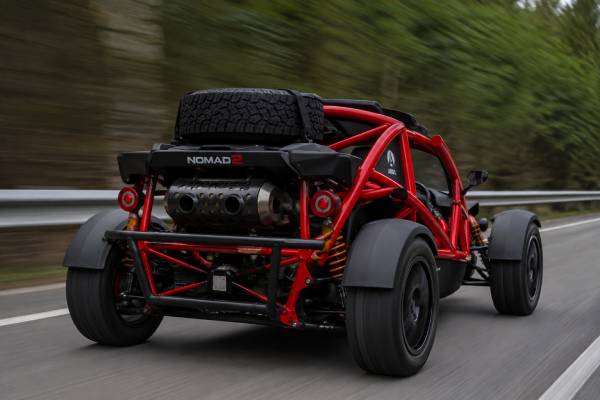
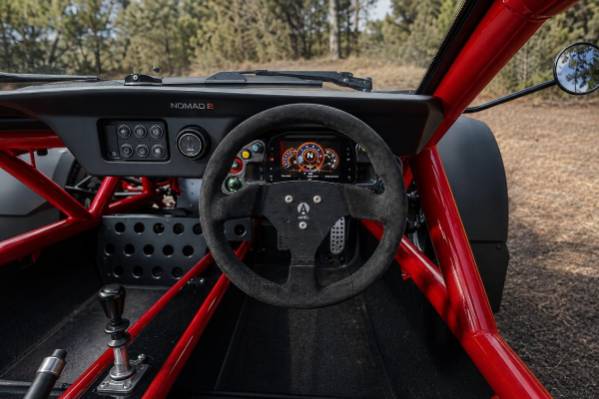
The 305 bhp Ariel Nomad 2 adds more than a higher peak-power setting to the new Ford-powered platform. Ariel’s adjustable engine package gives the driver three maps, moving from 260 bhp through 302 bhp to 305 bhp while maximum torque rises as high as 518 Nm. In a 715 kg rear-wheel-drive car on long-travel suspension, that map selection changes throttle sensitivity, traction demand, heat, and driveline load as much as it changes acceleration. The package sits within an all-new vehicle whose chassis is over 60 percent stiffer than Nomad 1, with a larger radiator, high-mounted intercooler, 70-liter tank, dual off-road filtration, 288 mm standard brakes, and optional traction control, launch control, adjustable ABS, limited-slip differential, larger AP brakes, baffled sump, and competition dampers. This guide explains how the adjustable-power system works in context, which supporting options matter, how to choose maps by surface, and what maintenance and documentation are essential for a 2025–present Nomad 2 rated at 305 bhp.
Table of Contents
- Three Maps, Not One Permanent 305 bhp Setting
- Adjustable-Power Nomad 2 Specifications
- Matching Engine Map to Surface and Driver
- Heat, Oil, Fuel, and Turbo Protection
- Supporting Options That Make 305 bhp Usable
- Validation and Maintenance of Driver-Adjustable Systems
- Buying and Documenting a 305 bhp Nomad 2
Three Maps, Not One Permanent 305 bhp Setting
Ariel’s UK configurator describes the option as switchable power from 260 to 305 bhp. Ariel North America’s launch information provides the fuller map breakdown: 260 bhp with 385 Nm, 302 bhp with 451 Nm, and 305 bhp with 518 Nm. The small final increase in horsepower hides a much larger final increase in torque.
That distinction is crucial. The middle 302 bhp map is already extremely powerful for a 715 kg car, while the highest map adds 67 Nm and changes how quickly the rear tires can be overloaded. The maximum setting is not simply the middle map plus three horsepower; it is a more aggressive torque calibration intended to deliver stronger performance through the rev range.
A sensible owner treats each map as a tool. The 260 setting provides the calmest torque request and can suit wet roads, unknown surfaces, passenger introductions, mechanical warm-up, or learning. The 302 setting gives near-maximum power with less peak torque than the top map. The 305 setting is for conditions where the tire, surface, temperature, visibility, and driver can use it.
The adjustable package does not change the Nomad 2’s basic architecture. It remains a six-speed manual, rear-wheel-drive, turbocharged two-seater. The limited-slip differential is listed as an option on Ariel’s UK page, so a 305 bhp car should not be assumed to have one unless the build sheet confirms it. Traction control, launch control, ABS, brakes, sump, cooling, and dampers are also specification choices rather than automatic consequences of selecting the power option.
A well-specified 305 is therefore defined by integration. Its map controller should identify settings clearly, the calibration should match the engine and fuel, and the car should have tires, brakes, cooling, oil control, differential, and electronic aids appropriate to its intended use. Peak output without those foundations is little more than an expensive traction problem.
Adjustable-Power Nomad 2 Specifications
The tables combine Ariel’s standard Nomad 2 technical data with the official adjustable-map information and relevant factory options. Optional hardware remains marked as such.
| Specification | Factory information |
|---|---|
| Engine | Ford 2.3 ST inline four-cylinder |
| Displacement | 2,267 cc (2.3 liters) |
| Bore × stroke | 87.6 × 94 mm |
| Construction | Aluminum-alloy block and head |
| Valvetrain | Chain-driven DOHC, four valves per cylinder |
| Induction | Twin-scroll turbocharger |
| Fuel system | Direct injection |
| Map 1 | 260 bhp / 385 Nm in launch information |
| Map 2 | 302 bhp / 451 Nm |
| Map 3 | 305 bhp / 518 Nm |
| Standard UK specification reference | 260 bhp at 5,900 rpm / 380 Nm at 2,500 rpm |
| System | Specification or status |
|---|---|
| Standard transmission | Six-speed manual plus reverse |
| Drive type | Rear-wheel drive |
| Limited-slip differential | Optional on the UK configurator |
| Engine maps | Three-stage driver-adjustable ECU mapping with power option |
| Traction control | Adjustable option, calibrated for road and off-road use |
| Launch control | Included with the adjustable traction/launch option |
| ABS | Optional selectable road/off-road system |
| Brake bias | Cockpit-adjustable option |
| Hydraulic handbrake | Optional; acts on rear service brakes and does not latch |
| Sequential gearbox | Quaife six-speed paddle-change option described at launch |
| System | Factory specification |
|---|---|
| Radiator | Front-mounted fabricated unit; launch material states 2.5 times original Nomad size |
| High-performance radiator | Optional for high-load use in hot countries |
| Intercooler | High-mounted, full-width air-to-air system |
| Intake | Raised, aerodynamically directed roof-level system |
| Filtration | Dual off-road filter system with moisture/debris collection and vacuator valve |
| WRC filter | Optional finer element for severe dust |
| Baffled sump | Optional for oil-surge control in track or hard off-road use |
| Fuel tank | 70 liters (18.5 US gal), aluminum |
| Area | Standard specification | Relevant performance option |
|---|---|---|
| Chassis | Bronze-welded large-diameter steel tube, over 60 percent stiffer | Same core structure for all maps |
| Suspension | K-Tech dampers and Eibach springs | Öhlins three-way or Bilstein four-way/hydraulic-bumpstop packages |
| Brakes | 288 mm discs front and rear | AP Racing four-piston calipers with 290 mm discs, including two-piece option |
| Wheels | 8J × 16 alloys | 16-inch forged beadlock or 18-inch packages |
| Standard tires | Yokohama Geolandar 235/70R16 | Extreme-terrain, all-terrain, or road-legal track-day fitments |
| Steering | Manual rack, two turns lock to lock | Quick-release wheel optional |
| Measure | Factory value |
|---|---|
| Length × width × height | 3,400 × 1,860 × 1,475 mm |
| Wheelbase | 2,396 mm |
| Track | 1,635 mm front and rear |
| Approach/departure angles | 48/64 degrees |
| Published weight | 715 kg before build-specific equipment changes |
| Power-to-weight at 305 bhp | Approximately 427 bhp per metric tonne at 715 kg |
| Torque-to-weight at 518 Nm | Approximately 724 Nm per metric tonne at 715 kg |
| 0–60 mph | 3.4 seconds in Ariel’s Nomad 2 launch data |
| Top speed | 134 mph (216 km/h) |
The official 0–60 mph figure is shared across Nomad 2 launch information rather than broken out by map. Tire grip and launch control constrain the standing start, so the highest map’s greatest advantage may appear in rolling acceleration rather than a dramatically different launch number.
Matching Engine Map to Surface and Driver
Map selection should happen before the demanding section, with a clear reason. The driver needs enough capacity to process the surface, braking point, steering, traffic, and vehicle response without using the map switch as entertainment.
The 260 bhp map is the correct default for learning the car. It still provides roughly 364 bhp per metric tonne and strong low-speed torque. On wet tarmac, cold tires, mud, snow, or an unfamiliar road, lower requested torque makes the throttle easier to meter. It also reduces the chance that a small pedal error becomes a large yaw correction.
The 302 bhp map is not a timid intermediate step. Its 451 Nm is a substantial increase over the low map and gives nearly all the maximum horsepower. It may be the best fast-road or dry-gravel setting because it delivers strong acceleration without the top map’s full 518 Nm torque spike.
The 305 bhp map is useful where the car is straight enough, the tire has grip, and there is room for acceleration. Its stronger torque throughout the range can reduce the need to downshift and can help maintain momentum on a fast climb. On a slow loose climb, however, it may make wheelspin more difficult to avoid.
Traction control should be tuned with the map, not treated separately. A low engine map with very permissive traction control can still spin the tires, while the high map with strong intervention may feel inconsistent if the system repeatedly cuts and restores torque. Begin with the factory-recommended combination for the surface and change one parameter at a time.
Launch control creates repeatable acceleration but also shocks the clutch, gearbox, differential, shafts, mounts, and tires. Use it sparingly in a legal controlled environment with the car warm.
Adjustable ABS also needs surface context. A road setting may intervene early on gravel because wheel deceleration differs. An off-road setting can permit more slip and allow a wedge of loose material to build, but it may not suit wet pavement. The driver must know which mode is active before the first hard stop.
The limited-slip differential changes how power is shared. On a car without it, one tire may spin first; with it, both rear tires can drive more effectively but can also break loose together. Confirm whether the option is fitted and learn its behavior away from obstacles.
The hydraulic handbrake is a separate rally control, not a substitute for map selection or parking. It operates the rear service brakes without a ratchet. Misuse at speed can rotate the car instantly, particularly with high engine torque ready when the lever is released.
Heat, Oil, Fuel, and Turbo Protection
The high map asks the engine and cooling system to process more fuel and air. That raises exhaust energy, turbocharger speed, charge-air temperature, coolant load, and oil temperature. Ariel’s larger base cooling system provides headroom, but the intended environment still determines whether the high-performance radiator is appropriate.
The radiator’s position exposes it to debris, while the high-mounted intercooler relies on the roof-level airflow system. Inspect both heat exchangers after insects, mud, grass, or pressure washing. Bent fins and blocked passages reduce performance. Warm air from the radiator is deliberately managed away from the intake; damaged ducts or missing panels can disturb that separation.
The intercooler protects power and knock margin. When charge temperature climbs, the ECU may reduce ignition advance or torque. A car that feels slower after repeated low-speed runs may be protecting itself. Diagnose the airflow, sensor data, and cooling system rather than assuming the high map has been “lost.”
Engine oil lubricates the turbocharger and carries heat. Use only the Ariel-approved grade, filter, capacity, and level procedure. Avoid full load until oil is warm. After sustained high boost, reduce load and allow temperatures to stabilize with airflow before shutdown. Prolonged idling is not automatically the best cool-down; follow current factory guidance.
The baffled sump is a valuable option for sustained lateral, braking, jumping, or rough-surface load because it reduces oil movement away from the pickup. It does not correct low oil level, unsuitable oil, or excessive angle. Owners should confirm the sump type and any change in oil quantity.
Fuel quality is map critical. The calibration expects a particular octane and fuel standard. Old, contaminated, or lower-grade fuel reduces knock margin. Ask Ariel how the control system responds to poor fuel and whether the highest map is restricted in some markets. Do not assume that because the engine derives from a Ford product, every donor-car fuel recommendation applies unchanged.
The direct-injection system includes high-pressure components that require specialist precautions. Pressure may remain after shutdown. Diagnosis should use compatible tools and procedures, and injector or pump replacement may require calibration or adaptation. A general mechanic should not improvise around high-pressure fuel.
The turbocharger and intake system should be inspected for oil residue, loose clamps, damaged hoses, foreign-object marks, and abnormal shaft or bearing noise where accessible. A light film in some intake systems may be normal; pooling, smoke, sudden oil use, or compressor contact is not.
The dual filtration system must remain sealed. Dust that bypasses the filters can damage the compressor and cylinders. Service the vacuator and collection area, inspect the clean side, and use the optional WRC element where Ariel recommends it. The raised intake helps find cleaner air but does not provide a published wading depth.
Supporting Options That Make 305 bhp Usable
Ariel explicitly describes the AP Racing four-piston 290 mm brake package as the option for the 305 bhp configuration. The standard 288 mm discs are already larger than Nomad 1’s, but the performance system adds caliper stiffness, pad area, and heat control. Two-piece discs add a separate bell and friction ring for severe use.
Brake hardware must be matched to the tire. Road-legal track tires can generate stronger deceleration on dry tarmac than extreme-terrain tires. A mud tire’s tall blocks and carcass movement may trigger ABS earlier and lengthen stops. Bias and ABS settings should be developed for the actual combination.
The optional limited-slip differential is highly relevant. It improves drive out of corners and across uneven grip, but it also makes both rear tires participate in a slide. Its oil, preload or internal mechanism, and service schedule must be documented. A seller’s statement that “all 305s have LSD” is not enough because Ariel’s UK page lists it as an option.
Traction and launch control add adjustability. They are especially valuable when the car changes between road, gravel, and mud. The owner should record a safe baseline for each map and tire. Randomly changing intervention while also adjusting dampers and pressures makes cause and effect impossible to understand.
The baffled sump and WRC filter are protection options rather than performance theater. A car used on circuits or hard off-road sections benefits from oil control. A car used in fine dust benefits from the higher-filtration option. Both may be more valuable than the highest damper package.
For suspension, standard K-Tech dampers are the starting point. Öhlins three-way units separate rebound, high-speed compression, and low-speed compression. Bilstein four-way or race-oriented systems with hydraulic bumpstops offer more control over extreme events. Each extra adjuster creates more ways to be wrong. Professional setup and written settings are essential.
Wheel choice should follow terrain. Standard 16-inch alloys and Geolandars suit broad use. Forged beadlocks support lower off-road pressures but add inspection and assembly requirements. Eighteen-inch wheels with all-terrain or track-day tires sharpen road response while reducing sidewall. Confirm full-lock and full-travel clearance with the chosen brakes.
The high-performance radiator is appropriate for hot climates and sustained off-road load. Guards and a winch can obstruct or redirect airflow, so the complete front-end installation should be evaluated. Recovery hardware also adds mass at the ends of the car and changes suspension response.
A sequential gearbox may make sense for competition or specialized use, but it changes service, noise, shifting technique, and cost. The standard manual is already capable and more familiar. Select the transmission based on the mission rather than the 305 bhp badge.
Validation and Maintenance of Driver-Adjustable Systems
An adjustable car needs an adjustable-car record. At delivery, document the software or calibration version, map labels, expected output, fuel requirement, traction-control scale, launch-control procedure, ABS modes, brake-bias baseline, differential, gearbox, and all warning indications.
Before driving, confirm that the displayed map matches the switch position and that no faults are active. The TFT should complete its startup checks. If a map or control setting becomes unavailable, save diagnostic information before cycling power or clearing codes.
Test functions one at a time in a safe area. Verify the low map first, then the middle, then the high map under progressively greater load. Confirm traction control at modest speed on an appropriate surface. Test ABS with ample space. Launch control is last, not first.
The PDM-based electrical system monitors circuits and can remove and restore power when limits are exceeded. This can make a fault appear to “fix itself.” Record the circumstances, load, temperature, and display message. Repeated resets indicate an electrical, mechanical, or calibration problem that needs diagnosis.
Battery condition matters because modern control systems dislike low voltage. Maintain the battery with the approved equipment and connection. Check grounds, connectors, harness support, and water sealing after washing or rough use. Do not add lights, winches, cameras, or chargers without understanding PDM capacity and programming.
Engine service should be annual at minimum and also reflect mileage, competition, and off-road use. Ariel’s launch information states annual servicing, while the current service kit page describes 4,500-mile/annual and four-year/18,000-mile levels for the Nomad family. Confirm the exact schedule by chassis and region.
Keep oil, coolant, brake fluid, gearbox oil, differential oil, filter, spark-plug, and belt records. Note engine hours and high-load events if available. Data logs can help identify intake-temperature rise, boost inconsistency, knock control, fuel-pressure drop, or sensor drift, but logs require knowledgeable interpretation.
After dirt use, clean filters and heat exchangers correctly, inspect suspension joints and damper shafts, remove mud from guards, examine wheels and tire beads, and check steering center. After track use, measure pads and discs, inspect tires, check fluid condition, and review temperature data.
Harnesses, fire systems, tires, hoses, and competition equipment have age or certification limits. A low-mileage car can still require replacement. Dampers with complex adjusters also need rebuilds based on use and manufacturer guidance.
Record software updates, their reason, and any change in map behavior. Those records define what “305 bhp” means on that chassis.
Buying and Documenting a 305 bhp Nomad 2
A new-car buyer should begin with a written mission and then select the adjustable-power option only as part of the complete specification. Discuss surface, climate, luggage, road registration, competition, tire, brake, differential, traction, ABS, cooling, sump, filter, damper, and recovery needs with Ariel or the authorized dealer.
The final order should identify the three-map package explicitly, not simply “305 hp.” It should also state whether the car has the limited-slip differential, traction and launch control, adjustable ABS, AP brakes, baffled sump, WRC filter, high-performance radiator, damper package, wheel and tire set, and standard or sequential gearbox.
At handover, ask the technician to demonstrate map changes, display indications, traction settings, launch control, ABS mode, master switch, PDM warnings, brake bias, hydraulic handbrake, and recovery points. Record the approved fuel and warm-up/cool-down procedure. Obtain manuals and contact details for support.
Verify the delivered car line by line. Check chassis and builder nameplate, calibration version, wheel and tire specifications, brake calipers and discs, differential, dampers, sump, filter, radiator, guards, lights, windscreen, luggage system, winch, harnesses, and road equipment. Photograph labels and adjustment positions.
For a used car, request the original order, factory build record, delivery checklist, software history, service invoices, warranty claims, competition use, accident or off-road repair, and tire changes. Confirm that all three maps function and that the highest map is not an aftermarket calibration presented as the Ariel package.
A specialist inspection should review engine health, turbo and intake system, fuel pressure, cooling, oil control, map identification, fault history, PDM events, clutch, gearbox, differential, brakes, ABS, traction control, suspension, frame, wheels, tires, and registration documents. Early cars may also have factory updates that need confirmation.
During the test drive, use the low map until the car is warm and basic systems pass. Check steering, braking, clutch, shifting, differential, temperatures, and warnings. Progress to the middle map, then briefly to the high map only in legal safe conditions. Any misfire, unstable boost, clutch flare, temperature surge, fuel-pressure warning, or control fault ends the test.
Inspect for evidence of hard landings or impacts: distorted guards, damaged chassis coating, bent wishbones, cracked wheel rims, cut tires, displaced intercooler ducting, and chafed lines. Beadlock rings need correct fasteners and torque history. Track-day tires need heat-cycle and age context.
Road legality and insurance depend on jurisdiction. Confirm emissions equipment, title or approval status, noise, lighting, tire legality, beadlock rules, and any cat-bypass use. North American Ariel information notes that vehicles are not federalized for ordinary road use, so state-level treatment requires advance verification.
The right 305 bhp Nomad 2 is the car whose documentation makes every setting understandable. Adjustable power adds value only when the owner can choose the correct map, maintain the systems that support it, and prove that its calibration and options remain as intended.
References
- Nomad – Ariel Motor Company 2026 (Manufacturer Specifications and Adjustable-Power Options)
- Ariel Atom, Ariel Nomad, Ariel North America Ariel Nomad 2 Announcement 2026 (Three-Map Output and Technical Launch Data)
- ALL NEW NOMAD 2 ANNOUNCED – Ariel Motor Company 2026 (Manufacturer Launch Summary)
- NOMAD 2 PRODUCTION BEGINS – Ariel Motor Company 2026 (Manufacturer Production Timing)
- Nomad Service Kit – Ariel Motor Company 2026 (Manufacturer Service Parts and Intervals)
- Aftercare – Ariel Motor Company 2026 (Manufacturer Service Support)
Disclaimer
This article is general information, not a substitute for the individual build sheet, current calibration documentation, official workshop procedures, professional diagnosis, inspection, driver training, or legal advice. Map outputs, fuel requirements, options, fluids, capacities, settings, service intervals, software, and registration status vary by chassis, market, and production date. Confirm the exact car with Ariel or an authorized specialist.
Share this guide with another Nomad 2 owner or buyer who needs to understand what the three adjustable power maps require from the rest of the vehicle.