


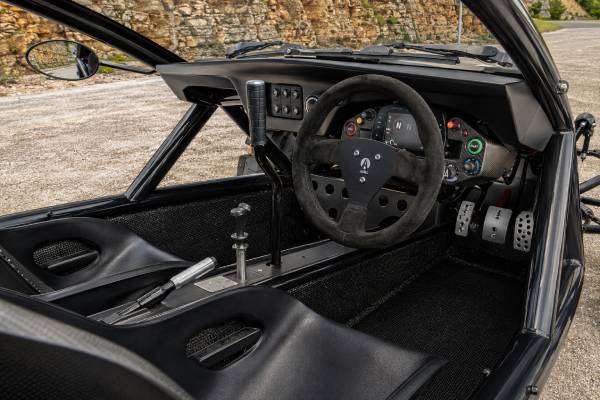
The Ariel Nomad 300 is the factory-developed supercharged version of the original 2.4-liter K24 Nomad, introduced as an option in 2016 and offered alongside the naturally aspirated 235 through the first generation. Its headline gain is 65 bhp, but the package is defined just as much by what supports that output. Ariel requires a heavy-duty clutch and oil cooler with the K24 supercharger, recommends stronger brakes, and offered an aluminum radiator, short final drive, raised intake, larger brake systems, and multiple damper and tire packages. Because each Nomad was individually specified, “300” confirms the engine package more reliably than it confirms the rest of the car. Factory used listings show road-biased, mixed-surface, and off-road-focused examples with very different equipment. This guide explains the technical baseline, the thermal and driveline consequences of supercharging, the option combinations that create a balanced car, the maintenance evidence a buyer should demand, and the inspection process for 2016–2024 Nomad 300 models.
Table of Contents
- From Nomad 235 to Nomad 300
- Nomad 300 Factory Data and Dependencies
- What Supercharging Changes Mechanically
- Choosing Gearing, Brakes, and Cooling
- Road, Gravel, and Off-Road Personalities
- Service Records That Prove a Healthy 300
- Used-Car Inspection and Authentication
From Nomad 235 to Nomad 300
Ariel launched the original Nomad in 2015 with a naturally aspirated Honda K24 producing 235 bhp and 300 Nm. In 2016, the company released a supercharger option that lifted advertised output to 300 bhp. The conversion preserved the six-speed manual, rear-wheel drive, and long-travel Nomad chassis while adding the airflow, fuel, calibration, and supporting hardware required for forced induction.
The Nomad 300 was not a limited edition in the way the later five-car Nomad R was. It was a configurable first-generation Nomad whose build could lean toward road, mixed-surface, or serious off-road use. The model may therefore appear in records as a Nomad 235 fitted with the K24 supercharger system, a Nomad 300, or a supercharged Nomad.
Factory used listings are valuable because they show the combinations Ariel actually delivered or supported. Repeated items include the 300 bhp supercharger system, heavy-duty clutch with K20 flywheel, oil cooler, aluminum radiator, short final drive, raised intake, 290 mm four-piston brakes, hydraulic handbrake, remote brake-bias control, and adjustable dampers. Wheel choices range from 18-inch road or all-terrain packages to 15-inch rally-strength wheels.
Those listings should not be copied as a universal specification. One car may have front and rear large brakes, another only an upgraded front system. Some use Bilstein dampers, others Öhlins or FOX. A road car may omit winch bumpers and guards; an off-road build may carry them all. Even the exhaust, catalytic-converter arrangement, seats, harnesses, and body panels can differ.
The 300’s appeal is its combination of immediate supercharged response and very low mass. At the original 670 kg baseline, the nominal power-to-weight ratio is about 448 bhp per metric tonne. Options and occupants reduce that number, but the car remains exceptionally potent. The limit is often tire grip, driver confidence, or cooling airflow rather than engine output.
A buyer should think of the 300 as a factory-engineered power package embedded in a bespoke vehicle. Authentication begins with the chassis and build records, while quality is determined by how well the rest of the specification supports the engine.
Nomad 300 Factory Data and Dependencies
The core dimensions and naturally aspirated values come from Ariel’s Nomad 1 specification. Supercharged output and component dependencies come from the manufacturer’s option information and documented Nomad 300 builds. Build-specific items are labelled accordingly.
| Specification | Verified value |
|---|---|
| Engine family | Honda K24 inline four-cylinder i-VTEC |
| Displacement | 2,354 cc (2.4 liters) |
| Bore × stroke | 87 × 99 mm |
| Valvetrain | Chain-driven DOHC, four valves per cylinder |
| Induction | Ariel supercharger system for K24 |
| Advertised maximum power | 300 bhp |
| Naturally aspirated reference output | 235 bhp at 7,200 rpm |
| Naturally aspirated reference torque | 300 Nm at 4,300 rpm |
| Fuel injection | Indirect multi-port grouped injection |
| Fuel tank | 50 liters, aluminum |
| Component | Manufacturer status | Reason |
|---|---|---|
| Heavy-duty clutch | Required with K24 supercharger | Supports additional torque and heat |
| Oil cooler | Required with K24 supercharger | Controls lubricant temperature |
| Upgraded brakes | Recommended with increased power | Adds stopping and heat capacity |
| Aluminum radiator | Optional; needed for specified low-speed/high-load use | Improves coolant heat rejection |
| K20 flywheel | Commonly paired with heavy-duty clutch in factory listings | Part of documented Ariel package combinations |
| Raised intake | Optional | Changes intake location for contamination management |
| Specification | Value |
|---|---|
| Gearbox | Six-speed close-ratio manual with reverse |
| Clutch actuation | Hydraulic |
| Differential | Limited-slip differential |
| Drive type | Rear-wheel drive |
| Standard final drive | Build baseline; exact ratio should be confirmed |
| Short final drive option | Reduces all gear ratios by approximately 7 percent |
| Steering | Manual rack and pinion, 1.7 turns lock to lock |
| Brake balance | Twin master cylinders, adjustable front/rear |
| Area | Base specification | Documented 300 variations |
|---|---|---|
| Frame | Bronze-welded, powder-coated steel tube | Guards, bumpers, and road equipment vary |
| Suspension | Unequal-length wishbones, Bilstein/Eibach baseline | Bilstein remote reservoir, Öhlins, or FOX packages |
| Brakes | 240 mm ventilated discs | Four-piston 290 mm systems, one- or two-piece discs |
| Wheels | 7J × 15 alloys, 235/75R15 | 15-inch rally or 18-inch road/all-terrain packages |
| Handbrake | Mechanical parking system | Hydraulic rally brake and alternate rear brake arrangement |
| Body equipment | Polyethylene/composite panels | Windscreen, side panels, carriers, lights, and protection |
| Measure | Published first-generation value |
|---|---|
| Length × width × height | 3,215 × 1,850 × 1,425 mm |
| Wheelbase | 2,348 mm |
| Track | 1,585 mm front and rear |
| Approach/departure angles | 71/82 degrees |
| Base published weight | 670 kg |
| Nominal 300 bhp power-to-weight | Approximately 448 bhp per metric tonne at 670 kg |
| Naturally aspirated 0–60 mph reference | 3.4 seconds |
| Top speed reference | 125 mph; Ariel notes aerodynamics limit maximum speed |
| Universal 300 acceleration claim | Not published for every option combination |
A heavily equipped 300 will weigh more than 670 kg, and tire choice can dominate acceleration. Publishing a borrowed Nomad R or naturally aspirated launch figure as a universal 300 result would be misleading.
What Supercharging Changes Mechanically
A mechanically driven compressor increases the mass of air entering the K24 whenever the engine and throttle demand it. More air permits more fuel and torque, but compression heats the intake charge and increases cylinder pressure. The crankshaft also spends some power driving the supercharger. The net gain is substantial, with a response that arrives immediately rather than after exhaust flow builds.
The oil system sees higher thermal load. Ariel’s required oil cooler adds capacity and a second heat exchanger, along with hoses and fittings that must remain leak-free. The owner needs the exact fill procedure because the system may drain or retain oil differently from a standard engine. Checking too soon, on a slope, or by a generic Honda method can produce an incorrect level.
The coolant system also works harder. An aluminum radiator appears frequently on documented builds, especially those intended for low-speed rough use. The radiator, fan, ducting, expansion system, cap, and bleed process all matter. Mud or bent fins can erase the advantage of an upgraded core.
The intake tract becomes more sensitive to leaks and contamination. A loose clamp downstream of the filter can admit dust; a leak in a pressure-side connection can alter measured airflow and mixture. Identify the exact filter, supercharger, pulley arrangement, bypass system, sensors, injectors, and ECU calibration. Keep a parts record because low-volume installations may not be obvious to a general workshop.
The drive belt is a service item and a diagnostic surface. Fraying at one edge, glazing, cracking, rubber dust, unstable tensioner travel, or repeated throwing indicates alignment, bearing, tension, or contamination problems. A replacement belt should not be used to conceal the cause.
The clutch receives more torque and is explicitly upgraded. Factory listings often describe a heavy-duty unit with a K20 flywheel. Pedal weight alone does not prove the hardware. Slipping under boost in a high gear, shudder, inconsistent release, or burning odor requires investigation before continued full-load driving.
The gearbox and differential remain compact components in a very light car. That lightness reduces continuous load but permits severe shock from wheel hop, aggressive launches, and abrupt grip changes. Inspect mounts, driveshaft joints, boots, seals, and backlash. Avoid full-throttle shifts or clutch dumps unless the car is prepared and the owner accepts the wear.
Calibration is the final mechanical safeguard. Fuel grade, ignition control, temperature compensation, rev limit, injector duty, and knock response must suit the actual hardware. A car can idle perfectly while having an unsafe high-load map. Documentation and specialist data logging are more persuasive than a seller’s claim that it has “always been fine.”
Choosing Gearing, Brakes, and Cooling
A balanced Nomad 300 is specified from the route backward. Engine power is fixed at the headline level, but gearing, braking, cooling, tires, and suspension determine whether it is useful.
The short final drive provides about 7 percent lower gearing in every ratio. It increases acceleration at a given engine speed and can keep the engine in a more responsive range. On tight roads or loose stages, that can make the car feel alive. On long road journeys it raises cruising rpm, increases shift frequency, and may make first gear easier to overwhelm. Ariel says top speed remains aerodynamically limited, so the shorter ratio changes how quickly the car gets there rather than the maximum itself.
Brake selection should reflect repeated energy, not a single emergency stop. Ariel’s option page points 300 bhp customers toward four-piston 290 mm systems. Larger discs add leverage and thermal mass; multi-piston calipers can improve pressure distribution and feel. Pad compound, fluid, ducting, tire grip, and correct bias remain essential. A big brake behind an old all-terrain tire cannot deliver road-racing stopping distances.
Determine whether the car has front-only or front-and-rear upgrades, one-piece or two-piece rotors, and which manufacturer supplied the calipers. Factory listings use Alcon terminology on some cars, while the current options page describes AP Racing packages. The installed part, not the web page, determines consumables and service procedures.
Cooling should be matched to speed and load. A road-biased car sees high airflow and short bursts of power. A green-lane car may crawl at high load with the radiator exposed to mud. Ariel specifically identifies the aluminum radiator for low-speed, high-load green-lane work. The oil cooler remains required with the supercharger in either case.
A raised intake can help place the filter away from some contamination, but it does not make the car amphibious. No official first-generation wading depth is provided. Water can damage the engine, starter, alternator, ECU, connectors, wheel bearings, and fluids long before it reaches the filter opening.
Tires complete the package. An 18-inch road tire sharpens paved response and may improve braking. A 15-inch all-terrain tire adds sidewall, impact compliance, and loose-surface versatility. Rally-strength wheels improve resilience. Each choice changes effective gearing, unsprung mass, steering effort, and clearance, so the suspension and alignment must be checked afterward.
Road, Gravel, and Off-Road Personalities
On dry pavement, the 300’s defining sensation is in-gear urgency. The supercharger fills the gap between throttle input and acceleration, while the low mass makes every gear feel short. Overtaking requires less planning, and the car can reach inappropriate speed before the driver finishes appreciating the noise.
The open body amplifies that performance. Wind, intake, exhaust, tire, and mechanical sounds are not isolated. A windscreen reduces pressure but adds turbulence and weight. Ear and eye protection may be appropriate depending on equipment and legal requirements. Objects must be secured because the cockpit has no conventional enclosed storage.
On gravel, immediate torque is both useful and demanding. A progressive pedal movement can maintain a controlled slide, while an abrupt movement can spin both rear tires through the limited-slip differential. The 300 rewards a gear that keeps the engine responsive without multiplying torque unnecessarily.
Tall all-terrain tires soften impacts and communicate through their sidewalls. They may feel slower to take a set than road tires. Reduce speed until the car’s transient behavior is understood. Pressure changes can tune grip and compliance, but very low pressure risks bead loss, rim damage, heat, and sidewall failure.
On rough ground, momentum should replace wheelspin. Repeated full-throttle attempts at a climb heat the clutch, oil, coolant, and tires while digging the car in. Inspect the line, protect vulnerable components, and use recovery equipment before the vehicle is buried or damaged.
The hydraulic handbrake, when fitted, is a specialist control for momentarily operating the rear service brakes. It does not latch and cannot secure a parked car. Its use on public roads or near obstacles is inappropriate. The mechanical parking brake must function independently.
A car with road-biased dampers can be excellent on tarmac yet bottom or skip on rough terrain. An off-road damper package may feel softer and less precise on a smooth road. Neither is inherently superior. Setups should be judged by tire contact, control through repeated bumps, and the owner’s real use.
After leaving dirt, perform a roadworthiness check before high speed. Remove packed mud that can unbalance wheels, inspect tire cuts, verify wheel fasteners, check steering center, test the brake pedal, and look for leaks. The transition from low-grip trail to high-grip road can reveal damage suddenly.
Service Records That Prove a Healthy 300
A strong history names parts and procedures. An invoice that says “annual service” is useful; one that records oil type and quantity, filter, belt, brake fluid, transmission oil, coolant work, air-filter service, alignment, and observations is much better.
Ariel’s Nomad service kit information describes engine oil, oil filter, and sump washer for the interim service. The annual/4,500-mile level adds transmission oil, fuel filter, and brake fluid, while the factory asks owners to make contact for the 18,000-mile/four-year service. A supercharged car also needs its specific belt, oil-cooler, intake, spark-plug, and calibration checks.
Look for a consistent oil-level record. Consumption that changes suddenly, metallic material, fuel dilution, coolant contamination, or repeated overheating needs investigation. Oil analysis can help when samples are taken consistently and interpreted as a trend. It does not replace compression, leak-down, pressure, or mechanical inspection where symptoms exist.
Cooling records should show more than coolant replacement. Useful history includes radiator cleaning, fan operation, cap and hose inspection, pressure testing, bleed procedure, and repair of leaks. A car that has repeatedly expelled coolant or needed topping up may have an unresolved fault.
The supercharger belt and tension system should have identifiable replacement dates. Bearings and pulleys may need service even if the belt looks new. Ask whether the owner carried a spare and knew the installation procedure; that practical knowledge often indicates attentive ownership.
Spark-plug records reveal whether the calibration was maintained. The exact heat range and gap must match Ariel or the approved tuner’s specification. Uneven plugs, eroded electrodes, or signs of detonation need explanation. Ignition coils, injector seals, fuel filters, and pump performance also matter under boost.
Clutch and gearbox history should include fluid, adjustment, and any replacement parts. A heavy-duty clutch is consumable, not permanent. Track or off-road use can wear it without adding many miles. Differential oil, driveshaft boots, mounts, and wheel bearings deserve inspection after repeated shock loads.
Brake service should identify pad and disc types, fluid specification, and bias baseline. Damper service should identify the manufacturer, rebuild date, spring rates, and settings. Tire history needs date codes and pressure use, not only remaining tread.
Exposure records matter. A seller who can explain cleaning after mud, powder-coat repairs, storage, battery maintenance, and guard removal is more credible than one who presents a freshly washed underside with no earlier photographs.
Used-Car Inspection and Authentication
Authenticate the engine package first. Request the chassis number, original invoice, build sheet, supercharger order or installation invoice, heavy-duty clutch record, oil-cooler specification, ECU information, and service history. Ask Ariel to confirm the delivered or factory-supported configuration where possible.
Inspect the installation with the car cold. Trace intake plumbing, belt drive, oil lines, coolant hoses, wiring, fuel components, and exhaust clearance. Look for belt dust, rubbing, unsupported hoses, nonstandard splices, heat damage, leaking fittings, and missing fasteners. Identify the supercharger rather than assuming every 300 uses exactly the same service parts.
Check the tube chassis methodically. Suspension pickups, lower rails, engine cradle, rollover structure, floor edges, bumper mounts, and guard attachments deserve bright light and clean surfaces. Fresh local coating, distorted tubes, cracked powder coat, unequal wheelbase, or alignment at the limit of adjustment calls for specialist measurement.
Used examples often have impressive option lists. Verify every line physically. Confirm brake caliper and disc dimensions, damper manufacturer, wheel size and offset, tire dates, differential, short final drive, cooling hardware, raised intake, hydraulic handbrake, brake-bias adjuster, winch, guards, windscreen, and electrical accessories.
Start from cold and observe the entire warm-up. Check smoke, idle, warning lamps, fluid pressure where displayed, fan cycling, fuel smell, coolant behavior, and charging. A healthy engine should not need throttle tricks to remain running. Mechanical supercharger sound is expected, but grinding, rumbling, or changing belt noise is not.
Drive in stages. At low load, evaluate clutch release, gearbox synchros, steering center, wheel balance, differential sound, brake pedal, and temperature. Add moderate power only after the basics pass. Full boost should be brief, legal, and safe. Misfire, detonation-like noise, clutch flare, belt squeal, temperature rise, or warning lamps ends the test.
Lift the car correctly and inspect underside protection, trapped debris, leaks, wheel bearings, rod ends, wishbones, damper shafts, springs, driveshaft boots, brake lines, and fuel lines. Remove wheels if the seller permits. Measure consumables rather than estimating them through spokes.
Verify UK road status or the applicable overseas registration. Check IVA records, chassis identity, registration documents, lighting, emissions equipment, and modifications. A cat-bypass pipe advertised for off-road use may affect road legality and emissions compliance.
A pre-purchase inspection from Ariel or a marque specialist is proportionate to the car’s value and complexity. The ideal report includes engine health, calibration, cooling and oil circuits, clutch and gearbox, differential, frame geometry, suspension, brakes, wheels, tires, electrical equipment, and provenance.
Do not choose solely by mileage. A regularly serviced 10,000-mile car with factory history can be safer than a 1,000-mile example that sat with old fuel, hardened tires, and unknown boost calibration. The correct purchase is the documented, coherent build whose condition supports its claims.
References
- Nomad 1 – Ariel Motor Company 2026 (Manufacturer Specifications and Supercharger Options)
- Our History – Ariel Motor Company 2026 (Manufacturer Introduction Timeline)
- Ariel Nomad 300 – Ariel Motor Company 2026 (Factory Used-Vehicle Build Specification)
- Nomad 300 – Ariel Motor Company 2026 (Factory Used-Vehicle Service and Equipment Record)
- Nomad Service Kit – Ariel Motor Company 2026 (Manufacturer Service Parts and Intervals)
- TOP GEAR MAGAZINE – USED CAR SUPERHEROES – Ariel Motor Company 2026 (Factory-Hosted Buying Context)
Disclaimer
This guide is informational and cannot replace the exact build sheet, factory workshop information, calibration record, professional diagnosis, inspection, or legal advice. Hardware, output, fluids, capacities, torque values, service intervals, and road status vary by chassis, market, production date, options, and modification history. Confirm every safety-critical detail with Ariel or a qualified specialist.
Share this article with another Nomad owner or buyer who needs to understand the complete K24 supercharger package rather than only its 300 bhp rating.