

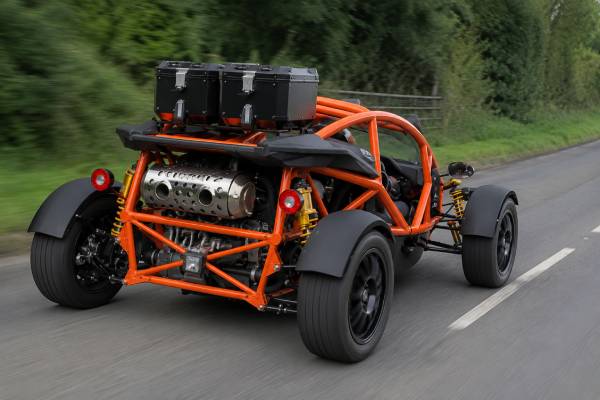
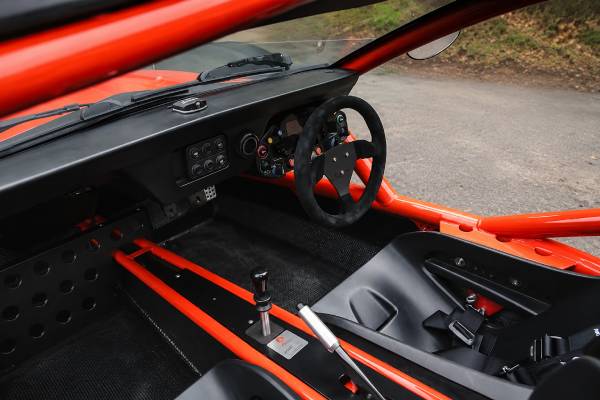
The Ariel Nomad 235 is the original British-market expression of the idea: a 670 kg tube-frame two-seater powered by a naturally aspirated 2.4-liter Honda K24, riding on long-travel wishbone suspension and tall 15-inch tires. Launched in 2015, it established the Nomad’s unusual blend of sports-car response, rally-stage agility, and genuine rough-road usefulness before the 300 bhp supercharger option and limited Nomad R arrived. The “235” identifies the standard 235 bhp output, but it does not describe one fixed trim. Ariel built each car for its owner, offering different wheels, tires, dampers, brakes, guards, screens, luggage systems, gearing, cooling equipment, and road-registration preparation. That bespoke approach is central to ownership and to used-car inspection. This guide covers the verified factory specification, explains why the naturally aspirated K24 suits the chassis, and gives practical advice on setup, servicing, corrosion prevention, documentation, and buying a first-generation 2015–2024 Nomad 235.
Table of Contents
- The Original Nomad Formula
- Factory Specifications for the 235 bhp K24
- Bespoke Options and Why Build Sheets Matter
- Performance Without Forced Induction
- Setting Up the Chassis for Real Use
- Maintenance for an Exposed Lightweight Car
- Provenance, Condition, and the Used Market
The Original Nomad Formula
Ariel launched the Nomad in 2015 after applying the company’s lightweight, visible-engineering philosophy to a car intended for roads and the ground beyond them. The structure is a bronze-welded steel tube frame with aluminum bulkheads. Long-travel, outboard suspension uses unequal-length wishbones at both ends, and the occupants sit inside the frame rather than beneath conventional bodywork.
The 235 bhp K24 version was not an underpowered introductory model. At the published 670 kg weight, it delivers approximately 351 bhp per metric tonne before occupants and options. The factory’s 0–60 mph claim of 3.4 seconds and 0–100 mph figure of 8.7 seconds show that the naturally aspirated car already operates in serious performance territory.
Its defining quality is not a launch number, however. The K24 produces 300 Nm at 4,300 rpm and responds directly to the accelerator. That makes it easier to balance the car on a wet lane, loose track, or uneven corner than an engine with a sudden boost event. The six-speed close-ratio gearbox keeps the engine active, while the limited-slip differential helps deploy torque through the rear wheels.
The first-generation Nomad remained available through the transition to the second-generation car announced in 2024. During its long life, options and individual specifications evolved. Used examples may carry anything from minimal road equipment and 18-inch tires to rally-strength 15-inch wheels, heated windscreen, winch bumpers, oil cooling, large brakes, luggage, and multi-adjustable dampers.
Ariel’s one-technician, one-owner build philosophy means “standard specification” is a reference point rather than a guarantee. The engine and core geometry are stable, but the delivered mission could be road touring, green-lane exploration, mixed-surface recreation, or fast off-road use. That is why an accurate Nomad article must describe both the baseline and the option logic.
The 235’s simplicity remains attractive. It avoids supercharger belts and added charge heat, uses a familiar Honda architecture, and offers enough performance to make chassis setup and driver judgment more important than engine modification. A well-maintained naturally aspirated car can be the most usable first-generation Nomad for an owner who values response, range, and mechanical clarity.
Factory Specifications for the 235 bhp K24
These tables use Ariel’s published Nomad 1 data. The values describe the standard technical foundation; ordered options can change weight, dimensions, braking, cooling, tires, gearing, and equipment.
| Specification | Factory value |
|---|---|
| Engine | Honda K24 inline four-cylinder i-VTEC |
| Displacement | 2,354 cc (2.4 liters) |
| Bore × stroke | 87 × 99 mm |
| Construction | Aluminum-alloy block, head, and sump |
| Valvetrain | Chain-driven DOHC, four valves per cylinder |
| Maximum power | 235 bhp at 7,200 rpm |
| Maximum torque | 300 Nm (221 lb-ft) at 4,300 rpm |
| Induction | Naturally aspirated with ITG foam filter |
| Fuel injection | Indirect multi-port grouped injection |
| Fuel pump | Continuous-flow electric, 3.5 bar |
| Fuel tank | 50 liters, aluminum |
| Exhaust | Fabricated stainless 4-2-1 manifold and stainless silencer |
| Specification | Factory value |
|---|---|
| Gearbox | Six-speed close-ratio manual plus reverse |
| Gearbox casing | Aluminum alloy |
| Clutch | Hydraulic operation |
| Differential | Limited-slip differential |
| Drive type | Rear-wheel drive |
| Steering | Manual rack and pinion, 1.7 turns lock to lock |
| Column | Collapsible offset design |
| Steering wheel | 305 mm suede-covered racing wheel |
| Pedal box | Tilton aluminum racing assembly |
| Brake balance | Twin master cylinders, adjustable front/rear bias |
| Specification | Factory value |
|---|---|
| Chassis | Bronze-welded steel tube, phosphated and powder-coated |
| Bulkheads | Aluminum |
| Suspension | Double unequal-length fabricated wishbones front and rear |
| Uprights | Lightweight fabricated units |
| Dampers | Outboard Bilstein front and rear |
| Springs | Eibach alloy-steel coils |
| Brakes | 240 mm ventilated discs |
| Wheels | 7J × 15, 12-spoke alloys front and rear |
| Tires | 235/75R15 front and rear |
| Area | Factory specification |
|---|---|
| Body | Non-structural toughened polyethylene and composite panels |
| Seats | Individual composite woven-cloth units, five-position adjustment |
| Harnesses | 2-inch E-approved four-point quick-release type |
| Display | LCD speedometer, tachometer, coolant, fuel, odometer, and trip |
| Ignition | Electronic coil-on-plug |
| Management | Hondata engine management |
| Immobilizer | Thatcham 2 Toad system |
| Cooling pump | Pressurized centrifugal pump, 82 L/min |
| Radiator | Front-mounted fabricated unit |
| Measure | Factory value |
|---|---|
| Length | 3,215 mm |
| Width | 1,850 mm |
| Height | 1,425 mm |
| Wheelbase | 2,348 mm |
| Track | 1,585 mm front and rear |
| Approach angle | 71 degrees |
| Departure angle | 82 degrees |
| Published weight | 670 kg |
| 0–60 mph | 3.4 seconds |
| 0–100 mph | 8.7 seconds |
| Top speed | 125 mph (201 km/h) |
The 670 kg figure should not be applied to a fully equipped used car without qualification. Windscreen, wipers, bumpers, guards, spare wheel, carrier, larger brakes, winch, lighting, luggage, and alternate dampers all change the delivered mass.
Bespoke Options and Why Build Sheets Matter
Ariel’s option list was an engineering menu. It allowed the owner to prioritize a particular use, but some choices also created dependencies. The current archived Nomad 1 page preserves much of that logic and is one of the most useful tools for understanding a used car.
The road pack supplied the lights and switchgear needed for road use, while an IVA test and registration service addressed UK approval. A heated windscreen, washers, wipers, side panels, mirrors, high-level brake light, and weather-related accessories could make touring much easier. These parts also add electrical load and maintenance points.
For powertrain use in high ambient temperature or sustained load, Ariel offered an oil cooler and aluminum radiator. The manufacturer specifically says the larger radiator is needed for green-lane use involving low speeds and high engine load. Even a naturally aspirated 235 can generate significant heat when airflow is poor and the tires are working hard.
The short final drive lowers all gear ratios by around 7 percent. It improves the rate at which the car reaches its aerodynamically limited top speed, but it also raises engine speed for a given road speed and brings shifts closer together. It can suit tight roads or mixed-surface driving while making relaxed travel less relaxed.
Brake options ranged from a road/light-off-road Sport package to four-piston 290 mm systems. The standard 240 mm ventilated brakes are part of the verified 235 specification, yet a used car may have been upgraded later. Confirm caliper brand, disc construction, master cylinders, parking-brake arrangement, and wheel clearance before buying consumables.
Suspension choices included different adjustable dampers and springs biased toward road, off-road, or mixed use. A damper’s appearance does not reveal its internal valving. Record manufacturer, part number, spring markings, reservoir pressure requirements, and adjustment positions. A mismatched pair can create unpredictable behavior even if both units are expensive.
Wheel and tire options transformed the car. Tall 15-inch all-terrain tires support the original concept, while 18-inch road-oriented packages sharpen steering on asphalt. Rally-strength wheels improve impact resistance. Each choice affects ride height, unsprung mass, effective gearing, braking feel, and clearance.
Protection and recovery options included a sump guard, coolant-pipe guard, front suspension/body-tub protection, winch bumper, rear bumper, tow points, spare carrier, and lighting bar. Inspect mounting points and trapped debris. Accessories only protect the car when their fasteners and interfaces remain straight and corrosion-free.
The build sheet ties these choices together. It identifies what Ariel intended, helps source correct parts, and supports value. Without it, owners are forced to infer specification from components that may have been changed several times.
Performance Without Forced Induction
The 235’s acceleration comes from low mass rather than an oversized torque curve. The engine’s 300 Nm peak is modest compared with modern turbocharged cars, but each newton-metre moves far less vehicle. The response feels immediate because there is no heavy body to accelerate and no boost system to wake.
On the road, the close-ratio gearbox keeps the K24 in its strongest range. The engine becomes more energetic with revs but remains usable in the middle. The driver can leave a corner in a taller gear for a calmer response or select a lower ratio and exploit the upper range. Clutch and shifter feel are direct, so poor engagement or crunching should not be excused as normal competition-car behavior.
On gravel, the naturally aspirated delivery makes small throttle corrections effective. The driver can hold a light slide, reduce wheelspin, or add momentum without waiting for pressure to build. The limited-slip differential helps both rear tires share work, although it can also make oversteer develop clearly when both lose grip.
The published 3.4-second 0–60 mph time depends on a favorable surface and launch. Tire tread, pressure, temperature, gearing, occupant mass, and options can alter the result. Repeated launch attempts place severe load on clutch, driveshafts, differential, tires, and engine mounts. They are poor evidence of vehicle health and an expensive way to chase a brochure number.
At higher speed, aerodynamics become the limit. The open frame, occupants, spare wheel, screens, lights, and tires create drag. Ariel notes that the short final drive does not change top speed because the car is aerodynamically limited. The stated 125 mph should be treated as technical context, not a recommendation. Wind load, noise, debris exposure, tire rating, road conditions, and legal limits make such speeds inappropriate outside a controlled environment.
Braking feel is affected by the unassisted, adjustable system. The driver builds pressure directly, and tire grip controls the final result. A larger brake package can improve heat capacity and feel, but it cannot compensate for old tires or incorrect bias. Establish a documented baseline before turning the cockpit adjuster.
The 235 is often the more satisfying road companion because full throttle can be used for longer without immediately reaching extreme speed. It also gives the chassis room to communicate. Owners considering a supercharger should first ensure that the standard car is correctly aligned, freshly tired, and driven well; many apparent power deficiencies are actually setup or technique problems.
Setting Up the Chassis for Real Use
Start setup with the intended surface and actual load. Driver, passenger, fuel, spare wheel, luggage, windscreen, and recovery equipment change corner weights. Ride height and alignment set on an empty minimal car may not suit a fully equipped tourer.
Inspect first, adjust second. Verify straight wishbones, free rod ends, sound wheel bearings, centered steering, healthy dampers, matched springs, and correct tire condition. Alignment cannot repair bent hardware. If the steering wheel moved off-center after an impact, measure the chassis and links before changing toe.
Tire pressure is a working variable, not a styling choice. Tall 235/75R15 tires can absorb roughness and gain loose-surface compliance, but excessive pressure reduces the contact patch and ride quality. Too little pressure increases heat, sidewall movement, rim damage, and the risk of unseating a bead. Use tire-manufacturer limits, axle loads, speed, and controlled testing.
Damper adjustment should begin from the documented manufacturer or Ariel setting. Change one axis in small steps and record the result. More compression can reduce body movement but also make the tire skip across corrugations. More rebound can control spring return but may cause the suspension to pack down over repeated bumps. A car that becomes lower and harsher as a rough section continues may have excessive rebound.
Brake bias changes deserve the same discipline. The correct balance depends on tires, surface, load, and brake package. Test at low speed in a safe area. Rear lock before the front can rotate the car unexpectedly; excessive front bias can lengthen stops and overload the front tread.
Wheel choice should preserve clearance through full steering and suspension travel. Check brake calipers, lines, wishbones, body panels, and guards. A tire that clears while parked may contact when compressed or turned. Verify spare compatibility and whether wheel nuts or spacers differ between packages.
Protect setup records. Note ride height at repeatable points, alignment values, corner weights if measured, spring markings, damper clicks, tire size, cold pressures, and typical hot pressures. That document allows the car to be returned to a known state after experimentation or service.
Maintenance for an Exposed Lightweight Car
The Nomad makes inspection easy because much of its structure and suspension is visible. Use that advantage. Before driving, look at tires, wheels, fasteners, steering joints, fluid levels, leaks, harnesses, throttle return, brake pedal, and any luggage or spare-wheel restraint.
Engine service must follow the Ariel installation and individual build, not a generic Honda capacity. An oil cooler, alternate sump, remote lines, or filter arrangement changes fill quantity and checking behavior. Keep the car level, use the approved procedure, and record consumption. Investigate fuel smell, metallic particles, coolant contamination, or repeated low readings.
Ariel’s current Nomad service kit identifies an interim level with engine oil, filter, and sump washer, and an annual/4,500-mile level that adds fuel filter and brake fluid. The manufacturer directs owners to contact the factory for the 18,000-mile/four-year service. Earlier cars and market-specific documents may add requirements, so confirm by chassis.
The ITG foam filter needs correct cleaning and oiling. After dust, inspect the clean side of the intake and every clamp. Do not assume a raised intake prevents contamination. Twin fuel filters are part of the published system and should be replaced according to the applicable schedule, especially after storage with degraded fuel.
Wash dirt away before it hardens, but avoid forcing water into connectors, bearings, filter media, instruments, or seals. Clear radiator fins from the appropriate direction. Remove guards when necessary to release packed mud and stones. Dry the frame and repair powder-coat chips before corrosion spreads beneath the finish.
Brakes collect grit. Inspect pads, disc surfaces, calipers, hoses, and parking-brake hardware. A long pedal, fluid seepage, severe scoring, or pull under braking needs diagnosis. Brake fluid is age-sensitive even when mileage is low.
Tires also age. Record date codes and check inner sidewalls, bead areas, cuts, repairs, and hardening. Harnesses, hoses, bushings, seals, battery, and wiper components deteriorate by calendar. A 2015 car with 2,000 miles can need more recommissioning than a regularly serviced 10,000-mile example.
For storage, keep the car clean, dry, ventilated, and protected from rodents. Maintain the battery using the approved connection, avoid stale fuel, and prevent tire flat spotting. Do not place a cover over a wet chassis. Return to service with a complete inspection and gradual shakedown rather than immediate high-load driving.
Provenance, Condition, and the Used Market
A used Nomad 235 should be evaluated as a bespoke machine. The asking price reflects not only age and mileage but also build specification, factory history, road-registration status, condition, and whether expensive options suit the next owner.
Obtain the chassis number and original order documents. Match the number on the frame, invoice, registration certificate, and service records. Ask Ariel to confirm the original specification when possible. Identify later changes and retain invoices for them.
A factory-used listing for a 2017 Nomad 235 illustrates how extensively a naturally aspirated car could be equipped: heavy-duty clutch, oil cooler, large front and rear brakes, hydraulic handbrake, remote bias control, 15-inch mixed-surface tires, windscreen, bumpers, guards, lighting, and luggage. That car is a useful example, not a universal 235 specification.
Inspect the tube frame in bright light. Concentrate on suspension pickups, lower rails, floor edges, engine cradle, rollover structure, bumper mounts, and guard attachments. Look for cracked coating, dents, nonuniform welds, corrosion staining, and localized fresh finish. A specialist should assess any evidence of repair or misalignment.
Check cooling and fuel systems for chafe, seepage, damaged fins, loose clamps, and old hoses. Start the engine cold and watch the full warm-up. Listen for persistent chain noise or bearing sounds, check for smoke and warning lights, and verify fan operation. A short warm-start demonstration hides valuable evidence.
Drive progressively. Confirm clutch take-up, all six gears, differential behavior, steering centering, brake balance, wheel vibration, and temperature stability. Test every installed accessory, including windscreen heat, wipers, lamps, immobilizer, master switch, sockets, and parking brake.
Inspect tires and wheels for age, impact damage, correct size, and even wear. Examine dampers for leaks and identify their exact model. Measure brake pads and discs and verify that replacement parts remain available. A highly optioned car can be expensive to restore if its specialist components have been neglected.
Road legality must be confirmed in the destination jurisdiction. In the UK, check IVA and registration records, number plates, lighting, emissions obligations, and any modifications affecting compliance. Overseas buyers need to understand import and local registration rules before committing.
Commission a pre-purchase inspection from Ariel or a specialist familiar with tube-frame cars and K-series installations. A useful report includes structure, geometry, cooling, fuel, drivetrain, suspension, brakes, electrical systems, road equipment, and documentation—not only an engine scan.
Buy the configuration that matches planned use. A simple 235 on suitable tires may be better for touring than a heavily protected car with aggressive gearing. Conversely, a rough-surface owner may save money by purchasing the correct guards, dampers, and wheels already fitted. Provenance and coherent specification are more valuable than an indiscriminate option count.
References
- Nomad 1 – Ariel Motor Company 2026 (Manufacturer Specifications and Options)
- Our History – Ariel Motor Company 2026 (Manufacturer Model History)
- Nomad 235 – Ariel Motor Company 2026 (Factory Used-Vehicle Specification and Service History)
- Nomad Service Kit – Ariel Motor Company 2026 (Manufacturer Service Parts and Intervals)
- Aftercare – Ariel Motor Company 2026 (Manufacturer Service and Support)
- EVO MAGAZINE – ARIEL NOMAD V MORGAN PLUS FOUR CX-T – Ariel Motor Company 2026 (Factory-Hosted Driving Context)
Disclaimer
This article is general guidance and does not replace the individual build sheet, official workshop information, professional diagnosis, inspection, or legal advice. Specifications, fluids, capacities, torque values, settings, intervals, and road status vary with chassis number, market, options, age, and modification history. Verify the exact car with Ariel or a qualified specialist before buying, servicing, or driving it.
Share this guide with another enthusiast researching the naturally aspirated first-generation Nomad and its many possible factory configurations.