

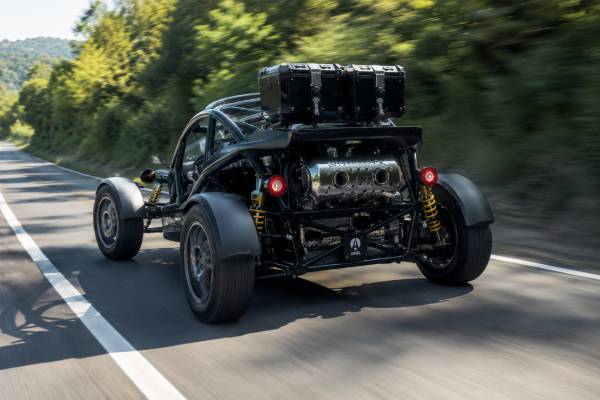
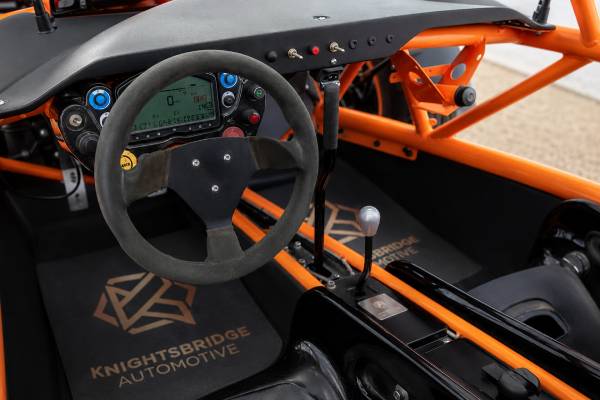
The 300 hp Ariel Nomad Sport is not simply a standard Sport with a more impressive dyno number. Ariel’s K24 supercharger package adds a large increase in airflow and heat to a car that already weighs about 1,480 pounds, so the supporting clutch, oil cooling, brake, tire, and setup choices are central to how the finished machine works. In North America, the underlying Sport specification used the Honda K24Z7, a six-speed manual, 18-inch road-oriented wheels, and comparatively light chassis hardware. Individual cars could then receive the supercharger and a wide range of optional components, which means two “Nomad Sport 300” examples may differ substantially. The best cars are coherent builds whose cooling, stopping power, gearing, and intended use all agree with their output. This guide separates the verified factory package from build-specific equipment, explains the resulting performance and thermal demands, and gives practical inspection and ownership advice for 2016–2022 supercharged Sport models.
Table of Contents
- What the 300 hp Sport Package Actually Is
- Supercharged Nomad Sport Specifications
- Airflow, Heat, and Driveline Load
- Turning Extra Power into Usable Pace
- Building a Balanced Sport 300
- Service Strategy for a Boosted K24
- Authentication and Pre-Purchase Inspection
What the 300 hp Sport Package Actually Is
Ariel introduced the K24 supercharger option in 2016, raising first-generation Nomad output from roughly 230–235 bhp to 300 bhp. For a North American Sport, the starting point was normally the locally assembled K24Z7 car rather than a separate factory model with one fixed equipment list. “Sport 300” is therefore best understood as a Sport chassis equipped with Ariel’s supercharger system and the associated supporting hardware, not as a uniform trim whose wheels, brakes, dampers, and body accessories were identical from car to car.
The manufacturer’s original Nomad options information is explicit about two dependencies: the K24 supercharger system requires the heavy-duty clutch and an oil cooler. Ariel also recommended upgraded brakes to match the higher speeds. Used examples sold through the factory repeatedly show the same pattern. Their build sheets commonly list the supercharger, heavy-duty clutch with K20 flywheel, oil cooler, and then a selection of larger Alcon brakes, aluminum radiator, short final drive, raised intake, alternate dampers, and different wheel and tire packages.
That distinction matters when researching a North American Sport. The ACE Performance Sport specification provides the naturally aspirated chassis baseline: 230 hp, close-ratio six-speed manual, limited-slip differential, 240 mm ventilated discs, 18-inch wheels, and a listed weight of 1,480 pounds. The supercharger changes output, but it does not prove that any particular car received 290 mm brakes, rally wheels, a hydraulic handbrake, an upgraded radiator, or off-road dampers. Those items must be verified on the build sheet and on the vehicle.
A genuine, well-integrated package should have a clear installation history. Ideally, the factory, Ariel North America, or an experienced Ariel dealer performed or documented the work. Later aftermarket conversions can be excellent, but the buyer must establish the supercharger type, calibration, fuel requirements, cooling layout, belt routing, clutch specification, and whether the engine management has safeguards appropriate to the hardware.
Supercharged Nomad Sport Specifications
The tables below combine the published North American Sport baseline with verified information about Ariel’s K24 supercharger package. Where equipment varied by order, the value is identified as build-specific rather than presented as standard.
| Specification | Verified value |
|---|---|
| Engine family | Honda K24Z7 inline four-cylinder |
| Displacement | 2,354 cc (2.4 liters) |
| Bore × stroke | 87 × 99 mm |
| Valvetrain | Chain-driven DOHC, four valves per cylinder, i-VTEC |
| Induction | Ariel supercharger system for K24 |
| Advertised maximum power | 300 hp/bhp, market terminology varies |
| Naturally aspirated Sport baseline | 230 hp at 7,200 rpm |
| Published baseline torque | 220 lb-ft (298 Nm) at 4,300 rpm |
| Fuel system | Electronic multi-port fuel injection |
| Fuel tank | 13 US gal (49.2 L), aluminum |
| Component | Status | Purpose |
|---|---|---|
| Heavy-duty clutch | Required by Ariel with the K24 supercharger option | Handles increased torque and thermal load |
| K20 flywheel | Frequently listed with factory heavy-duty clutch packages | Part of documented factory combinations on used cars |
| Oil cooler | Required by Ariel with the supercharger option | Controls engine-oil temperature under added load |
| Aluminum radiator | Build-specific option | Adds cooling capacity |
| Raised air intake | Build-specific option | Changes intake location and contamination exposure |
| Short final drive | Build-specific option | Reduces all ratios by about 7 percent for stronger acceleration |
| Specification | Value |
|---|---|
| Transmission | Six-speed close-ratio manual with reverse |
| Clutch actuation | Hydraulic |
| Differential | Limited-slip differential |
| Drive type | Rear-wheel drive |
| Steering | Manual rack and pinion, 1.7 turns lock to lock |
| Pedal system | Tilton aluminum racing pedal assembly |
| Brake bias | Twin master cylinders with adjustable front/rear balance |
| Area | Sport baseline | Common 300 hp variations |
|---|---|---|
| Structure | Bronze-welded steel tube frame with aluminum bulkheads | Same core architecture; guards and bumpers varied |
| Suspension | Double unequal-length wishbones | Bilstein, Öhlins, FOX, or other build-specific damper packages |
| Brakes | 240 mm ventilated discs | Alcon four-piston calipers with 290 mm discs often specified |
| Wheels | 7J × 18 alloys | 15-inch rally-strength or alternate 18-inch packages |
| Tires | Road-oriented fitment depended on delivery specification | Road, all-terrain, or mixed-surface choices |
| Parking brake | Conventional mechanical system | Brake package dependent; hydraulic rally brake could be added separately |
| Measure | Published Sport value |
|---|---|
| Length | 3,215 mm (126.6 in) |
| Width | 1,850 mm (72.8 in) |
| Height | 1,425 mm (56.1 in) |
| Wheelbase | 2,348 mm (92.4 in) |
| Track | 1,585 mm (62.4 in) front and rear |
| Approach/departure angles | 71/82 degrees |
| Published Sport weight | 1,480 lb (671 kg), before build-specific options |
| Power-to-weight at 300 hp | Approximately 447 hp per metric tonne at the published baseline weight |
| Published naturally aspirated 0–60 mph estimate | 3.4 seconds; no single verified Sport 300 figure applies to every build |
The absence of one universal acceleration figure is intentional. Tire type, surface, gearing, launch technique, weight, temperature, and differential behavior dominate a light rear-drive car’s standing start. A 300 hp Sport on road tires may accelerate very differently from one on tall all-terrain rubber even when both engines make the advertised output.
Airflow, Heat, and Driveline Load
A supercharger is mechanically driven by the engine, so boost response is immediate and closely tied to engine speed. That quality suits the Nomad because there is little waiting for torque, but it also means the belt drive, intake charge, oil, coolant, clutch, and gearbox see additional work whenever the driver asks for power.
The oil cooler is not decorative insurance. Ariel specifically requires it with the K24 supercharger system and also recommends oil cooling for very hot ambient conditions. Engine oil in this installation lubricates components operating under high load while also carrying heat away. A car that records acceptable coolant temperature can still have excessive oil temperature during repeated acceleration, long climbs, sand running, or track sessions. The cooler, hoses, fittings, thermostat if fitted, and airflow path should therefore be inspected as one system.
Radiator condition matters for the same reason. Nomads expose their cooling hardware to insects, grit, mud, and bent fins. An upgraded aluminum radiator appears on many factory-documented 300 hp builds, but it was not universal. Capacity alone does not guarantee control: trapped air, a weak cap, damaged ducting, a slow fan, an incorrect coolant mix, or debris between cores can defeat a large radiator.
Intake temperature affects both power and knock margin. The supercharger compresses air and raises its temperature. The exact charge-cooling arrangement and calibration must be identified on the individual conversion rather than assumed. Owners should know what temperature and pressure sensors are present, what fuel grade the calibration expects, and whether the ECU reduces ignition advance or boost-related load when temperatures rise.
The belt system deserves routine attention. Inspect belt ribs, edge wear, glazing, dust, tensioner travel, pulley alignment, bearing sound, and evidence of contact. A belt that repeatedly walks or sheds material is reporting a geometry or bearing problem. Replacing it without correcting the cause risks a failure far from support.
More torque also reaches the clutch and driveline at lower road speeds. That is why Ariel paired the package with a heavy-duty clutch. Slipping in a high gear at full throttle, a rising engagement point, burning odor, or shudder after repeated launches indicates a problem. The limited-slip differential and driveshaft joints should be checked for leaks, backlash, damaged boots, and noises that change between drive and overrun.
Heat management begins with driving practice. Use a proper warm-up, avoid full load on cold oil, and add a gentle cool-down after severe use. A cool-down does not mean extended idling in every situation; it means reducing load and allowing temperatures to stabilize while maintaining useful airflow. The correct method depends on the day’s conditions and the installed cooling system.
Turning Extra Power into Usable Pace
At the published Sport weight, 300 hp produces a power-to-weight ratio that rivals serious supercars, but the Nomad has a short wheelbase, rear-wheel drive, no conventional body, and tires chosen for very different jobs. Its real performance is therefore a traction and setup question.
On dry pavement with warm road-biased tires, the supercharger gives the car a stronger surge through the middle and upper rev range than the naturally aspirated Sport. Overtaking gaps shrink, gear selection becomes less critical, and acceleration can remain intense well beyond legal speeds. The manual steering and exposed chassis make that speed feel immediate rather than filtered.
On gravel or damp pavement, the extra output demands restraint. Progressive throttle application matters more than chasing peak revs. A limited-slip differential can help both rear tires contribute, but it can also make a slide develop decisively once grip is exceeded. Alignment, rear toe, tire pressure, damper settings, and throttle calibration all influence whether the car feels adjustable or abrupt.
The short final drive is a common companion to the supercharger, but it changes character rather than simply making the car “better.” Ariel states that it lowers all ratios by around 7 percent and improves the rate at which the Nomad reaches its aerodynamically limited top speed. The tradeoffs are more shifting, higher engine speed at a given road speed, and potentially more wheelspin in low gears. A road-tourer may prefer the standard final drive; a car used on tight routes may benefit from the shorter set.
Brakes should be judged by repeatability, not only caliper size. The Sport baseline’s 240 mm ventilated discs may be adequate for light road use, while Ariel recommended upgraded braking with 300 hp. Many documented builds use Alcon four-piston calipers and 290 mm discs. Pad compound, fluid, cooling, tire grip, pedal ratio, and bias setting determine whether that hardware is confidence-inspiring. Too much rear bias can destabilize the car; too little leaves stopping performance on the table.
Tires are the most influential option. An 18-inch road tire can offer crisp response and braking on asphalt. A taller all-terrain tire adds compliance and surface versatility but may reduce steering precision, alter effective gearing, and move more mass. A 15-inch rally package can create yet another behavior. Compare tires by actual size, load rating, construction, age, and intended terrain, not by wheel diameter alone.
A balanced Sport 300 should feel predictable before it feels dramatic. The driver should be able to place the car, build braking force, roll into power, and sense the limit approaching. Sudden snap oversteer, wandering under braking, steering kickback that has worsened, or repeated bottoming is a setup or condition warning, not an unavoidable feature of 300 hp.
Building a Balanced Sport 300
The most useful way to specify or improve a supercharged Sport is to begin with its actual mission. A road car, a gravel-day car, and a mixed-surface tourer need different answers even though each may use the same engine package.
For predominantly paved use, prioritize fresh road tires, known alignment, brake repeatability, cooling health, and a secure wind-management solution. Large off-road accessories add mass and aerodynamic drag without helping the primary task. The standard final drive may make highway running calmer, while a full windscreen, effective mirrors, and suitable lighting may contribute more to real usability than another chassis option.
For fast mixed-surface use, choose wheels and tires with enough sidewall and strength, then protect vulnerable cooling and underbody components. Dampers should be valved and adjusted for the tire and surface rather than set at arbitrary “sport” positions. More compression damping is not automatically better; excessive stiffness can make the tire skip over rough ground and reduce traction.
For loose-surface recreation, underbody guards, robust recovery points, filter care, and a disciplined cleaning routine become important. A winch and heavy bumpers may be appropriate, but adding them changes axle loads and suspension response. The Sport’s lightweight uprights and 18-inch road-biased starting specification should be evaluated honestly before sustained severe off-road use. A Tactical-style build used different priorities from the outset.
The supercharger conversion itself should remain serviceable. Hoses need clearance from hot or moving parts, wiring should be supported, and filters must be accessible. Keep a record of belt part numbers, pulley configuration, ECU calibration, spark-plug specification, injectors, sensors, and any nonstandard fasteners. Without that record, even a simple roadside repair becomes guesswork.
Avoid combining parts merely because they appear on another Nomad. A brake package may require specific wheels. A wheel change alters clearance, scrub radius, tire behavior, and effective gearing. A damper package may need matching springs and ride-height targets. A raised intake can change water and dust exposure but does not make the engine waterproof. Every modification should solve a defined problem and be checked as part of the whole car.
Finally, retain removed original parts and documentation. The small production volume makes provenance valuable, and later owners may prefer to return the car to its delivered configuration. Clear invoices and photographs also help distinguish a thoughtful factory-supported build from an undocumented collection of upgrades.
Service Strategy for a Boosted K24
A low annual mileage does not justify neglect. Fluids absorb moisture, fuel ages, belts and hoses take a set, seals dry, and exposed joints corrode while the odometer stands still. Ariel’s current Nomad service kit information identifies an annual or 4,500-mile service level and a larger 18,000-mile or four-year service point for the family. The exact North American schedule and the individual conversion’s requirements should still be confirmed from its records.
Create a baseline immediately after purchase. Record engine-oil type and quantity, filter number, transmission oil, brake fluid, coolant, clutch fluid if separate, supercharger belt, spark plugs, air-filter service product, and all service dates. Do not copy a generic Honda K24 capacity because a remote oil cooler, hoses, sump, and filter arrangement can change the required fill and checking method.
Before each demanding drive, inspect oil and coolant levels, leaks, belt condition, intake security, radiator cleanliness, tire pressures, wheel fasteners, brake-pedal feel, steering play, harnesses, and throttle return. Start the engine cold often enough to hear its true behavior. Persistent chain noise, misfire, smoke, fuel smell, coolant pressurization, or unstable idle deserves diagnosis before boost is used.
Oil analysis can be useful when interpreted over time. One sample rarely proves health, but trends in fuel dilution, viscosity, coolant contamination, silicon, and wear metals can support decisions. The sampling method and oil hours must be consistent. Replace oil based on the approved interval and actual duty rather than stretching it to create a prettier report.
Spark plugs provide evidence. Uneven color, cracked insulators, eroded electrodes, oil fouling, or speckling can point toward mixture, ignition, heat, or mechanical problems. Use only the specification approved for the calibration. A colder plug is not a universal cure for detonation, and reducing the gap without diagnosis can mask a weak ignition system.
Clean the car after dirt use with controlled water pressure. Do not drive water into electrical connectors, bearings, filter media, or the cockpit electronics. Clear debris from both sides of heat exchangers, inspect guards for trapped mud, dry the frame, and protect chips in the powder coat. Check suspension fasteners and rod ends after hard impacts.
Brake fluid, pads, discs, and tires can age out before they wear out. Date-code tires and inspect for cracking, flat spots, hardening, or puncture repairs unsuitable for the intended speed. Harness webbing and labels should be checked for damage and expiration requirements relevant to the activity. Dampers need periodic inspection for leakage, shaft damage, and matched adjustment positions.
Storage should be dry, ventilated, and battery-safe. Stabilize or replace old fuel according to the fuel-system guidance, keep rodents away from intake and wiring, avoid trapping moisture beneath a cover, and move or support the car appropriately to protect the tires. Before returning to full boost after a long layup, perform a complete inspection and staged road test.
Authentication and Pre-Purchase Inspection
A seller’s description is the beginning of the investigation, not proof of specification. Ask for the chassis number, original invoice, build sheet, supercharger installation invoice, ECU or calibration documentation, service history, and a list of later changes. Match dates and mileage across records.
Confirm that the car began as a Sport if that identity matters. Its original North American specification should be distinguishable from the Tactical’s off-road-oriented hardware, but years of customization can blur the visual clues. Ariel North America or the supplying dealer may be able to confirm the delivered configuration from the chassis number.
Inspect the supercharger installation cold and in bright light. Look for belt dust, pulley damage, oil or coolant residue, chafed hoses, improvised wiring, heat damage, loose clamps, cracked brackets, and contact marks. Identify the oil cooler and trace its lines. Verify that the heavy-duty clutch installation is documented; it cannot be authenticated from pedal weight alone.
Check the chassis around suspension pickups, engine mounts, floor edges, rollover structure, bumper mounts, and guard attachment points. Fresh powder coat or localized paint can be innocent protection, but it can also hide repair. Unequal wheelbase measurements, steering-center mismatch, abnormal tire wear, or alignment settings at the edge of adjustment call for specialist geometry inspection.
The test drive should progress gradually. Verify cold starting, idle, clutch engagement, low-load shifting, steering centering, brake balance, and cooling before using full throttle. Then assess boost delivery in a safe, legal setting. Surging, detonation-like sound, misfire, belt slip, rising temperature, clutch flare, or warning lights are reasons to stop.
Review the car’s usage honestly. Mud, sand, salt, standing water, track work, repeated launches, and long storage each leave different evidence. A low-mileage car can require extensive recommissioning. A higher-mileage example with complete Ariel service history may be the safer purchase.
Legal status deserves equal attention. North American Nomads are specialty vehicles whose title and registration treatment varies by jurisdiction. Confirm the exact title category, emissions obligations, equipment rules, insurer acceptance, and transfer process before money changes hands. Do not assume an existing plate guarantees registration in another state.
A pre-purchase inspection should involve a specialist familiar with Ariel tube-frame cars and boosted K-series installations. The report should cover compression or leak-down testing when justified, scan data, calibration identity, cooling pressure, belt drive, clutch, differential, brakes, suspension, frame, alignment, wheels, tires, electrical accessories, and documentation.
The strongest Sport 300 is not necessarily the one with the longest option list. It is the one whose engine package is verifiable, whose supporting systems are appropriate, whose setup matches its use, and whose owner can explain what was changed and why. That coherence is what turns 300 hp from a headline into durable, controllable performance.
References
- Ariel Nomad Sport – ACE Performance 2026 (North American Sport Specifications)
- Nomad 1 – Ariel Motor Company 2026 (Manufacturer Specifications and K24 Options)
- Our History – Ariel Motor Company 2026 (Manufacturer Model History)
- Ariel Nomad 300 – Ariel Motor Company 2026 (Factory-Documented Supercharged Build)
- Nomad Service Kit – Ariel Motor Company 2026 (Manufacturer Service Parts and Intervals)
- TOP GEAR MAGAZINE – USED CAR SUPERHEROES – Ariel Motor Company 2026 (Factory-Hosted Used-Car Specification Guidance)
Disclaimer
This article is general information, not a substitute for factory documentation, professional inspection, diagnosis, or repair. Output, calibration, fuel requirements, fluids, capacities, torque values, maintenance intervals, legal status, and installed hardware can differ by chassis, market, build date, and modification history. Verify the individual car with Ariel or a qualified specialist before operating, servicing, or purchasing it.
Share this guide with an Ariel owners’ group or another enthusiast who is comparing naturally aspirated and supercharged Nomad Sport builds.