
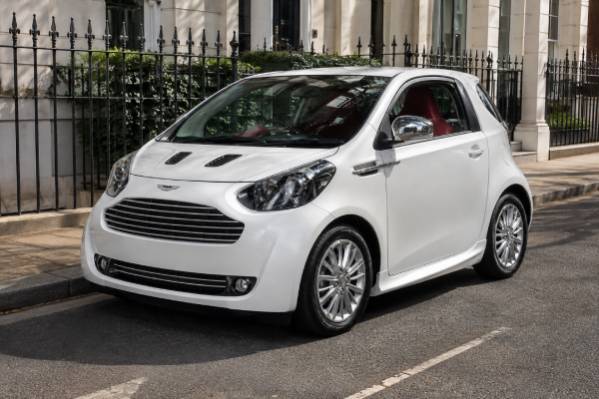
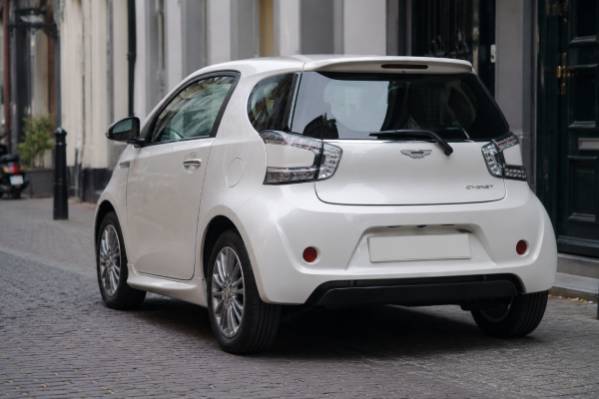
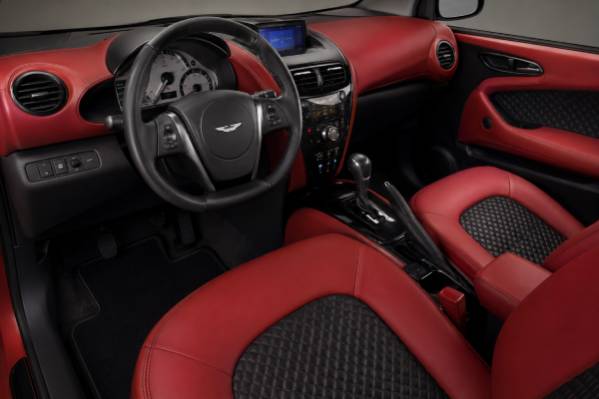
The Aston Martin Cygnet is easiest to understand as a luxury city car, not a miniature sports car. Produced from 2011 to 2013, it combined the compact engineering of the Toyota iQ with Aston Martin exterior detailing, extensive hand-finished cabin work, and an unusually broad personalisation programme. Every regular-production example used a naturally aspirated 1.33-litre four-cylinder petrol engine producing 97 bhp, with either a six-speed manual gearbox or a continuously variable transmission. Its 3,078 mm length, four-metre turning circle, and low official fuel consumption made it genuinely useful in crowded cities, while its materials and original price placed it far outside the normal economy-car market. Today, the Cygnet attracts buyers for several different reasons: rarity, design, compact dimensions, Aston Martin identity, or simple curiosity. A good purchase therefore depends on more than mileage. Mechanical condition, build specification, trim authenticity, storage history, documentation, and the availability of model-specific cosmetic parts all deserve equal attention.
Table of Contents
- Why the Cygnet Existed and Where It Fits
- Range, Transmissions, and Personalisation
- Verified Technical Specifications
- Engineering Beneath the Aston Martin Tailoring
- Daily Driving, Space, and Efficiency
- Maintenance and Age-Related Risks
- Used-Buying Inspection and Ownership Fit
Why the Cygnet Existed and Where It Fits
The Cygnet was Aston Martin’s answer to premium urban transport: a very small car finished with the brand’s materials and visual language. It was never intended to reproduce the speed, proportions, or long-distance character of a Vantage or DB model in a shorter body.
That distinction matters because the Cygnet is often judged against the wrong standard. Its value was built around manoeuvrability, low-speed ease, a richly trimmed cabin, and the ability to occupy little more than three metres of road space. The grille, side strakes, lighting details, wheels, paint choices, leather, Alcantara, and metal cabin trim created the Aston Martin identity. The underlying package remained deliberately compact and economical.
Official Aston Martin material identifies the production period as 2011–2013. The short run makes the Cygnet uncommon, but rarity alone does not make every example equally desirable. Cars differ substantially in colour, leather combination, stitching, decorative trim, transmission, options, and condition. A restrained specification may appeal to someone seeking an understated city car; a vivid factory combination may attract a collector who values the personalisation story.
For a modern buyer, the most useful way to classify the Cygnet is as a hand-finished, Toyota-derived city car with Aston-specific body and cabin content. That description neither dismisses its origins nor exaggerates the extent of the mechanical transformation. It also leads to the right ownership priorities: maintain the proven mechanical base carefully, preserve the expensive bespoke surfaces, and document exactly how the car left the factory.
Range, Transmissions, and Personalisation
All standard 2011–2013 Cygnets share the same 1.33-litre petrol engine, front-wheel drive, compact body, and four-seat designation. The principal mechanical choice is between the six-speed manual and the optional CVT, while the largest visible differences come from factory colours, materials, and individual commissions.
The manual includes stop-start technology and a gear-shift indicator. It gives the driver direct control and can feel more engaging on open roads, although its clutch and shift quality must be assessed carefully on a used car. The CVT replaces fixed ratios with continuously adjusted gearing and includes an economy-driving indicator. It suits slow traffic well, but its operating character is different: engine speed may rise and remain steady during acceleration rather than climbing through distinct gears. That is normal; judder, delayed engagement, or inconsistent drive is not.
Aston Martin offered a much wider decorative palette than a typical small hatchback. Buyers could combine exterior paint, contrasting interior leather, Alcantara headlining, stitching, carpets, and metal details in ways that make two apparently similar cars feel quite different. This flexibility creates both interest and complexity in the used market. An unusual specification is not automatically evidence of later alteration, yet a seller’s claim that a car is “one of one” should be supported by build records rather than inferred from rarity online.
Early Launch Edition Black and Launch Edition White cars gave the model a defined introduction, while special collaborations such as Cygnet & colette explored a more fashion-led treatment. Those editions deserve edition-specific authentication. They should not be used as a template for judging every standard Cygnet, because regular cars could also be highly distinctive.
Model-year differences are less important than condition and provenance. A 2013 registration is not necessarily mechanically superior to a well-kept 2011 car, and registration date does not always tell the whole production story. Compare the vehicle identification number, build documents, first-registration record, service history, and visible specification. On a car produced in small numbers, those records help establish what is original and which parts may have been changed later.
Verified Technical Specifications
The Cygnet is a petrol-powered front-wheel-drive city car using Toyota’s 1NR-FE engine. Its mechanical specification is modest by Aston Martin standards but well matched to a 988 kg kerb weight, with official performance differing only slightly between the manual and CVT versions. The following figures apply to the regular 2011–2013 1.33-litre Cygnet unless a transmission is identified separately.
| Specification | Value |
|---|---|
| Engine code | 1NR-FE |
| Fuel type | Petrol |
| Layout | Front-mounted, naturally aspirated inline-four |
| Displacement | 1,329 cc (1.33 litres) |
| Valvetrain | 16-valve DOHC with Dual VVT-i |
| Fuel delivery | Electronic fuel injection |
| Maximum power | 72 kW (97 bhp / 98 PS) at 6,000 rpm |
| Maximum torque | 125 Nm (92 lb-ft) at 4,400 rpm |
| Compression ratio | 11.5:1 |
| Timing drive | Chain |
| Measure | Six-speed manual | CVT |
|---|---|---|
| Transmission features | Stop-start system and gear-shift indicator | Continuously variable ratios and economy-driving indicator |
| Drive type | Front-wheel drive | Front-wheel drive |
| 0–100 km/h (0–62 mph) | 11.8 seconds | 11.6 seconds |
| Maximum speed | 170 km/h (106 mph) | 170 km/h (106 mph) |
| EU urban fuel consumption | 5.8 L/100 km (48.7 mpg UK) | 6.1 L/100 km (46.3 mpg UK) |
| EU extra-urban fuel consumption | 4.5 L/100 km (62.8 mpg UK) | 4.6 L/100 km (61.4 mpg UK) |
| EU combined fuel consumption | 5.0 L/100 km (56.5 mpg UK) | 5.2 L/100 km (54.3 mpg UK) |
| EU combined CO2 | 116 g/km | 120 g/km |
The published consumption figures come from the period EU test cycle, not current WLTP testing. They are best used to compare the two factory transmissions under the same method; actual use will depend on traffic, temperature, journey length, tyre condition, and driving style.
| Specification | Value |
|---|---|
| Body style | Two-door hatchback with full-width tailgate |
| Seating | Four seats with 50:50 split-folding rear seatbacks |
| Length | 3,078 mm |
| Width | 1,680 mm excluding mirrors |
| Height | 1,500 mm |
| Wheelbase | 2,000 mm |
| Front and rear track | 1,480 mm |
| Turning circle | 4.0 m kerb to kerb |
| Fuel-tank capacity | 32 litres |
| Kerb weight | 988 kg |
| System | Factory specification |
|---|---|
| Front suspension | MacPherson struts |
| Rear suspension | Torsion beam |
| Steering | Electric power assistance; 3.0 turns lock to lock |
| Front brakes | 255 mm ventilated discs |
| Rear brakes | 259 mm solid discs |
| Factory tyre size | 175/60 R16 front and rear |
| Driver aids | ABS, EBD, emergency brake assist, traction control, and VSC+ |
| Area | Equipment |
|---|---|
| Lighting and visibility | Bi-halogen headlamps, LED rear lamps, fog lamps, rain-sensing wipers, and dusk-sensing headlamps |
| Parking | Rear parking sensors and electrically retractable heated mirrors |
| Climate and access | Automatic climate control, keyless entry, and keyless start |
| Infotainment | Portable navigation, Bluetooth phone connection, radio/CD, six speakers, and auxiliary input |
| Restraints | Front, curtain, knee, and seat-cushion airbag provisions, plus ISOFIX child-seat mounting |
These tables describe the factory configuration, not a promise that every surviving car retains every original component. Wheel finishes, navigation units, trim pieces, badges, and even complete interiors may have been refurbished or replaced. A build sheet and detailed inspection are needed when originality affects the price.
Engineering Beneath the Aston Martin Tailoring
The Cygnet’s core structure and powertrain come from the Toyota iQ, while Aston Martin concentrated its work on design, materials, finish, and brand-specific presentation. Understanding that division helps owners source routine service knowledge without assuming that every visible component is interchangeable.
The 1NR-FE is a compact, naturally aspirated engine with variable valve timing on both camshafts. Its 97 bhp output is delivered at relatively high engine speed, and peak torque arrives at 4,400 rpm. The car therefore feels most responsive when the engine is allowed to rev rather than driven like a turbocharged model with strong low-speed torque. That is normal engineering behaviour, not a defect.
The short wheelbase and narrow footprint make the chassis exceptionally easy to place in town. MacPherson front suspension and a torsion-beam rear axle are conventional, space-efficient solutions. They do not turn the Cygnet into a sports chassis, but they support the packaging goal and keep the basic suspension layout understandable for an experienced workshop.
Aston-specific content remains central to the car’s identity. The front and rear styling, grille treatment, side strakes, lighting presentation, badging, wheel finish, cabin leather, Alcantara, carpets, and machined metal details are not merely accessories to be ignored during inspection. Damage to those parts can be more consequential than an ordinary service item because correct replacements or faithful restoration may demand specialist work.
Mechanical cross-referencing should therefore be disciplined. Toyota-derived service parts can make routine ownership more manageable, but compatibility should be confirmed by vehicle identification number, part number, dimensions, and market specification. “It fits an iQ” is not enough for safety-critical parts, control modules, trim interfaces, or components that may have changed during production.
The related Toyota iQ received a Euro NCAP assessment in 2009, and its safety engineering provides useful background to the shared architecture. It should not be presented as a separately conducted Cygnet crash rating. The Cygnet’s own equipment list includes multiple airbags, stability control, traction control, anti-lock brakes, brake-force distribution, emergency brake assist, seat-belt warnings, and ISOFIX mounting.
Daily Driving, Space, and Efficiency
The Cygnet works best where its dimensions provide a daily advantage: dense streets, small parking spaces, short commutes, and mixed urban errands. It can travel beyond the city, but comfort, luggage planning, and overtaking expectations need to match a 97 bhp car with a two-metre wheelbase.
Its turning circle is one of the clearest practical benefits. The car can reverse into spaces that would be awkward for a conventional luxury coupe, and the near-vertical body makes its footprint easy to judge. Rear parking sensors help, but they do not protect the wide doors, alloy wheels, painted bumpers, or bright trim from careless urban contact. A test drive should include tight turns and full-lock manoeuvres so the buyer can listen for rubbing, clicking, or steering irregularities.
The four-seat description requires context. Front accommodation is the priority, while rear usefulness depends on the position of the front seats and the size of the passengers. The seat behind the front passenger can be made more usable by sliding that seat forward; the place behind a tall driver is much more restricted. Treat the rear as flexible occasional seating rather than expecting four adults to travel with equal comfort.
Folding the two rear seatbacks expands carrying space and makes the Cygnet more useful for shopping, small cases, or everyday equipment. The trade-off is obvious: passenger capacity and luggage capacity compete for the same compact cabin. Anyone planning regular airport trips, bulky hobbies, child equipment, or pet transport should test the actual items rather than rely on the car’s external shape.
Official combined consumption is 5.0 L/100 km for the manual and 5.2 L/100 km for the CVT under the period EU cycle. Short cold journeys, congestion, frequent acceleration, and prolonged idling can produce less favourable real-world results. Conversely, a mechanically healthy car driven smoothly on a warm, flowing route can make good use of its low mass and modest engine.
The cabin is where the Cygnet separates itself from an ordinary city car. Leather-covered surfaces, Alcantara, metal details, and carefully chosen colour combinations create a richer environment, but they also demand more care. Dark denim transfer, hand cream, sunlight, heat, and repeated entry over the seat bolster can all alter pale or vivid leather. Gentle cleaning and early treatment are preferable to aggressive correction after years of neglect.
Maintenance and Age-Related Risks
A Cygnet should be maintained as an ageing low-volume luxury car built around durable mass-production mechanicals. That means routine servicing can be straightforward, but deferred maintenance and damaged bespoke trim can still make a seemingly cheap example expensive.
Start with evidence of regular engine-oil and filter changes. The timing system uses a chain rather than a scheduled rubber belt, but a chain drive still depends on correct oil level, suitable oil, and timely servicing. Listen from cold for persistent metallic noise, check for warning lamps, inspect for leaks, and confirm that the engine reaches a stable operating temperature without coolant loss or overheating signs.
Low annual mileage is not automatically reassuring. Cars that sit for long periods can develop weak batteries, corroded brake surfaces, flat-spotted or age-hardened tyres, sticking mechanisms, stale fluids, and moisture-related electrical problems. A history showing consistent use and maintenance can be more valuable than a remarkably low odometer reading with long unexplained gaps.
Transmission and controls
On a manual car, check clutch take-up, pedal feel, engagement of every gear, and behaviour during a hill start. A high biting point, slipping under load, or difficulty selecting gears needs investigation.
On a CVT car, select drive and reverse several times from a complete stop. Engagement should be predictable, without a long pause or heavy thump. Test gentle and firm acceleration, steady-speed cruising, and a warm restart. Shudder, surging, warning messages, or a mismatch between rising engine speed and actual acceleration deserves specialist diagnosis. Do not accept a universal fluid recommendation without checking the correct documentation for the car’s VIN and market.
Brakes, tyres, and suspension
The Cygnet uses disc brakes at both ends. Inspect the discs for corrosion lips, scoring, heat marks, or an uneven swept surface, especially on a car that has spent years in storage. During the drive, the car should stop straight without steering shake, pulsing, grinding, or a soft pedal.
Confirm all four tyres are the correct size, have suitable load and speed ratings, and are not old despite ample tread. Matching tyres support consistent steering and stability-control behaviour. Inspect the alloy wheels from both sides for cracks, bends, poor repairs, or refinishing that has softened the original design details.
Clunks over small bumps can come from worn joints, bushes, mounts, or dampers, but diagnosis should not be guessed from sound alone. Uneven tyre wear may indicate alignment trouble, worn components, or previous impact damage. Because the wheelbase is short, a poorly controlled ride or steering pull is readily noticeable.
Electrical and cabin condition
Test both keys if supplied, keyless entry, keyless start, electric windows, mirror adjustment and folding, climate control, wipers, washers, lights, parking sensors, audio functions, and the portable navigation equipment. An old navigation map is not a major mechanical concern, but missing original hardware can matter to a buyer who values completeness.
Inspect door seals, the tailgate area, carpets, under-seat spaces, and the luggage area for dampness or past water entry. Check the leather in daylight, including bolsters, steering wheel, gear lever, door pulls, rear seats, and areas hidden by mats. Creasing is normal; split seams, colour loss, hardened surfaces, overspray, or mismatched panels indicate a larger restoration decision.
Finally, inspect the Aston-specific exterior closely. Grilles, strakes, emblems, lamps, bumper details, paint edges, and privacy glass should align and match the documented specification. Small parking damage may be cosmetically repairable, but the cost depends on whether the correct finish and parts can be obtained.
Used-Buying Inspection and Ownership Fit
Buy the best-documented, most coherent Cygnet you can find, not simply the lowest-mileage or cheapest advertised car. A strong example should make sense as a whole: identity, history, condition, specification, and seller explanation should support one another.
Begin before viewing the car. Ask for the registration, vehicle identification number, service invoices, current inspection record, previous inspection history, build documentation, number of keys, and clear photographs in natural light. Check official records for registration details, inspection mileage, outstanding finance or theft concerns through appropriate services, and any applicable safety action. Discrepancies should be resolved before money changes hands.
At the viewing, use a fixed order so presentation does not distract from evidence:
- Identity: Match the VIN in the car to the paperwork and confirm the engine, transmission, colour, and trim description.
- Cold start: Arrange for the engine to be cold, observe warning lights, listen for abnormal noise, and check exhaust behaviour.
- Structure and paint: Compare panel gaps, paint texture, glass markings, lamp condition, underbody contact points, and signs of previous repair.
- Bespoke components: Inspect grilles, strakes, badges, wheels, leather, Alcantara, carpets, stitching, and metal trim against build records.
- Controls: Operate every switch and convenience feature, including both keys where possible.
- Road test: Include traffic, rough surfaces, full-lock turns, braking, a climb, and enough time for the drivetrain to reach normal temperature.
- Independent inspection: Use a technician who understands both Toyota-derived mechanical systems and low-volume Aston Martin trim and electronics.
A pre-purchase inspection is particularly valuable when a car has been stored, modified, imported, repainted, or presented as an unusual factory commission. The inspection should distinguish immediate safety work, routine maintenance, cosmetic correction, and originality concerns. Those categories affect value in different ways.
Budgeting should also be divided. Routine filters, fluids, tyres, brakes, and many service operations relate to the underlying mechanical package. Paint matching, leather restoration, unique badges, grille pieces, wheels, and trim may require Aston Martin parts channels or specialist craftsmanship. The presence of an economical engine does not make every repair inexpensive.
The Cygnet is a good fit for an owner who wants a genuinely tiny car with distinctive materials, accepts modest performance, and is prepared to preserve a low-volume specification. It can also suit an Aston Martin collector who needs urban practicality without treating the car as a conventional investment object. It is a poor choice for someone expecting sports-car acceleration, four-adult touring space, anonymous parking, or bargain-basement body and interior repairs.
Match the inspection to the intended use. A regular city car needs dependable controls, sound wheels and tyres, effective air conditioning, and a history showing real use. A collection car places more weight on build documents, original finishes, complete accessories, and careful storage. In either case, the strongest Cygnet is one whose mechanical base and Aston-specific detailing have received equal care.
References
- Cygnet | Past Models | Aston Martin 2026
- Aston Martin Cygnet 2011 (Product Brochure)
- Owner’s Guides | Car Ownership | Aston Martin (UK) | Aston Martin UK 2026
- iQ 2010: A new level of perceived quality, new interior ambiance and multidrive-s transmission with 1.33 VVT-i engine 2012
- Toyota iQ – Euro NCAP Results 2009 2009 (Safety Rating)
- Check a used vehicle you’re buying – GOV.UK 2026
Disclaimer
This article is for informational purposes and is not a substitute for professional diagnosis or repair. Specifications, torque values, service intervals, and procedures can differ by VIN, market, production date, and equipment; verify all work against the official documentation for the exact vehicle.
Please share this guide on Facebook, X/Twitter, or another relevant platform if it has helped you support informed Cygnet ownership.