
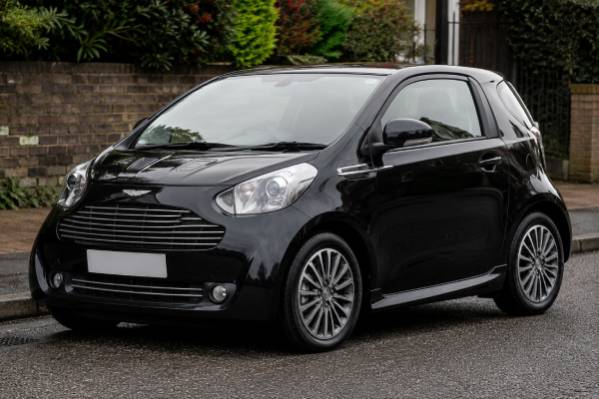
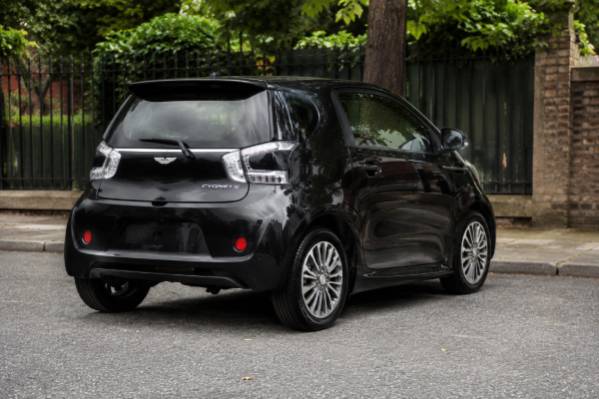
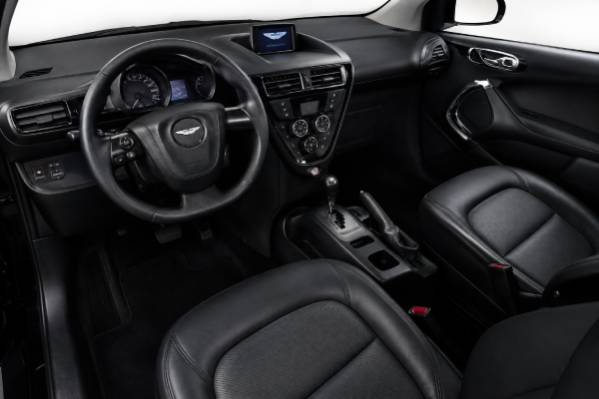
Magic Black paint with a deep sea-green effect gave the 2011 Aston Martin Cygnet Launch Edition Black a more serious character than the standard city car suggested. Created to mark the beginning of Cygnet production at Gaydon, the Black edition combined matt-black details, dark badges, pure black full-grain leather, diamond-perforated upholstery, and a fitted Bill Amberg luggage set. Its purpose was not to add speed. The engine, suspension, front-wheel-drive layout, and choice of manual or CVT transmission remained those of the regular 97 bhp Cygnet. What the buyer paid for was a carefully resolved launch specification and the novelty of Aston Martin craftsmanship in a car barely over three metres long. Today, that means condition must be judged on two levels: the ordinary mechanical health of the Toyota iQ-derived platform and the preservation of limited-edition finishes that are much harder to replace. This guide covers both, including exact specifications, driving character, maintenance priorities, and authentication checks.
Table of Contents
- Launch Edition Black Identity and Production Context
- Magic Black Exterior, Cabin, and Luggage
- Technical Data for the 2011 Black Edition
- Manual or CVT: How the Two Versions Differ
- Road Behaviour, Safety, and Practicality
- Service Strategy and Cosmetic Care
- Buyer’s Checklist, Authenticity, and Value
Launch Edition Black Identity and Production Context
The Launch Edition Black was one of two special specifications offered when Cygnet production began in 2011. It was a colour-and-trim edition available with either transmission, not a numbered high-performance model or a mechanically unique homologation special.
Aston Martin announced Black and White launch cars to demonstrate the level of finish and personalisation possible in the Cygnet programme. Production was scheduled to start in April 2011 at the company’s Gaydon headquarters, using a dedicated area and craftspeople associated with the marque’s larger sports cars. Contemporary reports placed the Launch Edition price at £39,995, well above the standard Cygnet and many times the price of a related Toyota iQ.
The Black edition’s importance lies in its timing. It represented Aston Martin’s first fully formed retail statement for the production Cygnet: a compact urban vehicle presented through materials, detailing, and brand theatre rather than traditional Aston Martin performance. Buyers could still select a six-speed manual or CVT, so “Launch Edition Black” does not identify the transmission.
Production language from the period can be confusing. Aston Martin described both launch editions as strictly limited and available for a limited time, while contemporary reporting also discussed sales expectations. Those statements do not provide a reliable surviving-car total by themselves. A seller claiming an exact production number should support it with factory correspondence, a recognised register, or model-specific historical documentation.
The Toyota iQ connection is central to understanding the car honestly. The Cygnet retained the iQ’s compact architecture, 1.33-litre engine family, front-wheel drive, and core safety concept. Aston Martin changed the visual identity, body details, cabin materials, equipment, and finishing process. That arrangement gave owners proven mass-produced mechanical foundations but also created a split parts situation: routine service pieces can be comparatively familiar, while Aston Martin panels, grilles, lamps, leather work, badges, and launch-specific trim may be costly or scarce.
A Launch Edition Black should therefore be evaluated as a complete factory specification, not simply as any black Cygnet. The edition’s desirability depends on the correct exterior effect, dark brightwork, black badges, interior treatment, and luggage being present together. One isolated feature is not enough to establish identity.
Magic Black Exterior, Cabin, and Luggage
The defining feature is not ordinary solid black paint. Aston Martin described Magic Black as a metallic finish with a specially developed deep sea-green effect, intended to reveal depth and colour as light moves across the body.
That subtle colour shift matters during inspection and repair. Under weak indoor lighting, the car may look simply black; in sunlight, the green undertone should become easier to see. A repaired panel mixed as generic black can look acceptable in a photograph yet stand out beside the original finish outdoors. Inspect every panel from several angles, then compare colour, metallic orientation, orange peel, and gloss around door openings and under the tailgate.
The exterior treatment combined Magic Black with matt-black bonnet louvres and chrome brightwork. Black Aston Martin wings badges reinforced the monochrome theme. These details created contrast rather than making every surface identical. A car with later gloss-black louvres, silver badges, wrapped trim, or aftermarket wheels may still be attractive, but it is no longer presenting the launch specification correctly.
Inside, pure black full-grain leather covered the seats and dashboard. The upholstery used a specially developed diamond perforation, while dark-chrome accents replaced the lighter atmosphere of the White edition. Because black leather can hide dirt and minor repairs better than pale leather, inspect it closely under diffuse light. Look for texture changes, overspray on stitching, blocked perforations, hard shiny bolsters, or panels that have been recoloured in a flatter black.
The launch cars were supplied with a bespoke five-piece luggage set by Bill Amberg. The set combined black leather and technical fabric and included:
- a glovebox bag;
- a removable door-pocket bag;
- a holdall;
- a garment bag;
- a collapsible tote bag.
Completeness can make a meaningful difference to collector appeal. Loose luggage is easily separated when cars change owners, and a generic black bag is not a substitute. Check labels, materials, dimensions, stitching, hardware, and any period paperwork. Photograph each piece individually and note wear or missing straps before purchase.
Other standard Cygnet luxury features included automatic climate control, heated front seats, keyless entry and start, portable satellite navigation with Bluetooth, a leather steering wheel, Alcantara headlining, rear parking sensors, rain-sensing wipers, and dusk-sensing headlamps. Technology that seemed generous in 2011 can feel basic now. The portable navigation and audio system should be judged for originality and function, not modern screen quality.
The best-preserved cabins show gentle, even use. A tiny odometer reading is less persuasive if the driver’s bolster is heavily worn, steering-wheel leather is glossy, or switch markings are damaged. Conversely, light creasing in full-grain leather is normal and may be preferable to an over-restored interior whose grain and perforation no longer match the original.
Technical Data for the 2011 Black Edition
The Launch Edition Black is a conventional petrol ICE vehicle with no hybrid system or external charging. It uses a front-mounted 1NR-FE four-cylinder engine, electronic fuel injection, front-wheel drive, and either a six-speed manual gearbox or a CVT.
| Specification | Value |
|---|---|
| Engine code | 1NR-FE |
| Engine type | Naturally aspirated inline-four petrol |
| Displacement | 1,329 cc (1.33 litres) |
| Valve system | 16-valve DOHC with Dual VVT-i |
| Timing drive | Chain |
| Fuel delivery | Electronic fuel injection |
| Compression ratio | 11.5:1 |
| Maximum power | 72 kW (97 bhp / 98 PS) at 6,000 rpm |
| Maximum torque | 125 Nm (92 lb-ft) at 4,400 rpm |
| Specification | Manual | CVT |
|---|---|---|
| Gearbox | Six-speed manual | Continuously variable transmission |
| Drive | Front-wheel drive | Front-wheel drive |
| 0–100 km/h (0–62 mph) | 11.8 seconds | 11.6 seconds |
| Top speed | 170 km/h (106 mph) | 170 km/h (106 mph) |
| EU combined consumption | 5.0 L/100 km (56.5 mpg UK) | 5.2 L/100 km (54.3 mpg UK) |
| EU combined CO₂ | 116 g/km | 120 g/km |
| Component | Factory specification |
|---|---|
| Front suspension | MacPherson struts |
| Rear suspension | Torsion beam |
| Steering | Speed-sensitive power-assisted rack and pinion; 3.0 turns lock-to-lock |
| Front brakes | 255 mm ventilated discs |
| Rear brakes | 259 mm solid discs |
| Tyres | 175/60 R16 front and rear |
| Brake and stability systems | ABS, EBD, EBA, traction control, and VSC+ |
| Measurement | Value |
|---|---|
| Length | 3,078 mm (121.2 in) |
| Width | 1,680 mm (66.1 in), excluding mirrors |
| Height | 1,500 mm (59.1 in) |
| Wheelbase | 2,000 mm (78.7 in) |
| Front and rear track | 1,480 mm (58.3 in) |
| Kerb-to-kerb turning circle | 4.0 m (13.1 ft) |
| Kerb weight | 988 kg (2,178 lb) |
| Fuel capacity | 32 litres (8.5 US gal) |
| Seats | Four, with 50:50 split-folding rear seats |
| Area | Edition-specific treatment |
|---|---|
| Paint | Magic Black metallic with deep sea-green effect |
| Bonnet details | Matt-black louvres |
| Badging | Black Aston Martin wings badges |
| Seat and dashboard trim | Pure black full-grain leather |
| Seat inserts | Special diamond perforation |
| Interior accents | Dark chrome |
| Luggage | Bill Amberg five-piece black leather and technical-fabric set |
The fuel and emissions values are period EU laboratory figures. They describe a new, correctly maintained vehicle under a superseded test procedure and should not be treated as guaranteed present-day results.
Manual or CVT: How the Two Versions Differ
Choose the manual for involvement and simpler conventional behaviour; choose the CVT for relaxed traffic use. Neither transmission changes the Black edition’s visual specification, and condition is more important than theoretical preference.
The six-speed manual includes a gear-shift indicator and stop-start system. Its ratios make sensible use of the modest power output, while the clutch gives the driver more control on steep streets and during brisk acceleration. On a test drive, the pedal should move smoothly without graunching, the bite point should be consistent, and the car should pull cleanly in a high gear without engine speed rising ahead of road speed. Difficulty selecting reverse, baulking when cold, or noise that changes with clutch position deserves investigation.
Stop-start operation depends on temperature, battery charge, cabin-climate demand, and other conditions. A system that does not activate during a short viewing is not automatically faulty. It does, however, make battery condition particularly important. These cars can spend long periods unused, and a marginal battery may still start the engine while causing intermittent convenience-system behaviour.
The CVT removes manual shifting and is well suited to dense city traffic. It changes ratio continuously, so a hard acceleration run produces a steady rise in engine speed rather than stepped gear changes. That characteristic can be mistaken for clutch slip by someone unfamiliar with CVTs. Normal behaviour should still be smooth and repeatable. Shudder from rest, delayed engagement, surging at a steady throttle, warning lamps, or a pronounced mechanical whine is not something to dismiss as “how they all are.”
Service history matters because transmission-fluid requirements differ. Never fill a CVT with ordinary automatic-transmission fluid or assume a manual gearbox lubricant is interchangeable with engine oil. The correct specification should come from the official documentation for the car’s VIN and market. An invoice naming the product used is more useful than a service stamp that says only “fluids checked.”
The official performance difference is negligible. Aston Martin quoted 11.8 seconds to 62 mph for the manual and 11.6 seconds for the CVT, with both reaching 106 mph. In real ownership, responsiveness, noise, and driver workload will distinguish them more than the two-tenths difference.
A collector may prefer the transmission represented in original sales material or considered rarer in a particular market, but no broad claim should replace chassis-level research. Buy the healthier drivetrain with the better records unless a specific transmission is essential to your intended use.
Road Behaviour, Safety, and Practicality
The Black edition works best as a polished urban runabout. It is easy to place in traffic and exceptionally easy to park, but short-wheelbase ride quality, limited rear space, and modest overtaking performance remain part of the package.
At 3,078 mm long, the Cygnet occupies less road space than most modern city cars. The four-metre turning circle is a genuine advantage in older city centres, multi-storey car parks, and narrow residential streets. The driver sits relatively upright, the body corners are close, and rear parking sensors reduce stress around the expensive bumper finish.
The 97 bhp engine feels willing when revved, yet the car is not effortless at higher speed. Leave more space for motorway slip roads and passing manoeuvres, particularly with passengers or luggage. The engine’s note becomes more prominent as it approaches the 6,000 rpm power peak. That is normal; hesitation, misfire, or an engine warning lamp is not.
MacPherson struts at the front and a torsion beam at the rear are conventional and compact. The layout provides tidy responses at urban speeds, but sharp-edged potholes can send a distinct movement through the short body. Worn dampers, broken springs, damaged top mounts, or incorrect tyre pressures can make that behaviour noticeably worse. Compare both sides of the car for equal ride height and listen for knocks on a slow, rough road.
The original 175/60 R16 tyre size gives enough sidewall to protect ride quality, but age is critical on lightly used examples. A decade-old premium tyre is not preserved simply because it has tread. Check the date code, sidewalls, inner shoulders, and whether all four tyres match in size, load rating, and general type.
Safety equipment included nine airbags, stability control, traction control, anti-lock brakes, brake-force distribution, emergency brake assist, ISOFIX rear-seat anchor points, and seat-belt warnings. Euro NCAP tested the related Toyota iQ in 2009, but the cited assessment is not a separate Cygnet crash-test result. Owners should focus on the actual car: no airbag or stability-control warnings, correct tyres, functioning seat belts, intact child-seat anchors, and evidence that collision repairs were performed properly.
The rear seating arrangement is clever rather than spacious. The front passenger seat can be moved forward to free more room behind it, while the position behind a tall driver is best reserved for short trips. Folding the rear seats creates a much more useful load area. Protect the black leather and remove the Bill Amberg bags before carrying objects that can mark trim or roll into the tailgate.
Service Strategy and Cosmetic Care
Maintain the running gear on time and preserve the finish with minimal, well-documented intervention. A low annual mileage does not justify skipping fluid changes, while unnecessary repainting or retrimming can reduce historical integrity.
The 1NR-FE uses a chain-driven camshaft system. Chain life depends heavily on oil quality, level, and change history. A brief sound at start-up should be evaluated by a technician familiar with the engine; a persistent metallic rattle, oil-pressure warning, or variable valve-timing fault requires diagnosis rather than thicker oil or additives.
Time-sensitive service items deserve particular attention on collector cars:
- engine oil and filter;
- brake fluid;
- coolant strength and condition;
- spark plugs and air filter;
- auxiliary belt inspection;
- gearbox or CVT fluid history;
- tyre age and pressure;
- 12-volt battery condition;
- air-conditioning function;
- brake caliper movement and disc corrosion.
Ask the workshop to record product specifications and measured condition, not only mileage. A clear invoice showing oil grade, filter, brake-fluid change, tyre dates, and transmission-fluid type helps the next owner and reduces uncertainty.
Magic Black requires careful paint correction. Wash with clean mitts and towels, remove contamination before polishing, and avoid aggressive compounds around panel edges and badges. The green effect and metallic orientation make local repairs demanding. A specialist should blend colour using the exact paint information and inspect the result in sunlight, shade, and artificial light.
Matt-black louvres must not be polished like gloss paint. Gloss-enhancing waxes or machine compounds can create uneven shiny patches. Clean them gently with products intended for satin or matt finishes. Similarly, black badges can lose edge detail if repeatedly polished with abrasive metal products.
Inside, vacuum perforated leather before applying cleaner so grit is not rubbed into the holes. Use small amounts of appropriate leather product and keep liquids away from seams, navigation equipment, and switchgear. Dark chrome can scratch easily; a soft damp cloth is safer than metal polish. Retain photographs and receipts for any professional leather repair, especially if a seat panel must be replaced.
Storage should include a breathable indoor cover, dry ventilation, stable tyre pressures, and a suitable battery maintainer. Run the air-conditioning periodically and drive the car far enough to warm fluids fully. Starting it for a few minutes without driving can add moisture to the oil and exhaust while doing little for brakes, tyres, and transmission seals.
Buyer’s Checklist, Authenticity, and Value
A desirable Launch Edition Black is original-looking, mechanically exercised, and supported by records that connect the VIN to the factory specification. Do not pay a limited-edition premium until those three elements agree.
Begin with documentation. Match the VIN to the V5C or local registration document, service book, invoices, MOT history, and any Aston Martin build information. Ask for the original order or sales invoice if available. The description should identify the Launch Edition Black specification and transmission, not merely list the paint colour.
Then inspect the identifying features as a set:
- Magic Black metallic paint with the correct green effect;
- matt-black bonnet louvres;
- black wings badges;
- pure black full-grain leather on seats and dashboard;
- diamond-perforated upholstery;
- dark-chrome interior details;
- original Bill Amberg five-piece luggage set.
A missing bag or replaced badge does not automatically make the car undesirable, but the price should reflect completeness and replacement difficulty. Ask whether removed original parts are included. Modifications such as aftermarket wheels, window tint, audio equipment, or wrapped trim are more acceptable when reversible and when all factory pieces remain with the car.
Inspect body structure and repair quality. Look under the front bumper, sills, wheel arches, and tailgate floor for deformation or fresh coating. Confirm that airbags and restraint-system components have not been replaced with incorrect parts. A paint-depth gauge can identify likely repairs, but aluminium trim, small panels, and hand-finished paint require expert interpretation.
The road test should start from cold. Check oil and coolant levels beforehand, then watch every warning lamp during start-up. Test steering assistance at parking speed, braking from several speeds, air conditioning, heated seats, keyless entry, both keys, windows, mirrors, rear parking sensors, audio, and navigation. Drive long enough for the transmission and brakes to warm.
Official online checks should include registration data, MOT history, mileage progression, theft or finance status where applicable, and safety recalls. Repeated advisories for tyres, brakes, suspension, or lighting can reveal storage patterns or postponed maintenance. A gap in history needs a credible explanation and supporting invoices.
Market value cannot be reduced to age and mileage. The following factors carry unusual weight:
- proof that the car left the factory as a Launch Edition Black;
- original paint and trim condition;
- complete luggage and keys;
- continuous, detailed maintenance records;
- absence of poorly matched black paint repairs;
- correct wheels, badges, and matt details;
- a healthy manual clutch or smooth CVT;
- sympathetic ownership and secure storage.
The Launch Edition Black suits an owner who wants the Cygnet’s contradiction in its most understated form: a practical city platform presented with dark Aston Martin detailing and a carefully finished cabin. It can be used regularly, and regular exercise is mechanically beneficial, but its rare trim makes careless street parking expensive. Buy on evidence, preserve what is original, and service the mechanical base without treating low mileage as immunity from age.
References
- Cygnet | Past Models | Aston Martin 2026
- Aston Martin Cygnet 2011 (Product Brochure)
- Aston Martin launches Cygnet | Carbuyer 2011
- iQ 2010: A new level of perceived quality, new interior ambiance and multidrive-s transmission with 1.33 VVT-i engine 2012
- Toyota iQ – Euro NCAP Results 2009 2009 (Safety Rating)
- Check a used vehicle you’re buying – GOV.UK 2026
Disclaimer
This article is for informational purposes and does not replace professional diagnosis, inspection, or repair. Specifications, torque values, service intervals, fluids, and procedures may differ by VIN, market, transmission, and equipment, so verify all work with the official service documentation for the individual vehicle.
Please share this guide on Facebook, X/Twitter, or an Aston Martin community if it supported your research.