
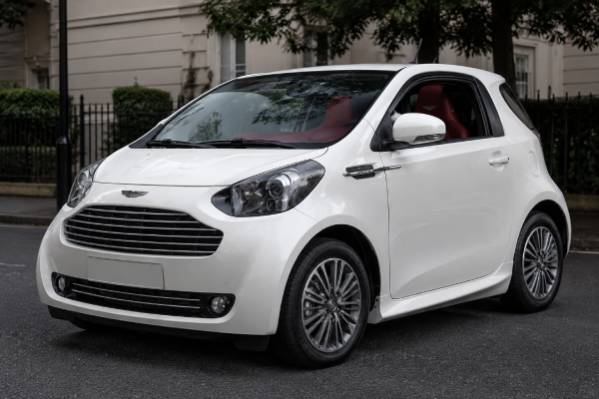
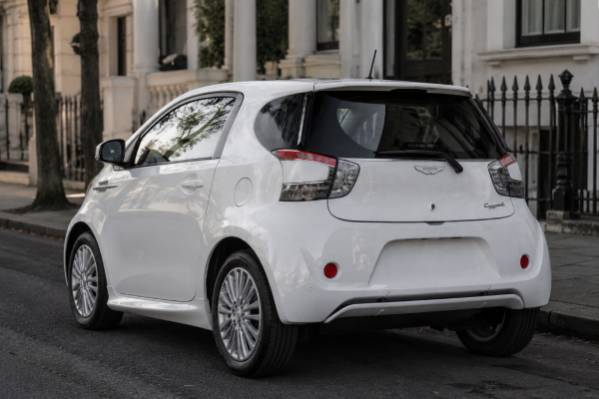
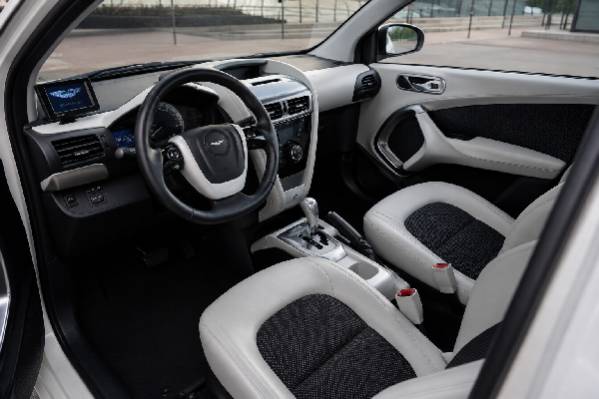
Few small cars reveal their history as openly as the 2011 Aston Martin Cygnet Launch Edition White. Snow White metallic paint, satin stripes, white enamelled wings badges, diamond-turned white wheels, Pearl White leather, and pale Alcantara make wear, repair, and careless cleaning difficult to hide. That visibility is part of the appeal. The edition was created to celebrate the start of Cygnet production and show that a three-metre city car could receive the same attention to materials and detail as a far more expensive Aston Martin. It did not receive extra power: the 97 bhp 1.33-litre 1NR-FE engine, front-wheel drive, six-speed manual, and optional CVT were shared with the standard model. A good example is therefore not defined by performance upgrades but by the survival of its original colour scheme, launch equipment, documentation, and carefully maintained mechanical base. This guide explains how to identify the White edition, understand its engineering, protect its unusual finishes, and assess one before purchase.
Table of Contents
- What Defines a Launch Edition White
- Pearl White Interior and Condition Clues
- Mechanical and Dimensional Specifications
- Compact Engineering and Packaging
- Performance, Efficiency, and Everyday Use
- Maintenance, Cleaning, and Restoration
- How to Buy and Authenticate the Right Car
What Defines a Launch Edition White
A Launch Edition White is a specific 2011 factory presentation, not merely a white-painted Cygnet. Its identity comes from the combination of Snow White metallic paint, satin body stripes, silver and chrome exterior details, white wheels, special badges, pale cabin trim, and launch equipment.
Aston Martin introduced White and Black launch versions as production of the Cygnet began at Gaydon. Both were intended to display the car’s bespoke character and could be ordered with either the standard six-speed manual or optional CVT. The White edition used brightness and contrast to create a calm, almost gallery-like appearance, while the Black edition took a darker, more formal approach.
Period descriptions identify the following exterior elements:
- Snow White metallic paint;
- twin satin stripes running from front to rear;
- Magnum Silver bonnet louvres and side-vent mesh;
- chrome door-mirror caps and brightwork;
- 16-inch 16-spoke wheels with gloss-white paint and diamond-turned faces;
- white enamelled Aston Martin wings badges;
- special launch-edition sill plates.
Some specialist records also describe a Cygnet-head badge with a contrasting eye colour on launch cars. Because these small pieces are easy to remove, repaint, or reproduce, they should be considered supporting evidence rather than the sole proof of identity.
Inside, Pearl White leather was paired with perforated Alcantara inserts backed in silver and satin-chrome finishers. This pale specification was the clearest visual expression of the White edition, but historical records indicate that a Snow White exterior could also be ordered with the all-black interior associated with the Black launch car. That means an atypical cabin should not be dismissed automatically. It does mean the buyer should obtain a factory specification or original invoice rather than relying on assumptions.
The launch package included a five-piece Bill Amberg luggage set. It consisted of a glovebox bag, removable door-pocket bag, holdall, garment bag, and collapsible tote in black leather and technical fabric. Other listed equipment included a first-aid kit and a garage-door-opening rear-view mirror in applicable markets. The more of this material that remains with a car, the easier it is to establish completeness.
“Limited edition” should also be interpreted carefully. The cars were offered for a limited period, but contemporary publicity does not provide a universally accepted final total for each colour. A precise production claim requires evidence from Aston Martin, a chassis register, or surviving sales records.
Pearl White Interior and Condition Clues
The pale cabin is both the edition’s main attraction and its most revealing inspection area. Dirt can be cleaned, but dye transfer, incorrect recolouring, damaged perforations, and poorly matched replacement leather can permanently affect originality.
Begin with the driver’s seat. Look at the outer bolster, cushion edge, stitching, and the transition between Pearl White leather and Alcantara. Normal use produces gentle creasing and a slight softening of the grain. Heavy blue or black dye transfer, glossy patches, cracking, split seams, or a noticeably different white panel suggest neglect or repair.
Leather colour is difficult to match because “white” changes with pigment, age, ultraviolet exposure, conditioner, and surrounding materials. A repair can be technically neat but visually obvious beside original trim. Compare the front seats, rear seats, dashboard leather, door panels, steering-wheel area, and hidden surfaces. A uniformly bright cabin may have been recoloured; that is not automatically bad, but the work should be disclosed and documented.
The perforated Alcantara inserts deserve separate attention. Vacuum them gently before touching the surface. Flattened pile can sometimes be lifted, while staining, adhesive bleed, tears, or stretched perforations are harder to correct. The silver backing should remain visually consistent through the holes. Aggressive wet cleaning can disturb adhesive or leave tide marks.
Inspect the satin-chrome pieces for scratches, clouding, and over-polishing. Satin finishes are created by a controlled texture; abrasive metal polish can turn local areas shiny. Check the launch sill plates, mirror controls, centre-console details, door handles, and any portable navigation mount for evidence of dismantling or damage.
The headlining and sun visors should be dry, clean, and firmly attached. Water staining near the tailgate or door apertures may indicate leakage. Because the cabin uses pale materials, even a small leak can leave a permanent mark before the owner notices dampness.
A complete inspection should also cover:
- both keys and the operation of keyless entry and start;
- heated front seats;
- climate control and air-conditioning temperature;
- windows, folding mirrors, rain sensor, and dusk-sensing lights;
- portable navigation, Bluetooth, audio, and auxiliary input;
- rear parking sensors;
- rear-seat folding mechanisms and ISOFIX covers;
- the condition and identity of every luggage piece.
Do not judge the interior only from edited sale photographs. View it in natural daylight, then inspect with a neutral handheld light. Camera exposure can make yellowed leather appear clean white or hide the difference between replacement panels.
Mechanical and Dimensional Specifications
The White edition is a petrol-powered ICE model with a Toyota-derived 1NR-FE engine and no mechanical changes from the standard 2011 Cygnet. The compact four-seat body, front-wheel-drive layout, four-wheel disc brakes, and two transmission choices define its technical character.
| Specification | Value |
|---|---|
| Engine code | 1NR-FE |
| Configuration | Inline-four, naturally aspirated petrol |
| Capacity | 1,329 cc (1.33 litres) |
| Cylinder head | 16-valve DOHC with Dual VVT-i |
| Camshaft drive | Timing chain |
| Injection | Electronic fuel injection |
| Compression ratio | 11.5:1 |
| Power | 72 kW (97 bhp / 98 PS) at 6,000 rpm |
| Torque | 125 Nm (92 lb-ft) at 4,400 rpm |
| Measure | Six-speed manual | CVT |
|---|---|---|
| Drive layout | Front-wheel drive | Front-wheel drive |
| Transmission feature | Stop-start and gear-shift indicator | Eco-driving indicator |
| 0–100 km/h (0–62 mph) | 11.8 seconds | 11.6 seconds |
| Maximum speed | 170 km/h (106 mph) | 170 km/h (106 mph) |
| Test cycle | Six-speed manual | CVT |
|---|---|---|
| Combined consumption | 5.0 L/100 km (56.5 mpg UK) | 5.2 L/100 km (54.3 mpg UK) |
| Urban consumption | 5.8 L/100 km (48.7 mpg UK) | 6.1 L/100 km (46.3 mpg UK) |
| Extra-urban consumption | 4.5 L/100 km (62.8 mpg UK) | 4.6 L/100 km (61.4 mpg UK) |
| Combined CO₂ | 116 g/km | 120 g/km |
| Component | Specification |
|---|---|
| Front suspension | MacPherson struts |
| Rear suspension | Torsion beam |
| Steering | Speed-sensitive power-assisted rack and pinion |
| Front brake discs | 255 mm, ventilated |
| Rear brake discs | 259 mm, solid |
| Tyre size | 175/60 R16 front and rear |
| Control systems | ABS, EBD, EBA, traction control, and VSC+ |
| Specification | Value |
|---|---|
| Body | Two-door hatchback with full-width tailgate |
| Length | 3,078 mm (121.2 in) |
| Width | 1,680 mm (66.1 in), excluding mirrors |
| Height | 1,500 mm (59.1 in) |
| Wheelbase | 2,000 mm (78.7 in) |
| Track | 1,480 mm (58.3 in), front and rear |
| Turning circle | 4.0 m (13.1 ft), kerb to kerb |
| Kerb weight | 988 kg (2,178 lb) |
| Fuel tank | 32 litres (8.5 US gal) |
| Seating | Four, with split-folding rear seats |
These figures describe the factory configuration. A used car may now have different tyres, repaired wheels, altered suspension, or equipment changes, so compare the physical vehicle with its build specification.
Compact Engineering and Packaging
The Cygnet’s most interesting engineering is its use of space, not its power output. A very short body, wheels pushed toward the corners, a compact drivetrain, and an offset cabin layout create useful front accommodation without pretending to be a conventional four-seat family car.
The front-mounted engine and differential drive the front wheels, leaving no transmission tunnel for a rear driveshaft. The engine is small and light, and its Dual VVT-i system adjusts intake and exhaust valve timing to support flexibility and efficiency. The chain-driven camshafts remove a routine timing-belt replacement, although chain durability still depends on correct oil and service history.
Toyota designed the iQ architecture around unusually efficient packaging. The front passenger area can extend farther forward, allowing more rear space behind that seat than behind the driver. In practice, the Cygnet works well for two adults, can carry a third passenger behind the front passenger, and offers a fourth seat for shorter occupants or brief trips. The rear backrests fold 50:50 when luggage matters more than seating.
The four-metre turning circle is one of the car’s most useful specifications. It allows U-turns and parking manoeuvres that would require several movements in a larger Aston Martin. The upright seating position and short overhangs help the driver judge the car, while parking sensors protect the intricately finished rear bumper.
The suspension uses conventional small-car solutions: MacPherson struts in front and a torsion beam at the rear. These are compact, durable, and space-efficient. They also mean the White edition’s ride and handling are fundamentally those of a short city hatchback. On smooth roads it feels composed and agile. On broken urban surfaces, the short wheelbase can make vertical motions more noticeable.
Braking equipment is stronger than some buyers expect from a small car because discs are fitted at all four wheels. Anti-lock braking, electronic brake-force distribution, emergency brake assist, traction control, and stability control support the chassis. Nine airbags were listed in the Cygnet specification. The related Toyota iQ was assessed by Euro NCAP in 2009, but buyers should avoid describing that as a separate Aston Martin test result.
This mechanical simplicity is an ownership advantage only when the car remains standard. Lowering kits, non-original wheel offsets, very low-profile tyres, or poorly fitted aftermarket electronics can compromise ride, steering, and reliability. For a launch car, originality usually makes the better engineering and collector choice.
Performance, Efficiency, and Everyday Use
The Launch Edition White is at its best in cities and on moderate-speed roads. It can handle motorway travel, but its acceleration, cabin noise, and luggage capacity are those of a small car rather than an Aston Martin grand tourer.
With 97 bhp and 125 Nm, the engine needs revs for its best performance. Peak power arrives at 6,000 rpm and maximum torque at 4,400 rpm. Around town, the low mass keeps responses adequate. On a fast slip road or during an overtake, the driver must plan and use the available rev range.
The manual offers six forward gears and a direct, familiar driving style. Check for a smooth clutch, clean selection into every ratio, and correct stop-start behaviour when conditions permit. A very high bite point, clutch judder, or gearbox noise should be priced into the purchase.
The CVT is easier in traffic and keeps the engine within an efficient operating range. Under hard acceleration, it can hold a high engine speed while the vehicle gains speed; that is characteristic, not necessarily a fault. Irregular shudder, delayed selection of Drive or Reverse, surging, or warning messages require specialist investigation.
Official combined consumption was 5.0 L/100 km for the manual and 5.2 L/100 km for the CVT under the period EU procedure. Short cold journeys can be much less efficient because the engine and catalytic converter spend more time warming. Tyre pressure, battery condition, air-conditioning use, and traffic also have a noticeable effect in a small petrol car.
The 32-litre tank is sufficient for urban use but does not provide the long-legged range of a larger touring car. Treat the fuel gauge and trip computer as aids, not laboratory instruments. On a rarely used collector car, avoid leaving old fuel in the tank for extended periods and do not run the level extremely low before storage.
Everyday practicality depends on how the cabin is configured. With rear seats upright, luggage room is limited. Fold them and the Cygnet becomes useful for shopping, cabin-size cases, or a carefully packed weekend. Protect the Pearl White surfaces with clean removable coverings rather than permanent dark mats or adhesive films that can stain or mark the original material.
The White edition’s visual impact makes it appealing for events and occasional use, but it can also function as intended in urban traffic. The owner simply needs to accept that street grime, denim dye, kerb contact, and crowded parking have greater cosmetic consequences than on a darker standard car.
Maintenance, Cleaning, and Restoration
Service the mechanical components according to time and condition, then approach cosmetic work conservatively. A White launch car can lose authenticity quickly through over-cleaning, incorrect paint repair, or wholesale retrimming.
For the engine, confirm regular oil and filter changes with the correct specification for the VIN and market. The timing chain is not a reason to extend oil intervals. Listen for persistent chain noise on a cold start, check for oil leaks, and investigate engine-management or variable valve-timing faults properly rather than masking symptoms.
A practical age-based service review should include:
- engine oil, filter, and oil level;
- coolant concentration, hoses, radiator, and water-pump area;
- brake-fluid condition and evidence of caliper seizure;
- spark plugs, air filter, and auxiliary belt;
- manual gearbox or CVT fluid records;
- battery state of health and charging voltage;
- tyre dates, pressures, and inner-edge wear;
- air-conditioning output and compressor noise;
- wipers, washers, lights, and parking sensors.
Cars stored for long periods can develop corroded brake discs, sticking calipers, flat-spotted tyres, weak batteries, and moisture in fluids. Regular full-temperature drives are preferable to repeated short starts in a garage. Use a compatible battery maintainer and keep ventilation around the vehicle.
Snow White metallic paint and satin stripes need separate care. Wash from top to bottom with clean equipment and remove bonded contamination before polishing. Do not machine-polish satin stripes or Magnum Silver pieces. A gloss compound can permanently change their appearance. White wheels should be cleaned frequently enough that brake dust does not etch the finish, but strong acid cleaners can attack diamond-turned faces and lacquer edges.
Stone chips and wheel corrosion should be documented before repair. Diamond-cut wheels require precise machining and enough remaining metal; repeated refurbishment is not unlimited. Confirm that a restorer can reproduce the gloss-white pockets and turned spoke faces rather than applying a simpler all-silver finish.
For the cabin, begin with dry methods. Vacuum seams and Alcantara using low suction, then use a white cloth to test any cleaner. Treat small sections and avoid flooding perforations. Dark clothing dye may need professional removal, and aggressive rubbing can remove the leather’s topcoat before the stain disappears.
Restoration decisions should preserve evidence. Photograph original stitches, perforation spacing, backing colour, leather grain, badge placement, wheel finish, and stripe dimensions. Retain removed parts, even when damaged. A future owner may value the original component or use it as the only accurate pattern for reproduction.
How to Buy and Authenticate the Right Car
The strongest purchase combines factory proof, consistent launch details, a clean mechanical inspection, and honest evidence of cosmetic work. A spotless-looking car without history can be riskier than a lightly worn original with complete records.
Ask for the VIN, registration, MOT test history, service book, invoices, both keys, owner’s manual, and original sales material before travelling. Check that the mileage rises logically and that long periods off the road are explained by storage records or maintenance invoices. Use official services to confirm registration details, MOT results, and recall status.
Request a build specification from Aston Martin or a recognised marque specialist. This is particularly important because some Snow White cars may have been ordered with black interiors. The factory record should settle whether an unusual trim combination is authentic, later modified, or incorrectly represented.
During the viewing, work through the car in a fixed order:
- Confirm VIN locations and documents.
- Inspect paint and stripe consistency in daylight.
- Check badges, louvres, mesh, mirror caps, wheels, and sill plates.
- Examine every pale leather and Alcantara panel.
- Inventory the five Bill Amberg bags and other supplied items.
- Start the engine from cold and observe warning lamps.
- Test the transmission, brakes, steering, climate control, and electronics.
- Review the underside, tyres, suspension, and evidence of collision repair.
Paint-depth measurements can be useful, but they are not a verdict. A small hand-finished car may show natural variation, and repainted plastic parts cannot be assessed like steel panels. The inspector should interpret readings alongside overspray, masking lines, fasteners, panel gaps, and colour match.
Value depends strongly on visible preservation. Original Pearl White trim with minor patina may be more desirable than an incorrect bright-white retrim. Complete luggage, both keys, launch literature, and period accessories strengthen the package. Conversely, missing white badges, refinished wheels, damaged stripes, or an undocumented interior colour change reduce confidence even if the car drives well.
Mechanical condition still matters. A buyer should budget for tyres based on age, a full fluid review, battery replacement, brake servicing, and air-conditioning work unless recent invoices prove otherwise. CVT repairs, bespoke trim work, and paint matching can be especially expensive, so a pre-purchase inspection is sensible at any price.
The Launch Edition White rewards careful custodianship because every correct detail contributes to the whole. Its modest performance is part of the original concept: a highly finished city car, not a sports car in miniature. Buy the example whose history makes sense, whose pale materials have been preserved rather than disguised, and whose maintenance shows that it has been treated as a car as well as a collectible object.
References
- Cygnet | Past Models | Aston Martin 2026
- Aston Martin Cygnet 2011 (Product Brochure)
- Cygnet Launch Edition White « Aston Martins.com 2011
- Aston Martin launches Cygnet | Carbuyer 2011
- iQ 2010: A new level of perceived quality, new interior ambiance and multidrive-s transmission with 1.33 VVT-i engine 2012
- Check a used vehicle you’re buying – GOV.UK 2026
Disclaimer
This article is provided for informational purposes and is not a substitute for professional inspection, diagnosis, or repair. Specifications, torque values, service intervals, fluids, and procedures can vary by VIN, market, transmission, and equipment; always verify them against official service documentation for the individual car.
Please share this article on Facebook, X/Twitter, or with another Aston Martin enthusiast if you found it useful.