
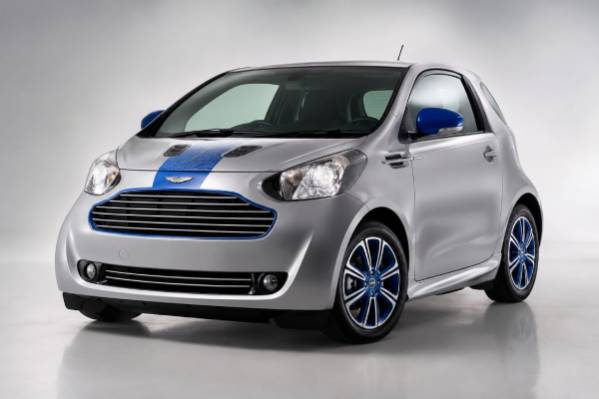
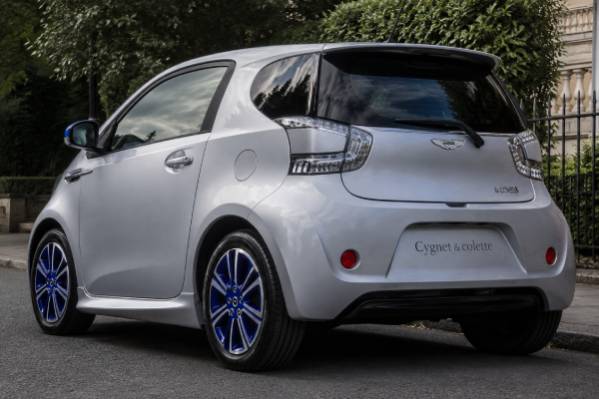
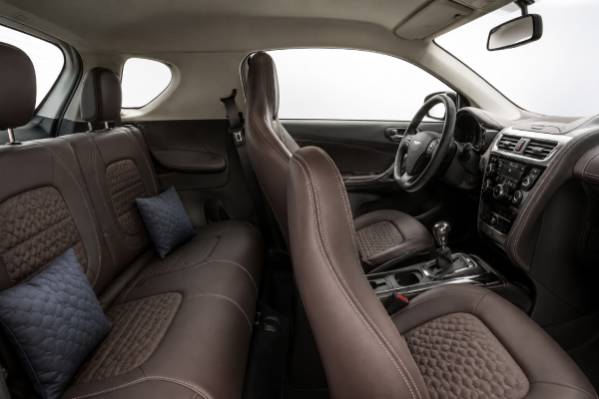
The Aston Martin Cygnet & colette is best understood as a design commission rather than a faster or mechanically different Cygnet. Announced in 2011 with a proposed run of 14 cars, it paired Aston Martin Works Tailored craftsmanship with the visual identity of the Paris concept store colette. Lightning Silver paint, vivid colette-blue accents, Bitter Chocolate leather, special badging, quilted details, and branded accessories turned an already unusual luxury city car into an even more specific collector object. Underneath, however, it retained the standard Cygnet’s Toyota-derived 1.33-litre four-cylinder engine, front-wheel drive, and choice of six-speed manual or continuously variable transmission. That distinction matters to owners and buyers: mechanical servicing is relatively conventional, but confirming originality, preserving the bespoke trim, and documenting provenance can be far harder than maintaining the powertrain. This guide explains what made the collaboration unique, how it drives, what to inspect, and how to judge a claimed example.
Table of Contents
- What the colette Collaboration Actually Was
- Bespoke Design, Trim, and Original Accessories
- Cygnet & colette Technical Specifications
- Performance, Road Manners, and City Use
- Maintenance and Preservation Priorities
- Inspection Points and Common Ownership Risks
- Buying, Authenticating, and Valuing an Example
What the colette Collaboration Actually Was
The Cygnet & colette was a 2011 limited-edition styling project built through Aston Martin Works Tailored, not a separate performance derivative. Its value rests on the collaboration, the hand-finished specification, and the provenance of each car rather than any mechanical upgrade.
Aston Martin announced the project with colette, the influential Paris retailer known for tightly curated fashion, design, music, and lifestyle products. The car was intended to demonstrate how far the Cygnet could be personalised while also giving Aston Martin a way to connect with customers who viewed a car as part of a broader design culture. The planned production limit was 14 examples, with orders taken through colette in Paris and delivery scheduled toward the end of 2011. The stated starting price was €48,995, a substantial premium over an ordinary small car and even over the already costly standard Cygnet.
That announced limit should not automatically be described as the number actually completed. Contemporary publicity clearly supports the intention to build 14, but later specialist records suggest that far fewer may have been made. Because factory production totals for this exact collaboration are not readily published in a current official register, a careful buyer should use wording such as “one of 14 planned” unless the individual car’s factory documentation confirms more.
The mechanical base remained the regular Cygnet, itself closely related to the Toyota iQ. Aston Martin received the compact body and proven running gear, then reworked the exterior panels, grille, bonnet treatment, cabin materials, trim, and finishing. The result was assembled and hand-finished with an Aston Martin identity, yet it did not receive a bespoke Aston engine or rear-wheel-drive chassis. That combination explains both the car’s controversy and its present appeal: it is a tiny, practical urban platform dressed and finished like an exclusive luxury object.
For collectors, the collaboration also marks a point in Aston Martin’s personalisation history. Works Tailored preceded the broader prominence of Q by Aston Martin, so the colette project illustrates an earlier stage of the company’s modern bespoke strategy. It is therefore relevant not only as a Cygnet special edition but also as a small-volume design commission connected with Newport Pagnell craftsmanship.
Bespoke Design, Trim, and Original Accessories
A genuine Cygnet & colette should present a coherent, highly specific package inside and out. The most convincing cars retain the original colour scheme, branded pieces, unusual small accessories, and documentation showing that these features were fitted from new.
The exterior was finished in Lightning Silver, contrasted by colette blue. The blue appeared on the mirror caps, wheel faces, and graphic details across the front bumper and bonnet. Diamond-turned eight-spoke wheels gave the compact car a jewellery-like appearance, while gloss-black bonnet louvres and tear-duct details added contrast. Bright metal side strakes, dark mesh, and specially made badges reinforced the connection with larger Aston Martin models.
The branding was unusually detailed. Publicity material described hand-enamelled “Cygnet & colette” boot badging made by Thomas Fattorini, together with hand-formed and engraved stainless-steel door-handle badges. These pieces are more important than ordinary trim because replacements are unlikely to be available off the shelf. A missing badge may be physically small but can materially weaken the completeness and credibility of a collector car.
Inside, the dominant theme was Bitter Chocolate leather with colette-blue stitching and accents. The colour reportedly took inspiration from Oscar, colette’s chocolate-brown Labrador. Hexagonal quilted leather appeared on seat and door inserts, complemented by quilted Alcantara sun visors and a Cirrus Grey Alcantara headlining. Satin-chrome cabin trim, a blue leather console strap, special sill plaques, an embossed grab handle, and branded navigation start-up graphics completed the factory presentation.
The rear seats were supplied with hand-trimmed, quilted blue leather occasional cushions. These are not substitutes for normal occupant restraint or child-seat equipment; they were decorative accessories that reinforced the fashion-led concept. Their survival matters because loose items are often separated from a car during resale, storage, or dealer preparation.
A complete delivery package was also meant to include a machined aluminium key ring with blue enamelling and a stitched protective pouch. Promotional descriptions listed colette-themed extras such as a special DianaF+ camera, a protective car cover, candies, fragrance, a SIGG bottle, bubbles, a Paris guide, and compilation CDs. Not every surviving car will retain every consumable or promotional object, but an intact collection can strengthen provenance and collector interest.
When inspecting a claimed example, compare the car as a whole rather than checking only one badge. A standard Cygnet can be repainted and retrimmed, and individual colette-style details could be recreated. The stronger evidence is a consistent package supported by build records, period invoice material, correspondence, original keys, accessory receipts, and a traceable ownership history.
Cygnet & colette Technical Specifications
Mechanically, the Cygnet & colette used the standard 2011 Cygnet’s naturally aspirated 1NR-FE petrol engine and front-wheel-drive layout. Buyers could have the six-speed manual with stop-start or the optional CVT, so transmission-specific figures should be checked against the individual car rather than assumed from the edition name.
| Specification | Value |
|---|---|
| Engine | 1NR-FE 1.33-litre petrol four-cylinder |
| Displacement | 1,329 cc |
| Valve gear | 16-valve DOHC with Dual VVT-i |
| Timing drive | Chain |
| Fuel system | Electronic fuel injection |
| Compression ratio | 11.5:1 |
| Maximum power | 72 kW (97 bhp / 98 PS) at 6,000 rpm |
| Maximum torque | 125 Nm (92 lb-ft) at 4,400 rpm |
| Specification | Six-speed manual | CVT |
|---|---|---|
| Transmission | Six-speed manual with stop-start | Continuously variable transmission |
| Drive type | Front-wheel drive | Front-wheel drive |
| 0–100 km/h (0–62 mph) | 11.8 seconds | 11.6 seconds |
| Maximum speed | 170 km/h (106 mph) | 170 km/h (106 mph) |
| Test result | Six-speed manual | CVT |
|---|---|---|
| Combined fuel consumption | 5.0 L/100 km (56.5 mpg UK) | 5.2 L/100 km (54.3 mpg UK) |
| Urban fuel consumption | 5.8 L/100 km (48.7 mpg UK) | 6.1 L/100 km (46.3 mpg UK) |
| Extra-urban fuel consumption | 4.5 L/100 km (62.8 mpg UK) | 4.6 L/100 km (61.4 mpg UK) |
| Combined CO₂ emissions | 116 g/km | 120 g/km |
| Specification | Value |
|---|---|
| Front suspension | MacPherson struts |
| Rear suspension | Torsion beam |
| Steering | Speed-sensitive power-assisted rack and pinion |
| Front brakes | 255 mm ventilated discs |
| Rear brakes | 259 mm solid discs |
| Factory tyre size | 175/60 R16 front and rear |
| Driver aids | ABS, EBD, emergency brake assist, traction control, and VSC+ |
| Specification | Value |
|---|---|
| Body style | Two-door city hatchback with full-width tailgate |
| Seating | Four seats with 50:50 split-folding rear backrests |
| Length | 3,078 mm (121.2 in) |
| Width | 1,680 mm (66.1 in), excluding mirrors |
| Height | 1,500 mm (59.1 in) |
| Wheelbase | 2,000 mm (78.7 in) |
| Track | 1,480 mm (58.3 in), front and rear |
| Turning circle | 4.0 m (13.1 ft), kerb to kerb |
| Fuel tank | 32 litres (8.5 US gal) |
| Kerb weight | 988 kg (2,178 lb) |
The official figures come from the period Cygnet specification and use the former EU test cycle. They are useful for comparing the two transmissions, but modern traffic, short journeys, tyre condition, weather, and driving style can produce different real-world consumption.
Performance, Road Manners, and City Use
The Cygnet & colette is quick enough for normal urban and suburban use, but it is not a miniature Aston Martin sports car. Its strengths are visibility, compact dimensions, easy parking, light controls, and a surprisingly substantial cabin finish.
The 1.33-litre engine develops its peak power at 6,000 rpm, so brisk acceleration requires revs. Around town, the 125 Nm torque peak and low kerb weight make the car responsive enough when gaps open, though motorway joining and overtaking require planning. The official 0–62 mph times of 11.8 seconds for the manual and 11.6 seconds for the CVT make the character clear: performance is ordinary small-car performance, not grand-tourer performance.
The manual offers the more conventional connection between engine and road. Its six ratios let the driver keep the engine in a useful range, and the stop-start system can reduce idling in suitable conditions. Check that the clutch engages smoothly, the gear lever selects every ratio cleanly, and stop-start operates only when its normal conditions are satisfied. A weak battery can disable the system before it causes obvious starting trouble.
The CVT suits slow traffic because it removes clutch work and keeps acceleration smooth. Under a hard throttle, however, engine speed can rise and remain high while road speed catches up, which is normal CVT behaviour. A healthy unit should still pull cleanly without shuddering, flaring inconsistently, hesitating when Drive or Reverse is selected, or producing bearing-like whine. Because the car is rare and often lightly used, a documented fluid-service history is more reassuring than mileage alone.
The wheel-at-each-corner stance and 4.0-metre turning circle make tight streets easy to negotiate. The short wheelbase can produce a busy ride on broken surfaces, while the tall body and narrow footprint discourage aggressive cornering. Stability control, traction control, and four-wheel disc brakes add confidence, but old or budget tyres can undermine the chassis more than modest annual mileage suggests.
Cabin packaging uses the iQ’s unusual asymmetrical layout. The front passenger can sit farther forward than the driver, creating more space behind that seat. The rear bench is best treated as occasional accommodation, particularly behind a tall driver. Folding the rear seats is often the practical choice for shopping or luggage. The colette cushions should be removed and stored safely before carrying abrasive or dirty cargo.
Noise levels are also relative. The leather and Alcantara create a richer atmosphere than the mechanical base suggests, yet the car remains a very short small hatchback with a four-cylinder engine and limited acoustic isolation. Wind and tyre noise at motorway speed are not evidence of a fault by themselves, but rattles from special trim pieces deserve attention because replacement components may be difficult to source.
Maintenance and Preservation Priorities
Routine mechanical care is manageable, but preserving the colette-specific finish requires specialist judgement and restraint. The best ownership approach separates Toyota-derived service items from Aston Martin-specific body, trim, software, and provenance needs.
The 1NR-FE engine uses a timing chain rather than a scheduled timing belt. That removes one major belt-replacement interval, but it does not make oil care optional. Clean oil of the correct specification helps protect the chain, tensioner, variable valve-timing system, and small oil passages. Use the viscosity and approval stated for the exact market in the owner’s documentation, and avoid relying on a generic online chart when the car’s service history is available.
A sensible maintenance routine should cover:
- engine oil and filter changes based on time as well as distance;
- coolant condition, level, freeze protection, and evidence of leaks;
- brake-fluid age and moisture content;
- spark plugs, air filter, and auxiliary drive-belt condition;
- manual gearbox or CVT fluid history using the correct transmission-specific fluid;
- brake-disc corrosion, caliper movement, and parking-brake operation;
- tyre age, sidewall cracking, tread depth, and matching specifications;
- 12-volt battery health, especially on cars stored for long periods;
- air-conditioning performance and drainage;
- keyless-entry keys, backup key, and remote-battery condition.
Low mileage can create its own problems. Condensation, repeated cold starts, flat-spotted tyres, corroded brakes, discharged batteries, stale fuel, and dried seals may affect a stored car even when the odometer appears attractive. A car driven regularly and serviced annually can be a safer mechanical purchase than one that has spent years on display.
The bespoke cabin needs a different technique from normal used-car valeting. Test any leather cleaner on a hidden area, avoid aggressive solvents on blue stitching and printed branding, and do not saturate quilted seams. Alcantara should be cleaned with products and methods intended for microsuede rather than scrubbed like carpet. Metal badges can be scratched by abrasive polish, and blue-enamelled pieces should not be treated as ordinary chrome.
Exterior preservation is equally important. A paint-depth survey can help distinguish original Lightning Silver panels from later repairs, but readings must be interpreted by someone familiar with hand-finished low-volume cars. The blue accents, bonnet graphics, mirror caps, and wheel faces should be photographed in detail before any restoration. Recreating the colours without original references can produce a visually convincing but historically inaccurate result.
Use a battery maintainer suited to the installed battery when the car is stored, maintain tyre pressure, move the vehicle periodically to avoid flat spots, and keep the interior dry. Store loose colette accessories separately in labelled, breathable packaging rather than leaving them to rub against leather or fade in sunlight.
Inspection Points and Common Ownership Risks
The largest buying risks are incomplete provenance, expensive cosmetic damage, neglected low-mileage mechanics, and missing edition-specific parts. A pre-purchase inspection should therefore combine an ordinary small-car check with a collector-car authenticity review.
Start with identity. Confirm that the VIN on the car, registration documents, service records, invoices, and any Aston Martin build information all agree. Ask for evidence that the car was supplied as a Cygnet & colette rather than subsequently modified. A special badge alone is not enough. Period photographs, original sales correspondence, a Works invoice, a specification sheet, or confirmation from Aston Martin Heritage or a recognised marque authority can be much stronger.
Examine the exterior in bright natural light. Look for mismatched silver paint, overspray, uneven gaps, sanding marks around badges, chipped blue wheel faces, and damaged graphics. The Cygnet’s compact dimensions make parking damage likely, particularly on bumper corners and alloy wheels. A minor scrape on a standard city car is easy to dismiss; on this edition it may involve a finish that is difficult to reproduce correctly.
Inside, inspect every special component. Check the branded sill plaques, grab handle, navigation start-up graphic, blue console strap, engraved handles, headlining, quilted inserts, cushions, key ring, and pouch. Photograph wear before negotiating. Creased leather is normal, but dye transfer, split stitching, shrunken trim, loose Alcantara, or poorly matched repairs can be costly to rectify.
Mechanically, perform a cold start. Listen for persistent chain rattle, check that warning lamps illuminate and then extinguish correctly, and watch for uneven idle or exhaust smoke. During the road test, confirm stable coolant temperature, straight braking, smooth steering assistance, and predictable throttle response. On the manual, check clutch bite and synchroniser operation. On the CVT, test both hot and cold operation, including gentle take-off, reversing, and full-throttle acceleration where safe.
Common age-related concerns to investigate include:
- a weak 12-volt battery causing keyless-entry, stop-start, or warning-light issues;
- seized or corroded brakes after storage;
- aged tyres despite deep tread;
- water entry around doors, tailgate, or lamp seals;
- air-conditioning that has lost charge or developed a compressor fault;
- parking damage to bespoke bumpers, wheels, and mirror caps;
- worn key buttons or missing spare keys;
- navigation and Bluetooth equipment that works but feels dated by current standards.
The Toyota iQ received a Euro NCAP assessment, but the Cygnet was not separately presented as an independently rated Aston Martin in the cited test. The shared structural origins are relevant, yet a buyer should not simply transfer every rating statement without qualification. More practical today is checking that all airbags, seat-belt warnings, stability-control systems, tyres, and child-seat anchor points are present and fault-free.
Finally, check the vehicle’s MOT history, recorded mileage progression, advisories, and recall status through the appropriate official services. Very low annual mileage should form a consistent pattern. Sudden mileage gaps, repeated tyre advisories, corrosion notes, or long periods without tests require explanation rather than immediate rejection.
Buying, Authenticating, and Valuing an Example
Buy the best-documented and most complete car, not simply the lowest-mileage one. With a Cygnet & colette, originality and evidence can outweigh a small difference in odometer reading because bespoke parts and lost history may be impossible to recreate convincingly.
A strong car should have a continuous chain from its first sale to the present. Ideally, the file will include the original invoice, Works Tailored specification, service book, maintenance invoices, MOT records, both keys, manuals, photographs, and correspondence relating to the colette order. Any accessories still with the car should be inventoried, photographed, and identified as original, replacement, or unverified.
Ask the seller to describe the production claim precisely. “Limited to 14” may mean 14 were announced, offered, or planned; it does not by itself prove that 14 were delivered. A credible seller will distinguish publicity language from documented build facts. For a high-value purchase, request written confirmation from the factory or a respected Aston Martin registry regarding the individual chassis.
Value is shaped by several overlapping factors:
- verified factory identity as a Cygnet & colette;
- originality of paint, trim, badges, wheels, and graphics;
- completeness of keys, cushions, luggage, and promotional objects;
- condition of the leather, Alcantara, enamel, and machined pieces;
- mechanical health and evidence of time-based servicing;
- transmission preference in the target market;
- ownership history, public appearances, and supporting photographs;
- quality and reversibility of any restoration work.
Do not assume that every cosmetic defect should be restored immediately. Carefully preserved original trim can be more desirable than a visually perfect retrim with incorrect grain, stitch colour, or quilting. Before commissioning work, document the existing materials, seek samples, and consult a specialist familiar with Aston Martin’s period interiors.
Running costs have two personalities. Routine filters, plugs, tyres, brakes, and Toyota-based mechanical components can be relatively approachable. Aston Martin-specific exterior panels, special interior materials, electronic diagnosis, and colette-branded details may be expensive or unobtainable. Insurance should reflect agreed value, limited use, secure storage, and the cost of specialist repair rather than the price of an ordinary Toyota iQ.
The right buyer is someone who appreciates the car as a design artifact and compact luxury commission. It can still be used in the city for the purpose it was created to serve, but crowded street parking and daily cosmetic exposure carry greater consequences than they would in a standard Cygnet. A well-documented example with sympathetic use offers the most convincing balance: mechanically exercised, visually protected, and historically intact.
References
- Cygnet | Past Models | Aston Martin UK 2026
- Aston Martin Cygnet 2011 (Product Brochure)
- Cygnet & colette « Aston Martins.com 2011
- iQ 2010: A new level of perceived quality, new interior ambiance and multidrive-s transmission with 1.33 VVT-i engine 2012
- Toyota iQ – Euro NCAP Results 2009 2009 (Safety Rating)
- Check a used vehicle you’re buying – GOV.UK 2026
Disclaimer
This article is for informational purposes and is not a substitute for professional diagnosis, inspection, or repair. Specifications, torque values, service intervals, fluids, and procedures can vary by VIN, market, transmission, and equipment; verify all work against the car’s official service documentation and current manufacturer information.
Please share this article on Facebook, X/Twitter, or your preferred enthusiast community if it helped you research this rare Cygnet.