


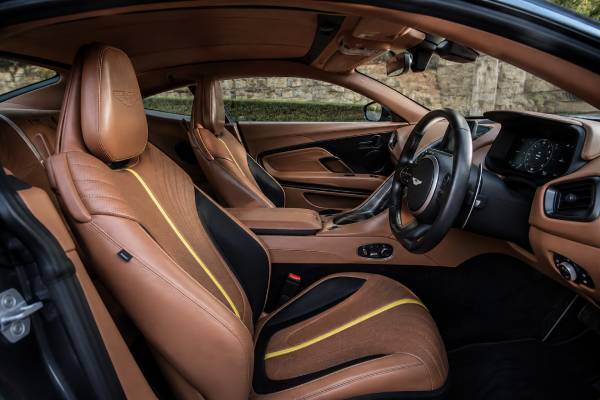
The 2019 Aston Martin DB11 Coupe Classic Driver Edition is a Q by Aston Martin commission created for Classic Driver’s twentieth anniversary. Only 20 cars were offered across the coupe and Volante body styles, so the coupe is far rarer than a normal 503 bhp DB11 V8 even though its engine, transaxle, and basic chassis are standard production hardware. Its significance lies in design authorship and provenance: Classic Driver and Aston Martin developed a restrained specification intended to recall elegant post-war grand tourers without turning the DB11 into a retro pastiche. That makes buying one different from shopping for an ordinary option-rich V8. The mechanical inspection is still essential, but the build record, correct colours, trim materials, commission details, and continuity of ownership evidence carry unusual weight. A genuine, complete example offers a useful balance. It has the lighter front end and everyday reach of the V8 coupe, yet the small production story and coherent Q specification give it an identity that cannot be recreated convincingly by selecting similar colours on a standard car.
Table of Contents
- The purpose of the Classic Driver commission
- How Q by Aston Martin translated a media brand into a car
- Coupe specifications and mechanical package
- Why the closed-roof body suits this edition
- Living with the cabin, luggage space, and technology
- Service strategy for the 503 bhp V8
- Proving originality and inspecting a candidate
- Who should buy one and how to protect its story
The purpose of the Classic Driver commission
The Classic Driver Edition was conceived as a modern grand tourer filtered through the tastes of a platform known for collectible cars, design, travel, and luxury culture. It did not chase lap times or add power. Instead, the project asked how a contemporary DB11 might acquire the atmosphere of a carefully preserved coachbuilt car while retaining modern performance, safety, and usability.
Classic Driver marked its twentieth anniversary with the commission, and Q by Aston Martin provided the route from concept to production. Twenty examples were planned in total, with customers able to choose coupe or Volante. That combined number is crucial: an advertisement claiming 20 coupes is misrepresenting the production story unless supported by stronger factory evidence.
The coupe covered here uses the 4.0-litre twin-turbo V8 in its original 503 bhp tune. That engine choice was consistent with the edition’s tone. Compared with the V12, the V8 removes mass from the front, shifts the static balance rearward, and gives the car a lighter response on narrow roads. It also leaves more of the experience to colour, materials, and proportion rather than making the powertrain the only headline.
A commission is not authenticated simply because a car has a rare paint shade. Q by Aston Martin can create individual or small-series specifications, and later owners can repaint, retrim, or badge a standard vehicle. The Classic Driver Edition should therefore be approached as a documented product with a known design narrative. Build sheets, original invoice language, correspondence, certificates, press material, and delivery photographs are all more persuasive than a dealer description written years later.
The model’s appeal is strongest when its restraint survives. Extra carbon, blacked-out brightwork, oversized wheels, or a loud exhaust can make it less faithful to the commission. Reversibility matters because value is tied to the complete aesthetic idea, not merely VIN rarity.
How Q by Aston Martin translated a media brand into a car
The design works by combining warm, historically suggestive materials with the DB11’s very modern shape. Rather than copying a specific older Aston Martin, it uses colour harmony, tactile trim, and small details to create the impression of a car selected for continental travel and long ownership.
Exact specifications should be taken from the individual build record because Q commissions can include customer choices and market differences. The recognised Classic Driver Edition theme uses a carefully curated exterior colour, contrasting accents, distinctive leather and textile treatment, and bespoke identifiers associated with the anniversary. The essential point is coherence: exterior, cabin, luggage, and documentation should tell the same story.
Inspect paint under neutral light. Deep or metallic colours can hide local repairs indoors and reveal mismatched flop in sunlight. Use a paint-depth gauge as a guide, not a verdict, because aluminium panels, hand finishing, and previous paint-protection work can produce variation. Examine edges around the clamshell bonnet, roof strakes, vents, handles, lamps, and rear spoiler for masking lines or disturbed fasteners.
Textiles and open-pore or low-gloss trim require different care from lacquered wood and conventional smooth leather. Over-wetting can mark woven inserts; aggressive brushing can lift fibres; oily conditioners can darken pale surfaces or create tide lines. A specialist should document the material before attempting stain removal. Original patina is often preferable to a conspicuous repair.
Bespoke stitching, logos, sill plates, plaques, and fitted luggage are easy to separate from a car over time. List every item shown on the build sheet and confirm its presence. Missing accessories may seem minor during a mechanical purchase, but replacing a one-off bag, book, or badge can be impossible once the commission is no longer in production.
Wheels should be checked for correct style and finish, not just diameter. Refinished wheels may lose machined edges, pinstripes, engraved details, or the intended sheen. Inspect the inner barrels for cracks and bends, verify part markings, and compare all four wheels. A visually perfect fresh powder coat can conceal repeated repairs.
The cabin should age consistently. Compare driver-seat wear with steering wheel, pedals, switchgear, door pulls, and carpet. A low-mileage car with heavily restored leather deserves questions; a higher-mileage car with careful, even patina may be more honest. Check that any retrim uses the correct grain, perforation, thread colour, seam pattern, and edge finish.
Q provenance also includes what is not visible. Market equipment, infotainment region, emissions configuration, alarm and tracker installation, and optional audio can differ. The VIN-specific specification is the only reliable basis for deciding whether a detail is missing or merely was never ordered.
Coupe specifications and mechanical package
Beneath its Q materials, the Classic Driver coupe is the lighter 503 bhp V8 DB11 with a front-mid engine, torque tube, and rear transaxle. That layout gives the closed car a rear-biased balance and separates its collectible design content from ordinary mechanical service parts. These are the production V8 coupe figures that underpin the Classic Driver Edition. Q by Aston Martin changed presentation and materials; it did not create a separate engine tune or performance homologation for this commission.
| Specification | Value |
|---|---|
| Engine | Mercedes-AMG M177-based 4.0-litre twin-turbocharged V8, Aston Martin intake, exhaust, mounts, calibration and wet-sump installation |
| Displacement | 3,982 cc |
| Fuel | Premium unleaded gasoline |
| Maximum power | 503 bhp (510 PS / 375 kW) at 6,000 rpm |
| Maximum torque | 675 Nm (498 lb-ft) from 2,000 rpm |
| Specification | Value |
|---|---|
| Transmission | Rear-mounted ZF eight-speed automatic transaxle |
| Drive and differential | Rear-wheel drive; mechanical limited-slip differential; brake-based torque vectoring |
| Front and rear suspension | Independent double wishbones front; multi-link rear; V8-specific springs, anti-roll bars, bushings and adaptive damping |
| Steering | Electric power-assisted rack-and-pinion |
| Brakes | Ventilated steel discs, six-piston front and four-piston rear calipers |
| Specification | Value | Standard or condition |
|---|---|---|
| 0–100 km/h (0–62 mph) | 4.0 seconds, manufacturer 0–100 km/h (0–62 mph) | Manufacturer claim |
| Top speed | 301 km/h (187 mph) | Manufacturer claim |
| Fuel-tank capacity | 78 L (20.5 US gal) | Nominal capacity |
| U.S. fuel economy | U.S. rating: 18 mpg city, 24 mpg highway, 20 mpg combined for representative 2019–2021 cars | EPA cycle; exact year and body style should be checked |
| Specification | Value |
|---|---|
| Length | about 4,750 mm (187.0 in) |
| Width | about 1,950 mm body; 2,060 mm including mirrors |
| Height | about 1,290 mm (50.8 in) |
| Wheelbase | 2,805 mm (110.4 in) |
| Kerb weight | 1,760 kg (3,880 lb), published kerb weight |
| Weight distribution | 49:51 front/rear |
| Specification | Value |
|---|---|
| Body and seating | 2+2 coupe |
| Wheel format | 20-inch staggered wheels |
| Typical factory tire sizes | 255/40 ZR20 front; 295/35 ZR20 rear |
| Luggage capacity | 270 L (about 9.5 cu ft) |
Why the closed-roof body suits this edition
The coupe reinforces the commission’s long-distance character through greater isolation, a full fastback roofline, and the largest luggage space offered in a DB11. It feels like a discreet private express rather than an open-air display piece, which suits the edition’s understated design.
With 115 kg less mass over the front than the original V12 coupe, the V8 changes direction more readily and places less demand on the front tires. The engine sits farther back and lower in the bay, contributing to a 49:51 published weight distribution. Those numbers do not make the DB11 small, but they reduce the sensation that the long bonnet must be managed before the rest of the car follows.
The 503 bhp output is sufficient for a claimed 0–62 mph time of 4.0 seconds and a 187 mph maximum. More relevant in everyday use is 675 Nm from 2,000 rpm. The engine can pull cleanly in a high gear, while the rear transaxle keeps gear changes smooth in GT mode and brisk in the sport settings.
A healthy car should have three clearly useful personalities. GT mode should be supple and quiet enough for distance. Sport should add throttle response and hold gears without becoming abrupt. Sport Plus should be more immediate but still controlled. If every mode feels identical, investigate drive-mode communication, damper operation, exhaust valves, software, or a previous modification.
The V8 soundtrack is compact and forceful rather than silken like the V12. Aston Martin designed its own intake, exhaust, calibration, and mounting around the Mercedes-AMG-derived M177 family, so the car should not be judged or serviced as though it were simply an AMG wearing a different body. Its transaxle layout, cooling installation, chassis electronics, and control strategy are Aston Martin’s.
Road-test on surfaces that expose the structure. The coupe should remain quiet around the roof, rear glass, tailgate area, and frameless doors. Creaks can come from seals, trim, seat frames, or body movement; diagnosis should identify the source rather than assuming all hand-built cars make noise.
Brake feel, steering alignment, and wheel balance deserve attention because a grand tourer can hide defects behind refinement. Test at several speeds, use light and firm brake applications, and check whether a vibration changes with road surface or engine load. Old or mismatched tires can imitate chassis problems and make the rear axle nervous in rain.
The edition is enjoyable precisely because it does not demand a special occasion. Its closed body, useful boot, rear parcel space, and calmer wind environment make it suited to multi-day travel. Keeping it exercised through complete heat cycles is usually healthier than preserving it through repeated short starts and stationary display.
Living with the cabin, luggage space, and technology
The DB11 coupe is a two-person grand tourer with emergency rear seats, not a practical four-seater. Adults in front receive generous adjustment and a wide cabin, while the rear works best for children, compact bags, coats, or short journeys. The 270-litre boot accepts soft luggage more effectively than rigid cases.
Classic Driver Edition materials make loading discipline important. Metal suitcase corners, denim dye, damp coats, and unsecured camera equipment can damage rare trim quickly. Use clean protective covers that do not transfer colour, and keep any edition-specific luggage with the car even when a different travel set is more practical.
The digital instrument cluster and central infotainment were advanced when the DB11 launched, but they now feel older than the mechanical package. That is not a fault by itself. What matters is stable operation: quick start-up, clear displays, reliable Bluetooth, correct navigation region, functioning USB ports, consistent audio, and a complete parking-camera image.
Operate every switch during inspection. Test seat movement through the full range, heating and ventilation where fitted, memory, lumbar support, steering-column adjustment, mirrors, window drop, door handles, boot release, ambient lighting, climate zones, demisting, and both keys. A collection of small faults can require substantial trim removal and diagnostic time.
The frameless windows should lower slightly when a door opens and seal cleanly when it closes. Wind noise, scraping, slow movement, or water marks may indicate indexing, regulator, seal, or alignment issues. Check door drains and carpets after washing, especially if the car has spent time outdoors.
Climate performance must be judged on a warm drive, not by feeling cool air for thirty seconds. Confirm that both sides reach and hold the selected temperature, the compressor does not cycle noisily, and the fan changes speed without rattling. Heat from the front-mounted powertrain makes effective air conditioning part of the car’s touring capability.
Infotainment upgrades should be evaluated for reversibility and integration. A discreet phone interface may improve usability, but poorly installed modules can introduce battery drain, audio noise, camera faults, or cut wiring. Ask for invoices and installation diagrams, and verify that factory functions remain available.
Preserve the handover package. Books, keys, pouches, tools, compressor or mobility equipment, charging lead for the battery conditioner, and edition materials support both usability and value. Photograph them as a set and list anything absent before completing the purchase.
Service strategy for the 503 bhp V8
A sound maintenance plan begins with annual inspection and VIN-specific factory information. Mileage alone is a poor guide for a low-volume GT because time, temperature cycles, storage, and battery condition can create needs before a distance interval is reached.
The M177-based engine must receive the oil grade, filter, quantity, and procedure specified for the Aston Martin installation. Its wet-sump arrangement, cooling, intake, exhaust, engine mounts, control software, and packaging differ from common AMG applications. A general Mercedes workshop may know the engine family but lack Aston diagnostic access and transaxle experience.
Keep the main battery on the correct conditioner during storage. Test rather than guess when starting speed declines, and investigate parasitic draw if a healthy battery repeatedly discharges. Low voltage can trigger warnings across unrelated modules. Stable power followed by a complete scan is the correct starting point, not replacing parts based on the first message displayed.
Cooling-pack cleanliness is easy to overlook. Debris can collect between heat exchangers, reducing efficiency without an obvious external blockage. Inspect from the appropriate access points, confirm fan operation, check hoses and reservoirs for residue, and monitor the car through a full warm drive and heat soak.
Turbocharged engines benefit from sensible temperature management. Avoid heavy load before oil is warm, and finish a hard drive with a gentler period rather than switching off immediately after repeated boost. This is simple mechanical sympathy, not a ritual that replaces servicing.
Spark plugs, ignition components, filters, brake fluid, coolant, gearbox and differential fluids, belts, and air-conditioning service all require schedule review. Ask the specialist to identify what is due by time, what is due by mileage, and what is condition based. An invoice that says “annual service” without listing materials and checks is not enough for a rare car.
Tires should be matched across the axle and preferably as a complete approved set. Record date codes and measure inner shoulders, which can wear differently from the visible tread. Correct pressures and alignment transform the way a DB11 feels; incorrect settings can make a healthy car seem heavy, noisy, or unstable.
Steel brake discs can corrode during damp storage. After washing, drive gently to dry them rather than parking with wet pads clamped to the surface. At inspection, measure disc condition and examine inner faces, caliper seals, hoses, and parking-brake operation.
Documentation is part of maintenance. Retain diagnostic reports, campaign confirmations, alignment sheets, battery tests, tire invoices, fluid specifications, and photographs of major work. For a 20-car commission, these records preserve confidence that cannot be recreated later.
Proving originality and inspecting a candidate
A pre-purchase inspection should answer two independent questions: is this a genuine Classic Driver Edition, and is it a healthy DB11 V8? A car can pass one test and fail the other.
Start with the factory build specification and original ordering documents. Confirm the VIN, body style, market, exterior and interior codes, Q content, edition identifiers, audio, wheels, brake finish, and supplied accessories. Then compare each item with the physical car. Record discrepancies before accepting explanations about dealer changes or owner preference.
For the mechanical portion, insist on a fully cold start, lift inspection, Aston-capable diagnostic scan, long road test, hot reinspection, and second scan. Look for active and stored faults, software or campaign gaps, fluid leaks, cooling residue, damaged undertrays, transaxle behaviour, suspension noise, brake vibration, tire age, and evidence of impact.
Body inspection should account for the DB11’s bonded aluminium structure and composite outer pieces. Examine panel alignment, adhesive seams where visible, fasteners, bonnet catches, jacking points, floor edges, wheel housings, and the mounting of AeroBlade ducts and spoiler hardware. Repair quality matters more than a simplistic claim that any paintwork is unacceptable.
Ask for photographs taken before cosmetic correction. A freshly detailed car can hide sanding marks, leather recolouring, wheel repair, or previous film edges. Independent paint readings and material inspection are especially useful when the Q finish carries much of the premium.
Test the car without the seller pre-warming it. Cold behaviour reveals battery health, start quality, exhaust smoke, mechanical noise, idle stability, and warning messages. During the drive, use all modes, manual shifts, steady cruise, braking from several speeds, tight turns, parking sensors, cameras, and climate control.
Imported examples need an additional file review: registration history, taxes, title status, odometer evidence, market lighting, emissions equipment, navigation region, warranty position, and any conversion work. A rare car can cross borders several times; the paperwork should explain the journey.
Do not let a scarcity claim rush the decision. A careful inspection may be the only opportunity to price missing commission items or hidden modifications before ownership. The correct car will remain rare after it has been properly examined.
Who should buy one and how to protect its story
This edition suits an owner who values design provenance as much as performance. A buyer seeking the fastest DB11 should choose a V12 AMR or DBS; someone wanting the lowest-cost V8 should choose from the larger standard-car market. The Classic Driver Edition rewards interest in materials, specification, and the history of the commission.
Price comparisons should separate coupes from Volantes and genuine edition cars from lookalike Q or individually specified DB11s. Adjust for market taxes, mileage, accident history, service, condition, included luggage, paintwork, tire and brake life, and the completeness of documents. Public asking prices are evidence of seller ambition, not proof of value.
Use need not destroy provenance. Long journeys, concours events, tours, and carefully documented ownership can enrich the story. Protect high-risk surfaces, store the car dry, use a conditioner, clean rare materials correctly, and keep every removed factory part. Avoid modifications that require drilling, cutting, coding changes, or disposal of original pieces.
Insurance should recognise the small production run and the cost of recreating Q materials. An agreed-value policy may be appropriate, subject to local availability. Confirm choice of repairer, genuine-parts terms, transport, storage conditions, mileage limits, and coverage outside the home country.
When selling, present an organised dossier rather than relying on adjectives. Include the build sheet, invoice, correspondence, certificates, press context, service chronology, campaign printout, inspection reports, paint history, photographs, accessories, and a clear declaration of modifications. This protects both parties and helps the next owner understand why the car differs from a normal DB11.
The coupe’s long-term appeal comes from alignment between form and purpose. It is a lighter, balanced V8 grand tourer dressed with an unusually considered anniversary specification. Preserve that alignment—mechanically current, cosmetically honest, and thoroughly documented—and the Classic Driver Edition can remain meaningful after fashion has moved on from today’s colours and option trends.
References
- Aston Martin DB11 Classic Driver Edition – Classic Driver 2019 (Edition Overview)
- Designing and building the Aston Martin DB11 Classic Driver Edition – Classic Driver 2019 (Design and Production)
- SUBLIME CHOICES: DB11 NOW OFFERED WITH V8 ENGINE 2017 (V8 Technical Release)
- Owner’s Guides | Aston Martin 2026 (Owner Documentation)
- Fuel Economy of the 2019 Aston Martin DB11 V8 2019 (EPA Fuel Economy)
Disclaimer
This is an informational buying and ownership guide, not a workshop manual or valuation certificate. Confirm Classic Driver Edition provenance and all technical procedures with the VIN-specific build record, market documentation, official service information, and a qualified professional.
Please share it on Facebook, X/Twitter, or another platform when useful so the commission’s history remains easier to research.