

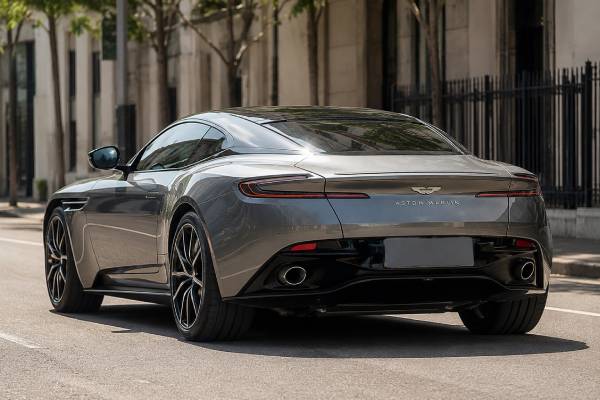
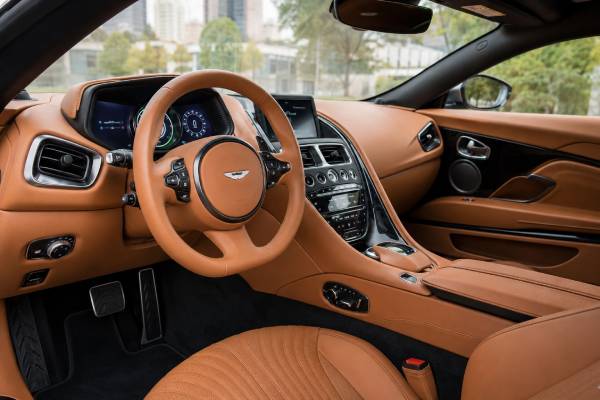
The 2022–2023 Aston Martin DB11 V12 Coupe is the final regular-production twelve-cylinder version of the DB11. It retains the 630 bhp, 700 Nm, 208 mph mechanical specification introduced by the DB11 AMR, but Aston Martin removed the AMR badge for model year 2022 while keeping the power and dynamic attributes. That naming change creates a frequent used-car mistake: a late V12 without AMR emblems is not the earlier 600 bhp model, and adding AMR badges does not improve its authenticity. These cars combine the most developed DB11 V12 calibration with the last years of the AM5 platform, making them attractive to buyers who want the final factory form rather than a named sub-model. They also remain complex, tightly packaged 5.2-litre twin-turbo grand tourers with high heat rejection, large brakes, costly tires, extensive electronics, and a rear transaxle. A correct purchase depends on VIN-level identification, annual service, campaign and software confirmation, a cold and hot diagnostic inspection, and evidence that cooling, battery, suspension, body, and drivetrain have not been neglected during low-mileage ownership.
Table of Contents
- The final DB11 V12 without the AMR badge
- Powertrain, transaxle, and thermal engineering
- 2022–2023 V12 coupe specifications
- How the late V12 performs as a grand tourer
- Options, technology, and model-year identification
- Maintenance priorities as the cars age
- Buying the last regular-production DB11 V12
The final DB11 V12 without the AMR badge
The key fact is simple: for model year 2022, Aston Martin dropped the AMR name from the DB11 V12 but retained the 630 bhp output and the dynamic specification developed for the AMR. The late car is therefore mechanically closer to a 2018–2021 AMR than to the original 600 bhp V12.
This change reflected range simplification rather than a downgrade. Buyers could order the V12 as the flagship DB11 powertrain without necessarily adopting overt AMR branding. The car remained capable of a claimed 208 mph and 0–62 mph in 3.7 seconds.
Used listings often create confusion by calling every 630 bhp car an AMR or by quoting 600 bhp for all DB11 V12s. The VIN-linked build sheet, model year, engine calibration, original invoice, and factory data should establish the exact version. Registration year alone can overlap with build and model-year boundaries.
The 2022–2023 cars also occupy the end of the DB11 story. The DB12 replaced the model for the 2024 model year and launched with a V8, so the late DB11 V12 represents the closing regular-production twelve-cylinder chapter of this platform. That historical position may support long-term interest, but it does not excuse poor condition.
There was no regular Volante V12. Every late 630 bhp DB11 V12 is a coupe, and advertisements that combine the late output with an open body are either describing another model or using incorrect data.
The final years can be desirable for age and development, yet later does not automatically mean flawless. Low use, extended storage, battery discharge, old tires, incomplete campaigns, cosmetic repair, and deferred fluid work can affect a 2023 car as readily as an older one.
A late V12 should be bought as a complete grand tourer, not merely as an engine. Its steering, dampers, transaxle, differential, braking, cooling, cameras, infotainment, and cabin systems all need to work together. A strong twelve-cylinder sound cannot compensate for unresolved network faults or an uncertain service baseline.
Powertrain, transaxle, and thermal engineering
The AE31 is Aston Martin’s 5.2-litre twin-turbo V12, an all-alloy quad-cam engine with 48 valves, variable cam timing, water-to-air charge cooling, stop-start, and cylinder deactivation. In late DB11 form it produces 630 bhp at 6,500 rpm and 700 Nm from 1,500 rpm.
The low torque peak gives the car effortless acceleration at ordinary engine speeds. The higher output compared with the launch V12 is felt toward the top of the rev range and through the revised transmission response. Delivery should remain smooth; hesitation, repeated misfire, unstable idle, smoke, or warning messages need diagnosis.
Cylinder deactivation closes one bank under suitable light-load conditions and alternates operation to manage temperatures. A driver should not experience a sustained rough transition. An Aston-capable scan tool can examine cylinder data, fuel trims, boost, temperatures, and stored events before parts are replaced.
The engine sits behind the front axle and connects through a torque tube to a rear-mounted ZF eight-speed automatic transaxle. This layout distributes mass toward the centre and rear, helping the large coupe avoid conventional nose-heavy behaviour. It also means mounts, torque tube, gearbox, differential, shafts, and control software must be considered as one driveline.
The transaxle should select Drive and Reverse promptly, creep smoothly, and shift consistently at light and heavy throttle. Test manual paddles, kickdown, overrun, parking manoeuvres, and steady cruise both cold and hot. Software updates can refine behaviour, but repeated impacts, delay, flare, or whine require mechanical investigation.
Thermal management is a primary ownership system. Two turbochargers, charge coolers, catalytic converters, engine coolant, transmission load, air conditioning, and tightly stacked heat exchangers share limited space. Leaves and insects between radiator cores can reduce performance even when the grille face looks clean.
Inspect reservoirs, caps, hose joints, pump and fan operation where testable, condenser and radiator impact, dried coolant traces, and undertray staining. Observe temperature and fan behaviour after slow traffic, controlled acceleration, and heat soak. Never open a hot pressurised system for a casual inspection.
Oil checks must follow the correct procedure and specification. Undertrays can conceal leaks or move fluid away from its source. Examine the engine from above and below, document consumption over distance, and avoid guessing from one isolated level reading.
Fuel quality matters. Use the premium grade required for the market, especially where the car is stored or driven infrequently. Old fuel, short starts, and repeated cold operation are poor substitutes for a complete warm drive.
2022–2023 V12 coupe specifications
The final DB11 V12 keeps the 630 bhp AE31 engine, torque tube, and rear-mounted eight-speed transaxle introduced with the AMR calibration. Removing the badge did not alter the rear-drive layout or reduce its 208 mph mechanical specification. These values apply to the late 630 bhp DB11 V12 after Aston Martin removed the AMR badge. The 208 mph performance specification continued; only the naming strategy changed.
| Specification | Value |
|---|---|
| Engine | Aston Martin AE31, all-alloy 5.2-litre twin-turbocharged V12 |
| Displacement | 5,204 cc |
| Fuel | Premium unleaded gasoline |
| Maximum power | 630 bhp (639 PS / 470 kW) at 6,500 rpm |
| Maximum torque | 700 Nm (516 lb-ft) from 1,500 rpm |
| Specification | Value |
|---|---|
| Transmission | Rear-mounted ZF eight-speed automatic transaxle with revised calibration |
| Drive and differential | Rear-wheel drive; mechanical limited-slip differential; brake-based torque vectoring |
| Front and rear suspension | Independent double wishbones front; multi-link rear; adaptive damping with V12/AMR calibration |
| Steering | Electric power-assisted rack-and-pinion |
| Brakes | Ventilated steel discs, six-piston front and four-piston rear calipers |
| Specification | Value | Standard or condition |
|---|---|---|
| 0–100 km/h (0–62 mph) | 3.7 seconds, manufacturer 0–100 km/h (0–62 mph); 3.5 seconds to 60 mph | Manufacturer claim |
| Top speed | 334 km/h (208 mph) | Manufacturer claim |
| Fuel-tank capacity | 78 L (20.5 US gal) | Nominal capacity |
| U.S. fuel economy | 2022–2023 U.S. rating: 14 mpg city, 22 mpg highway, 17 mpg combined | EPA cycle; exact year and body style should be checked |
| Specification | Value |
|---|---|
| Length | about 4,750 mm (187.0 in) |
| Width | about 1,950 mm body; 2,060 mm including mirrors |
| Height | about 1,290 mm (50.8 in) |
| Wheelbase | 2,805 mm (110.4 in) |
| Kerb weight | 1,870 kg (4,123 lb), EU kerb; 1,765 kg published dry weight |
| Weight distribution | 51:49 front/rear |
| Specification | Value |
|---|---|
| Body and seating | 2+2 coupe |
| Wheel format | 20-inch forged staggered wheels on AMR; later cars offered several 20-inch designs |
| Typical factory tire sizes | 255/40 ZR20 front; 295/35 ZR20 rear |
| Luggage capacity | 270 L (about 9.5 cu ft) |
How the late V12 performs as a grand tourer
The late V12’s defining ability is speed without effort. Seven hundred newton-metres are available from low revs, and the car can overtake rapidly in a high gear while the cabin remains calm. The 208 mph claim represents engineering headroom, not a road-test target.
GT mode should make the car easy to use. Throttle response is progressive, the transmission seeks higher ratios, and the adaptive dampers allow wheel travel over uneven surfaces. Sport and Sport Plus should then sharpen the same car rather than transform it into a harsh, unrelated machine.
A healthy exhaust changes character with mode and load. Cold-start volume should settle, valve operation should be consistent, and there should be no metallic rattle, catalyst smell, or motorway drone. Aftermarket controllers and exhaust parts can make a car louder while harming legality, refinement, or resale.
The steering is electrically assisted and relatively light. It should still provide a stable centre and accurate response. Test on several road surfaces before judging a pull, then inspect tire pressures, construction, date codes, wheel condition, alignment, bearings, and suspension joints.
Tires are critical. The staggered 20-inch set must be matched in model and performance level, correctly sized, recent enough to remain pliable, and worn evenly. Deep tread on eight-year-old rubber is not a benefit. Rear grip changes dramatically with temperature and moisture.
The steel brakes should provide a firm, consistent pedal. Measure discs and pads, inspect both faces, and test repeated stops at legal speeds. Storage corrosion or pad deposits can create vibration even on a low-mileage car, while track or mountain use may leave heat checking and discoloured hardware.
Ride quality can reveal more than a fast acceleration run. Use broken surfaces, long waves, and diagonal entrances. The body should settle once after a crest, and the dampers should change meaningfully between modes. Knocks, float, or constant harshness deserve investigation.
The car is wide, with a long bonnet and vulnerable lower body. Test every camera and sensor, confirm the surround image is complete, and inspect wheel rims, splitter, sills, and undertrays. Parking damage can be more common than high-speed damage.
A full road test must reach operating temperature, include steady cruise, use all modes, and finish with a hot reinspection and scan. Many cooling, voltage, driveline, or exhaust issues appear only after the car has completed a realistic duty cycle.
Options, technology, and model-year identification
The late V12 can be visually restrained or highly personalised. Paint, roof treatment, wheel design, carbon packages, seat style, leather, stitching, veneer, audio, cameras, blind-spot assistance, and Q content all affect desirability and replacement cost.
Obtain the factory build sheet before judging completeness. A missing feature may simply not have been ordered, while an attractive carbon or wheel upgrade may be a later addition. The original invoice and delivery photographs help distinguish factory, dealer, and owner changes.
The digital instrument panel and central infotainment belong to the DB11’s launch-era electrical architecture. By 2022 they were older than newer touch-screen systems, but normal operation should be stable. Test every display layout, Bluetooth, calls, navigation region, audio source, USB, controller, touchpad, cameras, sensors, and steering-wheel button.
A later registration does not prove model year. Confirm production date, VIN coding, warranty start, and factory output. Likewise, the absence of AMR badges is correct for these late V12s. Adding them can create confusion and should be disclosed.
Wheels deserve exact identification. Compare part numbers, dimensions, finish, centre caps, and build specification. Inspect inner barrels for cracks, bends, welds, and repeated refinishing. A new powder coat can conceal structural history.
Carbon-fibre parts should be checked for weave distortion, cloudy lacquer, edge lifting, stone damage, and repairs beneath film. Genuine documented replacement is acceptable; an unknown pattern part may weaken fit, finish, and value.
Inside, compare wear across touch points. Driver bolster, wheel rim, pedals, metal door pulls, controller, switches, and key should tell a consistent mileage story. Heavy recolouring can hide abrasion but often changes grain, sheen, perforation, or stitching.
Both keys, books, pouches, tire-mobility equipment, tools, battery-conditioning lead, and Q or delivery materials should remain with the car. Missing ordinary accessories are inconvenient; missing one-off specification items may be impossible to replace.
Body assessment requires knowledge of bonded aluminium and composites. Measure paint, examine panel alignment, clamshell bonnet latches, door apertures, fasteners, adhesive seams where visible, AeroBlade ducts, spoiler operation, jacking points, and floor edges. Quality and documentation matter more than a simplistic “no paint” claim.
Maintenance priorities as the cars age
Even the newest DB11 V12 is now old enough for time-based maintenance to matter. Annual service, battery condition, fluid age, tire dates, brake corrosion, cooling cleanliness, and software status should be reviewed independently of mileage.
Follow the exact Aston Martin schedule for the VIN and market. Confirm engine oil, filters, plugs, coolant, brake fluid, transmission, differential, belts, and inspection intervals. Do not borrow procedures from the earlier 600 bhp car or the related DBS without confirming applicability.
Battery support prevents many secondary faults. Use the recommended conditioner, record battery age, test reserve capacity, and investigate parasitic draw. When multiple warnings follow a weak start, stabilise voltage and scan all modules before deciding which faults are real.
Cooling maintenance includes cleaning between heat exchangers, inspecting impact damage, pressure testing when symptoms justify it, checking reservoirs and joints, and confirming fan operation after heat soak. Record every coolant addition and trace recurring loss.
Ignition or combustion faults need prompt attention. Driving with a misfire can overheat catalysts and turn a manageable coil, plug, injector, or fuel issue into major expense. Diagnosis should use cylinder-specific data and appropriate mechanical tests.
Transmission and differential history should be clear. Inspect for leaks, listen for speed-related whine, and evaluate shift quality across temperature. Record software updates separately from fluid or hardware work.
Tire replacement should be planned by age and condition, not delayed because tread remains. Replace a mismatched or aged set with suitable high-performance tires, then align the car and keep the measurements. Correct pressure is essential for both ride and grip.
Brake-fluid age, disc thickness, pad condition, inner-face corrosion, caliper health, and hose condition should be measured. Dry the brakes after washing and avoid damp storage with pads clamped against wet discs.
Adaptive dampers and suspension links should be checked for leaks, play, boot damage, and noise. Replace worn parts before alignment. The DB11’s mass and large wheels can expose small joint wear on rough roads.
Use both independent and authorised expertise. A DB11 specialist may provide continuity and diagnosis, while an authorised Aston Martin source verifies campaigns, software, and factory records. The strongest service file combines itemised invoices with campaign printouts, scans, battery tests, alignment, tire records, and photographs.
Buying the last regular-production DB11 V12
The best late V12 purchase is the car with the clearest condition and history, not automatically the lowest mileage or most dramatic options. Final-year status adds interest only after the mechanical baseline is established.
Require a cold start, Aston-capable diagnostic scan, lift inspection, long road test, hot reinspection, and second scan. Record voltage, mileage, active and stored faults, campaign status, and available software information before anything is cleared.
On the lift, examine cooling cores, engine and turbo areas, exhaust and catalysts, torque tube, transaxle, differential, suspension, dampers, brakes, wheel barrels, tire inner shoulders, undertrays, jacking points, and evidence of impact or leakage.
Road-test low-speed manoeuvres, GT, Sport, Sport Plus, automatic and manual shifts, steady cruise, acceleration, braking, broken surfaces, cameras, climate control, windows, seats, handles, lighting, and audio. Allow heat soak and recheck smells, fans, reservoirs, ground, and fault memory.
Review history chronologically. Service dates, mileage, tires, battery replacements, fluid work, campaigns, warnings, paint repair, and ownership periods should agree. A stamp without invoices cannot show materials or diagnostic findings.
Ask about software tunes, exhaust valves, downpipes, filters, suspension, spacers, wheel changes, wraps, paint-protection film, trackers, and phone modules. Reversible work with retained original parts is easier to accept than hidden wiring or unknown calibration.
Price immediate safety work, overdue service, active diagnosis, near-term wear, cosmetic repair, and optional improvement separately. This prevents a predictable tire set from being treated like an unknown engine fault and gives the buyer a realistic first-year budget.
Compare late 630 bhp cars with earlier AMRs, original 600 bhp V12s, V8 coupes, and the DBS according to actual priorities. The late V12 offers the developed AMR-level tune without the badge and the youngest DB11 V12 build dates. Check whether production label, warranty start, and first service timing support the advertised year, especially when a car crossed borders or remained in dealer stock. An earlier AMR may have stronger named identity; a V8 may be more agile and economical; a DBS is more extreme and expensive.
Final-production status should encourage use, not paralysis. Warm the car correctly, complete long drives, maintain voltage, keep cooling clean, inspect it after winter storage, and document every decision with dates and mileage. In that state, the 2022–2023 DB11 V12 stands as the mature conclusion of Aston Martin’s first turbocharged V12 grand-tourer generation.
References
- Aston Martin launches new online configurator and reveals 22MY updates offering more power, and enhanced choice 2021 (22MY Update)
- DB11 AMR – NEW PERFORMANCE FLAGSHIP OF THE DB11 RANGE 2018 (630 bhp Engineering)
- Owner’s Guides | Aston Martin 2026 (Owner Documentation)
- Aston Martin Luxury Car Servicing | Aston Martin 2026 (Service Information)
- 2023 Aston Martin DB11 V12 2023 (EPA Fuel Economy)
Disclaimer
The article is intended for general information and cannot replace VIN-specific factory data or professional diagnosis. Confirm late-V12 output, service intervals, fluids, campaigns, software, parts, and repair methods for the precise car and jurisdiction.
Please share this final-V12 guide on Facebook, X/Twitter, or another platform if it gives another buyer a clearer inspection baseline.