

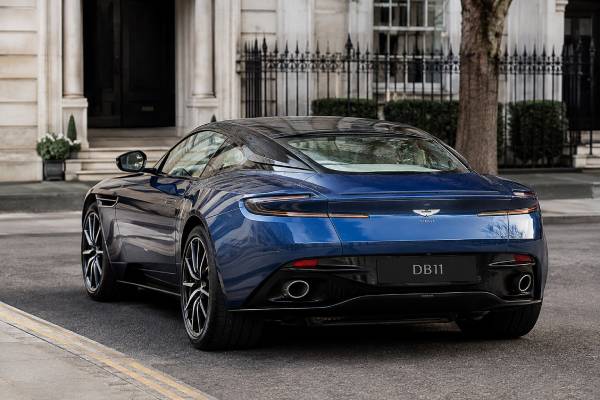
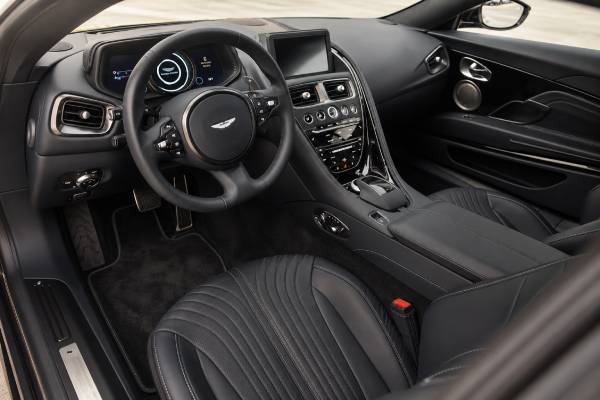
The Aston Martin DB11 V12 North Coast 500 Limited Edition is one of the smallest and most place-specific DB11 commissions. Six right-hand-drive coupes were created through Q by Aston Martin for Aston Martin Edinburgh, each named after a region on Scotland’s North Coast 500 route. They use the original 600 bhp, 5.2-litre twin-turbo V12 mechanical package, but their identity comes from Seychelles Blue paint, Bison Brown leather, Dunbeath Tweed, open-pore ash, individual embroidery, numbered sill plates, and matching luggage. The cars are commonly described by their 2017 model-year base, even though public promotion of the commission appeared later; that timeline should be recorded carefully rather than “corrected” by assumption. Because only six were made, ordinary DB11 buying advice is not enough. A prospective owner must confirm the exact named car, preserve materials that may be difficult to reproduce, and still inspect the underlying early V12 DB11 as rigorously as any other complex grand tourer.
Table of Contents
- Why the NC500 edition is unusually rare
- Scottish materials and the six named commissions
- North Coast 500 technical specifications
- Preparing the car for real grand touring
- Preserving tweed, leather, paint, and bespoke parts
- Mechanical service and storage strategy
- How to authenticate one of the six cars
- Buying, insuring, and valuing a tiny-production DB11
Why the NC500 edition is unusually rare
The NC500 is significant because it was a dealer-led Q commission with only six cars, not a broadly available factory trim. Each example was linked to one of six areas on the route—Black Isle, Caithness, Easter Ross, Inverness-Shire, Sutherland, and Wester Ross—giving every car an individual identity inside an already tiny series.
Aston Martin Edinburgh developed the project around Scotland’s now-famous 516-mile touring route. The concept was more thoughtful than applying a badge to a standard coupe. Its materials drew on the landscape and regional culture: a blue exterior related to the North Coast 500 identity, warm brown leather, locally evocative tweed, and dark open-pore wood. Owners were also associated with a curated NC500 experience, reinforcing the idea that these cars were intended to connect grand-touring machinery with a specific journey.
The date requires precision. The donor cars are described as 2017 model-year DB11 V12 coupes, while the edition was publicly introduced in 2018. Registration date, build date, model year, commissioning date, and announcement date are different facts. A seller who lists “2018 NC500” may simply be referring to the public launch, whereas the assignment and known specifications identify 2017MY base vehicles. The VIN, factory build sheet, first-registration record, and Q paperwork should resolve the individual car’s chronology.
Rarity magnifies both strengths and weaknesses. A complete, unaltered car with its luggage and documents can be compelling because another example may not appear for years. The same scarcity makes replacement embroidery, tweed, sill plates, luggage, or edition-specific trim difficult to source. It also means public price guides have little statistical value. Condition and documentation matter more than a generic percentage premium over a normal DB11 V12.
Scottish materials and the six named commissions
The edition’s defining feature is the relationship among its bespoke materials. Seychelles Blue coachwork provides the visual anchor, while Bison Brown leather and Dunbeath Tweed create a cabin that feels warm, tactile, and connected to Scottish textile tradition rather than to a conventional black-and-carbon performance theme.
Tweed appears on areas such as the seat inserts, door cards, sun visors, and central powered stowage section. Dark Ash Open Pore trim adds visible grain without a high-gloss lacquer layer. Saltire-themed Aston Martin wing badges, Q identification, embroidered regional names, and individual sill plates complete the commission. Matching two-piece luggage in leather and tweed is an important part of the original package.
These details should be photographed and catalogued before any restoration. Textile colour can fade unevenly, leather cleaners can stain adjacent tweed, and aggressive steam or extraction can distort natural fibres. Open-pore wood also behaves differently from glossy veneer: it should not be polished with abrasive compounds or coated with generic dashboard dressing. A conservator-minded trimmer is preferable to a high-volume detailer when correction is needed.
The six regional identities provide a powerful authentication tool. The embroidery and sill plates should agree with the car’s paperwork. A vehicle represented as the Sutherland car, for example, should not carry a different region’s identifying pieces. Because trim components can theoretically be swapped, no single badge proves authenticity; the VIN-linked Q build record and a continuous history remain decisive. Delivery photographs, luggage embroidery, dealer correspondence, and the named regional paperwork should all point to the same car. If those pieces disagree, pause the valuation until the identity chain is explained.
Owners should resist adding fashionable carbon-fibre parts, aftermarket wheels, black badges, or modern infotainment conversions without preserving the originals. Such changes may be reversible, but they weaken the design coherence of the commission. The NC500’s appeal is not that it resembles the most aggressive DB11. It is that it tells a complete, unusually regional design story.
North Coast 500 technical specifications
The NC500 commission retains the early 600 bhp V12 coupe architecture: front-mid engine, torque tube, rear transaxle, and rear-wheel drive. Its engineering is standard DB11 V12, while the six-car Scottish specification supplies the rarity. Mechanically, the six cars follow the original 600 bhp V12 coupe specification. Edition-specific materials and equipment can change actual mass slightly, so the published base-car kerb figure is more useful than inventing an NC500-only number.
| Specification | Value |
|---|---|
| Engine | Aston Martin AE31, all-alloy 5.2-litre twin-turbocharged V12 |
| Displacement | 5,204 cc |
| Fuel | Premium unleaded gasoline |
| Maximum power | 600 bhp (608 PS / 447 kW) at 6,500 rpm |
| Maximum torque | 700 Nm (516 lb-ft) from 1,500 rpm |
| Specification | Value |
|---|---|
| Transmission | Rear-mounted ZF eight-speed automatic transaxle |
| Drive and differential | Rear-wheel drive; mechanical limited-slip differential; brake-based torque vectoring |
| Front and rear suspension | Independent double wishbones front; multi-link rear; three-stage adaptive dampers |
| Steering | Electric power-assisted rack-and-pinion |
| Brakes | Ventilated steel discs, six-piston front and four-piston rear calipers |
| Specification | Value | Standard or condition |
|---|---|---|
| 0–100 km/h (0–62 mph) | 3.9 seconds, manufacturer 0–100 km/h (0–62 mph) | Manufacturer claim |
| Top speed | 322 km/h (200 mph) | Manufacturer claim |
| Fuel-tank capacity | 78 L (20.5 US gal) | Nominal capacity |
| U.S. fuel economy | 2017–2018 U.S. ratings commonly 15 mpg city, 21–22 mpg highway, 17–18 mpg combined | EPA cycle; exact year and body style should be checked |
| Specification | Value |
|---|---|
| Length | 4,739–4,750 mm (186.6–187.0 in), market/source rounding |
| Width | 1,940–1,950 mm body; about 2,060 mm including mirrors |
| Height | about 1,279–1,290 mm (50.4–50.8 in) |
| Wheelbase | 2,805 mm (110.4 in) |
| Kerb weight | 1,875 kg (4,134 lb), EU kerb definition |
| Weight distribution | 51:49 front/rear |
| Specification | Value |
|---|---|
| Body and seating | 2+2 coupe |
| Wheel format | 20-inch staggered wheels |
| Typical factory tire sizes | 255/40 ZR20 front; 295/35 ZR20 rear |
| Luggage capacity | 270 L (about 9.5 cu ft) |
Preparing the car for real grand touring
A North Coast 500 DB11 should be prepared for touring as a working performance car, not assumed ready because it has low mileage. Remote roads, changing weather, coarse surfaces, narrow lanes, livestock, and limited specialist support expose neglected batteries, old tires, marginal brakes, and fluid leaks quickly.
Begin several weeks before a long trip. Have an Aston-qualified workshop inspect tires by date and condition, measure brake discs and pads, pressure-test cooling systems where appropriate, scan every control module, check the charging system, and verify that no safety campaign or software action remains outstanding. Confirm the puncture-repair equipment, towing-eye location, locking-wheel-key presence, and roadside-assistance arrangements. A compact compressor and approved sealant are only useful if they are present and within date.
Route planning should respect the car’s width and low bodywork. The DB11 is about two metres wide with mirrors, and many Highland roads narrow to a single lane with passing places. The correct approach is unhurried: look far ahead, use passing places early, protect the wheel edges from broken verges, and avoid following navigation instructions onto unsuitable farm tracks. The clamshell bonnet and long front overhang make blind crests and steep ferry ramps worth assessing before committing.
Fuel range is adequate for touring, but the 78-litre tank and V12 consumption do not justify running near empty in remote areas. Plan premium-fuel stops with margin. Keep luggage soft and compact so the 270-litre boot can be loaded without forcing the lid or placing heavy objects against trim. The matching luggage, when present, is historically valuable; many owners may prefer to store it safely and tour with replaceable bags.
Driving modes should be selected for the road rather than the car’s image. GT mode provides the best compliance and smoothest throttle response on uneven surfaces. Sport can be useful when repeated bends benefit from stronger gearbox retention, but Sport Plus on wet, narrow roads adds little. The V12’s 700 Nm arrives early, and even a sophisticated stability system cannot replace fresh tires and disciplined throttle use.
Preserving tweed, leather, paint, and bespoke parts
Preservation begins with restraint. Clean only what needs cleaning, test products on hidden areas, and record the condition before work begins. The NC500 combines materials that require different methods, so one all-purpose interior chemical is the wrong solution.
For tweed, use gentle dry vacuuming with a protected nozzle and minimal agitation. Localised marks should be assessed by a textile specialist, especially where brown leather dye or previous dressing may have transferred into the weave. Saturating seat inserts risks tide marks, shrinkage, adhesive disturbance, and slow drying inside the cushion. Sun visors and door inserts are particularly vulnerable because their backing structures can deform.
Leather needs a pH-appropriate cleaner and light conditioner used sparingly. Heavy, glossy dressing changes the intended matte appearance and can migrate into the tweed. Inspect bolsters, perforations, brogue work, seams, piping, and powered storage covers. Early intervention on abrasion is easier than reconstructing a damaged panel, but recolouring should match both hue and sheen under daylight.
Open-pore ash should be dusted softly and protected from standing moisture. Do not use wax intended for lacquered furniture. Check for lifting edges, cracks around fixings, or colour changes caused by ultraviolet exposure. Edition-specific badges and sill plates should be cleaned without metal polish that removes plating or printed detail.
Seychelles Blue paint benefits from careful washing, decontamination, and measured correction rather than repeated aggressive machine polishing. Paint-protection film can preserve vulnerable areas, but installation should avoid cutting directly on rare panels. Photograph any original hand-applied details before film or ceramic coating. Matching luggage should be stored supported, dry, and away from sunlight, with breathable protection rather than sealed plastic.
Mechanical service and storage strategy
The NC500’s rarity does not change its mechanical needs. It remains an early AE31 V12 DB11 with a turbocharged engine, rear transaxle, adaptive dampers, multiple cooling circuits, powered aerodynamic systems, and a battery-sensitive electronic architecture.
Service it by time as well as mileage. Annual inspection is prudent even when the odometer barely moves. Use the VIN-specific owner and workshop information for oil, filters, plugs, coolant, brake fluid, transmission and differential service, wheel torque, and software procedures. Avoid assuming that a schedule quoted for a later AMR or for a Mercedes-AMG application transfers directly to the 600 bhp Aston installation.
Storage should include a compatible conditioner connected according to Aston Martin guidance, stable ventilation, pest control, and tire management. The car should not be idled briefly every few weeks as a substitute for driving; short runs can add moisture without fully heating the oil, exhaust, brakes, and transmission. Either preserve it correctly or drive it long enough for systems to reach normal temperature.
Before and after a tour, inspect the front cooling pack and underbody for debris or damage. Highland roads can deposit gravel, vegetation, and insects into openings. Check the AeroBlade inlets, deployable spoiler, wheel-arch vents, splitter, diffuser, and undertrays. Salt exposure near the coast makes a gentle underbody rinse worthwhile, provided water is not forced into electrical connectors or cabin vents.
Any warning light should be diagnosed, not merely cleared. Low voltage can be the cause, but repeating faults may identify sensors, actuators, cooling problems, or communication issues. Keep printed diagnostic reports and invoices. On a six-car edition, a well-organised maintenance file is part of the object’s history and can be as important to future confidence as the visible trim.
How to authenticate one of the six cars
Authentication should establish the car’s identity from the factory record outward. Start with the VIN and obtain a build specification or written confirmation from Aston Martin or an authorised dealer. Then reconcile every edition feature with the named regional car.
A disciplined checklist includes:
- Confirm the VIN, model year, build date, first registration, and Q commission record.
- Match the regional name on embroidery and sill plate to the documentation.
- Verify Seychelles Blue paint or documented factory variation, Bison Brown leather, Dunbeath Tweed placement, and Dark Ash Open Pore trim.
- Check Saltire-themed wing badges, Q badging, wheels, brake-caliper colour, stitching, and other recorded options.
- Locate the two-piece matching luggage and any original accessories, presentation items, route materials, or owner-experience documentation.
- Compare current condition with early photographs, dealer publicity, invoices, and previous sales listings.
Discrepancies are not automatically fatal. A wheel may have been refinished, a badge replaced after damage, or a seat panel repaired. What matters is whether the change is disclosed, supported, and reversible. Undocumented substitutions are more concerning when the seller uses rarity to justify a large premium.
Inspect identification plates and labels for disturbance, but do not rely on amateur “matching numbers” language. Modern cars have numerous serialized modules and components, and legitimate warranty replacements can occur. The meaningful question is whether the car is the documented NC500 commission it claims to be and whether significant changes have been recorded.
Because the six cars are individually named, community history can be helpful. Previous photographs or known ownership may confirm continuity, but privacy should be respected and informal claims should never replace factory documentation. Build a file that a future owner can understand without relying on verbal stories.
Buying, insuring, and valuing a tiny-production DB11
There is no reliable mass-market pricing formula for a six-car commission. Value depends on the intersection of normal DB11 condition and NC500-specific completeness: mechanical health, service history, mileage, paint, interior preservation, regional identity, luggage, documentation, and the credibility of the sale.
A standard V12 DB11 provides a useful mechanical baseline, but the edition premium should not be applied mechanically. A missing luggage set, replaced tweed, absent Q records, or incorrect plaques can reduce collector confidence even if the car drives well. Conversely, exceptional provenance and complete presentation may matter more than a small mileage difference.
Insurance should be arranged before purchase. Discuss agreed value, limited-production trim, replacement-part scarcity, repairer choice, European touring, storage requirements, and salvage rights. A conventional market-value policy may not capture the cost of recreating Dunbeath Tweed panels or edition-specific details after a claim. Provide the insurer with photographs and valuation evidence.
The pre-purchase inspection remains non-negotiable. It should cover a cold start, full diagnostic scan, lift inspection, cooling system, transaxle, differential, adaptive suspension, brakes, tires, wheel condition, body alignment, moisture, every electrical function, and campaign status. Do not allow rarity to create urgency that excuses incomplete checks.
The ideal owner will use the car carefully, preserve its distinctive materials, and continue building its documentary history. The NC500 edition was conceived around a route and an experience, so occasional meaningful touring arguably fits its story better than permanent static display. The balance is to drive it enough to remain healthy while avoiding careless modifications and deferred maintenance. In a car this rare, stewardship is not a slogan; it is the practical work that keeps all six identities legible for the next owner.
A sensible transaction also separates the vehicle price from the cost of making it tour-ready. Budget for an independent inspection, baseline fluids where records are unclear, fresh premium tires when date codes are old, battery support, paint correction by a conservative specialist, and secure transport if collection conditions are poor. These expenses do not diminish the edition; they protect it. A seller who has already completed them and can prove the work may justify a stronger price than an apparently cheaper car requiring immediate recommissioning. For international buyers, confirm registration eligibility, lighting and emissions requirements, taxes, and the treatment of its right-hand-drive specification before funds move. Rarity is valuable only when the car can be owned, insured, registered, and maintained without unresolved legal or logistical problems. Keep copies of customs, registration, valuation, and transport records with the permanent history file.
References
- DB11 V12 North Coast 500 Limited Edition Coupe « Aston Martins.com 2026 (Model Reference)
- Aston Martin DB11: the latest in an illustrious bloodline 2017 (Press Release)
- Owner’s Guides | Aston Martin 2026 (Owner’s Guide Portal)
- Aston Martin Luxury Car Servicing | Aston Martin 2026 (Servicing)
- Aston’s Twelve: 2017 Aston Martin DB11 Driven! 2016 (Independent V12 Test)
- Aston Martin DB11 V12 North Coast 500 Edition – Limited Touring Model 2026 (Vehicle Description)
Disclaimer
Use this article as general information, not as workshop instruction or a substitute for inspection. Verify the six-car NC500 identity, technical data, parts, software, and maintenance procedures against the specific VIN, market records, and official service material.
A share on Facebook, X/Twitter, or your preferred platform is appreciated and may help another NC500 researcher locate reliable context.