

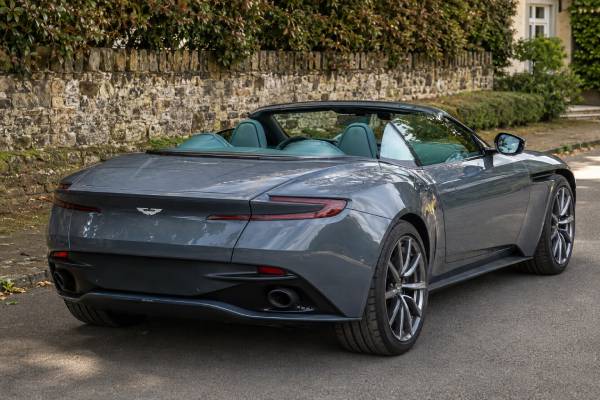
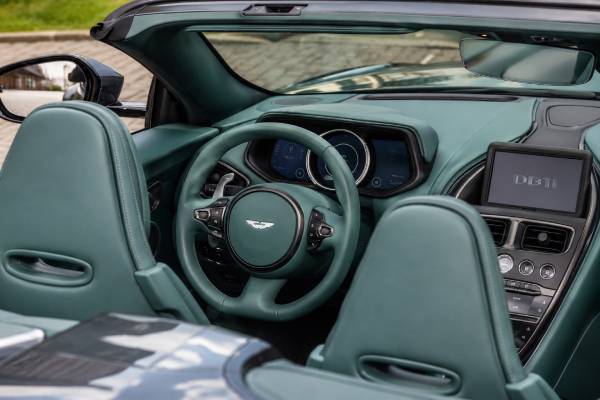
The 2019 Aston Martin DB11 Volante Classic Driver Edition is a small-series Q by Aston Martin commission that combines the 503 bhp V8 convertible with a design created for Classic Driver’s twentieth anniversary. Production was limited to 20 cars across both coupe and Volante forms, so the exact number of open cars depends on the final body-style mix rather than a separate 20-unit Volante run. Mechanically, it uses the established DB11 Volante package: a 4.0-litre twin-turbo V8, rear transaxle, adaptive chassis, and eight-layer folding fabric roof. Its rarity comes from the coordinated exterior, cabin, and edition details—not from additional power. That makes condition unusually broad. Buyers must examine the engine and chassis, but also the roof mechanism, drainage, water sealing, bespoke textiles, leather, fitted accessories, and factory evidence that ties the individual VIN to the commission. A complete car can be a distinctive travelling companion; one with missing Q content or neglected weather protection may be much harder to restore than its conventional mechanical specification suggests.
Table of Contents
- An anniversary car built around open-air travel
- What defines a genuine Classic Driver Volante
- Volante technical data and roof package
- Roof-down performance without losing GT manners
- Care of the fabric hood, seals, drains, and cabin
- Mechanical upkeep and seasonal storage
- A buyer’s inspection from documents to water test
- Collecting, touring, and preserving completeness
An anniversary car built around open-air travel
The Volante version gives the Classic Driver project a different meaning from the coupe. With the roof lowered, the edition’s materials and colours become part of the exterior view, and the car feels closer to a traditional touring convertible. With the roof raised, its multi-layer hood restores much of the privacy and weather protection expected from a modern GT.
Classic Driver and Q by Aston Martin developed the commission to celebrate two decades of the automotive and lifestyle platform. The intention was not to imitate one historic Aston Martin. It was to select tones, textures, and details that would feel at home on a European tour, outside a design hotel, or beside older coachbuilt machinery.
The V8 suits that brief. It is lighter than the original V12 and places less mass over the front axle, helping the Volante respond naturally on winding roads. Its 503 bhp is sufficient for 187 mph and rapid overtaking.
A convertible limited edition must be judged in two states. Roof-up presentation includes fabric tension, seam alignment, rear-glass fit, header sealing, and cabin quietness. Roof-down presentation reveals tonneau surfaces, rear trim, mechanism covers, headrest details, and the way bespoke colours meet the body. Inspecting only one position leaves half the design and many potential faults unseen.
Twenty examples were offered across coupe and Volante forms; each body style was not separately limited to twenty. Any claimed Volante count should be supported by factory or commission records.
The best examples have been used carefully rather than preserved through inactivity. Regular full drives exercise seals, hydraulic or electric roof components, climate systems, brakes, dampers, and the battery. Storage-only cars can look immaculate while hiding flat-spotted tires, weak batteries, stiff seals, corroded discs, or stale fluids.
What defines a genuine Classic Driver Volante
A genuine car is defined by its VIN-linked Q specification and delivery history. Paint colour, leather, stitching, roof fabric, wheel finish, sill or plaque details, luggage, books, and other anniversary content should agree with the original build record. No single badge proves the complete identity.
Obtain the original invoice and factory specification first. Then collect any Classic Driver correspondence, certificate, presentation material, delivery photographs, and early registration documents. These establish whether a detail is original, a customer-approved variation, a dealer addition, or a later owner change.
Examine the roof colour in daylight and compare it with protected areas near folds and seals. Fabric naturally fades, but uneven chemical staining, pressure-washing marks, abrasion, or a mismatched replacement hood can change the edition’s appearance. Stitching should be straight and evenly tensioned; the rear glass should sit cleanly without lifting or cloudy adhesive edges.
The exterior finish requires the same care as any bespoke DB11. Inspect metallic or deep paint from several angles, especially around the clamshell bonnet, windscreen frame, rear deck, roof cover, lamp edges, and door apertures. Paint-protection film can be useful, but record its age, coverage, installer, and the condition beneath accessible edges.
Inside, edition-specific leather and textile combinations should remain consistent across seats, doors, console, lower cabin, and luggage area. Convertible exposure can accelerate fading, dye transfer, sunscreen staining, and water spotting. Look beneath seat edges and behind trim to establish the original colour when visible surfaces have been recoloured.
Small components carry disproportionate importance on a 20-car commission. Verify both keys, books and pouches, tool or mobility kit, battery-conditioning lead, wind deflector if supplied, luggage pieces, plaques, and any presentation case. A missing mass-produced DB11 item may be replaceable; a missing anniversary-specific item may not be.
Wheels, centre caps, calipers, badges, and brightwork are common targets for cosmetic changes. Compare finish and part markings with delivery images. Fresh black powder coat or carbon wrapping may appeal to one owner but weaken the intended classic atmosphere and reduce confidence in originality.
Finally, inspect audio, tracker, phone-integration, and charging accessories for hidden installation work. Convertible cabins invite aftermarket convenience upgrades, but loose modules or cut wiring can cause battery drain, rattles, water paths, and intermittent electronic faults. Reversible, documented work is far safer than unexplained modifications.
Volante technical data and roof package
The Classic Driver Volante uses the 503 bhp V8 open-body package, with the compact engine ahead of the cabin and the gearbox behind it. Roof reinforcement and folding hardware add mass rearward, while the transaxle architecture preserves the convertible’s balanced GT response. The Classic Driver treatment did not alter the homologated output or basic roof mechanism. These figures describe the 503 bhp production Volante on which the Q commission was based.
| Specification | Value |
|---|---|
| Engine | Mercedes-AMG M177-based 4.0-litre twin-turbocharged V8 with Aston Martin-specific hardware and calibration |
| Displacement | 3,982 cc |
| Fuel | Premium unleaded gasoline |
| Maximum power | 503 bhp (510 PS / 375 kW) at 6,000 rpm |
| Maximum torque | 675 Nm (498 lb-ft) from 2,000 rpm |
| Specification | Value |
|---|---|
| Transmission | Rear-mounted ZF eight-speed automatic transaxle |
| Drive and differential | Rear-wheel drive; mechanical limited-slip differential; brake-based torque vectoring |
| Front and rear suspension | Independent double wishbones front; multi-link rear; adaptive damping tuned for the open body |
| Steering | Electric power-assisted rack-and-pinion |
| Brakes | Ventilated steel discs, six-piston front and four-piston rear calipers |
| Specification | Value | Standard or condition |
|---|---|---|
| 0–100 km/h (0–62 mph) | 4.1 seconds, manufacturer 0–100 km/h (0–62 mph) | Manufacturer claim |
| Top speed | 301 km/h (187 mph) | Manufacturer claim |
| Fuel-tank capacity | 78 L (20.5 US gal) | Nominal capacity |
| U.S. fuel economy | Representative U.S. V8 rating: 18 mpg city, 24 mpg highway, 20 mpg combined | EPA cycle; exact year and body style should be checked |
| Specification | Value |
|---|---|
| Length | about 4,750 mm (187.0 in) |
| Width | about 1,950 mm body; 2,060 mm including mirrors |
| Height | about 1,300 mm (51.2 in) |
| Wheelbase | 2,805 mm (110.4 in) |
| Kerb weight | 1,870 kg (4,123 lb), EU kerb definition |
| Weight distribution | 47:53 front/rear |
| Specification | Value |
|---|---|
| Body and seating | 2+2 Volante |
| Wheel format | 20-inch staggered wheels |
| Typical factory tire sizes | 255/40 ZR20 front; 295/35 ZR20 rear |
| Convertible roof | Eight-layer fabric K-fold roof; approximately 14 seconds to lower and 16 seconds to raise, operable at low road speed |
| Luggage capacity | Convertible luggage capacity is reduced from the coupe; verify the market brochure for the exact measurement method |
Roof-down performance without losing GT manners
The Volante should feel composed rather than fragile. Aston Martin engineered the open body with additional structural measures and tuned the adaptive damping for its mass and balance. It cannot match the coupe’s absolute isolation, but normal roof-down driving should not produce steering shake, dashboard movement, or trim noise that overwhelms the experience.
Its published 47:53 weight distribution places more static mass behind the occupants than the coupe, partly because the roof mechanism and body reinforcement sit rearward. The car is heavier at about 1,870 kg on the cited EU basis, yet the V8’s low-speed torque and eight-speed transaxle prevent it from feeling lethargic.
Begin a road test with the roof raised. Listen around the header rail, side-glass junctions, rear glass, and roof storage area. Wind noise should rise smoothly with speed rather than whistle from one corner. Drive over diagonal bumps to expose seal movement and body noises. Then lower the roof on level ground and repeat part of the route.
The roof operation should be smooth and coordinated. Watch each side, listen for strain or changes in motor speed, and confirm that windows, header latches, deck movement, and final confirmations occur in the correct sequence. The mechanism is designed to operate at low road speed, but inspection is safer while stationary unless the owner’s guide states the exact conditions.
With the roof down, turbulence should be manageable at touring speeds, especially with the wind deflector installed where appropriate. Severe buffeting may indicate a missing deflector, incorrect glass position, or an unrealistic test condition rather than a roof fault. Confirm that the climate system adapts effectively and that seat heating or ventilation functions as fitted.
The V8 delivers its torque early, making relaxed open-air progress easy. Sport modes add exhaust presence, but a non-standard exhaust can become tiring with the roof lowered. Test for drone at steady speeds and ask whether valve controllers, rear sections, catalysts, or software have been changed.
Brakes and tires shape confidence more than the headline acceleration figure. The open body’s extra mass adds energy during repeated stops, while old rear tires can make 675 Nm feel abrupt in cool or damp weather. Check approved sizes, matching models, date codes, pressures, inner-shoulder wear, and previous wheel repairs.
The Classic Driver Volante is most convincing when driven as a fast touring car: smooth inputs, full warm-up, long distances, and a route that uses its balance rather than merely its straight-line pace. That style also gives a buyer time to assess temperature stability, shift quality, seating comfort, audio, and roof-up refinement.
Care of the fabric hood, seals, drains, and cabin
Water management is the defining maintenance difference between this car and the coupe. The roof fabric, bonded rear glass, header and side seals, drainage channels, window indexing, and body drains must work together. A clean-looking hood does not prove that the system is dry beneath the visible surface.
Clean the roof according to fabric-specific guidance. Vacuum loose dirt first, use a soft brush in the weave direction, and rinse at low pressure. Avoid household detergents, stiff brushes, automatic washes with aggressive chemicals, and a pressure-washer nozzle close to seams or glass bonds. Let the hood dry fully before lowering it for storage.
Water repellency can be renewed with a compatible product after careful cleaning, but do not use treatment to hide an active leak. Test drainage and seals first. Reproofing overspray can mark paint, glass, and rare interior materials, so mask thoroughly and retain the product record.
Inspect seals for cuts, flattening, dirt, stickiness, poor seating, and previous adhesive repair. Clean them gently and use only a treatment approved for the material. Excess lubricant can attract grit and migrate onto fabric or bespoke trim. Window glass should drop slightly when a door is opened and rise into the seal without scraping or leaving a gap.
A controlled water test is valuable. Begin with a gentle flow over individual zones rather than blasting the whole roof. Have one person inside with lights and absorbent paper while another works from low to high. Check the header corners, side rails, rear glass, quarter areas, roof storage compartment, boot side cavities, carpet underlay, and electronic spaces.
Drainage channels should be cleared with the correct method. Forcing compressed air or rigid wire through an unknown route can disconnect a hose or puncture it. A specialist familiar with DB11 Volante body paths is safer when water is slow to exit.
Cabin care must account for sun and open-air contamination. Sunscreen, hand sanitiser, rain droplets, tree sap, and airborne grit can damage leather and textile inserts. Keep a clean, non-abrasive cover for seats when parked briefly with the roof down, but never trap moisture beneath it.
Check for UV fading by comparing exposed seat shoulders and rear trim with shaded folds. Some variation is normal; local colour loss, brittle leather, or hardened stitching requires conservative restoration. On a limited edition, preserving original material is preferable to replacing a large panel merely to make one area look new.
The wind deflector, its bag, and mounting points should be clean and complete. Store it dry and protected from bending. Likewise, protect any edition-specific luggage from damp boot carpets and keep it out of the vehicle during long storage unless the environment is controlled.
Mechanical upkeep and seasonal storage
The V8 drivetrain responds best to regular annual care and complete operating cycles. A convertible may accumulate mileage seasonally, so the maintenance calendar should not pause simply because the roof stays closed through winter.
Use Aston Martin’s VIN-specific instructions for engine oil, filters, plugs, brake fluid, coolant, transmission and differential service, and all inspection points. The M177 engine family has Mercedes-AMG origins, but Aston Martin changed the installation, calibration, intake, exhaust, mounts, wet-sump arrangement, cooling, and vehicle electronics.
Battery support is essential. Connect the approved conditioner in storage, record battery age, and test reserve capacity before a touring season. A low-voltage start can generate a screen full of warnings; restore stable voltage, scan every module, and verify which faults return before replacing components.
Before storage, wash and dry the body, clean the roof fully, dry the brakes through a short drive, fill with appropriate fresh fuel, set tire pressures according to storage guidance, and park in a dry, ventilated area. Do not lower a damp hood or apply a cover to a dirty car. Avoid starting the engine for a few minutes without driving, because that adds condensation without completing a heat cycle.
During recommissioning, inspect fluid levels, tire age and pressure, underbody leaks, rodent evidence, roof condition, drainage, battery health, and brake surfaces. Start cold while observing exhaust, idle, warnings, and charging behaviour. Drive gently until temperatures stabilise, then test all modes and roof functions.
Cooling-pack condition matters during summer touring. Examine the radiator and condenser stack for insects, leaves, and impact damage. Check reservoirs and hose joints for residue, verify fan operation, and watch temperature behaviour after a climb or slow traffic. Undertrays can retain fluid or conceal a leak, so lift inspection is worthwhile.
The rear transaxle should engage without prolonged delay or harsh impact. During a long test, evaluate light-throttle shifts, manual response, kickdown, overrun, tight manoeuvres, and any whine that changes with speed. Software updates may refine operation, but they do not explain every mechanical symptom.
Suspension joints, adaptive dampers, brakes, tires, and alignment should be inspected at the start of each active season. Convertibles can develop noises that seem roof related but originate in a worn link, loose undertray, seat mount, or wheel. Diagnose by loading one system at a time rather than accepting “they all do that.”
Keep an ownership log. Dates, mileage, roof cycles, water tests, battery tests, tire codes, fluid work, campaigns, and cosmetic treatment create a meaningful record. That history is especially valuable when the car’s edition content and weather exposure must be understood years later.
A buyer’s inspection from documents to water test
The inspection should be scheduled when the car is cold and dry, with enough time to examine it both before and after a controlled water test. Do not let the seller precondition the engine, lower the roof, or clear warning history before the specialist arrives.
First, verify identity. Match VINs across the car, registration, invoice, service record, diagnostic report, and Q documentation. Confirm that the build specification describes the Classic Driver Edition in Volante form and lists the expected colours, materials, wheels, roof, and accessories.
Second, inspect the dry car. Measure paint, check panel fit, examine the underbody and jacking points, inspect wheels and tires, and operate every electrical function. Scan all modules at the standing battery voltage. Record active, stored, communication, and undervoltage faults.
Third, cycle the roof several times only if the first operation is normal. View it from both sides, stop if movement becomes asymmetric, and check final latch confirmation. Inspect folds, bows, cables, seals, hinges, rear glass, storage areas, headlining, and tonneau surfaces in both positions.
Fourth, complete a road test with roof up and down. Assess cold start, boost, shifts, steering, braking, damper modes, exhaust behaviour, camera systems, climate control, seat comfort, and noise. Reach full temperature, allow a heat soak, then recheck for coolant smell, leaks, fan operation, and warning messages.
Fifth, perform a gentle zone-by-zone water test. Inspect carpet underlay and hidden cavities rather than touching only visible carpet. Moisture readings and photographs establish a baseline. Any leak should be traced to its route; do not accept a wet area as simply the result of washing.
Finally, compare the physical findings with the service chronology. Long gaps, repeated battery replacements, recurring roof adjustments, multiple trim repairs, or frequent fault clearing may reveal a pattern. Price immediate work, future preventive work, and missing edition items separately.
A specialist report should state limitations. A dry inspection cannot guarantee behaviour in a storm, and diagnostics cannot predict every future module failure. Its value is in replacing assumptions with evidence before a rare car changes hands.
Collecting, touring, and preserving completeness
The Classic Driver Volante is collectible because of its authorship, tiny combined production, and visual cohesion, but it remains most satisfying when used for the kind of travel that inspired it. Low mileage is valuable only when accompanied by mechanical health and preserved materials.
Compare market examples with care. Separate coupes from Volantes, left- from right-hand drive, local from imported cars, and complete commissions from vehicles missing luggage or documentation. Account for taxes, warranty, mileage, paint, roof condition, service, tires, brakes, ownership history, and accident repairs. A high advertised price does not prove rarity or correctness.
An agreed-value insurance policy may better reflect replacement difficulty, subject to the owner’s market. Confirm coverage for roof damage, water ingress, bespoke trim, choice of repairer, transport, continental touring, storage, and accessories kept away from the car.
Plan journeys around weather without becoming afraid of it. A healthy Volante should tolerate rain. The important habits are closing the roof dry when practical, cleaning seals, keeping drains clear, drying the cabin promptly if exposed, and investigating moisture at once. Avoid leaving the roof folded for long periods, which can set creases and hide dampness.
Preserve removed parts and reversible modifications. A modern phone interface, discreet protection film, or alternative wheel set can improve use, but keep original hardware, document installation, and avoid cutting the factory loom. A future owner should be able to understand and reverse every change.
When the car is sold, pass on an organised archive: original sales and Q records, Classic Driver material, service invoices, campaign evidence, roof and water-test history, detailing records, accessories, keys, photographs, and a modification declaration. That archive may distinguish the car more effectively than another layer of cosmetic preparation.
The ideal example is not necessarily untouched. It is complete, honest, dry, mechanically current, and cared for with knowledge of its materials. In that state, the Volante delivers a rare combination: the intimacy of a 20-car design commission, the ease of a modern V8, and the sensory pleasure of crossing a landscape with the roof folded behind the seats.
References
- Aston Martin DB11 Classic Driver Edition – Classic Driver 2019 (Edition Overview)
- Designing and building the Aston Martin DB11 Classic Driver Edition – Classic Driver 2019 (Design and Production)
- DB11 Volante: return of the ultimate convertible Sports GT 2017 (Volante Engineering)
- Owner’s Guides | Aston Martin 2026 (Owner Documentation)
- Fuel Economy of the 2019 Aston Martin DB11 V8 2019 (EPA Fuel Economy)
Disclaimer
The information here is general and does not replace a roof specialist, diagnostic inspection, or official repair procedure. Verify body-style count, VIN specification, fluids, parts, software, and roof instructions for the exact Volante and market.
A thoughtful share on Facebook, X/Twitter, or another network may help another owner protect one of these small-series convertibles.