
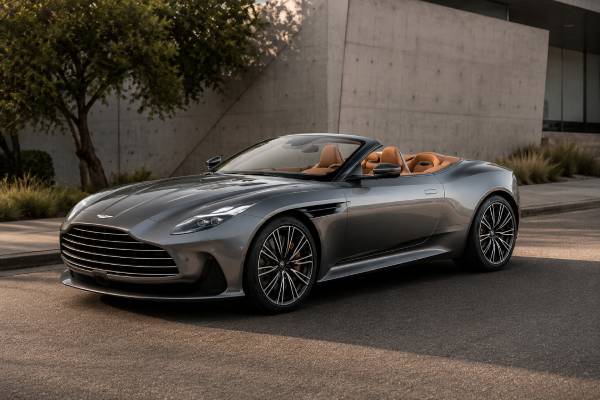
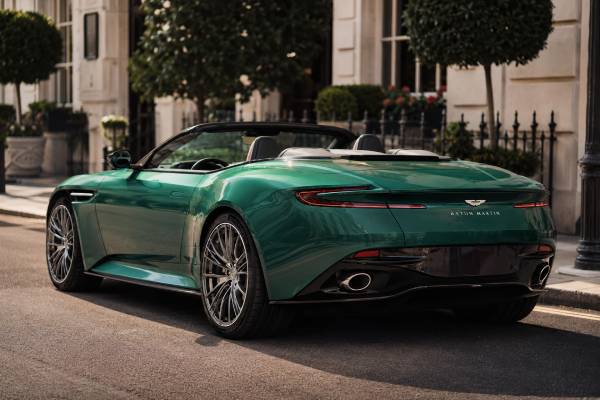
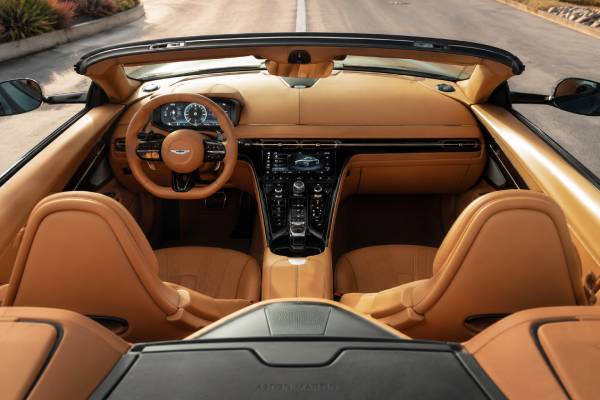
The Aston Martin DB12 S Volante combines the 690 hp S powertrain and chassis package with the DB12’s eight-layer folding fabric roof. It is therefore the most complex regular-production expression of the AM5 DB12: a 202 mph-capable rear-drive Super Tourer with standard carbon-ceramic brakes, 120-millisecond transmission shifts, revised differential and suspension calibration, fixed aerodynamic additions, and a roof that opens in 14 seconds. The appeal is obvious, but so is the need for precision when researching one. Aston Martin’s launch material confirms Coupe and Volante availability, yet some published S figures are presented for the model range rather than separated by body style. This guide does not invent a Volante-specific kerb weight or acceleration number where the manufacturer has not clearly distinguished it. Instead, it identifies the verified S hardware, the established Volante roof architecture, and the inspection points created when those systems meet. The result is a practical guide to driving, maintaining, specifying, and buying the car without treating it as either a roofless S coupe or a standard Volante with badges.
Table of Contents
- Two ideas in one DB12
- Verified DB12 S Volante specification
- S response with the roof lowered
- Brakes, tires, aero, and structure
- Cabin, roof, and touring choices
- Maintaining two high-demand systems
- How to buy and configure an S Volante
Two ideas in one DB12
The S Volante is built around a deliberate tension: the S package seeks quicker response and tighter control, while the Volante body prioritizes open-air atmosphere and roof packaging. A successful example preserves both qualities instead of allowing performance modifications to damage refinement or convertible repairs to compromise chassis behavior.
Aston Martin announced the DB12 S in October 2025 and stated that it could be ordered in Coupe and Volante forms, with deliveries beginning in the first quarter of 2026. The S raises engine output from 680 PS to 700 PS, revises the eight-speed gearbox, recalibrates launch control and throttle response, fits a thicker rear anti-roll bar, changes suspension geometry and software, retunes the electronic differential and steering, and makes carbon-ceramic brakes standard.
The Volante contribution is more than an electrically folding top. Its bonded-aluminum structure is reinforced for open-roof loads, its rear suspension is developed around the convertible body, and its luggage space changes when the roof is stored. The fabric canopy contains eight insulating layers and folds into a stack approximately 260 mm high. Opening takes 14 seconds and closing takes 16 seconds under the official operating conditions.
Combining the packages creates decisions that do not arise in either a standard coupe or a softer convertible. The car has the S model’s low front splitter and fixed rear aero, yet it may spend more time on scenic roads with changing surfaces. It has brakes designed for repeated high thermal load, yet roof-down touring exposes the cabin to grit, moisture, pollen, and ultraviolet light. It invites aggressive use through faster shifts and sound, but the roof mechanism and delicate interior reward smooth treatment and clean storage.
The correct comparison depends on the buyer’s priority. Against the standard DB12 Volante, the S offers more power, stronger braking hardware, sharper control, and clearer visual identity. Against the DB12 S coupe, it offers the sensory benefit of an open roof but adds mass, moving components, smaller usable luggage space, and greater sealing complexity. It is not objectively superior to both; it is the model for an owner who values both experiences enough to accept both sets of obligations.
Verified DB12 S Volante specification
The S Volante has the DB12 S model’s 700 PS V8, 800 Nm torque output, recalibrated eight-speed transaxle, standard carbon-ceramic brakes, and S-specific chassis systems. It also uses the DB12 Volante’s eight-layer K-fold roof architecture; unsupported body-specific figures such as a separate official S Volante kerb weight are omitted here rather than estimated.
| Parameter | Specification |
|---|---|
| Powertrain category | Internal-combustion engine |
| Engine layout | 4.0 L all-alloy twin-turbocharged V8 |
| Valve gear | Quad overhead camshafts |
| Turbochargers | Two twin-scroll units, one per cylinder bank |
| Fuel delivery | Direct sequential electronic fuel injection |
| Compression ratio | 8.6:1 |
| Maximum power | 700 PS / 690 bhp / 515 kW at 6,000 rpm |
| Maximum torque | 800 Nm / 590 lb-ft at 2,750–6,000 rpm |
| Lubrication | Wet sump |
| Parameter | Specification |
|---|---|
| Transmission | Rear mid-mounted ZF 8-speed automatic |
| Fastest stated shift time | Approximately 120 milliseconds |
| Drive layout | Rear-wheel drive |
| Propeller shaft | Carbon fiber |
| Differential | Electronic limited-slip differential with S calibration |
| Final-drive ratio | 3.083:1 |
| DB12 S launch figure, 0–60 mph | 3.4 seconds |
| DB12 S stated maximum speed | 325 km/h / 202 mph |
Aston Martin’s S announcement gives the 3.4-second figure for DB12 S while confirming both body styles, but it does not clearly publish a separate S Volante acceleration figure in that material. Treat 3.4 seconds as the announced S benchmark, not as a guaranteed body-specific instrumented result for every S Volante configuration.
| Parameter | Specification |
|---|---|
| Front suspension | Independent double wishbone |
| Rear suspension | Independent multi-link |
| Dampers | Adaptive DTX with S calibration |
| Rear anti-roll bar | 7% stiffer than standard DB12 |
| Steering | Electric power-assisted rack and pinion with S calibration |
| Front brakes | 410 × 38 mm carbon-ceramic discs; 6-piston calipers |
| Rear brakes | 360 × 38 mm carbon-ceramic discs; 4-piston calipers |
| Front wheels and tires | 21 × 9.5J; 275/35 ZR21 |
| Rear wheels and tires | 21 × 11.5J; 325/30 ZR21 |
| Parameter | Specification |
|---|---|
| Roof design | Electrically operated fabric K-fold |
| Insulation | Eight-layer canopy |
| Opening time | 14 seconds |
| Closing time | 16 seconds |
| Official launch operating speed | Up to 50 km/h / 31 mph |
| Folded stack height | Approximately 260 mm / 10.2 in |
| DB12 Volante luggage volume, roof raised | 206 L / 7.3 cu ft |
| DB12 Volante luggage volume, roof lowered | 169 L / 6.0 cu ft |
The luggage figures describe the DB12 Volante roof package on which the S Volante is based. Confirm the usable shape, separator position, and any market-specific equipment in the exact vehicle rather than relying on volume alone.
| Parameter | Specification |
|---|---|
| Body and seating | 2-door open-top body; 2+2 |
| Length | 4,725 mm / 186.0 in |
| Width including mirrors | 2,135 mm / 84.1 in |
| Maximum width excluding mirrors | 1,980 mm / 78.0 in |
| Wheelbase | 2,805 mm / 110.4 in |
| Fuel-tank capacity | 78 L / 20.6 US gal |
Actual mass, fuel consumption, emissions labeling, ride height, and option-related dimensions should be taken from the car’s market documentation and build record. A simple calculation based on standard S coupe and standard Volante weights would be technically unsound because equipment and homologation definitions do not combine arithmetically.
S response with the roof lowered
The S Volante’s special quality is the way quicker mechanical responses become audible and physical with the roof down. Gear changes, turbocharged torque, exhaust pulses, tire noise, and changes in wind pressure reach the driver more directly, making the car feel dramatic without requiring maximum speed.
The engine still produces its 800 Nm across a broad midrange, so the additional 20 PS over the standard Volante appears most clearly under sustained high load. In normal use, revised throttle mapping and the faster transmission are easier to feel. A small accelerator movement can be met with a more immediate answer, and a manual upshift arrives with less interruption when the car is accelerating hard.
Roof-down sound can make the S seem faster than the speedometer suggests. The standard four-outlet exhaust is more assertive than the regular DB12 system, while the optional titanium exhaust is 11.7 kg lighter and 1.5 dB louder in Aston Martin’s published comparison. The difference is not just volume; titanium can produce a harder, more metallic character as temperature changes.
That sensory intensity should not encourage poor mode selection. The wet program and stability systems exist because 325-section rear tires can still lose grip on cold pavement, standing water, dust, leaves, paint, or polished surfaces. With the roof open, a sudden shower also creates pressure to hurry. The correct response is to slow down and close the roof under permitted conditions, not attempt to outrun weather with 690 hp.
The electronic differential and revised rear roll stiffness help the S change direction more decisively. In a convertible, the driver may perceive additional body movement through the steering column, mirror, seat, or windshield surround over poor roads. Small differences from the coupe are expected; sharp impact noises, repeated cowl shake, or changes after a pothole strike are not. Tire pressure and wheel condition should be checked before assuming a structural problem.
Wind management changes with seat position, side-window height, wind deflector use, and speed. A taller driver sitting farther back may experience different turbulence from a shorter driver close to the windshield. Evaluate the exact seating position and intended passenger arrangement. The S’s performance seats can alter how high and far back an occupant sits, which affects both support and airflow.
Brakes, tires, aero, and structure
The S Volante depends on its contact patches and body attachments more than its power figure suggests. Standard carbon ceramics, low-profile tires, a low front splitter, bonnet vents, fixed rear spoiler, and convertible reinforcement all need to remain correct for the car to deliver its intended balance.
Carbon-ceramic discs remove approximately 27 kg of unsprung mass compared with the standard steel-brake package. That helps the adaptive dampers follow the road and reduces rotational mass, while the material’s heat tolerance supports repeated hard stops. The benefit is valuable in a convertible because the body already carries additional roof-system and reinforcement mass.
Their inspection cannot be reduced to mileage. Examine disc surfaces and edges for chips, impact damage, abnormal texture, contamination, and signs of severe heat. Confirm pad type and thickness, caliper condition, and any manufacturer wear measurement or indicator. Wheel removal must be performed carefully; one careless contact between a heavy wheel and a ceramic disc can create a repair disproportionate to the original task.
The approved Michelin Pilot Sport S 5 tires are part of the calibration. Front size is 275/35 ZR21 and rear size is 325/30 ZR21. Their age, heat cycles, pressure history, puncture repairs, and inner-edge wear can transform the car’s behavior before visible outer tread looks poor. A mixed brand, non-approved specification, or large tread-depth difference between sides deserves scrutiny.
S geometry may produce wear patterns that become expensive when ignored. Record tread depth at inner, center, and outer positions; inspect with the steering turned and, where safe, with the car lifted. After a pothole or curb strike, examine wheel barrels, tire sidewalls, toe, camber, steering center, and underbody. Vibration may originate in a bent wheel even when the face appears perfect.
The dual-element front splitter increases downforce and directs airflow, but its low position makes it vulnerable to ramps, parking stops, and transport equipment. Scratches on the lowest sacrificial surface may be ordinary; cracked mounting points, distorted panels, or a poorly bonded repair can affect stability and appearance. Measure garage transitions before purchase rather than assuming 120 mm of S coupe ground clearance translates safely to every approach angle and loaded condition.
Bonnet louvres extract heat from the V8’s hot-V area. Keep them free of leaves, detailing residue, and film edges that obstruct flow. Paint-protection film around each opening requires careful cutting and edge placement. An installer unfamiliar with heat and complex vents can leave lifted edges or knife marks.
The fixed rear spoiler and diffuser complete the S aero balance. They must coexist with the Volante’s roof cover and rear body movement without contact or misalignment. During a roof cycle, observe clearances around the deck and tonneau areas. After collision or cosmetic repair, verify that roof operation and aero-panel mounting were checked together rather than by separate shops working in isolation.
Cabin, roof, and touring choices
A well-configured S Volante should remain comfortable enough for a full day while holding occupants securely when the road becomes demanding. Seat choice, roof color, interior material, wind management, audio, and luggage planning have a greater effect on satisfaction than adding every visual option.
Standard 16-way Sport Plus seats provide broad adjustment and are likely to suit mixed road use. Optional carbon performance seats can improve support and reduce mass, but they may complicate entry, long journeys, and the reach to the seat belt. With the roof raised, check head clearance; with it lowered, assess wind at the chosen seat height. A seat that looks ideal in photographs may place an individual driver in a turbulent air stream.
The S cabin offers Accelerate and Inspire trim environments, including S-specific herringbone quilting or perforation, contrast details, and a red-anodized drive-mode controller. Open-roof use exposes these materials to more dust and sunlight than a coupe. Dark Alcantara can show pale contamination, light leather can take dye transfer, and contrast stitching can hold cleaning residue. Choose a combination that the owner is willing to maintain, not merely one that photographs dramatically at delivery.
The infotainment system uses twin 10.25-inch displays and retains physical controls for key driving and climate functions. Roof-down operation makes screen glare, voice pickup, and switch familiarity more important. Pair phones, test navigation, make a call at speed, use the cameras in bright and low light, and confirm that audio volume changes smoothly without masking warning sounds.
The 390-watt, 11-speaker system is adequate for many users. The 1,170-watt, 15-speaker Bowers & Wilkins system offers greater output and may retain more clarity against wind and tire noise, though it also adds cost and equipment. Test it with the roof both raised and lowered. A buzz may come from convertible trim rather than a speaker, and a roof position can alter perceived bass.
Roof color is a major exterior decision because it occupies a large visual area when raised. It should coordinate with paint and interior but also suit local climate and care. Pale fabric can display staining; very dark fabric absorbs heat and shows lint. Whatever the color, avoid automatic wash brushes, household waterproofers, and prolonged folding while damp.
Luggage planning should assume the roof will be used. Pack below the separator and leave clearance around moving components. Soft bags are more efficient than hard cases, and the rear seats can carry securely restrained light items. The car is nominally a 2+2, but it functions best as a two-person tourer when occupants, roof operation, and luggage all need space.
Maintaining two high-demand systems
S Volante maintenance has two parallel tracks: preserve a high-output S driveline and braking package, and keep a complex convertible enclosure dry, aligned, and electrically healthy. Neglect in either track can create faults in the other because shared battery, body, sensor, and drainage conditions link the systems.
Follow the VIN-specific service schedule and use current official procedures. Retain invoices that identify fluids, parts, software, brake condition, tire measurements, alignment, battery testing, roof adjustment, seal work, and campaign completion. A generic annual-service description is not enough for a car whose major consumables and roof system can each cost substantial sums.
Battery voltage is a common dependency. The roof uses significant electrical energy, and repeated cycles while stationary can lower reserve. Low voltage can also trigger drivetrain, suspension, camera, and infotainment warnings. Use a compatible maintainer during storage, allow proper system sleep, and test the battery and charging system if roof speed or electronic behavior changes. Do not keep cycling a slow roof.
Fabric care begins with dry debris removal and approved cleaning products. Inspect fold lines, stitching, rear glass, seals, headliner, and tension from both sides. Let the canopy dry fully before long storage in the lowered position. Clean drains according to official access instructions; poking an unsuitable wire into a passage can disconnect or puncture a tube.
Warning signs of water intrusion include musty odor, damp carpet, fogging, water marks, stained headliner, wet trunk trim, corrosion at connectors, and unexplained module faults. Investigate immediately. Drying the visible carpet without finding the entry route allows damage to continue underneath.
For performance use, monitor tire temperatures and pressures appropriately, inspect the low aero after road contact, and assess carbon ceramics with the correct method. Allow controlled cooldown after sustained load. Avoid applying cold wheel cleaner or water to very hot brakes. Keep contamination from tire dressings and detailing sprays away from disc surfaces.
The titanium exhaust, when fitted, needs inspection at joints, brackets, and clearances. Heat coloration can be normal, but impact dents or contact with the diffuser are not. Do not use aggressive metal polish on a finish whose intended appearance and surface treatment have not been confirmed.
Storage should normally leave the roof raised, fabric dry, windows and seals correctly seated, tires protected from prolonged deformation, and the battery supported according to manufacturer guidance. A clean breathable indoor cover is preferable to trapping moisture beneath an outdoor sheet. Periodic use should be long enough to warm systems properly rather than a short idle that adds condensation and consumes charge.
How to buy and configure an S Volante
The best S Volante is the one whose performance equipment, roof condition, and options match a defined use case. Buy with independent evidence, because its rarity and visual drama can make sellers emphasize specification while overlooking ceramic-brake wear, roof adjustment, or early-life software history.
For a new order or nearly new car, start with driving position and environment. Choose seats after a long fitting, not from images. Decide whether titanium exhaust sound suits the places the car will be used. Select paint, roof, and cabin materials with repair access and cleaning effort in mind. Confirm whether the car will enter steep garages, use automated parking systems, carry touring luggage, or spend winters stored.
For a used example, obtain the VIN, factory build sheet, service and warranty records, campaign status, ownership timeline, and any body, roof, wheel, tire, brake, or software invoices. Confirm that it is a factory S Volante rather than a standard Volante with S-style exterior parts. The correct car should combine S engine and control calibration, carbon ceramics, S aero and exhaust, interior identifiers, and the Volante roof structure.
Inspect the roof dry, then cycle it several times under proper conditions. Observe glass indexing, latch operation, tonneau movement, side flaps, headliner, clearances near the fixed spoiler, and final sealing. A controlled water test and moisture inspection are justified. Run a complete diagnostic scan before and after cycling because intermittent roof or voltage faults may not leave a dashboard warning.
The mechanical inspection should start cold and include fluid leaks, cooling, transmission engagement, differential behavior, adaptive damping, steering, brakes, tires, wheels, alignment clues, underbody, splitter, cameras, driver assistance, displays, climate, seats, audio, and both keys. Ask for measured ceramic and tire condition rather than verbal reassurance.
Drive with the roof up and down. Listen for a concentrated whistle, glass movement, cowl shake, suspension noise, brake vibration, differential binding, or exhaust contact. Test gentle maneuvering, steady cruising, varied surfaces, progressive braking, and more responsive drive modes only after temperature and conditions are suitable. The ability to accelerate hard is already established; refinement and consistency are what the test must discover.
Compare total ownership exposure with alternatives. A DB12 S coupe is lighter, simpler, and more structurally direct. A standard Volante provides most of the open-air experience with steel brakes available and a softer price point. The S Volante justifies itself when the buyer genuinely wants sharper chassis response, standard ceramics, S design, and the open roof together—not when it is chosen solely as the most expensive line on a model list.
A careful purchase leaves room in the budget for tires, ceramic assessment, alignment, roof service, insurance, secure storage, transport, and specialist diagnostics. With those provisions, the S Volante can deliver unusually broad theater: disciplined high-performance control when driven hard and a roof-down grand-touring experience at speeds where the landscape, engine, and cabin all remain part of the journey.
References
- Aston Martin DB12 S: The new pinnacle of performance and style 2025
- DB12 S | Class-Leading Super Tourer | Aston Martin 2026
- DB12 Volante | Luxurious Top-Down Car 2026
- Introducing DB12 Volante: The ultimate open-top Super Tourer 2023
- Aston Martin Luxury Car Servicing | Aston Martin 2026
- Safety Campaign Checker | Aston Martin 2026
Disclaimer
This article is for general information and is not professional diagnosis, repair, legal, financial, driving, or purchasing advice. Specifications, torque values, intervals, roof procedures, software, campaign status, and equipment vary by VIN, market, and model year; verify every decision against the exact car’s official service documentation. Share this guide on Facebook, X/Twitter, or an Aston Martin owners’ group when it can help another S Volante buyer.