
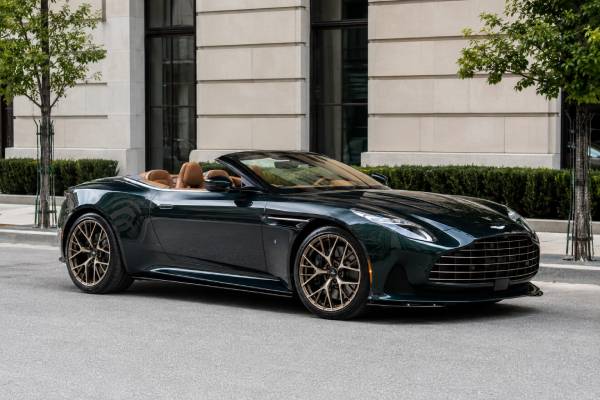
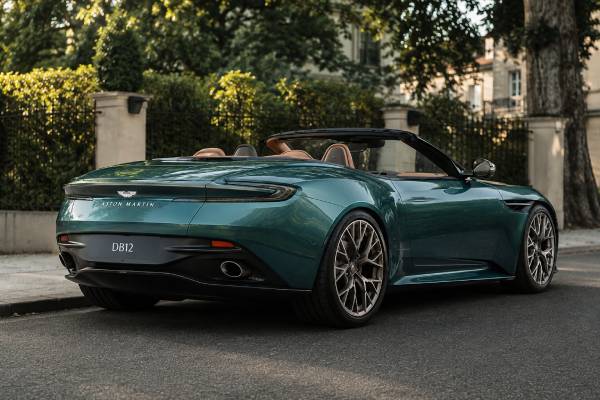
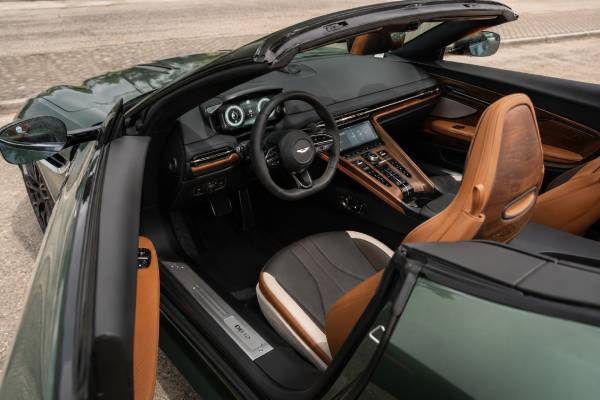
Aston Martin created the DB12 Volante 60th Anniversary Edition to celebrate six decades since the rare Short Chassis Volante established the name in 1965. Limited to 60 DB12 examples, the Q by Aston Martin edition combines Pentland Green paint, a Westminster Green fabric roof, satin-bronze wheels, a machined bronze side strake, and a tri-tone cabin with the standard Volante’s 671 hp V8 and 202 mph capability. It is not a faster DB12, and it shares the regular car’s roof mechanism, dimensions, core chassis, and service needs. Its distinction lies in how a historically important body-style name is interpreted through materials that are difficult to repair invisibly or replace casually. This makes the edition unusually dependent on condition, documentation, and finish care. The following guide explains the production context, exact technical package, Q design choices, real-world roof-down usability, preservation methods, and purchase checks. It is written for buyers who want to understand both the modern open-top grand tourer and the limited commission attached to it.
Table of Contents
- Sixty years of the Volante name
- 60th Anniversary Edition specifications
- Q colors, metals, and cabin craft
- What the edition is like to use
- Protecting bronze, fabric, and leather
- Provenance, condition, and inspection
- Collector logic and purchase decision
Sixty years of the Volante name
The 60th Anniversary Edition marks the Volante badge’s 1965 origin rather than an anniversary of the DB12 itself. Aston Martin limited the DB12 version to 60 cars and created a separate run of 60 Vanquish Volantes, so the production statement should not be misread as 60 cars shared between both models.
The starting point was the Short Chassis Volante, introduced in 1965 and produced in only 37 examples. It connected the final DB5-era chassis with styling and technical elements associated with the incoming DB6 period. “Volante,” meaning flying in Italian, then became Aston Martin’s established name for open models across multiple generations.
The anniversary pair was announced in September 2025, with deliveries scheduled for the fourth quarter. Q by Aston Martin developed a common design language for both, but the DB12 and Vanquish remain mechanically different vehicles with separate production limits. A DB12 buyer should therefore verify the exact model designation rather than relying on generic “Volante 60th” paperwork or accessories.
This edition retains the 680 PS DB12 Volante powertrain. There is no factory output increase, unique final drive, revised suspension tune, or S-model carbon-ceramic package stated as part of the anniversary specification. Its purpose is commemorative and aesthetic: it celebrates a lineage by pairing traditional green and tan colors with bronze metalwork and contemporary cabin execution.
That is an advantage for some owners. The car delivers the established DB12 Volante driving experience without introducing a one-off mechanical calibration that could complicate long-term support. Normal DB12 service infrastructure applies to the engine, gearbox, roof, electronics, and chassis. At the same time, the exterior and interior details need edition-aware repair decisions because an ordinary replacement finish may be mechanically acceptable but historically and visually wrong.
The edition is best understood in four categories:
- Production identity: one of 60 DB12 Volante 60th Anniversary Editions.
- Mechanical base: standard-output 671 hp DB12 Volante.
- Q specification: exclusive paint, roof, wheels, bronze and cabin details.
- Historical theme: a factory commemoration of the Volante name’s first 60 years.
Keeping those categories separate helps establish what can be serviced routinely, what must be preserved, and what evidence a buyer should demand.
60th Anniversary Edition specifications
The anniversary model uses the DB12 Volante’s 4.0-liter twin-turbo V8, rear transaxle, electronic differential, adaptive suspension, and eight-layer K-fold roof. Its official performance remains 0–60 mph in 3.6 seconds and 202 mph, while the special-edition content is concentrated in colors, materials, wheels, and identifying details.
| Parameter | Specification |
|---|---|
| Official model | Aston Martin DB12 Volante 60th Anniversary Edition |
| Commissioning division | Q by Aston Martin |
| DB12 production limit | 60 examples |
| Announcement date | September 2025 |
| Planned first deliveries | Fourth quarter of 2025 |
| Anniversary marked | 60 years of the Volante name, 1965–2025 |
| Mechanical basis | DB12 Volante, standard 680 PS specification |
| Parameter | Specification |
|---|---|
| Powertrain category | Internal-combustion engine |
| Engine | 4.0 L all-alloy twin-turbocharged V8 |
| Valve gear | Quad overhead camshafts |
| Fuel system | Direct sequential electronic fuel injection |
| Compression ratio | 8.6:1 |
| Maximum power | 680 PS / 671 bhp / 500 kW at 6,000 rpm |
| Maximum torque | 800 Nm / 590 lb-ft at 2,750–6,000 rpm |
| Lubrication | Wet sump |
| Parameter | Specification |
|---|---|
| Transmission | Rear mid-mounted ZF 8-speed automatic |
| Drive | Rear-wheel drive |
| Propeller shaft | Carbon fiber |
| Rear differential | Electronic limited-slip differential |
| Final-drive ratio | 3.083:1 |
| 0–60 mph | 3.6 seconds |
| 0–100 km/h | 3.7 seconds |
| Maximum speed | 325 km/h / 202 mph |
| Parameter | Specification |
|---|---|
| Roof | Eight-layer fabric K-fold in Q Westminster Green |
| Opening time | 14 seconds |
| Closing time | 16 seconds |
| Official launch operating speed | Up to 50 km/h / 31 mph |
| Length | 4,725 mm / 186.0 in |
| Width including mirrors | 2,135 mm / 84.1 in |
| Height | 1,295 mm / 51.0 in |
| Wheelbase | 2,805 mm / 110.4 in |
| Fuel capacity | 78 L / 20.6 US gal |
| Luggage volume, roof raised | 206 L / 7.3 cu ft |
| Luggage volume, roof lowered | 169 L / 6.0 cu ft |
| Area | Edition detail |
|---|---|
| Body paint | Q Pentland Green |
| Fabric roof | Q Westminster Green |
| Front grille | Anodized bronze finish |
| Wheels | 21-inch Q design in satin bronze with diamond-turned edges |
| Brake calipers | Black |
| Side strake | Bronze component machined from solid billet aluminum |
| Q identification | Enamel Q badge and edition-specific detailing |
| Cabin colors | Centenary Saddle Tan, Ivory, and Woven leather |
| Cabin veneer | Dark Walnut Open Pore |
| Interior accents | Bronze controls, 60th embroidery, and etched/infilled seatback detail |
The tables distinguish model-defining equipment from options that may vary on individual cars. Carbon-ceramic brakes, audio, seats, and other configurable features should be confirmed on the build sheet. Do not assume every limited-edition example is identical beyond the officially defined anniversary package.
Q colors, metals, and cabin craft
The anniversary specification is built around controlled tonal variation rather than high contrast. Greens, bronze, saddle tan, ivory, woven leather, and open-pore walnut create a warm, traditional atmosphere while the DB12’s shape and technology remain modern.
Q Pentland Green covers the body, and Q Westminster Green gives the fabric roof a related but visibly different surface. The effect depends on light. Paint reflects sharply through clear coat, while woven roof fabric absorbs light and reads softer. A good repair must respect that relationship; a merely “close” green roof or paint blend may be obvious when both surfaces are viewed together outdoors.
The anodized bronze grille is the front focal point. Anodizing is not the same as bronze-colored paint: it changes the metal surface through an electrochemical process and can show depth, tonal variation, and directional effects. Abrasive polishing can remove or unevenly alter that finish. Stone impacts, insect residue, and aggressive alkaline cleaner should be addressed early with approved methods.
The 21-inch wheels use satin bronze with diamond-turned edges. This combination is difficult to refinish because the satin painted areas and machined highlights require separate preparation and controlled clear coating. Too much machining changes the edge profile; the wrong gloss level makes a repaired wheel stand apart. Black calipers keep the brake area subdued and should not be repainted in a fashionable color without preserving the originals and documenting the change.
The side strake is especially significant because it is machined from a solid billet of aluminum and finished in bronze. It is not an ordinary plated strip. Check its edges, surface, mounting, and relationship to the Q enamel badge. A replacement made from a different alloy or coated to imitate bronze may look acceptable in photographs while losing the material distinction central to the commission.
Inside, Centenary Saddle Tan supplies the dominant warmth, Ivory provides contrast, and Woven leather adds texture. Dark Walnut Open Pore avoids a glossy furniture-like appearance and lets the grain remain tactile. Bronze controls link the cabin to the exterior metalwork. The 60th embroidery and etched, infilled seatback design carry the anniversary message without turning the dashboard into a plaque display.
Material combinations should be evaluated as a set during a purchase. One newly replaced light-leather panel may differ in grain and color from its neighbors. Open-pore wood can darken or dry unevenly. Bronze controls can acquire wear patterns. These changes may be honest signs of use, but isolated refinishing can make the cabin less coherent than careful, even aging.
What the edition is like to use
The anniversary edition is mechanically a DB12 Volante, so its daily character is defined by broad V8 torque, a rear transaxle, adaptive damping, a compact 2+2 cabin, and limited roof-down luggage capacity. The special materials add occasion but do not remove the compromises of a wide, low, high-output convertible.
The 800 Nm plateau allows relaxed progress without repeated downshifts. In GT-oriented settings, the gearbox can keep engine speed modest and the dampers absorb long-distance undulations. Select a more responsive powertrain program and the car becomes much more immediate, holding gears and opening the exhaust while the electronic differential supports traction.
The roof changes the experience more than the drive mode. With it raised, eight insulation layers aim to provide coupe-like comfort, although some wind and fabric-roof noise remain normal. Lowered, the engine sounds closer and the cabin becomes part of the landscape. A 14-second opening time is convenient, but the mechanism should be operated only when the luggage separator, clearance, battery state, speed, and weather satisfy the official procedure.
The Volante’s rear seats are occasional. They work better for securely restrained bags than for adult touring, particularly when front occupants are tall. Roof-up trunk volume is 206 liters and falls to 169 liters with the top stored. Soft luggage shaped to the compartment is far more effective than large hard-shell cases. Owners should test-pack while cycling the roof before a trip.
Twenty-one-inch tires deliver rapid steering response and high grip, yet they make potholes and wheel damage meaningful concerns. The rear tires are 325 mm wide, so standing water and cold conditions require restraint. A 202 mph capability does not make the car invulnerable to aquaplaning or short sightlines. The wet mode and driver-assistance systems support judgment; they cannot replace it.
The standard steel-brake package is powerful and appropriate for road touring. Carbon ceramics, where fitted, reduce unsprung mass and improve repeated high-temperature capacity, but they change cost and inspection needs. The cabin’s 10.25-inch central touchscreen and driver display are supplemented by physical controls for important functions. This balance is useful with the roof down, when glare, vibration, gloves, or attention make menu-heavy interaction undesirable. Test phone pairing, navigation, voice pickup, cameras, climate control, audio, seat functions, and all keys in real driving conditions.
The car’s width is more likely to affect daily life than its length. At 2,135 mm including mirrors, it needs a carefully measured garage door, parking space, and route through older streets. Surround-view cameras help, but low wheels, the front splitter, and wide rear body still require direct awareness.
Protecting bronze, fabric, and leather
Preservation should be finish-specific: bronze, anodized metal, diamond-cut wheels, open-pore walnut, woven roof fabric, and pale leather cannot all be cleaned or corrected with one universal detailing product. The least aggressive approved method is usually the safest starting point.
For the bronze grille and side strakes, remove loose debris before contact washing. Use clean tools dedicated to those surfaces and avoid metal polish unless Aston Martin’s finish guidance explicitly permits it. Abrasive compounds can create bright patches, alter satin character, or thin the surface treatment. Dry crevices carefully so mineral deposits do not collect around edges and badges.
Wheel care needs equally disciplined handling. Rinse away grit, use a pH-appropriate cleaner safe for the exact finish, and avoid scrubbing a hot wheel. Inspect diamond-turned edges for clear-coat lifting or white corrosion. Early professional advice may prevent a small defect from spreading. When tires are changed, photograph each wheel and ask the shop to use protected equipment and ceramic-safe procedures if carbon brakes are present.
Pentland Green paint can be protected with carefully installed film, but the edition’s grille, strakes, badges, and panel transitions make installer skill important. Film edges should not interfere with metal parts or trap contamination. Record the product, installation date, templates, and any knife-free method used. Coatings and waxes must not be allowed to stain the Westminster Green roof.
Clean the fabric roof after vacuuming or gently lifting dry debris. Bird contamination should be treated promptly. Avoid pressure washing at seals, harsh household detergent, hard brushes, and folding the roof while damp. Let it dry raised, then inspect fold lines and stitching. Waterproofing products should match manufacturer guidance; over-application can leave patchiness and attract dirt.
Drainage and seals are functional preservation items. Watch for damp carpets, musty odor, condensation, water marks, slow draining, or moisture in the trunk and rear cabin. Have drainage paths serviced through the correct access method. Improvised rods can detach a hose or damage a passage, turning preventive work into a hidden leak.
Centenary Saddle Tan and Ivory leather need regular gentle cleaning before grime becomes embedded. Test any product in an inconspicuous area and keep moisture away from perforations and stitching. Denim dye transfer is easier to reduce early than after it migrates into a light coating. Woven leather should be cleaned along its structure rather than scrubbed across raised texture.
Open-pore walnut should not receive glossy furniture polish or heavy oil. Its low-build finish is intended to preserve natural texture, and uneven saturation can darken the grain permanently. Dust with a soft cloth and use only approved care products. Bronze interior controls need the same caution as exterior metal: repeated abrasive polishing can erase the finish’s original character.
Storage should be dry, secure, and electrically supported according to the car’s official guidance. Leave the roof raised and clean for prolonged storage, maintain battery health with compatible equipment, protect tires from extended deformation, and avoid covering a wet vehicle. A climate-controlled environment helps, but regular inspections and proper driving cycles remain necessary.
Provenance, condition, and inspection
A buyer must prove that the car is one of the 60 DB12 editions and then assess it as a complete modern Volante. Edition identity does not excuse mechanical faults, and a sound standard Volante cannot become the anniversary model through paint and bronze-colored parts.
Begin with VIN, original invoice, factory build sheet, Q documentation, registration history, service invoices, keys, books, and warranty records. Confirm the production description exactly. Because Aston Martin also built 60 Vanquish Volante anniversary cars, generic documents must state DB12 clearly. Any numbered plaque or certificate should align with the vehicle and supporting records.
Create an edition inventory before discussing price. Verify Pentland Green paint, Westminster Green roof, correct Q wheel design and finish, black calipers, anodized bronze grille, billet-aluminum bronze side strakes, enamel Q badges, tri-tone leather scheme, Dark Walnut Open Pore, bronze cabin accents, 60th embroidery, and etched/infilled seatback details. Compare both sides and all four wheels for finish consistency.
Inspect paint and body under natural or high-quality diffused light. Look for overspray, masking edges, sanding marks, film cuts, color mismatch, disturbed fasteners, undertray damage, and repaired composite pieces. Bonded-aluminum structure requires model-aware assessment. A cosmetic bumper repair is not the same as structural work, but both should be disclosed with photographs and invoices.
The roof inspection should include fabric condition, rear glass, stitching, tension, headliner, seals, drains, deck movement, glass indexing, warning messages, and repeated full cycles. Perform a controlled water test when possible and inspect hidden low points for moisture. A car that has been detailed immediately before sale may smell clean while retaining dampness below the carpet.
Mechanical evaluation begins from cold. Scan every module, preserve fault history, and review software and campaign status before codes are cleared. Check engine and cooling systems, transmission behavior, electronic differential, adaptive dampers, steering, suspension joints, tires, wheels, brakes, exhaust, cameras, driver assistance, seats, infotainment, audio, climate control, lights, and both keys.
Tires should be measured at several positions across each tread. Record age, approved specification, puncture history, and sidewall condition. Inspect inner wheel barrels for impact damage. If carbon-ceramic brakes are fitted, obtain a specialist condition report rather than a casual visual opinion.
Drive the car roof-up and roof-down over varied surfaces. Listen for seal whistles, trim movement, suspension noise, brake vibration, differential binding, exhaust contact, and abnormal body shake. Verify straight tracking and smooth low-speed gearbox engagement. Strong acceleration should be sampled only after temperatures, legality, road, and insurance permit; it is less diagnostic than consistency across ordinary operation.
Check current safety campaigns by VIN in the relevant market. Early DB12-related actions have addressed an oil-cooler hose and rearview-camera display behavior in the United States. A model-level search or seller assurance is insufficient because production range and repair status determine whether work applies.
Collector logic and purchase decision
The 60th Anniversary Edition makes sense when a buyer values the Volante lineage, the exact Q palette, and a 60-car DB12 production limit. It is not the right choice for someone primarily seeking more power, the lowest operating cost, or freedom to modify finishes without affecting edition integrity.
Its collectibility rests on several factors rather than scarcity alone. The Volante name has genuine historical depth, the Short Chassis origin is unusually rare, the anniversary timing is clear, and the specification is visually cohesive. Against that, the car is mechanically a standard-output DB12 Volante, and long-term demand for recent special editions can fluctuate. No responsible purchase should assume guaranteed appreciation.
Condition grading will likely emphasize surfaces that are difficult to reproduce. Correct bronze tone, undamaged billet strakes, original wheel machining, healthy roof fabric, coherent tri-tone leather, intact seatback details, and unaltered walnut may distinguish excellent cars from merely presentable ones. A complete service history and dry roof system matter just as much, because future collectors do not want an original interior surrounded by electrical or structural problems.
Mileage should be interpreted, not feared. Regular, well-documented use can keep seals, fluids, battery, brakes, and mechanisms functioning. Long inactivity can create flat-spotted tires, discharged batteries, stuck components, condensation, and stale fluids. Conversely, high mileage with exposed-road stone damage and worn light leather requires realistic pricing. The best history explains use and care together.
Modifications should preserve reversibility. Tire changes must maintain approved specification. Exhaust, suspension, software, wheel color, caliper color, audio, and trim alterations can weaken the edition’s coherence even when workmanship is good. Retain every original part and record any change. Permanent alteration of bronze components, embroidery, seatbacks, badges, or Q paint is especially difficult to justify.
Before purchase, obtain an agreed-value insurance quotation and discuss edition-specific repair with the insurer. Identify a body shop and wheel specialist capable of reproducing Q finishes, and confirm parts availability through an Aston Martin retailer. Secure indoor storage and careful transport may be more relevant than a conventional depreciation forecast.
Compare the car with three alternatives: a standard DB12 Volante in a preferred personal specification, a DB12 S Volante for more performance focus, and another factory Q or heritage edition for stronger collector emphasis. The anniversary model wins when its combination of traditional green, bronze craft, open-roof use, and formal Volante history is the attraction—not simply because its production number is smaller.
Used as intended, it can be both commemorative object and capable road car. The balanced approach is to drive it enough to preserve function, protect its unique surfaces, document every service and repair, and avoid turning conservation into inactivity. That gives the next owner evidence that the car’s story continued after delivery rather than ending in a storage bubble.
References
- Volante 60th Anniversary Editions | Limited Edition Open-Top Luxury | Aston Martin 2026
- Q by Aston Martin celebrates 60 years of Volante with exclusive anniversary editions 2025
- DB12 Volante | Luxurious Top-Down Car 2026
- Introducing DB12 Volante: The ultimate open-top Super Tourer 2023
- DB12 Quick Start Guide | Aston Martin 2026
- Aston Martin Luxury Car Servicing | Aston Martin 2026
Disclaimer
This article provides general information and is not professional diagnosis, repair, legal, financial, appraisal, or purchasing advice. Specifications, torque values, service intervals, roof procedures, finish care, software, and campaign status can vary by VIN, market, model year, and equipment; verify them with the exact car’s official service documentation. Please share this guide on Facebook, X/Twitter, or an Aston Martin owners’ community when it can assist another anniversary-edition buyer.