
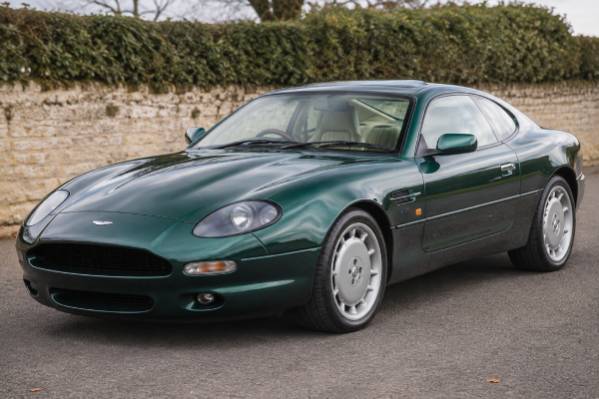
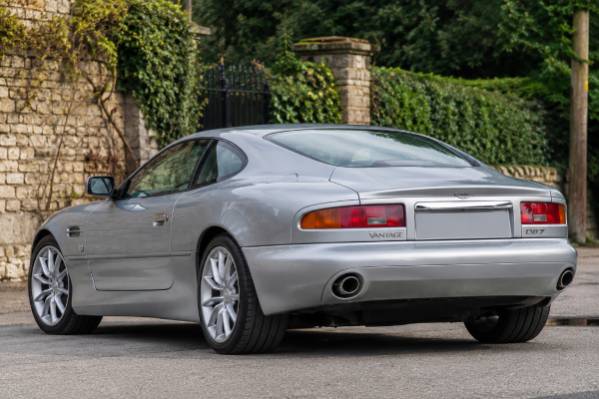
The six-cylinder Aston Martin DB7 is the version that changed the company’s direction. Introduced in 1994, it combined Ian Callum’s elegant bodywork with a TWR-developed, supercharged 3.2-litre straight-six and a chassis rooted in proven Jaguar engineering. The result was not a stripped-out sports car but a fast, compact grand tourer with unusually delicate steering, strong mid-range thrust, and enough practicality for long-distance use. It also became the first Aston Martin in decades to be built in meaningful numbers.
Today, the original DB7 is attractive because it offers the cleanest styling in the range and a more agile feel than the later V12 cars. It is also a complex, hand-finished vehicle whose purchase price can be misleading. A sound example can be rewarding; a neglected one can absorb major sums through corrosion, cooling faults, aging electronics, and unavailable trim. The sections below explain the exact specification, driving character, engineering changes, maintenance priorities, and inspection points that matter most.
Table of Contents
- Why the original DB7 matters
- DB7 3.2 technical data
- Performance and road manners
- Engineering and production evolution
- Maintenance priorities
- Known problems and warning signs
- Buying the right six-cylinder DB7
Why the original DB7 matters
The 3.2-litre DB7 matters because it was both a commercial rescue plan and a convincing Aston Martin in its own right. It gave the company a lower-volume-production method that was more modern than the hand-built V8 cars, yet it retained the long-bonnet proportions, leather-lined cabin, and relaxed high-speed ability expected of the badge.
The project began under the internal code NPX. Ford ownership gave Aston Martin access to engineering resources, while the former JaguarSport plant at Bloxham provided a suitable production base. TWR developed the mechanical package around Jaguar-derived architecture, and Ian Callum shaped the exterior into a design that looked new without rejecting the marque’s past. The DB7 was shown at Geneva in 1993 and entered production in 1994.
Calling the car merely a rebodied Jaguar misses the amount of work involved. The supercharged engine had its own cylinder head, induction system, management, cooling arrangement, and character. The suspension geometry, spring and damper tuning, steering response, body structure, interior, and exterior panels were developed for the Aston. The steel semi-monocoque also used composite parts, including several exterior panels, to control weight and permit lower-volume tooling.
The original coupé is especially significant because it presents the design in its least altered form. Compared with the later V12 Vantage, it has a smaller grille, simpler lamp treatment, lighter visual detailing, and less mass over the front axle. Its performance is strong rather than overwhelming, so the driver can use more of the engine and chassis on normal roads.
Production totals vary slightly among published records, but approximately 1,578 six-cylinder coupés were built. Manuals are much less common than automatics. That rarity does not automatically make every manual more valuable: condition, originality, corrosion, documentation, and the quality of previous repairs remain more important than gearbox type alone.
DB7 3.2 technical data
This DB7 is a front-engined, rear-wheel-drive petrol coupé powered by a supercharged 3,228 cc straight-six. The manual and automatic versions use different gearboxes, and some period sources list slightly different power or weight figures by market and production phase. The data below reflects the normal 335 bhp manual specification unless a variation is stated.
| Specification | Value | Notes |
|---|---|---|
| Engine family | AJ6-family, TWR-developed Aston Martin unit | Longitudinal front installation |
| Configuration | Inline six, aluminium alloy construction | Double overhead camshafts, 24 valves |
| Displacement | 3,228 cc (3.2 L) | 91.0 mm bore × 83.0 mm stroke |
| Induction | Eaton Roots-type supercharger | Water-cooled charge-cooling circuit |
| Fuel system | Electronic multi-point sequential injection | Early cars used Zytek management; later cars received revised electronics |
| Compression ratio | 8.3:1 | Low ratio supports forced induction |
| Maximum power | 335 bhp (250 kW) | Manual specification; commonly quoted at about 5,750 rpm |
| Maximum torque | 489 Nm (361 lb-ft) | At 3,000 rpm |
| Fuel tank | 89 L (23.5 US gal) | Premium unleaded is appropriate |
| Specification | Value | Configuration |
|---|---|---|
| Drive type | Rear-wheel drive | Front engine, conventional propeller shaft |
| Manual gearbox | Getrag 290, 5-speed | Stronger enthusiast demand; heavy clutch action is normal |
| Automatic gearbox | GM 4L80-E, 4-speed | Some automatic cars were rated at a lower output |
| Differential | Limited-slip differential | Condition and fluid history affect smooth operation |
| Measure | Value | Condition |
|---|---|---|
| 0–60 mph | About 5.8 seconds | Manual coupé; period figures vary slightly |
| Top speed | About 165 mph (266 km/h) | Manual coupé |
| Power-to-weight character | Fast grand tourer rather than lightweight sports car | Performance depends strongly on transmission and condition |
| Specification | Value | Notes |
|---|---|---|
| Body style | Two-door 2+2 coupé | Rear seats are best treated as occasional seating or luggage space |
| Construction | Steel semi-monocoque with composite exterior panels | Panel material varies by location and production phase |
| Length | Approximately 4,631–4,646 mm (182.3–182.9 in) | Published values differ by measuring convention |
| Width | Approximately 1,820–1,830 mm (71.7–72.0 in) | Excluding mirrors |
| Height | Approximately 1,237–1,268 mm (48.7–49.9 in) | Market and specification differences |
| Wheelbase | 2,591 mm (102.0 in) | Shared across regular DB7 coupé and Volante models |
| Kerb weight | Approximately 1,725 kg (3,803 lb) | Definition and equipment level vary |
| Seating | Four | Limited rear legroom and headroom |
| Specification | Value |
|---|---|
| Front suspension | Independent double wishbones, coil springs, dampers, anti-roll bar |
| Rear suspension | Independent layout with double wishbones and longitudinal control arms |
| Steering | Power-assisted rack and pinion |
| Brakes | Disc brakes with anti-lock braking; specification evolved during production |
| Common tire size | 245/40 ZR18 |
| Wheel arrangement | 18-inch alloy wheels; several factory styles were offered |
Performance and road manners
A healthy manual DB7 feels quick because its torque arrives early and builds smoothly, not because it delivers a sudden modern turbocharged hit. The supercharger gives useful response from low engine speed, while the straight-six remains refined enough for sustained motorway running.
The engine’s defining feature is its broad mid-range. Peak torque arrives at 3,000 rpm, so the car does not need constant high-rev driving. The supercharger whine, intake sound, and six-cylinder exhaust note add character without turning the DB7 into a noisy car. Full performance depends on the charge-cooling system working correctly; a weak car may still run smoothly while producing much less boost than it should.
The five-speed manual gives the clearest connection to the engine. Its shift can feel firm, and the clutch is heavier than in a modern GT, but the gearing suits the torque curve. The four-speed automatic is durable when maintained and makes sense for relaxed touring, yet its wide ratios and slower responses soften acceleration. Some automatic cars also carried a lower nominal power rating, so buyers should confirm the exact specification rather than assuming every 3.2 has the same output.
Chassis balance is one of the coupé’s strongest qualities. The steering is measured and communicative, and the car settles into bends with a fluid response that rewards smooth inputs. It is not happiest when driven like a short-wheelbase track car. Early braking, one clean steering movement, and progressive throttle suit it better than abrupt direction changes.
Ride quality is generally compliant for a car on 18-inch wheels, but worn bushes, tired dampers, incorrect tires, or poor alignment can make a DB7 feel nervous and heavy. A properly sorted example should track straight, absorb ordinary road imperfections without crashing, and load its outside tires progressively. Tramlining, rear-steer sensations, or steering kickback usually point to condition rather than an inherent flaw.
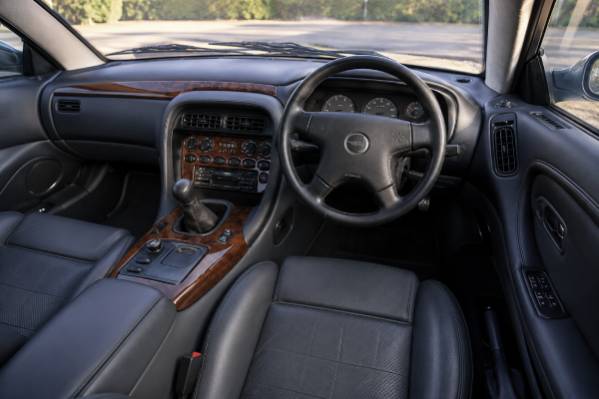
The cabin reinforces the grand-touring role. Front-seat comfort is good for many drivers, but the pedal position and limited adjustment can feel cramped, especially in early cars. The rear seats are too small for most adults and are more useful for soft luggage. Boot space is adequate for a weekend, provided the owner packs around its shape rather than expecting hatchback flexibility.
Engineering and production evolution
The six-cylinder DB7 changed substantially during its five-year life, so production date matters. Later cars adopted many improvements developed for the Volante, making them easier to live with without changing the basic engine or character.
Early cars are the purest visually. Their distinctive wheels, simpler safety equipment, and original cabin details appeal to collectors, but they also contain more low-volume components and early electronic systems. Zytek engine management requires a specialist who understands the platform; generic diagnostic assumptions can waste time and money.
When the Volante was developed, Aston Martin revised hundreds of components. A portion of those changes transferred to the coupé in the mid-1990s. Depending on market and build date, improvements included revised body details, softer suspension tuning, updated electrical systems, dual airbags, improved climate-control operation, and numerous trim and quality changes. These cars are often described informally as later or Series 2 examples, although sellers do not always use the terminology consistently.
Panel construction also deserves attention. The DB7 combined a steel structure with composite bonnet, boot, sill, and other panels in varying combinations. Composite parts do not rust, but they can crack, distort, become porous after damage, or show bubbling beneath paint. Steel parts can corrode around seams, mounting points, glass apertures, wheel arches, floors, and structural attachments. The mixed-material construction therefore demands an inspector who can distinguish corrosion from composite deterioration and old repairs.
The DB7 was assembled at Bloxham using a distributed production process. Bodies were manufactured and painted away from final assembly during much of the six-cylinder period, then completed with the engine, running gear, leather, carpet, and wood trim. Small production volumes and hand finishing mean panel gaps and trim details may not look as uniform as on a mass-produced German coupé. The goal is not absolute modern precision but consistency from side to side and evidence that any variation is original rather than accident damage.
A factory Works Prepared car may include approved performance, cooling, chassis, or cosmetic changes. Such cars can be desirable, but documentation is essential. A badge, plaque, or later-added part is not proof of factory work. The invoice history should identify who performed the conversion, what parts were installed, and whether later maintenance preserved the intended specification.
Maintenance priorities
The best maintenance strategy is preventive and condition-led. Annual mileage may be low, but age affects every hose, seal, bearing, electrical connector, fluid, and bonded trim part. A DB7 that has covered little distance can require more recommissioning than one used regularly and serviced by a marque specialist.
Start with the cooling and charge-cooling systems. The engine has conventional coolant circuits plus an intercooler arrangement for the supercharger. Check fluid levels only when safe, inspect the radiator and coolers for leaks or blocked fins, confirm that fans operate, and replace aged hoses before they fail. Low intercooler fluid can indicate an external leak or internal loss into the inlet system. Persistent coolant loss, sweet smells, staining, or rising temperature under load should never be dismissed.
Engine oil changes should be time-based as well as mileage-based. Use the viscosity and specification confirmed for the exact VIN, market, and climate by official service information or a qualified Aston Martin specialist. Avoid universal online recommendations that ignore production changes. The same principle applies to gearbox, differential, power-steering, brake, and coolant fluids. “Lifetime fill” is not a useful idea for a vehicle of this age.
The supercharger is durable when correctly lubricated and aligned. Listen for abnormal rattling, grinding, or a rough nose-bearing sound. Inspect its drive belt and related pulleys, and investigate oil staining around the nose housing. A quiet supercharger does not guarantee full output, so boost performance and charge-cooler condition should be assessed during a long road test.
The timing-chain system is another priority. Rattle at startup or persistent metallic noise can indicate tensioner or guide wear. Because a failed tensioner can lead to severe engine damage, diagnosis should be immediate rather than deferred to the next routine service.
Chassis maintenance is equally important. Replace bushes in matched groups where appropriate, then complete a proper four-wheel alignment on level equipment. Check dampers for leakage and reduced control, inspect ball joints and top mounts, and examine tire age as well as tread depth. The DB7’s behavior depends heavily on correct tire construction and geometry; mixing unsuitable tires can undermine steering and braking even when the tread looks legal.
Brake fluid should be changed at the documented interval, and the hydraulic system must be checked for sticking, leakage, and correct pedal feel. Early brake master-cylinder problems can be costly and may be misdiagnosed as caliper trouble. A sinking, inconsistent, unusually hard, or long pedal needs specialist investigation.
Finally, exercise every electrical and comfort feature. Windows, mirrors, central locking, seat motors, instruments, lighting, alarm, audio equipment, climate control, and air-conditioning should all be tested regularly. Infrequent use encourages battery problems and hidden faults. A quality battery maintainer is useful during storage, but it should not be used to disguise a charging-system fault or parasitic drain.
Known problems and warning signs
Most costly DB7 faults give clues before failure. The safest approach is to treat several minor symptoms as a connected system problem rather than repairing the most obvious part in isolation.
Common areas to inspect include:
- Cooling leaks and overheating: Look for coolant staining, brittle hoses, damaged radiator fins, fan faults, unstable temperature, or evidence of repeated top-ups.
- Charge-cooler loss: Low intercooler fluid, weak performance, intake contamination, or unexplained misfire can point to leakage in the supercharger cooling circuit.
- Timing-chain noise: A brief rattle may still be important. Persistent noise requires immediate diagnosis.
- Cracked exhaust manifolds: Listen for ticking when cold and inspect for soot marks or repaired cracks.
- Oil-cooler and transmission-cooler leaks: Check undertrays, hose unions, cooler faces, and fluid levels rather than relying on a clean garage floor.
- Manual clutch and flywheel wear: High bite point, slip under load, vibration, or noise can lead to an expensive repair because original-style parts are not always readily available.
- Automatic shift problems: Delayed engagement, harsh shifts, warning lights, or inconsistent operation may involve the gearbox, wiring, cooling, or control system.
- Suspension bush wear: Rear wandering, clunks, uneven tire wear, and vague turn-in are strong reasons for a lift inspection.
- Corrosion: Examine sills, floors, jacking points, rear wheel arches, boot floor, glass surrounds, radius-arm mountings, and hidden seams.
- Composite-panel damage: Bubbles, cracks, ripples, poor edge definition, and changing panel gaps can indicate impact or moisture damage.
- Air-conditioning failure: A non-working evaporator can require extensive dashboard removal, so test cooling performance and all flap functions.
- Window and lighting faults: Regulators, motors, switches, and headlamp units can be costly. Test them repeatedly, not once.
A short test drive is inadequate. The car should be started cold, driven until fully warm, taken through urban and open-road conditions, allowed to idle, and restarted hot. Watch the gauges throughout. The engine should pull evenly, the gearbox should behave consistently, and no new warning lamps, smells, noises, or fluid leaks should appear as temperature rises.
Service history must be judged by content, not thickness. A folder full of annual oil-change stamps is less reassuring than invoices showing cooling-system renewal, suspension work, brake maintenance, geometry, electrical diagnosis, and careful rectification by recognized specialists. Conversely, a recent burst of invoices may indicate that an owner has properly recommissioned the car rather than that it is inherently troublesome.
Buying the right six-cylinder DB7
Buy the best-maintained, least-corroded car you can verify, even when it has higher mileage or a less fashionable transmission. Restoring a cheap DB7 generally costs more than the difference between a poor example and a sound one.
Begin by confirming identity. Match the VIN on the car, registration documents, service records, and factory data. Check the build date, original color, trim, transmission, wheel style, market specification, and any Works Prepared upgrades. Ask for invoices supporting engine, gearbox, suspension, body, and air-conditioning work. Missing early history is not automatically fatal, but recent ownership should be unusually well documented.
Inspect the body on a lift with an Aston Martin specialist or an experienced modern-classic body engineer. A glossy exterior can hide structural corrosion, filler, misaligned composite panels, or poor accident repair. Use paint-depth readings as one tool, not as the only judgment, because composite and steel panels respond differently. Look for overspray, disturbed fasteners, uneven seam sealer, mismatched texture, and inconsistent gaps.
Choose a manual when driving involvement and long-term collector appeal are priorities. Verify clutch condition, flywheel conversion history, shift quality, and differential noise. Choose an automatic when relaxed touring matters more, but insist on clean fluid history, smooth hot and cold operation, and correct electronic control. Do not buy an automatic expecting it to feel like a modern multi-speed transmission.
Early cars offer the clearest original styling and can be historically interesting, particularly when they retain period wheels and trim. Later six-cylinder cars are usually easier to use because of their detail improvements, safety equipment, and revised systems. Neither is universally better. The correct choice depends on whether originality, usability, or driving feel ranks first.
Before purchase, budget for an immediate baseline service even when the seller claims the car needs nothing. That service should verify all fluids, belts, hoses, filters, tire dates, brake condition, battery health, charging voltage, fault memory, alignment, and underbody condition. Keep a reserve for age-related repairs rather than spending the full budget on the purchase price.
A strong DB7 should feel cohesive: steady temperature, clean throttle response, accurate steering, controlled ride, firm brakes, quiet trim, and fully working equipment. When those qualities are present, the original 3.2-litre coupé delivers something the later cars cannot duplicate—a graceful, supercharged Aston with enough speed for modern roads and the lighter, more delicate character of the model that secured the company’s future.
References
- DB7 i6 COUPE – 2026 (Historic Model Archive)
- Aston Martin DB7 | Aston Martin 2026 (Manufacturer Heritage Page)
- Aston Martin DB7 buyer’s guide: what to pay and what to look for | Classic & Sports Car 2019 (Buyer’s Guide)
- Buying Guide: Aston Martin DB7 | Hagerty UK 2021 (Buyer’s Guide)
- Aston Martin DB7 Buyer’s Guide (1994–2004) | Car Collector International 2026 (Buyer’s Guide)
- Check for Recalls: Vehicle, Car Seat, Tire, Equipment | NHTSA 2026 (Recall Database)
Disclaimer
This article is for informational purposes and is not a substitute for professional diagnosis, inspection, or repair. Specifications, torque values, service intervals, fluids, and procedures can vary by VIN, market, build date, and equipment; verify every job against the official service documentation for the exact car. Please share this guide on Facebook, X/Twitter, or another platform if it helped you support informed DB7 ownership.