
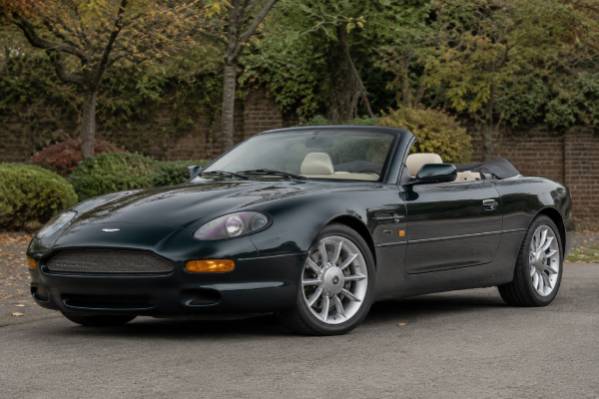
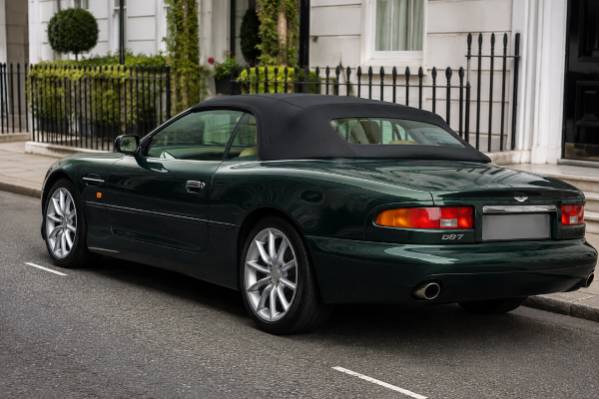
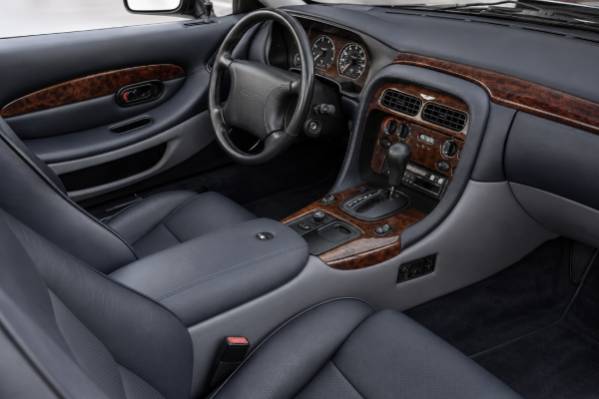
The six-cylinder DB7 Volante is more than a coupé with its roof removed. Aston Martin revised the structure, suspension, weather sealing, cabin details, and hundreds of smaller components before launching the convertible in 1996. The result is a softer, more theatrical grand tourer that keeps the supercharged straight-six character of the original DB7 while adding the sound, visibility, and occasion of open-air driving.
Its appeal is easy to understand, but ownership depends heavily on condition. Water management, hood alignment, body rigidity, trim preservation, and electrical reliability matter as much as engine performance. A neglected roof drain or damp hood well can create damage that is far more expensive than a routine mechanical service. Conversely, a properly stored and regularly exercised Volante can feel remarkably composed for a 1990s convertible.
This guide focuses only on the 3.2-litre, 335 hp Volante built from 1996 to 1999. It explains the correct technical layout, the differences from the coupé, the way the car drives, the maintenance areas unique to the open body, and the inspection process needed before purchase.
Table of Contents
- What the Volante changes
- Open-top DB7 specification
- Structure, hood, and cabin
- How the supercharged Volante drives
- Weatherproofing and maintenance
- Fault-finding an aging Volante
- Choosing and inspecting a car
What the Volante changes
The Volante trades some coupé sharpness for open-air character, but Aston Martin did substantial engineering work to keep the body controlled. It is best understood as a distinct grand-touring derivative rather than a simple cosmetic conversion.
Aston Martin unveiled the DB7 Volante in North America in 1996, a strategically important launch because the open car helped re-establish the marque in the United States and Canada. The convertible arrived almost three years after the coupé’s public debut, giving the development team time to strengthen the shell, package the powered hood, and revise detail quality.
Period accounts state that more than 600 components were developed or changed for the Volante, with roughly 200 of those improvements later incorporated into the coupé. The exact list varied through production, but the broader point is clear: the convertible became a rolling update for the DB7 program. Buyers comparing an early coupé with a later Volante may therefore notice differences in electronics, safety equipment, trim, climate controls, suspension tuning, and small fittings that are not caused by the body style alone.
The roof mechanism gives the car its identity. A multi-layer fabric hood folds beneath a rear cover and includes a heated glass rear screen. When correctly adjusted, it creates a tidy profile and reasonable long-distance refinement. The cover and seals need careful handling, however, and the hood occupies space that would otherwise be available for luggage and body bracing.
Removing the fixed roof also changes the way the car communicates. The Volante has more wind and road noise, and a tired example may show scuttle shake through the steering column or windscreen frame. Some movement is expected in a 1990s convertible, but obvious shuddering over ordinary bumps usually means worn suspension, poor body condition, incorrect tire pressures, loose structural fittings, or previous accident repair.
The rear seats remain nominally present, yet they are even less useful than those in the coupé. Front-seat occupants need to move forward significantly to create legroom, and the hood packaging restricts the sense of space. Most owners use the rear area for jackets or soft bags. That is not a failure of the car’s purpose; the Volante is a two-person touring car with occasional extra seating.
Open-top DB7 specification
The 1996–1999 Volante uses the same basic supercharged 3,228 cc straight-six as the contemporary coupé, driving the rear wheels through either a five-speed manual or four-speed automatic. Its extra structural reinforcement and roof equipment increase mass, while its suspension tuning favors composure over ultimate response.
| Specification | Value | Context |
|---|---|---|
| Engine | TWR-developed AJ6-family inline six | Front-mounted, longitudinal |
| Displacement | 3,228 cc (3.2 L) | 91.0 mm bore × 83.0 mm stroke |
| Valvetrain | Double overhead camshafts, 24 valves | Four valves per cylinder |
| Induction | Eaton Roots-type supercharger | Separate water-cooled charge-cooling circuit |
| Fuel delivery | Electronic multi-point sequential injection | Management system changed during production |
| Compression ratio | 8.3:1 | Configured for forced induction |
| Maximum power | 335 bhp (250 kW) | Manual-car rating; automatic figures may differ by market |
| Maximum torque | 489 Nm (361 lb-ft) | At approximately 3,000 rpm |
| Specification | Value | Notes |
|---|---|---|
| Drive type | Rear-wheel drive | Limited-slip differential |
| Manual | Getrag 290 5-speed | More direct, with a firm clutch and deliberate shift |
| Automatic | GM 4L80-E 4-speed | Relaxed touring character; wider ratio gaps |
| Fuel capacity | 89 L (23.5 US gal) | Use the fuel grade specified for the exact market |
| Measure | Typical published value | Important qualification |
|---|---|---|
| 0–60 mph | Approximately 6.2–6.5 seconds | Manual figures vary by test and source |
| Top speed | Approximately 152–155 mph (245–249 km/h) | Manual-car figures; automatic performance is lower |
| Driving role | Fast open grand tourer | Heavier and less rigid than the coupé |
| Specification | Value |
|---|---|
| Body style | Two-door 2+2 convertible |
| Length | Approximately 4,646 mm (182.9 in) |
| Width | Approximately 1,830 mm (72.0 in), excluding mirrors |
| Height | Approximately 1,260 mm (49.6 in) |
| Wheelbase | 2,591 mm (102.0 in) |
| Published weight | Approximately 1,760–1,875 kg (3,880–4,134 lb) |
| Seating | Four, with very limited rear accommodation |
| Component | Specification | Ownership relevance |
|---|---|---|
| Roof | Powered multi-layer fabric hood with heated glass rear screen | Condition, adjustment, and drains are critical |
| Front suspension | Independent double wishbones, coil springs, dampers, anti-roll bar | Worn top mounts and bushes affect steering |
| Rear suspension | Independent double-wishbone-based layout with longitudinal links | Volante tuning is softer than the coupé |
| Steering | Power-assisted rack and pinion | Shake or kickback warrants inspection |
| Brakes | Disc brakes with ABS | Hydraulic condition matters more than cosmetic appearance |
| Common tires | 245/40 ZR18 | Fit matched, suitable tires of correct load and speed rating |
The broad published weight range reflects different definitions, equipment, and market specifications. It should not be used to calculate payload or compare two cars unless the source uses the same weighing method. For a purchase decision, actual condition and body integrity are more meaningful than a catalogue weight difference.
Structure, hood, and cabin
The Volante’s most important engineering is hidden below the paint and trim. Its reinforcement must carry loads that the coupé’s fixed roof would normally distribute, while the hood system must keep water outside without damaging the body when it folds.
The steel semi-monocoque uses additional strengthening around the sills, floor, bulkheads, and open body aperture. Composite exterior panels help shape the car but do not replace the steel structure underneath. A visual inspection from above cannot establish structural health. The car needs to be raised so the sills, jacking areas, floor edges, suspension attachments, and repaired seams can be examined.
Door fit provides a useful clue. Open each door with the car on level ground, then repeat the check after it has been lifted correctly. Excessive change in gap or latch alignment may indicate weakened structure, poor prior repair, or improper lifting. A small amount of flex is normal, but doors should not need to be slammed or lifted into their catches.
The hood should operate in one smooth sequence without grinding, hesitation, or unequal movement. Observe the frame from both sides. Fabric should tension evenly, the rear glass should sit correctly, and the leading edge should lock without force. Check for abrasion where the folded hood contacts its frame, especially around the rear quarters. A replacement hood can look fresh while hiding worn pivots, stretched straps, tired hydraulics, or misadjusted geometry.
Water management is just as important as visible fabric. The hood well, drain channels, seals, rear bulkhead, boot carpet, spare-wheel area, and rear lamp pockets should be dry. Dampness may come from blocked drains, hardened seals, a poorly fitted hood, lamp gaskets, aerial fittings, or body seams. Repeated leaks can corrode hidden metal, damage control modules, stain leather, and create persistent odors.
Inside, the Volante combines Connolly leather, Wilton carpet, wood veneer, and familiar Ford-era switches. Hand-finished trim should be judged for honest age rather than perfection. Light creasing is normal; cracked bolsters, hardened leather, mismatched recoloring, lifting veneer, and water-marked carpet suggest deferred care. A sympathetic original cabin is usually preferable to a heavily refinished one with incorrect grain or color.
The driving position can feel tight for tall occupants. Seat motors, runners, steering adjustment, and pedal alignment must all work because a small loss of travel makes a significant difference. Check that the front seats move far enough to access the rear area and that their wiring does not snag during operation.
How the supercharged Volante drives
The best Volante driving experience comes from using its torque and rhythm, not chasing maximum cornering speed. With the roof down, the supercharger and exhaust are more noticeable, and the car feels faster than its numbers suggest.
The 3.2-litre engine pulls strongly from the middle of the rev range. It should respond cleanly from low speed, build boost without hesitation, and continue to accelerate smoothly toward the upper rev range. Flat spots, surging, detonation-like noises, or a sudden loss of power point to ignition, fueling, boost-control, charge-cooling, or sensor problems.
Manual cars feel more alert because the driver can keep the engine in its strongest range. The Getrag gearbox needs a measured hand; forcing a cold shift is unnecessary and may exaggerate wear. Clutch weight is part of the period character, but judder, slip, release-bearing noise, or a very high engagement point is not.
The automatic suits the open car’s touring role. In good condition it should select drive promptly, change consistently when cold and hot, and kick down without flare. It will not mimic a modern eight-speed unit, so slow responses alone are not proof of failure. Harsh engagement, delayed reverse, warning lamps, burnt fluid odor, or changing behavior as temperature rises are more serious signs.
Compared with the coupé, the Volante is less precise over broken surfaces. The suspension was tuned to reduce the sensation of shake, which gives a calmer ride but also softer body control. That balance works well when the bushes, dampers, tires, and alignment are correct. A poor example may wobble after bumps, steer from the rear, or vibrate through the windscreen frame.
Wind management is respectable for the era, although buffeting rises with speed and seating position. The hood-up cabin should be free from loud whistles around the header rail and side windows. Minor wind noise is expected; a sharp leak from one corner often means a misadjusted glass, compressed seal, or hood-frame issue.
Braking should feel progressive and stable. The open body can make pedal vibration or front-end shimmy more noticeable, but those symptoms still require diagnosis. Check disc condition, caliper operation, wheel bearings, suspension joints, tire balance, and the brake master cylinder rather than assuming the body style causes everything.
Weatherproofing and maintenance
A Volante should be maintained as both a performance car and a fabric-roofed body system. Mechanical servicing alone will not protect it from the most expensive age-related damage.
Clean the hood with products intended for its fabric, using gentle agitation and low water pressure. High-pressure jets can force water past seals, damage stitching, and disturb the rear-screen bond. Allow the hood to dry fully before folding it for extended periods. Never store the car long-term with a damp roof lowered.
Inspect and clear drains before wet seasons. Water should leave the hood well and body channels freely, without spilling into the cabin or boot. Do not push hard tools blindly through a drain, because a hose can be punctured or disconnected. If flow is poor, access the system properly and confirm where the water exits.
Condition rubber seals with a suitable non-damaging product and keep their contact surfaces clean. Replace seals that are torn, permanently compressed, or detached. Window alignment is part of the weather seal: the glass must rise to the correct height and meet the hood consistently. Replacing rubber without correcting window geometry may not solve the leak.
The hood mechanism needs periodic inspection of pivots, fasteners, straps, hydraulic components, wiring, and microswitches. Lubricate only where the official procedure allows. Excess grease attracts dirt and can contaminate fabric or headlining. If the sequence stops midway, do not repeatedly operate the switch; identify whether the problem is low voltage, a position switch, hydraulic pressure, mechanical binding, or control logic.
Mechanical maintenance follows the same preventive approach as the coupé. Renew engine oil by time as well as mileage, keep both cooling circuits healthy, inspect the supercharger drive, listen for timing-chain tensioner noise, and service gearbox and differential fluids according to verified documentation. Replace old brake fluid and check flexible hoses. Tire age is especially important because the Volante’s softer structure can mask declining grip until an emergency maneuver.
Storage should be dry, ventilated, and free from direct sunlight. Use a breathable indoor cover only on a clean, dry car. Maintain the battery with a quality charger, but exercise the hood, windows, climate system, locks, and seat motors periodically. Move the car enough to prevent tire flat-spotting and brake corrosion, ideally by driving it until all fluids reach full operating temperature.
Fault-finding an aging Volante
Diagnose a Volante by tracing symptoms to their source, because water, voltage, and body movement can create faults that appear unrelated. A damp connector may imitate a failed motor; a weak battery may interrupt the hood sequence; worn bushes may be mistaken for structural flex.
Use this order when assessing a problem car:
- Establish battery and charging health. Low system voltage can trigger erratic windows, alarm behavior, seat faults, and roof interruptions.
- Check for water entry. Lift carpets and inspect the hood well, boot corners, rear bulkhead, fuse areas, and connector locations.
- Verify hood geometry manually. Look for unequal frame movement, bent links, frayed straps, and contact marks before energizing the system repeatedly.
- Scan and test electrical systems. Early DB7 electronics require appropriate knowledge and equipment; generic code readers may provide little value.
- Inspect structure and suspension on a lift. Separate body weakness from worn mounts, bushes, dampers, wheel bearings, and tires.
- Complete a full-temperature road test. Many cooling, transmission, and electrical problems appear only after heat builds.
Typical warning signs include moisture beneath the rear carpet, mildew odor, slow windows, hood motors that change speed, hydraulic staining, a rear glass panel separating from the fabric, and doors that alter alignment. Mechanical concerns include supercharger rattle, low charge-cooler fluid, timing-chain noise, exhaust leaks, oil-cooler seepage, and unstable engine temperature.
Air-conditioning deserves special attention because dashboard removal may be needed for evaporator work. Confirm that the compressor engages, outlet temperature drops, airflow changes correctly between vents, and the heater responds. A seller’s statement that the system “only needs a recharge” should be treated as unproven until leak testing has identified the cause.
The body can show corrosion at the rear arches, sill structures, floor edges, boot floor, mounts, and glass surrounds. Composite panels may bubble or crack without rusting. On a convertible, both conditions matter because water may pass from a damaged outer panel into a steel cavity. Ask the inspector to map the repair area rather than simply naming the visible defect.
Choosing and inspecting a car
The right Volante is the one with a dry body, correctly working hood, stable structure, complete records, and consistent mechanical behavior. Low mileage and glossy paint are secondary evidence, not proof of quality.
Start with provenance. Confirm the VIN, build date, original transmission, colors, market specification, and factory options. Compare service stamps with detailed invoices. A strong file should show attention to cooling, brakes, suspension, tires, roof care, air-conditioning, and body preservation, not only annual oil changes.
Inspect the car after rain or arrange a controlled water test with the owner’s permission. Check the cabin and boot immediately, then look again after the car has stood. Water can travel behind trim before appearing at the lowest point. A dry car on a sunny sales day may still leak heavily.
Operate the hood several times with a fully charged battery. Watch from outside, listen for pump strain, and confirm that the windows and latches coordinate correctly. Inspect the fabric both raised and partly folded. The rear cover should fit evenly, and all protective flaps or tonneau components should be present. Missing original covers are common and can be costly to replace in matching material.
A specialist pre-purchase inspection should include:
- lift examination of sills, floors, suspension mounts, brake lines, and corrosion-prone seams;
- paint-depth and panel-alignment assessment suited to mixed steel and composite construction;
- cold start, hot restart, and full-temperature road test;
- engine, gearbox, differential, cooling, and charge-cooling checks;
- hood hydraulic, electrical, seal, drain, and frame inspection;
- operation of every switch, lamp, gauge, lock, window, seat, and climate function;
- tire date codes, wheel condition, alignment evidence, and brake measurements.
Choose the manual for maximum involvement and stronger rarity appeal, provided the clutch and flywheel arrangement are healthy. Choose the automatic for relaxed use, particularly in traffic, but verify its fluid history and hot-shift quality. The automatic’s lower urgency is part of the specification, whereas delayed engagement or slipping is not.
Budget for indoor storage and specialist servicing from the beginning. A Volante left outside will age faster around the hood, seals, rear body cavities, leather, veneer, and electrical connections. The purchase price should leave room for an immediate baseline service and correction of small defects before they become connected failures.
When properly maintained, the six-cylinder Volante offers a distinctive experience: elegant proportions, supercharged torque, a hand-finished cabin, and enough chassis composure for long journeys. Its value lies less in outright speed than in the way it turns an ordinary drive into an event. That quality is preserved only when the roof, drains, structure, and mechanical systems receive equal attention.
References
- DB7 V12 VANTAGE VOLANTE – 2026 (Historic Model Archive)
- Aston Martin DB7 | Aston Martin 2026 (Manufacturer Heritage Page)
- Aston Martin DB7 buyer’s guide: what to pay and what to look for | Classic & Sports Car 2019 (Buyer’s Guide)
- Buying Guide: Aston Martin DB7 | Hagerty UK 2021 (Buyer’s Guide)
- Aston Martin DB7 Buyer’s Guide (1994–2004) | Car Collector International 2026 (Buyer’s Guide)
- Check for Recalls: Vehicle, Car Seat, Tire, Equipment | NHTSA 2026 (Recall Database)
Disclaimer
This article is for informational purposes and does not replace professional diagnosis, body assessment, or repair. Specifications, torque values, service intervals, roof procedures, fluids, and adjustments vary by VIN, market, build date, and equipment; always confirm them in the official documentation for the exact vehicle. If this guide was useful, please share it on Facebook, X/Twitter, or another social platform to support our work.