
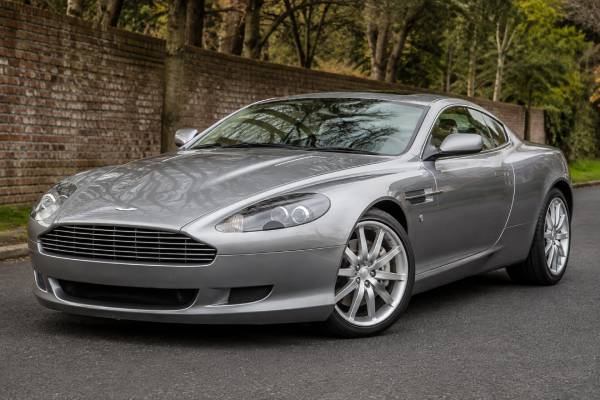
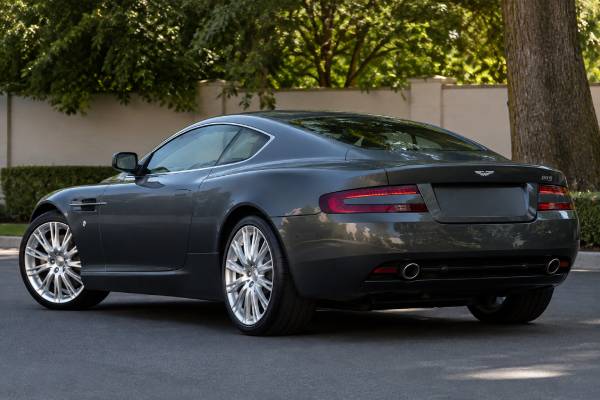
The 450 hp Aston Martin DB9 is the version that established the modern Gaydon-era Aston: elegant, fast, hand-finished, and built around a bonded-aluminium structure rather than the steel-based architecture of the DB7. In coupe form it is also the purest expression of the original DB9 brief. The naturally aspirated 5.9-litre V12 sits behind the front axle, while a rear-mounted six-speed transaxle helps keep mass balanced between the axles.
This guide covers the AM04-powered coupe sold from 2004 through the early 2008 transition period. That final year needs careful checking because later 2008-built cars may belong to the 470 bhp AM09 specification. The early car remains appealing because it combines clean Ian Callum and Henrik Fisker-era styling with a choice of manual or Touchtronic automatic transmission. Its mechanical core is generally strong, but age, deferred maintenance, battery-related faults, oil leaks, cooling-system problems, worn suspension, and expensive cosmetic repairs can turn a cheap example into a costly project.
Table of Contents
- What Defines the AM04 DB9
- Specifications and Technical Layout
- Performance and Driving Character
- Engineering and Model-Year Changes
- Maintenance Priorities
- Known Problems and Inspection Points
- Buying the Right Example
What Defines the AM04 DB9
The AM04 DB9 is the original 450 bhp coupe, not the later 470 bhp facelift or the 510 bhp 2013 redesign. The safest way to identify one is to check the VIN, build date, engine identification, specification sheet, and service records rather than relying on registration year alone.
Aston Martin introduced the DB9 as the first production model built at its then-new Gaydon factory and the first road car based on the VH, or Vertical/Horizontal, architecture. The central structure uses extruded and pressed aluminium sections bonded and riveted together. Aluminium and composite exterior panels are attached around it. This approach reduced body mass while creating a substantially stiffer platform than the outgoing DB7.
The car’s layout is central to its character. The V12 is mounted front-midship, meaning most of the engine sits behind the front-axle line. A carbon-fibre propeller shaft runs through a torque tube to a transaxle positioned ahead of the rear axle. Concentrating the engine and gearbox within the wheelbase improves balance and reduces the nose-heavy feel common in large front-engined grand tourers.
Early coupes were available with two very different six-speed transmissions. The Graziano manual is the enthusiast choice, with a conventional clutch and a metal-topped lever. The ZF-based Touchtronic 2 automatic better suits relaxed touring and is more common. Both drive the rear wheels through a limited-slip differential.
This version is best understood as a fast, refined GT rather than a track-focused sports car. It has significant performance, but its long wheelbase, rich cabin, substantial weight, compliant damping, and progressive controls are tuned for covering distance. Rear seats are present, but they are best treated as occasional child seats or extra luggage space.
Specifications and Technical Layout
The AM04 coupe is a naturally aspirated petrol V12 with rear-wheel drive and a rear-mounted transaxle. Manual and automatic cars share the same engine output, but their acceleration, final-drive ratios, fuel economy, and kerb weights differ.
| Specification | Value |
|---|---|
| Engine | AM04 all-alloy 5,935 cc naturally aspirated V12 |
| Layout | Front-mid-mounted, 60-degree V12, rear-wheel drive |
| Valvetrain | Quad overhead camshafts, 48 valves |
| Fuel system | Electronic sequential multi-point injection |
| Compression ratio | 10.2:1 |
| Maximum power | 450 bhp (335 kW) at 6,000 rpm |
| Maximum torque | 570 Nm (420 lb-ft) at 5,000 rpm |
| Timing drive | Chain-driven camshafts |
| Specification | Manual | Touchtronic 2 automatic |
|---|---|---|
| Transmission | Rear-mounted six-speed manual transaxle | Rear-mounted six-speed automatic transaxle |
| Final-drive ratio | 3.54:1 | 3.154:1 |
| Propeller shaft | Carbon fibre inside an alloy torque tube | Carbon fibre inside an alloy torque tube |
| Differential | Limited-slip | Limited-slip |
| Drive type | Rear-wheel drive | Rear-wheel drive |
| Specification | Manual | Automatic |
|---|---|---|
| 0–60 mph | 4.7 seconds | 4.9 seconds |
| 0–100 km/h (0–62 mph) | 4.9 seconds | 5.1 seconds |
| Maximum speed | 300 km/h (186 mph) | 300 km/h (186 mph) |
| Official combined consumption | 15.8 L/100 km (17.8 mpg UK) | 17.1 L/100 km (16.5 mpg UK) |
| North American rating | 11 mpg city / 18 mpg highway | 12 mpg city / 19 mpg highway |
| CO₂ emissions | 421 g/km | 394 g/km |
| Specification | Value |
|---|---|
| Front suspension | Independent aluminium double wishbones, coil-over monotube dampers, anti-roll bar |
| Rear suspension | Independent aluminium double wishbones, coil-over monotube dampers, anti-roll bar |
| Front brakes | 355 mm ventilated and grooved steel discs, four-piston monobloc calipers |
| Rear brakes | 330 mm ventilated and grooved steel discs, four-piston monobloc calipers |
| Front wheels and tyres | 8.5J × 19; 235/40 ZR19 |
| Rear wheels and tyres | 9.5J × 19; 275/35 ZR19 |
| Steering | Servotronic speed-sensitive hydraulic rack and pinion; 3.0 turns lock-to-lock |
| Specification | Value |
|---|---|
| Length | 4,710 mm (185.5 in) |
| Width | 1,875 mm (74.0 in), excluding mirrors |
| Height | 1,270 mm (50.0 in) |
| Wheelbase | 2,745 mm (108.1 in) |
| Turning circle | 12.0 m (39.4 ft) |
| Fuel capacity | 80 L (17.6 UK gal; 21.1 US gal) |
| Kerb weight | 1,760 kg manual; 1,800 kg automatic |
| Drag coefficient | Cd 0.35 |
The figures are factory specifications for the early coupe and can vary slightly by market, equipment, wheel package, and measurement convention. A 2008 registration is not enough to prove that a car has the AM04 engine because Aston Martin’s changeover to the AM09 specification occurred during that period.
Performance and Driving Character
The early DB9 is fast by modern road standards, but the strongest impression is the way it delivers speed rather than the raw acceleration number. The V12 builds power in a smooth, linear sweep, with no turbocharger delay and a deeper exhaust note as the active bypass valves open.
At low speed the steering is heavier than in many newer GTs, and the long nose requires care in tight spaces. Once moving, the hydraulic rack provides clear loading through bends without feeling nervous. The car’s wheelbase and rear transaxle give it excellent high-speed stability, while the double-wishbone suspension keeps body movement controlled without the brittle ride common in later, more aggressively damped performance cars.
The manual changes the experience most. Its clutch can feel heavy in traffic, first-to-second shifts are best made deliberately when cold, and clutch replacement is expensive because of parts prices and labour. In return, it gives the driver direct control over the V12 and has become the more collectible configuration. A healthy manual should engage cleanly, select every gear without baulking, and show no clutch slip during a high-gear acceleration test.
The automatic is not as quick-shifting as a modern dual-clutch unit, yet it fits the car’s grand-touring role. In normal use it changes smoothly and keeps the V12 relaxed. Steering-column paddles provide manual control, and Sport mode holds gears longer. Harsh engagement, delayed selection, warning messages, or refusal to select Park or Drive require diagnosis rather than being dismissed as old-car behaviour.
Grip is strong on correct, fresh tyres, but 450 bhp still reaches only the rear axle. Old tyres are a serious safety issue even when tread depth looks acceptable. Check the four-digit date code, confirm matching premium tyres on each axle, and inspect the inner shoulders because incorrect geometry or worn suspension joints can hide wear from a casual glance.
Engineering and Model-Year Changes
The original DB9 evolved continuously, so two 450 bhp cars can differ in equipment and detail. Build date and factory specification matter more than broad year labels.
The bonded VH structure was the major engineering step. Rather than welding a conventional steel monocoque, Aston Martin bonded aluminium sections with structural adhesive and mechanical fasteners. The bonnet, roof, and rear wings were aluminium, while composite panels were used in selected areas. Repairing this construction after a substantial collision requires correct jigs, bonding methods, fasteners, corrosion isolation, and panel knowledge. A visually attractive repair can still be structurally poor.
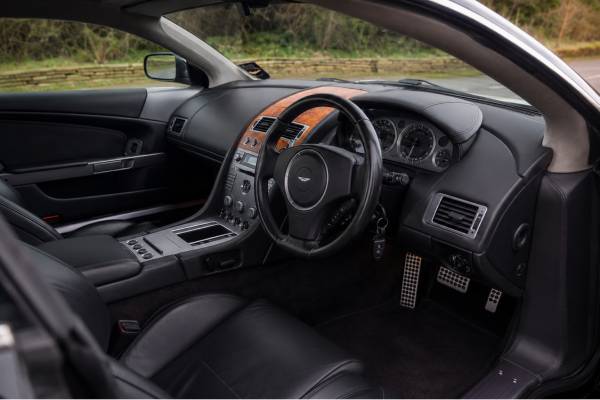
Early interiors use Aston Martin’s organic electroluminescent displays and a high-mounted navigation screen. The cabin is beautifully trimmed but contains components and electronics shared with larger manufacturers. That parts commonality can reduce the cost of certain switches or modules, yet model-specific trim, glass, lights, and body panels remain expensive.
The 2006-on period brought detail improvements, revised options, and the availability of the Sports Pack on some cars. Sports Pack equipment can include lighter wheels, revised spring and damper tuning, and other chassis changes depending on market and model year. Do not assume every car advertised as a “Sport” has a complete factory package; verify the build sheet.
The key boundary is the 2008 update. The later AM09 engine produces 470 bhp and 600 Nm, and those cars received substantial mechanical and equipment revisions. When comparing prices, make sure an advertised “2008 DB9” has not been described using the specification of the other engine generation.
Ownership details also changed during the run without always receiving a clear model-year label. Wheel finishes, brake components, seat patterns, audio and navigation hardware, key arrangements, paint and leather choices, and small electrical revisions can differ. Replacement parts therefore need to be ordered from the VIN rather than from a registration year. This is especially important with lamps, modules, suspension components, and trim, where a visually similar part may use another connector, calibration, or finish.
The optional Sports Pack deserves a road-based assessment rather than an assumption that firmer is automatically better. Its lighter wheel design and revised suspension tune can make the coupe feel more immediate, but aged dampers, incorrect springs, or ordinary wheels fitted later can blur the distinction. Confirm the factory build data, inspect part numbers where practical, and compare the car’s stance on level ground. A mixed setup assembled from used parts may look convincing while delivering inconsistent damping or geometry.
Body repair history is particularly important on the earliest VH cars because correct aluminium work was less familiar outside authorised networks when they were new. Ask for photographs and invoices for any significant repair. Check adhesive seams and fasteners where visible, compare gaps on both sides, and look for paint disturbance around the windscreen, rear quarters, sill covers, and suspension mounting areas. A professional repair is not automatically a reason to reject a car; an unexplained or structurally uncertain one is.
Maintenance Priorities
A well-maintained AM04 can be dependable, but it does not respond well to skipped annual servicing or long periods with a weak battery. Maintenance history should show regular work by an Aston Martin dealer or a specialist familiar with the VH-platform cars.
The original service schedule called for maintenance every 10,000 miles (16,000 km) or 12 months, whichever came first, after the initial running-in service. Brake fluid was scheduled annually, engine coolant at five years in the early schedule, manual transaxle oil at 30,000 miles, automatic differential oil at 20,000 miles, and spark plugs at 70,000 miles. Age now matters as much as mileage, so a low-mileage car still needs fresh fluids, belts, tyres, filters, battery care, and inspection of seals and hoses.
Prioritize these items:
- Engine oil and leaks: Use the correct approved oil specification and change it annually. Inspect the timing-cover area, cam covers, oil cooler connections, lower engine, and undertrays for fresh seepage.
- Cooling system: Check coolant level only when cold, inspect hoses and pipework, and look for dried residue around joints. Any overheating history is a major warning because the V12 is costly to repair.
- Ignition system: Misfires can come from coils, plugs, injectors, wiring, air leaks, or low voltage. Replacing twelve coils and plugs is labour-intensive, so diagnose properly.
- Automatic transmission: Although the original schedule focused mainly on inspection and topping up, many specialists now recommend age-appropriate fluid servicing. The exact procedure and fluid must match the transmission.
- Manual clutch and transaxle: Check clutch take-up, release-bearing noise, synchro operation, leaks, and proof of previous replacement. A clutch job can materially affect the value of the car.
- Suspension and alignment: Inspect wishbone bushes, ball joints, dampers, springs, wheel bearings, and fasteners. Uneven tyre wear often points to geometry or worn components.
- Battery management: A correct battery and quality maintainer are essential for a lightly used DB9. Low voltage can create multiple unrelated fault messages and can shorten module life.
A pre-purchase inspection should include a cold start, diagnostic scan, fluid-leak check with undertrays removed where practical, road test from cold to full operating temperature, and post-drive inspection for smells, leaks, and stored faults.
Known Problems and Inspection Points
The most expensive DB9 is often the neglected bargain. Condition, repair quality, and evidence of completed recalls matter more than a low odometer reading.
Oil leakage from the front of the V12 can require substantial labour because access is restricted. Light misting and an active leak are not the same; a specialist should identify the source before estimating cost. Coolant leaks, failed thermostat components, ageing hoses, and blocked radiator or air-conditioning condenser faces can lead to high temperatures. The engine should warm normally, hold a stable temperature in traffic, and show no coolant smell after shutdown.
Electrical issues often begin with voltage. Test the battery after the car has been standing, check charging voltage, and scan every available control module. Confirm that windows drop and rise correctly with the doors, mirrors fold, seats move through their full range, the climate system cools, the navigation screen operates, the audio system works, and no warning lights have been removed or masked.
Rear light condensation and failed LED sections are common age-related concerns. Replacement lamps are costly, and poorly sealed repairs can recur. Door seals and window alignment can create wind noise or water ingress. Inspect the carpets, boot, battery area, and behind trim for dampness or corrosion staining.
The aluminium and composite body does not eliminate corrosion or damage risk. Look for paint bubbling where dissimilar materials meet, distorted panel gaps, cracked paint near bonded joints, overspray, missing fasteners, and inconsistent underbody sealant. Stone chips are normal; evidence of a poorly repaired front or rear impact is not.
Recall completion must be checked by VIN. Depending on build and market, campaigns have addressed issues including an automatic-transmission park component, front lower-control-arm cam bolts on certain 2007–2008 cars, and battery-cable routing on specified early vehicles. A recall database search is useful, but an Aston Martin dealer can confirm campaign status against the individual VIN.
Buying the Right Example
Buy the best-documented car you can afford, not the cheapest car with the lowest mileage. A sorted higher-mileage DB9 with annual history, recent tyres, healthy brakes, corrected leaks, and a strong battery is usually a better purchase than a garage queen needing years of catch-up work.
Start by confirming identity. Match the VIN on the car, registration documents, service book, invoices, and diagnostic report. Verify that the engine is the 450 bhp AM04 specification and that the gearbox matches the listing. Obtain the original build sheet where possible to confirm colour, trim, wheels, options, and Sports Pack status.
Then evaluate the ownership record. A stamped book without invoices gives limited detail. Strong history shows annual services, dates and mileages, parts used, diagnostic work, recall completion, tyre dates, brake measurements, suspension repairs, battery replacement, and any clutch or transmission work. Long gaps are especially concerning because cars that sit can develop seal, fuel, tyre, brake, and electrical problems.
During the test drive, begin with a genuinely cold engine. Listen for abnormal mechanical noise, watch for smoke, and make sure idle settles smoothly. Test both gentle and full-load acceleration after the fluids are warm. The steering should track straight, the brakes should stop without vibration, and the suspension should be quiet over broken surfaces. On automatic cars, test Park, Reverse, Drive, paddle shifts, and hot restarts. On manuals, test clutch bite, high-gear load, and every ratio.
Inspect the cabin with the same discipline used underneath the car. The dashboard leather can shrink at edges, seat bolsters can crack, headlining can loosen, and metal or piano-black finishes can mark. Test both keys, the alarm, central locking, pop-up handles, window indexing, seat memories, mirrors, climate control, heated glass, navigation, audio, parking sensors, boot release, and fuel flap. Operate items repeatedly after the road test because heat and voltage changes can expose faults that a single demonstration misses.
Check consumables by age and measurement, not appearance. Tyres need readable date codes and inspection of their inner shoulders. Brake discs should be measured and viewed on both faces, while fluid history and caliper operation matter as much as the outer surface. A fresh set of tyres or brakes can add real value, but only when the underlying alignment, suspension, and installation work are correct.
Budget beyond the purchase price. Insurance, premium fuel, 19-inch tyres, annual servicing, brakes, suspension components, trim repairs, and specialist labour all remain those of an exotic V12 car. A contingency fund is not optional. The reward is a grand tourer with timeless proportions, a charismatic engine, and a driving experience that still feels special without relying on modern turbocharging or digital theatre.
The early coupe is the right DB9 for buyers who value the original styling, a possible manual gearbox, and the cleanest version of the Gaydon-era concept. It is not the fastest DB9, but a properly maintained example delivers the balance, sound, and sense of occasion that made the model important in the first place.
Before collection, agree in writing which faults will be corrected, which accessories and keys are included, and which fluids or tyres will be replaced. Photograph the odometer, warning-light check, body, wheels, and supplied documents. A clear handover record prevents minor misunderstandings and gives the next service workshop a reliable starting point. After purchase, establish a baseline rather than waiting for the next nominal interval: confirm fluid dates, tyre pressures, battery condition, and recall status, then drive the car often enough to identify changes early.
References
- Aston Martin DB9 | Past Models | Aston Martin (UK) | Aston Martin UK 2026
- DB9 – 2026 (Historic Model)
- untitled 2006 (Factory Brochure)
- Aston Martin DB9 Owner’s Manual Service Periods 2005 (Owner’s Manual)
- 10V-449 (5 Pages) 2010 (Recall Database)
- Battery Cable may Short Circuit 2017 (Recall Database)
Disclaimer
This article is for informational purposes and is not a substitute for professional diagnosis, inspection, or repair. Specifications, torque values, service intervals, campaign eligibility, and procedures can vary by VIN, market, build date, transmission, and equipment; verify all work against the official documentation for the individual vehicle.
Please share this guide on Facebook, X/Twitter, or another platform if it helped you; sharing supports the continued production of detailed owner and buyer resources.