

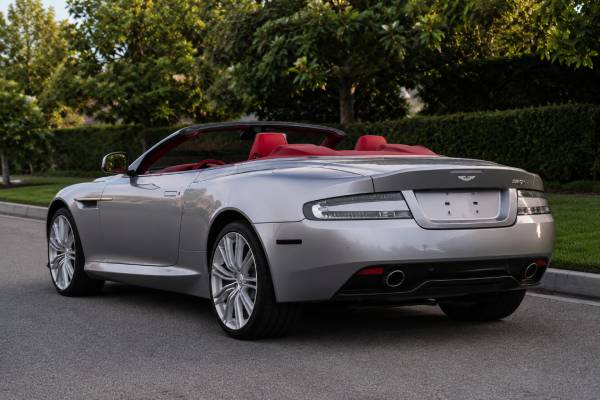
The Aston Martin DB9 GT Volante is the closing open-top version of the original Gaydon-era grand tourer. It combines the final 540 bhp tune of the naturally aspirated AM11 V12 with the strengthened 2013-on Volante body, carbon-ceramic brakes, three-stage adaptive damping, sports exhaust, and GT-specific trim. Few cars offer the same mixture of formal styling, twelve-cylinder sound, a fabric roof hidden beneath a hard tonneau, and genuine long-distance comfort.
Its rarity and final-edition status do not simplify ownership. A GT Volante carries every important inspection point of the coupe plus a powered hood, frameless window calibration, drains, seals, rollover equipment, and additional structural mass. It also shares many components with the 510 bhp Volante, so badges and wheels are not enough to prove identity. This guide separates factory GT content from cosmetic conversion, explains the exact technical package, and sets out a purchase method that gives equal weight to authenticity, roof health, ceramic-brake life, electronics, cooling, and service history. The best example should feel special before the roof even opens—and remain dry and dependable after it closes.
Table of Contents
- The Last Open DB9
- GT Volante Technical Profile
- What the GT Package Adds
- Roof, Structure, and Water Management
- Driving Nearly Two Tonnes With 540 hp
- Long-Term Service and Failure Prevention
- Authenticity and Condition Checklist
- Who Should Buy the GT Volante
The Last Open DB9
The GT Volante is the final factory-developed convertible in the DB9 family, using the highest-output production tune of the model’s V12. It is not a new-generation car; it is the last expression of an architecture that had been refined for more than a decade.
Aston Martin’s DB9 began as a 450 bhp coupe in 2004, followed by the first Volante. The 2008 update raised output to 470 bhp and added adaptive chassis development. A far broader 2013 revision introduced the AM11 engine, a stronger body, carbon-ceramic brakes, 20-inch wheels, and three-stage damping. The GT Volante takes that later structure and adds the 540 bhp calibration and final-edition details.
The underlying packaging remains distinctive. The V12 sits behind the front axle, while the automatic gearbox is positioned near the rear axle as a transaxle. A carbon-fibre propeller shaft turns inside an aluminium torque tube. This arrangement helps centralise mass and gives the car more balanced responses than its long bonnet and considerable kerb weight might suggest.
The convertible body carries substantial reinforcement and roof hardware. Aston Martin had claimed a 30 percent increase in Volante rigidity with the 2013 redesign, providing a more stable foundation for the GT’s dampers and brakes. The car still cannot match the fixed-roof coupe’s absolute stiffness, but it should feel cohesive rather than loosely connected.
Its design balances final-edition aggression with the DB9’s established elegance. Black exterior elements, graphitic exhaust finish, GT badging, and dedicated wheels make it more assertive. The fabric roof keeps the profile lighter than a folding metal system, and the solid tonneau hides the folded hood from view.
The cabin is nominally a 2+2. Rear space remains limited, and roof packaging reduces luggage flexibility. In practice, the GT Volante is a two-person touring car with occasional rear seats. Soft bags are more useful than hard cases, and the wind deflector is an important touring component rather than an optional curiosity.
Because the car sits at the top of the DB9 hierarchy, sellers may emphasise rarity before condition. Reverse that priority. A genuine final car with damaged ceramic discs, damp electronics, or an unreliable roof is not made whole by a low production claim.
GT Volante Technical Profile
The GT Volante is a naturally aspirated petrol convertible with rear-wheel drive, a 5.9-litre AM11 V12, and a six-speed Touchtronic 2 rear transaxle. Its 540 bhp output is GT-specific, while the chassis hardware follows the late AM11 platform.
| Item | Value |
|---|---|
| Engine | AM11 all-alloy 5,935 cc naturally aspirated V12 |
| Valvetrain | 48 valves, four overhead camshafts, dual variable camshaft timing |
| Maximum power | 540 bhp (403 kW; 547 PS) at 6,750 rpm |
| Maximum torque | 620 Nm (457 lb-ft) at 5,500 rpm |
| Fuel delivery | Electronic sequential multi-point injection |
| Engine location | Longitudinal front-mid-mounted |
| Fuel | Premium unleaded |
| Item | Specification |
|---|---|
| Transmission | Touchtronic 2 six-speed automatic rear transaxle |
| Final-drive ratio | 3.46:1 |
| Differential | Limited-slip |
| Propeller shaft | Carbon fibre, enclosed in an aluminium torque tube |
| 0–60 mph | 4.4 seconds |
| 0–100 km/h | 4.5 seconds |
| Maximum speed | 295 km/h (183 mph) |
| Item | Value |
|---|---|
| Structure | Bonded aluminium VH architecture with Volante reinforcement |
| Suspension | Independent double wishbones front and rear |
| Damping | Adaptive system with Normal, Sport, and Track modes |
| Front brakes | 398 mm carbon-ceramic discs; six-piston calipers |
| Rear brakes | 360 mm carbon-ceramic discs; four-piston calipers |
| Steering | Hydraulically assisted rack and pinion |
| Item | Value |
|---|---|
| Front wheels and tyres | 8.5J × 20; 245/35 ZR20 |
| Rear wheels and tyres | 11J × 20; 295/30 ZR20 |
| Length | 4,720 mm |
| Width including mirrors | 2,061 mm |
| Height | 1,282 mm |
| Wheelbase | 2,740 mm |
| Kerb weight | 1,890 kg |
| Fuel capacity | 78 litres |
| Item | Published specification |
|---|---|
| Roof | Power-operated multi-layer fabric hood with hard tonneau |
| Roof operating time | 17 seconds |
| Rollover protection | Reinforced windscreen surround and deployable rear hoops |
| Official combined consumption | 14.0 L/100 km |
| Official CO₂ emissions | 325 g/km |
| Seating | 2+2 |
Official performance values are often listed for the GT range as a whole. Real acceleration can differ with body style, surface, temperature, fuel, tyre condition, and measurement method. The technical identity is clearer: 540 bhp, six-speed transaxle, ceramic brakes, late Volante structure, and GT trim.
What the GT Package Adds
The GT package adds more than badges but less than a ground-up mechanical transformation. Its defining changes are the 540 bhp calibration, sports exhaust, final-edition appearance, dedicated cabin treatment, and late AMi II infotainment.
The engine’s 30 bhp increase over the regular AM11 DB9 is delivered at 6,750 rpm. Maximum torque remains 620 Nm, so normal low-speed thrust is familiar. The distinction becomes clearer when a lower gear is held and the V12 is allowed to work through the upper rev range. That character suits an open car because the driver hears the change without needing to chase a dramatic numerical advantage.
The sports exhaust gives the GT a deeper and more present note. Inspect the system rather than assuming any loud exhaust is correct. The factory arrangement should be supported by the build specification and should operate without rattles, uneven valve action, damaged graphitic tailpipes, or excessive motorway drone. Aftermarket components can reduce originality and may affect emissions or warning systems.
Exterior details generally include a gloss-black front splitter and rear diffuser, dark-bordered rear lamps, front-wing V12 badges, a GT decklid badge, graphitic tailpipe finish, and dedicated wheels. These are useful for an initial sense check but are easy to imitate. A conversion may be visually convincing from photographs while lacking the engine calibration, build identity, or interior details.
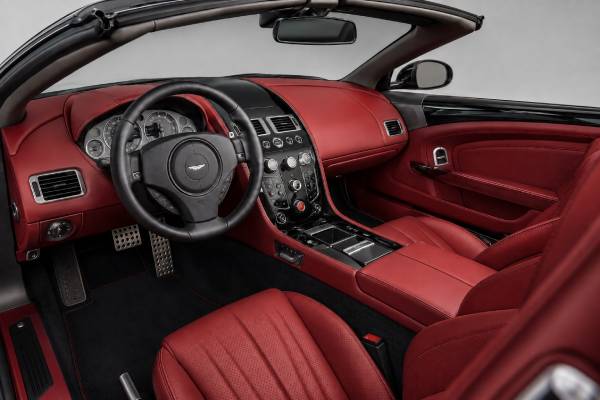
Inside, GT embroidery, special seat treatment, and an engraved fuel cap reinforce the final-edition theme. The Volante typically uses a leather steering wheel rather than the coupe’s Alcantara item, a practical distinction for open-top exposure and repeated handling. Options can alter colour, stitching, carbon trim, audio, and seat appearance.
AMi II improved the late infotainment interface. It remains an older embedded system, so buyers should test it for complete operation rather than compare its speed with a current phone. Verify navigation, audio sources, Bluetooth-related functions, parking display, and physical controls. A smartphone upgrade can be worthwhile when installed reversibly and without battery drain.
GT badging does not change the underlying space. The rear seats are still occasional, the boot remains constrained by the hood, and the long doors require room. Likewise, the GT name does not eliminate normal age-related faults. It raises the importance of retaining correct parts and records because future buyers will examine originality more closely.
Roof, Structure, and Water Management
The roof and body should be tested as a weatherproof structural system, not as a single switch-operated accessory. Smooth motion, even sealing, dry electronic compartments, stable door gaps, and restrained scuttle movement are all part of a healthy GT Volante.
The hood folds under a hard tonneau in roughly 17 seconds. Several movements must happen in sequence: windows index, latches release, the tonneau opens, the roof frame folds, and the cover closes. Control modules monitor position to prevent collisions. When the system pauses, repeated button presses can cause damage; diagnosis should establish whether voltage, a switch, hydraulic operation, frame alignment, or another component interrupted it.
Cycle the roof from outside while watching both sides. The frame should remain symmetrical and the fabric should not catch or bunch incorrectly. Inspect the front bow, stitching, tension straps, rear-glass bond, headlining, seals, pivots, and tonneau edges. Scraped paint near the cover can show past misalignment. A recently replaced hood should have an invoice and sit correctly at every stage.
The frameless windows are active sealing components. Each should drop slightly as its door opens and rise after closing. Repeat the test with both keys and from both interior and exterior handles. Slow indexing can damage seals or allow wind and water entry. Calibration may solve a minor issue, but regulators, latches, wiring, modules, and low voltage are also possible causes.
Water is routed through channels and drains around the roof well. Debris, displaced tubes, or previous trim repairs can send it into carpets, the boot, or electronic areas. The outer fabric may look perfect while a drain fault causes serious interior damage. Check beneath surfaces wherever possible for damp underlay, corrosion, mould, tide marks, swollen trim board, and odour.
Use a controlled, low-pressure water test with permission. Work one zone at a time so the entry point remains identifiable. Begin at the lower roof sections, then the header and side glass, allowing drainage between stages. Afterwards, inspect the cabin and boot and confirm water exits beneath the car where expected. A pressure washer is not a realistic test and can overwhelm an otherwise sound seal.
The strengthened 2013-on shell should limit body shake, but the Volante still weighs more and lacks a fixed roof. On an angled driveway, observe door and windscreen movement. Doors should latch cleanly with the hood up or down. Knocking, changing gaps, unusual creases, or heavy scuttle motion may indicate worn suspension, poor body repair, or structural damage.
Aluminium resists conventional red rust but can corrode under damaged paint, and steel fasteners or brackets remain vulnerable. Look for bubbling around edges, mirror bases, trim fixings, and repaired areas. Proper structural work requires knowledge of bonding, riveting, heat control, and mixed materials.
Driving Nearly Two Tonnes With 540 hp
The GT Volante’s performance is defined by effortless speed and open-air sound rather than lightness. Nearly 1,890 kg means that tyres, dampers, brakes, and body control must be healthy for the car to feel as sophisticated as its engine.
The V12 is smooth at low rpm and progressively more urgent as it approaches the 6,750 rpm power peak. There is no turbo lag or abrupt torque plateau. Roof down, intake and exhaust sound make a medium-speed acceleration run feel more dramatic than the same event in the coupe. Roof up, the car should return to quiet, stable touring.
Touchtronic 2 provides torque-converter smoothness at parking pace. In Drive it uses the V12’s broad range, while the column paddles allow earlier downshifts and higher revs. The six ratios make each gear long by modern standards. A measured shift is normal; delayed engagement, slipping, a harsh strike, unexpected neutral, or warnings are not.
Test the transmission from cold through full temperature. Use Reverse, Drive, manual selection, kickdown, slow inclines, and repeated manoeuvres. Park operation should be checked with the parking brake used correctly. A VIN-specific recall search is essential because portions of the automatic DB9 population were included in a Park-pawl software campaign.
In Normal damper mode, the car should absorb the road without repeated floating. Sport adds support and can be the best setting for a flowing route. Track is firmest and may be counterproductive on broken surfaces. Compare the modes on the same stretch. A missing change, warning, leak, or one corner that rebounds differently suggests a fault.
Hydraulic steering remains one of the car’s attractions. Weight should build naturally through a turn, and the car should track straight at speed. Wide tyres can follow road contours, but pronounced tramlining or vibration needs investigation. Wheel damage, old tyres, inner-edge wear, poor alignment, or worn bushes can all degrade confidence.
Carbon-ceramic braking performance should be strong and consistent. Some cold noise can occur, but the pedal should not pulse, pull, lengthen, or change after several stops. Because replacement cost is high, brake assessment must include both disc faces, edge condition, wear criteria, correct pads, caliper operation, and fluid history.
Open-top aerodynamics are part of comfort. The wind deflector reduces cabin turbulence for two occupants; confirm it is present and undamaged. Excessive roof-up whistle can point to glass or seal adjustment. Test at motorway speed because a short urban drive cannot reveal refinement or water-management noise.
Long-Term Service and Failure Prevention
A GT Volante should receive annual specialist attention even if mileage is tiny. Preservation depends on fluids, voltage, exercise, dry storage, and early correction—not on avoiding use.
Verify the exact service schedule for the VIN and market. Yearly oil and filter changes, mechanical inspection, and module scanning are the baseline. Brake fluid, coolant, spark plugs, filters, transaxle and differential lubricants, and other operations follow time or mileage. Invoices should identify the parts and fluids rather than use only a generic service label.
Battery support is fundamental because the roof, windows, locks, seats, infotainment, modules, and starter all depend on stable supply. Use an approved maintainer during storage, but replace a battery that fails load testing. A charger can keep a weak unit barely operational while voltage still collapses during a roof cycle or hot start.
Exercise the hood periodically in suitable temperature and with the car level. Clean debris first and complete the movement. Inspect drains during regular service and after autumn storage. Use dedicated fabric-roof cleaners and compatible seal products; harsh detergents and pressure washing can cause damage that looks like ordinary ageing.
Cooling-system care should include fan operation, radiator cleanliness, hose inspection, coolant condition, pressure integrity, and stable temperature under traffic load. Repeatedly topping up is not maintenance. Oil leaks should be traced around the engine, coolers, hoses, torque-tube and transaxle areas, with undertrays considered.
Misfire or rough running deserves immediate diagnosis. A failing ignition component, injector, air leak, sensor, or fuel issue can overheat catalysts. Read stored faults and live data before replacing parts. Both banks should deliver even exhaust sound and temperature.
Ceramic brakes require correct pads and careful wheel handling. Ask tyre shops whether they understand carbon-ceramic systems and Aston Martin lift points. Protect the discs from wheel impact, avoid incompatible cleaners, and dry the brakes after washing before storage. Time-based brake-fluid replacement remains necessary.
Inspect adaptive dampers and suspension joints as a system. Wide tyres and high mass accelerate the financial consequences of poor geometry. A new set of rear tyres can disappear quickly if worn bushes remain. After repairs, use a specialist alignment with correct ride condition and settings.
Cabin preservation matters on an open car. Clean leather and gloss trim with appropriate products, protect the dashboard from intense sun, and keep the car dry before closing it for storage. Check that electronic compartments stay moisture-free. Operate climate control and demisting even outside summer to keep components in use.
Authenticity and Condition Checklist
Prove factory identity before paying a GT premium, then prove condition before paying for rarity. The VIN, build record, diagnostic report, brake assessment, roof test, and service file should all tell the same story.
Obtain a factory or dealer specification that explicitly identifies DB9 GT Volante, market, build date, colours, options, and relevant serial information. Compare it with the registration documents and physical car. A GT-styled 510 bhp Volante remains a different model even if every visible badge is correct.
Check exterior cues: gloss-black splitter and diffuser, rear-lamp treatment, graphitic tailpipes, V12 wing badges, GT deck badge, and dedicated wheels. Look for correct installation, consistent ageing, and invoices for replaced parts. A freshly fitted badge on weathered paint is a clue, not proof of deception; resolve it through records.
Inspect interior GT embroidery, seat design, trim, engraved fuel cap, steering-wheel specification, and AMi II system. Verify both glass keys, books, tools, wind deflector, and factory accessories. Retrimming may improve condition but should be disclosed and assessed for material and stitch quality.
Build a chronology from invoices. Seek annual servicing, fluid changes, battery replacements, tyres, brake measurements, roof or drain work, suspension repairs, air conditioning, cooling-system jobs, transmission care, and recalls. A stored car should show maintenance during storage and thoughtful recommissioning.
The independent specialist inspection should start from cold and include a full module scan, load and charging tests, cooling assessment, leak search, transmission operation, adaptive-damper modes, suspension play, wheel condition, tyre age, carbon-ceramic wear, roof cycle, drain and moisture checks, body repairs, and VIN campaign status. Written cost estimates separate a manageable fault from an uneconomic cluster.
Inspect paint under natural light. Metallic mismatch, ripples, overspray, thick panel edges, missing underbody fasteners, crushed lifting points, or scraping can reveal repair history. Pay particular attention to the low nose, sills, tonneau perimeter, door apertures, and aluminium bubbling near trim or mixed-metal contacts.
Drive long enough to heat the car completely. Repeat low-speed manoeuvres, use uneven roads, cruise at speed, accelerate after warm-up, brake firmly when safe, and perform a hot restart. Raise and lower the roof before and after the drive. Heat-related warnings or a slower second roof cycle can expose weak voltage or component problems.
A low odometer should not overrule stale tyres, old fluids, flat spots, a discharged battery history, or evidence that the roof was never exercised. Conversely, sensible mileage with excellent records can demonstrate that every system works. Price the actual condition, not an abstract mileage category.
Who Should Buy the GT Volante
The GT Volante suits an owner who wants the final DB9 experience in its most theatrical form and accepts that open-top complexity is part of the purchase. It is less suitable for someone seeking the simplest or cheapest route into an Aston Martin V12.
Choose it over the coupe when roof-down use is central, not occasional. The coupe is lighter, stiffer, quieter, and has more convenient luggage space. The Volante trades those advantages for sound, visibility, and occasion at ordinary speeds. Neither is universally better; their priorities differ.
Choose it over a 510 bhp Volante when the final-edition identity, 540 bhp output, sports exhaust, appearance, and potential collectability justify the premium to you. The performance difference is real but modest in normal road use. A superior 510 bhp car can be a better ownership proposition than a compromised GT, particularly if the price difference funds years of maintenance.
Choose it over an early Volante when you value structural control, modernised damping, ceramic brakes, and the developed AM11 engine more than a manual gearbox or the lightest original styling. Every GT is automatic, and its 20-inch wheels and brake hardware raise replacement stakes.
Storage and use should be planned before purchase. The car needs a dry garage, battery power, space for long doors, careful washing, regular roof exercise, and journeys long enough to reach full temperature. It also needs a specialist relationship and a financial reserve for high-value components.
Insurance should reflect an agreed or accurately researched replacement value where available. Document condition with photographs and retain every invoice. For a final-edition vehicle, provenance added during your ownership will matter to the next custodian.
Do not preserve it into dysfunction. Regular, thoughtful use circulates fluids, exercises seals and actuators, reveals faults early, and keeps the V12 doing what it was designed to do. Avoid only short starts and prolonged idling; drive gently until warm, then allow the car a complete journey.
A well-bought GT Volante delivers a combination unlikely to return in the same form. It has a naturally aspirated twelve-cylinder engine, hydraulic steering, a fabric roof, a rear transaxle, and styling that remained coherent through years of development. Its final-edition badge is meaningful, but the greater achievement is that the mature car still feels like a DB9. Verify it thoroughly, maintain it proactively, and the last open version can be both a significant Aston Martin and an enjoyable machine rather than a static collectible.
References
- DB9 VOLANTE – 2026 (Historic Model)
- Aston Martin DB9 | Past Models | Aston Martin (UK) | Aston Martin UK 2026
- POWER. BEAUTY. SOUL. 2016 (Factory Brochure)
- Owner’s Guides | Car Ownership | Aston Martin (UK) | Aston Martin UK 2026
- 2015 Aston Martin DB9 2015 (Government Fuel Data)
- Park Pawl may not Engage, Allowing Vehicle to Move 2017 (Recall Database)
Disclaimer
This guide is for general informational use and cannot determine the specification, safety, condition, authenticity, or value of a particular DB9 GT Volante. Confirm all technical data, service work, options, and recalls against the VIN and local official records, and obtain specialist advice before purchase or repair.
Please share this article on Facebook, X/Twitter, or another social service when it is helpful. Sharing supports the creation and discovery of detailed enthusiast resources.