
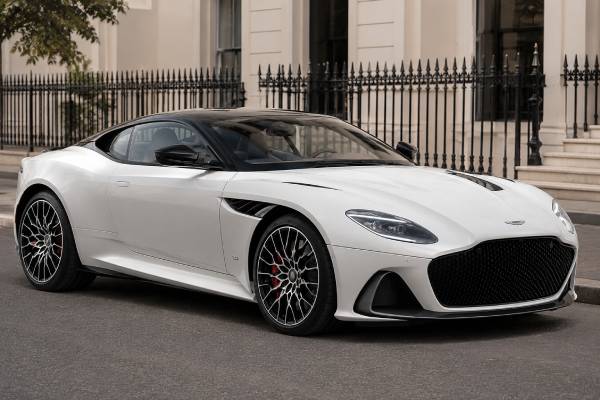
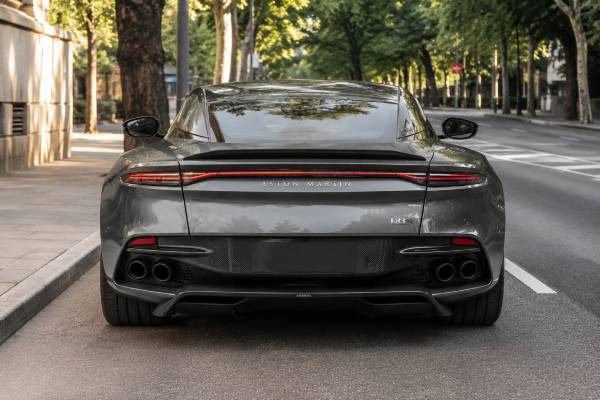
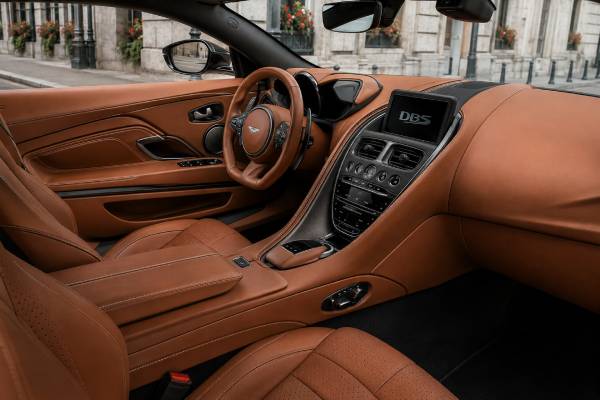
The 2022–2023 Aston Martin DBS is the late-production version of the AM7-generation V12 flagship formerly called DBS Superleggera. The name changed, but the core car did not: it still uses a 715 hp 5.2-litre twin-turbo V12, 900 Nm of torque, a rear-mounted ZF eight-speed automatic, rear-wheel drive, carbon-ceramic brakes, adaptive dampers, and extensive carbon-fibre bodywork. The coupe reaches 100 km/h in a claimed 3.4 seconds and 340 km/h at maximum speed.
These final regular-production cars are attractive because they combine the mature specification of the generation with a simpler DBS badge. They are also easy to misdescribe. Registration date, model year, badge wording, special-edition trim, and the later 770 Ultimate are not interchangeable. Buyers should verify the VIN and build sheet before deciding what a car is worth. This guide explains how to identify the 2022–2023 model, what changed, how it drives, and which maintenance and inspection items deserve priority.
Table of Contents
- Identifying the 2022–2023 DBS
- Late-production technical specifications
- What changed and what did not
- Performance, power delivery, and chassis
- Equipment, options, and daily usability
- Servicing, condition, and known risks
- Buying a late DBS coupe
Identifying the 2022–2023 DBS
The easiest description is also the most accurate: this is the same AM7-generation coupe that launched as the DBS Superleggera, but Aston Martin dropped the Superleggera wording for the later model years. The mechanical specification remained centered on 715 bhp and 900 Nm until the separate DBS 770 Ultimate finale.
Do not identify a car from the registration date alone. A vehicle first registered in 2022 may be an earlier model-year Superleggera, while a model-year 2022 car may be registered later. The VIN, factory build data, compliance label, original invoice, and service-system entry establish the actual model year and specification.
The regular 715 hp DBS should also be separated from special derivatives. The 770 Ultimate has 770 PS, specific body changes, unique wheels, a revised chassis, and limited production. A late 715 hp car with aftermarket wheels or added badging is not an Ultimate. Likewise, a special Q colour or carbon package can make a standard DBS rare without changing its engine output.
Model identification should cover:
- coupe body rather than Volante;
- 5.2-litre twin-turbo V12;
- 715 bhp or 725 PS rating;
- eight-speed rear transaxle;
- 2022 or 2023 model-year documentation;
- original wheel, carbon, interior, and badge specification;
- absence of 770 Ultimate build-number details unless documented.
The late DBS is significant because it closes the regular-production chapter of this generation. It retains the original car’s core engineering while benefiting from several years of production experience, software development, and option evolution. That does not guarantee perfection, but it can make a well-maintained late example appealing to an owner who wants the mature standard car rather than the numbered finale.
Late-production technical specifications
The 2022–2023 DBS coupe is a petrol internal-combustion model with no hybrid assistance. Its engine is mounted behind the front axle line as far as packaging allows, while the gearbox sits between the rear wheels. Market certification can produce different economy and emissions figures, so values should be compared only within the same test procedure.
| Specification | Value |
|---|---|
| Engine family | AE31 all-alloy twin-turbocharged V12 |
| Displacement | 5,204 cc (5.2 litres) |
| Valve gear | Quad overhead camshafts, 48 valves, variable cam timing |
| Compression ratio | 9.3:1 |
| Charge cooling | Water-to-air intercooling |
| Maximum power | 715 bhp (725 PS; 533 kW) at 6,500 rpm |
| Maximum torque | 900 Nm (663 lb-ft) from 1,800–5,000 rpm |
| Fuel | Premium unleaded petrol to the applicable market specification |
| Specification | Value |
|---|---|
| Transmission | Rear mid-mounted ZF 8HP95 eight-speed automatic |
| Final-drive ratio | 2.93:1 |
| Driven wheels | Rear |
| Differential | Mechanical limited-slip unit |
| Propeller shaft | Carbon fibre within an alloy torque tube |
| Driving modes | GT, Sport, and Sport Plus |
| Measure | Value | Context |
|---|---|---|
| 0–100 km/h (0–62 mph) | 3.4 seconds | Coupe manufacturer claim |
| Maximum speed | 340 km/h (211 mph) | Manufacturer claim |
| WLTP combined consumption | About 13.5 L/100 km | Late-market published figure |
| WLTP combined CO₂ | About 306 g/km | Late-market published figure |
| Specification | Value |
|---|---|
| Front suspension | Forged double wishbones, coil springs, anti-roll bar, adaptive damping |
| Rear suspension | Multi-link, coil springs, anti-roll bar, adaptive damping |
| Steering | Electric power assistance, 13.09:1 ratio |
| Front brakes | 410 mm ventilated carbon-ceramic discs |
| Rear brakes | 360 mm ventilated carbon-ceramic discs |
| Front tyre size | 265/35 ZR21 |
| Rear tyre size | 305/30 ZR21 |
| Specification | Value |
|---|---|
| Body style | Two-door 2+2 coupe |
| Length | 4,712 mm (185.5 in) |
| Width including mirrors | 2,146 mm (84.5 in) |
| Maximum width excluding mirrors | 1,968 mm (77.5 in) |
| Height | 1,280 mm (50.4 in) |
| Wheelbase | 2,805 mm (110.4 in) |
| Quoted dry weight | From 1,693 kg (3,732 lb) |
| Weight distribution | Approximately 51% front / 49% rear |
Dry weight is not the same as road-ready mass. Fluids, fuel, options, accessories, and regional definitions change the actual number. Use a measured or homologated kerb figure for transport, lift, or loading decisions.
What changed and what did not
The principal visible change was the name. The 2022 model-year car was marketed simply as DBS rather than DBS Superleggera. Buyers should not assume the shorter name means a lower-output replacement or a new platform.
The following core systems continued:
- 5.2-litre twin-turbo V12 with 715 bhp and 900 Nm;
- rear-mounted eight-speed automatic and limited-slip differential;
- bonded aluminium structure with carbon-fibre exterior panels;
- 410 mm front and 360 mm rear carbon-ceramic brake discs;
- 21-inch staggered tyres;
- GT, Sport, and Sport Plus calibration;
- 211 mph maximum-speed claim;
- 2+2 coupe packaging.
Late production brought changes in colours, trim walks, wheel finishes, option bundles, badges, software revisions, and market equipment. Some cars carry the newer Aston Martin wings badge or late interior specifications, while others reflect transition timing. Because hand-built, low-volume cars can cross calendar and model-year boundaries, the original build sheet is more reliable than a general online model-year summary.
The infotainment architecture remained from the earlier car. That means the late DBS can feel mechanically current but digitally older than its registration year suggests. The screen, controller, navigation graphics, and phone integration do not match newer Aston Martin systems. This matters to daily users but has little effect on the core driving experience.
A late 715 hp DBS also should not be valued as though it includes the 770 Ultimate’s re-engineering. The Ultimate gained higher boost, revised intake and ignition pathways, transmission calibration, a solid-mounted steering column, increased local front-end stiffness, unique damper software, new body details, and limited build numbers. The regular 2022–2023 car remains a very fast DBS, but it is not the same specification with a different badge.
For some buyers, that is an advantage. The standard car can be less conspicuous, may cost less, and retains the original balance between touring comfort and performance. The Ultimate is sharper and rarer; the regular late DBS may be the better choice for frequent road use.
Performance, power delivery, and chassis
The late DBS feels dominated by torque rather than revs. With 900 Nm available from 1,800 rpm, it can accelerate hard without a downshift and can overwhelm the rear tyres if the driver uses full throttle carelessly on a cold or uneven surface.
The engine’s two turbochargers and water-to-air charge coolers allow high output across a broad range. Cooling performance depends on clean heat exchangers, functioning pumps and fans, correct coolant, sound hoses, and unobstructed front airflow. A short demonstration drive may not reveal heat-related faults, so a complete inspection should include operating temperature, stored codes, coolant history, and the condition of the front cooling stack.
The eight-speed transmission has distinct personalities. GT mode favours smoothness and early upshifts. Sport holds gears longer and sharpens response. Sport Plus makes the car most immediate but can feel abrupt in traffic. Fixed paddles allow manual control. The gearbox should not repeatedly flare, bang into gear, hesitate when selecting reverse, or produce heavy clunks during gentle load changes.
The rear transaxle and carbon propeller shaft support balanced mass distribution. The car still has a large V12 ahead of the cabin, yet it changes direction more neutrally than its proportions suggest. Steering is electrically assisted but quick, while adaptive dampers keep body movement controlled.
GT mode is usually the best setting for rough roads. A firmer mode does not create grip where the surface is broken. On poor tyres, the stiffest setting can make the car skip and reduce confidence. Correct tyre specification, age, pressure, and alignment have a greater effect than choosing an aggressive mode.
The carbon-ceramic brakes offer strong stopping power and low fade. They also require informed inspection. Disc condition cannot be judged from mileage alone. Check for edge chips, surface damage, scoring, contamination, and impact marks from wheel removal. Ask for measured wear and pad condition using the approved method.
The car’s aerodynamic system creates genuine high-speed stability. Airflow is managed through the front splitter, wheel-arch outlets, side features, Aeroblade concept, underbody, and double diffuser. Damage beneath the car can affect more than appearance. A cracked splitter or displaced undertray may create noise, cooling issues, or poor fit elsewhere.
Equipment, options, and daily usability
The late DBS is practical enough for touring but requires planning. Its 2+2 cabin, boot, adaptive ride, cameras, climate control, and comfortable seats support long trips; its width, low nose, limited rear space, and fuel use work against ordinary daily convenience.
Many cars were highly personalised. Exterior carbon packages can include the roof, mirror caps, side louvres, splitter, diffuser, and other pieces. Interiors vary through leather type, Alcantara, quilting, perforation, contrast stitching, carbon trim, wood, seat ventilation, steering-wheel finish, jewellery colour, and audio specification.
Factory originality matters because later changes can be hard to distinguish from genuine Q options. Confirm unusual colours, badges, wheels, and interior combinations from factory data. Paint-protection film is common and can be beneficial, but inspect its edges, yellowing, lifting, trapped contamination, and the paint beneath where possible.
The 360-degree camera, parking sensors, blind-spot assistance where fitted, mirror functions, and automatic parking help manage the car’s size. Test each function. A bumper repaint can affect sensor operation, while wheel or alignment damage can make parking-assistance behaviour unreliable.
The cabin technology is functional rather than modern. Bluetooth, USB, navigation, audio, and the central controller should work consistently. Reversible smartphone-integration upgrades can be worthwhile, but avoid installations that cut factory wiring or damage trim. Check for battery drain after any aftermarket work.
Rear seats are best used for soft bags or occasional passengers. The boot can support a weekend trip, but the opening and depth determine what fits. Carrying long or rigid luggage may be more difficult than the nominal volume suggests.
The front overhang and low air dam are vulnerable on steep ramps. Approach diagonally where safe, and inspect the underside before buying. Front-end lifting is not part of the standard configuration, so route planning matters in underground car parks and on ferry ramps.
Fuel range varies dramatically. Motorway cruising can be reasonable for the performance level, while urban use and short trips consume fuel quickly. The 12-volt battery also suffers when the car is used only for brief journeys. A compatible conditioner is sensible for occasional use.
Servicing, condition, and known risks
The safest maintenance approach is annual specialist servicing plus proactive inspection of systems affected by time, heat, and storage. The car’s low production volume and high parts prices make prevention more valuable than deferred repair.
A complete service review should cover:
- engine oil and filter specification and date;
- engine and charge-cooling circuits;
- air filters and front heat-exchanger cleanliness;
- brake-fluid age and carbon-ceramic disc condition;
- transmission, differential, and torque-tube leaks;
- adaptive dampers, suspension joints, and alignment;
- tyres across the full tread width and by date code;
- battery capacity, charging voltage, and software status;
- air conditioning, cameras, sensors, and infotainment;
- splitter, diffuser, undertrays, and exposed carbon.
Cold-start and engine checks
Ask the seller not to warm the car. The V12 should start promptly, settle evenly, and avoid persistent smoke or warning messages. Listen for abnormal tapping, knocking, belt noise, or exhaust leaks. Inspect for oil staining above and below the engine and for dried coolant around reservoirs, hoses, pumps, and radiators.
A diagnostic scan should read all control modules. Stored low-voltage faults may indicate an old battery or repeated discharge; boost, misfire, mixture, temperature, and emissions faults require separate investigation. Clearing the dashboard before sale does not prove the car is healthy.
Transmission and driveline checks
Select Drive and Reverse several times after initial start and again when warm. Engagement should be consistent. During the road test, use light throttle, manual paddles, and stronger acceleration after full warm-up. Harshness can come from software, adaptations, mounts, differential play, or internal problems, so specialist interpretation is important.
Listen for clunks when moving from acceleration to overrun. Some driveline connection is expected in a high-torque rear-transaxle car, but repeated sharp impacts are not. Inspect the torque-tube area and rear assembly for leaks or previous removal.
Body, wheel, and electronic checks
Carbon panels are expensive and can hide repaired damage beneath paint. Check panel gaps, weave alignment on exposed carbon, clear-coat condition, paint depth, fasteners, and underside edges. Stone chips are normal; cracks, distortion, or mismatched finish are different.
Low-profile 21-inch wheels can buckle or crack. A cosmetically perfect refurbished wheel may still have excessive runout. Vibration should prompt a wheel, tyre, and hub check rather than repeated balancing alone.
Electrical reliability depends heavily on stable voltage. Verify battery type, age, charging behaviour, both keys, alarm, tracker where fitted, and sleep-current condition. Multiple unrelated warnings after storage often begin with the battery, but the cause should be proven rather than assumed.
Recall and service-action status is VIN-specific. Use the relevant national database and request an authorised Aston Martin printout. Late model year does not guarantee every campaign or software action has been completed.
Buying a late DBS coupe
A late DBS should be selected on condition, provenance, and specification—not simply because it is newer than a Superleggera-badged car. The ideal example has continuous annual servicing, original build documentation, clean diagnostics, correct recent tyres, healthy ceramic brakes, undamaged carbon, and no unresolved warning history.
Use a pre-purchase inspection that includes:
- VIN and build-sheet verification;
- paint-depth and carbon-fibre assessment;
- full module scan and battery test;
- cold start and warm road test;
- transmission adaptation and shift review;
- lift inspection of underbody and cooling areas;
- wheel runout, tyre age, and alignment evidence;
- measured brake-disc and pad condition;
- recall and software confirmation;
- written estimate for immediate work.
Do not treat a low odometer reading as a substitute for use. A car stored for long periods can have aged tyres, a repeatedly discharged battery, sticky exhaust valves, dried seals, corroded brake hardware, and stale fluids. A somewhat higher-mileage car used on long trips may be healthier.
Compare the late DBS with both its neighbours. An earlier Superleggera can offer the same performance at a lower price and may carry a more evocative badge. A 770 Ultimate adds rarity and chassis revisions but usually commands a large premium. The standard 2022–2023 DBS occupies the middle: mature, very fast, and less focused on collectibility.
Ownership budgeting should include fuel, insurance, secure storage, annual service, tyres, brake contingency, battery support, and an allowance for carbon, electronics, cooling, dampers, or transmission-related work. The purchase price may depreciate; repair prices still reflect a high-end V12 flagship.
Avoid paying heavily for cosmetic claims that cannot be verified. Q paint, unusual trim, carbon options, and limited packages can be desirable, but documentation must support them. Aftermarket wheels, exhausts, tunes, or lowering parts should be evaluated for reversibility, quality, emissions legality, and their effect on warranty or resale.
The 2022–2023 DBS is a strong choice for an owner who wants the final regular 715 hp configuration rather than the launch-era badge or the limited Ultimate. Its performance remains extraordinary, but its best quality is breadth: calm enough for a long journey, dramatic enough to feel special at any speed, and powerful enough that restraint is part of driving it well.
For imported cars, model-year verification should extend beyond the VIN description. Check the original market, compliance plate, speedometer and lighting configuration, emissions equipment, infotainment region, warranty transfer, and evidence of any legal conversion. A late registration in the destination country can make an older build appear newer, while missing export documents can complicate resale. The build sheet and continuous mileage record should connect the car’s factory specification to its present identity without unexplained changes. Check that both keys, manuals, market-specific labels, and original sales paperwork also agree with that record, particularly when the vehicle has passed through several dealers.
References
- Discover why James Bond chose the Aston Martin DBS as his best car. The epitome of British craftsmanship, performance and luxury 2026 (Manufacturer Pre-Owned Model Page)
- Introducing the new DBS Superleggera: two illustrious names; one magnificent Super GT | Aston Martin USA 2018 (Generation Technical Release)
- Unleashing DBS 770 Ultimate: A ferocious farewell to Aston Martin’s Super GT flagship | Aston Martin 2023 (End-of-Generation Context)
- Vehicle Detail Search – 2022 ASTON MARTIN | NHTSA 2026 (Recall Database)
- Aston Martin Timeless | Certified pre-owned luxury sports cars 2026 (Manufacturer Pre-Owned Standards)
- Aston Martin Luxury Car Servicing | Aston Martin 2026 (Manufacturer Service Information)
Disclaimer
This material is informational and is not a substitute for professional diagnosis, repair, valuation, or a VIN-specific inspection. Specifications, procedures, torque values, service intervals, software, options, and campaign coverage vary by market, equipment, and production date. Confirm critical information with official Aston Martin owner and workshop documentation for the exact vehicle.
Please share this article on Facebook, X/Twitter, or an enthusiast forum if it assisted your research and you would like to support future technical guides.