


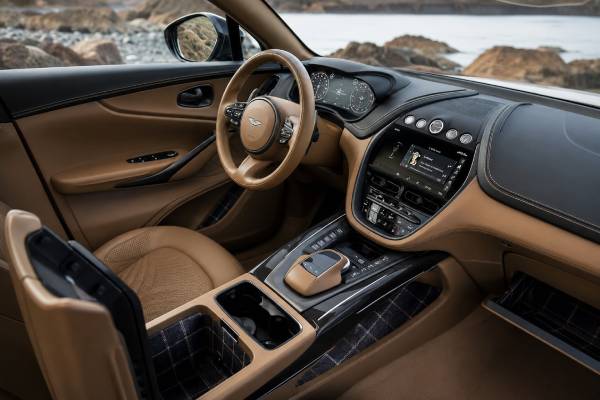
The Aston Martin DBX Bowmore Edition is a rare example of a luxury SUV whose identity comes from materials and provenance rather than extra horsepower. Only 18 were planned, each created by Q by Aston Martin to celebrate the marque’s partnership with Bowmore, the Islay single-malt distillery. Beneath the copper, tweed, and special paint, it remains the original 2021 DBX V8: a five-seat, all-wheel-drive grand tourer with a 4.0-liter twin-turbo engine, air suspension, and genuine towing and cargo ability. That distinction matters to buyers. Mechanically, servicing and road behavior should be judged as an early DBX, while condition, completeness, and authenticity determine much of the edition’s collector appeal. This guide separates the special-edition content from the standard engineering, explains how the DBX works, identifies sensible maintenance priorities, and shows what to verify before buying one of the 18 cars.
Table of Contents
- What makes the Bowmore Edition special
- Bowmore Edition specifications
- How the V8 DBX drives
- Craft, materials, and cabin details
- Maintenance for an early DBX
- Buying and authenticating one of 18
- Ownership verdict
What makes the Bowmore Edition special
The Bowmore Edition is a Q by Aston Martin design commission built in a run of 18, not a higher-output derivative of the DBX. Its value lies in the unusually specific link between an individual car and materials taken from Bowmore’s distilling heritage.
Aston Martin announced the model in December 2020, with customer deliveries planned for the fourth quarter of 2021. The preferred exterior color was Bowmore Blue, an archive shade revived for the project. Xenon Grey, containing a blue metallic fleck, was offered as an alternative, and buyers could request another color. That flexibility means paint color alone cannot prove or disprove authenticity.
The most important edition-specific details are less easily copied. Copper from Bowmore’s original whisky stills was incorporated into the side strakes, sill plaques, and cupholder area. Inside, the design used Bowmore Tweed and copper-toned treatments rather than merely applying branded badges to a standard specification. A hand-laid copper-foil detail appeared in the center-console trim. Each vehicle was also associated with a handover experience in Scotland and a set of tailored accessories, including a Bowmore tweed picnic blanket and a leather holdall.
That combination gives the car two overlapping identities:
- It is a fully usable early DBX V8 with normal DBX mechanical needs.
- It is a numbered, provenance-sensitive Q commission whose trim, accessories, documentation, and originality affect desirability.
A buyer should therefore resist two common mistakes. The first is assuming the Bowmore Edition has unique engine calibration or performance hardware; Aston Martin stated the same 550 PS and 700 Nm output as the contemporary DBX. The second is treating it like a normal used DBX with a decorative package. Replacing damaged copper, tweed, plaques, or bespoke luggage may be difficult, slow, or impossible on an exact like-for-like basis.
The edition also illustrates why Q by Aston Martin cars require careful description. “Q” can refer to factory-curated collections, dealer-supported special runs, or highly individual commissions. For the Bowmore Edition, the defining story is documented and finite: 18 vehicles, a named partnership, identifiable materials, and a planned experiential delivery. Those facts should appear consistently across the build sheet, sales invoice, Q documentation, service history, and physical car.
Bowmore Edition specifications
The Bowmore Edition uses the original DBX’s internal-combustion layout: a front-mid-mounted 3,982 cc twin-turbo V8, nine-speed torque-converter automatic transmission, and electronically controlled all-wheel drive. Its bespoke content changes appearance and rarity, not the fundamental powertrain, chassis, body, or utility ratings.
| Specification | Value | Notes |
|---|---|---|
| Powertrain type | Gasoline internal-combustion engine | No hybrid traction system |
| Engine | 3,982 cc twin-turbocharged V8 | All-alloy, 32-valve layout |
| Maximum power | 550 PS (542 bhp; 405 kW) | Edition retains standard DBX V8 tune |
| Maximum torque | 700 Nm (516 lb-ft) | Broad low- and mid-range delivery |
| Fuel requirement | Minimum 95 RON; 98 RON recommended | Higher-octane fuel supports optimum performance |
| Fuel tank | 85 L (22.5 US gal) | Market literature may round capacity |
| Efficiency feature | Cylinder deactivation and stop-start | Operates according to load and drive mode |
| Specification | Value |
|---|---|
| Transmission | Nine-speed torque-converter automatic |
| Drive system | Electronically controlled all-wheel drive |
| Rear differential | Electronic limited-slip differential |
| Body structure | Bonded-aluminium architecture with aluminium and composite panels |
| Front suspension | Double wishbone with adaptive damping |
| Rear suspension | Multi-link with adaptive damping |
| Spring system | Triple-chamber adaptive air suspension |
| Roll control | 48-volt electronic active anti-roll control |
| Specification | Value | Condition |
|---|---|---|
| 0–100 km/h (0–62 mph) | 4.5 seconds | Manufacturer figure for original DBX V8 |
| Top speed | 291 km/h (181 mph) | Manufacturer figure |
| Kerb weight | 2,245 kg (4,949 lb) | Published launch figure |
| Braked towing capacity | 2,700 kg (5,952 lb) | Correct towing equipment required |
| Boot volume | 632 L | Rear seats in use |
| Seating | Five | 40:20:40 split-folding rear bench |
| Measurement | Value |
|---|---|
| Length | 5,039 mm (198.4 in) |
| Width excluding mirrors | 1,998 mm (78.7 in) |
| Width including mirrors | 2,220 mm (87.4 in) |
| Height | 1,680 mm (66.1 in) |
| Wheelbase | 3,060 mm (120.5 in) |
| Turning circle | 12.4 m (40.7 ft), kerb to kerb |
| Ride-height adjustment | Up to 45 mm higher or 50 mm lower than the normal setting |
| Component | Specification |
|---|---|
| Typical wheel diameter | 22 in; verify the exact Bowmore build sheet and fitted design |
| Front tire size | 285/40 R22 on the common 22-inch package |
| Rear tire size | 325/35 R22 on the common 22-inch package |
| Front brakes | Ventilated iron discs, 410 mm |
| Rear brakes | Ventilated iron discs, 390 mm |
| Parking brake | Electronic |
The horsepower in the assignment is 542 hp because that is the brake-horsepower equivalent of Aston Martin’s 550 PS European rating. Listings sometimes call the same car “550 hp,” which is usually a unit-labeling shortcut rather than evidence of a different tune. Use the build record and market specification to avoid confusing PS, bhp, and SAE horsepower.
How the V8 DBX drives
The Bowmore Edition drives like the original DBX V8: quick, composed, and unusually adjustable for a large SUV, but less explosive than the later DBX707. Its character is better described as a high-speed grand tourer with off-road and towing range than as a track-focused special.
The engine’s strongest quality is accessible torque. Seven hundred newton-metres gives the DBX effortless passing power without forcing the gearbox to chase high revs. The nine-speed automatic uses a conventional torque converter, so it generally moves away smoothly and suits urban driving. Sport and Sport+ sharpen the powertrain, hold gears longer, and open the active exhaust more often. GT mode is the better default for long-distance use because it relaxes throttle, transmission, damping, and exhaust behavior.
The chassis is more technically ambitious than its soft luxury presentation suggests. Triple-chamber air springs change effective spring rate, adaptive dampers control vertical movement, and the 48-volt eARC system actively resists roll. Aston Martin quoted up to 1,400 Nm of anti-roll force per axle. The result is not a light vehicle, but it can maintain a remarkably flat stance without relying on permanently harsh springs.
That sophistication also explains why a short test drive is inadequate. Drive the car through several modes, over broken pavement, during tight parking maneuvers, and at sustained speed. The system should raise and lower predictably, settle evenly at all four corners, and avoid persistent suspension warnings. The steering should remain consistent rather than becoming notchy or unusually heavy. A fault-free dashboard at startup is not enough; some intermittent problems appear only after the car changes height or heat-soaks.
The standard brakes suit the 542 hp car, yet mass and wheel size mean consumables are expensive. A driver who repeatedly uses the performance will generate heat quickly and can wear the outer shoulders of the front tires. Mixed tire brands, mismatched specification markings, or a large age difference between axles are warning signs on an all-wheel-drive performance SUV. Correct load and speed ratings matter as much as tread depth.
Practicality is real. The 632-liter luggage area, split rear seat, low loading lip, and 2,700 kg braked towing rating make it more than a tall sports car. The long wheelbase benefits rear space, while the air suspension can lower the body for loading. The trade-offs are width and visibility: at 2.22 meters across the mirrors, narrow entrances and older parking structures require care. Cameras and sensors should be tested individually because bodywork and special paint are costly to repair.
Craft, materials, and cabin details
The Bowmore cabin is the edition’s main reason for existing, so preservation matters more than chasing cosmetic perfection through replacement. Original copper, tweed, leather, embroidery, plaques, and accessories form one connected design story.
Copper develops surface character. That can be desirable patina rather than neglect, but corrosion, aggressive polishing, clear-coat damage, and uneven refinishing are different issues. Compare the two side strakes in natural light. Their finish should be coherent with the interior copper elements and documented specification. Ask whether any trim has been removed, polished, re-lacquered, or replaced after accident repair.
Bowmore Tweed should be inspected for fading, pulled fibers, staining, and cleaning residue. Strong household chemicals can alter wool-based fabrics, while leather treatments can leave adjacent woven material greasy. A specialist familiar with mixed-material luxury interiors is safer than a generic valeting package. Photographing the cabin before professional cleaning also creates a useful condition record.
The center console deserves special attention because its hand-laid copper-foil inlay is difficult to replicate. Look across it at a shallow angle for lifting edges, trapped moisture, clouding, or cracking. Minor variation may reflect hand finishing; obvious delamination does not. Avoid placing leaking drink containers or abrasive objects near the inlay, even though the DBX is designed as a daily-use SUV.
Completeness extends beyond the car. Ideally, the sale includes:
- The original build specification and invoice showing Bowmore Edition content.
- Numbered or edition-specific certificates, handover material, and Q documentation.
- The Bowmore tweed picnic blanket and tailored leather holdall.
- Both keys, books, charging/conditioning equipment, tools, and any supplied luggage pieces.
- Service invoices that identify mileage, dates, software work, campaigns, and replaced trim.
A missing accessory should not automatically end a purchase, but its absence should be disclosed and reflected in price. A replacement blanket in similar fabric is not the same collectible object as the supplied accessory. The same principle applies to generic copper-look trim or standard DBX side strakes fitted after damage.
Early DBX infotainment is another ownership consideration. The dual-screen presentation looked modern at launch, but the central interface came from an earlier generation of Mercedes-derived electronics and was controlled largely by a rotary controller and touchpad rather than direct touchscreen input. Apple CarPlay helps, yet buyers accustomed to later DBX707 interiors may find the system dated. Confirm pairing, navigation, audio, cameras, steering-wheel controls, and USB connections instead of assuming software updates can transform the hardware.
Maintenance for an early DBX
The safest maintenance strategy is annual specialist attention, a consistently charged 12-volt battery, correct fluids and tires, and prompt investigation of warnings. Low mileage does not eliminate age-related needs on a complex 2021 vehicle.
Aston Martin documentation for the exact VIN and market should determine intervals, capacities, approved lubricants, and procedures. The Mercedes-AMG-derived V8 does not make the whole vehicle a Mercedes parts-bin product. Engine hardware may have a recognizable family relationship, but calibration, cooling, intake, exhaust, diagnostics, packaging, driveline, and chassis systems are specific to the DBX. Substituting parts solely because they look similar can create warranty, fitment, or software problems.
Prioritize these areas:
- Battery condition: The DBX contains many control modules and a separate 48-volt chassis system. A weak 12-volt battery can generate cascading warnings or prevent reliable sleep/wake behavior. Use the approved conditioner during storage and have battery health tested rather than merely recharged.
- Engine oil and leaks: Follow the VIN-specific oil specification and annual service requirement. Inspect the undertray, turbo oil and coolant areas, cam covers, and front of the engine for fresh residue. A clean engine bay after detailing is not proof of dryness.
- Cooling system: Check coolant level only as instructed and when safe. Investigate unexplained loss, odors, residue, or repeated fan operation. The twin-turbo engine produces substantial heat, especially after short, hard use.
- Air suspension and eARC: Confirm even ride height after an overnight park, normal compressor operation, and successful changes among access, GT, sport, and terrain settings. Scan all chassis modules during a pre-purchase inspection.
- Brakes and tires: Measure remaining pad and disc life, not just appearance through the wheel. Check tire age, sidewalls, inner shoulders, and alignment history.
- Software and campaigns: Ask an Aston Martin dealer to check completed and outstanding actions by VIN. Generic online recall searches are useful, but dealer systems may contain market-specific campaigns or service updates.
Annual use is usually healthier than long static display. Warm the car fully, allow the transmission and differentials to reach operating temperature, operate the air suspension, use the climate system, and avoid repeated five-minute runs. At the same time, “exercise” should not mean hard acceleration on cold oil. Aston Martin’s quick guide cautions against exceeding 4,000 rpm in extreme cold until coolant reaches normal temperature; mechanically sympathetic owners will use an even broader warm-up habit in all seasons.
Storage conditions matter uniquely to the Bowmore trim. Keep humidity stable, avoid direct sun on the tweed and leather, and do not cover a damp car. Breathable protection is preferable to trapping condensation. Record any conservation work, especially polishing or coating of the copper, so a future buyer understands what was done.
Buying and authenticating one of 18
Buy the Bowmore Edition on documentation, condition, and completeness—not on a seller’s claim that any blue DBX with copper accents is one of the 18. A factory-supported provenance check is worth more than visual resemblance.
Start with the VIN and ask an authorized Aston Martin retailer or the marque’s heritage/client-services channel to confirm the original build. Match the VIN across the windscreen, body labels, registration, invoice, service records, and diagnostic report. Then compare the physical specification with the factory record. Because alternative exterior colors were allowed, an unusual paint choice may be legitimate; undocumented color changes or wrapped panels still require investigation.
A strong pre-purchase inspection should include four layers:
- Provenance review: Establish original supplying dealer, delivery date, owner sequence, edition documents, and accessory inventory.
- Body and trim inspection: Measure paint where practical, inspect bonded-aluminium repair areas, check panel gaps, and examine every copper and tweed component.
- Mechanical and electronic diagnosis: Scan all modules, road-test every drive mode, test the air suspension and eARC, inspect leaks, and assess brakes and tires.
- Costed report: Obtain realistic prices and lead times for required work. A rare car with several “small” trim needs can be more difficult to restore than a mechanically similar standard DBX.
Pay particular attention to accident repairs. Aluminium structures and composite panels demand correct methods, and the Bowmore paint and trim add another layer of complexity. Overspray near seals, disturbed fasteners, mismatched metallic flop, non-original side strakes, or missing Q markings justify deeper investigation. A minor bumper repair may be acceptable when documented and properly executed; hidden structural work or invented provenance is not.
Mileage should be interpreted alongside use. A very low-mileage car may have spent years on a static battery, old tires, and infrequent servicing. A modestly used example with annual invoices, clean fluids, current campaigns, and complete accessories may be the safer purchase. Date-based service history matters even when the odometer barely changes.
Valuation is difficult because public transactions are scarce and specification can vary. Do not derive the Bowmore premium by simply adding the original cost of Q options to the value of an ordinary 2021 DBX. Consider rarity, global desirability, condition of irreplaceable materials, documented ownership, market location, tax status, and whether the complete Scotland-delivery story remains with the car. The special edition may appeal to Aston Martin collectors, whisky collectors, or both, but that narrower audience can also make resale timing unpredictable.
Before paying a deposit, put all representations in writing. The sales agreement should identify the car as an authentic DBX Bowmore Edition, list included accessories and documents, state known paintwork and accident history, and record any promised servicing or campaign completion. “One of 18” is a material claim, not casual advertising language.
Ownership verdict
The DBX Bowmore Edition makes the most sense for an owner who wants a usable Aston Martin with a genuinely limited craft story and is willing to preserve its original materials. It is not the choice for someone seeking the fastest DBX, the newest infotainment, or the lowest-cost route into the model.
As a road car, it offers the same persuasive blend that made the early DBX important: strong V8 torque, five-seat comfort, air-suspended breadth, meaningful luggage space, and towing capability. As a collectible, it adds only 18-car production, recognizable Islay-linked materials, and a curated handover concept. Neither side should be ignored. A perfect interior cannot compensate for deferred chassis maintenance, and flawless mechanical health cannot recreate missing Bowmore copper, tweed, documentation, or luggage.
The best example will therefore look almost uneventful on paper: verified VIN, complete Q provenance, original trim, careful storage, annual service, current software and campaigns, matched high-quality tires, healthy batteries, and no unexplained warning history. That disciplined ownership record protects both the driving experience and the story that separates the Bowmore Edition from a normal DBX.
References
- Aston Martin reveals exclusive DBX Bowmore® Edition | Aston Martin 2020
- Q by Aston Martin | Bespoke Car Personalisation | Aston Martin 2026
- ASTON MARTIN UNVEILS DBX: AN SUV WITH THE SOUL OF A SPORTS CAR | Aston Martin 2019
- ASTON MARTIN’S FIRST SUV POWERS INTO FINAL STAGES OF DEVELOPMENT | Aston Martin 2019
- DBX Quick Start Guide | Aston Martin UK 2026 (Quick Start Guide)
- Check for Recalls: Vehicle, Car Seat, Tire, Equipment | NHTSA 2026 (Recall Database)
Disclaimer
This article is for informational purposes and is not a substitute for professional diagnosis, repair, valuation, or authentication. Specifications, torque values, service intervals, software, and procedures can vary by VIN, market, options, and production date. Verify all work against official Aston Martin service documentation and have a qualified specialist inspect the vehicle. Please share this guide on Facebook, X/Twitter, or another platform if it helped you.