

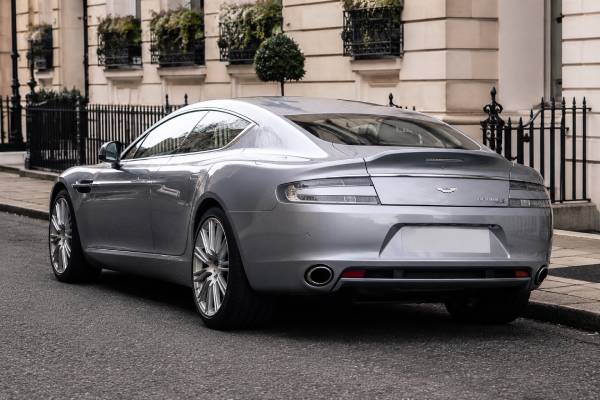
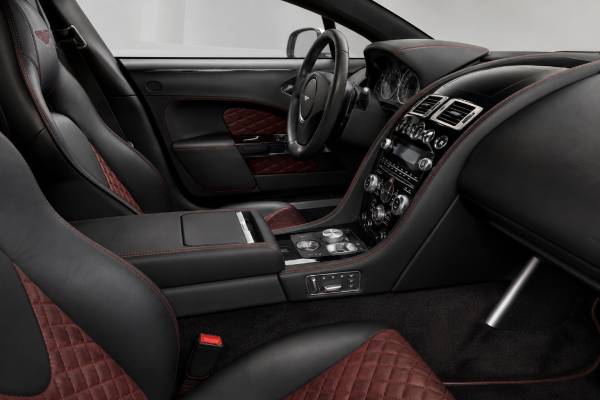
The Aston Martin Rapide S Centenary Edition combines the first, 550 hp version of the Rapide S with a hand-finished specification created for Aston Martin’s 100th anniversary. Its significance is not a different engine tune or a competition package. It is the union of the newly strengthened Rapide S—AM11 V12, six-speed Touchtronic II transaxle, revised front structure, and 190 mph capability—with elaborate paint, sterling-silver details, numbered trim, and a presentation set.
That makes authentication central to ownership. A convincing car should tell one coherent story through its VIN records, build sheet, sill plaques, exterior finish, cabin materials, keys, accessories, and service history. The anniversary program was announced as a worldwide run of up to 100 examples for each model line, but surviving cars should be judged individually rather than by an unsupported rarity claim in an advertisement.
This guide separates the commemorative content from the underlying Rapide S engineering, explains how the six-speed 2013 car drives, and sets out a preservation-minded inspection process for buyers who want both a usable V12 grand tourer and a credible centenary artifact.
Table of Contents
- Centenary Provenance and Production Context
- Special Paint, Silverwork, and Cabin Details
- 2013 Rapide S Technical Reference
- Driving the Six-Speed Rapide S
- Preservation, Detailing, and Storage
- Authentication and Pre-Purchase Inspection
- Collector Ownership and Buying Strategy
Centenary Provenance and Production Context
The Centenary Edition is best understood as an official commemorative commission applied to a 2013 Rapide S, not as a mechanically separate Rapide derivative. Aston Martin announced Centenary Editions for its contemporary model lines during the company’s 100th year, with availability limited to a maximum of 100 examples per model line worldwide.
The date matters. The Rapide S had just replaced the original 470 hp Rapide, so the anniversary car arrived with substantial engineering changes already built into the new model. Power rose to 550 bhp, the engine sat lower, the nose was reshaped around a larger grille, and the structure was revised to improve pedestrian protection and packaging. The Centenary treatment then added its own finish and presentation rather than altering those fundamentals.
A buyer should distinguish three different numbers that sellers sometimes blur:
- The announced limit for the entire model-line edition.
- The sequence shown on an individual car’s numbered commemorative trim.
- The number of cars presently documented in a registry or specialist database.
Only the first two are directly tied to the factory program, and even then the physical car and factory records should agree. Registry totals can be useful but may omit private cars, exports, re-registrations, or vehicles whose special status was not entered correctly in public data.
The strongest provenance file begins with a factory build specification or heritage confirmation linked to the VIN. It should continue with the original sales invoice, handover documents, numbered plaques, service book, spare key, presentation materials, and photographs from early ownership. A complete chain does more than support value; it helps establish whether paint, silver components, and cabin pieces are original or later replacements.
Do not rely on exterior appearance alone. Aston Martin’s personalization programs could produce highly individual regular Rapide S cars, and skilled refinishing can imitate a color effect. Conversely, an authentic Centenary car may have received legitimate repair work. The question is not whether every surface is untouched, but whether every change is documented and executed to a standard consistent with the car’s significance.
Special Paint, Silverwork, and Cabin Details
The commemorative specification is defined by labor-intensive finish and precious-metal details. These features are the primary evidence that separates a Centenary Edition from an ordinary 2013 Rapide S with attractive options.
The signature exterior treatment was a graduated paint finish developed to create a subtle transition in tone. Aston Martin described the process as requiring roughly 18 additional hours compared with a conventional paint application. The result depends on controlled layering and visual continuity across large panels, which means local repairs demand unusual care. A mismatched door or quarter panel can be more obvious on a graduated finish than on a flat metallic color.
Factory centenary features included:
- Specially developed graduated exterior paint.
- Sterling-silver Aston Martin wing badges with enamel inlay.
- Hallmarked silver details made for the anniversary specification.
- Deep, soft black leather with contrasting silver stitching and embroidery.
- Numbered sterling-silver sill plaques.
- A presentation box containing commemorative accessories.
The exact contents and market packaging should be verified against the build sheet. A car missing its box or a spare key can still be genuine, but replacement cost and collectibility are affected. Loose accessories without a matching VIN history are not a substitute for evidence.
Silver demands different care from plated plastic or ordinary brightwork. Aggressive metal polish can round engraved edges, remove intended surface character, or contaminate adjacent leather and paint. Cleaning should begin with a dry, soft cloth and progress only to products suitable for hallmarked silver. If tarnish is heavy, a conservator or detailer familiar with precious-metal automotive trim is safer than routine machine polishing.
The interior needs equally restrained treatment. Soft black leather can show dye transfer, bolster compression, shrinkage around stitched panels, and gloss from unsuitable conditioners. Silver thread and embroidery can snag under stiff brushes. Use low-moisture cleaning, test products in a hidden area, and photograph original marks before repair. A lightly aged but consistent cabin may be more credible than one whose leather has been heavily redyed without documentation.
Examine the plaques from several angles. Their font, hallmark, mounting, finish, and sequence should match period examples and factory records. Scratches are not automatically a problem; inconsistent engraving, fresh adhesive, or a plaque number unsupported by paperwork is more concerning. Check both sides of the car rather than assuming a single correct plaque proves the complete specification.
2013 Rapide S Technical Reference
Mechanically, the Centenary Edition follows the 2013 Rapide S specification: a naturally aspirated 5,935 cc V12, six-speed rear transaxle, rear-wheel drive, and adaptive damping. The tables below provide a reference for inspection and comparison; market equipment and certification figures can vary, so the VIN-specific factory record remains decisive.
| Item | Specification |
|---|---|
| Engine | All-alloy 60-degree V12, naturally aspirated |
| Displacement | 5,935 cc (5.9 L) |
| Valvetrain | Quad overhead camshafts, 48 valves |
| Maximum power | 410 kW / 558 PS / 550 bhp at 6,750 rpm |
| Maximum torque | 620 Nm / 457 lb-ft at 5,500 rpm |
| Fuel | Premium unleaded petrol |
| Item | Specification |
|---|---|
| Transmission | Six-speed Touchtronic II automatic transaxle |
| Layout | Front-engine, rear-wheel drive |
| Torque delivery | Carbon-fibre propeller shaft within torque tube |
| Differential | Limited-slip differential |
| Driver control | Automatic or steering-column paddle selection |
| Measure | Factory figure |
|---|---|
| 0–100 km/h | 4.9 seconds |
| 0–60 mph | 4.7 seconds |
| Maximum speed | 306 km/h / 190 mph |
| Combined consumption | 14.3 L/100 km / 19.8 mpg imperial |
| CO2 emissions | 332 g/km |
| Item | Measurement |
|---|---|
| Length | 5,019 mm / 197.6 in |
| Width excluding mirrors | 1,929 mm / 75.9 in |
| Height | 1,360 mm / 53.5 in |
| Wheelbase | 2,989 mm / 117.7 in |
| Kerb weight | 1,990 kg / 4,387 lb |
| Fuel capacity | 90.5 L / 23.9 US gal |
| Item | Specification |
|---|---|
| Body structure | Bonded and riveted extruded-aluminium VH platform |
| Front suspension | Independent double wishbones, coil springs, anti-roll bar |
| Rear suspension | Independent double wishbones, coil springs, anti-roll bar |
| Damping | Adaptive damping system |
| Front tyres | 245/40 ZR20 |
| Rear tyres | 295/35 ZR20 |
| Brakes | Ventilated iron discs with anti-lock braking and stability control |
These figures identify the early Rapide S. The later eight-speed car is materially quicker and uses different published consumption data. A 2013 Centenary Edition represented as an eight-speed model therefore requires careful investigation; it may be a registration-year confusion, an inaccurate listing, or a car with a more complicated history than stated.
Driving the Six-Speed Rapide S
The 2013 Centenary Edition drives like a first-generation Rapide S: more urgent and more tightly controlled than the original Rapide, yet still calibrated as a long-distance four-seat GT. Its character comes from the naturally aspirated V12 and balanced transaxle layout rather than from the anniversary trim.
The AM11 engine responds cleanly as revs rise and produces its maximum power at 6,750 rpm. Around town, it feels smooth rather than explosive. On an open road, the additional 80 bhp over the original Rapide is obvious in the middle and upper rev range. The car gathers speed with a sustained surge and a sharper exhaust note, but its mass and long wheelbase remain part of the experience.
The six-speed Touchtronic II is the defining mechanical feature of this early S. It is not as quick or closely spaced as the later eight-speed gearbox. In automatic mode, it can feel deliberate when the driver suddenly requests acceleration. Manual paddle selection improves anticipation: choose the ratio before a bend or overtake rather than waiting for the transmission to decide under full throttle.
A healthy gearbox should engage Drive and Reverse without a prolonged delay, shift consistently once warm, and hold the car correctly in Park. Certain six-speed Rapide and Rapide S vehicles were subject to a transmission park-lock software recall, so the VIN should be checked for completed campaigns. A receipt or dealer record is stronger evidence than a verbal assurance.
The steering is hydraulically assisted and comparatively communicative. The car’s width and long nose demand attention in tight streets, but the low seating position and stable chassis help on flowing roads. Adaptive damping should produce a noticeable, sensible change between modes. Harshness in every setting can indicate old tyres, wheel damage, worn suspension joints, or a fault in the damping system rather than an inherently uncompromising ride.
Braking performance is strong for road use, although the standard iron discs must manage nearly two tonnes. A pulse through the pedal, steering vibration, heavy lip on the discs, or cracked friction surfaces justifies measurement rather than guesswork. Cars used infrequently may develop surface corrosion, while repeated high-speed use can create heat-related wear.
The best test drive includes cold start, urban traffic, a rough road, sustained cruising, repeated moderate braking, and a full-temperature restart. A brief demonstration on smooth roads can conceal low-speed driveline behavior, trim noise, weak air conditioning, and intermittent warning messages.
Preservation, Detailing, and Storage
Preserving a Centenary Edition requires a different hierarchy from maintaining an ordinary used luxury car: first protect originality, then correct deterioration with reversible and documented work. Mechanical neglect still causes the greatest financial risk, but cosmetic intervention can erase the evidence that makes the edition special.
For the exterior, begin with a professional paint-depth map. Graduated paint may show legitimate variation from panel to panel, so readings must be interpreted with visual inspection and repair records. Look for masking lines around seals, overspray on fasteners, disturbed hinge bolts, texture changes, and color transition that no longer flows across adjoining panels. A high reading is not automatically disqualifying, but an unexplained local repaint should affect price.
Use a conservative wash process:
- Rinse loose contamination thoroughly before contact.
- Use clean microfiber media and a pH-neutral shampoo.
- Avoid strong alkaline cleaners on silver badges and delicate trim.
- Dry with soft towels or filtered air rather than dragging a heavy cloth.
- Select wax or coating only after testing its effect on the special finish.
Paint-protection film can be sensible on a car that is driven, especially across the nose and rocker areas. The installer must understand the paint’s age, prior repairs, and edge visibility. Removing old film can lift weak refinished clear coat, so inspect existing film before deciding it is merely cosmetic.
Storage should be dry, ventilated, secure, and electrically managed. A compatible battery conditioner is preferable to allowing voltage to fall. Low system voltage can produce warning lights, seat or window malfunctions, alarm problems, and misleading diagnostic faults. Keep the fuel system exercised with regular drives rather than repeated stationary starts that never bring fluids to temperature.
Tyres age even when tread remains deep. Record their date codes, monitor pressure, and avoid long periods on underinflated tyres. If the car will stand, move it periodically or use suitable supports that do not damage the underbody. A collector car still needs heat cycles, brake use, air-conditioning operation, and seal lubrication.
Create a preservation log separate from the service book. Include dated photographs, paint readings, silver-care work, leather products, battery replacements, tyre dates, recall confirmations, and every removed original part. Store replaced but serviceable factory components with labels. Future buyers value a traceable decision more than a vague claim that money was spent.
Authentication and Pre-Purchase Inspection
A pre-purchase inspection should verify identity before judging condition. The correct order is VIN and factory specification, commemorative components, structural history, mechanical health, electronic operation, and finally price.
Start by obtaining the VIN before travel. Ask an Aston Martin dealer, recognized heritage service, or qualified marque specialist to confirm the build specification. Compare that record with the seller’s description and the car itself. The anniversary finish, leather combination, stitching, wing badges, sill plaques, and accessories should form a consistent package.
Use this authentication checklist:
- VIN visible on the car and consistent across documents.
- Factory record naming the Centenary specification.
- Numbered sterling-silver sill plaques present and correctly mounted.
- Hallmarked silver wing badges and other edition details present.
- Graduated paint consistent with the recorded color.
- Cabin leather, stitching, and embroidery matching the build sheet.
- Presentation box, keys, and handover materials inventoried.
- Service history continuous enough to explain mileage and long storage periods.
Then inspect the VH aluminium structure and exterior panels. Aluminium does not rust like ordinary steel, but it can corrode, crack, distort, and be difficult to repair invisibly. Examine suspension pick-up areas, bonded seams, undertrays, jacking points, floor edges, and signs of impact. Specialist body repair invoices are preferable to a seller’s statement that damage was “only cosmetic.”
Run a full diagnostic scan with equipment capable of reading Aston Martin systems. Save the report before clearing anything. Check engine, transmission, adaptive damping, restraint, parking, climate, seat, door, and battery-management modules. Intermittent faults can be more revealing than a dashboard that happens to be clear on inspection day.
From cold, listen for abnormal mechanical noise that persists beyond initial oil circulation. Confirm stable idle, clean throttle response, correct charging voltage, and no fuel or coolant odor. Inspect cooling hoses, radiator condition, oil leaks, engine mounts, exhaust hardware, and evidence of rushed recent cleaning around leak points.
Every cabin function deserves a physical test. Operate all four doors, windows, seat movements, heating or ventilation, rear controls, infotainment, navigation mechanism, audio, parking sensors, cameras, lamps, and key functions. A small fault can require scarce trim removal or module diagnosis, and repairs must avoid damaging edition-specific materials.
Finally, compare tyre brand, specification, date, and wear across each axle. Uneven inner-edge wear may point to alignment or suspension concerns. Inspect wheels for bends and poor refinishing. The correct-looking wheel is not necessarily structurally sound.
Collector Ownership and Buying Strategy
The best Centenary Edition is the car with the clearest identity, soundest structure, healthiest mechanical systems, and most complete special equipment—not automatically the lowest-mileage example. Low use can preserve surfaces, but it can also conceal old tyres, weak batteries, dried seals, corroded brakes, and deferred servicing.
Price the car in layers. First establish the value of a comparable 2013 Rapide S in similar mechanical condition. Then assess a premium for verified centenary provenance, condition of the graduated paint, completeness of silver and presentation pieces, and quality of documentation. Deduct the full likely cost of unresolved faults, not the seller’s optimistic estimate.
A sensible ownership budget has four reserves:
- Immediate catch-up work after purchase.
- Annual servicing and age-based fluids.
- Tyres, brakes, battery, and suspension wear.
- Specialist cosmetic conservation for paint, leather, and silver.
Do not spend the entire budget on the purchase price. A rare specification does not make cooling, electrical, or transmission problems cheaper. Nor should a collector-grade appearance delay basic maintenance. Old brake fluid, degraded tyres, or uncertain coolant history deserve attention before concours detailing.
For regular use, preserve the car by using it intelligently. Warm the engine fully before high revs, avoid repeated short trips, keep voltage stable, and inspect the underside after long journeys. Document mileage with service invoices and photographs rather than treating any additional mile as damage to value. A properly exercised Rapide S can be more reliable and more enjoyable than one kept static for display.
For long-term collection, retain every original item, including imperfect parts removed during sympathetic repair. Ask technicians to photograph work before assembly. Keep invoices detailed enough to identify part numbers, fluids, and campaign actions. If paint repair is unavoidable, choose a facility capable of reproducing the graduated finish and preserve samples or spectrophotometer data where possible.
Walk away from a car whose story depends on pressure. Warning signs include refusal to provide the VIN, inconsistent plaque numbers, missing build documentation, freshly cleared diagnostic codes, unexplained repainting, or a claim that commemorative parts can be “added later.” The point of the edition is factory-authenticated coherence; a collection of approximate details is not equivalent.
Bought on evidence rather than excitement, the Rapide S Centenary Edition offers an unusual combination. It is a 550 hp, naturally aspirated, four-seat Aston Martin that can cross countries at speed, yet its most valuable distinctions reward close inspection rather than public display. That dual identity makes preservation demanding, but it also gives the car depth beyond a conventional limited-edition badge.
References
- Centenary Edition Aston Martins 2013 (official press release)
- The Aston Martin Magazine: Special Delivery 2013 (official magazine)
- RAPIDE S 2018 (official historic model page)
- Aston Martin Rapide S Brochure 2013 (official brochure)
- Rapide S Centenary Edition 2026 (model specialist)
- Owner’s Guides 2026 (official owner resource)
Disclaimer
This article is for general informational purposes and is not a substitute for an Aston Martin factory record, VIN-specific workshop information, professional valuation, or inspection by a qualified technician. Equipment, certification figures, recall coverage, build dates, and commemorative details can vary by market and individual vehicle. Confirm every material claim against the VIN and current records before purchase or service. Share this guide with an owner, inspector, or buyer who is evaluating a Rapide S Centenary Edition.