
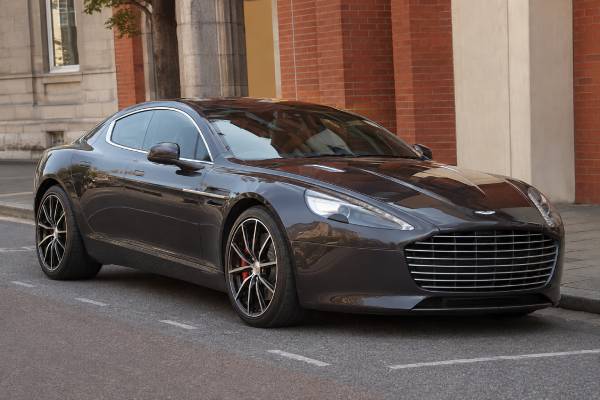
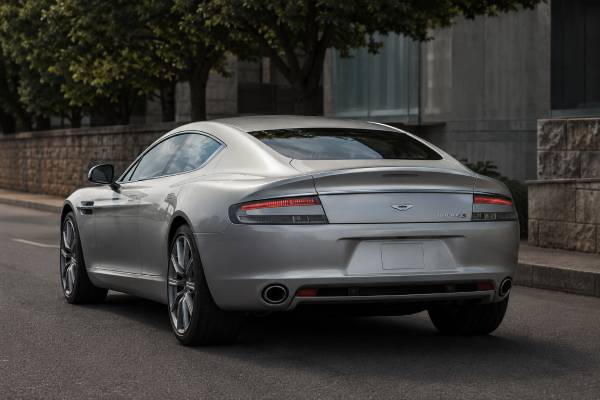
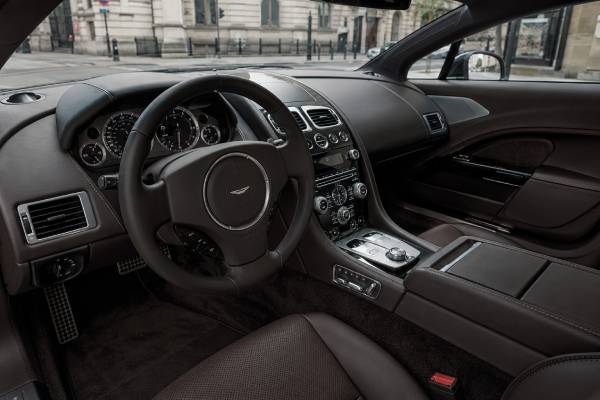
The 2014–2018 Aston Martin Rapide S is the mature standard version of the VH400 four-door, pairing the naturally aspirated 5.9-litre V12 with an eight-speed Touchtronic III transaxle. Its quoted 552 bhp output is only slightly above the early S, but extra ratios, a revised final drive, faster shifts, and updated calibration transform acceleration and everyday response. Factory figures moved to 0–100 km/h in 4.4 seconds and a 203 mph maximum speed.
This later car often provides the strongest balance of Rapide performance and usability. It combines the S body and engine package with the gearbox most buyers prefer, yet remains a hand-built, low-volume V12 whose age matters as much as mileage. Infotainment generations, market specifications, storage, maintenance, and previous repairs can make two similar-looking cars very different propositions.
The guide concentrates on the eight-speed transformation, AM29-era technical data, touring behavior, cabin evolution, and a service-first buying method. It treats 2014–2018 as a range that must be verified car by car rather than proof that every feature remained identical throughout.
Table of Contents
- Why the Eight-Speed Gearbox Matters
- Later Rapide S Specifications
- High-Speed Grand-Touring Character
- Cabin, Technology, and Model-Year Evolution
- Age-Related Service Plan
- Fault Finding and Physical Inspection
- Choosing the Right 2014–2018 Car
Why the Eight-Speed Gearbox Matters
The eight-speed Touchtronic III transmission is the defining upgrade of the later Rapide S. It does not merely add two ratios; it changes how quickly the V12 reaches useful revs, how smoothly the car moves through traffic, and how effectively it combines performance with long-distance cruising.
Aston Martin installed the ZF-supplied transaxle at the rear, preserving the torque-tube layout and favorable mass distribution. The ratios are closer than those of the earlier six-speed unit, while the 2.73 final drive supports both acceleration and relaxed motorway running. In automatic mode, the gearbox can select a lower ratio more promptly. In manual mode, shifts are faster and the engine stays nearer its power band.
That improvement is visible in the numbers. The earlier 550 bhp Rapide S needed 4.9 seconds to reach 100 km/h and was rated at 190 mph. The later 552 bhp car achieves 100 km/h in 4.4 seconds and reaches 203 mph. A two-bhp headline increase cannot explain that difference; gearing, calibration, and shift speed do most of the work.
The transmission also makes the car easier at ordinary speeds. First gear is shorter, reducing the effort required to move nearly two tonnes from rest. Upper ratios allow lower engine speed when cruising. The result is a car that can feel calmer in routine use and more alert when the driver requests acceleration.
Identification is straightforward once the car is inspected properly. The later S has eight forward ratios and Touchtronic III controls, while the early S has six. Registration year alone is unreliable because dealer stock, regional launch timing, and first-use dates can overlap. The VIN, build sheet, transmission identification, and software records are better evidence.
During a road test, the eight-speed unit should:
- Select Drive and Reverse promptly after start-up.
- Move away without shudder or excessive throttle.
- Shift cleanly at light load when cold and warm.
- Respond consistently to both paddles.
- Downshift without a severe bang or long flare.
- Hold the selected ratio in manual mode within protection limits.
- Remain free of warning messages after a full-temperature drive.
A small change in feel between modes is normal. Repeated harsh engagement, refusal to select a ratio, fluid leakage, or a fault that appears only when hot requires specialist diagnosis. Software updates may improve behavior, but software should not be used to explain away mechanical symptoms without testing.
Later Rapide S Specifications
The later Rapide S uses a 5,935 cc naturally aspirated V12 rated at 560 PS or 552 bhp, with 630 Nm of torque and an eight-speed rear transaxle. These are the core figures for the 2014–2018 assignment; individual markets may present output or emissions in different units.
| Item | Specification |
|---|---|
| Configuration | All-alloy naturally aspirated V12 |
| Displacement | 5,935 cc (5.9 L) |
| Valvetrain | Quad overhead camshafts, 48 valves |
| Maximum power | 412 kW / 560 PS / 552 bhp at 6,650 rpm |
| Maximum torque | 630 Nm / 465 lb-ft at 5,500 rpm |
| Fuel system | Sequential multi-point petrol injection |
| Item | Specification |
|---|---|
| Transmission | Eight-speed Touchtronic III automatic transaxle |
| Final drive | 2.73:1 |
| Drive layout | Rear-wheel drive |
| 0–100 km/h | 4.4 seconds |
| 0–60 mph | 4.2 seconds |
| Maximum speed | 327 km/h / 203 mph |
| Measure | Published figure |
|---|---|
| Urban consumption | 19.7 L/100 km / 14.3 mpg imperial |
| Extra-urban consumption | 9.2 L/100 km / 30.7 mpg imperial |
| Combined consumption | 12.9 L/100 km / 21.9 mpg imperial |
| CO2 emissions | 300 g/km |
| Fuel capacity | 90.5 L / 23.9 US gal |
| Item | Measurement |
|---|---|
| Length | 5,019 mm / 197.6 in |
| Width excluding mirrors | 1,929 mm / 75.9 in |
| Height | 1,360 mm / 53.5 in |
| Wheelbase | 2,989 mm / 117.7 in |
| Kerb weight | 1,990 kg / 4,387 lb |
| Seating | Four individual seats |
| Item | Specification |
|---|---|
| Body architecture | Bonded and riveted extruded-aluminium VH platform |
| Suspension | Independent double wishbones front and rear |
| Damping | Three-stage adaptive damping |
| Steering | Hydraulic rack and pinion |
| Front tyres | 245/40 ZR20 |
| Rear tyres | 295/35 ZR20 |
| Brake type | Ventilated iron discs with electronic stability control |
The official combined figure is useful for comparing variants, but it should not be treated as an ownership forecast. Urban use, cold starts, traffic, tyre pressure, and driving style can move consumption substantially. A car that is used rarely may also have stale fuel or a contaminated tank, making storage practice more important than an isolated trip-computer reading.
High-Speed Grand-Touring Character
The later Rapide S excels as a fast, stable, four-person touring car rather than as a lightweight sports saloon. Its performance is real, but the experience is shaped by a long wheelbase, low seating position, hydraulic steering, rear transaxle, and a V12 that becomes more expressive as engine speed rises.
In town, the eight-speed gearbox removes much of the earlier car’s hesitation. The short lower ratios help it leave junctions cleanly, and the engine does not need to be worked hard. Visibility over the long nose requires familiarity, while the width and swan-wing doors call for care in parking spaces. Parking sensors and cameras should therefore be tested as functional equipment, not treated as minor conveniences.
On a country road, the steering communicates front-tyre load more clearly than many later electrically assisted systems. The car turns accurately when tyres and alignment are correct, but its mass rewards smooth inputs. Braking early, settling the chassis, and feeding power progressively produce better results than trying to force abrupt changes of direction.
The three-stage adaptive damping system should make the car versatile. The softer setting allows controlled compliance on poor surfaces. The middle setting suits faster road use, while the firmest mode reduces movement further. A car that crashes over every joint may have old tyres, incorrect pressures, damaged wheels, worn bushes, failed dampers, or an alignment problem.
High-speed stability is a core strength. The body remains settled, the V12 has ample reserve, and the eighth ratio lowers cruising effort. At legal motorway speeds, listen for wheel-bearing noise, tyre roar, wind leaks, and vibration through the seat or steering wheel. These symptoms can be easier to identify during steady cruising than during hard acceleration.
The engine should deliver power without hesitation across the rev range. Misfire under load, flashing warning lamps, fuel odor, or a sudden loss of response requires immediate attention. Ignition components, fueling, air leaks, sensors, and voltage can all influence behavior, so replacement should follow diagnosis rather than guesswork.
Brake feel should be firm and progressive. The standard iron system is appropriate for road use, but repeated heavy stops expose disc runout, pad deposits, overheating, and tired fluid. After the drive, inspect for unusual heat at one wheel, which may indicate a dragging caliper or parking-brake issue.
Noise is part of the appeal, yet a louder car is not automatically a better one. Factory exhaust behavior varies by mode and market. Aftermarket systems or valve controllers should be documented, and the original parts are valuable. Excessive resonance at cruise can make long-distance use tiring and may signal an installation problem.
Cabin, Technology, and Model-Year Evolution
The later Rapide S cabin remained architecturally traditional while its infotainment and option content evolved. Buyers should choose by actual equipment and function rather than assuming every 2014–2018 car has the same console, navigation system, audio features, or trim package.
All cars provide four individual seats separated by a central console. The rear space is more intimate than limousine-like, and the low roofline affects entry. Adults can travel comfortably when front occupants cooperate, but a physical seating test is more useful than dimensions. Check whether the intended passengers can enter, sit, and exit without contacting fragile trim.
The liftback gives useful access to the luggage area. Folding rear seatbacks increase flexibility, although the central structure and low roof mean the car does not behave like a conventional estate. Inspect the hatch struts, latch, parcel cover, carpet, trim clips, and water sealing. Dampness beneath the floor or a musty odor deserves investigation.
Aston Martin introduced infotainment updates during this period, including later AMi generations. The screen mechanism, controller, navigation, Bluetooth behavior, audio source selection, and phone compatibility should be tested in the exact car. A seller’s phrase such as “upgraded infotainment” is too vague; ask for the system name, hardware details, and invoice.
Test every powered function systematically:
- Front and rear seat movement, memory, heating, and ventilation where fitted.
- All windows and their drop/indexing behavior.
- Door latches, mirrors, locks, and keyless functions.
- Climate control in each zone and at both temperature extremes.
- Infotainment screen deployment, controller, audio, navigation, and Bluetooth.
- Parking sensors, reversing camera, lighting, and tyre-pressure monitoring.
- Rear entertainment or audio controls where specified.
- Alarm, spare key, and battery-condition indication.
Low battery voltage can create faults across several of these systems. Before condemning multiple modules, test the battery and charging system, then scan the car. That does not mean every electrical complaint is caused by voltage; it means stable voltage is the correct diagnostic starting point.
Leather and headlining condition often reveal use patterns. Driver’s bolsters show entry wear, rear controls reveal passenger use, and a sagging or marked headlining may indicate heat or adhesive aging. Inspect stitching, perforated leather, seat-belt presentation, piano-black trim, carbon-fibre or wood surfaces, and switches under natural light.
Model-year differences can add desirability but should not outweigh condition. A later interface may be easier to live with, yet a well-maintained earlier eight-speed car can be a better purchase than a neglected final-year example. Verify build date, market, option codes, and any dealer-installed upgrade before comparing prices.
Age-Related Service Plan
A later Rapide S should be maintained by calendar, condition, and diagnostic evidence—not mileage alone. By 2026, even the newest standard cars in this range have accumulated enough time for tyres, fluids, hoses, batteries, seals, suspension components, and electronic connections to age.
Start with the service file. Annual or scheduled entries should be supported by invoices naming the oil, filters, plugs, brake fluid, coolant, transmission work, tyres, battery, and repairs. Gaps matter most when they coincide with long storage or a change of country. Ask what happened during those years rather than assuming low mileage means no maintenance was required.
Engine care centers on correct oil service, cooling health, ignition performance, leak monitoring, and regular full-temperature operation. Inspect the radiator and condenser faces for debris. Check coolant hoses, expansion tank, fan operation, and dried residue. The temperature gauge should remain stable in traffic after a spirited drive.
The eight-speed transaxle should be inspected for leaks, mounting condition, fault memory, and adaptation behavior. Although marketing may describe some fluids as long-life, age and use justify a specialist discussion about fluid and filter service. The workshop should use the correct procedure and temperature range rather than apply a generic transmission flush.
Brake fluid absorbs moisture with time. Replace it according to the service schedule and verify the condition of hoses, calipers, pads, discs, and parking-brake hardware. A car that sits can develop corrosion even without mileage. Measure rather than judging through wheel spokes.
Tyres need matched quality and correct ratings. Record date codes, pressures, repairs, sidewall condition, and inner-edge wear. Four premium tyres are an ownership cost, not an optional cosmetic improvement. Alignment should follow after worn joints or damaged wheels are corrected.
Battery management is essential. A compatible conditioner helps during storage, but it does not restore a battery with poor capacity. Load-test the battery, confirm alternator output, inspect terminals and grounds, and diagnose parasitic draw if the car repeatedly goes flat. Repeated jump-starting can create additional faults and erases useful evidence.
Create a rolling maintenance plan:
- Establish a baseline with fluids, scan, tyre dates, and brake measurements.
- Correct safety items before cosmetic work.
- Address cooling and voltage faults before they affect other systems.
- Schedule age-based rubber and suspension inspection.
- Exercise the car on meaningful drives, not brief stationary starts.
- Keep dated invoices, scan reports, and photographs together.
The best workshop is not necessarily the nearest. Look for Aston Martin diagnostic capability, VH-platform knowledge, transmission experience, and access to correct parts information. A transparent specialist should explain why a component failed, what was measured, and which recommendations can safely be staged.
Fault Finding and Physical Inspection
A good inspection connects symptoms to systems instead of producing a shopping list of parts. The car should be scanned, lifted, road-tested, and examined from cold, with findings recorded before codes are cleared or surfaces are cleaned.
Begin with the VIN and factory specification. Confirm the eight-speed gearbox, output version, market equipment, paint, trim, and build date. This prevents later confusion about missing options or incompatible parts. Check title and registration history for country changes, mileage inconsistencies, and prior damage records.
The aluminium structure deserves a specialist view. Examine bonded seams, underbody extrusions, suspension mounting areas, jacking points, and signs of impact. Uneven seam sealer, fresh fasteners, disturbed undertrays, or mismatched panel gaps may justify deeper investigation. Aluminium repair can be excellent, but it should be documented and performed by an appropriate facility.
Paint-depth measurements help locate refinishing. Interpret them alongside color, texture, masking traces, and repair invoices. Stone chips on a used GT are normal; a flawless nose with no documentation may simply mean it was repainted. Quality and structural implications matter more than the existence of paintwork alone.
A full module scan should include engine, transmission, damping, braking, restraint, climate, body, seat, parking, and infotainment systems. Save current, historic, and intermittent codes. Check readiness status where relevant, especially if the battery was recently disconnected or warning lamps were reset.
On the lift, inspect:
- Engine and transmission leaks.
- Cooling hoses, radiators, and underbody staining.
- Propeller-shaft and torque-tube areas.
- Suspension arms, bushes, ball joints, and dampers.
- Steering rack, lines, and joints.
- Brake discs, pads, hoses, calipers, and parking brake.
- Wheel damage, tyre dates, and inner tread.
- Exhaust mounts, valves, heat shields, and modifications.
The road test must include parking maneuvers, broken surfaces, steady motorway speed, several transmission modes, progressive acceleration, and repeated moderate braking. Recheck for leaks, odors, codes, and uneven wheel heat afterward. Some faults only appear once fluids and modules reach operating temperature.
Do not let a recent dealer inspection replace an independent pre-purchase examination unless its scope and measurements are available. A sales check may confirm roadworthiness without estimating upcoming costs. The buyer needs a report designed for decision-making, not merely preparation for retail display.
Choosing the Right 2014–2018 Car
The right later Rapide S is the example whose identity, condition, and service pattern fit the intended use. Color, trim, model year, and mileage matter, but they should be considered only after structure, drivetrain, electronics, tyres, brakes, and maintenance evidence pass scrutiny.
For frequent touring, prioritize recent tyres, strong air conditioning, stable infotainment, quiet wheel bearings, measured brakes, and a transmission that behaves consistently in traffic. For occasional use, pay particular attention to battery capacity, storage conditions, fluid age, flat-spotted tyres, and corrosion on brake surfaces.
For a collection, originality becomes more important, but originality should not be confused with neglect. Factory wheels, exhaust, trim, keys, manuals, and option documentation add confidence. Necessary repairs completed with correct parts and records are preferable to untouched faults. Keep any removed original components.
Compare asking prices only after normalizing likely expenditure. A lower-priced car needing tyres, brakes, suspension work, annual service, battery, and infotainment repair may cost more than a stronger example. Obtain written estimates from a relevant specialist and include transport, taxes, insurance, and parts lead time.
A useful decision matrix scores five areas:
- Identity: correct VIN, gearbox, market, and equipment.
- Structure: no unexplained major repair or poor aluminium work.
- Mechanical health: clean hot and cold behavior with measured wear items.
- Electrical function: stable voltage, complete scan, and working cabin systems.
- Documentation: coherent mileage, invoices, keys, manuals, and modification records.
Walk away when access to evidence is restricted. Refusal to provide the VIN, a warmed engine before inspection, recently erased codes, missing invoices, mismatched tyres, unexplained warning lights, or pressure to skip a specialist inspection are not signs of a rare opportunity. They shift risk to the buyer.
Once purchased, establish a baseline even when the seller presents a recent service. Confirm oil, brake fluid, coolant, tyre pressures, battery, campaign status, and diagnostic record with the workshop that will maintain the car. This creates a known starting point and prevents assumptions from becoming expensive surprises.
The later Rapide S succeeds because the eight-speed gearbox unlocks more of the existing V12 rather than changing the car’s identity. It remains a low, elegant four-seater with hydraulic steering and an unusual transaxle layout, but it responds more quickly and cruises more efficiently than the six-speed S. Bought with evidence and maintained on time, it is the standard Rapide variant that most completely balances drama, usability, and engineering maturity.
References
- Aston Martin Rapide S 2026 (official past-model page)
- RAPIDE S 2018 (official historic model page)
- The Power of Luxury. The Art of Aston Martin. 2015 (model brochure)
- Power. Beauty. Soul. 2016 (model brochure)
- Rapide S 2026 (model specialist)
- Owner’s Guides 2026 (official owner resource)
Disclaimer
This article is an informational model guide, not VIN-specific technical advice, a valuation, or a substitute for inspection by a qualified Aston Martin specialist. Power ratings, emissions data, equipment, software, build dates, and service requirements may differ by country and individual car. Verify the gearbox, options, maintenance schedule, legal status, and current condition before purchase or repair. Share the guide with another buyer or owner who needs to distinguish the later eight-speed Rapide S from earlier versions.