
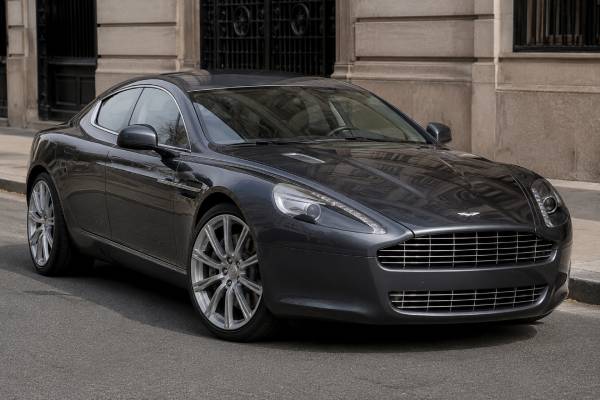
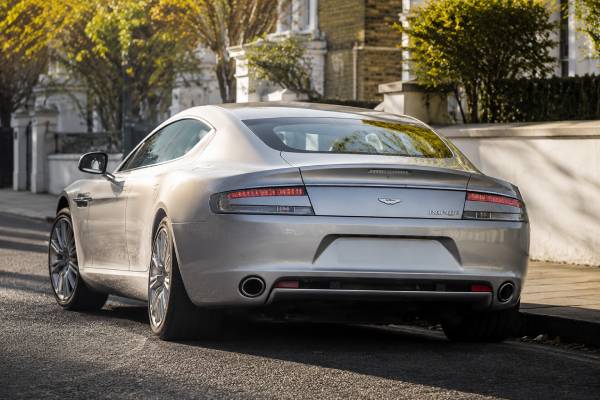
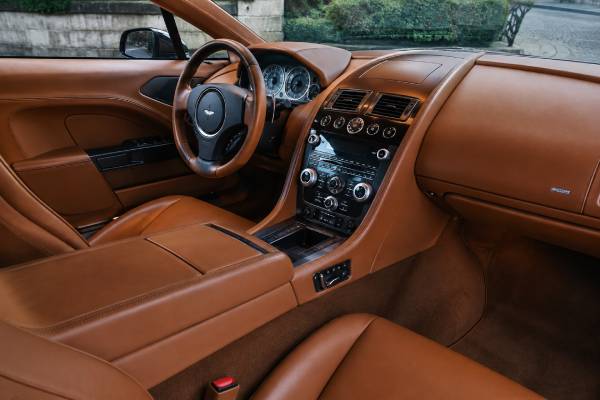
The original Aston Martin Rapide is a four-seat grand tourer shaped like a coupe, engineered around a rear transaxle, and powered by a hand-built 5.9-litre V12. It was never intended to compete with ordinary executive sedans on rear legroom, fuel economy, or ownership cost. Its purpose was more specific: preserve the steering feel, proportions, engine character, and hand-finished cabin of an Aston Martin while adding two rear doors, individual back seats, and a useful hatch.
That formula still makes the 2010–2012 VH400 Rapide distinctive. The 470 hp AM16 engine is less powerful than later Rapide S versions, and the six-speed Touchtronic II automatic feels deliberate beside newer eight-speed gearboxes. Yet the early car has a cohesive character of its own, with progressive response and a chassis that becomes more convincing as distance and speed increase. Today, the decision is about condition. A sorted Rapide can be an exceptional long-distance car; a neglected one can turn a tempting purchase price into a sequence of specialist repairs. The sections below separate core engineering from the age-related risks that matter now.
Table of Contents
- The Original Rapide Formula
- VH400 Specifications and Technical Layout
- How the 470 hp Rapide Performs
- Four-Seat Usability Without Sedan Proportions
- Service Needs and Age-Related Weak Points
- How to Inspect and Buy the Right Car
The Original Rapide Formula
The Rapide is fundamentally a stretched Aston Martin sports car, not a conventional luxury sedan wearing a sporting badge. Its bonded-aluminium VH architecture, front-mid-mounted V12, carbon-fibre propeller shaft, rear transaxle, double-wishbone suspension, and individual seating layout all reinforce that point.
Aston Martin previewed the idea as a concept before placing the production car on sale for 2010. The body is more than five metres long, but the roof remains low and the glasshouse narrow. Four “swan wing” doors rise slightly as they open, helping them clear kerbs and adding theatre to arrival. The rear is a large hatch rather than a separate boot, allowing the two rear seatbacks to fold and substantially increase luggage capacity.
The early production story is part of the model’s identity. Initial Rapide assembly took place at Magna Steyr in Graz, Austria, because Aston Martin needed additional capacity. Later production returned to Gaydon. This does not make an Austrian-built example inferior; manufacturing location should be treated as a historical detail rather than a quality verdict. Condition, records, and repair standards remain far more important.
The VH400 code identifies the Rapide platform family. The AM16 designation in this assignment refers to the early 5,935 cc V12 installation, which produces 470 bhp and 600 Nm. It is related to Aston Martin’s long-running naturally aspirated V12 family, but the complete vehicle should not be reduced to an engine code. The layout of the driveline is equally important. Placing the six-speed automatic at the rear helps distribute mass along the wheelbase, while the rigid torque tube links engine and transaxle.
This engineering gives the Rapide an unusual balance of abilities:
- a low driving position and clear sense of front-axle placement;
- stable, relaxed high-speed behaviour;
- enough rear accommodation for adults on real journeys;
- a hatch and folding seats that accept long or awkward luggage;
- a cabin trimmed more like a hand-built GT than a fleet sedan.
The compromises follow directly from the same choices. Rear access is tight, visibility is not as open as in a conventional saloon, and the long nose plus low front bumper require care on ramps. The full-length centre console means the car seats four rather than five. None of these are hidden defects; they are part of the Rapide’s original brief.
VH400 Specifications and Technical Layout
The 2010–2012 Rapide is an ICE vehicle using a naturally aspirated petrol V12, a six-speed automatic rear transaxle, and rear-wheel drive. The figures below describe the regular 470 hp VH400 model; market equipment and homologated consumption can differ, so a VIN-specific handbook and build record remain the final authority.
| Specification | Value | Technical context |
|---|---|---|
| Engine designation | AM16 | Early Rapide application |
| Configuration | 60-degree V12, front-mid-mounted | Longitudinal installation |
| Displacement | 5,935 cc (5.9 L) | Commonly marketed as 6.0 litres |
| Construction | All-alloy block and cylinder heads | Naturally aspirated |
| Valvetrain | DOHC per bank, 48 valves | Four valves per cylinder |
| Bore × stroke | 89.0 × 79.5 mm | Oversquare geometry |
| Maximum power | 350 kW (470 bhp) at 6,000 rpm | Manufacturer rating |
| Maximum torque | 600 Nm (443 lb-ft) at 5,000 rpm | Manufacturer rating |
| Specification | Value |
|---|---|
| Gearbox | Touchtronic II six-speed automatic |
| Gearbox position | Rear-mounted transaxle |
| Drive | Rear-wheel drive |
| Propeller shaft | Carbon fibre inside an alloy torque tube |
| Final drive | 3.46:1 |
| Differential | Mechanical limited-slip differential |
| Stability systems | DSC, traction control, ABS, EBD, brake assist |
| Measure | Value | Condition |
|---|---|---|
| 0–60 mph | Approximately 5.1 seconds | Manufacturer figure |
| 0–100 km/h | Approximately 5.3 seconds | Manufacturer figure |
| Top speed | 303 km/h (188 mph) | Manufacturer figure |
| Urban consumption | About 21.6 L/100 km | Period European cycle |
| Extra-urban consumption | About 10.0 L/100 km | Period European cycle |
| Combined consumption | About 14.9 L/100 km | Period European cycle |
| CO₂ output | About 355 g/km | Combined homologation figure |
| Specification | Value |
|---|---|
| Body | Five-door fastback, four seats |
| Length | 5,019 mm (197.6 in) |
| Width | 1,929 mm (75.9 in) excluding mirrors |
| Width including mirrors | 2,140 mm (84.3 in) |
| Height | 1,360 mm (53.5 in) |
| Wheelbase | 2,989 mm (117.7 in) |
| Kerb weight | Approximately 1,950 kg (4,299 lb) |
| Fuel capacity | 90.5 L (23.9 US gal) |
| Luggage capacity | 317 L; 886 L with rear seats folded |
| Component | Factory arrangement |
|---|---|
| Front suspension | Independent double wishbones with coil springs and anti-roll bar |
| Rear suspension | Independent double wishbones with anti-squat and anti-lift geometry |
| Damping | Adaptive dampers with selectable calibration |
| Steering | Servotronic speed-sensitive hydraulic assistance |
| Front tyres | 245/40 R20 |
| Rear tyres | 295/35 R20 |
| Front brakes | 390 mm ventilated dual-cast discs, six-piston calipers |
| Rear brakes | 360 mm ventilated discs, four-piston calipers |
The published weight definition and standard equipment can vary between brochures and markets. When comparing two cars, focus on actual option content and measured condition rather than treating a small catalogued weight difference as meaningful.
How the 470 hp Rapide Performs
The early Rapide is quick enough to feel special without relying on a sudden surge of turbocharged torque. Its performance builds progressively, and the chassis rewards smooth inputs more than aggressive point-and-shoot driving.
At low engine speeds, the V12 is quiet and flexible. The accelerator calibration allows the car to move away cleanly without making every urban manoeuvre dramatic. As revs rise, induction and exhaust sound become more prominent, and the engine pulls with a continuous sweep rather than a single peak. The official 0–60 mph time of roughly five seconds no longer defines a modern super-sedan, but the real appeal is the response available at motorway speeds and the ease of sustaining pace over distance.
The six-speed Touchtronic II is central to the car’s character and one of the clearest differences from later versions. Left in automatic mode, it prioritises smoothness. Its ratios are relatively widely spaced, and a full-throttle downshift can take longer than drivers accustomed to modern dual-clutch or eight-speed automatics expect. Manual paddle control improves anticipation. Selecting the required ratio before an overtake or descent makes the car feel more connected and reduces unnecessary hunting.
Handling is more agile than the dimensions suggest. The driver sits low and close to the centre of the wheelbase, the steering is hydraulically assisted, and the rear transaxle reduces the nose-heavy sensation that often affects large front-engine cars. On a fast, open road the Rapide settles into a confident rhythm. Tight urban streets expose its width and long overhangs, while abrupt mid-corner inputs remind the driver that nearly two tonnes are involved.
Tyres transform the experience. Correctly sized, matched premium tyres preserve steering precision, ride quality, braking, and stability-control calibration. Old tyres can retain legal tread yet become hard, noisy, and weak in wet conditions. A four-wheel alignment by a shop familiar with the platform is worthwhile after tyre replacement or suspension work.
The adaptive dampers should produce a noticeable but sensible change. The normal setting suits mixed roads; the firmer setting controls vertical movement on smoother, faster sections. A car that bounces, crashes, floats, or displays damping warnings needs investigation. Do not accept poor ride as normal merely because the wheels are large.
Fuel use is substantial. The official combined figure was already high, and short trips or enthusiastic driving increase consumption sharply. Range is helped by the 90.5-litre tank, but running costs include more than fuel: rear tyres are wide, brakes are large, and twelve-cylinder servicing uses more parts and labour than a mainstream car.
Four-Seat Usability Without Sedan Proportions
The Rapide can carry four adults and their luggage, but it works best when passengers accept sports-car access and an intimate cabin. Buyers should physically test every seat rather than assuming that a five-metre car provides limousine space.
Front occupants receive supportive seats, a broad centre console, clear primary instruments, and a driving position that feels closely related to Aston Martin’s coupes. The waterfall-style console is visually distinctive, though the number of small buttons and the period navigation interface require acclimatisation. Many functions are integrated into expensive trim assemblies, so cosmetic and electronic condition are both worth checking.
Rear passengers enter through short doors and step down into individual buckets. The seats themselves can be comfortable on long journeys, but tall occupants may find headroom and knee space dependent on the front-seat position. The centre tunnel and console divide the cabin, preventing a fifth passenger but giving each rear occupant a defined space. Separate climate outlets and available entertainment support the grand-touring intent.
The hatch is one of the model’s most useful features. The 317-litre quoted volume is modest with four seats occupied, yet the shape accommodates soft luggage efficiently. Each rear backrest folds, increasing capacity to 886 litres and allowing skis, golf equipment, or long bags to extend forward. The moving bulkhead and trimmed load area make the conversion feel integrated rather than improvised.
Daily usability is shaped by small details:
- The doors rise as they open, which helps near kerbs but does not eliminate the need for space.
- The car’s width including mirrors exceeds two metres, making old garages and parking ramps relevant.
- The low nose is vulnerable to steep transitions and wheel stops.
- Rear visibility is limited, so working parking sensors and camera equipment are valuable.
- Frameless glass, seals, latches, and window indexing must all operate correctly for a quiet cabin.
- The electronic parking brake and push-button transmission controls should be tested repeatedly.
A Rapide can serve as an occasional family car or daily grand tourer, but it is a poor choice for frequent child-seat changes, mobility-limited passengers, or crowded city parking. Its practicality is real, just specialised.
Service Needs and Age-Related Weak Points
The core engine and transaxle can cover meaningful mileage, but age now affects every 2010–2012 Rapide. Preventive care should address voltage, cooling, fluids, ignition, suspension, brakes, seals, and electronics before faults cascade.
Battery condition is the first line of defence. These cars have many modules and dislike prolonged low voltage. A properly specified battery and approved conditioner are sensible for infrequent use. Before replacing parts in response to multiple warning messages, test battery health, alternator output, grounds, and stored fault codes. Conversely, do not use a new battery to dismiss a repeatable system fault.
Cooling-system inspections should look for residue around the expansion tank, cap, hose joints, radiator area, and undertray. Verify that the temperature remains stable in traffic and after a spirited drive. Cooling fans should operate without unusual noise. Any unexplained coolant loss requires diagnosis; repeated topping-up is not maintenance.
The ignition system has twelve spark plugs and multiple coils exposed to heat cycles. A minor misfire can damage catalytic converters if ignored. The engine should idle evenly, pull cleanly under load, and show no flashing warning lamp. Service invoices for plugs, coils, oxygen sensors, or intake work help establish whether age-related jobs have already been completed.
The rear transaxle should be assessed both cold and hot. Fluid history matters even where original schedules or market guidance described long intervals. Engagement delays, flared shifts, harshness, or transmission warnings are not normal. Certain six-speed cars were included in a safety recall concerning park-lock control software, so campaign completion must be checked by VIN.
Chassis wear often arrives gradually. Bushes, anti-roll-bar links, top mounts, wheel bearings, dampers, and alignment can each alter the way the car feels. A buyer unfamiliar with the model may accept looseness or noise because the vehicle is old and heavy. A healthy Rapide should track accurately, remain quiet over ordinary bumps, and brake without vibration.
Brakes and tyres deserve measurement, not visual guesses. Ask for disc thickness and condition, pad life, tyre date codes, wheel runout, and evidence of correct alignment. Inner-edge tyre wear can be hidden. Refurbished wheels should retain the proper dimensions and finish, with no cracks or repeated structural repairs.
Cabin and body maintenance includes drainage paths, door seals, window indexing, hatch wiring, seat motors, audio components, parking sensors, and the rising Bang & Olufsen tweeters where fitted. Water entry and low voltage can create confusing secondary symptoms, so diagnosis should begin with causes rather than replacing modules at random.
How to Inspect and Buy the Right Car
The right Rapide is the car with the clearest history, healthiest systems, and smallest backlog—not necessarily the lowest mileage or brightest paint. A specialist pre-purchase inspection is essential because a normal test drive cannot evaluate bonded structure, diagnostic history, campaign status, or the cost of deferred work.
Begin with documentation. Match the VIN across the car and records. Confirm model year, market, factory options, original colour, and servicing. Read invoices for detail: oil grade, fluids, plugs, coils, brakes, tyres, battery, dampers, suspension arms, software campaigns, and any accident repair. A service stamp without supporting information proves less than a dated invoice with parts and mileage.
Inspect the car cold in good light. Watch the complete warning-lamp sequence, listen through warm-up, and check for smoke or fluid smells. Examine panel alignment, paint texture, wheel condition, underside scrapes, front bumper damage, and evidence of water in the luggage area. Because aluminium, composite, and steel components respond differently, body assessment should be performed by someone familiar with Aston Martin construction.
A useful road-test sequence includes:
- Low-speed steering on full and partial lock, listening for noise or binding.
- Light throttle through every gear, followed by stronger acceleration when warm.
- Manual paddle shifts and kickdown response.
- Braking at several pressures to expose judder, pull, or pedal irregularity.
- Rough-road driving to identify damper, bush, trim, or hatch noise.
- A hot restart and several selections of Park, Reverse, and Drive.
After the drive, scan all modules and recheck for leaks, coolant odour, fan behaviour, and warning messages. Test every electrical feature: seats, memories, heaters, ventilation, climate zones, windows, mirrors, locks, navigation, audio, phone connection, parking sensors, camera, hatch release, rear-seat equipment, and key functions.
Price negotiations should be based on a written defect list. Separate immediate safety work from near-term maintenance and cosmetic preferences. Tyres, brakes, batteries, and servicing may be predictable; intermittent module faults or poor accident repair are harder to price and may justify walking away.
The early Rapide is most compelling for drivers who value naturally aspirated response, hydraulic steering, handcrafted materials, and an uncommon shape. Later Rapide S models are faster and have more modern driveline behaviour, but they do not make the original obsolete. A well-kept 470 hp car offers a calmer, coherent interpretation of the four-door Aston Martin idea—and that coherence is what makes it worth preserving.
Ownership also becomes easier when the intended use is defined before purchase. For weekend touring, quiet wheel bearings, recent tyres, working navigation and audio, stable air conditioning, and a clean luggage area may matter more than a perfect exterior. For urban use, camera function, parking sensors, door support, window indexing, and low-speed gearbox behavior deserve extra weight. Families should test child-seat access and belt geometry in the actual rear seats rather than assuming four doors make every installation simple.
The liftback is one of the original Rapide’s most useful ideas. Its 317-litre luggage area is modest by executive-saloon standards, but the opening is broad and the rear seatbacks can be folded to expand capacity to roughly 886 litres. Soft bags fit the tapering shape better than rigid cases. Check the hatch struts, latch, parcel shelf, floor panels, and moisture beneath the carpet, because a trim fault or water leak can turn that flexibility into an expensive repair.
These practical tests also reveal whether the car has been maintained as a complete system. A strong engine cannot compensate for doors that need repeated slamming, rear controls that fail, or a hatch that will not remain raised. The original Rapide was engineered to make four-person travel believable, so usability is part of its condition, not an optional bonus.
References
- Aston Martin Rapide | 4 Door Sports Car | Aston Martin (USA) | Aston Martin USA 2026 (Manufacturer Specifications)
- RAPIDE 2026 (Manufacturer Historic Model Page)
- The world’s most beautiful 2010 (Sales Brochure)
- RA-07-0028 – 6-Speed Touchtronic II Automatic Transmission Park Lock Problem 2017 (Safety Recall Action)
- 2010 Aston Martin Rapide Review & Ratings | Edmunds 2026 (Road-Test and Ownership Overview)
- Owner’s Guides | Aston Martin 2026 (Owner Documentation)
Disclaimer
This article is for informational purposes and does not replace professional diagnosis, inspection, or repair. Specifications, torque values, maintenance intervals, recall status, and procedures vary by VIN, market, production date, and equipment. Always verify requirements in the official service documentation for the individual vehicle.
If this guide was useful, please share it on Facebook, X/Twitter, or an Aston Martin owners’ community to support further independent technical content.