

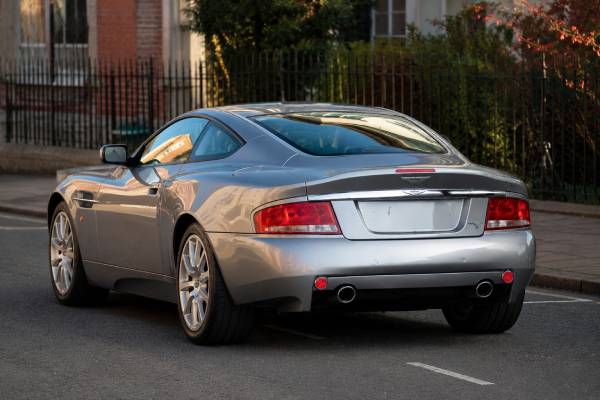
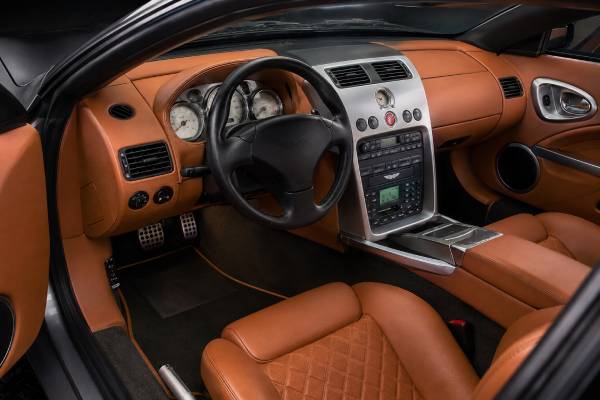
The 2001–2005 Aston Martin V12 Vanquish is important because it did more than replace an older flagship: it introduced the construction methods, paddle-operated transmission, and muscular design language that shaped Aston Martin’s modern era. Its naturally aspirated 5.9-litre V12, rear-mounted six-speed transaxle, aluminium-and-carbon structure, and hand-finished cabin make it far more technically ambitious than its traditional appearance suggests. It is also a car that rewards careful selection. A healthy example feels special at any speed, while deferred servicing, an incorrectly adjusted automated manual gearbox, tired dampers, or damaged composite and aluminium bodywork can produce very large bills. Buyers should therefore judge condition and history before mileage or colour. The best car is not necessarily the most polished one in an advertisement; it is the example whose maintenance, clutch operation, structural condition, and originality have been documented by people who understand the model.
Table of Contents
- Why the Original Vanquish Matters
- Vanquish 460 Technical Data
- Aluminium, Carbon, and V12 Engineering
- How the ASM Transmission Changes the Drive
- Maintenance and Age-Related Risks
- Pre-Purchase Inspection Priorities
- Ownership Character and Buyer Fit
Why the Original Vanquish Matters
The original V12 Vanquish matters because it was the bridge between old-world, low-volume Aston Martin craftsmanship and a more modern, engineered product. It arrived after the Project Vantage concept and entered production in 2001 with technology that was genuinely adventurous for the company: a carbon-fibre transmission tunnel, bonded and riveted aluminium structure, composite inner body sections, drive-by-wire throttle, and an electrohydraulically shifted manual transaxle.
That combination explains why the car feels unlike both the DB7 that preceded it and the VH-platform cars that followed. The Vanquish is broad, heavy, and imposing, but its structure was designed as a high-strength safety cell rather than as a conventional steel monocoque. The exterior used superformed aluminium panels, while the cabin remained visibly hand-built. Even today, the juxtaposition is striking: modern composites and electronic actuation sit beneath leather, metal, and design details that feel almost coachbuilt.
The 460 bhp V12 is another defining element. It does not produce the low-rev surge of a modern turbocharged engine. Instead, it builds power progressively, becomes more urgent as the tachometer rises, and gives the driver a long, theatrical acceleration event. The official 190 mph top speed was exceptional in the early 2000s, but the car’s appeal is not limited to numbers. Its long bonnet, compact glasshouse, heavy controls, and V12 resonance turn an ordinary journey into an occasion.
Production numbers reinforce its significance. Aston Martin states that 1,489 examples of the original 460 bhp version were built before the more powerful Vanquish S became the leading model. That is rare enough to make provenance important, yet not so rare that a buyer must accept a poor car simply because it is available. There are meaningful differences in condition, maintenance quality, seating configuration, market equipment, and later upgrades.
The car also has cultural visibility, including its association with the James Bond film Die Another Day. That connection adds recognition, but it should not dominate a purchase decision. The qualities that sustain the model are its engineering story, physical presence, rarity, and place as the last major Aston Martin launched from the Newport Pagnell era.
Vanquish 460 Technical Data
In powertrain terms, this Vanquish is a non-hybrid petrol ICE grand tourer: its naturally aspirated V12 drives the rear wheels through a rear-mounted six-speed automated manual transaxle. Its essential engineering story is the pairing of a high-revving 5,935 cc engine with a structure that uses bonded aluminium, composites, and a carbon-fibre central tunnel. Values below describe the standard 460 bhp model; market equipment and homologation details can differ.
| Specification | Value |
|---|---|
| Engine type | Naturally aspirated petrol V12 |
| Displacement | 5,935 cc (5.9 litres) |
| Maximum power | 460 bhp at 6,500 rpm |
| Maximum torque | 542 Nm (400 lb-ft) at 5,000 rpm |
| Engine position | Front-mid mounted |
| Drivetrain | Rear-wheel drive |
| Specification | Value |
|---|---|
| Transmission | Six-speed manual transaxle with electrohydraulic ASM/SSM operation |
| Gear selection | Steering-column paddles or automated mode |
| 0–60 mph | 5.0 seconds |
| Maximum speed | 190 mph (306 km/h) |
| Final drive layout | Rear transaxle connected by a torque tube |
| Measurement | Value |
|---|---|
| Length | 4,665 mm (183.7 in) |
| Width | 1,923 mm (75.7 in) |
| Height | 1,318 mm (51.9 in) |
| Published weight | 1,835 kg (4,045 lb) |
| Body style | Two-door coupe |
| Seating | 2+0 or 2+2, depending on specification |
| Area | Configuration |
|---|---|
| Primary structure | Bonded and riveted aluminium with carbon-fibre transmission tunnel and composite sections |
| Body panels | Superformed aluminium exterior panels |
| Front suspension | Independent double wishbones with coil springs and dampers |
| Rear suspension | Independent double wishbones with coil springs and dampers |
| Brakes | Ventilated steel discs with anti-lock braking |
| Steering | Hydraulically assisted rack and pinion |
| Measure | EPA value |
|---|---|
| Combined | 13 mpg US (about 18.1 L/100 km) |
| City | 11 mpg US (about 21.4 L/100 km) |
| Highway | 18 mpg US (about 13.1 L/100 km) |
| Required fuel | Premium gasoline |
Fuel use in real ownership depends heavily on traffic, warm-up time, speed, and how often the V12 is used at high load. The EPA figures are best treated as homologation context, not a promise for a differently specified car or a different market.
Aluminium, Carbon, and V12 Engineering
The Vanquish’s greatest technical distinction is its mixed-material body structure, not simply its cylinder count. Aston Martin bonded and riveted extruded aluminium sections around a carbon-fibre transmission tunnel, then added composite inner side structures and aluminium body panels. This was a substantial manufacturing departure for a company associated with labour-intensive traditional methods.
The carbon tunnel performs more than a marketing role. It creates a rigid central spine around the driveline, while the front and rear structure manage suspension loads and crash energy. The arrangement also helps package the torque tube that connects the V12 to the rear transaxle. Placing the gearbox at the rear improves mass distribution and leaves the engine set well back in the nose, although the completed car remains a substantial grand tourer rather than a lightweight sports car.
For an owner, the construction method changes how collision damage should be evaluated. Aluminium can stretch and work-harden differently from steel, bonded joints require approved procedures, and composite damage can be hidden beneath trim or surface repairs. A glossy finish cannot prove that the underlying structure is sound. Evidence of a significant accident should trigger inspection by a repairer familiar with aluminium and composite Aston Martins, not only a conventional paint-depth survey.
The V12 itself is a 5,935 cc naturally aspirated unit related to the engine used in the DB7 Vantage, but installed here within a more ambitious powertrain system. Its character depends on clean airflow, accurate electronic throttle control, healthy ignition components, correct fuel delivery, and stable cooling. Twelve cylinders mean more plugs, coils, injectors, and potential sealing points than in a simpler engine. That does not make the engine inherently fragile, but it raises the cost of neglect and makes diagnosis more time-consuming.
A good engine should start promptly from cold, settle without heavy mechanical knocking, pull evenly, and maintain stable temperature. Some exhaust condensation is normal during warm-up; persistent smoke, unexplained coolant loss, oil contamination, or repeated misfire warnings are not. A pre-purchase check should include a true cold start, because a warmed car can conceal weak batteries, noisy auxiliary components, smoke, or rough initial running.
Cooling-system condition deserves special attention on any low-mileage example. Age affects hoses, seals, radiators, fans, and coolant regardless of odometer reading. Cars that sit for long periods can develop dried seals, corroded electrical connections, flat-spotted tyres, and fuel-related issues. Regular but sympathetic use is usually healthier than years of static display followed by an aggressive recommissioning drive.
The body and interior also require specialist thinking. Door alignment, window indexing, seal condition, headlining, leather shrinkage, switchgear, and air-conditioning performance all influence usability. Hand-finished trim can be repaired, but exact materials and skilled labour are expensive. Originality matters, yet a sensitively retrimmed or refurbished cabin with invoices can be preferable to an untouched but deteriorated one.
How the ASM Transmission Changes the Drive
The automated manual transmission works best when driven as a manual gearbox with electronic clutch and shift actuation, not as a modern torque-converter automatic. Understanding that distinction improves smoothness, reduces unnecessary clutch slip, and helps a buyer separate normal operating character from faults.
The system uses a conventional single dry clutch and six-speed manual gearset, but hydraulic actuators operate the clutch and select gears. The paddles request shifts, while control software coordinates engine torque and clutch movement. In traffic, an automated mode can choose gears, but it cannot create the fluid creep and torque multiplication of a traditional automatic. Low-speed manoeuvring therefore needs restraint.
For smoother upshifts under normal acceleration, a slight easing of the accelerator as the paddle is pulled allows the drivetrain to unload. The pause is part of the system’s character. Keeping the accelerator pinned can make the shift feel abrupt because the control unit must manage a greater torque change. At higher loads, firmer shifts are expected, but repeated bangs, missed selections, warning messages, or reluctance to engage first or reverse require investigation.
Clutch wear is strongly affected by use. Holding the car on an incline with the accelerator, repeatedly creeping forward in tiny increments, reversing uphill, or forcing prolonged parking manoeuvres can generate heat and consume clutch life. Use the brake to hold the car, leave space in stop-start traffic, and complete low-speed moves decisively rather than hovering at the clutch’s engagement point.
A specialist can read clutch-related data, actuator behavior, hydraulic pressure, fault history, and adaptation values with suitable diagnostic equipment. That information is far more useful than guessing remaining clutch life from mileage alone. A car used mostly on open roads may retain a healthy clutch at a mileage that alarms an uninformed buyer, while a low-mileage urban car may have experienced much more slip.
The transmission’s reputation has led some cars to receive later upgrades or manual conversions. A properly documented conversion may appeal to a buyer who wants direct clutch control, but it changes originality and should be assessed on workmanship, parts source, calibration, reversibility, and market acceptance. An upgraded original ASM system can also be satisfying when correctly maintained. Neither configuration should be accepted without invoices and a drive from cold to full operating temperature.
The rest of the driving experience is deliberately physical. Steering effort, brake feel, broad dimensions, and the firm ride communicate that this is an early-2000s super grand tourer rather than a digitally filtered modern GT. On a flowing road it feels stable and purposeful. In a narrow car park it can feel larger than its measurements suggest, making wheel condition, mirror visibility, parking-sensor operation, and low-speed transmission control more important than they appear on paper.
Maintenance and Age-Related Risks
Maintenance should be planned by time, condition, and specialist inspection, not by mileage alone. Every surviving example is now old enough for age-related work to matter as much as routine oil and filter changes, and a cheap annual service does not prove that the car has been comprehensively maintained.
Start with the basics: correct fluids, filters, ignition health, cooling-system integrity, brake condition, tyre age, battery support, and complete diagnostic scanning. Service intervals and fluid specifications should be verified against the documentation for the exact VIN and market. A specialist invoice that lists measured condition and remedial work is more reassuring than a stamped book with no detail.
Battery voltage is unusually important. Low voltage can trigger confusing electronic warnings, disturb transmission operation, and make fault finding more difficult. A correctly rated battery, clean terminals, healthy charging system, and quality maintainer are sensible for a car that is not driven weekly. Repeatedly jump-starting a neglected example is not a maintenance strategy.
The ASM hydraulic system deserves condition-based attention. Look for delayed engagement, warning lights, pump behavior that seems excessive, fluid leaks, or inconsistent shifts. Diagnosis should precede parts replacement because similar symptoms can arise from clutch wear, adaptation, actuator issues, hydraulic pressure, wiring, or voltage. A seller’s statement that “they all do that” should not end the investigation.
Brakes are conventional ventilated steel discs on the original car, but replacement costs are still significant because of component size and limited-volume parts pricing. Check disc surfaces, thickness, corrosion, caliper function, hoses, and brake-fluid history. A car stored after washing may develop surface corrosion; more serious pitting, vibration, or a pulling sensation suggests deeper work.
Tyres should match by type and preferably by production generation across each axle, with correct speed and load ratings. Tread depth alone is insufficient. Hardened old tyres compromise wet grip and braking even when they look unworn, and the Vanquish’s mass and performance leave little margin for bargain rubber. Inspect the inner shoulders, where wear may be less visible, and obtain an alignment check if the pattern is uneven.
Suspension wear can appear as knocks, imprecise wheel control, uneven tyre wear, or a car that never settles after a bump. Bushes, ball joints, dampers, wheel bearings, and mountings should be checked on a lift. Replacing one obvious component may not restore the car if several age together. A coherent suspension refresh is often better value than repeated isolated repairs.
Body seals and water management are equally important. Check carpets, luggage areas, door apertures, window seals, and electrical modules for dampness. Confirm that windows drop and rise correctly when doors operate. Water ingress can damage trim and electronics long before it becomes obvious as standing water.
Finally, budget for unavailable or slow-supply trim items. Low-volume cars do not have the parts ecosystem of mass-produced models. A missing bespoke piece, damaged headlamp, cracked grille component, or incorrect interior fitting can take time and specialist sourcing to resolve. A contingency fund is essential even after buying a very good car.
Pre-Purchase Inspection Priorities
The safest buying method is to commission an independent inspection from a workshop that knows first-generation Vanquish cars and has suitable diagnostic access. The inspection should verify identity, structure, drivetrain behavior, electronics, consumables, and records rather than concentrating on paint shine and a short test drive.
Begin with provenance. Confirm the VIN on the car and documents, market specification, original build details, seating configuration, keys, books, toolkit, and any factory or dealer records. Compare dates and mileages across invoices and inspection certificates. Long gaps are not automatically disqualifying, but they need an explanation and may justify a more extensive recommissioning plan.
Study the history for recurring warnings or repeated replacement of the same component. A large invoice is not necessarily bad; it may show that a prior owner addressed costly work. More concerning is a sequence of temporary fixes, unexplained fault clearing, or generic workshops attempting transmission repairs without model knowledge.
Inspect the car cold and dry. Before the engine starts, look for fluid levels, leaks, perished hoses, damaged undertrays, corrosion at fasteners and subcomponents, tyre dates, wheel repairs, brake condition, and signs of recent cleaning intended to hide seepage. A paint-depth gauge can identify refinishing on metal panels, but it cannot fully assess composite areas or bonded structure. Panel fit, adhesive seams where visible, overspray, fastener disturbance, and repair documentation matter.
During the cold start, watch the warning lights complete their checks. Listen for abnormal rattles, confirm stable idle, test climate control and every electrical function, and allow the car to warm without rushing. The transmission should select first and reverse consistently. A long road test should include urban manoeuvring, steady cruising, moderate and stronger acceleration, manual shifts at different loads, braking from speed, uneven surfaces, and a hot restart.
After the drive, inspect again for leaks, smells, warning messages, cooling-fan operation, and changes in fluid condition. Diagnostic scanning should record active, pending, and historic faults before anything is cleared. Ask for clutch and adaptation data where the equipment permits, and have the specialist explain the meaning rather than supplying an isolated percentage without context.
A practical inspection priority list is:
- Structural integrity and quality of any aluminium or composite repair.
- Clutch condition, ASM hydraulic performance, and fault history.
- Stable cooling, clean engine operation, and absence of persistent fluid loss.
- Tyres, brakes, suspension joints, dampers, and alignment.
- Water ingress, window indexing, air conditioning, and electrical functions.
- Authenticity and quality of upgrades, especially transmission modifications.
- Complete records and a realistic immediate-maintenance estimate.
Negotiate from the written inspection report, not from vague fear. Some faults are straightforward bargaining items; others make the car unsuitable regardless of discount. Structural uncertainty, severe transmission problems without diagnosis, persistent overheating, mixed identity, or evidence of poorly executed modifications should normally prompt a buyer to walk away.
Ownership Character and Buyer Fit
The 460 bhp V12 Vanquish suits an owner who values occasion, engineering history, and analogue involvement more than effortless convenience. It can cover distance impressively, but it is not a low-attention collector car. It needs sympathetic use, specialist care, storage discipline, and a financial reserve.
Compared with the later Vanquish S, the original car has less power and a lower top speed, yet that does not make it a lesser experience. Its 460 bhp output is ample on public roads, and the earliest specification has historical purity as the car that established the name. The S offers stronger performance and revised details; the original offers the first expression of the design and engineering concept. Condition should decide between two individual cars more strongly than badge hierarchy.
A 2+2 rear seat can add occasional utility, but it is best viewed as luggage space or seating for small passengers over short distances. The 2+0 layout may offer cleaner packaging for an owner who never needs rear accommodation. Neither configuration changes the essential role: this is a dramatic two-person grand tourer with limited everyday tolerance for tight parking, poor road surfaces, and inattentive servicing.
Storage should be dry, secure, and ventilated. Keep the battery maintained, avoid leaving the car immobile for months, and bring fluids and tyres to operating condition progressively before using full performance. Wash carefully around seals and body apertures, dry the brakes after cleaning, and document every service, repair, tyre change, and upgrade. Good records support both reliability and future value.
Running costs extend beyond fuel. Insurance conditions, specialist labour, large tyres, brake components, bespoke trim, transport to the right workshop, and occasional parts delays should be included in the annual plan. An inspection can reduce risk but cannot eliminate it on a hand-built, complex car of this age.
The strongest purchase is therefore a car with transparent ownership, correct behavior, sound structure, and recent evidence of meaningful expenditure. A neglected low-mileage example can be more expensive than a regularly used car with twice the odometer reading. Buy the history and the inspection result, then choose the colour and options.
When those fundamentals are right, the original Vanquish delivers something increasingly rare: a naturally aspirated twelve-cylinder flagship whose technology is visible in its behavior rather than hidden behind seamless automation. Its shifts ask for driver timing, its dimensions demand concentration, and its engine rewards revs. Those traits are responsibilities, but they are also the reason the car remains memorable.
References
- Aston Martin Vanquish & Vanquish S (2001 – 2007) | Aston Martin (Manufacturer Model History)
- V12 VANQUISH (Manufacturer Press Archive)
- Vanquish at 25 – three generations of flagship performance and engineering excellence 2026 (Manufacturer History)
- Fuel Economy of the 2002 Aston Martin Vanquish (Official Fuel Economy Database)
- Vehicle Detail Search – 2002 ASTON MARTIN VANQUISH | NHTSA (Recall Database)
- Owner’s Guides | Aston Martin (Manufacturer Owner Resources)
Disclaimer
This article is for informational purposes and is not a substitute for professional diagnosis, repair, or a model-specific inspection. Specifications, torque values, maintenance intervals, fluids, and procedures can vary by VIN, market, production date, and equipment; verify every service decision against the official documentation for the exact vehicle. Please share this guide on Facebook, X/Twitter, or your preferred enthusiast community if it helped you.