
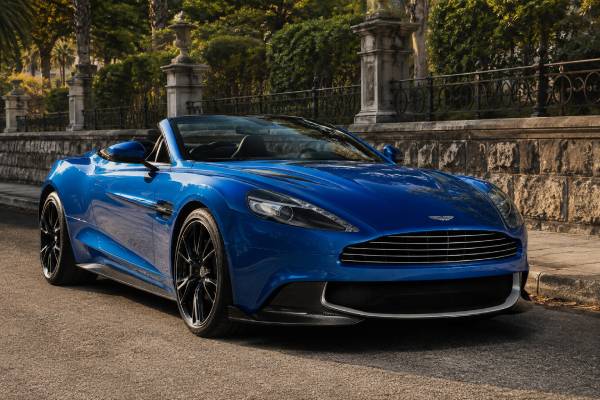
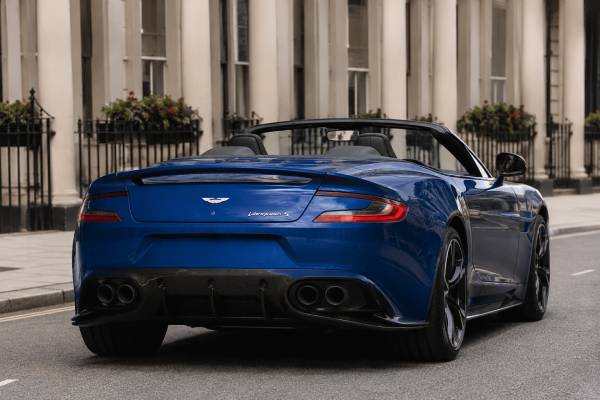
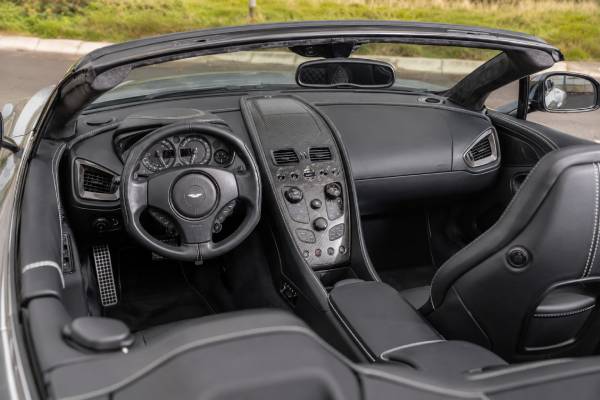
The 2017–2018 Aston Martin Vanquish S Volante is the final open-roof expression of the company’s long-running naturally aspirated 5.9-litre V12 flagship. It combines 595 hp, an eight-speed Touchtronic III rear transaxle, S-specific intake and exhaust changes, revised adaptive damping, carbon-ceramic brakes, and exposed carbon aerodynamics with a power-operated fabric hood. Official figures of 0–62 mph in 3.5 seconds and 197 mph place it only slightly behind the S coupe while making its V12 soundtrack far more immediate. The Volante’s appeal is emotional, but buying one should be methodical. Hood hydraulics and sensors, drains, seals, glass alignment, hidden water, body rigidity, carbon repairs, ceramic-disc life, tyre age, and electrical voltage can matter more than odometer mileage. The last 175-car Vanquish S Ultimate series included both coupe and Volante versions, adding provenance questions to the inspection. A dry, original, fully documented car is one of the most charismatic modern Aston Martins; a wet or poorly repaired one can be exceptionally expensive.
Table of Contents
- The Last Naturally Aspirated S Volante
- S Volante Specifications and Performance
- Integrating S Aerodynamics with a Folding Roof
- The Roof-Down Driving Experience
- Keeping the Cabin Dry and the V12 Healthy
- Ultimate Edition and Collectable Specifications
- Pre-Purchase Proof and Long-Term Ownership
The Last Naturally Aspirated S Volante
The S Volante is significant because it closed the naturally aspirated Vanquish era with the strongest factory tune and the developed eight-speed drivetrain. It is more than a convertible version of the S coupe: its reinforcement, roof hardware, weight, aerodynamics, luggage packaging, and weather exposure create a distinct ownership profile.
The engine produces 595 bhp, commonly quoted as 600 PS, from 5,935 cc without turbocharging. That matters to the experience. Power rises progressively, throttle response is direct, and the exhaust note changes continuously with engine speed. With the roof lowered, the driver hears intake resonance, mechanical texture, and the quad exhaust more clearly than in the coupe.
The eight-speed Touchtronic III transaxle gives the Volante stronger acceleration than the earlier 568 hp car despite similar peak torque. Closely spaced ratios keep the V12 active, while tall upper gears allow relaxed touring. Officially, 62 mph arrives in 3.5 seconds and maximum speed is about 197 mph, four mph below the coupe’s 201 mph.
S-specific bodywork includes the exposed carbon front splitter, revised rear diffuser, bonnet vents, and quad tailpipes. These details visually lower the car and support its higher-performance identity. They are also easy to damage on ramps and transporters, and replacement quality affects both function and authenticity.
The roof system adds mechanisms and removes the fixed structural panel above the cabin. Aston Martin reinforced the VH aluminium structure, but the Volante remains heavier and may show slightly more movement on a broken diagonal surface. It should not shake continuously, change door gaps, or rattle at the header. Those signs require structural, suspension, and roof-alignment investigation.
Production timing creates several subgroups: regular S Volantes, Q commissions, region-specific editions, Zagato Volante derivatives, and the Vanquish S Ultimate. They share portions of the drivetrain but are not interchangeable identities. A car advertised as “Ultimate specification” may simply use similar colours. Factory records are essential where rarity affects price.
The standard S Volante should not be overlooked. Without a limited-edition premium, a well-maintained regular car may be used more freely and can still have a highly individual Q colour scheme. Condition and suitability for the owner’s intended use matter more than a plaque.
S Volante Specifications and Performance
The S Volante is a non-hybrid petrol ICE convertible, pairing a naturally aspirated V12 with rear-wheel drive and an eight-speed automatic transaxle at the rear. It uses carbon-fibre exterior panels, a bonded aluminium convertible structure, adaptive suspension, a fabric folding roof, and carbon-ceramic brakes. The figures describe the S Volante, not the S coupe or Zagato variants.
| Specification | Value |
|---|---|
| Engine configuration | V12 petrol, naturally aspirated |
| Displacement | 5,935 cc (5.9 litres) |
| Maximum power | 595 bhp (600 PS) |
| Maximum torque | Approximately 630 Nm (465 lb-ft) |
| Engine position | Front-mid mounted |
| Driven wheels | Rear |
| Measure | Published result |
|---|---|
| Transmission | Eight-speed Touchtronic III automatic rear transaxle |
| 0–62 mph (0–100 km/h) | 3.5 seconds |
| Top speed | 197 mph (317 km/h) |
| Driver control | Automatic programs and fixed column paddles |
| Rear differential | Mechanical limited-slip unit |
| Measurement | Approximate figure |
|---|---|
| Length | About 4,730 mm (186.2 in) |
| Width excluding mirrors | About 1,910 mm (75.2 in) |
| Wheelbase | 2,740 mm (107.9 in) |
| Published kerb mass | About 1,844 kg (4,065 lb) |
| Boot volume | About 279 litres (9.9 cu ft) |
| Seating | 2+2 |
| System | Configuration |
|---|---|
| Primary structure | Bonded aluminium VH platform with convertible reinforcement |
| Body panels | Carbon fibre |
| Roof | Power-operated fabric hood |
| Aerodynamics | S-specific carbon splitter and rear diffuser |
| Dampers | Adaptive with S calibration |
| Brakes | Carbon Ceramic Matrix discs |
| Item | Detail |
|---|---|
| Wheels | 20-inch designs, including lightweight options |
| Fuel | Premium unleaded gasoline |
| Fuel capacity | Approximately 78 litres (20.5 US gal) |
| Exhaust | Quad-outlet S system |
| Primary use | Open-top high-performance grand touring |
Market equipment, options, weight definitions, and homologation data vary. Use the official guide and service information for the exact VIN when selecting tyres, fluids, pressures, or repair procedures.
Integrating S Aerodynamics with a Folding Roof
The S Volante must manage air at both ends of the car while accommodating a soft roof that changes cabin airflow and body stiffness. Correct alignment of the splitter, diffuser, undertrays, hood, windows, and tonneau is therefore important to refinement and stability.
The exposed carbon front splitter sits low. Examine its entire underside, mounting hardware, and connection to adjacent panels. Repeated scraping can weaken the part or distort mounts. A fresh top surface does not prove the hidden edge is sound. Transport loading is a common risk, so ask how the car has been moved.
At the rear, the diffuser surrounds the quad exhaust layout and manages underbody flow. Check for heat damage, cracking, missing fasteners, and poor fit after exhaust modification. Tailpipes should sit evenly without touching carbon. Heat shields must be present and secure.
The fabric hood creates a smooth outer surface when raised, but its tension and seals must be correct. Loose fabric can flutter; incorrect glass height can whistle; a misaligned header can create movement and leaks. Drive at several speeds roof-up and listen to each side separately.
Roof-down airflow is influenced by windows and the removable wind deflector where fitted. Confirm the deflector is present, undamaged, and stored correctly. Test window movement with the roof in both positions. A regulator that works once may fail when the roof control requests a different sequence.
Drainage paths sit below visible surfaces. Debris in the roof well can redirect water into rear trim or luggage compartments. Clean gently and avoid hard probes. Evidence of sealant smeared around channels may indicate repeated leak attempts without identifying the source.
The bonded aluminium structure should be inspected for correct repair. Carbon body panels can be replaced while structural distortion remains beneath them. Changes in door gap between roof-up and roof-down positions, difficulty latching the hood, or one window needing extreme adjustment can point beyond a simple seal issue.
Ride height also affects aero. Incorrect springs, tired dampers, or wheel and tyre changes alter splitter clearance and body attitude. The S was calibrated as a system. Lowering for appearance can increase grounding and reduce suspension travel, while nonstandard wheels may change loads and steering response.
The Roof-Down Driving Experience
The S Volante’s strongest quality is the way it turns the V12’s high-rpm delivery into a full sensory event while retaining automatic ease. It should feel fast and stable, but never so stiff or noisy that it loses its grand-touring purpose.
At low speeds, the torque converter allows smooth creep and parking. The gearbox should engage drive and reverse without excessive delay or impact. Paddle mode becomes most rewarding once the engine is warm: downshift before an overtake, build revs, and let the engine pull through a broad arc rather than relying on a turbocharged surge.
The exhaust is more present than in the regular Volante. Valve operation, mode selection, and engine load change the sound. Listen for clean tone rather than metallic rattle, ticking leaks, or drone. An aftermarket exhaust may increase volume but can undermine long-distance comfort or emissions compliance.
The adaptive dampers should hold the heavier open body in control. Compare settings on identical roads. GT use should not produce repeated float; sportier settings should not cause the wheels to skip over rough surfaces. Old tyres can make the firmest mode feel unusable, so check rubber before condemning dampers.
Steering should be direct and stable. Some camber sensitivity is normal with wide tyres, but a car that wanders may have inner-edge tyre wear, wheel damage, poor alignment, worn bushes, or structural history. A four-wheel alignment is diagnostic only after joints and ride height are confirmed.
Carbon-ceramic brakes can feel powerful and consistent when warm. In damp conditions, initial response may differ, so use progressive pressure. On inspection, demand a proper disc assessment rather than a visual guess. The material can be damaged by impact, contamination, or incorrect handling during wheel work.
Roof-down, listen for body noises over diagonal bumps. A few trim movements may occur, but strong scuttle shake, door movement, or a header that chatters suggests more than normal convertible flex. Repeat the same route roof-up; if the noise changes, investigate the hood and latches, and if it remains, inspect suspension and structure.
The official 197 mph maximum is an engineering statement, not a public-road target. Its practical relevance is that tyres, aerodynamics, alignment, and body integrity were designed for an extreme envelope. Correct speed ratings and undamaged carbon are therefore safety issues at normal motorway speeds too.
Keeping the Cabin Dry and the V12 Healthy
Dry storage, battery support, clean drains, proper warm-up, and annual condition-led service are the foundations of reliable ownership. The Volante can deteriorate while parked if fabric, seals, hydraulic systems, tyres, and electronics are ignored.
Store the hood raised for long periods and only fold it when clean and dry. Vacuum debris from seams and channels before washing. Use a soft brush and suitable cleaner, rinse with low pressure, and allow complete drying in ventilation. Harsh detergent can strip treatment or stain adjacent materials.
Inspect the cabin after rain, not only after washing. Check under mats and boot panels, around rear seat and belt areas, and behind accessible side trim. A musty smell, steamed windows, green corrosion, tide marks, or repeated dehumidifier use indicates a problem. Drying without resealing merely pauses damage.
Roof hydraulics should not need routine topping-up to compensate for leaks. Look for fluid around cylinders, hoses, pump area, trim, and hinge points. Slow movement may also come from voltage or mechanical binding. Diagnose before operating repeatedly.
The V12 needs correct oil, filters, plugs, coils, cooling, and fuel quality. Misfire data should be reviewed during service because a twelve-cylinder engine can still feel smooth with an emerging weakness. Unburned fuel threatens catalytic converters, so warning lights need prompt attention.
Clean the cooling pack carefully and verify both fan operation and traffic temperature. Bonnet vents do not compensate for blocked radiators. Watch for coolant staining, odor, or level trends. A car that was detailed immediately before viewing may have had evidence washed away.
Touchtronic III should receive the specified fluid procedure. Check transaxle and differential areas for leaks and mounts for age. Battery events can create misleading codes, so test voltage before replacing control units. A compatible maintainer is inexpensive protection for an intermittently used car.
Tyres expire by age. Replace hardened rubber even with deep tread and use matching approved sizes. Inspect inner shoulders, wheel barrels, and rim repairs. Record pressures before a tour, adjusting only according to official guidance for load and conditions.
Interior sunlight exposure can shrink leather and cloud carbon lacquer. Use shade when practical, clean with appropriate products, and avoid leaving the roof down for long periods in intense sun. Restorations should match original grain, stitching, and finish.
Ultimate Edition and Collectable Specifications
Collectable value depends on proof, completeness, condition, and demand—not merely on an unusual colour. The S Volante was available in regular form, as part of the 175-car Ultimate programme, through Q commissions, and in separate Zagato derivatives.
Aston Martin offered the Vanquish S Ultimate in coupe and Volante forms with three designer themes and unique details. The engine remained the 595 bhp V12, paired with Touchtronic III, adaptive damping, and carbon-ceramic brakes. The edition celebrated the end of AM310 production rather than introducing a higher-output powertrain.
Verify an Ultimate through VIN and factory records. Check the original exterior scheme, graphics, interior colour, stitching, carbon details, wheels, calipers, sill plates, and accessories. Aston Martin allowed customers some theme mixing, so a non-catalogue combination may be legitimate. Documentation resolves the question.
Q commissions can be more individual than the Ultimate. A factory order may include paint-to-sample, unusual leather, embroidery, special carbon, or personalized trim. Preserve commissioning papers and sample approvals. A unique specification may narrow the future buyer pool if colours are polarizing, but it can also be highly desirable to the right collector.
Region-specific projects and signature editions require the same evidence. Badges, logos, luggage, covers, and plaques may be essential parts of the package. Missing accessories should influence value because reproducing them can undermine originality.
Zagato Volante is a separate limited-production body, not a trim level. Its unique carbon panels and design create different replacement-parts and valuation risks. A standard S Volante article cannot provide complete Zagato inspection guidance.
Do not confuse preservation with inactivity. An Ultimate that has sat on old tyres with a weak battery and damp hood is not automatically superior to a regularly used standard car. Fluids, seals, fabric, hydraulic cylinders, brakes, and ignition components age regardless of mileage.
A tasteful retrim or replacement hood may improve usability but affects originality. Keep removed pieces, invoices, material samples, and photographs. Reversible work with honest disclosure is easier for the market to understand than undocumented “factory-style” restoration.
Pre-Purchase Proof and Long-Term Ownership
The purchase should be approved only after identity, dryness, structure, ceramic brakes, drivetrain, and electronics are proven. Use an inspector who understands AM310 Volantes and can access Aston Martin diagnostics and repair information.
Ask the seller not to warm or wash the car. Begin with a cold, dry inspection. Match VIN and build record, then examine roof fabric, header, seals, windows, drains, boot, rear trim, carbon aero, panel fit, and door alignment. Test the battery before cycling the hood.
Operate the roof several times and record any warning or asymmetry. Repeat after the road test. Conduct a controlled water test if possible, avoiding pressure that would force water past healthy seals. Recheck hidden areas with a moisture meter.
On a lift, inspect aluminium structure, braces, undertrays, carbon panels, splitter, diffuser, exhaust heat shielding, suspension, dampers, wheel barrels, tyres, ceramic discs, leaks, and approved jacking points. Require photographs of any concern.
Scan all control modules. Review engine misfires, transmission faults, roof and body codes, low-voltage history, suspension warnings, restraint systems, parking aids, locks, and climate control. Do not clear evidence before saving a report.
A complete test drive includes roof-up and roof-down sections, slow manoeuvring, automatic and paddle shifting, full warm-up, safe upper-rev acceleration, adaptive-mode comparison, progressive braking, motorway tracking, traffic idling, and hot restart. Check for new fluid odor, warnings, or moisture afterward.
The service file should document V12 care, transmission and differential work, battery tests, roof repairs, drain cleaning, seal adjustment, tyres, ceramic-brake measurements, dampers, cooling, recalls or service actions, and carbon repairs. A one-line invoice for “annual service” cannot substitute for this detail.
Budget beyond purchase price. Insurance, dry storage, premium fuel, specialist labour, tyres, roof work, ceramic-brake contingency, carbon repairs, transport, and bespoke trim can be significant. Set aside funds before an emergency, not after.
Match the car to the way it will actually be used. Regular touring favors supportive seats, current navigation, practical luggage, a quiet roof at speed, and easy access to qualified service. Occasional collection use places more emphasis on originality, paint and trim provenance, controlled storage, battery management, and documented exercise. Neither pattern excuses inactivity: fluids must reach temperature, the roof should be cycled in suitable conditions, brakes need clean use, and tyres need movement and pressure checks. A realistic use plan prevents the common cycle in which a rarely driven convertible becomes less dependable precisely because owners are trying to preserve it.
The S coupe is the choice for maximum rigidity and luggage room. The regular 568 hp Volante offers similar open-air character with softer S-specific styling. The S Volante is for the owner who wants the final naturally aspirated flagship at its most dramatic and accepts the additional roof and rarity responsibilities.
When healthy, it provides a combination that is unlikely to return: a front-engine, rear-transaxle, naturally aspirated V12 convertible with nearly 600 hp, a carbon body, and a traditional fabric hood. Its quality is not measured only by speed. It is measured by how cleanly the roof seals, how confidently the body settles, and how the V12 builds toward its redline with the sky overhead.
References
- VANQUISH S (Manufacturer Historic Model Archive)
- VANQUISH VOLANTE (Manufacturer Historic Model Archive)
- Vanquish S Ultimate: Flagship Super GT celebrated with stunning special edition 2017 (Manufacturer Special Edition Release)
- Aston Martin Ownership | Luxury Car Servicing | Aston Martin 2026 (Official Ownership Information)
- Vanquish at 25 – three generations of flagship performance and engineering excellence 2026 (Manufacturer History)
- Owner’s Guides | Aston Martin (Manufacturer Owner Resources)
Disclaimer
This article is for informational purposes and does not replace professional diagnosis, repair, roof service, authentication, or a specialist inspection. Specifications, torque values, fluids, maintenance intervals, campaigns, and procedures can vary by VIN, market, production date, and equipment; confirm all technical decisions using official documentation for the exact vehicle. Please share this article on Facebook, X/Twitter, or an enthusiast group if it was useful.