
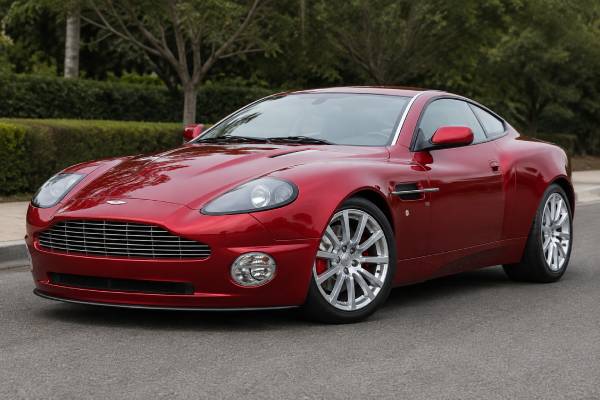
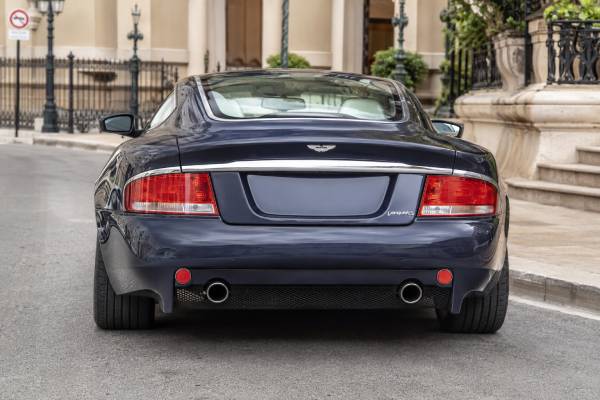
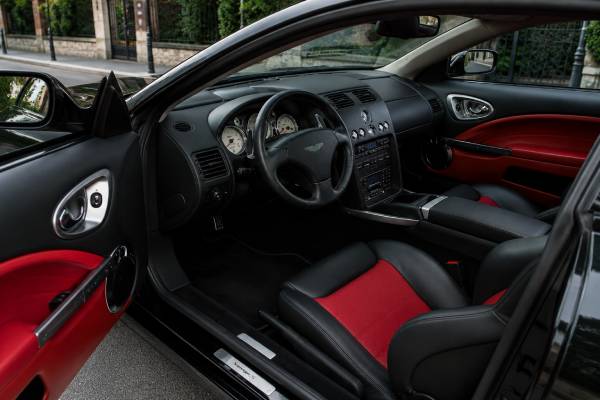
The 2004–2007 Aston Martin V12 Vanquish S is the developed, faster, and rarer final form of the Newport Pagnell flagship. Its 520 bhp naturally aspirated V12, revised gearing, enlarged cooling openings, sharpened aerodynamics, and official 200-plus-mph capability distinguish it from the 460 bhp car without changing the underlying character: this remains a hand-built aluminium-and-carbon grand tourer with an electrohydraulically operated six-speed manual transmission. The S badge raises expectations and prices, so authentication and condition matter greatly. A genuine, well-maintained car can be both a landmark Aston Martin and a deeply involving long-distance machine. A neglected one can combine worn clutch hardware, aging hydraulic systems, expensive trim needs, hidden structural repairs, and scarce parts. The right buying approach is therefore specific rather than romantic: establish exactly what the car is, document its production and upgrades, inspect it with model-level expertise, and budget for preservation rather than ordinary used-car maintenance.
Table of Contents
- What the S Badge Changed
- Vanquish S Numbers and Hardware
- Two-Hundred-MPH Engineering
- Getting the Best from the Paddle Transaxle
- Preserving a Late Newport Pagnell Car
- Authenticity, History, and Inspection
- Choosing Between S Versions and Use Cases
What the S Badge Changed
The Vanquish S was not merely a cosmetic run-out edition; Aston Martin altered the engine, gearing, cooling, aerodynamics, suspension calibration, and visual details to create a faster and more focused flagship. Output rose from 460 bhp to 520 bhp, torque increased, and the official maximum speed moved from 190 mph to beyond 200 mph.
The most visible changes are functional. A larger, more open front grille and revised front treatment admit additional cooling air. A small front splitter and a raised rear spoiler manage airflow and help distinguish the S at a glance. Revised wheel designs, badging, and detail finishes also identify the model, although individual cars may have been personalized or updated during their lives.
Under the bonnet, the 5,935 cc V12 received changes that allowed it to produce peak power at 7,000 rpm. The result is not a modern turbo-style wall of torque. The engine still rewards revs and precise throttle use, but it pulls harder through the upper range and gives the S a more urgent character. Revised gear and final-drive ratios complement the extra output, helping the car accelerate more strongly and reach its higher maximum speed.
Aston Martin also sharpened the chassis. The S remained a substantial grand tourer, not a stripped track special, yet its responses were intended to feel more controlled and athletic. That matters for buyers because a tired suspension can erase the very distinction that justifies the model. A car on old dampers, hardened tyres, worn bushes, or incorrect alignment may feel heavy and nervous rather than stable and precise.
The final-production story adds another layer. Newport Pagnell production ended with the Vanquish S in July 2007, and the last 50 cars were the Ultimate Edition. Those cars have particular collector interest, but the regular S is itself historically important as the final series-built model from Aston Martin’s long-established Buckinghamshire factory. Documentation should carry greater weight than assumptions based on paint colour, plaques, or seller language.
The S also evolved during production. Later cars may have factory or approved updates to the transmission system, cabin details, or other components. Some early Vanquish owners retrofitted S-style parts, while some S cars have been modified further. None of that is automatically negative, but a buyer should separate original specification, factory updates, dealer upgrades, and aftermarket changes. Value and usability depend on knowing which is which.
Vanquish S Numbers and Hardware
The Vanquish S is an internal-combustion-only, front-engine, rear-wheel-drive coupe using a naturally aspirated 5.9-litre V12 and a rear six-speed automated manual transaxle. Its headline numbers are 520 bhp, 576 Nm of torque, 0–60 mph in 4.8 seconds, and a top speed beyond 200 mph. The published values below apply to the standard S rather than a modified car.
| Item | Vanquish S value |
|---|---|
| Engine | Naturally aspirated 60-degree V12 |
| Capacity | 5,935 cc (5.9 litres) |
| Power | 520 bhp at 7,000 rpm |
| Torque | 576 Nm (425 lb-ft) at 5,800 rpm |
| Fuel | Premium unleaded gasoline |
| Driven wheels | Rear |
| Item | Vanquish S value |
|---|---|
| Gearbox | Six-speed manual transaxle with electrohydraulic ASM/SSM control |
| Driver interface | Column-mounted shift paddles with automated mode |
| 0–60 mph | 4.8 seconds |
| Top speed | More than 200 mph (more than 322 km/h) |
| Layout | Front-mid engine, torque tube, rear transaxle |
| Measurement | Published figure |
|---|---|
| Length | 4,665 mm (183.7 in) |
| Width | 1,923 mm (75.7 in) |
| Height | 1,318 mm (51.9 in) |
| Published weight | 1,875 kg (4,134 lb) |
| Body | Two-door coupe with superformed aluminium panels |
| Cabin arrangement | 2+0 or 2+2 according to build specification |
| System | Configuration |
|---|---|
| Core structure | Bonded and riveted aluminium with carbon-fibre central tunnel |
| Suspension | Independent double wishbones front and rear |
| Steering | Hydraulically assisted rack and pinion |
| Brakes | Large ventilated steel discs with ABS |
| Stability systems | Traction and stability control appropriate to production specification |
| EPA measure | Result |
|---|---|
| Combined | 12 mpg US (about 19.6 L/100 km) |
| City | 10 mpg US (about 23.5 L/100 km) |
| Highway | 16 mpg US (about 14.7 L/100 km) |
| Fuel-tank capacity | 22 US gal (about 83 litres) |
| Estimated EPA range | 264 miles (425 km) |
The model-year label, equipment, emissions calibration, and measured mass can vary by market. Use the tables to identify the car’s basic configuration, then verify the exact vehicle against its build record and official documentation.
Two-Hundred-MPH Engineering
A 200-plus-mph claim affects much more than engine output; cooling, aerodynamics, tyres, gearing, braking, and structural condition all become part of the performance system. Even if an owner never approaches the maximum speed, the engineering needed to support it shapes how the S feels at normal motorway pace.
The revised nose provides greater airflow, while the splitter and raised rear spoiler address high-speed stability. These parts should be examined for cracks, poor repairs, incorrect attachment, and signs of repeated grounding. An apparently minor damaged splitter may reveal careless use or an impact that also affected undertrays, mounting points, cooling hardware, or alignment.
The longer-legged performance requires correct tyres. Speed rating, load rating, size, construction, age, and axle matching matter. A collector car may display deep tread while wearing rubber that has hardened over many years. At the S model’s mass and performance level, old tyres are not a cosmetic imperfection; they change steering response, wet braking, traction-control behavior, and ride quality.
Brake condition must be judged as a system. Measure disc thickness, inspect both faces, check for cracking or severe corrosion, confirm caliper operation, and review fluid-change history. A car that has been stored may develop uneven deposits or pitting that causes vibration. One that has been driven hard may show heat effects. Either condition needs diagnosis rather than an assumption that large brakes are automatically healthy.
The cooling system also carries a greater burden than on the 460 bhp car. Radiators and condensers can become obstructed or damaged at the front, fans and sensors must operate correctly, and aged hoses or seals can turn a small weakness into a major overheating event. The test drive should include enough time at full operating temperature to prove stable cooling in traffic as well as during motion. A temperature gauge that behaves normally on a short, cool drive is not a complete test.
Aerodynamic and structural integrity are closely linked. The bonded aluminium and composite construction was advanced, but it demands model-appropriate repair methods. High-speed stability depends on geometry, panel fit, underbody condition, suspension health, and tyre uniformity. A car rebuilt without accurate fixtures or approved bonding processes may never drive correctly, even if its exterior gaps look acceptable.
The S is often described as more sporting than the original, but it remains a grand tourer. Its best quality is sustained pace with a sense of occasion, not lap-time chasing. The engine’s upper-range energy, the transaxle’s deliberate shifts, and the firm chassis make a flowing road rewarding. Excessive harshness, steering wander, repeated stability-control intervention, or braking instability indicate condition problems rather than desirable “race car” character.
Getting the Best from the Paddle Transaxle
The Vanquish S transmission is satisfying when its driver works with it and frustrating when treated like a conventional automatic. It is a real manual gearbox with an automated clutch and shift mechanism, so every low-speed manoeuvre and gear change still involves clutch engagement, even though there is no pedal.
Manual paddle operation is normally the most predictable mode. Under moderate acceleration, ease the throttle slightly as the upshift is requested, then reapply it as the next gear engages. The movement does not need to be exaggerated; the aim is to unload the driveline. At higher revs and larger throttle openings, the system is calibrated to shift more assertively, but mechanical sympathy still matters until oil temperatures are established.
Automated mode can reduce workload, yet it may select gears or time shifts differently from what an experienced driver expects. That is normal. What is not normal is repeated failure to select a requested gear, flashing warnings, neutral selection under load, severe clutch smell, unusually long engagement, or inconsistent behavior as the car becomes hot.
Parking technique has a large effect on clutch wear. Avoid inching continuously, balancing on the accelerator on a slope, or reversing slowly uphill for a prolonged period. Hold the car with the brakes, create space before moving, and complete the manoeuvre in controlled segments. A garage or storage location with a steep, tight approach should be considered before purchase because it can turn every drive into a clutch-heating exercise.
Specialist diagnostics should be part of routine assessment. The workshop should inspect hydraulic pressure generation, actuator operation, clutch adaptation, fault codes, wiring, and battery voltage. A clutch-wear reading can be useful, but it is not the only criterion. Calibration quality and actual engagement behavior matter, and some values require interpretation in the context of replacement history or system updates.
Many cars have received transmission-related updates during their lives. Some owners choose a manual conversion, replacing electronic clutch actuation with a pedal and conventional shift control. A conversion can make the car more intuitive for certain drivers, but its desirability depends on execution. Check who performed it, which components were used, how electronic integration was handled, whether the work is documented, and whether the change affects registration, insurance, or resale in the relevant market.
For an original ASM car, the goal is not to make it imitate a modern dual-clutch gearbox. The pause and mechanical sequence are part of the experience. Once a driver learns the rhythm, the system creates a distinct connection between engine speed, paddle input, and weight transfer. That character is worth preserving when the hardware is healthy.
Preserving a Late Newport Pagnell Car
Preservation means keeping the Vanquish S mechanically exercised and correctly serviced, not simply minimizing mileage. Static display can protect paint from road use, but it does not protect seals, batteries, fuel systems, tyres, air conditioning, hydraulic components, or lubricated surfaces from time.
A sensible care plan begins with regular inspections and documented annual servicing even when distance covered is low. The exact schedule, oil grade, coolant specification, brake fluid, transmission fluid, and torque procedures must come from documentation for the specific VIN. Because production was low and updates occurred, generic internet lists are not a safe substitute.
Before starting a car that has stood for weeks, check the battery maintainer and look beneath the vehicle for leaks. Let the engine establish oil circulation before demanding high revs. Drive long enough to warm the engine, gearbox, brakes, and exhaust properly rather than completing repeated short starts. Once temperatures are stable, use a range of engine speeds and operate the brakes progressively. This helps reveal problems and prevents the car from becoming a static object with hidden deterioration.
The battery and charging system deserve proactive attention. Low voltage can cause transmission warnings, incomplete actuator cycles, alarm problems, and spurious electronic faults. Replace a weak battery with the correct specification and investigate parasitic drain rather than repeatedly resetting the car. Clean earth connections and documented charging-system tests can prevent expensive diagnostic confusion.
Keep the front cooling pack clean but avoid aggressive pressure washing. Debris trapped between heat exchangers restricts airflow, while careless cleaning can bend fins or force water into electrical areas. Monitor coolant level only when safe, note any trend, and investigate odor, staining, or fan irregularities promptly.
Leather and headlining respond to environment. Excess heat and humidity can shrink, loosen, fade, or encourage mold. Use breathable indoor storage, avoid sealing a damp car under an impermeable cover, and condition materials with products suitable for the original finish. A sun-baked dashboard or lifting headlining can be restored, but matching handcrafted surfaces requires expertise.
Exercise all functions, including windows, mirrors, seat motors, climate control, locks, lamps, wipers, washers, parking aids, and audio equipment. Small electrical faults often become harder to solve after long periods of disuse. Keep a written log of symptoms, battery events, and repair dates so a specialist can identify patterns.
Cosmetic conservation should not conceal structural issues. Paint correction and ceramic coatings may improve appearance, but first inspect aluminium panels, bonded joints, undertrays, wheel arches, jacking areas, and previous repairs. Preserve original labels, tools, books, keys, and removed factory parts whenever upgrades are made. The history file is part of the car.
Authenticity, History, and Inspection
The most valuable inspection question is not “Is this a Vanquish S?” but “Is this exact car, in its present configuration, accurately represented?” Confirming identity requires build data, VIN consistency, production records, equipment, and physical details considered together.
An S should have the correct engine specification, exterior treatment, badging, wheels or documented alternatives, interior details, and production-era components. However, Aston Martin personalization, dealer changes, later factory upgrades, and owner modifications can complicate a visual checklist. A genuine car should not be rejected merely because a wear item was updated, and a convincing replica should not be accepted because it carries S badges.
Ultimate Edition claims require especially strong evidence. The final 50 cars had a defined factory identity and are commonly recognized by distinctive specification details, but a plaque or similar paint scheme alone is not proof. Obtain documentation from Aston Martin or a recognized historical source and ensure numbers, build dates, market delivery, and current identity agree.
The service file should show more than stamps. Look for invoices that specify clutch work, hydraulic components, software or calibration updates, cooling repairs, suspension renewal, brakes, tyres, batteries, air conditioning, window mechanisms, and trim restoration. Note which workshop performed each task and whether the descriptions demonstrate familiarity with the model.
During an independent inspection, require:
- a cold start and a fully hot restart;
- complete diagnostic scanning before code clearing;
- assessment of clutch operation and ASM data;
- lift inspection of structure, suspension, leaks, brakes, and underbody panels;
- tyre date and condition checks on inner and outer shoulders;
- paint, panel, composite, and aluminium repair assessment;
- operation of every cabin and body electrical function;
- a road test long enough to evaluate heat-related behavior.
Pay attention to how the car tracks and settles. It should not need constant steering correction, shimmy under braking, or crash over small bumps. The engine should rev cleanly without persistent misfire, and the transmission should behave consistently rather than deteriorating once hot. Air conditioning should cool effectively, windows should index correctly, and no area of the cabin or luggage compartment should smell damp.
A post-inspection estimate should divide work into safety-critical, reliability-critical, age-preventive, and cosmetic categories. This makes comparison between cars rational. A higher-priced example needing only scheduled work may be much cheaper than a discounted car requiring clutch, hydraulic, suspension, cooling, tyre, and trim restoration at once.
Choosing Between S Versions and Use Cases
Choose a Vanquish S for its combination of final-era provenance, naturally aspirated V12 performance, and distinctive automated-manual interaction, not because it offers modern supercar convenience. It is best for an owner who will drive it enough to maintain function while respecting its age and low-volume construction.
Against the 460 bhp Vanquish, the S offers stronger acceleration, a higher-revving power peak, revised chassis behavior, clearer visual differentiation, and greater rarity. The original car may feel historically purer and can cost less to enter; the S provides the completed factory development. There is no universal winner. A first-rate original is a better purchase than a compromised S, while two equally healthy cars invite a choice based on character and collecting goals.
Within the S market, separate standard production cars from special specifications. An Ultimate Edition can command a premium because of its final-50 status, but that premium should buy documentation, originality, and condition. Unusual Q or customer-specified colours may be desirable, yet personal taste and verifiable factory provenance matter more than claims that every rare colour is uniquely valuable.
Decide how the car will be used. For touring, prioritize seat comfort, climate control, luggage practicality, tyre freshness, cooling health, and smooth transmission behavior. For collection, prioritize build documentation, original components, restrained restoration, and storage history, but do not ignore mechanical exercise. For frequent use, a thoughtfully upgraded ASM system or documented manual conversion may be attractive, although it could narrow the future buyer pool.
Ownership costs are irregular. Some years may involve routine service and detailing; another may require a major clutch, suspension, cooling, or trim project. A reserve should exist before purchase. Insurance should reflect agreed value and disclosed modifications, while transport arrangements should account for the car’s width, low nose, and limited clearance.
The model rewards a long-term mindset. Learn the shift technique, keep voltage stable, warm the car properly, avoid clutch-abusive manoeuvring, and use a workshop that retains diagnostic and historical knowledge. Do not postpone small leaks, weak cooling, or intermittent warning messages until they become immobilizing faults.
A correctly sorted S feels cohesive rather than merely fast. The body remains settled, the steering has weight, the V12 pulls with increasing intensity, and the paddle shift imposes a deliberate rhythm. Its appeal lies in that blend of modern-for-its-time engineering and unmistakably hand-built character. Buy one because that interaction speaks to you, and protect it with evidence-led maintenance.
References
- Aston Martin Vanquish & Vanquish S (2001 – 2007) | Aston Martin (Manufacturer Model History)
- VANQUISH S (Manufacturer Press Archive)
- Vanquish at 25 – three generations of flagship performance and engineering excellence 2026 (Manufacturer History)
- Fuel Economy of the 2006 Aston Martin V12 Vanquish S (Official Fuel Economy Database)
- Vehicle Detail Search – 2006 ASTON MARTIN V12 VANQUISH | NHTSA (Recall Database)
- Aston Martin Ownership | Luxury Car Servicing | Aston Martin (Manufacturer Owner Resources)
Disclaimer
This article is for informational purposes and does not replace professional diagnosis, repair, or an independent specialist inspection. Specifications, torque settings, service intervals, fluids, and procedures may differ by VIN, market, equipment, and production date, so verify all work against the official service documentation for the exact car. Please share this article on Facebook, X/Twitter, or another enthusiast platform if you found it useful.